

Tag: birds

Wildlife Students Gather Field Data with Flighty Participants

A point-of-view shot from the back of a canoe shows a student sitting at the front, facing away from the camera towards the sun rising over the Sturgeon River. The canoe is headed down the river towards a bridge. The river is lined on either side with trees and brush.
Wildlife ecology and conservation students perform real-world field research and data collection as part of their capstone projects. (Photo courtesy of Stacy Cotey)

Hands-on research and data collection are essential preparation for a career as a wildlife professional. The wildlife capstone course offered by the College of Forest Resources and Environmental Science (CFRES) guides students through the joys and challenges of collecting data on some of nature’s most elusive research subjects. One of this year’s teams focused on how the bat population uses forest gaps, while another examined how environmental factors relate to bird sightings.

Wildlife Students Close the Gap on Bat Data

Stacy Cotey, assistant teaching professor for CFRES, leads the course, which this academic year included Meghan Boelens, Derek Weide, Jacob Sutter, Graham Bishop and Grace Simpson, all wildlife ecology and conservation students. The Huskies took a closer look at how forest gaps and the way those open spaces are used can affect the bat population.
CFRES Faculty Featured in Science Magazine for Bird Decline Research

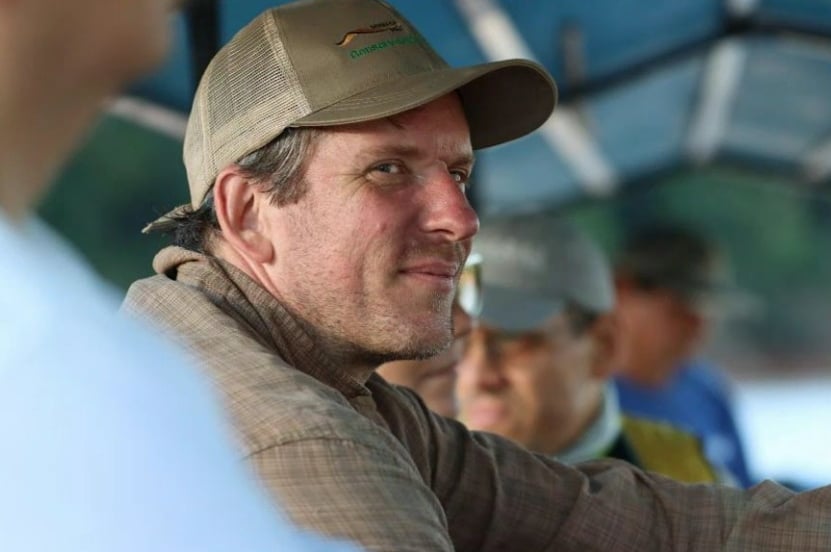
Jared Wolfe smiles while peering out of the corner of his eye towards the camera as he travels via boat through the Amazon.
Jared Wolfe’s work with rainforest bird populations has caught the attention of Science magazine.

Jared Wolfe, associate professor for the College of Forest Resources and Environmental Science, made Michigan Tech News headlines on our Unscripted Research Blog last year with his eye-catching subjects and jaw-dropping discoveries. This year, his research into the cause of bird declines in the Neotropics is the focus of a recently published feature article in Science magazine, “Fading Melodies.”

“It’s an honor to have the scientific media outlet of record interested in your work,” said Wolfe. “The fact that they are making it a featured article is even more exciting. Honestly, tropical bird declines have not received the attention they should, and I am glad Science is dedicating the resources to cover this issue.”

Wolfe is no stranger to the spotlight — his research has previously been featured in Audubon magazine and The Guardian multiple times — but says publication in Science represents a “pinnacle of research exposure.” He spent a week in the Amazon with Science reporter Warren Cornwall to provide information for the story. The feature highlights his innovative irrigation experiment in the central Amazon, designed to identify the climatic drivers of pervasive, unexplained bird population declines across multiple sites across the Neotropics.

“We developed an irrigation experiment in the Amazon, watering pristine forest to measure the multifaceted responses of birds, mammals, and insects,” said Wolfe. “The experiment is bold, and the results are compelling.”

Wolfe’s research indicates the declines may reflect changes in climate, such as increasingly severe dry seasons. Read the full Science article for details on his experiment and findings.