Category: Ford Center and Forest

From Conversation to Action: Continuing the Work at ForestsNext50

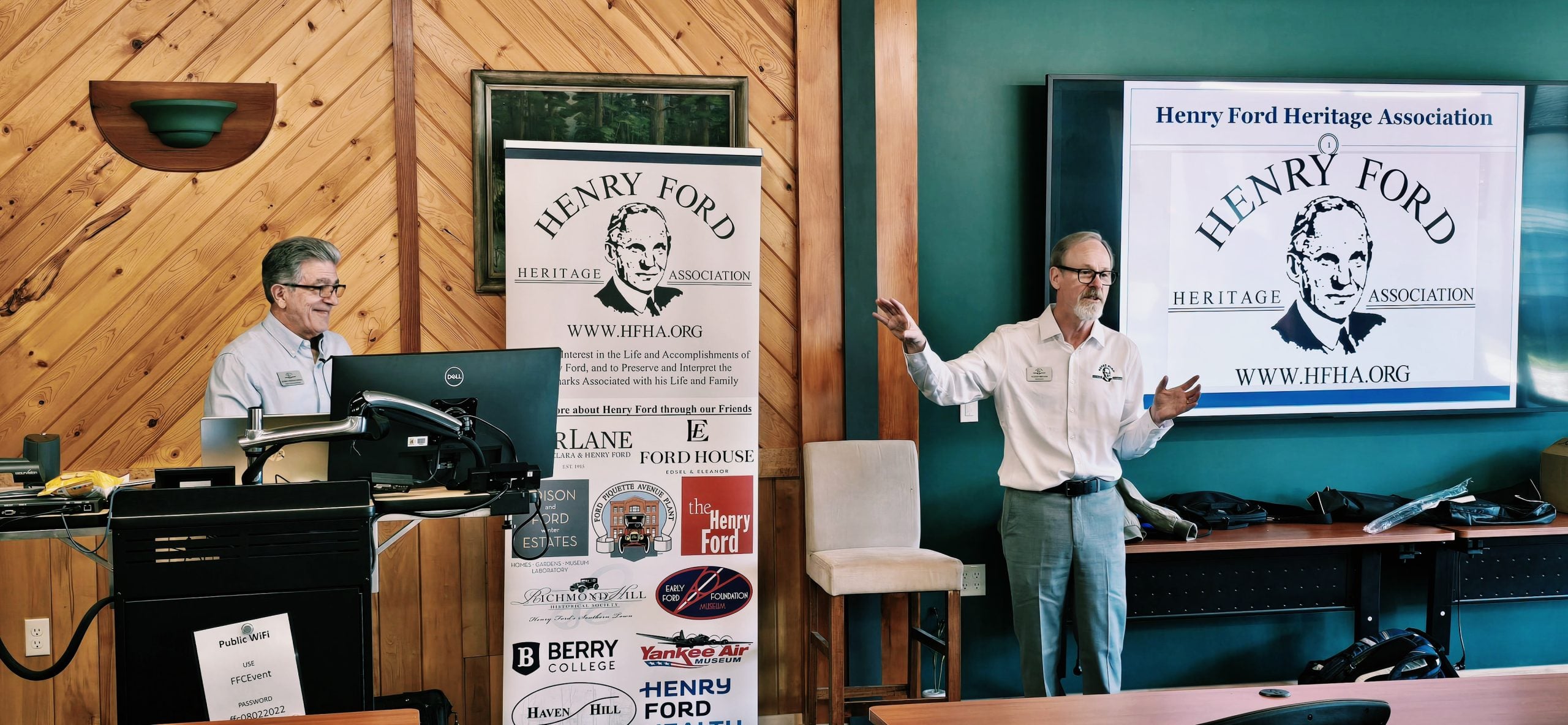
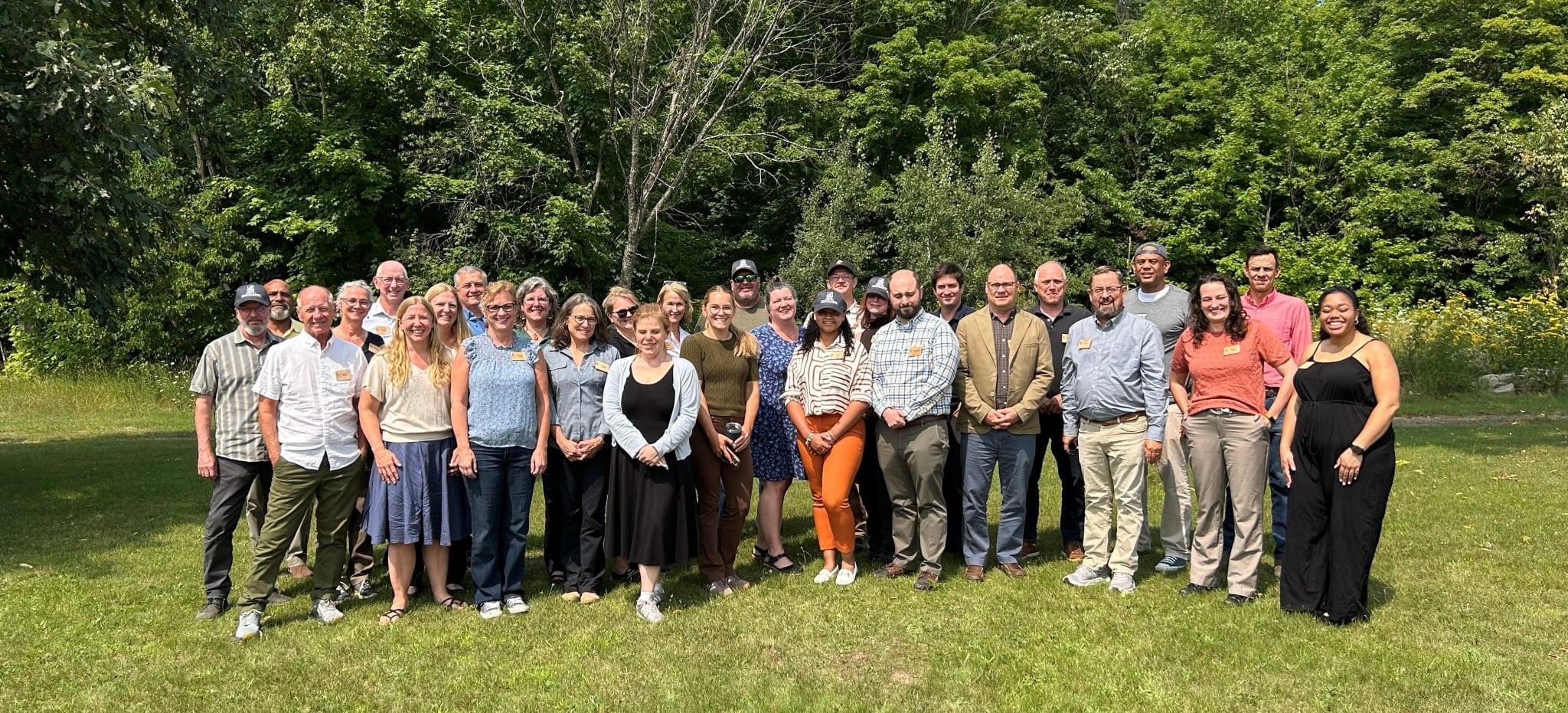
Around 40 forestry professionals and Society of American Foresters members met at Tech’s Ford Center to discuss plans for the next 50 years of forestry. (Photo courtesy of Tara Bal)

In a guest blog written by Tara Bal, associate professor in the College of Forest Resources and Environmental Science and President of the Society of American Foresters (SAF), shares insights from SAF’s ForestNext50 Leadership Summit.

Last week, I had the opportunity to participate in the ForestsNext50 Leadership Summit, which took place at Tech’s Ford Center and Research Forest in Alberta, Michigan. This gathering felt less like a standalone event and more like the next positive step in a conversation that has been building across the forest sector for many years. The goal of the convening was to discuss and identify actions aimed at sustaining healthy U.S. forests over the next 50 years.

ForestsNext50 was an opportunity to take previous conversations in forestry a step further by moving from talking about the future to making plans to build it. Earlier this year, I was also able to attend the Markets Matter Convening in Madison, Wisconsin, which brought together hundreds of people from across the forest sector to focus on a fundamental question: How do we strengthen markets, sustainably increase use of forest resources, create new opportunities for material that is currently underutilized, and increase science-based forest management on the ground?  The 9th American Forest Congress was also held in 2025 and brought people together around the future of forests, forest management, and the communities and economies that depend on them.

Building on momentum from these other recent events, ForestsNext50 was designed for more candid discussions and strategic conversations to identify and commit to practical actions.  We followed Chatham House Rules, which allowed participants to speak honestly about hard topics. Campfire chats in the evenings and breaks allowed partners to connect and dive deeper into conversations. Topics ranged from forest health restoration and wildland fire resilience, reforestation, wood markets and infrastructure, stewardship of non-federal lands, governance, and more.

About Chatham House Rule

The Chatham House Rule is a guiding principle that allows people to use information from a meeting while keeping speakers’ identities and affiliations confidential. Created in 1927 at Chatham House in London, the official wording is: “When a meeting, or part thereof, is held under the Chatham House Rule, participants are free to use the information received, but neither the identity nor the affiliation of the speaker(s), nor that of any other participant, may be revealed.” – Chathamhouse.org

One of the most valuable aspects of the summit was the opportunity to convene with people who have been part of these conversations and to meet others approaching the same challenges from different perspectives. There was a broad range of participants, representing over 30 different organizations, non-profits, public agencies, tribal communities, forestry professionals, and more, yet the total number of people in the room was around 40, so conversations felt like they went further. We could talk in a small group and share out easily. It was clear that the relationships and trust built between participants will have a significant impact on the future of forestry.

There was no shortage of ideas about what the future of forestry could look like. What was harder—and ultimately more important—was figuring out our next steps.  That means moving beyond identifying the challenges to reach actions, including relationships, projects, investments, policies, research, and demonstrations that can address challenges and move the sector forward. For me, that is where the value of ForestsNext50 really stood out.

After three days of gathering, there was so much gratitude in the room for the time, reflections, and valuable ideas from the participants. It was also clear that folks were leaving with stated commitments and real actions for collaborations and partnerships that will continue after everyone goes home. Based on this meeting’s success, it is likely that there will be additional convenings going forward, allowing different voices in the room while continuing to build the relationships that will be crucial to projects and policies moving forward.

The value of events like ForestsNext50 isn’t simply the few days we spend together or getting another meeting in the books. The legacy of this and the meetings that preceded it will be what real actions flow from them.  Michigan Tech College of Forest Resources and Environmental Science Dean David Flaspohler encapsulated this idea at the start of the conference.

“My great hope is that years from now, we will look back on this moment as a time when something truly impactful began, and the results, including healthier forests and a thriving renewable forest sector, will be the evidence of our collective success,” said Flaspohler.

Reaching those results requires following up with the people we met, continuing conversations that started in the room, working together, and turning shared priorities into specific next steps.

The forest sector is facing significant challenges, but there is also enormous opportunity to rethink how we manage forests, how we use forest resources, and how we build stronger communities and economies around them and within them. The conversations were not simply about where the forest sector is today. They were about what we can build together over the next five, 10, and 50 years, and what needs to happen now to get there.

ForestsNext50 reminded me that the future of forestry isn’t something that will simply happen to us. We have an opportunity, and a responsibility, to build it and help it grow. The work starts with what we do next.

Note: ForestsNext50 was facilitated by the USDA Forest Service National Partnership Office, Yale Forest Forum, and the Partnership and Community Collaboration Academy, and hosted by the Society of American Foresters and the College of Forest Resources and Environmental Science at Michigan Tech.


About the College of Forest Resources and Environmental Science

Michigan Tech’s College of Forest Resources and Environmental Science brings students, faculty, and researchers together to measure, map, model, analyze, and deploy solutions. The College offers six bachelor’s degrees in forestry, wildlife ecology and conservation, applied ecology and environmental science, natural resources management, sustainable bioproducts, and environmental science and sustainability. We offer graduate degrees in applied ecology, forest ecology and management, forest molecular genetics and biotechnology, and forest science.

Questions? Contact us at forest@mtu.edu. Follow us on Facebook, Instagram, and LinkedIn for the latest happenings.

Summer Youth Programs Introduce Students to Adventures in Natural Resources

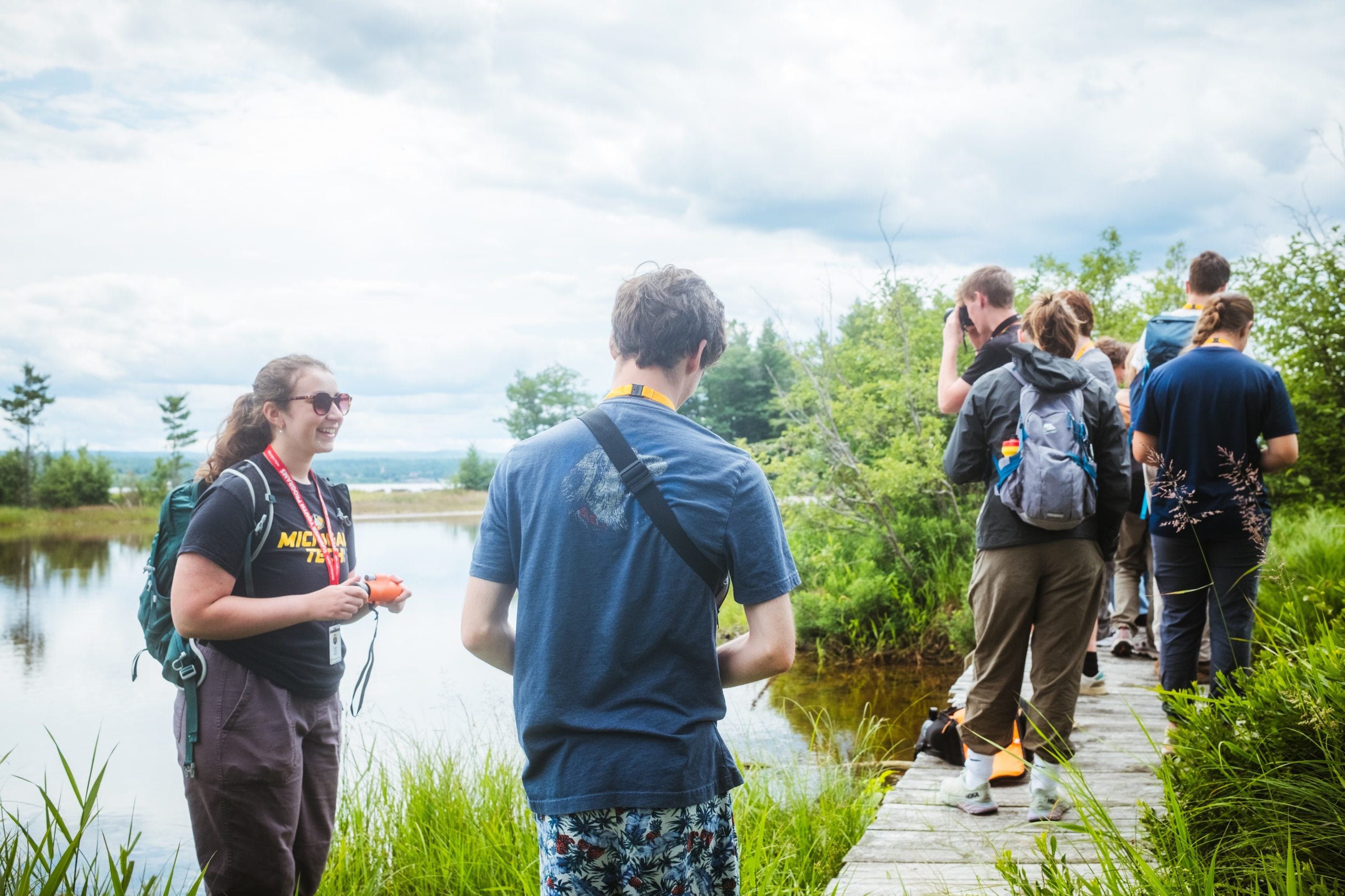
Sierra Williams stands outdoors wearing a Michigan Tech t-shirt, smiling as she guides SYP students along a boardwalk wetland trail.
Students in Sierra Williams’ Summer Youth Program courses don’t just learn about nature, they experience it during field trips that highlight the woods, water, and wonder of Michigan’s Upper Peninsula.

With the first week of Michigan Tech’s Summer Youth Programs (SYP) less than a month away, spots are filling fast—but registration is still open for many courses. In the College of Forest Resources and Environmental Science (CFRES), outreach coordinator Sierra Williams is looking forward to getting into the labs and out into the woods with middle- and high-school-aged students who are excited to learn about natural resources.

“Students are drawn to these courses due to the time they spend exploring the outdoors, while learning about how the ecosystems function around them through hands-on and field-based activities,” said Williams, whose background includes training in outdoor education.

Under her guidance, students will explore the wild and wonderful world of Michigan’s Upper Peninsula through field trips and projects.

Wildlife Students Gather Field Data with Flighty Participants

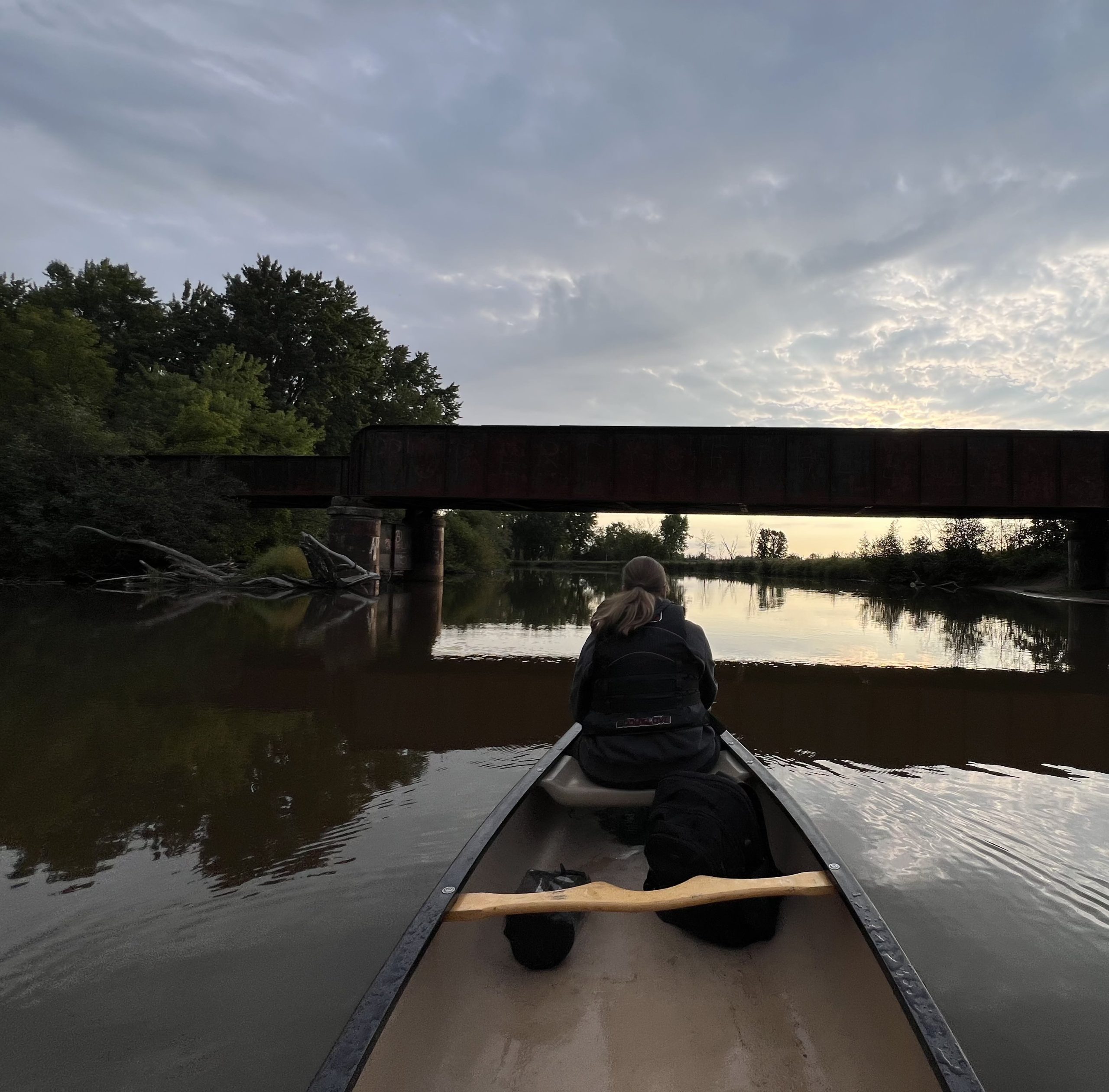
A point-of-view shot from the back of a canoe shows a student sitting at the front, facing away from the camera towards the sun rising over the Sturgeon River. The canoe is headed down the river towards a bridge. The river is lined on either side with trees and brush.
Wildlife ecology and conservation students perform real-world field research and data collection as part of their capstone projects. (Photo courtesy of Stacy Cotey)

Hands-on research and data collection are essential preparation for a career as a wildlife professional. The wildlife capstone course offered by the College of Forest Resources and Environmental Science (CFRES) guides students through the joys and challenges of collecting data on some of nature’s most elusive research subjects. One of this year’s teams focused on how the bat population uses forest gaps, while another examined how environmental factors relate to bird sightings.

Wildlife Students Close the Gap on Bat Data

Stacy Cotey, assistant teaching professor for CFRES, leads the course, which this academic year included Meghan Boelens, Derek Weide, Jacob Sutter, Graham Bishop and Grace Simpson, all wildlife ecology and conservation students. The Huskies took a closer look at how forest gaps and the way those open spaces are used can affect the bat population.

One Final Lesson: CFRES Grad Selected to Address Fellow Huskies at Mid-Year Commencement

Quinn Riordan stands in the UJ Noblet Forestry Building, smiling with her arms crossed in a confident pose.
Quinn Riordan looks forward to a career teaching others about environmental stewardship, thanks to her hands-on experiences at Michigan Tech.

When Quinn Riordan shares her farewell message as the 2025 student speaker for Midyear Commencement, she’ll also be continuing to prepare for her future.

“I’m pursuing a career in environmental education and research, which requires a lot of public speaking,” said Riordan. “What’s a better opportunity to get more practice than in front of my whole class?”

Riordan, who is earning her bachelor’s degree in applied ecology and environmental science, said she’s honored to be selected as speaker and grateful to College of Forest Resources and Environmental Science Dean David Flaspohler, who gave her the nudge she needed to throw her hat into the ring.

Ribbon-Cutting Ceremony Celebrates Preservation of Historic Ford Alberta Sawmill

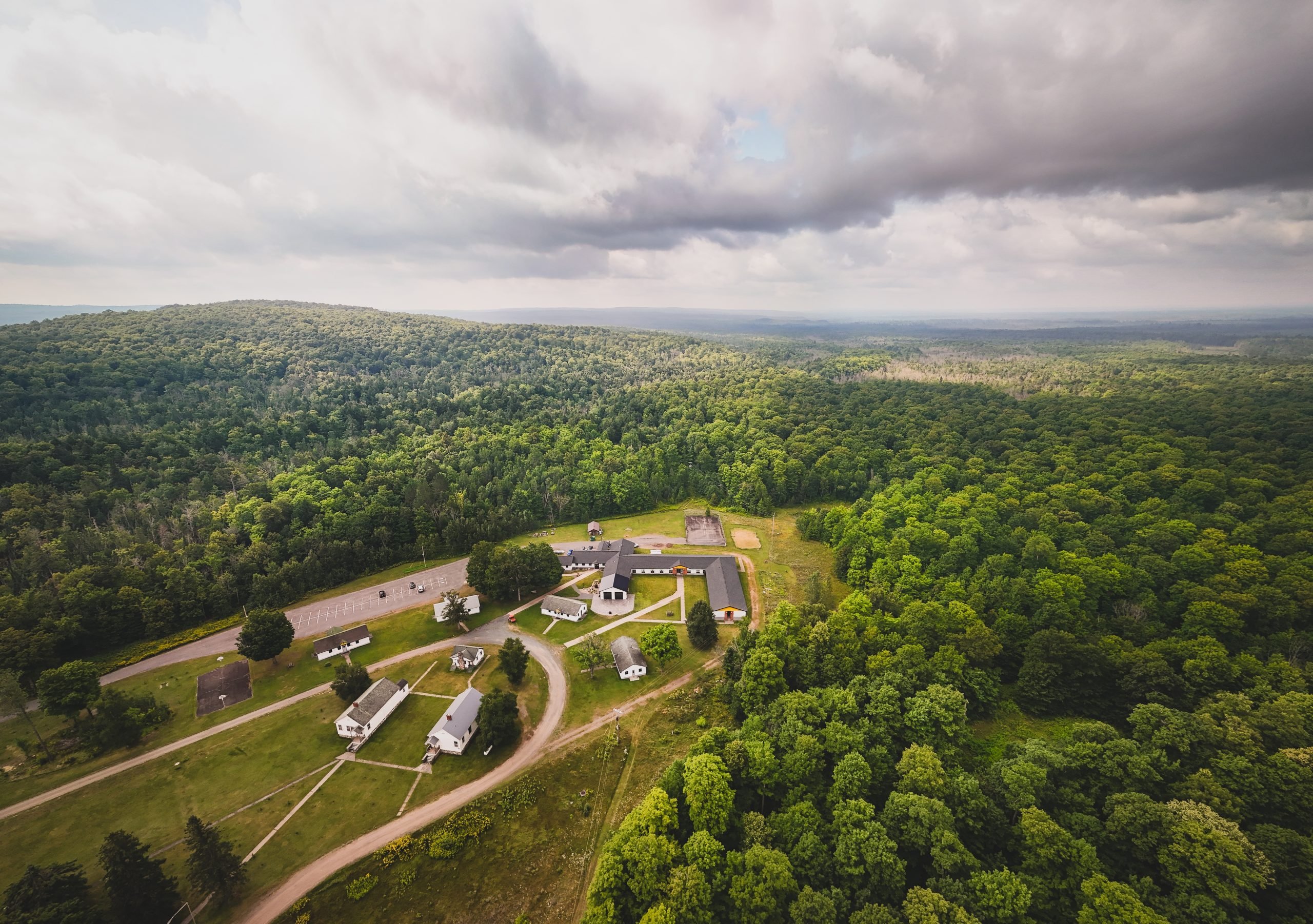
An aerial view of the Ford Center and surrounding forest.
The Alberta pump house will soon open to the public as the Historic Ford Welcome Center, part of ongoing preservation efforts that include the historic Ford Alberta sawmill.

Michigan Tech’s College of Forest Resources and Environmental Science is delighted to partner with the Baraga County Historical Society (BCHS) to open the Alberta pump house to the public as the Historic Ford Welcome Center and celebrate the preservation of the historic Ford Alberta sawmill. A ribbon-cutting ceremony will take place at the pump house at 3 p.m. on Friday, September 12, marking a significant achievement in preserving and honoring the location’s rich history.

“It’s really important that the Baraga County Historical Society has a physical presence on the Alberta campus,” said Mark Rudnicki, Ford Center and Forest director and a professor of practice in forest biomaterials. “They’ve played a leading role in fundraising for the sawmill restoration to date and I very much look forward to seeing their continued success.”

The Ford sawmill and pump house, located 10 miles south of L’Anse, Michigan on US Highway 41, has been an icon of Upper Peninsula Ford history since its establishment 90 years ago. BCHS said the opening of the pump house as the Historic Ford Welcome Center and the preservation project of the sawmill is pivotal to the legacy of Henry Ford in Baraga County and ensures that future generations can appreciate and learn from these important pieces of our history.

“We are proud to celebrate the preservation of the Ford Alberta sawmill and the opening of the Ford Welcome Center,” said Paula McElroy, president of BCHS. “This project, spearheaded by chairperson Mike DesRochers and his Historical Society committee, reflects our commitment to preserving our local history for present and future generations and contributing to the cultural enrichment of our community.”

The ceremony will feature remarks from Michigan Tech and BCHS leaders and special guest Todd Bryan, president of the Henry Ford Heritage Association. Attendees will have the opportunity to tour the former pump house as the new Historic Ford Welcome Center, now a satellite of the Baraga County Historical Museum, meet with preservation committee members to learn more about the history and significance of the site, and enjoy light refreshments.

Ford Center Sawmill Re-clad through Husky Innovation and Industry Partnership

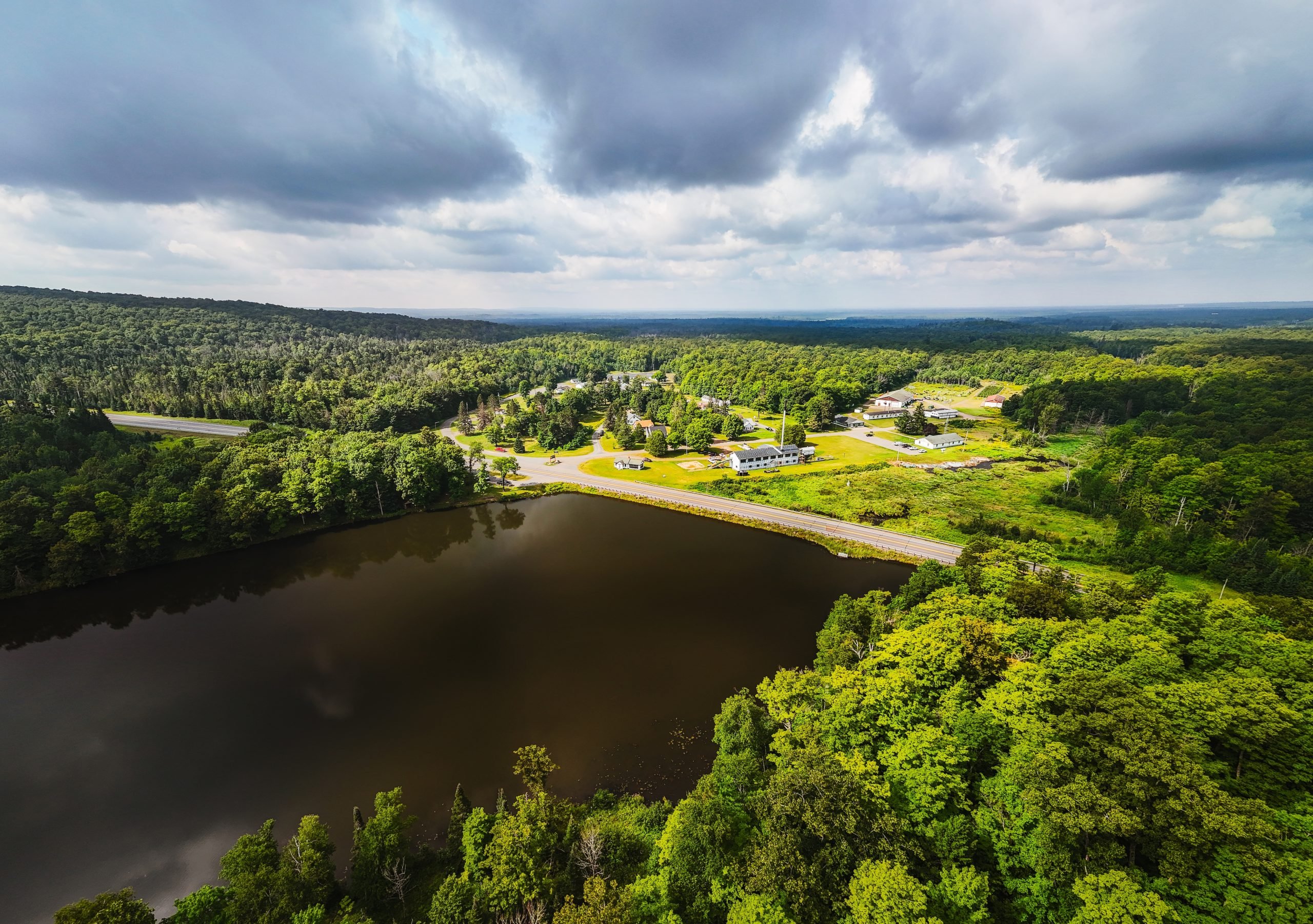
An aerial view of the Ford Center Sawmill and surrounding forest.
The Ford Center Sawmill is getting a fresh new look this summer with exterior siding from LP Building Solutions.

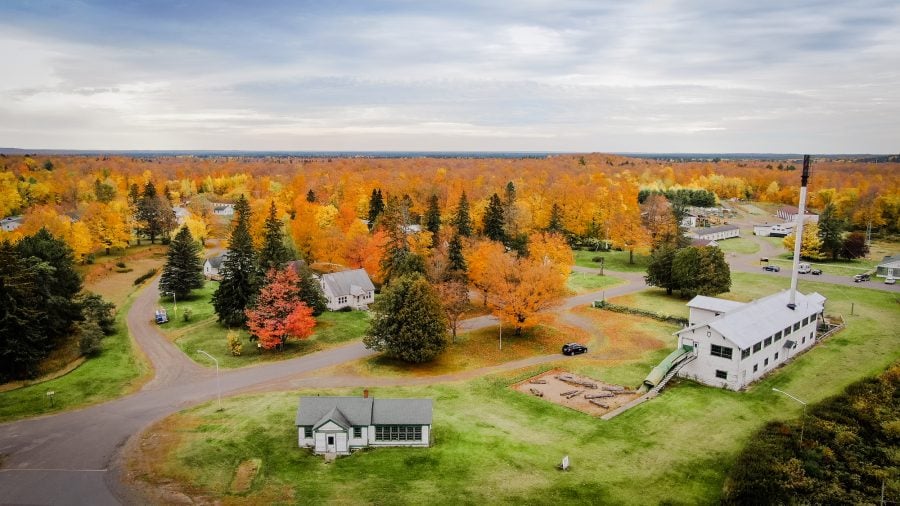
The historic Ford Center Sawmill at Michigan Tech’s Ford Forest and Center is getting a facelift. One of three original Ford-operated sawmills in Baraga County, Michigan, the circa 1936 sawmill is receiving all-new exterior siding from Louisiana Pacific Building Solutions (LP). 

College of Forest Resources and Environmental Science Dean David Flaspohler said the siding project, now underway and expected to be completed by the end of summer, is made possible through the generous support of LP, a local donor, and has a direct connection to Michigan Tech research.

CFRES Invites Community to Celebrate Expansion at Ford Center

Our Ford Center is known for its beautiful surroundings. Recent improvements have made the facility itself more beautiful.

Michigan Tech students, faculty, staff, and the greater community are invited to a ribbon-cutting to celebrate the completion of the new Danis room and patio area at the Ford Center. The event takes place at 3 p.m. Tuesday, October 1 at the Ford Center in Alberta.

Please pre-register to help organizers know how many to expect.

The patio was made possible through a brick paver campaign that wrapped up July 4. The College appreciates the contributions of alumni and friends who purchased commemorative engravings for the spacious and welcoming addition to the Center.

FISTA Basic Chainsaw Safety Training

Forest Industry Safety Training Alliance (FISTA) trainer Lee Schaumann, assisted by Jim Schmierer conducted a Level 1 Basic Chainsaw Safety training at the Ford Center facility at Alberta, 9 miles south of L’Anse, MI for Michigan Tech students and staff on Saturday, 11/12/11.  Participants learned about personal protective equipment, chainsaw maintenance, hazard awareness, safe chainsaw operation, proper notching, bore cutting, and tree felling techniques.   The afternoon was spent practicing what was learned in the field in the adjacent Research Forest.  Another training is planned for Spring semester 2012.

Jack Pine Thinning in Management Unit 22

A 70-acre jack pine stand on the Michigan Tech Research Forest in the Baraga Plains that includes direct seeding trials from the 1970s was thinned in 2011 to approximately 300 trees per acre (roughly 12’x12′ spacing) to improve vigor, reduce ladder fuels and fuel loads, and improve quality. The yield was 20 tons per acre on average and included mostly chips with a few loads of pulpwood. Samples were taken pre-treatment to develop nutrient profiles of the stand that can be monitored over time. Several Michigan Tech FERM students and a visiting group from Purdue toured the timber harvesting operation.

Capstone students complete Ford Forest inventory


Rebar marking a PSP plot centre on the Ford Forest
Permanent Sample Plot monument for inventory plots on the Ford Forest

This fall, students in FW4810 “Integrated Resources Management” (a.k.a. “capstone”) completed a wall-to-wall inventory on the Alberta and Baraga Plains tracts of the Ford Research Forest. Changes to capstone to emphasize landscape-scale assessments allowed for a unique opportunity to synergize teaching and management on our working forest. The data from the inventory will form the foundation of capstone management projects during the fall semester.

Faculty members Robert Froese and Mike Falkowski designed the inventory, and a total of 356 permanently monumented field plot centres were installed by graduate student Tim Gebuhr during August. A high-precision GPS coordinate was collected for each plot center, so the data from the inventory are also available for research applications that demand high-accuracy spatial referencing, such as remote sensing based models of forest inventory. Examples of such applications are the new Forest Biomass Information System for Michigan (http://fbis.mtu.edu).

For more information, contact Dr. Robert Froese, Director of Reserch Forests, at froese@mtu.edu.