
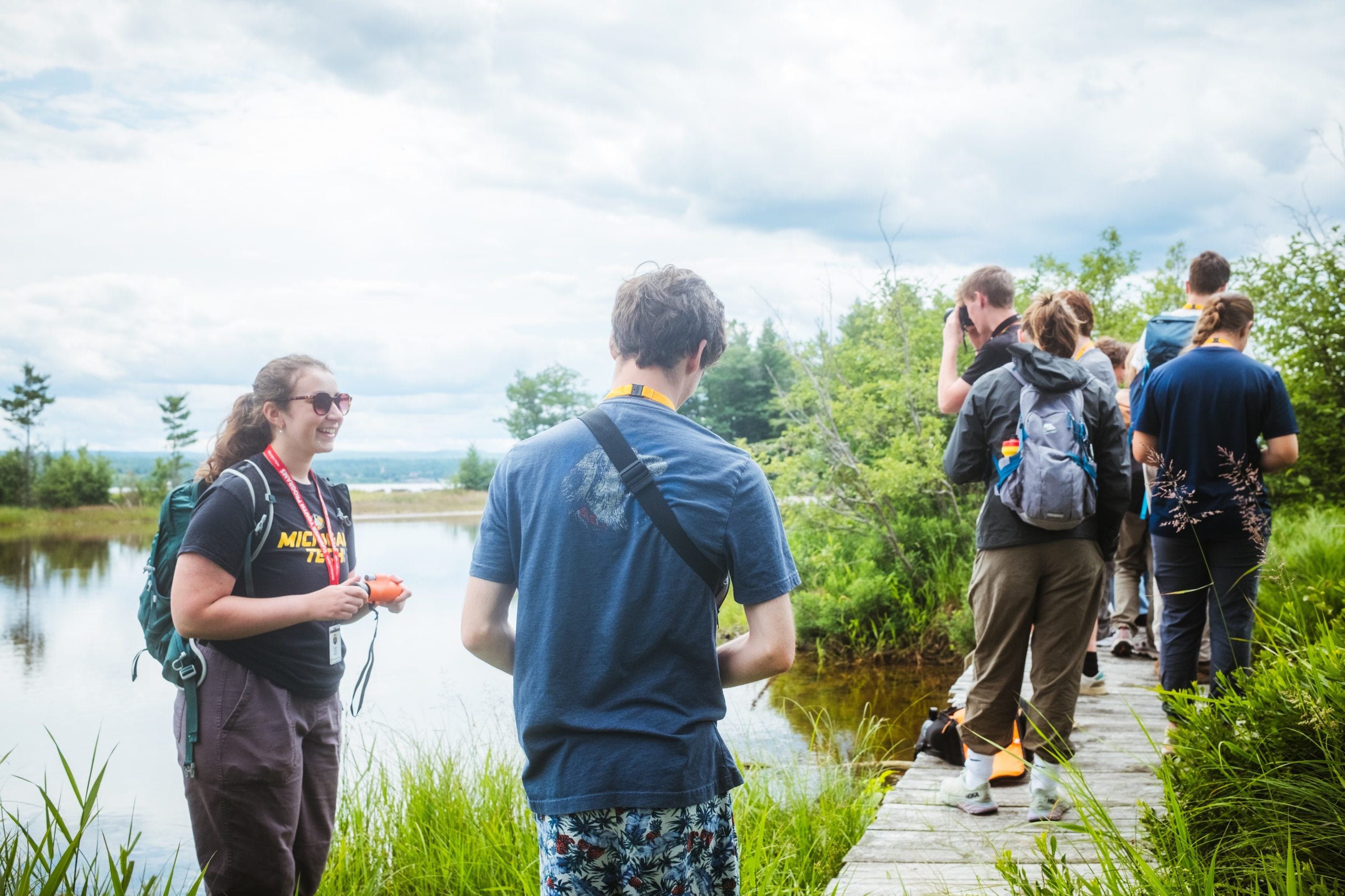
With the first week of Michigan Tech’s Summer Youth Programs (SYP) less than a month away, spots are filling fast—but registration is still open for many courses. In the College of Forest Resources and Environmental Science (CFRES), outreach coordinator Sierra Williams is looking forward to getting into the labs and out into the woods with middle- and high-school-aged students who are excited to learn about natural resources.
“Students are drawn to these courses due to the time they spend exploring the outdoors, while learning about how the ecosystems function around them through hands-on and field-based activities,” said Williams, whose background includes training in outdoor education.
Under her guidance, students will explore the wild and wonderful world of Michigan’s Upper Peninsula through field trips and projects.
In “Ecosystem Explorers: Introduction to Natural Resources,” students get their first look at forestry, wildlife ecology, and environmental science practices. Students who sign up for “Outdoor Field Skills in Natural Resources” step into the shoes of a natural resources professional and learn the practical skills needed to safely traverse the forest, streams, and lakes of the Keweenaw. The “Wildlife Ecology and Conservation” course teaches students how wildlife and ecosystems are studied, monitored, and managed.
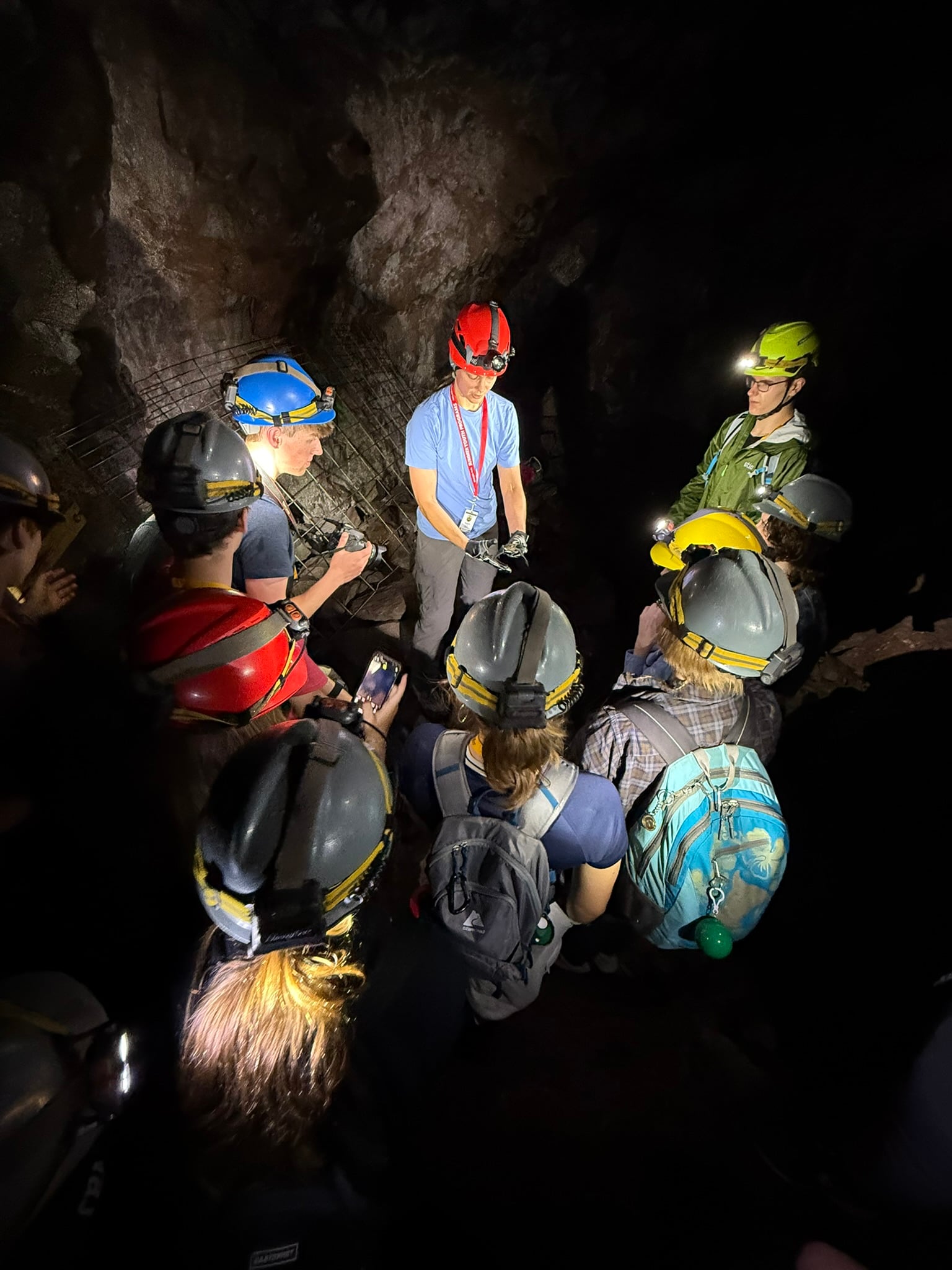
“My favorite memories from teaching SYP courses all stem from moments when participants got up close and personal with the natural world in a way that they had not experienced before,” said Williams. “Participants literally hugging trees while learning techniques on how to measure them, holding a fish for the first time while learning about aquatic ecosystem management, seeing bats taking a nap while in a mine shaft learning about wildlife ecology field work methods, or jumping on a peat bog for the first time while learning about wetland dynamics.”
Williams plans field and classroom activities to ensure students get the most out of their SYP experience, no matter what the weather brings. Last year, students got a closer look at what’s happening in Tech’s research forest, including the results of prescribed-burning experiments on jack pine trees.
Jack pine is a fire-adapted species, meaning fire is essential to its reproductive process. Although mature trees can be killed by fire, the species has evolved cones that open only in response to high heat. The jack pine site visited last year at the Ford Center and Forest gave SYP students insight into what happens when research doesn’t quite go as planned. In some areas, the heat from a prescribed burn became too intense, singeing the jack pine seeds instead of releasing them. Their observations sparked discussion about what could be done differently to improve the experiment.
Williams remembers a student telling her how “cool and interesting” it was to learn that some trees need fire to reproduce. During the classroom discussion about their observations, the student was also thinking about their own way to improve the experiment. “The thing I’d change would be to place the prescribed fire based on wind speed in the area—maybe one in a very windy area, one in a moderately windy area, and one in an area with little wind to see how that impacts the spread and the intensity of the fire,” they suggested.
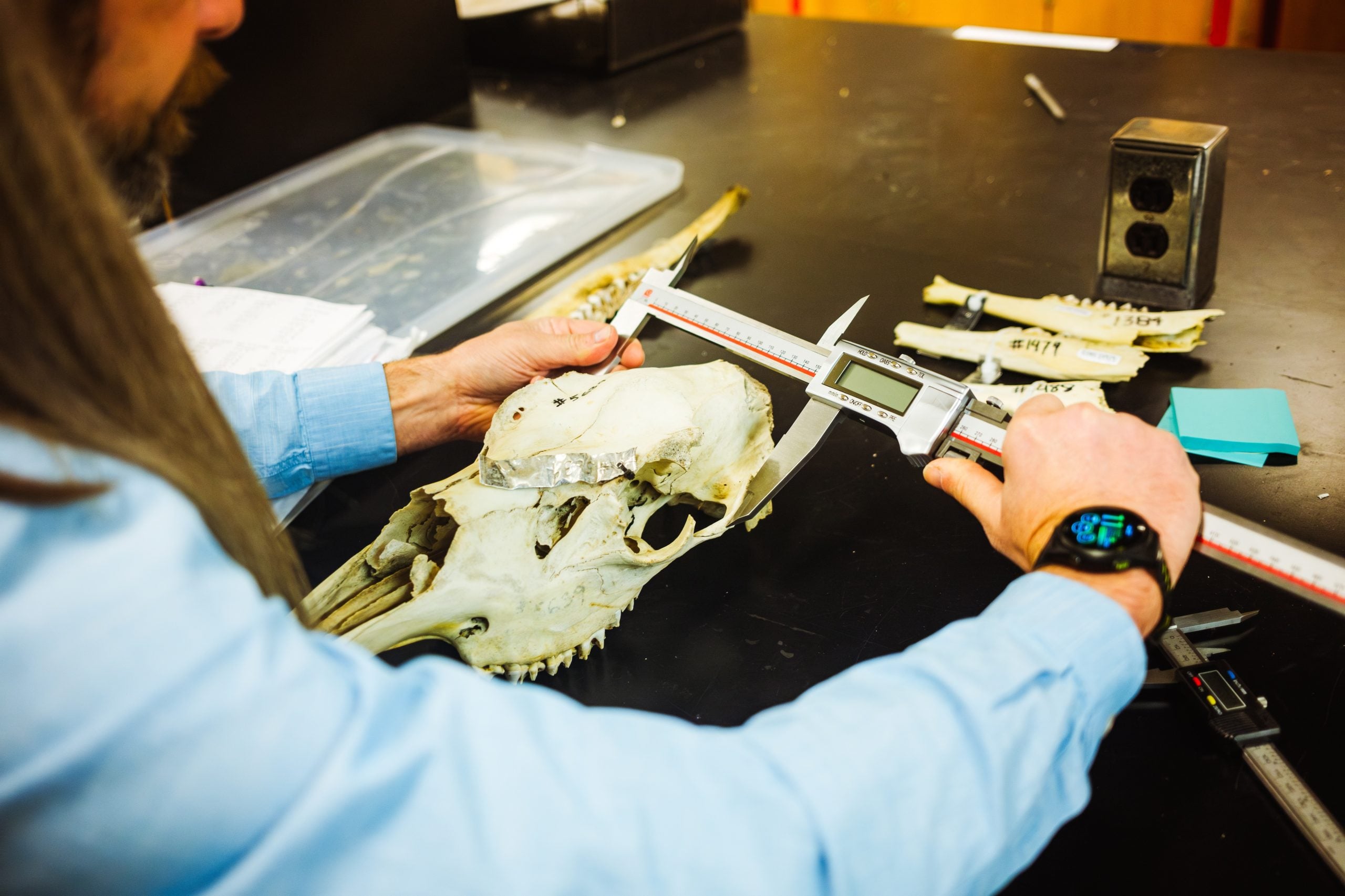
Another favorite CFRES SYP activity takes place indoors. Students examine moose bones to identify the age, sex, and cause of death of each animal. Since the bones have already been catalogued by CFRES researchers, students can check their work and present the accuracy of their findings to their fellow students. During past presentations, students gave their specimens nicknames like “Homer Moosen” and “Dominic,” and showed off their wildlife skills—accurately identifying their moose more times than not.
“Students will love these courses if they’re curious about the natural world, love experiential learning, and are interested in learning more about careers in the field of natural resources,” said Williams. “The most rewarding part about teaching SYP courses is getting to witness the light bulb moments that participants have when they begin to meet the intersection of passion, curiosity, and understanding for a particular subject.”
Since 1972, SYP has helped thousands of students learn more about themselves and their aspirations, fostering entrepreneurship and creativity. In addition to support from Michigan Tech faculty and staff, campers also get to know their SYP counselors, who are Tech students, many of whom attended SYP camp themselves. Browse the full course catalogue and get more info on the week-long experiences, including transportation, scholarships, and meals, on the Summer Youth Programs website.
About the College of Forest Resources and Environmental Science
Michigan Tech’s College of Forest Resources and Environmental Science brings students, faculty, and researchers together to measure, map, model, analyze, and deploy solutions. The College offers six bachelor’s degrees in forestry, wildlife ecology and conservation, applied ecology and environmental science, natural resources management, sustainable bioproducts, and environmental science and sustainability. We offer graduate degrees in applied ecology, forest ecology and management, forest molecular genetics and biotechnology, and forest science.
Questions? Contact us at forest@mtu.edu. Follow us on Facebook, Instagram, and LinkedIn for the latest happenings.