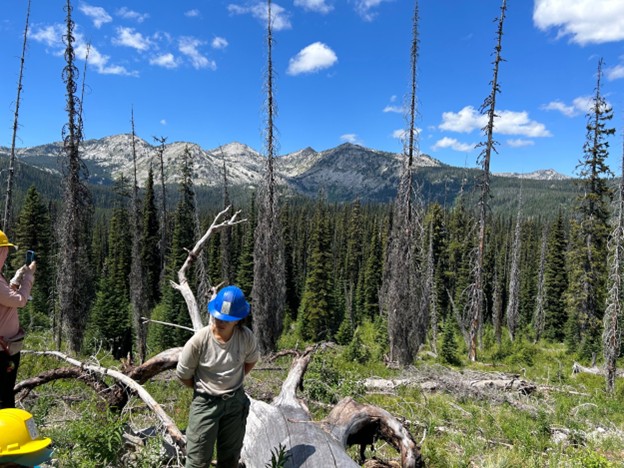
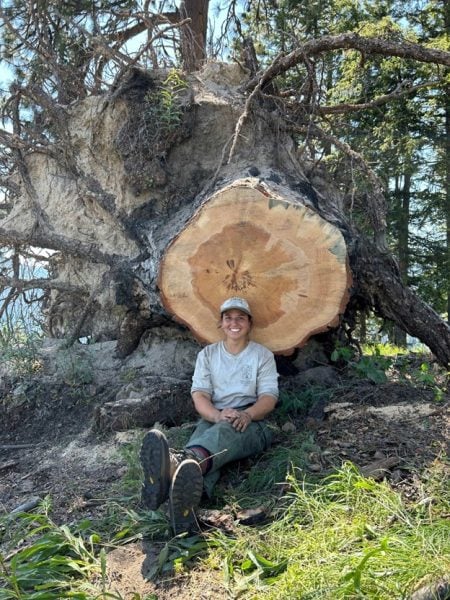
Raegan is a third-year forestry major who was recently invited to come back to as a Wilderness Explorer Technician. We talked with Raegan regarding her academic career, her roles, and what current students can do to find opportunities like this.
What helped you decide on your major in Forestry?
When I entered college, I had only a general idea of my goals. I knew I was drawn to environmental work with a hands-on, field-based focus. After my first year of coursework and an internship I realized I wanted to broaden my perspective of natural systems, so I added a Wildlife Ecology and Conservation major. Balancing both majors has been challenging but deeply rewarding. Because forestry and wildlife are so closely intertwined, studying both has strengthened my ability to integrate ideas across disciplines and better understand the complexity of the landscapes I work in.
What’s the best part regarding your program?
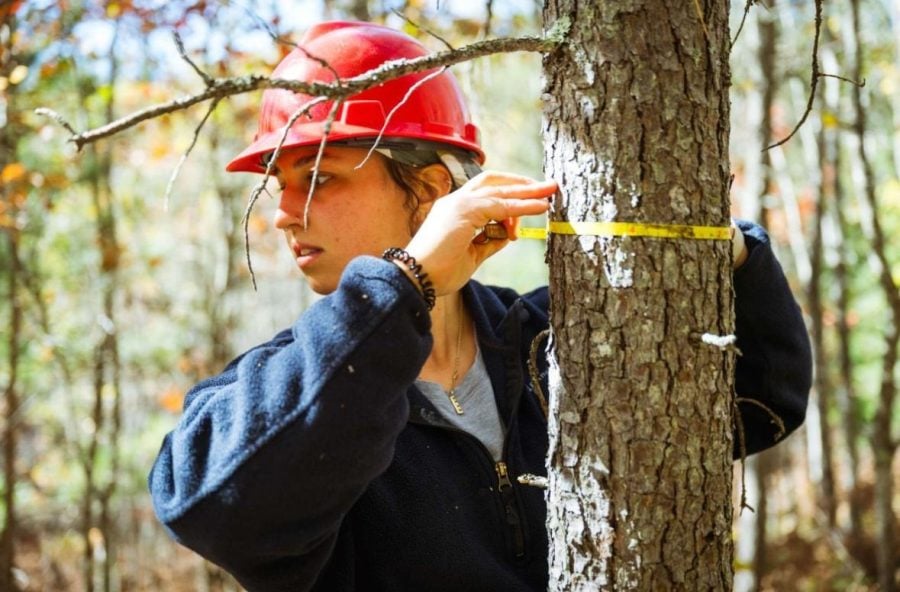
The hands-on, outdoors focus of my program is my favorite part and what truly sets it apart. The practical skills. I also value my peers immensely- everyone brings unique expertise, whether its birds, fungi, trees, or insects. Learning from one another has been just as valuable as learning from professors curriculum does an excellent job of preparing us for field-based careers and building a strong foundation in. The most challenging aspect for me is the technical skills, such as working with different computer programs like ArcGIS Pro and RStudio. While these tools are essential, I’m always happiest in the field. Fortunately, a lot of career paths in natural resources strike balance between field and office work.
What aspects of the position are you looking forward to?
I’m excited to work with a more specialized crew and continue developing my technical skills while taking on greater responsibilities. I am also eager for leadership and community outreach opportunities. Last summer, I co-led a trail crew of 15 high school students from Iowa, teaching both trail work fundamentals alongside ecological processes we observed in the backcountry. Teaching others strengthened my own understanding and reinforced my passion for this work, and I am excited to gain more backcountry leadership experience.
What helped you find the Wilderness Explorer Technician position?
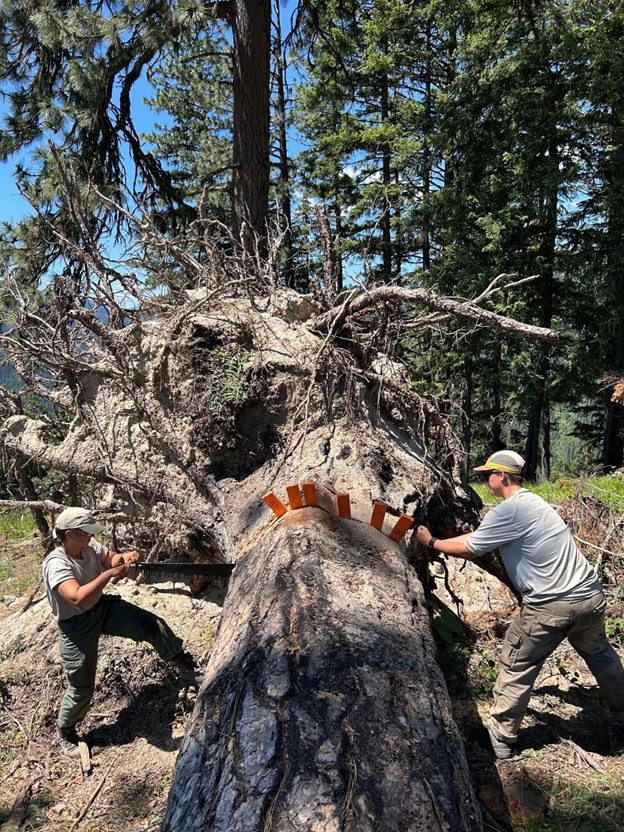
The Wilderness Trails Technician (WTT) position is offered by the Selway-Bitterroot Frank Church (SBFC) Foundation. SBFC is a nonprofit based in Missoula, Montana that maintains trails in the Selway-Bitterroot and Frank Church River of No Return Wilderness areas. Last summer, I worked with SBFC as a Wilderness Ranger Fellow (WRF), an entry-level role focused on teaching trail work fundamentals. I quickly fell in love with the work, and was offered the opportunity to work on a more specialized crew this summer.
Spending weeks at a time backpacking through wilderness areas has allowed me to know the land intimately, not just as someone who loves our public lands, but as a forester, ecologist, and steward of the land. My education has deepened my curiosity and strengthened my connection to these landscapes.
What advice do you have for other students pursuing forestry or similar degrees?
The natural resources field is full of passionate, curious and dedicated people. While the path forward can feel uncertain, especially at the federal level, don’t let that uncertainty become a deterrent. Let it serve as a reminder of how vital this work is. Let those challenges strengthen your resolve, deepen your connection to the land, and motivate you to advocate for public lands. Now more than ever, these landscapes need informed, dedicated stewards, and pursuing this work is both a responsibility and a privilege.