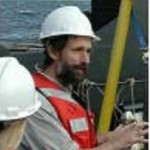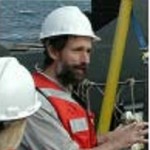
Environmental Engineering PhD candidate, Xinyu Ye, was awarded the Best Student Poster Presentation at the 20th Conference on Air-Sea Interaction in Madison held August 15-19, 2016. The conference was hosted by the American Meteorological Society (AMS).
KBJR-TV Channel 6 (NBC) in Duluth broadcast a story about students from Michigan Tech’s Summer Youth Program Rail and Intermodal Transportation Institute visiting rail yards in Superior, Wisconsin.
From Tech Today.
Michigan Tech students get an up close look at trains in Superior
Today, students from throughout the country enrolled in Michigan Tech’s Summer Youth Program’s Rail and Intermodel Transportation program were in Superior to get an up close look at Railroad Transportation.
Read more and watch the video at KBJR-TV Channel 6, by Anthony Matt.


Cladophora is a filamentous, green alga that grows to nuisance levels in areas of the Great Lakes receiving phosphorus enrichment. Anika Kuczynski, a Ph.D. candidate in environmental engineering working under Dr. Marty Auer, recently received an Editor’s Choice Award for her paper entitled, “The Cladophora resurgence in Lake Ontario: Characterization and implications for management” published in the Canadian Journal of Fisheries and Aquatic Sciences. Anika is back on Lake Ontario this summer seeking engineering solutions to this problem plaguing the Great Toronto waterfront. Anika was accompanied by environmental engineering undergrads Hayden Henderson and Michelle Nitz on her most recent trip to Lake Ontario in July. Results from the field and laboratory studies performed there will be input to a 3D model developed by Anika, Chenfu Huang (also a Ph.D. student in environmental engineering) and CEE’s Dr. Pengfei Xue to test management strategies to reduce nuisance growth of the alga.
Assistant professor Daisuke Minakata and a research engineer/laboratory director David Perram outreached high school students from Lake Linden-Hubble High School on June 1st, 2016. They provided an overview of “Cleaning Water” project, giving high school students hands-on experience in ‘ppm’ and ‘ppb’ concentrations level of chemical contaminants in water and an introduction to advanced water treatment technologies in the CEE department process lab. The outreach activity was a part of Science, Technology, Engineering, Math (STEM) CAREER Tour with funding support from the Lake Superior Stewardship Initiative and coordinated by the MTU Center for Science & Environmental Outreach and Western U.P, Center for Science, Math and Environmental Education. Joan Chadde in CEE coordinated the overall activity.
See schedule:
LLH EnvCareer Tour Schedule 06.01.16 FINAL
For more information, contact:
MTU Center for Science & Environmental Outreach
jchadde@mtu.edu or 906-487-3341
Made possible with funding from the Lake Superior Stewardship Initiative and coordinated by the MTU Center for Science & Environmental Outreach and Western U.P. Center for Science, Math and Environmental Education.
Civil and Structural Engineer, a web-based newsletter, published an article about the teams heading to the national Steel Bridge Competition this week in Utah. Michigan Tech’s team, which took first place in the regional competition, is among them. See the article here.
Senior Design Colloquium
The Civil and Environmental Engineering Department is pleased to invite the University community to attend the spring 2016 senior design team presentations. This semester students have undertaken a wide range of interesting projects to fulfill the Department’s design project requirement. Refreshments will be served.
April 29, 2016
8:30 am – 12:00 pm
Presentations will be in Chem Sci 101 & 102

An article titled “The Cladophora Resurgence in Lake Ontario: Characterization and Implications for Management” by Anika Kuczynski, Martin T. Auer, Colin N. Brooks, and Amanda G. Grimm was recently accepted as one of the “Editor’s choice” papers for 2016 by the Canadian Journal of Fisheries and Aquatic Sciences (CJFAS). The NRC Research Press uses this as a means of highlighting articles of “particularly high caliber and topical importance.” The article will be published as an Open Article (no CJFAS subscription required) for increased visibility. Please visit http://www.nrcresearchpress.com/journal/cjfas.
The American Society of Civil Engineers (ASCE) has announced that Steven C. Chapra, Rasika K. Gawde, Martin T. Auer, Rakesh K. Gelda and Noel R. Urban will receive the Society’s 2016 Horner Award for their paper entitled, Sed2K: Modeling lake sediment diagenesis in a management context, published in the
Journal of Environmental Engineering in 2015. The Horner Award is made annually, recognizing the paper, published in an ASCE journal making the most valuable contribution to the environmental engineering profession. The award-winning paper is based on a mathematical model (Sed2K) developed by Dr. Chapra, the Louis Berger Chair in Civil and Environmental Engineering at Tufts University. Application and testing of the model was led by Rasika K. Gawde who recently received the Ph.D. in Environmental Engineering from Michigan Tech and is now a post-doctoral fellow at the Horn Point Laboratory of the University of Maryland Center for Environmental Science. Rakesh Gelda, also received the doctorate in Environmental Engineering from Michigan Tech and is presently a Research Scientist with the Bureau of Water Supply, Water Quality Science & Research at the New York City Department of Environmental Protection. Drs. Auer and Urban are faculty in the Michigan Tech Department of Civil and Environmental Engineering.

Helen Amiri, a Peace Corps Master’s International student in Environmental Engineering at Michigan Tech, is pursuing her childhood dream by serving in Vanuatu as a hygiene education and water sanitation volunteer. Helen is one of many students at Michigan Tech pursuing a PCMI degree, which allows students to earn a master’s degree while also serving in the Peace Corps. Michigan Tech’s program is the largest in the nation and our students have served in 52 countries around the world.
Toward New Age Modeling and Management of Nuisance Cladophora in the Great Lakes
Monday, November 2, 2015
3 PM
202 Great Lakes Research Cener
Anika Kuczynski, Ph.D. Candidate, Department of Civil & Environmental Engineering, Michigan Tech
Abstract:
A native to the Great Lakes, Cladophora glomerata is a filamentous, green alga that has proliferated and caused nuisance conditions especially in the lower Great Lakes, both historically and in the 21st century. Depending on currents affected by wind speed and direction, algal mats may clog cooling and drinking water intakes or wash up on beaches. The decaying plant material produces offensive odors and provides favorable environmental conditions for hosting pathogens. While Cladophora was not the target for P abatement, which began in the late 1970s, its biomass levels appeared to decrease by the early to mid-1980s in Lake Ontario. With the return of nuisance conditions since the zebra and quagga mussel invasion and an altered system at hand, current field monitoring and modeling efforts are necessary to establish a new baseline understanding and appropriate management approaches in this new age. The objectives of this dissertation will be 1) to establish that there has, in fact, been a Cladophora resurgence in the Great Lakes and to quantitatively characterize that resurgence and management implications, 2) to define a phosphorus standard or substance objective for Cladophora management in the Great Lakes; and to demonstrate the application of linked hydrodynamic-phosphorus-Cladophora modeling to define management strategies in two case studies, 3) the Ajax, ON nearshore of Lake Ontario and 4) the eastern basin of Lake Erie.