
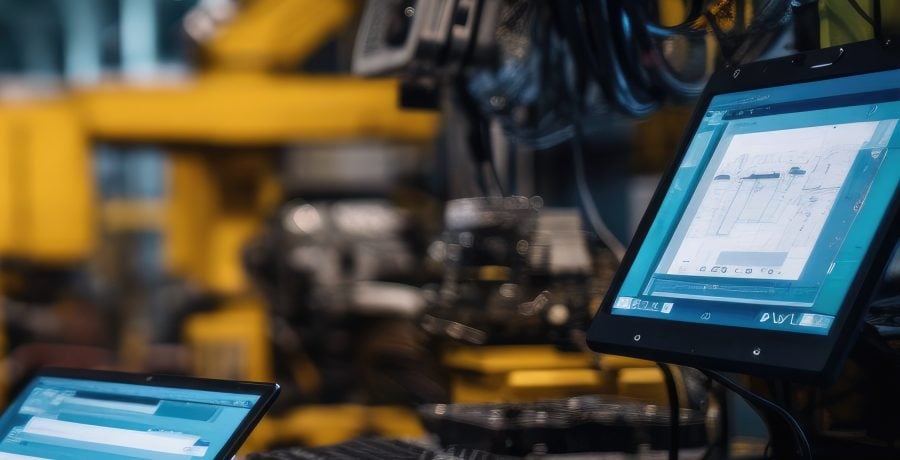
Production delays. Quality issues. Scrap and rework. Downtime. Rising costs. Manufacturers deal with these problems every day and solving them takes a lot of thought and much more than quick fixes.
These problems require careful analysis, practical judgment, and a strong understanding of how production systems actually work under real-world conditions.
Increasingly, they also require engineers who can work across data, processes, automation, AI, and smart manufacturing systems as these become more central to production.
Therein lies the value of manufacturing engineering, a field sitting at the intersection of design, production, systems thinking, and continuous improvement. And it is also why online manufacturing engineering programs continue to matter for working professionals who want to deepen their technical and technological knowledge while still staying engaged in industry.
Michigan Tech’s online MS and PhD in Manufacturing Engineering are built around that applied need. They focus on manufacturing competitiveness and Industry 4.0-related challenges such as smart manufacturing, modeling, simulation, sustainability, additive manufacturing, and advanced materials.
Benefit From A Curriculum Built Around Real Manufacturing Challenges.
Michigan Tech’s online manufacturing engineering programs, rooted in Automation Alley, are structured around the Four Pillars of Manufacturing Knowledge: materials and manufacturing processes; product, tooling, and assembly engineering; manufacturing systems and operations; and manufacturing competitiveness.
That framework helps students build both technical depth and systems-level perspective. It also reflects the reality that manufacturing success depends on how well people, processes, equipment, and information work together.
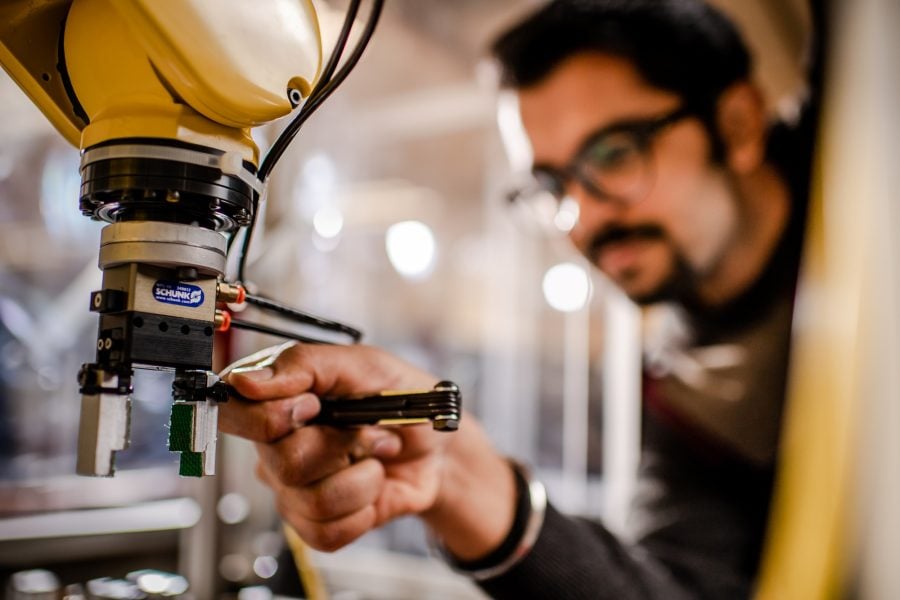
Or to put it another way, this coursework matters because manufacturing problems rarely stay in one lane. That is, a quality problem may begin with tooling. A delay on the line may actually come from poor systems integration. A push toward smarter production may require stronger knowledge of cyber-physical systems, simulation, maintenance, or data-driven decision-making.
For example, a manufacturer may face equipment downtime when an aging CNC machine unexpectedly goes offline. Then, production gets behind schedule, contributing to missed deadlines. At the same time, the company may see inconsistent quality because replacement parts are produced on a backup machine with slightly different tolerances. To complicate matters, if there are not enough trained workers available to keep both machines running smoothly, labor constraints can make the situation worse. The result is often process instability, delayed orders, and higher costs from overtime, scrap, rework, and expedited shipping.
For these pressures and challenges, advanced study can become especially useful. A strong graduate program in manufacturing engineering should help engineers move beyond patching symptoms to improving the broader system. And advanced education matters even more as manufacturing becomes more connected, automated, and data-driven. That is, the same systems thinking that helps engineers solve production problems today also prepares them to work in smart manufacturing environments shaped by AI, automation, and real-time decision-making
AI and Smart Manufacturing Are Reshaping the Factory Floor.
That is, AI, automation, and smart manufacturing are no longer side topics in manufacturing. They are becoming part of how competitive production systems actually operate.
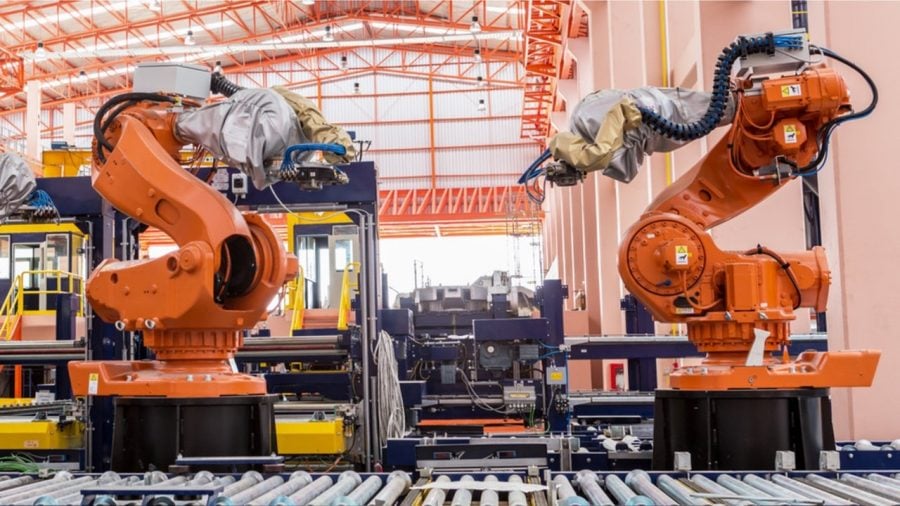
In practical terms, smart manufacturing means using data, connected systems, automation, modeling, and intelligent decision-making tools to make production more efficient, responsive, and reliable.
It is not simply about replacing people with machines.
It is about helping manufacturers reduce downtime, improve quality, respond faster to disruptions, and make better decisions across the production process.
This shift matters because many of the pressures facing manufacturers today cannot be solved by labor alone. Reshoring, supply-chain volatility, labor shortages, cost pressure, and demands for better quality all push companies toward smarter systems. A manufacturer trying to bring production back to the United States, for example, also has to think about labor costs, operational efficiency, and resilience while staying competitive in a fast-changing operating environment. In that environment, investments in AI, robotics, and automation become less of a luxury and more of a strategic necessity.
You can already see this change across several industries. Semiconductor firms, automakers, food and beverage producers, and pharmaceutical manufacturers are investing heavily in AI-enabled automation, digital infrastructure, predictive maintenance, robotics, and advanced process control. And in automotive manufacturing, especially, robots continue to handle tasks such as welding, painting, picking, and palletizing because these jobs benefit from consistency, speed, and safety.
But manufacturers still rely on human judgment for more intricate work and for the broader coordination of systems. Smart manufacturing, then, is not just automation for its own sake. It is about the integration of people, machines, and information.
Smart Manufacturing Requires Engineers With Advanced Skills.
Smart manufacturing is one main reason that advanced education matters so much right now. As factories become more connected and data-rich, the need grows for engineers who understand not only machines and materials, but also cyber-physical systems, modeling and simulation, quality analytics, sustainability, and systems integration. A smart factory still needs people who can ask the right questions: Where is the bottleneck really coming from? What does the data actually show? Will a new automation tool remove waste, or just shift it elsewhere? And, as usual, the age-old question: How can we do more with less?
Michigan Tech’s online manufacturing engineering programs fit this moment well because they already emphasize many of the areas shaping Industry 4.0: smart manufacturing, modeling and simulation, additive manufacturing, sustainability, advanced materials, and manufacturing competitiveness.
In other words, the programs are not focused only on traditional production methods. They are designed to help professionals understand how digital tools and advanced systems can improve real manufacturing performance. That preparation is valuable whether someone is working on process improvement, quality engineering, automation, continuous improvement, or broader production strategy. Just as important, smart manufacturing depends on workforce development.
That is, companies do not become more competitive simply by purchasing new robots, sensors, or AI tools. They also need professionals who can implement those technologies thoughtfully, connect them to operations, and lead change across teams.
“However smart our factories become, the human workforce will always be central to their success.” — World Economic Forum
Keep Working While You Earn Credentials.
These programs are also flexible, with multiple pathways. They can also fit students from a range of engineering-related backgrounds—not only those already trained in manufacturing or mechanical engineering. There is also an online Manufacturing Engineering certificate for professionals who want focused graduate-level study before committing to a full degree.
For professionals already working in manufacturing, these programs create room to connect coursework to real workplace challenges, whether they involve process improvement, safety, additive manufacturing, smart systems, or quality performance.
Learn More About Online Manufacturing Engineering Programs for Today’s Production Demands.
The future of manufacturing will not be shaped by technology alone, but by professionals who know how to put it to work. That is why graduate study in manufacturing engineering can be such a practical investment for working professionals. It helps build the technical depth and systems perspective needed to address current production problems while preparing for the next generation of manufacturing challenges.
Attend our live webinar, which offers a low-lift way to explore Michigan Tech’s online manufacturing programs and choose the educational pathway that is right for you. You’ll hear directly from program experts, receive useful admissions information, and get your questions answered live.
Webinar Details
- Location: Zoom
- Date: Thursday, April 16, 2026
- Time: 11:30 a.m. (ET)