Tag: smart manufacturing

MTU’s Online Manufacturing Engineering Programs for Today’s Industry Challenges

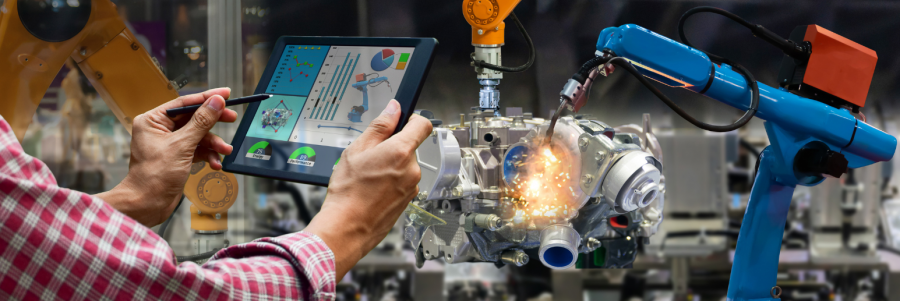
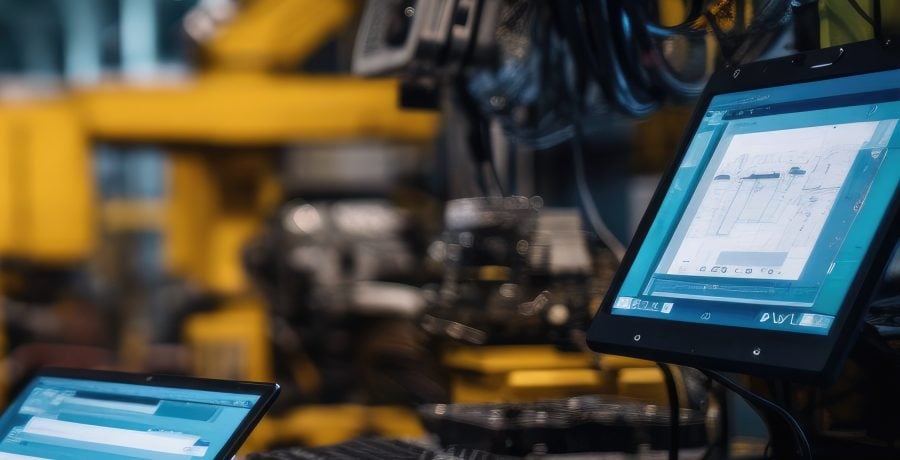
A computer and a laptop in a factory setting.

Production delays. Quality issues. Scrap and rework. Downtime. Rising costs. Manufacturers deal with these problems every day and solving them takes a lot of thought and much more than quick fixes.

These problems require careful analysis, practical judgment, and a strong understanding of how production systems actually work under real-world conditions.

Increasingly, they also require engineers who can work across data, processes, automation, AI, and smart manufacturing systems as these become more central to production.

Therein lies the value of manufacturing engineering, a field sitting at the intersection of design, production, systems thinking, and continuous improvement. And it is also why online manufacturing engineering programs continue to matter for working professionals who want to deepen their technical and technological knowledge while still staying engaged in industry.

Michigan Tech’s online MS and PhD in Manufacturing Engineering are built around that applied need. They focus on manufacturing competitiveness and Industry 4.0-related challenges such as smart manufacturing, modeling, simulation, sustainability, additive manufacturing, and advanced materials.

Benefit From A Curriculum Built Around Real Manufacturing Challenges.

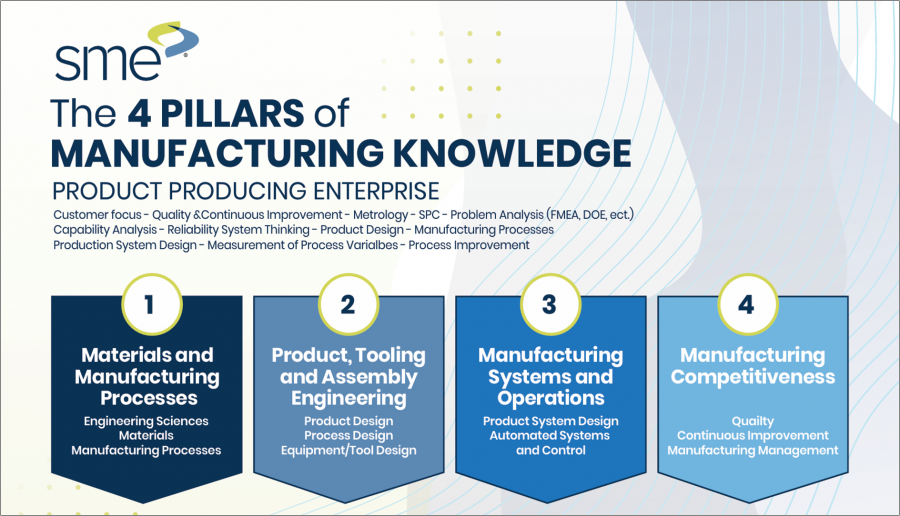
Michigan Tech’s online manufacturing engineering programs, rooted in Automation Alley, are structured around the Four Pillars of Manufacturing Knowledge: materials and manufacturing processes; product, tooling, and assembly engineering; manufacturing systems and operations; and manufacturing competitiveness.

That framework helps students build both technical depth and systems-level perspective. It also reflects the reality that manufacturing success depends on how well people, processes, equipment, and information work together.
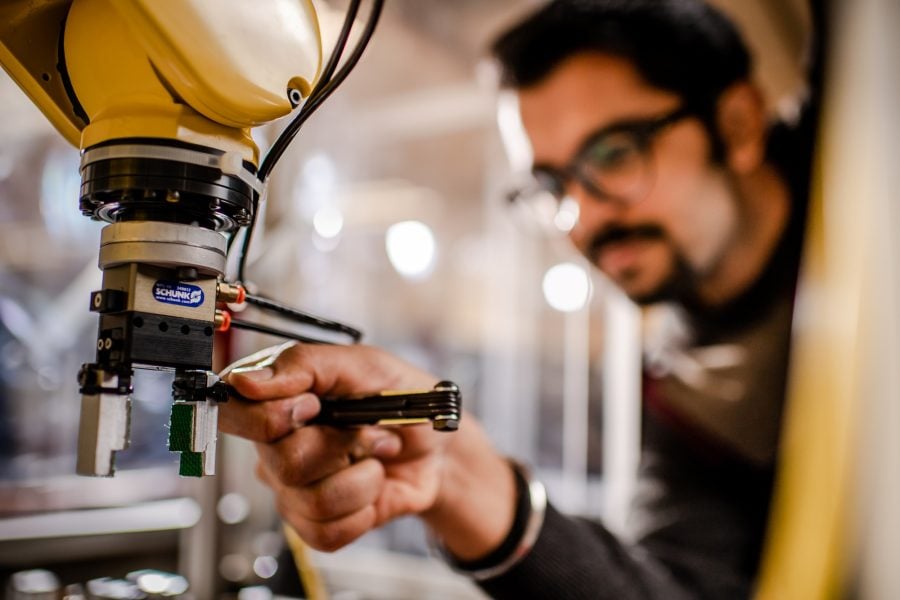
Manufacturing engineering professional working on a machine in a factory setting.

Or to put it another way, this coursework matters because manufacturing problems rarely stay in one lane. That is, a quality problem may begin with tooling. A delay on the line may actually come from poor systems integration. A push toward smarter production may require stronger knowledge of cyber-physical systems, simulation, maintenance, or data-driven decision-making.

For example, a manufacturer may face equipment downtime when an aging CNC machine unexpectedly goes offline. Then, production gets behind schedule, contributing to missed deadlines. At the same time, the company may see inconsistent quality because replacement parts are produced on a backup machine with slightly different tolerances. To complicate matters, if there are not enough trained workers available to keep both machines running smoothly, labor constraints can make the situation worse. The result is often process instability, delayed orders, and higher costs from overtime, scrap, rework, and expedited shipping.

For these pressures and challenges, advanced study can become especially useful. A strong graduate program in manufacturing engineering should help engineers move beyond patching symptoms to improving the broader system. And advanced education matters even more as manufacturing becomes more connected, automated, and data-driven. That is, the same systems thinking that helps engineers solve production problems today also prepares them to work in smart manufacturing environments shaped by AI, automation, and real-time decision-making

AI and Smart Manufacturing Are Reshaping the Factory Floor.

That is, AI, automation, and smart manufacturing are no longer side topics in manufacturing. They are becoming part of how competitive production systems actually operate.
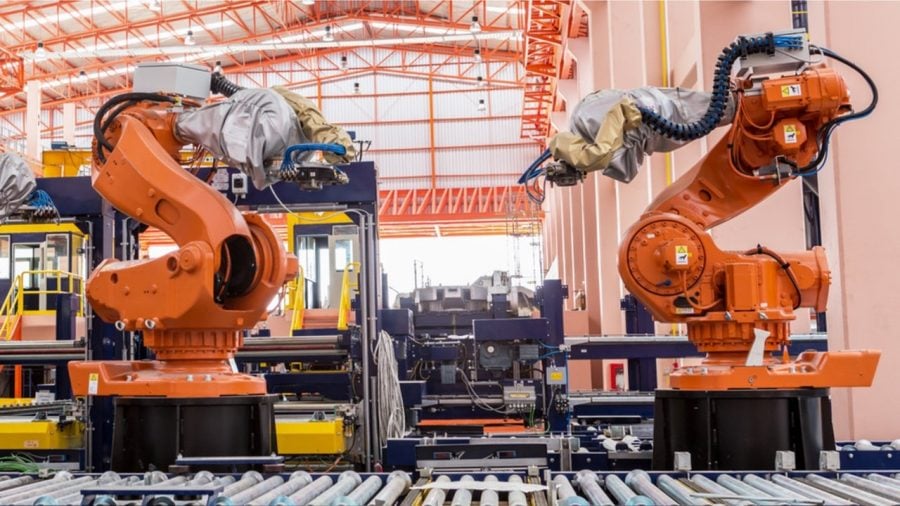
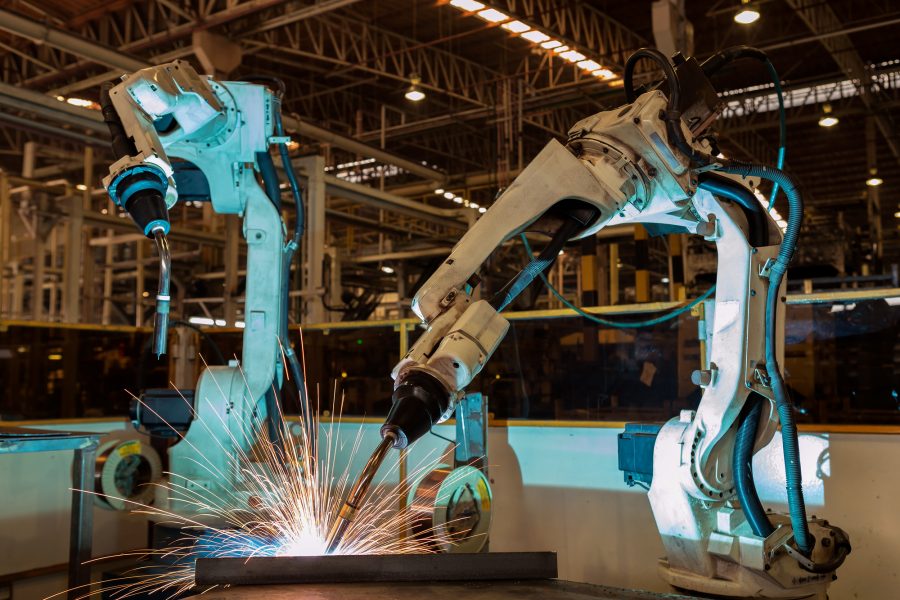
Two robot arms in a modern manufacturing setting.

In practical terms, smart manufacturing means using data, connected systems, automation, modeling, and intelligent decision-making tools to make production more efficient, responsive, and reliable.

It is not simply about replacing people with machines.

It is about helping manufacturers reduce downtime, improve quality, respond faster to disruptions, and make better decisions across the production process.

This shift matters because many of the pressures facing manufacturers today cannot be solved by labor alone. Reshoring, supply-chain volatility, labor shortages, cost pressure, and demands for better quality all push companies toward smarter systems. A manufacturer trying to bring production back to the United States, for example, also has to think about labor costs, operational efficiency, and resilience while staying competitive in a fast-changing operating environment. In that environment, investments in AI, robotics, and automation become less of a luxury and more of a strategic necessity.

You can already see this change across several industries. Semiconductor firms, automakers, food and beverage producers, and pharmaceutical manufacturers are investing heavily in AI-enabled automation, digital infrastructure, predictive maintenance, robotics, and advanced process control. And in automotive manufacturing, especially, robots continue to handle tasks such as welding, painting, picking, and palletizing because these jobs benefit from consistency, speed, and safety.

But manufacturers still rely on human judgment for more intricate work and for the broader coordination of systems. Smart manufacturing, then, is not just automation for its own sake. It is about the integration of people, machines, and information.

Smart Manufacturing Requires Engineers With Advanced Skills.

Smart manufacturing is one main reason that advanced education matters so much right now. As factories become more connected and data-rich, the need grows for engineers who understand not only machines and materials, but also cyber-physical systems, modeling and simulation, quality analytics, sustainability, and systems integration. A smart factory still needs people who can ask the right questions: Where is the bottleneck really coming from? What does the data actually show? Will a new automation tool remove waste, or just shift it elsewhere? And, as usual, the age-old question: How can we do more with less?

Michigan Tech’s online manufacturing engineering programs fit this moment well because they already emphasize many of the areas shaping Industry 4.0: smart manufacturing, modeling and simulation, additive manufacturing, sustainability, advanced materials, and manufacturing competitiveness.

In other words, the programs are not focused only on traditional production methods. They are designed to help professionals understand how digital tools and advanced systems can improve real manufacturing performance. That preparation is valuable whether someone is working on process improvement, quality engineering, automation, continuous improvement, or broader production strategy. Just as important, smart manufacturing depends on workforce development.

That is, companies do not become more competitive simply by purchasing new robots, sensors, or AI tools. They also need professionals who can implement those technologies thoughtfully, connect them to operations, and lead change across teams.

“However smart our factories become, the human workforce will always be central to their success.” — World Economic Forum

Keep Working While You Earn Credentials.

These programs are also flexible, with multiple pathways. They can also fit students from a range of engineering-related backgrounds—not only those already trained in manufacturing or mechanical engineering. There is also an online Manufacturing Engineering certificate for professionals who want focused graduate-level study before committing to a full degree.

For professionals already working in manufacturing, these programs create room to connect coursework to real workplace challenges, whether they involve process improvement, safety, additive manufacturing, smart systems, or quality performance.

Learn More About Online Manufacturing Engineering Programs for Today’s Production Demands.

The future of manufacturing will not be shaped by technology alone, but by professionals who know how to put it to work. That is why graduate study in manufacturing engineering can be such a practical investment for working professionals. It helps build the technical depth and systems perspective needed to address current production problems while preparing for the next generation of manufacturing challenges.

Attend our live webinar, which offers a low-lift way to explore Michigan Tech’s online manufacturing programs and choose the educational pathway that is right for you. You’ll hear directly from program experts, receive useful admissions information, and get your questions answered live.

Webinar Details

  • Location: Zoom
  • Date: Thursday, April 16, 2026
  • Time: 11:30 a.m. (ET)

MTU’s Advanced Manufacturing Programs Prepare Graduates for Industry 4.0

The U.S. Bureau of Labor Statistics projects a 12% growth in manufacturing engineering jobs through 2033, indicating strong demand for professionals with these skills. ​ And many of these jobs will be derived from the advanced manufacturing of Industry 4.0.

Advanced manufacturing is the broad, encompassing term for the integration of innovative technologies, automation, cyber-physical systems, data analytics, and advanced materials into traditional manufacturing processes. One main goal of advanced manufacturing is improving products and processes in the manufacturing sector. Another is increasing efficiency and flexibility across the entire production lifecycle.

Both of these objectives are crucial to reshoring American manufacturing.

Take automation, for example. Automating processes reduces labor costs and makes industries more competitive, offsetting the incentive to outsource. Modern technologies also enable higher-quality, lower-defect products. This precision is especially important to high-tech industries that the U.S. is known and respected for: automotive, aerospace, defense, pharmaceuticals, and medical equipment and devices. Advanced manufacturing also supports innovation ecosystems by encouraging creativity through Research and Development (R & D), prototyping, and customization.

And then there are responses to global disruptions (COVID-19) and geopolitical tensions. Advanced manufacturing, better able to support local, just-in-time production, also helps make the U.S. supply chain more resilient.

Because of all its benefits, it is clear that advanced manufacturing is crucial to the growth and sustainability of American industries. Or to put in another way, to reshore US manufacturing while carefully managing labor costs and operational expenses, companies must make significant investments in advanced manufacturing.

Investments in Advanced Manufacturing Accelerate

The benefits of advanced manufacturing are clear. A 2023 Deloitte report indicated that AI-driven automation could reduce operational costs by up to 30% and increase productivity by 20-25%. Similarly, the National Institute of Standards and Technology (NIST) emphasized that embracing advanced manufacturing is essential for U.S. businesses to stay competitive while building resilient domestic supply chains. ​

Admittedly, certain sectors have long been poised for advanced manufacturing. For instance, the semiconductor industry has invested heavily in both AI and automation. On April 15, 2025, Nvidia made a promising announcement. For the first time ever, it would produce its AI supercomputers and Blackwell chips in the U.S. To meet this goal, it will invest up to $500 billion over the next four years while partnering with local suppliers, foundries, and data center builders. Taiwan Semiconductor Manufacturing Co. (TSMC) is putting $100 and Intel are also expanding domestic chip production.

These commitments mean that a large part of the computational power required for driving advanced manufacturing—that for robotics, predictive maintenance, or AI-driven production optimization—will be increasingly available on U.S. soil. This availability will support “smart factories” in America while helping to build the digital backbone of the United States.

But it’s not just semiconductor companies that are putting big dollars behind advanced manufacturing in the United States. For instance, Stellantis recently announced a $5 billion investment in its US manufacturing network. This plan includes re-opening its Belvidere, Illinois plant. Similarly, Kimberly-Clark has committed to expanding its U.S. operations, which includes a new advanced facility in Warren, Ohio. And closer to MTU’s home, Corning’s upcoming expansion of its Michigan manufacturing facility will mean 400 new high-paying advanced manufacturing jobs.

Advanced Manufacturing Requires a Highly Skilled Workforce

All of these examples across various industries underscore the critical role of advanced manufacturing in enhancing efficiency, reducing operational costs, and mitigating supply chain risks. These effects are pivotal to revitalizing domestic manufacturing in the era of Industry 4.0.

However, supporting advanced manufacturing goes far beyond building cool things and adopting new technologies. Companies must also put money into their workforces, training employees of all levels in advanced manufacturing techniques, AI, and robotics. Creating a U.S.-based ecosystem, then, that supports automated, lean, high-output production begins with this most important resource: PEOPLE.

Admittedly, low-skill jobs will be lost to AI and automation. But as industries incorporate new technologies, there will be a demand for high-skill occupations in engineering, software, and data science. For instance, when it comes to technical and engineering roles, companies will need engineers specializing in mechatronics, materials science, and additive manufacturing. To manage digitization and data, they will require more industrial data scientists, automation and controls systems engineers, and cybersecurity analysts.

Also, to troubleshoot automated and computer-controlled systems, companies must bring on additional robotics technicians and quality systems analysts. And of course, supply chain analysts must be on hand to manage the just-in-time inventory while mitigating possible disruptions. In other words, advanced manufacturing requires a highly skilled workforce composed of specialists and innovators from various fields.

Examples of MTU Programs that Support Industry 4.0 Manufacturing

Several programs at Michigan Tech, many of them interdisciplinary, reflect the university’s commitment to integrating advanced manufacturing concepts into its engineering education.

Thus, they prepare students for the evolving demands of manufacturing in Industry 4.0.

These include MTU’s bachelor’s degrees in Mechanical Engineering Technology, Mechatronics, and Robotics Engineering.

MTU also has specific minors directly related to manufacturing. For instance, the university’s Manufacturing Minor has intensive coursework related to machining processes, design with plastics, micromanufacturing, metrology, metal casting, robotics, and mechatronics. And MTU’s Manufacturing Systems Minor focuses on manufacturing fundamentals and automated systems. Courses cover topics such as programmable logic controllers, simulation modeling, and discrete sequential controls. Complementing various engineering majors, this minor enhances students’ understanding of manufacturing operations and automation.

And through the Global Campus, Michigan Tech offers several online graduate certificates relevant to advanced manufacturing and its associated challenges. These include 9-credit programs in Manufacturing Engineering, Quality Engineering, Foundations of Cybersecurity, and Safety and Security of Autonomous Cyber-Physical Systems

Advanced Manufacturing Graduate Programs at MTU

In addition, MTU’s Department of Manufacturing and Mechanical Engineering Technology has respected graduate degrees in manufacturing engineering. These programs are some of the few available in the United States. That is, as of 2025, there are only 75 industrial and manufacturing grad programs in the United States. And only 25 of these are available online.

MTU’s programs are not only unique, but also practical. They are created and taught by manufacturing engineers with decades of on-the-job experience from several industries.

And their up-to-date curriculum is also based on The Society of Manufacturing Engineers’ Four Pillars of Manufacturing Knowledge.


In particular, MMET’s unique programs focus on the fourth pillar–Manufacturing Competitiveness–which is at the hub of smart manufacturing, modeling, simulation, sustainability, additive manufacturing, and advanced materials.

As well, the program also strongly emphasizes the third pillar, Manufacturing Systems and Operations, which includes the two key areas of Production System Design and Industry 4.0 and Automated Systems. Coursework covers Manufacturing System Design, Planning/Plant Layout, Human Factors, Environmental Sustainability, and Safety Production. 

Furthermore, the program also supports several of the key knowledge areas that are integral to supporting advanced manufacturing: smart manufacturing, modeling and simulation, sustainability and additive manufacturing, advanced materials, and leadership.

Coursework Designed for Advanced Manufacturing and Industry 4.0

In fact, several core courses address these knowledge areas while preparing students for the specific challenges of as well as leadership roles in advanced manufacturing. Take Industry 4.0 Concepts) (MFGE 5200), for instance. This course covers smart factories, sensor networks, and intelligent decision-making systems. In so doing, it teaches students how to model and simulate digital factories and how to integrate these systems into existing operations.

And Organizational Leadership (MFGE 5000) helps students develop communication, emotional intelligence, and ethical decision-making. Educating engineers in communication and decision-making is key to the complex, changing tasks of not only training employees but also integrating advanced technologies and tools in the advanced manufacturing environment. This course prepares students for technical leadership roles, such as those of team leads, project managers, and cross-functional coordinators.

In addition, the content of Statistical Methods (MA 5701) prepares students to lead Six Sigma and continuous improvement initiatives. Other core courses are Tolerance Analysis with Geometric Dimensioning & Tolerancing (MFGE5100) and Industrial Safety (MFGE5500).

Beyond these required courses, others prepare students for some of the specific challenges of advanced manufacturing. For instance, Operations Management (BA 5610), which focuses on lean systems, ERP integration, and demand forecasting, trains students to analyze operations holistically, from inventory to logistics to production. Furthermore, Introduction to Sustainability and Resilience (ENG 5515) recognizes that sustainability is more than just a buzzword. Its content introduces engineers to ecological economics, sustainability metrics, and policy-driven design. Therefore, it builds those systems-thinking skills necessary for leading green transitions, which are crucial for industries like automotive, energy, aerospace, and consumer goods.

Examples of Current Students in MTU’s Online Manufacturing Program

According to John Irwin, Professor and Chair, Manufacturing and Mechanical Engineering Technology, MTU’s online program is ideal for working professionals. Two of Global Campus’s current students are engineers at top-tier automotive companies. In their projects, they are supporting advanced manufacturing by developing methods for increased part production and safety.

For instance, shared spaces where humans and robots work and interact in close proximity are common in advanced manufacturing. One student is working to increase safety for collaborative robotic systems. Another MS Thesis student is collaborating with Pettibone, which produces material handling equipment. They are conducting a lean energy study to pinpoint both direct and indirect energy waste in production. The goal: increasing efficiency without sacrificing productivity.

Since the introduction of graduate degrees in MMET, we’ve had many full-time engineers pursue our programs. And these programs are growing. The Global Campus Fall 2025 enrollment has increased 100% over last spring semester. At MMET, we’re always looking to provide more opportunities for working professionals to pursue their research while earning a respected degree from Michigan Tech.

John Irwin

Learn More About Michigan Tech’s Online Graduate Program in Manufacturing Engineering

All in all, Michigan Technological University has programs that are strategically aligned to support the upskilling needed for manufacturing for Industry 4.0. Graduates of MTU’s online graduate manufacturing program, for instance, are well-positioned for various roles–especially those in leadership–across advanced manufacturing. 

Learn more and talk to subject matter experts by attending an upcoming virtual information session on Michigan Tech’s online graduate program in manufacturing engineering.

DETAILS:

  • Date: Thursday, June 19
  • Time: 11:30 AM (EDT)
  • Location: Zoom

Manufacturing Engineering Programs From MTU Go Online.

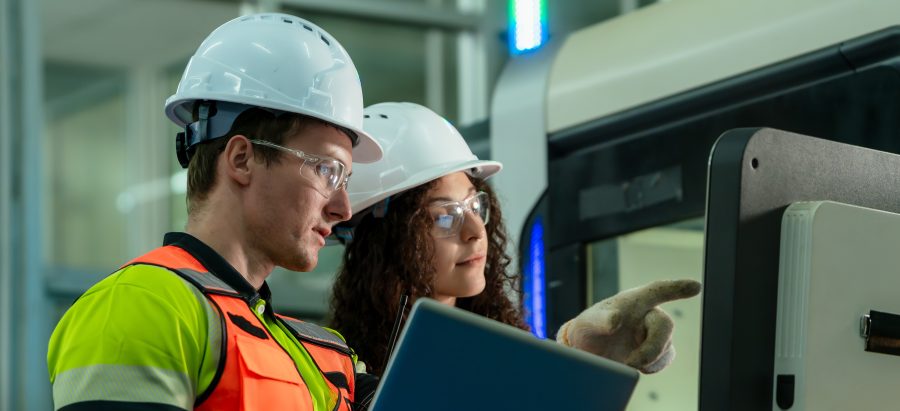
Two engineers in a factory look at a monitor.

The Department of Manufacturing and Mechanical Engineering Technology (MMET) has recently announced two new online programs: the MS and the PhD in Manufacturing Engineering. Previously, these programs were available only on campus. 

Both Michigan Tech’s online master’s degree and PhD program, designed in partnership with industry, stress manufacturing competitiveness. This competitiveness is central to smart manufacturing, modeling, simulation, sustainability, additive manufacturing, and advanced materials. All of these areas are crucial to Industry 4.0.

The programs’ practical core curriculum, which covers both the breadth and depth of manufacturing engineering, is inspired by Society of Manufacturing Engineer’s Four Pillars of Manufacturing Knowledge:

  • Materials and manufacturing processes
  • Product, tooling, and assembly engineering
  • Manufacturing systems and operations
  • Manufacturing competitiveness

Flexible Manufacturing Engineering Degrees for Working Professionals

But according to John Irwin, Professor and Department Chair of MMET, these programs are not solely for manufacturing engineers.

That is, similar to Michigan Tech’s online manufacturing engineering certificate, these in-demand programs have been designed to attract people from a wide range of undergraduate backgrounds. Students might come from mechanical engineering, electrical or computer engineering, materials science and engineering, manufacturing engineering technology, biomedical engineering, and robotics.

In other words, many can enroll in and then benefit from these degrees, which provide the tools and knowledge to take the next step: earning SME certifications, which are available in Lean, Additive, and Robotics Manufacturing.

In addition, the master’s and the PhD programs are both flexible and customizable. You may choose from three pathways for the 30-credit master’s degree (thesis, report, or course-work only). Also, there are two options for the doctoral degree (60 credits or 30 credits). Options depend on whether you begin with an undergraduate or a master’s degree. Beyond the core courses, you can also choose electives from four fundamental manufacturing areas. Thus, you can customize a degree that matches your educational and professional goals.

These online programs allow students from Michigan and beyond to benefit from this rigorous curriculum while working part or full-time. In fact, both programs are designed so that those enrolled can collaborate with their employers to complete workplace-based projects or conduct thesis or dissertation research.

 Students in the GD&T course work virtually in teams taking a component of a system from their workplace to perform tolerance analysis and conversion of traditional dimensions to GD&T in order to improve part functionality and minimize manufacturing errors.

John Irwin, Professor and Department Chair of MMET

In-Demand Knowledge for Current and Future Manufacturing Engineering Challenges

In 2021, the waves of the pandemic started to quickly unravel supply chains across the world. Manufacturing plants slowed or even closed, ports experienced unprecedented back-ups, and transportation costs and inflation raised prices dramatically.

According to NAM’s (National Association of Manufacturer’s) Q3 2023 Manufacturer’s Outlook Survey, 72.1% of the respondents indicated that the biggest challenge facing manufacturers was attracting and retaining a quality workforce. 

And manufacturing engineers are obviously a crucial part of that quality workforce. The US BLS stated that the job growth for industrial engineers (one possible career path) between 2023-2033 is 12%. This growth is much faster than average. Currently, there are over 241,977 manufacturing engineers employed in the US, but there still is a need for more. 

Why? The drive to incorporate Lean manufacturing processes, advances in additive manufacturing, the digital transformation of the manufacturing industry, and the reshoring of manufacturing in the US have all magnified the demand for manufacturing engineers.

In particular, the manufacturing industry needs engineers with expertise in IOT (Internet of Things) technologies and smart factory solutions, which are essential to manufacturing competitiveness. Michigan Tech, in fact, has a long history in advanced these and other manufacturing solutions.

That is, both the MS and PhD in manufacturing support efforts highlighted by Automation Alley, Michigan’s Industry 4.0 knowledge center. This center has helped manufacturers of all sizes understand the rapid technological changes associated with digital technology in manufacturing, so that both Michigan and the nation remain globally competitive.

Quality means doing it right when no one is looking.

Henry Ford, American industrialist, founder of the Ford Motor Company

Get Started On Your Program Now.

Michigan Tech’s online manufacturing programs can help you accelerate your career while making a difference in Industry 4.0.

There is still time to begin a graduate program for Spring 2025. Alternatively, you can start with an online graduate certificate in manufacturing engineering, and then apply these credits towards an advanced degree.

For Spring 2025, MMET is offering Industry for 4.0 Concepts (MFGE 5200), Design for Additive Manufacturing (MFGE 5300), which are core courses for both the certificate and master’s degree. Industrial Safety (MFGE 5500), a core course for the master’s program, is also on deck.

For more information about these programs, please contact David Wanless, Associate Teaching Professor MET and Program Director; and visit the web page on Global Campus.