Where Science Meets Startup: Inside the GLRC–gener8tor Partnership

If you walk along the waterfront at Michigan Technological University, you can’t miss the Great Lakes Research Center (GLRC), including its research vessels and equipment. But what you may not see are our researchers working on autonomous submersibles, collecting crucial Great Lakes data, or analyzing complex information behind the scenes. The GLRC is an environment built for testing boundaries, solving environmental challenges, and understanding freshwater systems.
Now, our world-class research facility on the Keweenaw Waterway is playing a direct role in launching the next generation of water-tech startups.

Through a partnership supported by the Great Lakes Observing System (GLOS), the National Oceanic and Atmospheric Administration (NOAA), and nationally ranked accelerator gener8tor, the GLRC serves as the technical engine and real-world proving ground for the Great Lakes Innovation Accelerator.

Let’s take a look at how and why this unique collaboration came to be.

The Origin: Bringing a Technical “Swiss Army Knife” to the Table

When GLOS engaged the GLRC as a subcontractor on the NOAA-funded grant, the goal was clear: round out regional capacity and provide early-stage founders with serious engineering muscle.

In traditional accelerators, founders often get world-class business coaching but hit a brick wall when it comes time to test physical hardware, deploy sensors in turbulent water, or run high-performance algorithms.

The GLRC acts as an agile, multidisciplinary partner—a technical “Swiss Army Knife” capable of connecting fast-moving founders with specialized expertise across campus, from chemical and mechanical engineering to high-performance supercomputing to life cycle assessment.

“Michigan Tech functions as a research powerhouse that is flexible enough to quickly connect startups with faculty across departments and throughout industry, while staying nimble enough to keep pace with a fast-moving accelerator,” explains Hayden Henderson, GLRC Senior Research Engineer and Principal Investigator for the initiative.

Bridging Two Speeds: Startups, Academics, and “Technical Interrogations”
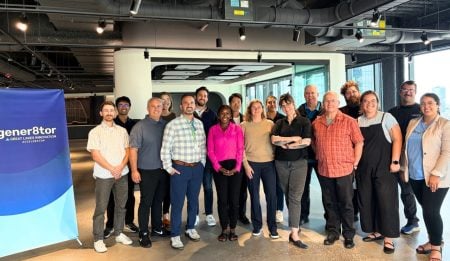
cohort 5 group photo - where science meets startup
Great Lakes Innovation Accelerator Cohort 5 founders collaborate with GLRC research engineer Walker Nelson. (photo courtesy of gener8tor)

Matching the tempo of a high-speed business accelerator with an academic institution requires deliberate translation.

Startups in gener8tor’s intensive three-month program move at breakneck speed. Academic faculty, on the other hand, balance grant deliverables, teaching schedules, and long-term research cycles. As the primary liaison, Henderson helps bridge those timelines—negotiating project scopes so founders get quick answers while respecting faculty commitments.

However, that collaboration starts long before a startup works with the GLRC. During the Great Lakes Innovation Accelerator recruitment cycles, the GLRC team sits in on startup interviews as “technical interrogators,” vetting engineering feasibility and real-world durability before gener8tor selects the next cohort.

Once in the program, founders undergo a rapid transformation.

A major value of gener8tor’s curriculum is teaching technical founders how to craft clear, efficient requests. Over three months, you see incredible growth—watching founders evolve from asking broad, vague questions to bringing us highly focused, actionable development asks.

Hayden Henderson

Putting Assets to Work: Real-World Proving Grounds

Instead of testing hardware in controlled lab tanks, startups gain direct access to the GLRC’s Marine Research Assets Facility (MRAF), shared laboratories, and field equipment. This setup ensures gear that might otherwise collect dust between scientific expeditions is constantly putting in work for the blue economy, giving founders authentic environments to test their innovations under real operating conditions.

Lasting Value Beyond the Lab

This collaboration isn’t just about supporting five startups for three months—it builds long-term momentum across every level of our mission.

On campus, it supports graduate research positions, generates revenue to maintain shared lab facilities, and gives Michigan Tech students front-row exposure to real-world tech commercialization. For Great Lakes communities, it means faster access to tools that protect coastal infrastructure—whether that’s predicting sewer overflows, monitoring aging seawalls, or tracking water quality in real time.

And because freshwater security and climate resilience are global challenges, testing these innovations in the demanding conditions of Lake Superior ensures that the solutions developed right here in the Keweenaw are ready to protect ecosystems around the world.

What’s Next

Over the coming weeks, we will dive deep into a few of the AI-driven startups in the current cohort. Stay tuned as we take you behind the scenes to explore their tech, their work with the GLRC, and how they are building the future of freshwater innovation.


Located on Michigan Tech’s campus in Houghton, Michigan, the Great Lakes Research Center (GLRC) leads in interdisciplinary research excellence. Situated in a 55,000-square-foot waterfront facility opened in 2012, the GLRC is a dynamic part of Michigan Tech’s landscape as an R1 public research university. Home to five specialized research centers, the GLRC drives innovation across water, land, climate, and community systems.
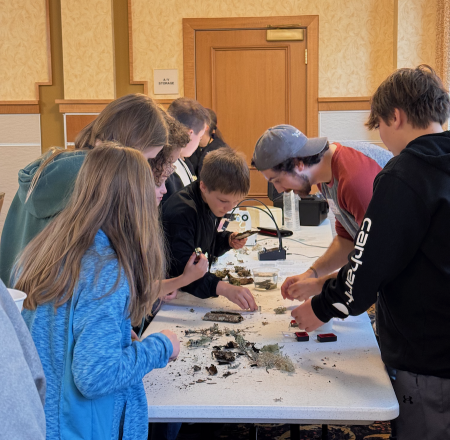
Empowering Local Youth: LSSI Hosts “Wonders of the Watershed” Summit at Michigan Tech

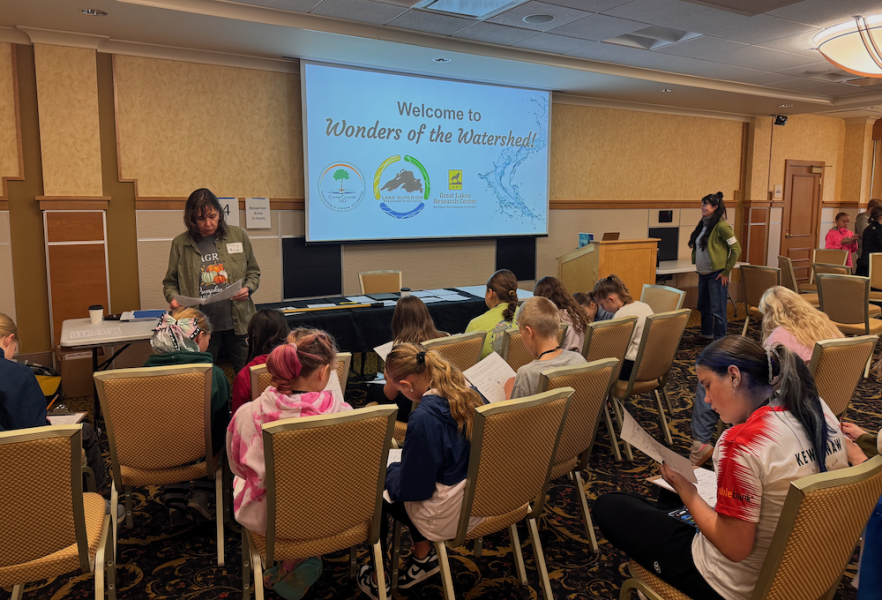
Middle school students from across the Western Upper Peninsula gathered at Michigan Tech’s Memorial Union Building on Wednesday, October 21, for the Wonders of the Watershed Summit. Hosted by the Lake Superior Stewardship Initiative (LSSI), this interactive event brought local students together with regional partners to explore the vital role of watershed health.

Hands-On Science and Local Conservation

Throughout the day, students rotated through dynamic learning stations led by local experts and community organizers. The interactive sessions gave participants a comprehensive look at local aquatic ecosystems and conservation practices through:

  • Interactive Science: Hands-on floodplain modeling and biological stream assessments.
  • Ecosystem Dynamics: Exploring the importance of native plant species and microscopy.
  • Community & Culture: Engaging in supply chain role-plays, discussions on legacy pollution, and environmental art projects.

Regional Partnerships in Action

The summit highlighted the depth of regional collaboration required to support Great Lakes stewardship. Interactive sessions were facilitated by a broad coalition of community partners, including representatives from Bessemer Area Schools, the Keweenaw Community Forestry Company, the Keweenaw Bay Indian Community Natural Resources Department, the Keweenaw Land Trust, the Keweenaw Outdoor Recreation Coalition, Keweenaw Time Traveler, Michigan Natural Features Inventory, Michigan Nature Association, Michigan Sea Grant, Rabbit Island, Wild Ones (Keweenaw Chapter), and the Western Upper Peninsula Planning & Development Region office (WUPPDR).

Funding for the event was provided by the Michigan chapter of The Nature Conservancy, with additional support from the Copper Country Intermediate School District and the Great Lakes Research Center.

About the Lake Superior Stewardship Initiative

LSSI unites schools and communities in the stewardship of the Lake Superior watershed, empowering youth to become knowledgeable citizens actively engaged in local action projects. A partnership between the Copper Country Intermediate School District and the Great Lakes Research Center at Michigan Tech, LSSI fosters deep community connections across the region.


Located on Michigan Tech’s campus in Houghton, Michigan, the Great Lakes Research Center (GLRC) leads in interdisciplinary research excellence. Situated in a 55,000-square-foot waterfront facility opened in 2012, the GLRC is a dynamic part of Michigan Tech’s landscape as an R1 public research university. Home to five specialized research centers, the GLRC drives innovation across water, land, climate, and community systems.
Geoheritage, Mining, and Conservation: Erika Vye Invited as Pardee Keynote Speaker for GSA Connects 2026

Bringing Keweenaw insights to an international stage, GLRC Geosciences Research Scientist Erika Vye (GLRC/GMES) presented at the Geological Society of America’s 2026 Pardee Keynote Symposia on October 13 in Denver, Colorado.

The Pardee Keynote Symposia represent the pinnacle of interdisciplinary discussion and forward-thinking research at the GSA Connects annual meeting. Named in honor of distinguished GSA Fellow and benefactor Joseph Thomas Pardee, these invited sessions bring together global leaders to address critical, big-picture challenges across the geosciences.

As part of the global “Geoheritage in a World of Resource Extraction” keynote symposium, Vye delivered a presentation titled “Deep Time, Shared Stories: Exploring Relationships with Mining in the Keweenaw Peninsula.”

As global demand for critical minerals and energy transition materials accelerates, balancing resource extraction with the conservation of geologically and culturally significant sites has become paramount. This GSA–ProGEO Symposium explored the complex interplay of geoheritage and humanity’s dependence on past, present, and future resource extraction.

Vye also co-chaired a technical session titled “Mining Heritage in the United States: Linking Historical Use with Geoconservation Practices” alongside Thomas Casadevall (USGS, Chair of the U.S. Geoheritage Advisory Group). This session explored scientific discoveries, historical mining practices, and the ways these insights underpin mining heritage and the application of geoconservation methods to the recovery, restoration, and reclamation of mined landscapes.


Located on Michigan Tech’s campus in Houghton, Michigan, the Great Lakes Research Center (GLRC) leads in interdisciplinary research excellence. Situated in a 55,000-square-foot waterfront facility opened in 2012, the GLRC is a dynamic part of Michigan Tech’s landscape as an R1 public research university. Home to five specialized research centers, the GLRC drives innovation across water, land, climate, and community systems.
From Soundscapes to Safety: CII Awards Research Seed Grant to Local Bird-Deterrent Tech

The Center for Innovation and Incubation (CII) has awarded a $10,000 Research Seed Grant to the Keweenaw BirdSafe Living Lab project.

The CII operates as the Great Lakes Research Center’s (GLRC) main bridge between research, entrepreneurship, and real-world application. In addition to incubating specialized teams in environmental biotechnology, mass timber, and education, the Center invests directly in its members to help scale their big ideas. Through strategic tie-ins with campus and regional resources—including MTU’s Office of Innovation and Commercialization, the MTEC SmartZone, and NSF I-Corps—the CII helps transform early-stage concepts into tangible community impacts.

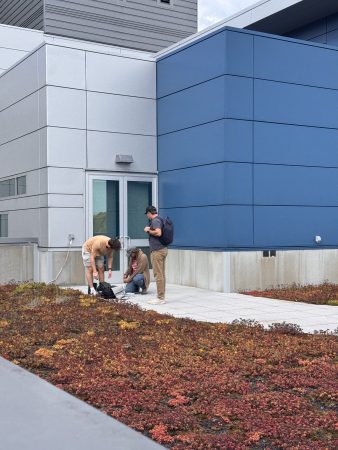
three people working on installing a project next to the GLRC green roof
The Keweenaw BirdSafe Living Lab team members set up their equipment at the GLRC.

This latest seed grant reflects that mission by supporting a collaborative effort that bridges engineering, ecology, and commercial innovation. The project team is led by Shane Oberloier, assistant teaching professor in the Department of Electrical and Computer Engineering; Jared Wolfe, associate professor in the College of Forest Resources and Environmental Science; and includes senior Luke Pietluck ’27, computer engineering and member of the Wireless Communications Enterprise. The team is working in partnership with local startup Keweenaw Ecological Innovations and their Averta platform. 

Innovation Built on Campus

The project focuses on deploying and testing next-generation bio-acoustic deterrents designed to prevent bird strikes against glass and urban infrastructure.

The newest generation unit—designed and built by Oberloier and Pietluck—has recently been installed directly at the Great Lakes Research Center (GLRC). This latest iteration marks a major leap forward in the technology:

  • Full Customization & Mobile Control: Operators can configure sound profiles and schedules directly from a smartphone interface.
  • Compact & High-Fidelity: The device is significantly smaller than previous prototypes while delivering noticeably cleaner, higher-quality audio output.
  • Dynamic Acoustic Strategies: Rather than relying on a single sound, the unit employs a varying array of acoustic signals—including predator calls (creating a dynamic “landscape of fear”), pink noise (played during early morning hours to disrupt bird communication), and other biological signals adapted to specific bird behavioral patterns throughout the day and night.

This installation at the GLRC represents the first fully built-out unit of its generation. Installing it now allows the team to collect critical data following the peak fall migration season, refining the software and hardware ahead of spring migration.

Turning Houghton and Hancock into a Validation Ground

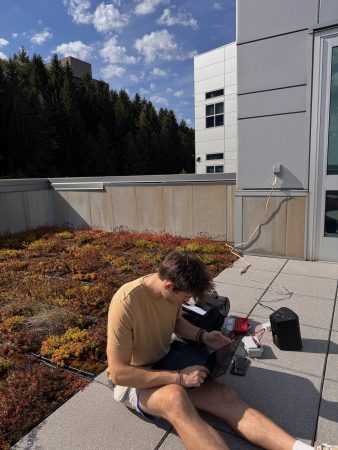
a student works on his laptop next to a project he is setting up near the green roof at the GLRC
Pietluck works on setting up the final touches on the system before deployment.

While the GLRC serves as a primary test location, the scope of the Keweenaw BirdSafe Living Lab extends beyond campus. Additional deterrent units are being deployed across other key locations, including the J. Robert Van Pelt and John and Ruanne Opie Library and select buildings in Hancock.

You’ll also see these deterrents pop up around the library and some buildings in Hancock to test the effects of a more community-wide bird collision management system. Right now, we are basically using Houghton-Hancock as a validation ground.

Shane Oberloier

To measure the system’s real-world impact, student researchers will conduct daily morning site checks at each location to monitor fresh bird strikes and gather baseline data on device performance.

Beyond its primary ecological goal of reducing avian mortality, the project also examines human-tech interactions by evaluating how local residents, students, and property owners respond to the subtle soundscapes the deterrent devices create in their environments.


Located on Michigan Tech’s campus in Houghton, Michigan, the Great Lakes Research Center (GLRC) leads in interdisciplinary research excellence. Situated in a 55,000-square-foot waterfront facility opened in 2012, the GLRC is a dynamic part of Michigan Tech’s landscape as an R1 public research university. Home to five specialized research centers, the GLRC drives innovation across water, land, climate, and community systems.
Rooted in Place: Erika Vye and LSSI Honored with 2026 MAEOE Impact Award

When learning happens inside and outside the classroom—where local geology, watersheds, and community history become part of the curriculum—students don’t just learn; they gain benefits like increased civic engagement, higher motivation, and a deeper understanding of the landscape they inhabit.

In Michigan’s Western Upper Peninsula, the Lake Superior Stewardship Initiative (LSSI) weaves that connection into daily work. We are proud to share that LSSI and its leadership team—including GLRC Geosciences Research Scientist Erika Vye and LSSI’s Lloyd Wescoat—received the 2026 Impact Award in Environmental Education from the Michigan Alliance for Environmental and Outdoor Education (MAEOE).

The award was presented during the annual MAEOE conference in Flint, Michigan, honoring organizations and leaders whose vision expands access to high-quality outdoor and environmental learning.

“This award is a celebration of LSSI’s leadership and steadfast commitment to advancing environmental learning and outdoor engagement throughout the region.”

Michigan Alliance for Environmental and Outdoor Education (MAEOE)

Bridging Science, Community, and Geoheritage

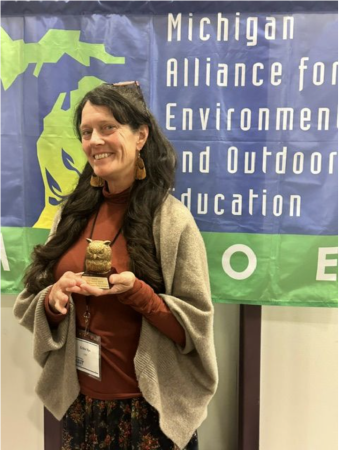
Vye displaying the 2026 Impact Award in Environmental Education

At the Great Lakes Research Center, Vye’s research and outreach center on a powerful idea: landscapes shape our sense of place, and our shared connections to rocks, waters, and geoheritage offer a vital doorway into Great Lakes literacy.

Through her dual roles as a School-Community Team Mentor and Professional Learning Coordinator with LSSI, Vye works alongside regional educators and over 50 community partners. This network provides opportunities for K-12 students and teachers across 20 regional schools to learn about career pathways and supports stewardship projects that directly solve real, identified needs right here in the Copper Country. 

LSSI unites local schools and communities in the stewardship of the Lake Superior watershed. By working alongside local knowledge holders to solve real community problems, students see themselves as valuable and capable civic leaders. 

– Erika Vye, Geosciences Research Scientist

Small Communities, Regional Reach

The LSSI is part of the Great Lakes Stewardship Initiative (GLSI), a statewide effort launched by the Great Lakes Fishery Trust. The LSSI is jointly housed within the Copper Country Intermediate School District and the Great Lakes Research Center.  The scale of its daily impact across Houghton, Baraga, Keweenaw, Gogebic, and Ontonagon counties includes:

  • 3,100+ K–12 Students actively engaged in local stewardship
  • 70+ Teachers
  • 50+ Local Community Partners
  • 20 Partner Schools

By encouraging young people to step outdoors, investigate local challenges, and collaborate with regional experts, Vye and the LSSI team are helping raise the next generation of Great Lakes stewards. Visit the Lake Superior Stewardship Initiative website to learn more about their work.

Please join us in celebrating Erika, Lloyd, and the entire LSSI network for this well-deserved recognition!


Located on Michigan Tech’s campus in Houghton, Michigan, the Great Lakes Research Center (GLRC) leads in interdisciplinary research excellence. Situated in a 55,000-square-foot waterfront facility opened in 2012, the GLRC is a dynamic part of Michigan Tech’s landscape as an R1 public research university. Home to five specialized research centers, the GLRC drives innovation across water, land, climate, and community systems.