Bridging Minds and Miles: MTU Students Shine at the Inaugural Superior Psychology Data Blizzard

A group of our Michigan Tech graduate and undergraduate students made the trek to Northern Michigan University for the first annual Superior Psychology Data Blizzard. The brand-new event is the result of Dr. Jason Harman (MTU) and Dr. Jon Barch’s (NMU) desire to establish and foster a collaborative ecosystem between our two programs. The two groups held a poster session and gave presentations about their ongoing research.

Poster Presentations

Sarah Atkinson, an MS student at MTU, shared that “The poster presentations were filled with the sharing of ideas and differing research areas that everyone was working on. Questions were welcome, along with curiosity about the different research areas that each institution/students were working on.”

MTU and NMU students mingle around easels displaying research posters in a hall at NMU
The poster session featured current research conducted by MTU and NMU students.

Elijah Nieman, a 2nd-year PhD student at MTU and an NMU alumnus, noted the strategic value of the visit: “The main goal for the event was to present and share our research generally, but also to find or create opportunities to collaborate on future projects.” 

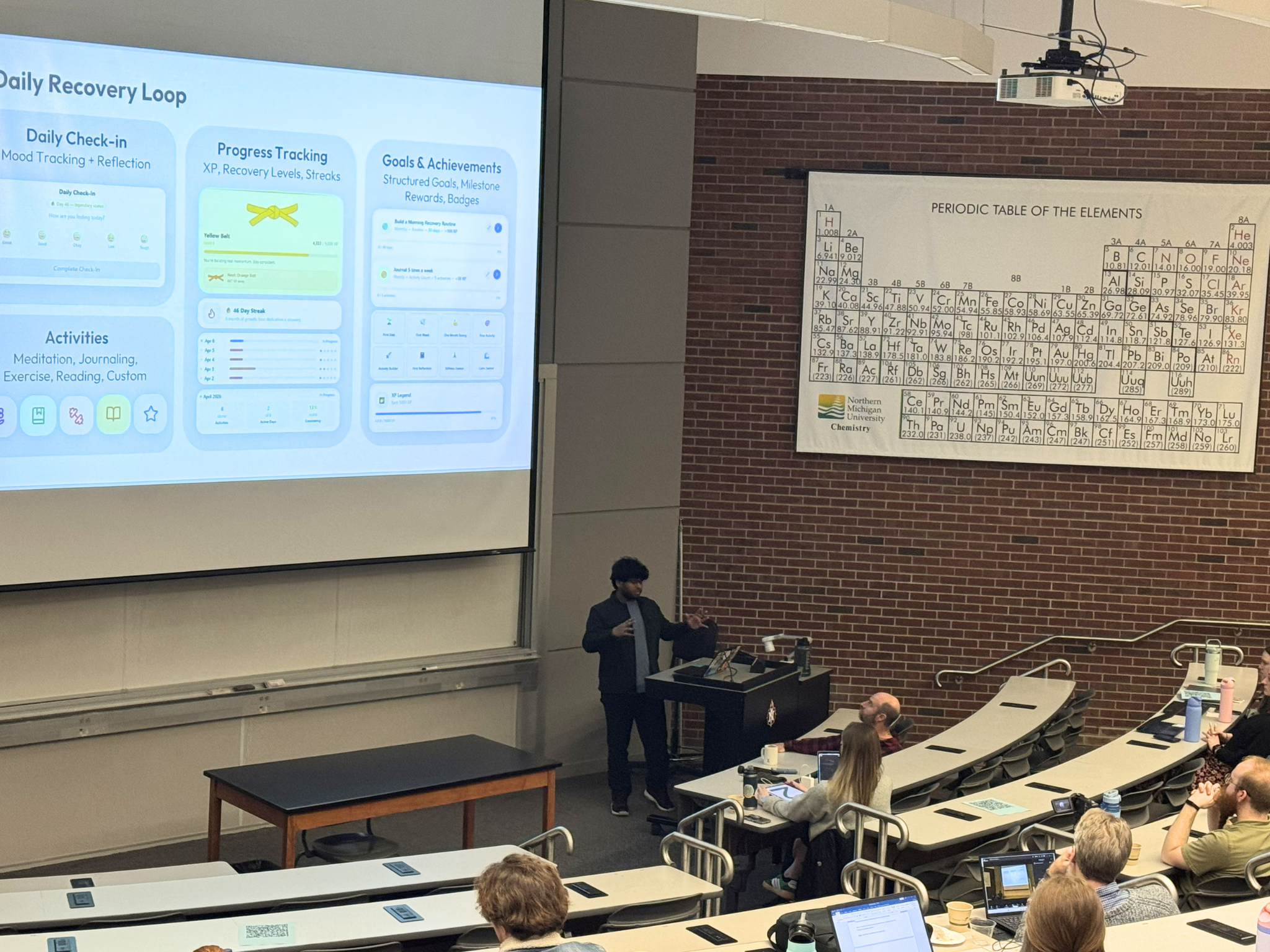
For Nithish Raja Loganathan, the event marked a significant personal milestone. “It was my first time presenting at a human factors–related event. Presenting my project, Recovery Ninja, and receiving questions and feedback from others made the experience both encouraging and really valuable.”

Nithish Raja Loganathan presents his project on a large projection screen to a group of students
Nithish Raja Loganathan presented his project Recovery Ninja

The Impact of Collaboration

Many of our students reported that the draw to NMU was the chance to see research through a different lens. While MTU is a powerhouse for Human Factors and PhD-level research, NMU’s Department of Psychological Science offers a vibrant, neuroscience-centric environment. 

Nithish shared his experience viewing the research from NMU students: “One thing that really stood out to me was the strong focus on neuroscience in many of the projects. It was really interesting to learn about the different ways students are studying human behavior through neuroscience. Seeing that perspective gave me a new way of thinking about how neuroscience and human factors research can connect.” 

Beyond the research, the event also highlighted clear pathways for student growth. Elijah noted how the relationship between the two schools can benefit academic careers. “There’s some potential for MTU undergrads to consider going there for an MS, or for students from their programs to come here—that’s what I did, getting my BS in Neuroscience and MS in Psychology before coming to the PhD program at Tech.” 

When asked to sum up his experience in a single sentence, Stanley Oshimeje said, “The event highlighted the value of bringing students and researchers together to exchange ideas, strengthen connections, and inspire future work.” 

Looking Forward to Next Year

A huge round of applause goes out to all the students who shared their hard work. We are already looking forward to making this a staple of the academic calendar for years to come!

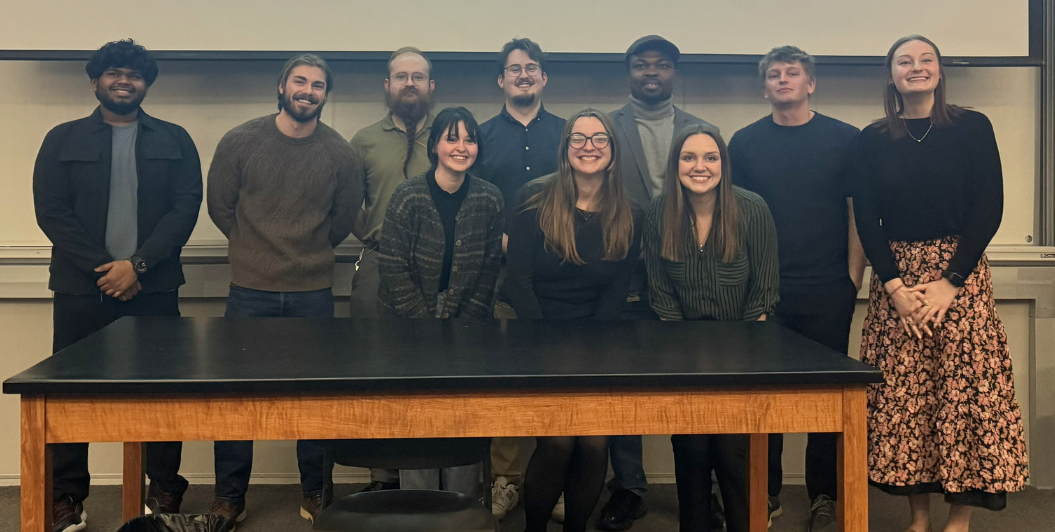
Both NMU and MTU students gather for a group photo
After all the presentations and discussion, both MTU and NMU students agreed that they were looking forward to visiting again next year.

Graduate Students:

Brandon Woolman, Jessica Brassard, Nithish Raja Karuppiah Loganathan, Elijah Nieman, Stanley Oshimeje, and Sarah.

Undergraduate Students:

Morgan Aufdencamp, Brianna Sleeman, and Justine Klein.

Special thanks to Jason Harman for coordinating and to Jon Barch at NMU for hosting such a productive exchange. Everyone is already looking forward to doing it again next year!

Setting the Stage: My Undergraduate Start at MPA

Written by Viviana Cotter

My name is Viviana Cotter. I am a second year Psychology major concentrating in Clinical/Counseling and minoring in Law and Society. Within the Psychology and Human Factors Department, I serve as a Student/Administrative Aide, Teaching Assistant, and Research Assistant. I also serve as the Treasurer for the Association of Psychology Students

In April, I was given the opportunity to attend the Midwestern Psychological Association conference in Chicago.

Viviana Cotter walking along a river in Chicago at night
Picture of Viviana Cotter walking the Chicago Riverwalk in downtown Chicago, Illinois during the night

During the conference, I attended a variety of poster sessions and paper presentations. There were so many researchers covering topics such as the direct and indirect benefits of animal companionship and the social, epistemic, and existential functions of blame. It was a wonderful experience because not only was I given the opportunity to learn about current research, but I was also able to see how the field of psychology is advancing and evolving.

It was enlightening to talk with fellow undergraduate students – discussing their research, asking questions, and learning about their future plans with their research. Additionally, the space provided me the opportunity to engage with graduate school representatives, where I was able to learn about different graduate programs and the opportunities they provide. 

Learning From MTU Graduate Students

I traveled with four MTU graduate researchers: Elijah Nieman, Lauren Sprague, Jen Shaud, and Brandon Woolman. Each presented their research findings during a poster session or paper talk. 

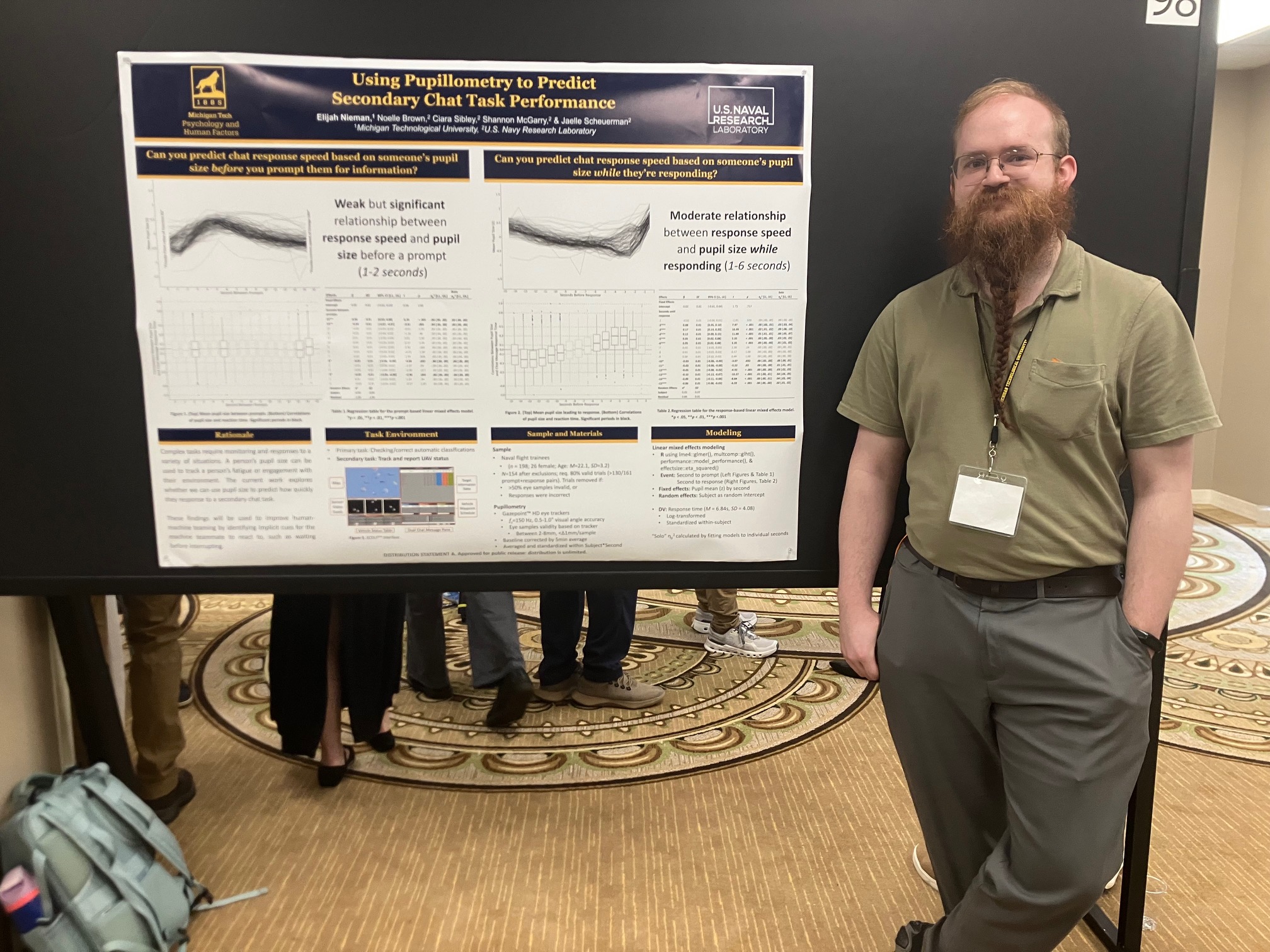
Elijah Nieman standing to the side of his research poster "Using Pupillometry to Predict Secondary Chat Task Performance"
Elijah Nieman presented his research on “Using Pupillometry to Predict Secondary Chat Task Performance” during the poster board session.
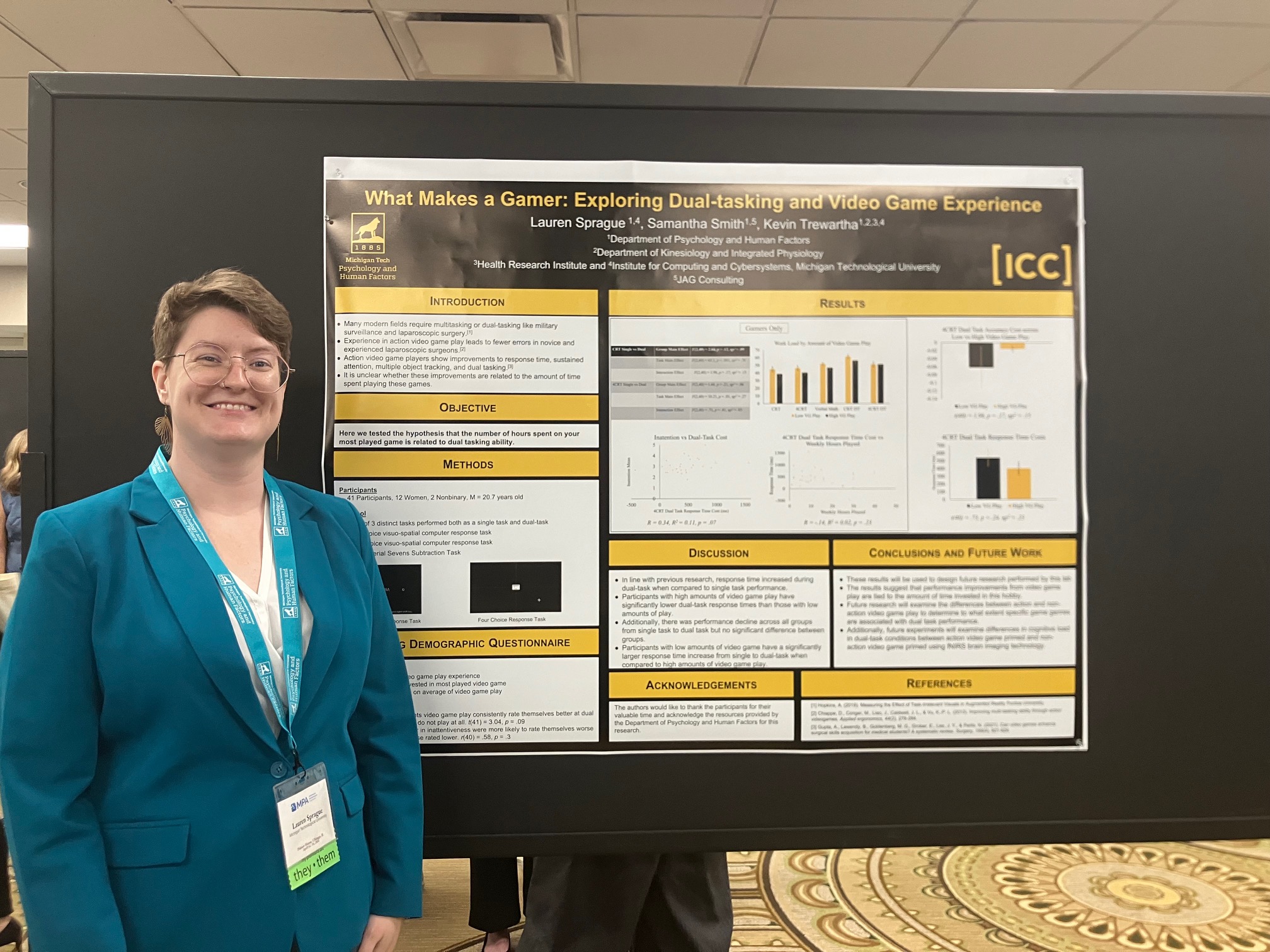
Lauren Sprague standing next to their research poster “What Makes a Gamer: Exploring Dual-Tasking and Video Game Experience.”
During the same session, Lauren Sprague presented their research on “What Makes a Gamer: Exploring Dual-Tasking and Video Game Experience.
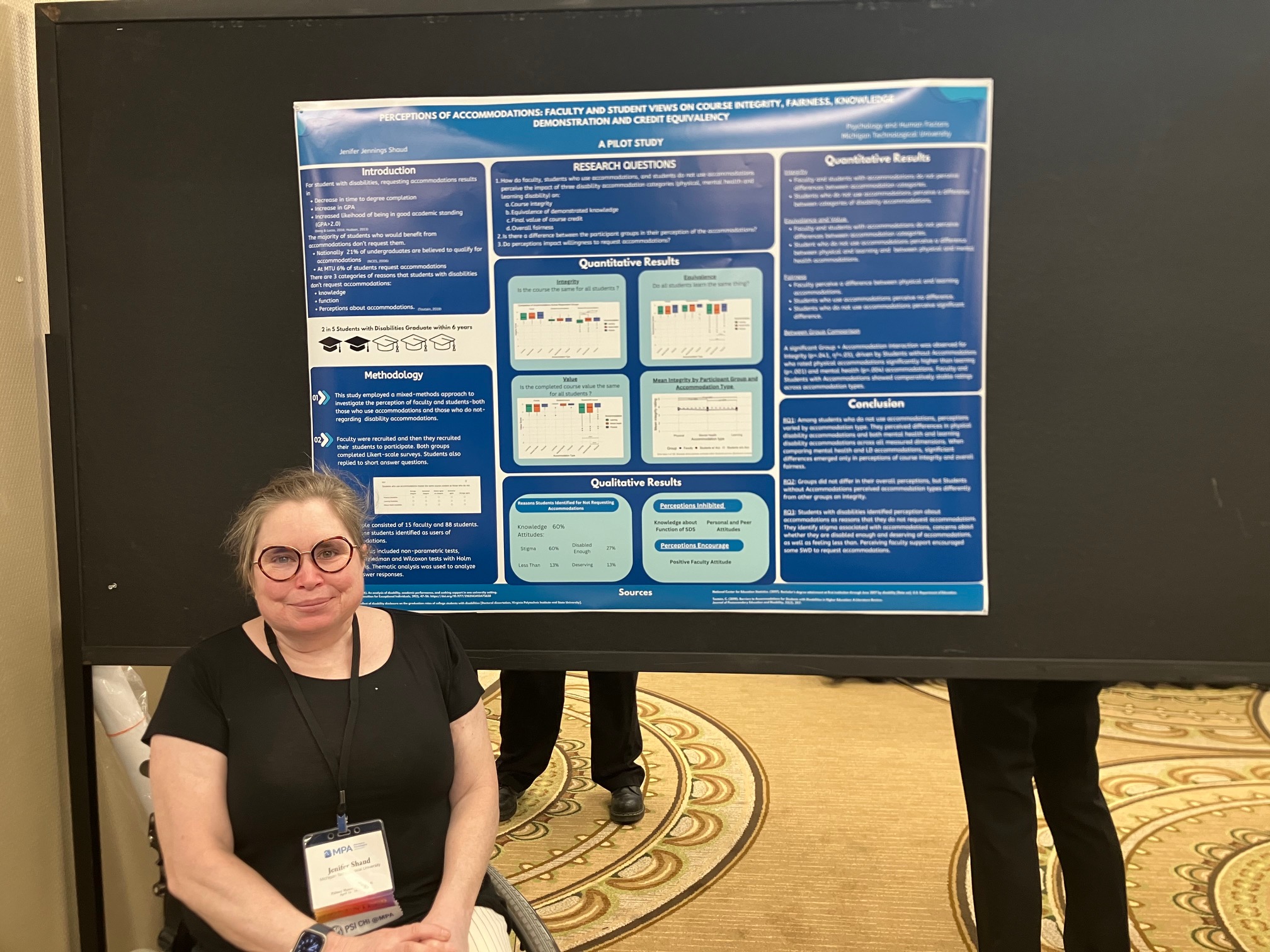
Jen Shaud standing beside her research poster "Perceptions of Accommodations: Faculty and Student Views on Course Integrity, Fairness, Knowledge Demonstration and Credit Equivaliency”
On Saturday, Jen Shaud presented their research on “Perceptions of Accommodations: Faculty and Student Views on Course Integrity, Fairness, Knowledge Demonstration and Credit Equivaliency” during the morning poster session. 
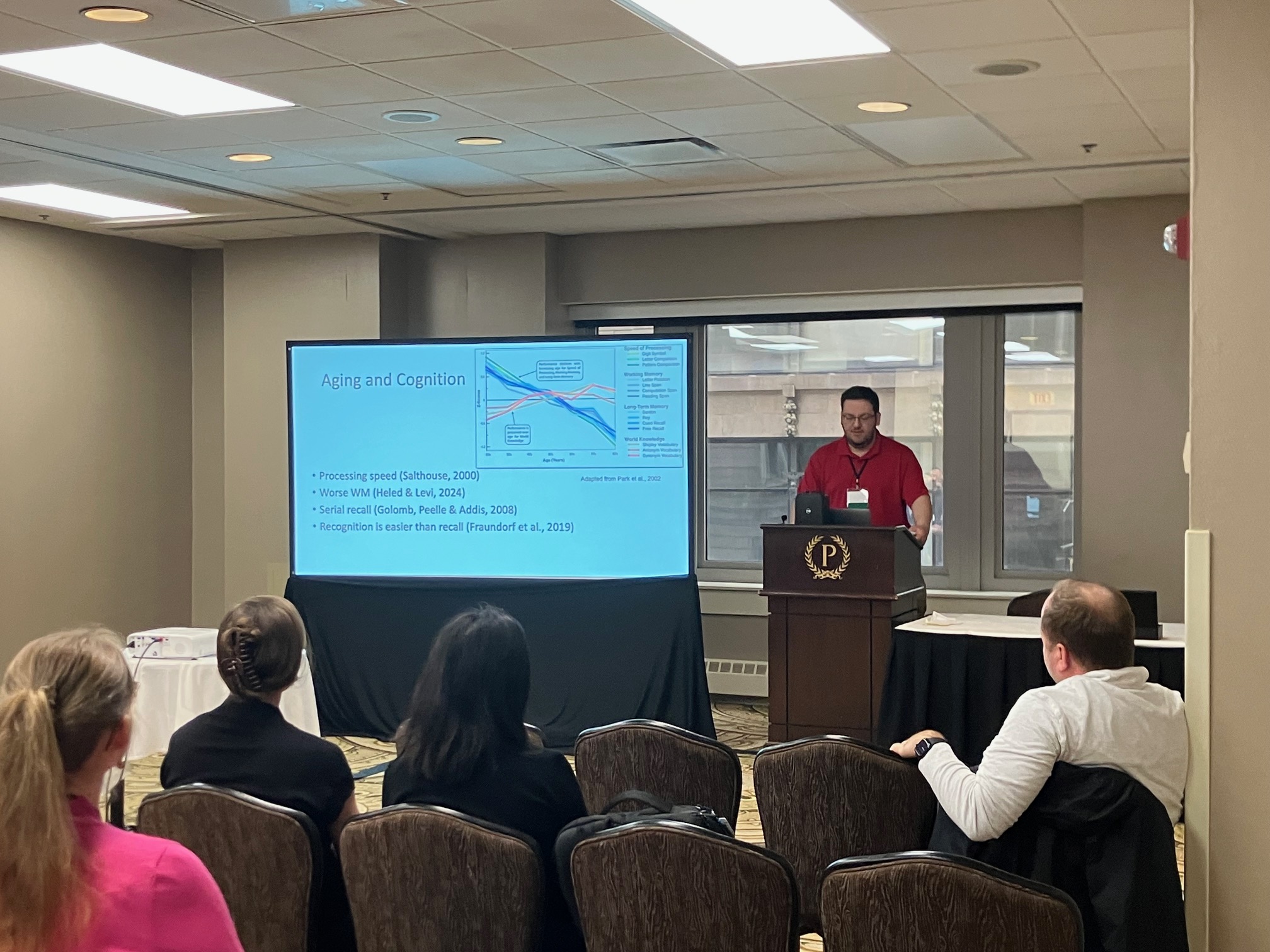
Brandon Woolman standing at a podium in front of a crowd presenting his research “Characterizing Age Difference in a Novel Motor Sequence Learning Task.”
Also on Saturday, Brandon Woolman participated in a paper talk, discussing his research on “Characterizing Age Difference in a Novel Motor Sequence Learning Task.” 

This opportunity was a significant moment for me as an undergraduate and aspiring researcher. I am walking away from this conference with a much clearer understanding of how it all works, and what I can expect in my own future. 

I plan to return next year to present the research that Dr. Destaney Sauls and I are currently working on. Currently, we are deep into research on communal narcissism and working to map its complex traits onto the Trifurcated Model. Stepping back onto that conference floor next year to present our model will feel like a full-circle moment in my development as a researcher and I can’t wait.  

Dr. Jeffery Pettibone Nominated for Deans’ Teaching Showcase

“Good morning, Psychology!” That’s how Dr. Jeff Pettibone greets the department most mornings as he heads for his first cup of coffee. It’s a fittingly warm start for a professor whose office—complete with a cozy couch, vibrant plants, and a table of snacks for any hungry passerby—has become a sanctuary for students. It’s a good thing he’s so prepared; his friendly, kind-hearted nature draws out the best in his students, and his office hours are rarely quiet.

Because of this dedication, we are thrilled to announce that Dr. Pettibone has been nominated for the Deans’ Teaching Showcase.

Established in 2017 by the William G. Jackson Center for Teaching and Learning, this award recognizes instructors who demonstrate exceptional skill in the classroom. Whether it’s managing large introductory courses, implementing innovative teaching methods, or developing a world-class curriculum, the showcase highlights the best of the best. Nominees are celebrated throughout the spring semester leading up to a formal ceremony in the fall.

We want to take this opportunity to honor Dr. Pettibone for the tremendous impact he has made on our Psychology and Human Factors students. Congratulations, Jeff!

Graduate students: Creating community through study and tradition

Weekly Study Group

Written by Jen Shaud

Every week, our department’s graduate students gather for study groups that have become much more than just academic meetings. These sessions are where collaboration meets camaraderie, creating a supportive environment that helps everyone succeed.

The study groups serve as a vital space where students discuss classwork, share insights about their research, and workshop their writing. Whether someone is wrestling with a challenging concept from class, wrestling with stats work or looking for feedback on a draft, there’s always a fellow student ready to offer a fresh perspective or lend a helping hand.

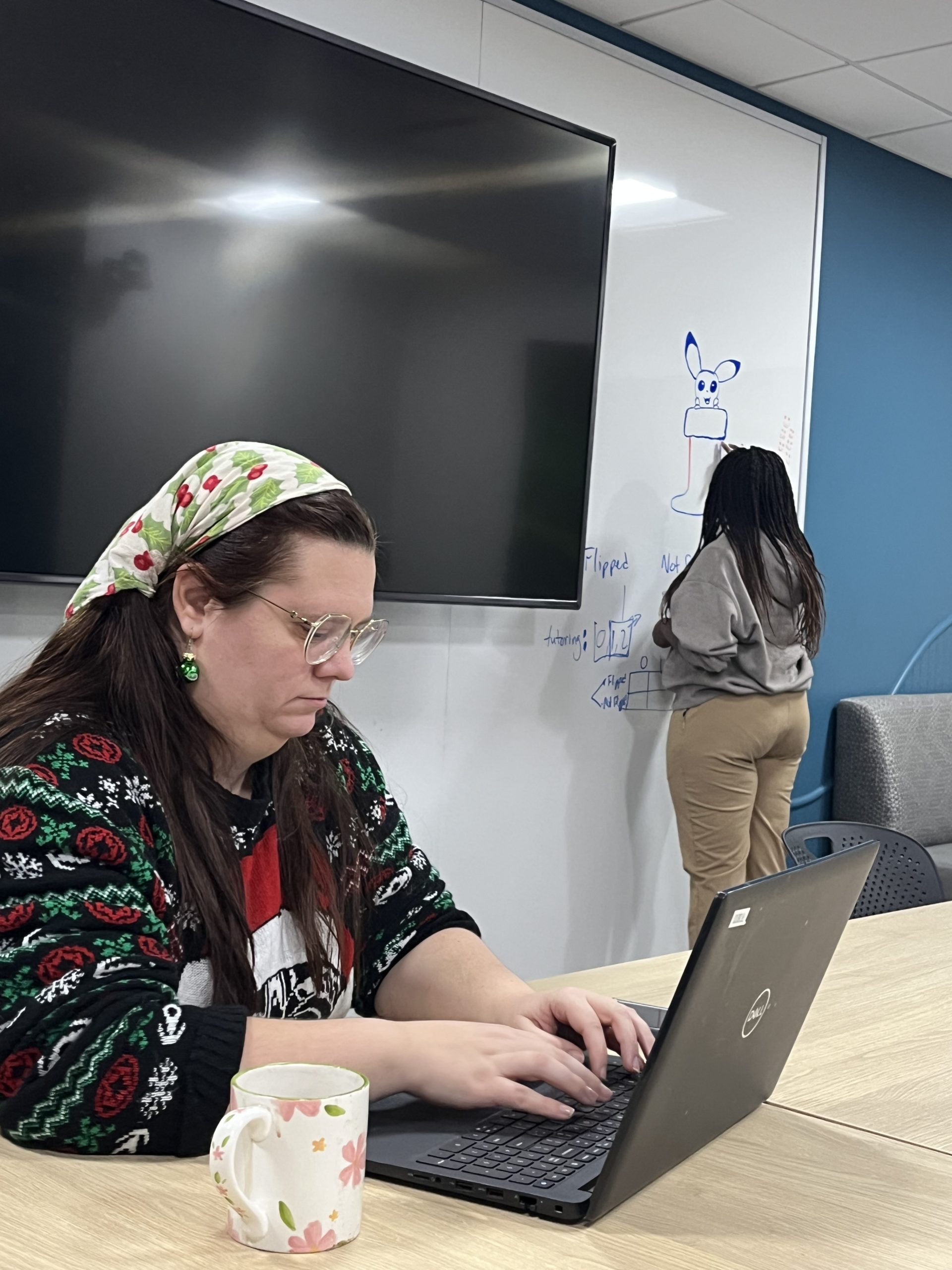
Recently, the groups have taken on an even warmer atmosphere. Holiday carols filled the room as students balanced festive cheer with productive work on class projects. Some students dedicated their time to collaborating on grant proposals, knowing that funding their research is crucial to their academic journey. Through it all, the underlying thread remained the same: graduate students supporting graduate students.

These weekly gatherings remind us that graduate school doesn’t have to be a solitary endeavor. When we come together to share knowledge, resources, and encouragement, we all benefit. The study groups have become proof that academic success and community support go hand in hand.

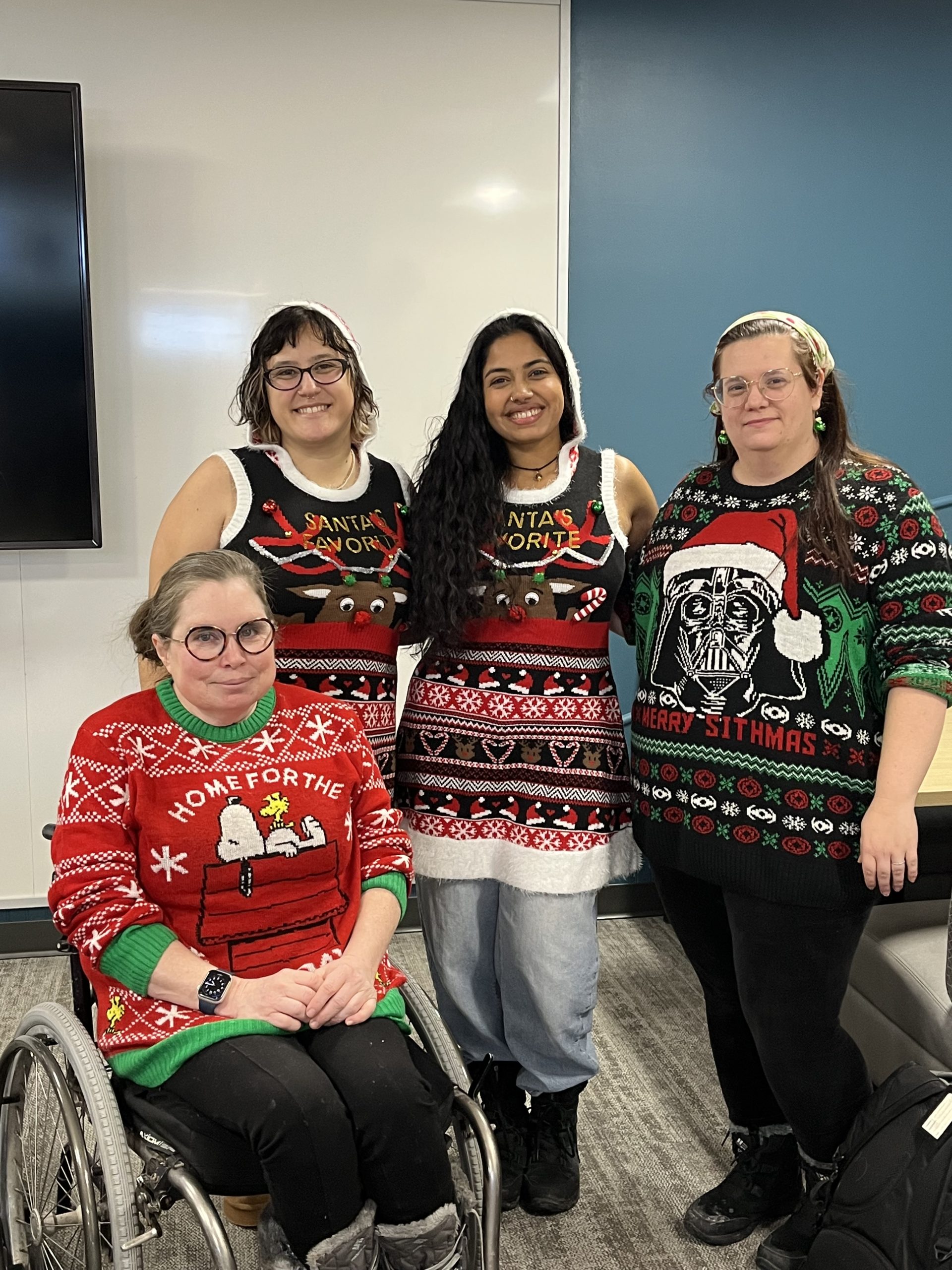
Four people standing in a group wearing festive holiday sweaters
Students gather for an Ugly Sweater party just before winter break
Our co-working space offers large whiteboards, hot coffee, and plenty of outlets for all of your electronic needs.

MTU Psychology Celebrates 20 Years and $2M in Research Awards

Michigan Tech’s psychology program celebrated its 20th anniversary in academic year 2024-25—and also marked its best year yet for research funding.

Psychology research at Michigan Tech embraces a wide variety of specialties and practical applications. One of the hallmarks of the program is how it intentionally engages undergraduate students in interdisciplinary research.

Read the full story in the College of Sciences and Arts blog.

ACSHF Forum: Grad Student Presentations

The Department of Psychology and Human Factors will host two speakers at the next Applied Cognitive Science and Human Factors (ACSHF) Forum: Laura Albrant and Kat Rawhouser, both ACSHF Ph.D. students. Their presentations will be from 2-3 p.m. on Monday, March 17, in M&M 610.

Photo of Laura Albrant
Laura Albrant
ACSHF PhD Student
Photo of Kat Rawhouser
Kat Rawhouser
ACSHF PhD Student

Laura Albrant: “Examining Student Resolutions of Automated Critiques

Laura Albrant’s study examines the submission data of students in an introductory engineering courses who modify their code in response to automated critique and how this process evolves over multiple submissions. Her research is grounded in data collected from students in Engineering Fundamentals (EF) courses who used our automated feedback tool, WebTA. This tool provides instant feedback on code syntax, logic, and style, tailored for first-year college students. She analyzed student interactions over four semesters, examining the effectiveness of EF students’ abilities to resolve critiques. This comparative analysis highlights differences in problem-solving strategies, engagement levels, and learning approaches in engineering fundamentals students. The data gathered from four semesters of engineering fundamentals courses, includes detailed logs of each submission, such as submission times, errors identified, critique counts, and resolution times. By analyzing patterns across different submissions, she tracked how student learning evolved over time and varied across disciplines. This approach allowed her to identify effective strategies in automated feedback design that cater to the diverse needs of learners from different educational backgrounds.

Kat Rawhouser: “Lessons from Needs Assessments”

Needs assessments can come in all forms and they can yield a great deal of useful information. In human factors, psychology and cognitive sciences we can learn much from reviewing and doing such assessment before research. From understanding demographics, to being about to connect with key players to gain access to a community or group this method of assessment has a yield in social, cultural and empirical information allowing for understanding by the researcher. This topic will cover the basics of needs assessment, how it can be used and provide an example of how assessing community needs can yield results during implementation.

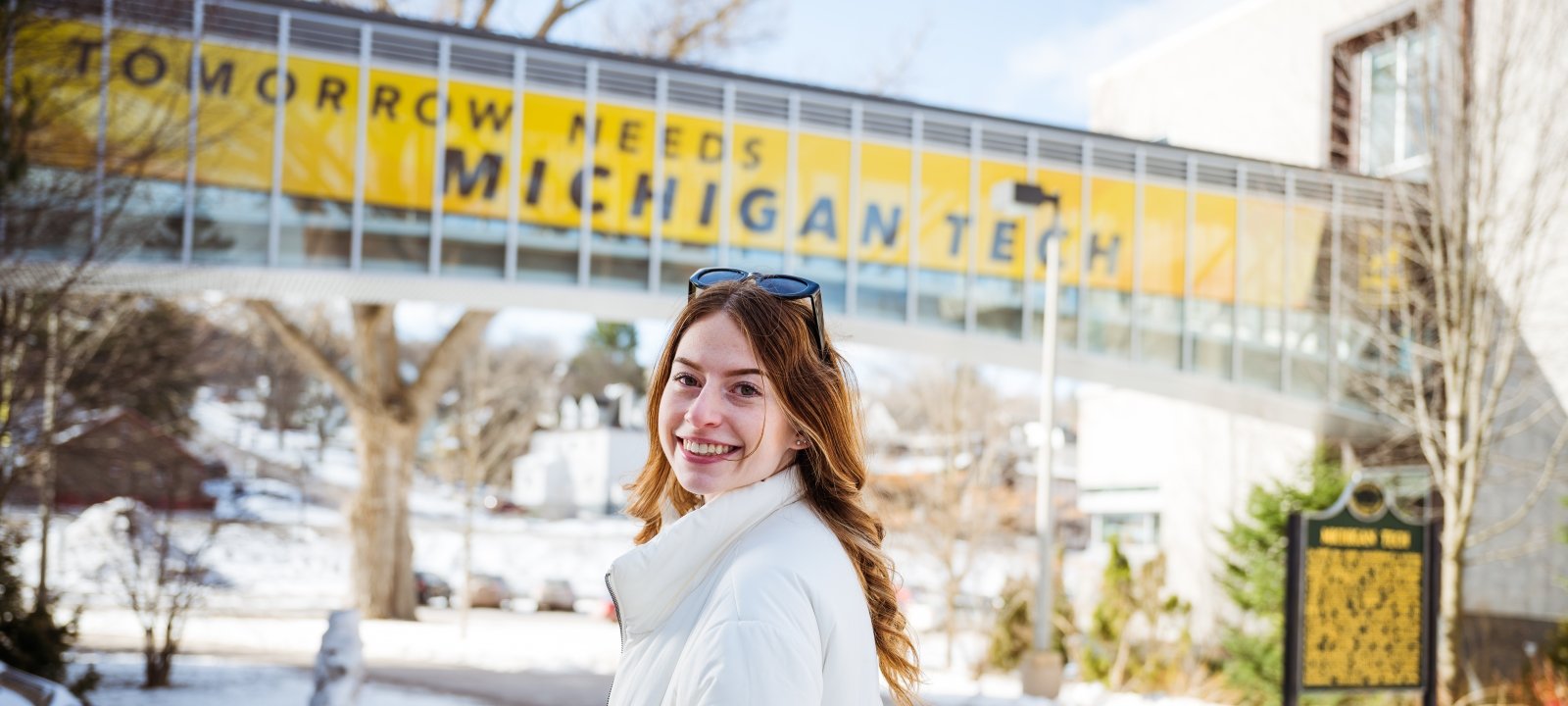
Hunter Malinowski, Psychology Phenom Adds Computer Science to Chart Her Own Course

Hunter Malinowski
Hunter Malinowski

Every college journey is unique. Students have so many different majors available to them. There are hundreds of classes available. Add in opportunities to work alongside professors doing undergraduate research, participate in clubs, and complete internships, and the combinations are virtually unlimited. Learn how Hunter Malinowski made her Michigan Tech experience unique by pursuing dual degrees in computer science and psychology and adding research, leadership, internship, and other experiences.

“The more I’ve done with psychology and computer science, the more I realize how many connections there are, from designing a website to the user interface and user experience,” Malinowski said. “I want to go into the data science/machine learning field. I think there’s a lot to be said about the psychology perspective for that.”

Hunter Malinowski ’24, BS Psychology/Computer Science

About the Department of Cognitive and Learning Sciences

Michigan Tech’s Department of Cognitive and Learning Sciences offers bachelor of science degrees in Human Factors and Psychology. The department confers master’s and doctoral degrees in Applied Cognitive Science and Human Factors. Additionally, faculty pursue diverse, cutting-edge research in education, human factors, technology, and science. Students and faculty improve performance, health, decisions, and safety where people interact with technology or systems. 

Questions? Contact us at cls@mtu.edu. Follow us on FacebookInstagram, and LinkedIn for the latest happenings.

ACSHF Forum: Kristin Kolodge

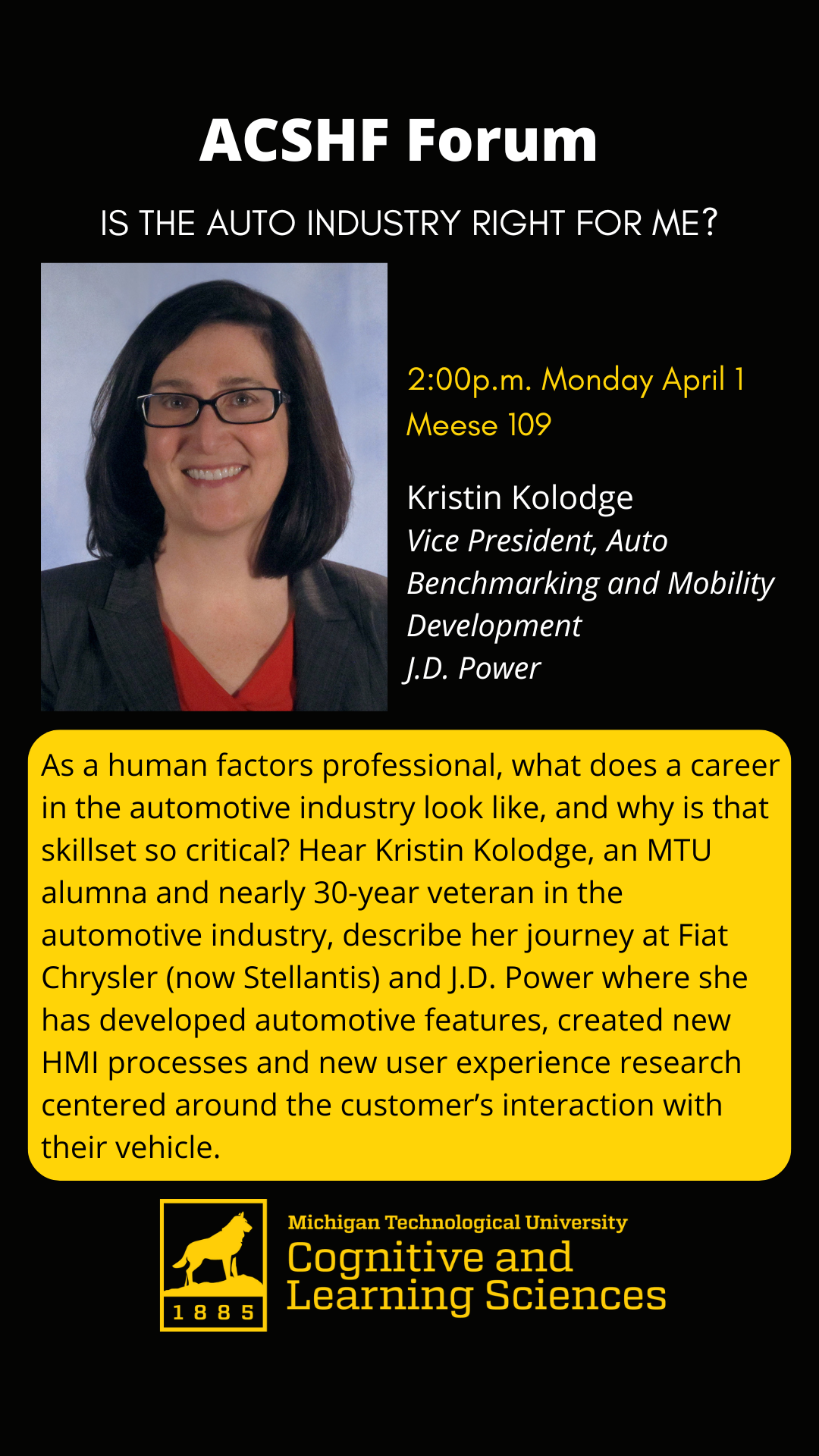
The Department of Cognitive and Learning Sciences will host Kristin Kolodge at the next Applied Cognitive Science and Human Factors forum Monday April 1, in Meese 109, from 2:00 p.m. to 3:00 p.m. and via Zoom.

“Is the Auto Industry Right for Me?”
As a human factors professional, what does a career in the automotive industry look like, and why is that skillset so critical? Hear Kristin Kolodge, an MTU alumna and nearly 30-year veteran in the automotive industry, describe her journey at Fiat Chrysler (now Stellantis) and J.D. Power where she has developed automotive features, created new HMI processes and new user experience research centered around the customer’s interaction with their vehicle.

ACSHF Forum: Sarah Aslani and Kit Cischke

The Department of Cognitive and Learning Sciences will host two speakers at the next Applied Cognitive Science and Human Factors forum: Sarah Aslani and Kit Cischke, both ACSHF graduate students. Their presentations will be from 2:00 to 3:00 p.m. Monday (February 5) in Meese 109.

Aslani will present “The Influence of Decreased Ambient Lighting on Reactive Balance Mechanisms in Older compared to Middle-aged Adults and Younger Adults”

Abstract:
Falls, a significant health concern, particularly impact the elderly, with an estimated 30 million incidents annually in the United States alone. Older adults face increased fall risks due to factors like gait variability, reduced strength, sensory decline, and environmental hazards. Postural control, vital for preventing falls, involves a complex interplay of visual, vestibular, somatosensory, and neuromuscular systems. Reactive balance, crucial for avoiding falls, is affected by aging and lighting conditions. Aging contributes to sensory and motor decline, impacting muscle function, coordination, and walking abilities. Visual and vestibular systems play essential roles in postural control, and their decline with age affects balance. Dark environments accentuate the reliance on the vestibular system, influencing balance recovery. Few studies explore the impact of dim lighting on balance recovery, especially in older adults. This study aims to investigate the differences in reactive balance control among older, middle-aged, and young adults in decreased ambient lighting conditions. The hypothesis suggests that dark
environments will decrease overall balance recovery ability in older adults compared to younger and middle-aged groups. Additionally, it predicts that balance recovery stepping characteristics, especially response initiation time, will be more adversely affected in the dark for older adults. This research contributes to understanding the age-related variations in balance control, particularly in challenging lighting conditions, offering insights for fall prevention strategies.

Cischke will present “Concept Maps as a Means to Calibrate Judgments of Learning”

Abstract:
Students often struggle with accurately assessing their own knowledge, also known as metacognition. They frequently rely on unreliable cues such as material familiarity or past homework grades and adjust their studying habits accordingly. In the context of learning new material, a metacognitive assessment of this type is referred to as a “judgment of learning” (JOL). Delaying a JOL after learning the material has been shown to lead to more precise judgments, which is thought to be due to a covert memory access made for the material. Concept maps are diagrams used in various fields to visualize knowledge, particularly the connections between concepts. They mimic the structure of human memory and require both overt and covert memory accesses when creating or reviewing them. Between the memory accesses in a constructive activity, concept mapping, and the testing effect (where testing increases retention of material), concept maps may be an effective tool to calibrate JOLs. This talk discusses some experimental findings on JOL calibration in a situation where the material to be learned is conceptual and there is a self-directed study period before the assessment. The material was technical in nature and new to all of the subjects. Some subjects made a numeric JOL, some completed a concept mapping activity before the JOL, and some did neither. We compare the study times, JOL calibration, and test results of the subjects. The results suggest that concept mapping, when used as an educational intervention in the classroom, can positively influence study efforts and test outcomes while being considered relatively enjoyable by the students.

ACSHF Forum: Timothy Keirnan

The Department of Cognitive and Learning Sciences will host Timothy Keirnan (Humanities) at the next Applied Cognitive Science and Human Factors forum Monday January 22 in Meese 109, from 2:00 p.m. to 3:00 p.m.

Join us for a presentation by Timothy Keirnan, a new professor in Humanities with 30 years of experience across the fields of automotive, audio engineering, financial services, and software. From working in recording studios wondering who designed the equipment, to designing the HMI of Ford’s award-winning Pro Power Onboard feature in F150 trucks and Transit vans with a multidisciplinary team of coworkers, Tim has found human factors engineers to be running a parallel course to his career all the way along. In 25 minutes, he will describe his dawning realization of HF as an essential professional discipline to product design and recount some tales from working with its literature and HF engineers at some workplaces. The second 25 minutes will be audience participation to discuss anything in the presentation plus the challenge HF and UX professionals still have in industry to be involved early and often enough on projects.