Author: Leanna Keleher

Decisions Under Pressure: Key Takeaways from the 18th International NDM Conference

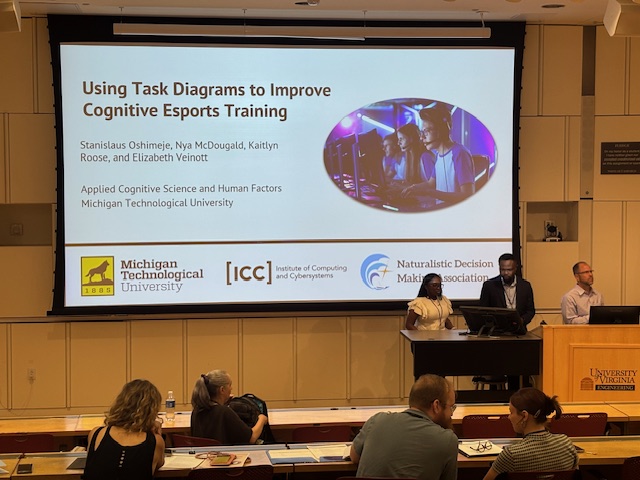
Nya McDougald (ACSHF) and Stanislaus Oshimeje (ACSHF) prepare to present their co-authored paper

When split-second choices mean the difference between success and failure, how do expert decision-makers act without the luxury of time? That’s the core question driving Naturalistic Decision Making (NDM)—a field of research that studies how people navigate complex, high-stakes, real-world environments.

This year, six students and three faculty traveled to the 18th International Conference on Naturalistic Decision Making at the University of Virginia in Charlottesville to present their work, exchange ideas, and connect with world-renowned experts in cognition and decision science.

We caught up with two student attendees, Jonathan Holland and Stanislaus Oshimeje, to hear about their experiences, key research takeaways, and advice for students preparing for their first international conference.

What Exactly Is Naturalistic Decision Making?

For those unfamiliar with NDM, both students offered clear ways to picture the field:

“Naturalistic Decision Making is the study of how people make decisions in real-world situations, often in real time and under pressure. For example, researchers may study doctors, firefighters, or emergency responders during events like life-saving surgeries or active fires. The goal is to better understand these decision-making processes and identify ways to improve them.”

— Jonathan Holland

“A simple example would be a baseball player deciding when to swing at a fast-moving pitch or a soccer player making a split-second decision about whether to shoot at the goal or pass to a teammate. NDM examines how experience helps people recognize important cues, anticipate what may happen next, and choose an effective course of action under time pressure, uncertainty, and complexity.”

— Stanislaus Oshimeje

While traditional decision theory often focuses on how people evaluate options in controlled lab settings, NDM zeroes in on expert intuition and real-world execution.

High-Stakes Connections & Standout Sessions

Attending an international gathering brings a unique mix of high-level academic discussions and meaningful informal networking.

Keynote Highlights: Learning from Leaders 

The session kicked off with Dan Dworkis, Chief Medical Officer at the Mission Critical Team Institute. As an ER physician and applied scientist, Dan explores how complex systems perform under crisis—a topic he dives into regularly on The Emergency Mind Podcast

Next up was former NASA astronaut Marsha Ivins, who captivated the room with fascinating stories of human spaceflight, weaving together lessons on teamwork, adaptability, and decision-making in the most extreme environment imaginable. 

Finally, Timothy Wilson (University of Virginia) took the stage. As a foundational figure in human factors whose seminal paper on verbal protocols is taught directly in Michigan Tech’s Human Factors curriculum, his keynote was a standout full-circle moment for our students.

How Language Shapes Action

Johnathan was particularly drawn to a talk entitled “Metaphor as Cognitive Infrastructure: Surfacing Mental Models in Naturalistic Decision Making” by Sharon Small of the Clean Language Institute. In her presentation, Small explored how the everyday metaphors we use actively frame our thinking and direct our behavior under pressure. 

Following the presentation, Jonathan reconnected with Small to dive deeper into how these subtle linguistic choices ripple through team dynamics, ultimately shaping how groups process information and solve high-stakes problems together.
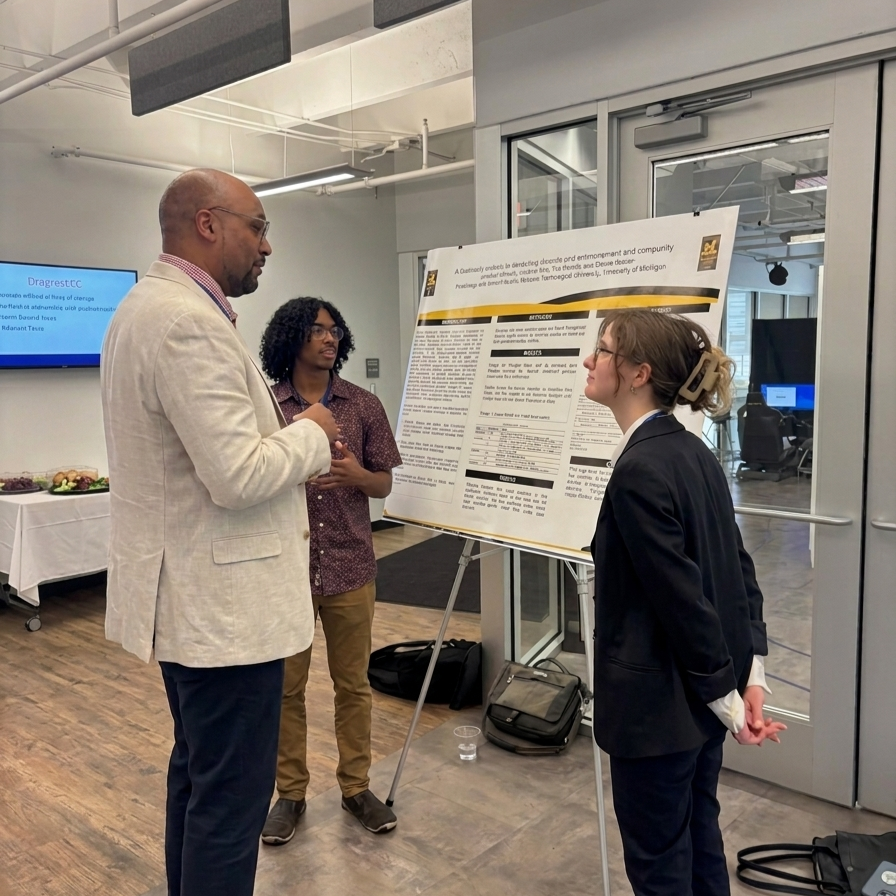
Jonathan Holland (Middle back, Senior, Psychology), center, presents his poster to fellow NDM attendees.

Meeting the Giants of the Field

For Stanislaus, whose current research uses NDM frameworks to analyze rapid decision-making in competitive esports, the conference served as a powerful validation of his work. Along with his co-author, Nya McDougald (ACSHF), Stanislaus took to the stage to present his year-long project. They shared their findings directly with an audience of international experts—including the very researchers whose publications had built the foundation of their own literature review.
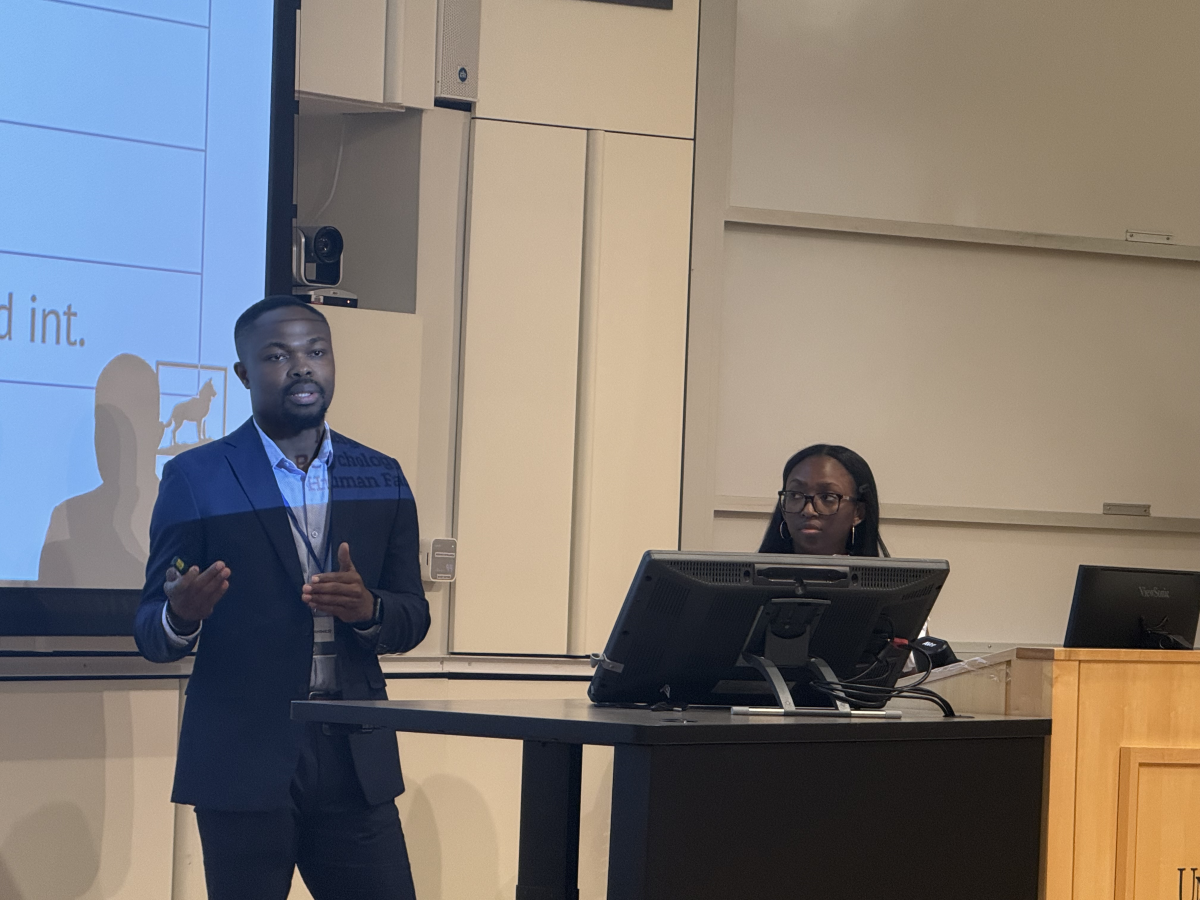
Stanislaus Oshimeje (ACSHF) and Nya McDougald (ACSHF) present a paper they co-wrote entitled Using Task Diagrams to Improve Cognitive Esports Training on the second day of the conference.

Beyond delivering his talk, Stanislaus had the opportunity to connect with Gary Klein, a founder and pioneer in the Naturalistic Decision Making field and founder and Chief Scientist of ShadowBox, to discuss his esports research. 

The conference also offered attendees a rare, behind-the-scenes look at the broader academic ecosystem including interactive experiences embedded throughout the event that translated NDM science into action. 

One such experience entitled Cognitive Skills Training for Emergency Medical Technicians and Paramedics-An Interactive Demonstration, invited attendees to perform a sensemaking diagnosis designed for Emergency Medical Services (EMS) personnel visiting homes and determining if a patient needed to be transported to the hospital.

By sitting in on discussions between veteran scholars and funding organizations, attendees gained firsthand insight into how basic research is pitched, valued, and ultimately translated into practical, real-world tools.

Unwinding in Charlottesville
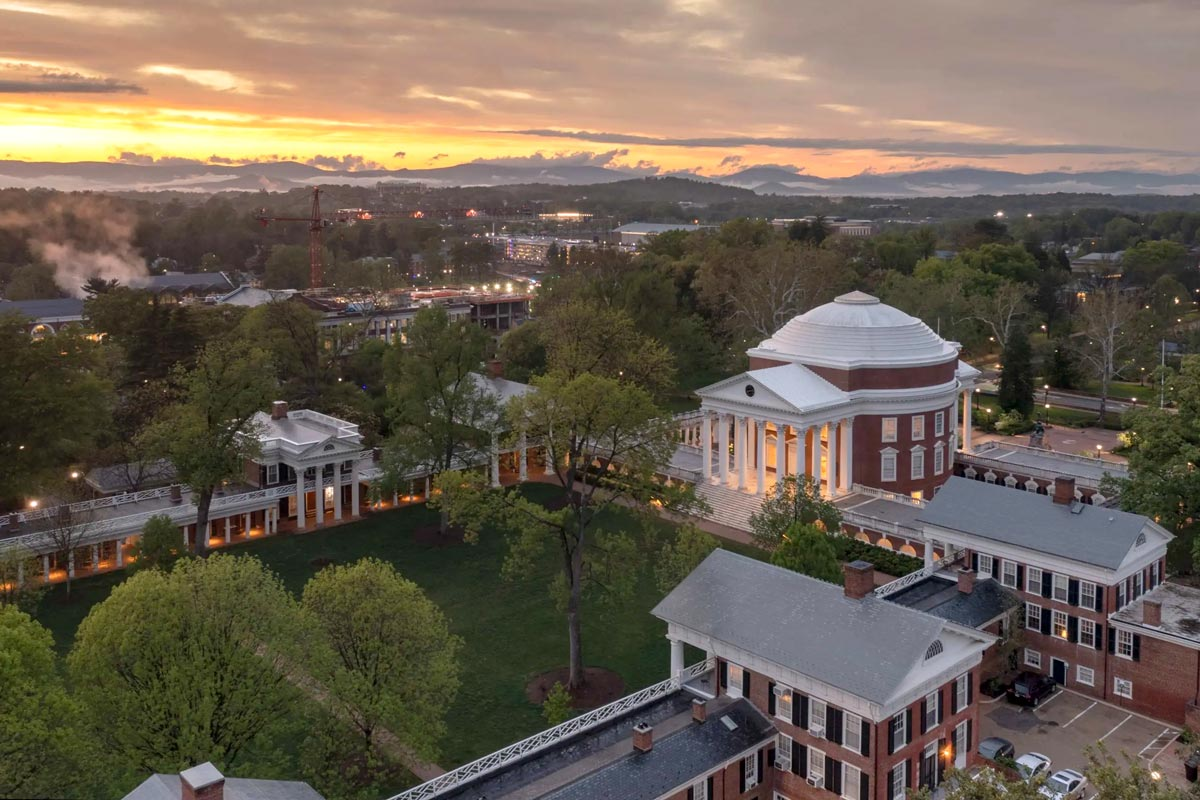
Image provided by The University of Virginia

Between dense schedules and back-to-back presentations, taking time to unwind proved essential for processing the flood of new ideas. Stepping out into Charlottesville provided a striking backdrop for reflection, with Jonathan taking advantage of quiet evening walks across the expansive grounds to digest the day’s insights.

Stanislaus joined a group excursion up to Carter Mountain Orchard, where attendees took in sweeping views of Charlottesville over local wine, bonding with fellow researchers in a relaxed, informal setting. 
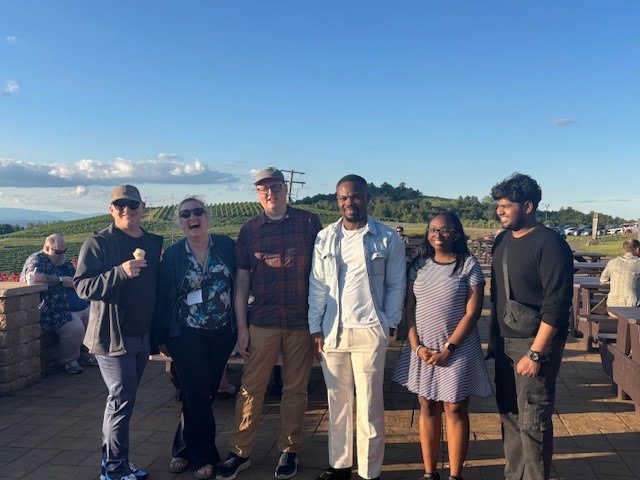
Psychology and Human Factors faculty and graduate students visit Carter Mountain Orchard. Right to left, Jason Harman, Beth Veinott, Shane Mueller, Stanley Oshimeje, Nya McDougald, and Nithish Loganathan

International Conference Advice: Words of Wisdom

Presenting research on an international stage can be daunting. Both Jonathan and Stanislaus shared encouraging words for students stepping up to the microphone for the first time:

Trust your Preparation

“Trust yourself—you know more than you may realize. Try not to feel intimidated. Instead, view the conference as a rare chance to learn and ask questions. Many attendees have built their careers around a specific topic and are more than happy to talk about their work and nerd out with someone who is genuinely curious.”

— Jonathan Holland

Make Connections Intentionally

“Do not attend only to present your work and then leave. Introduce yourself to other students, researchers, and professionals whose work interests you. Ask questions, attend social activities, and talk to people about their research. A brief conversation can lead to valuable feedback, future collaborations, mentorship, or career opportunities.”

— Stanislaus Oshimeje

Embrace the Shift from Page to Stage

Translating a year’s worth of paper writing into a 20-minute talk is intense, but receiving constructive feedback from leaders in the field turns initial anxiety into genuine confidence. You don’t need to know everything—you just need to share your work clearly and be open to growing.

To learn more about the event and upcoming initiatives, visit the Naturalistic Decision Making Association.
MTU Researchers Champion Rail Safety at InnovaRail 2026

Last week, researchers from the Department of Psychology and Human Factors (PHF) and the Department of Civil and Environmental Engineering traveled to the University of Illinois Urbana-Champaign (UIUC) to attend the IEEE InnovaRail 2026 conference.

The annual event brings together leading minds in rail technology, engineering, and safety to discuss the future of railway infrastructure and innovation.

Dr. Elizabeth Veinott (PHF) delivered a talk titled, “A cognitive engineering approach to mapping cues to improve safety at highway-rail grade crossings.” The research—co-authored by recent ACSHF PhD graduate Dr. Anusha Kannan and current ACSHF graduate student Nya McDougald—highlighted different HF methods we use in engineering psychology to improve safety at highway-rail intersections with examples from our research.

The conference provided an opportunity for Michigan Tech’s interdisciplinary delegation of faculty and graduate students to collaborate, share ideas, and represent the university on a national stage.

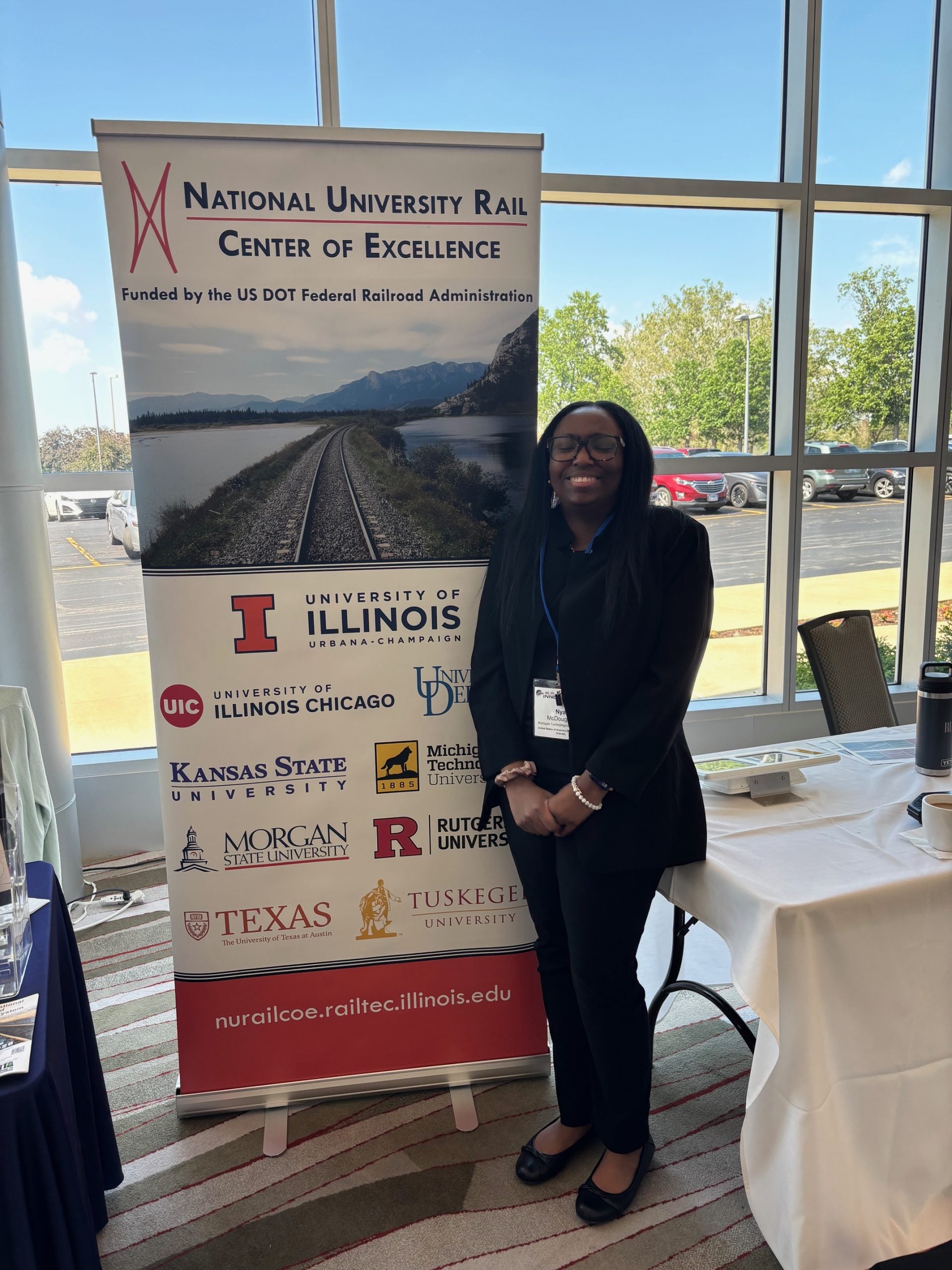
Graduate student and co-author Nya McDougald at the InnovaRail 2026 conference.


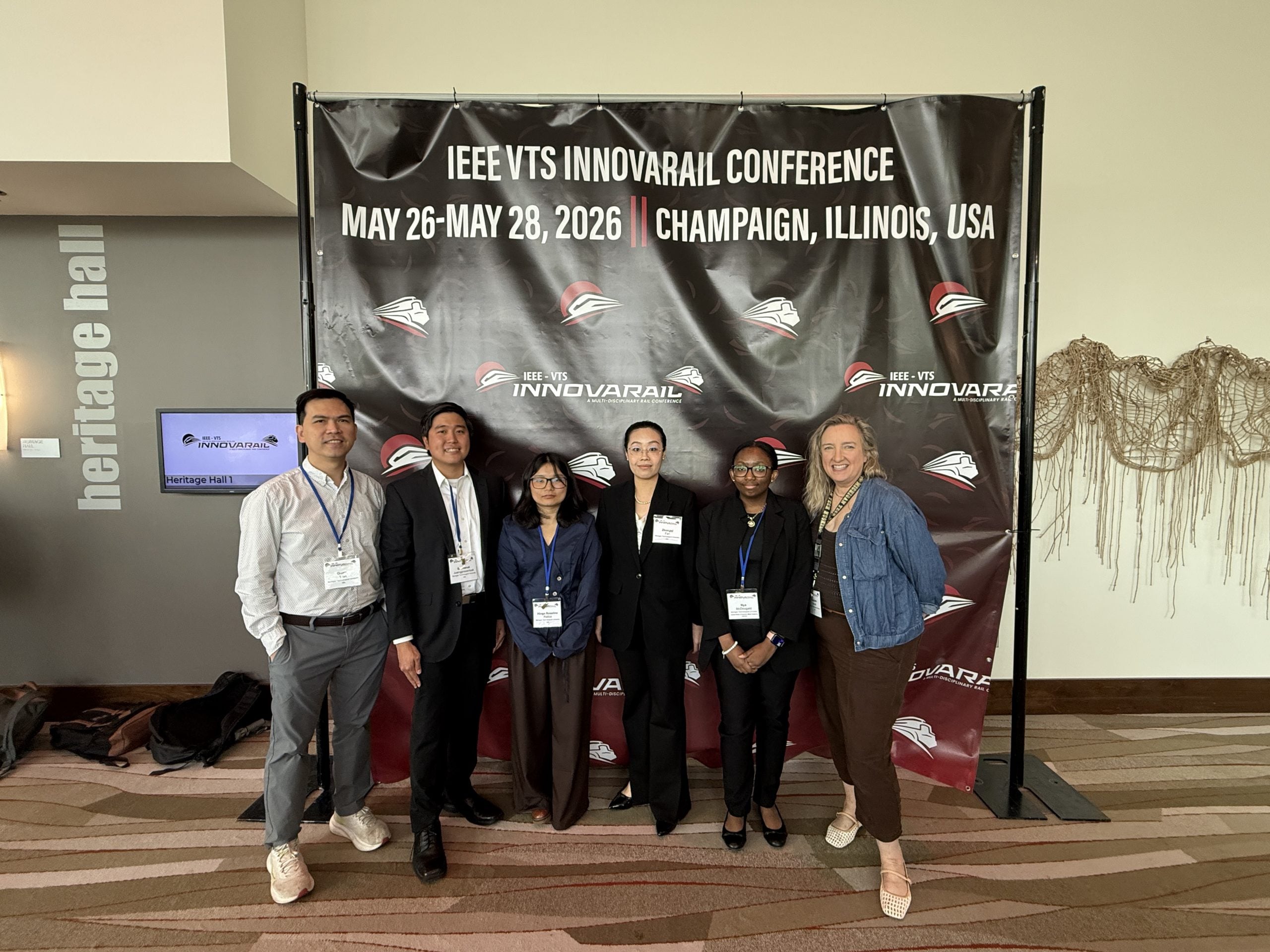
Faculty and graduate students from MTU’s PHF and Civil and Environmental Engineering departments at UIUC.

PhD Student Spotlight

Jen Shaud Helps Advance Conversations on Disability Equity in Higher Ed

An ACSHF PhD student, Jen Shaud, recently contributed to The Chronicle of Higher Education’s latest piece: “Are That Many Students Really Faking Disabilities?”

Jen is studying what helps students with disabilities stay in school and reach graduation. Her work includes surveying students—both with and without disabilities—as well as the faculty members who teach them.

In her research, Jen asks what encourages students to seek accommodations and, more importantly, what stops them from asking. Both Jen’s work and other studies show that staying in school isn’t just about earning passing grades; it’s about feeling like you belong on campus. Many students hesitate to ask for help because they fear peers or teachers will think they’re looking for an ‘easy out.’ Jen is exploring how we can change those attitudes and give students the tools to speak up for themselves so they can thrive from day one.

Bridging Minds and Miles: MTU Students Shine at the Inaugural Superior Psychology Data Blizzard

A group of our Michigan Tech graduate and undergraduate students made the trek to Northern Michigan University for the first annual Superior Psychology Data Blizzard. The brand-new event is the result of Dr. Jason Harman (MTU) and Dr. Jon Barch’s (NMU) desire to establish and foster a collaborative ecosystem between our two programs. The two groups held a poster session and gave presentations about their ongoing research.

Poster Presentations

Sarah Atkinson, an MS student at MTU, shared that “The poster presentations were filled with the sharing of ideas and differing research areas that everyone was working on. Questions were welcome, along with curiosity about the different research areas that each institution/students were working on.”

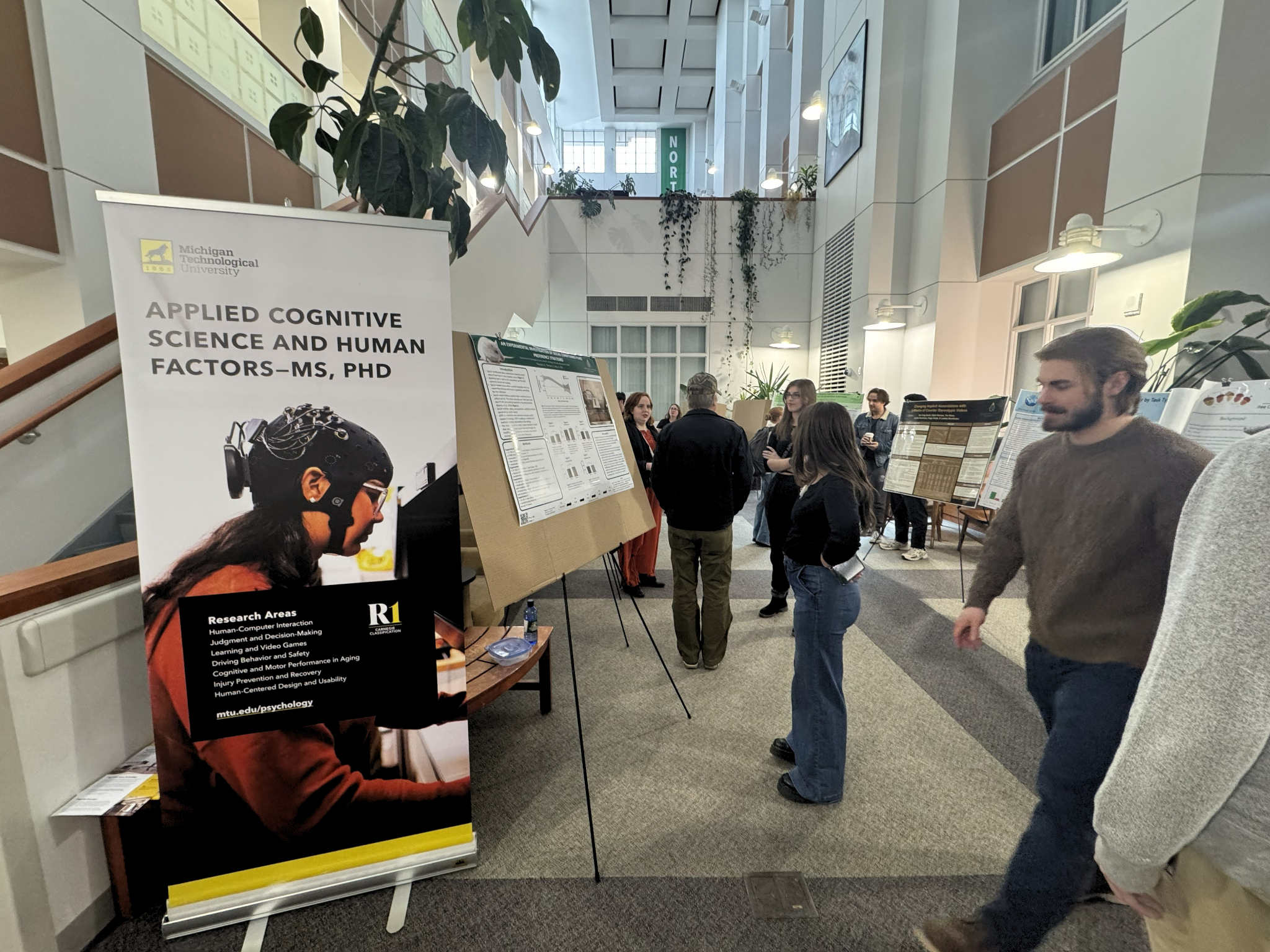
MTU and NMU students mingle around easels displaying research posters in a hall at NMU
The poster session featured current research conducted by MTU and NMU students.

Elijah Nieman, a 2nd-year PhD student at MTU and an NMU alumnus, noted the strategic value of the visit: “The main goal for the event was to present and share our research generally, but also to find or create opportunities to collaborate on future projects.” 

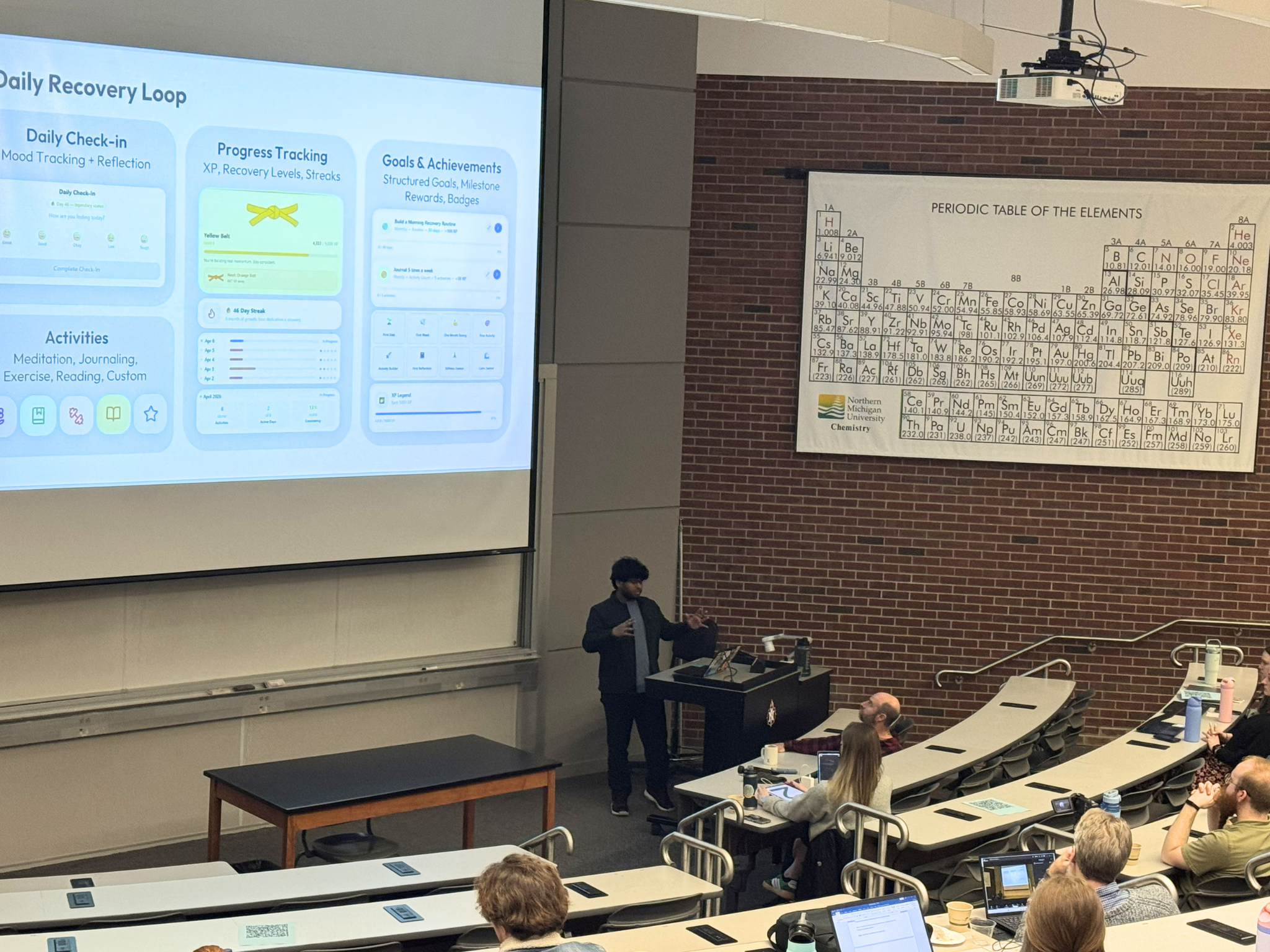
For Nithish Raja Loganathan, the event marked a significant personal milestone. “It was my first time presenting at a human factors–related event. Presenting my project, Recovery Ninja, and receiving questions and feedback from others made the experience both encouraging and really valuable.”

Nithish Raja Loganathan presents his project on a large projection screen to a group of students
Nithish Raja Loganathan presented his project Recovery Ninja

The Impact of Collaboration

Many of our students reported that the draw to NMU was the chance to see research through a different lens. While MTU is a powerhouse for Human Factors and PhD-level research, NMU’s Department of Psychological Science offers a vibrant, neuroscience-centric environment. 

Nithish shared his experience viewing the research from NMU students: “One thing that really stood out to me was the strong focus on neuroscience in many of the projects. It was really interesting to learn about the different ways students are studying human behavior through neuroscience. Seeing that perspective gave me a new way of thinking about how neuroscience and human factors research can connect.” 

Beyond the research, the event also highlighted clear pathways for student growth. Elijah noted how the relationship between the two schools can benefit academic careers. “There’s some potential for MTU undergrads to consider going there for an MS, or for students from their programs to come here—that’s what I did, getting my BS in Neuroscience and MS in Psychology before coming to the PhD program at Tech.” 

When asked to sum up his experience in a single sentence, Stanley Oshimeje said, “The event highlighted the value of bringing students and researchers together to exchange ideas, strengthen connections, and inspire future work.” 

Looking Forward to Next Year

A huge round of applause goes out to all the students who shared their hard work. We are already looking forward to making this a staple of the academic calendar for years to come!

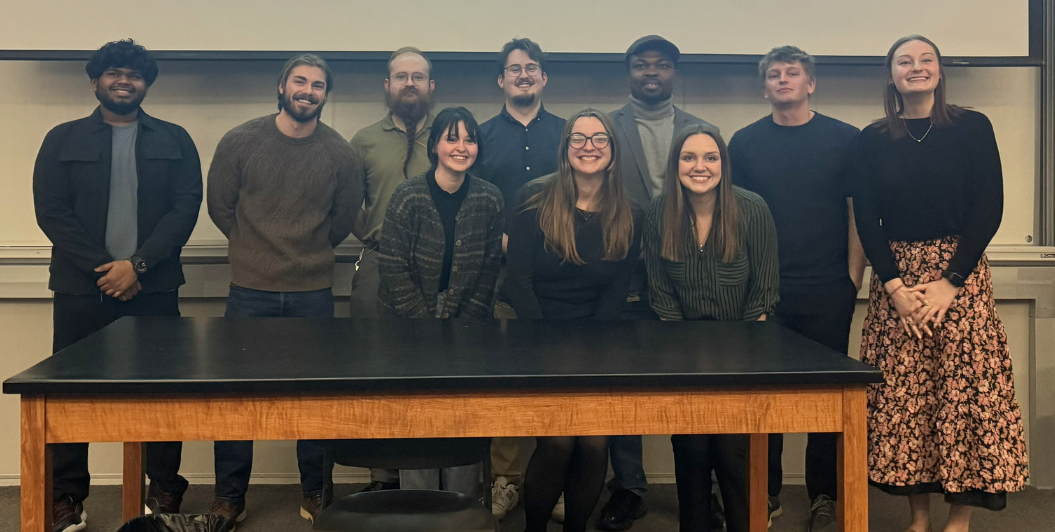
Both NMU and MTU students gather for a group photo
After all the presentations and discussion, both MTU and NMU students agreed that they were looking forward to visiting again next year.

Graduate Students:

Brandon Woolman, Jessica Brassard, Nithish Raja Karuppiah Loganathan, Elijah Nieman, Stanley Oshimeje, and Sarah.

Undergraduate Students:

Morgan Aufdencamp, Brianna Sleeman, and Justine Klein.

Special thanks to Jason Harman for coordinating and to Jon Barch at NMU for hosting such a productive exchange. Everyone is already looking forward to doing it again next year!

Setting the Stage: My Undergraduate Start at MPA

Written by Viviana Cotter

My name is Viviana Cotter. I am a second year Psychology major concentrating in Clinical/Counseling and minoring in Law and Society. Within the Psychology and Human Factors Department, I serve as a Student/Administrative Aide, Teaching Assistant, and Research Assistant. I also serve as the Treasurer for the Association of Psychology Students

In April, I was given the opportunity to attend the Midwestern Psychological Association conference in Chicago.

Viviana Cotter walking along a river in Chicago at night
Picture of Viviana Cotter walking the Chicago Riverwalk in downtown Chicago, Illinois during the night

During the conference, I attended a variety of poster sessions and paper presentations. There were so many researchers covering topics such as the direct and indirect benefits of animal companionship and the social, epistemic, and existential functions of blame. It was a wonderful experience because not only was I given the opportunity to learn about current research, but I was also able to see how the field of psychology is advancing and evolving.

It was enlightening to talk with fellow undergraduate students – discussing their research, asking questions, and learning about their future plans with their research. Additionally, the space provided me the opportunity to engage with graduate school representatives, where I was able to learn about different graduate programs and the opportunities they provide. 

Learning From MTU Graduate Students

I traveled with four MTU graduate researchers: Elijah Nieman, Lauren Sprague, Jen Shaud, and Brandon Woolman. Each presented their research findings during a poster session or paper talk. 

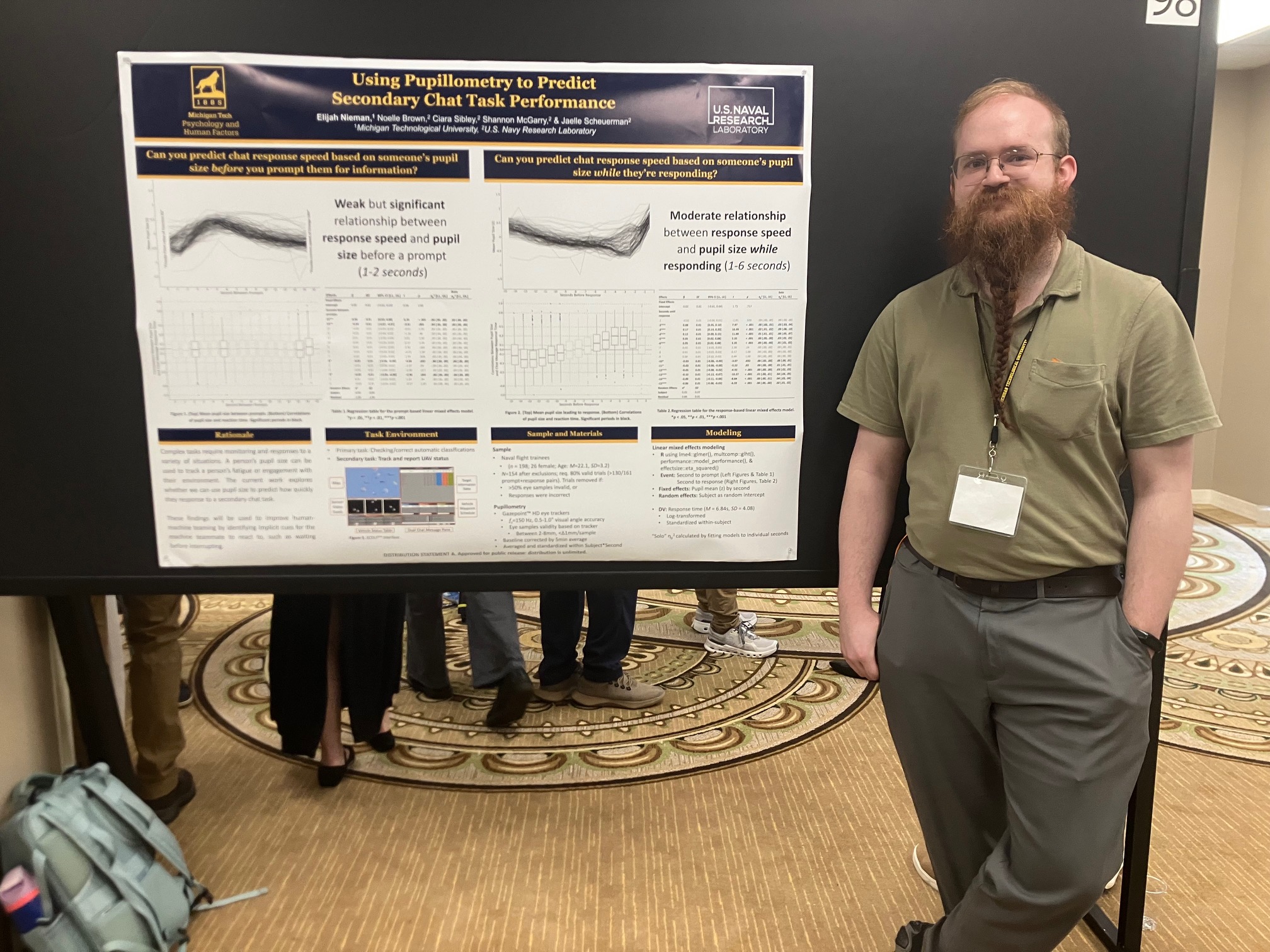
Elijah Nieman standing to the side of his research poster "Using Pupillometry to Predict Secondary Chat Task Performance"
Elijah Nieman presented his research on “Using Pupillometry to Predict Secondary Chat Task Performance” during the poster board session.
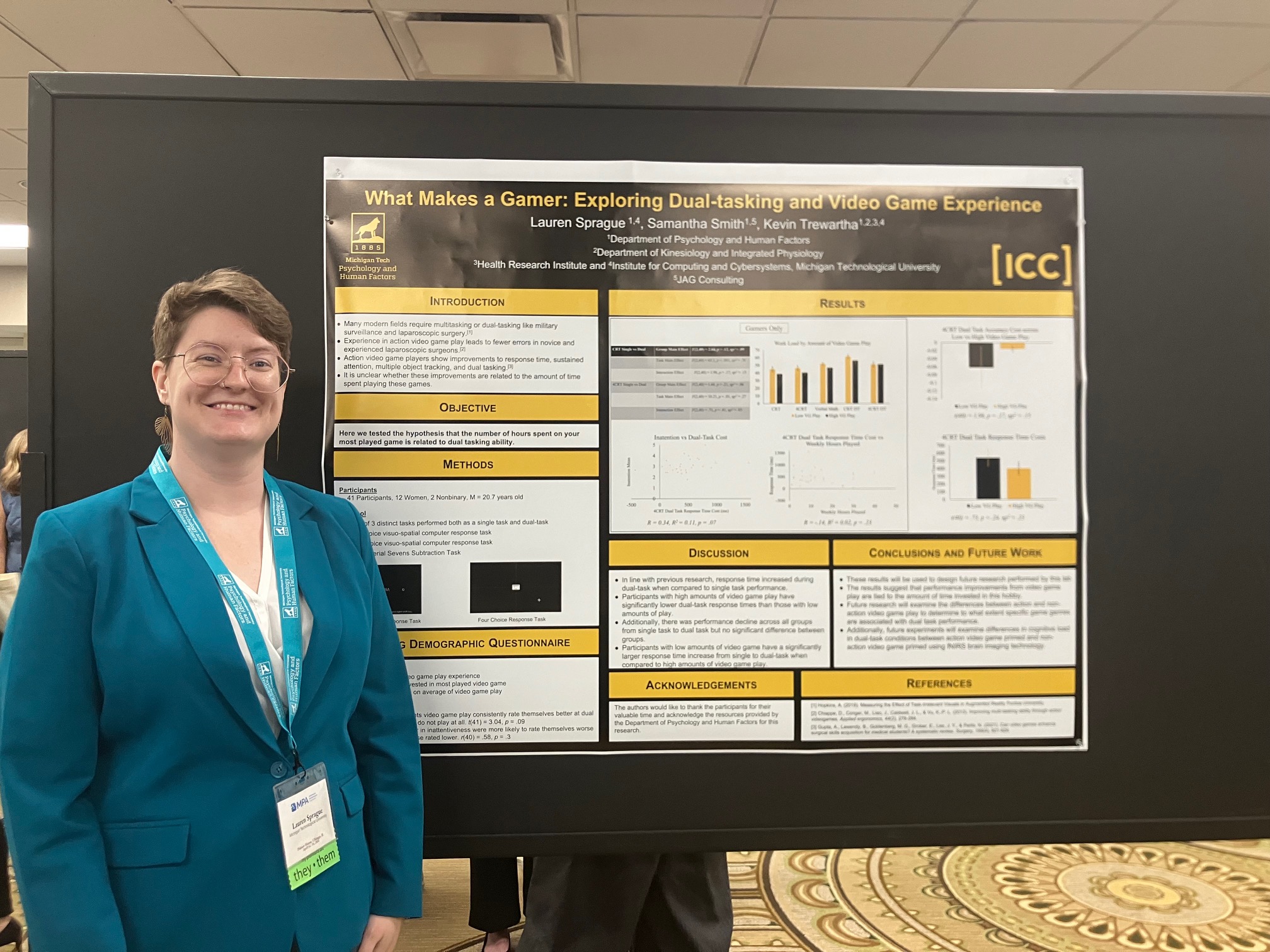
Lauren Sprague standing next to their research poster “What Makes a Gamer: Exploring Dual-Tasking and Video Game Experience.”
During the same session, Lauren Sprague presented their research on “What Makes a Gamer: Exploring Dual-Tasking and Video Game Experience.
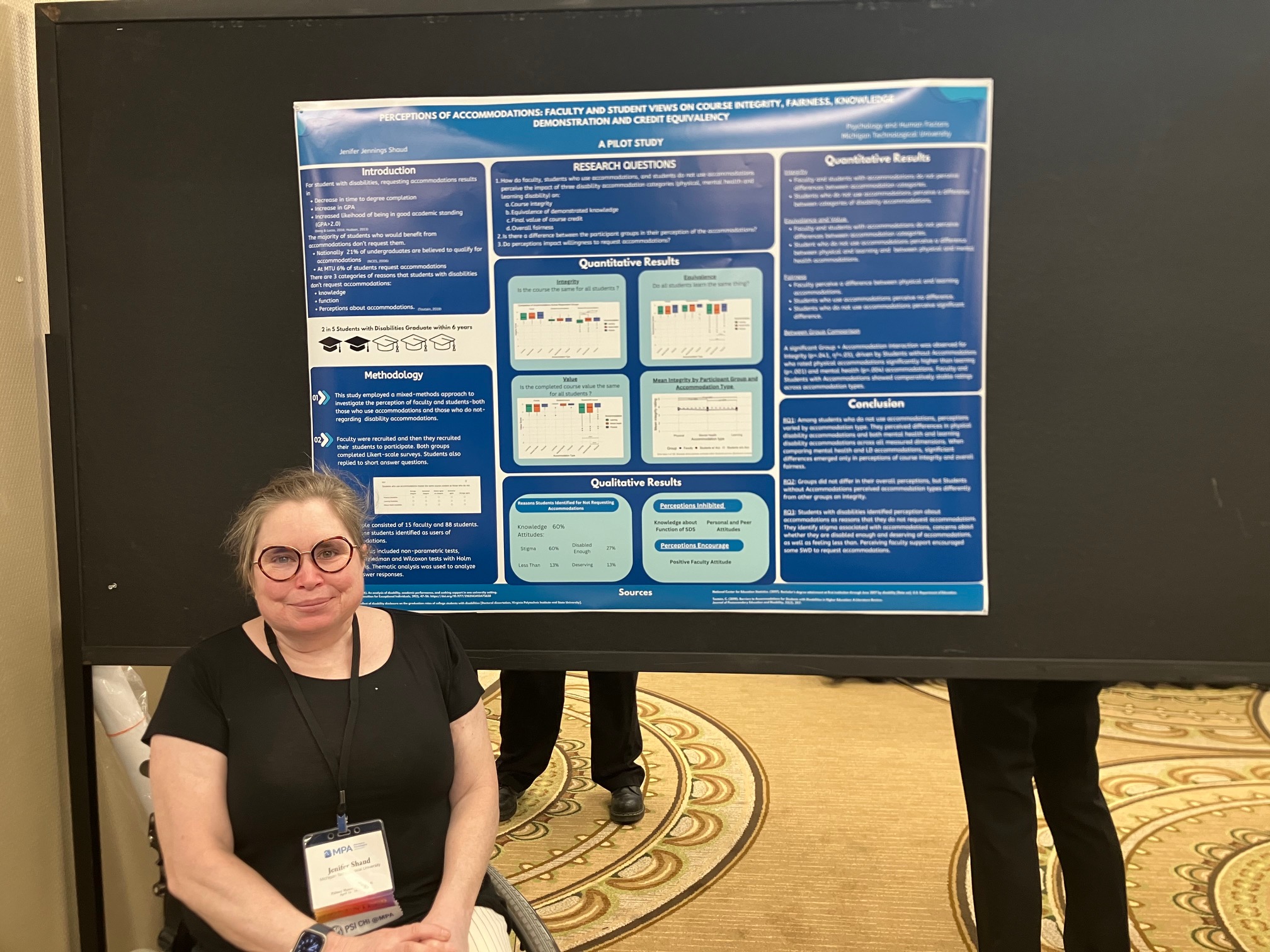
Jen Shaud standing beside her research poster "Perceptions of Accommodations: Faculty and Student Views on Course Integrity, Fairness, Knowledge Demonstration and Credit Equivaliency”
On Saturday, Jen Shaud presented their research on “Perceptions of Accommodations: Faculty and Student Views on Course Integrity, Fairness, Knowledge Demonstration and Credit Equivaliency” during the morning poster session. 
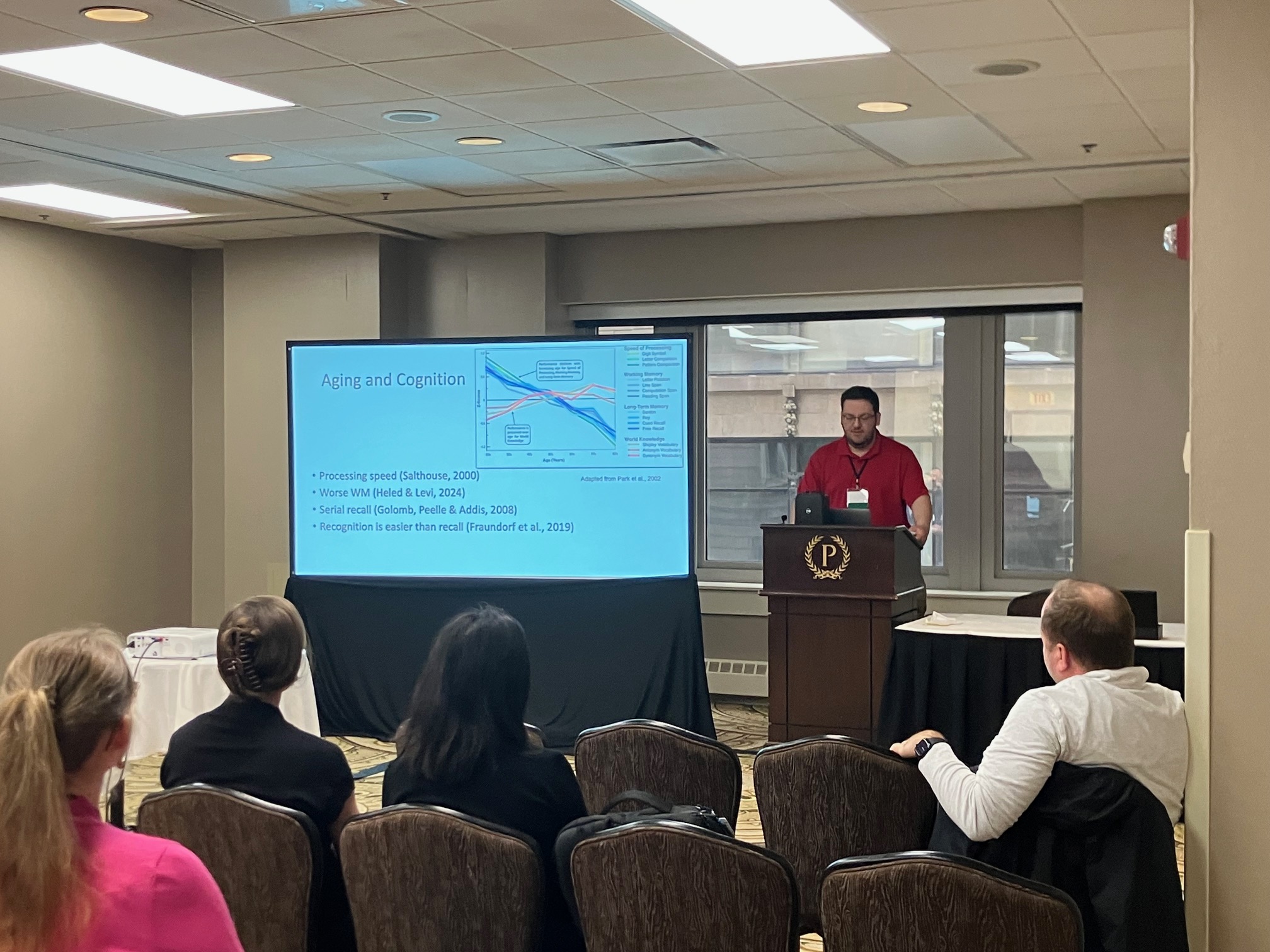
Brandon Woolman standing at a podium in front of a crowd presenting his research “Characterizing Age Difference in a Novel Motor Sequence Learning Task.”
Also on Saturday, Brandon Woolman participated in a paper talk, discussing his research on “Characterizing Age Difference in a Novel Motor Sequence Learning Task.” 

This opportunity was a significant moment for me as an undergraduate and aspiring researcher. I am walking away from this conference with a much clearer understanding of how it all works, and what I can expect in my own future. 

I plan to return next year to present the research that Dr. Destaney Sauls and I are currently working on. Currently, we are deep into research on communal narcissism and working to map its complex traits onto the Trifurcated Model. Stepping back onto that conference floor next year to present our model will feel like a full-circle moment in my development as a researcher and I can’t wait.  

Dr. Jeffery Pettibone Nominated for Deans’ Teaching Showcase

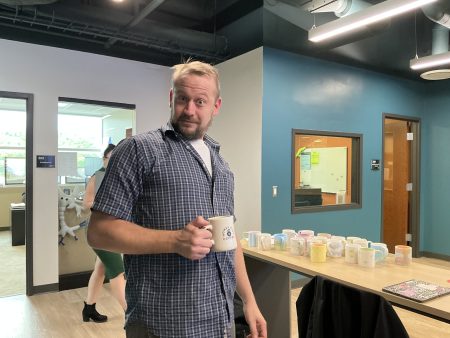
“Good morning, Psychology!” That’s how Dr. Jeff Pettibone greets the department most mornings as he heads for his first cup of coffee. It’s a fittingly warm start for a professor whose office—complete with a cozy couch, vibrant plants, and a table of snacks for any hungry passerby—has become a sanctuary for students. It’s a good thing he’s so prepared; his friendly, kind-hearted nature draws out the best in his students, and his office hours are rarely quiet.

Because of this dedication, we are thrilled to announce that Dr. Pettibone has been nominated for the Deans’ Teaching Showcase.

Established in 2017 by the William G. Jackson Center for Teaching and Learning, this award recognizes instructors who demonstrate exceptional skill in the classroom. Whether it’s managing large introductory courses, implementing innovative teaching methods, or developing a world-class curriculum, the showcase highlights the best of the best. Nominees are celebrated throughout the spring semester leading up to a formal ceremony in the fall.

We want to take this opportunity to honor Dr. Pettibone for the tremendous impact he has made on our Psychology and Human Factors students. Congratulations, Jeff!

Graduate students: Creating community through study and tradition

Weekly Study Group

Written by Jen Shaud

Every week, our department’s graduate students gather for study groups that have become much more than just academic meetings. These sessions are where collaboration meets camaraderie, creating a supportive environment that helps everyone succeed.

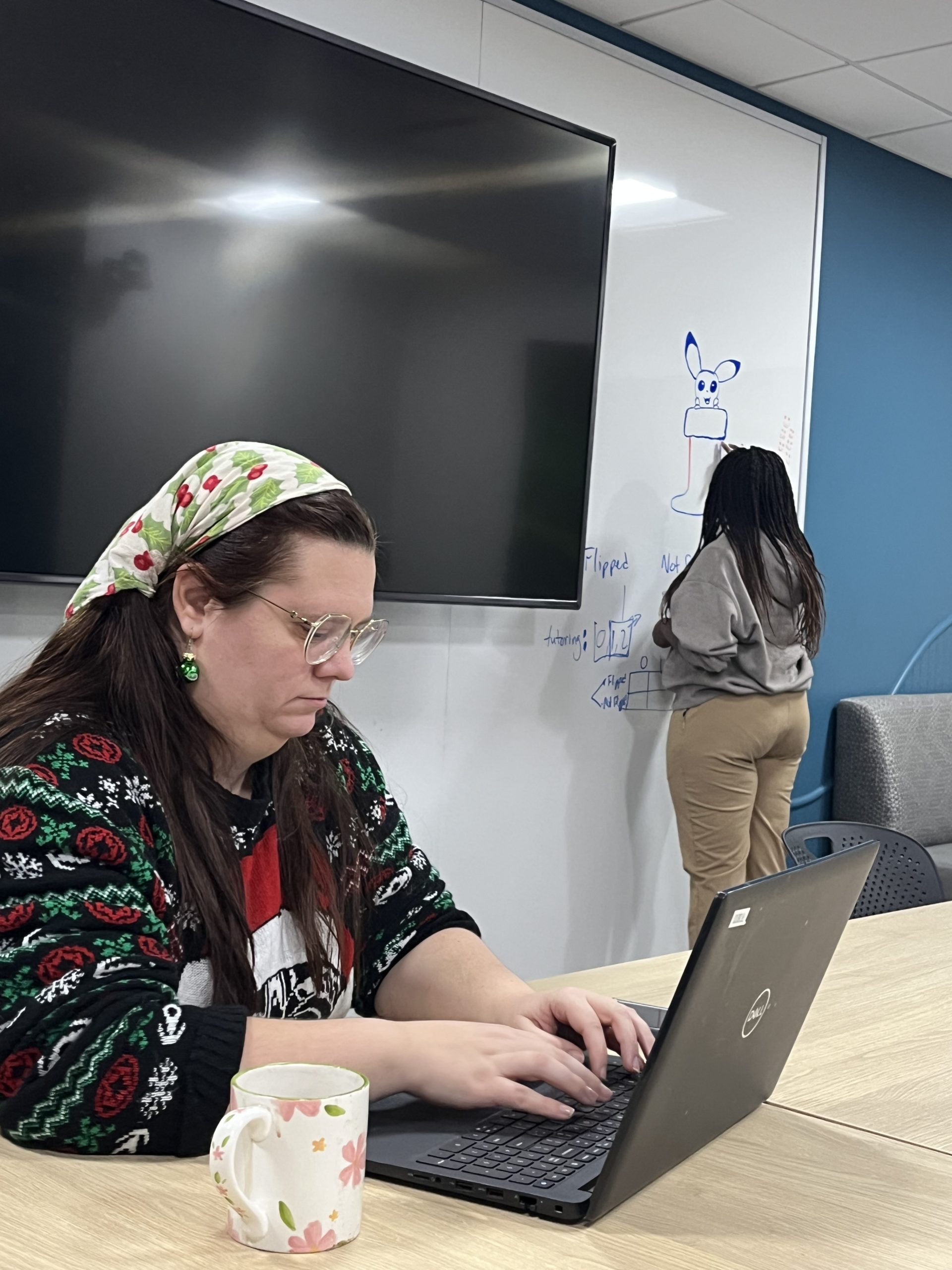
The study groups serve as a vital space where students discuss classwork, share insights about their research, and workshop their writing. Whether someone is wrestling with a challenging concept from class, wrestling with stats work or looking for feedback on a draft, there’s always a fellow student ready to offer a fresh perspective or lend a helping hand.

Recently, the groups have taken on an even warmer atmosphere. Holiday carols filled the room as students balanced festive cheer with productive work on class projects. Some students dedicated their time to collaborating on grant proposals, knowing that funding their research is crucial to their academic journey. Through it all, the underlying thread remained the same: graduate students supporting graduate students.

These weekly gatherings remind us that graduate school doesn’t have to be a solitary endeavor. When we come together to share knowledge, resources, and encouragement, we all benefit. The study groups have become proof that academic success and community support go hand in hand.

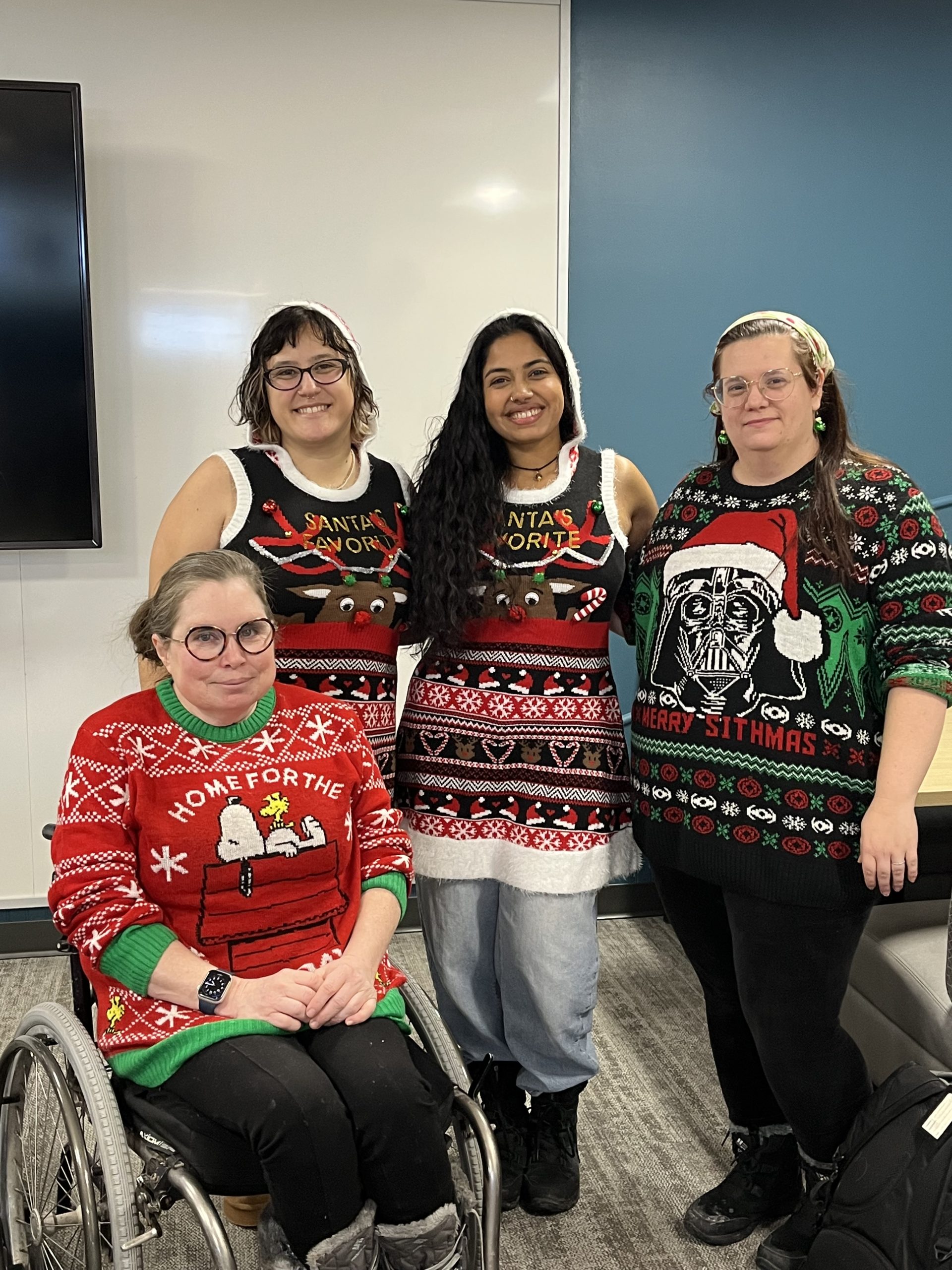
Four people standing in a group wearing festive holiday sweaters
Students gather for an Ugly Sweater party just before winter break
Our co-working space offers large whiteboards, hot coffee, and plenty of outlets for all of your electronic needs.