Category: Applied Cognitive Science and Human Factors

Decisions Under Pressure: Key Takeaways from the 18th International NDM Conference

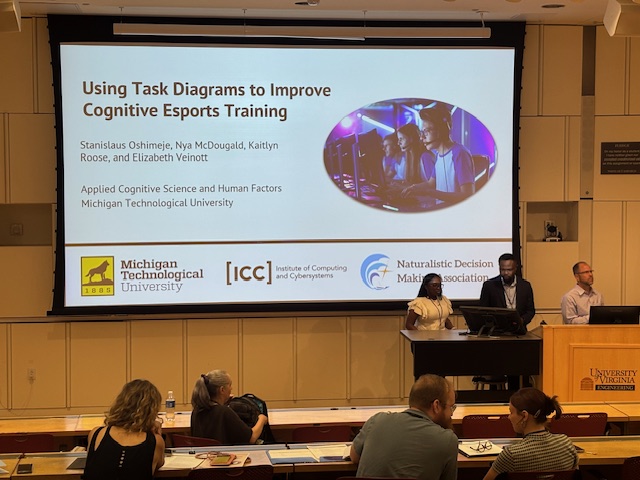
Nya McDougald (ACSHF) and Stanislaus Oshimeje (ACSHF) prepare to present their co-authored paper

When split-second choices mean the difference between success and failure, how do expert decision-makers act without the luxury of time? That’s the core question driving Naturalistic Decision Making (NDM)—a field of research that studies how people navigate complex, high-stakes, real-world environments.

This year, six students and three faculty traveled to the 18th International Conference on Naturalistic Decision Making at the University of Virginia in Charlottesville to present their work, exchange ideas, and connect with world-renowned experts in cognition and decision science.

We caught up with two student attendees, Jonathan Holland and Stanislaus Oshimeje, to hear about their experiences, key research takeaways, and advice for students preparing for their first international conference.

What Exactly Is Naturalistic Decision Making?

For those unfamiliar with NDM, both students offered clear ways to picture the field:

“Naturalistic Decision Making is the study of how people make decisions in real-world situations, often in real time and under pressure. For example, researchers may study doctors, firefighters, or emergency responders during events like life-saving surgeries or active fires. The goal is to better understand these decision-making processes and identify ways to improve them.”

— Jonathan Holland

“A simple example would be a baseball player deciding when to swing at a fast-moving pitch or a soccer player making a split-second decision about whether to shoot at the goal or pass to a teammate. NDM examines how experience helps people recognize important cues, anticipate what may happen next, and choose an effective course of action under time pressure, uncertainty, and complexity.”

— Stanislaus Oshimeje

While traditional decision theory often focuses on how people evaluate options in controlled lab settings, NDM zeroes in on expert intuition and real-world execution.

High-Stakes Connections & Standout Sessions

Attending an international gathering brings a unique mix of high-level academic discussions and meaningful informal networking.

Keynote Highlights: Learning from Leaders 

The session kicked off with Dan Dworkis, Chief Medical Officer at the Mission Critical Team Institute. As an ER physician and applied scientist, Dan explores how complex systems perform under crisis—a topic he dives into regularly on The Emergency Mind Podcast

Next up was former NASA astronaut Marsha Ivins, who captivated the room with fascinating stories of human spaceflight, weaving together lessons on teamwork, adaptability, and decision-making in the most extreme environment imaginable. 

Finally, Timothy Wilson (University of Virginia) took the stage. As a foundational figure in human factors whose seminal paper on verbal protocols is taught directly in Michigan Tech’s Human Factors curriculum, his keynote was a standout full-circle moment for our students.

How Language Shapes Action

Johnathan was particularly drawn to a talk entitled “Metaphor as Cognitive Infrastructure: Surfacing Mental Models in Naturalistic Decision Making” by Sharon Small of the Clean Language Institute. In her presentation, Small explored how the everyday metaphors we use actively frame our thinking and direct our behavior under pressure. 

Following the presentation, Jonathan reconnected with Small to dive deeper into how these subtle linguistic choices ripple through team dynamics, ultimately shaping how groups process information and solve high-stakes problems together.
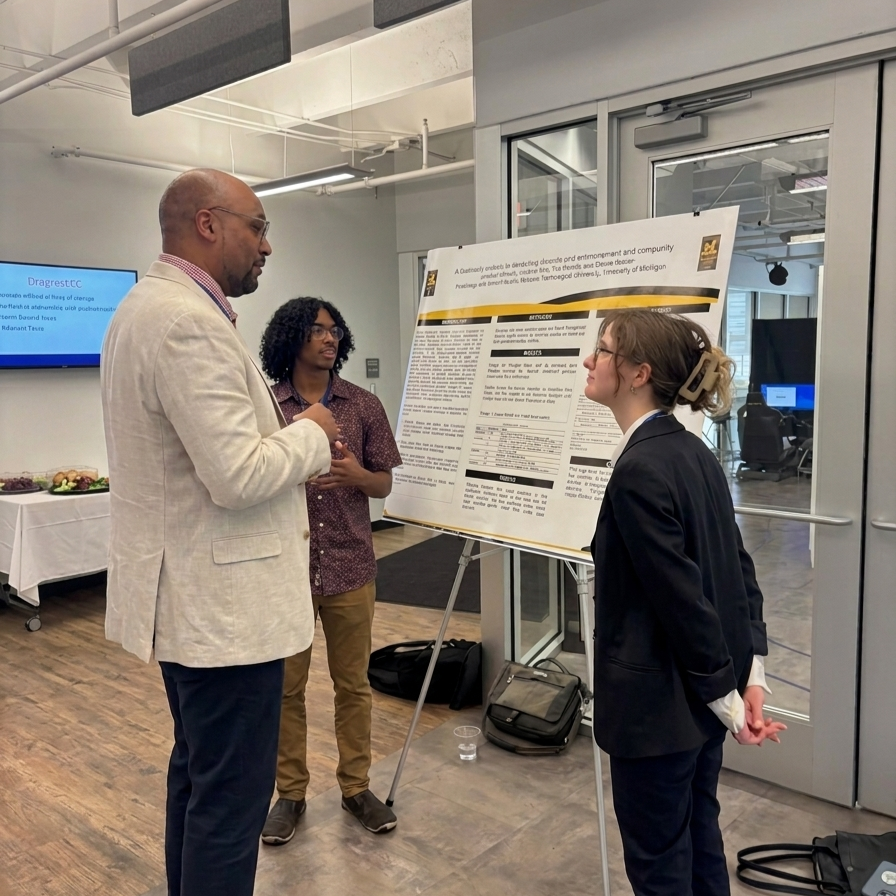
Jonathan Holland (Middle back, Senior, Psychology), center, presents his poster to fellow NDM attendees.

Meeting the Giants of the Field

For Stanislaus, whose current research uses NDM frameworks to analyze rapid decision-making in competitive esports, the conference served as a powerful validation of his work. Along with his co-author, Nya McDougald (ACSHF), Stanislaus took to the stage to present his year-long project. They shared their findings directly with an audience of international experts—including the very researchers whose publications had built the foundation of their own literature review.
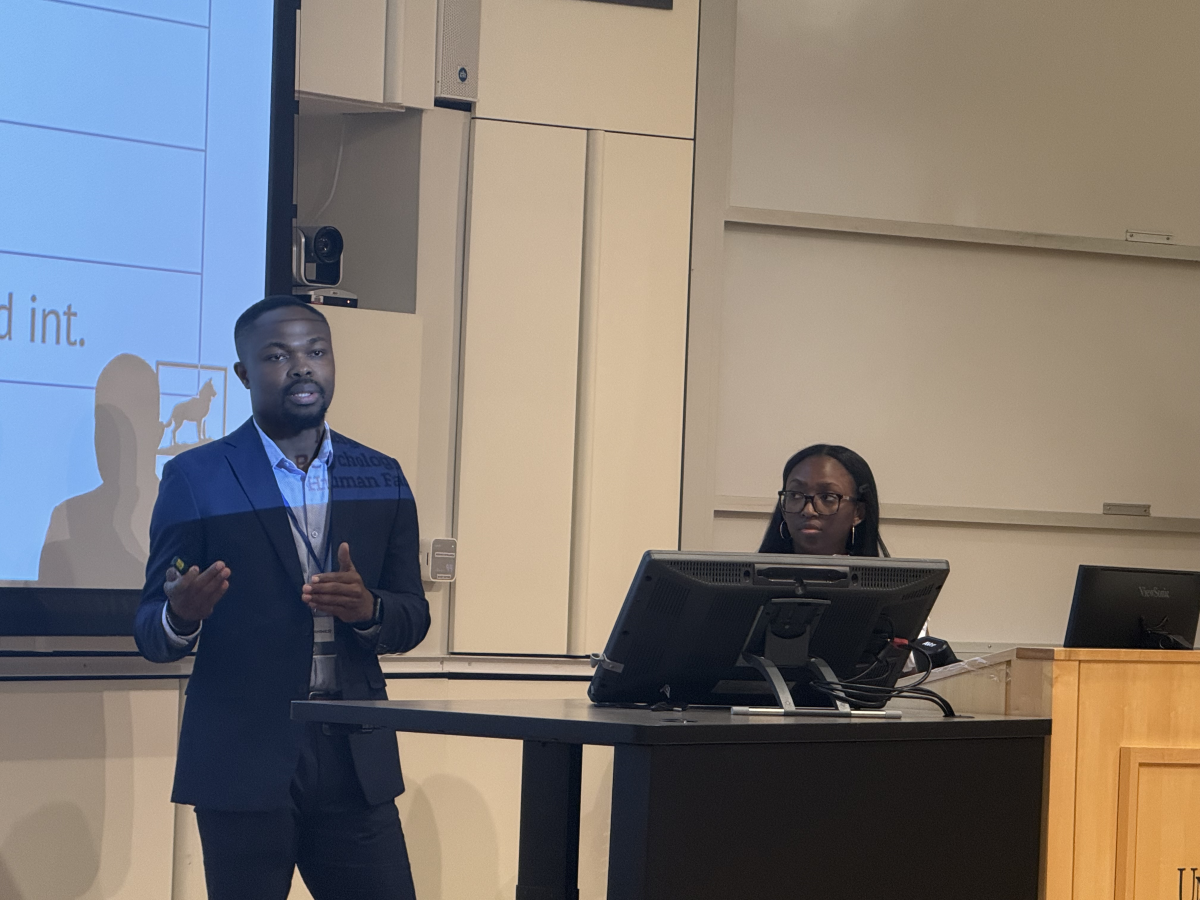
Stanislaus Oshimeje (ACSHF) and Nya McDougald (ACSHF) present a paper they co-wrote entitled Using Task Diagrams to Improve Cognitive Esports Training on the second day of the conference.

Beyond delivering his talk, Stanislaus had the opportunity to connect with Gary Klein, a founder and pioneer in the Naturalistic Decision Making field and founder and Chief Scientist of ShadowBox, to discuss his esports research. 

The conference also offered attendees a rare, behind-the-scenes look at the broader academic ecosystem including interactive experiences embedded throughout the event that translated NDM science into action. 

One such experience entitled Cognitive Skills Training for Emergency Medical Technicians and Paramedics-An Interactive Demonstration, invited attendees to perform a sensemaking diagnosis designed for Emergency Medical Services (EMS) personnel visiting homes and determining if a patient needed to be transported to the hospital.

By sitting in on discussions between veteran scholars and funding organizations, attendees gained firsthand insight into how basic research is pitched, valued, and ultimately translated into practical, real-world tools.

Unwinding in Charlottesville

Image provided by The University of Virginia

Between dense schedules and back-to-back presentations, taking time to unwind proved essential for processing the flood of new ideas. Stepping out into Charlottesville provided a striking backdrop for reflection, with Jonathan taking advantage of quiet evening walks across the expansive grounds to digest the day’s insights.

Stanislaus joined a group excursion up to Carter Mountain Orchard, where attendees took in sweeping views of Charlottesville over local wine, bonding with fellow researchers in a relaxed, informal setting. 
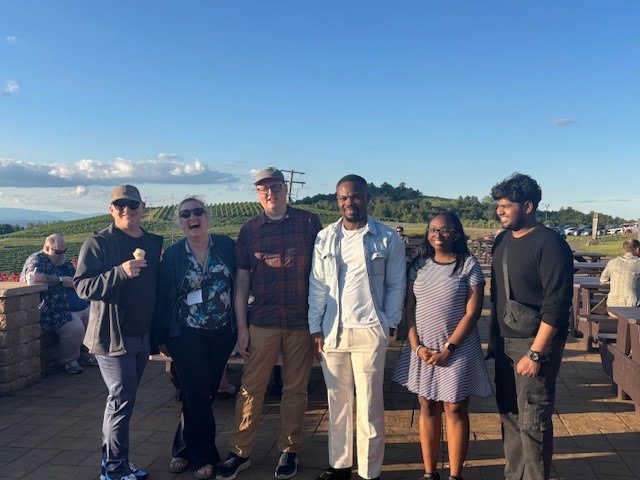
Psychology and Human Factors faculty and graduate students visit Carter Mountain Orchard. Right to left, Jason Harman, Beth Veinott, Shane Mueller, Stanley Oshimeje, Nya McDougald, and Nithish Loganathan

International Conference Advice: Words of Wisdom

Presenting research on an international stage can be daunting. Both Jonathan and Stanislaus shared encouraging words for students stepping up to the microphone for the first time:

Trust your Preparation

“Trust yourself—you know more than you may realize. Try not to feel intimidated. Instead, view the conference as a rare chance to learn and ask questions. Many attendees have built their careers around a specific topic and are more than happy to talk about their work and nerd out with someone who is genuinely curious.”

— Jonathan Holland

Make Connections Intentionally

“Do not attend only to present your work and then leave. Introduce yourself to other students, researchers, and professionals whose work interests you. Ask questions, attend social activities, and talk to people about their research. A brief conversation can lead to valuable feedback, future collaborations, mentorship, or career opportunities.”

— Stanislaus Oshimeje

Embrace the Shift from Page to Stage

Translating a year’s worth of paper writing into a 20-minute talk is intense, but receiving constructive feedback from leaders in the field turns initial anxiety into genuine confidence. You don’t need to know everything—you just need to share your work clearly and be open to growing.

To learn more about the event and upcoming initiatives, visit the Naturalistic Decision Making Association.


ACSHF Forum: Grad Student Presentations

The Department of Psychology and Human Factors will host two speakers at the next Applied Cognitive Science and Human Factors (ACSHF) Forum: Laura Albrant and Kat Rawhouser, both ACSHF Ph.D. students. Their presentations will be from 2-3 p.m. on Monday, March 17, in M&M 610.

Photo of Laura Albrant
Laura Albrant
ACSHF PhD Student
Photo of Kat Rawhouser
Kat Rawhouser
ACSHF PhD Student

Laura Albrant: “Examining Student Resolutions of Automated Critiques

Laura Albrant’s study examines the submission data of students in an introductory engineering courses who modify their code in response to automated critique and how this process evolves over multiple submissions. Her research is grounded in data collected from students in Engineering Fundamentals (EF) courses who used our automated feedback tool, WebTA. This tool provides instant feedback on code syntax, logic, and style, tailored for first-year college students. She analyzed student interactions over four semesters, examining the effectiveness of EF students’ abilities to resolve critiques. This comparative analysis highlights differences in problem-solving strategies, engagement levels, and learning approaches in engineering fundamentals students. The data gathered from four semesters of engineering fundamentals courses, includes detailed logs of each submission, such as submission times, errors identified, critique counts, and resolution times. By analyzing patterns across different submissions, she tracked how student learning evolved over time and varied across disciplines. This approach allowed her to identify effective strategies in automated feedback design that cater to the diverse needs of learners from different educational backgrounds.

Kat Rawhouser: “Lessons from Needs Assessments”

Needs assessments can come in all forms and they can yield a great deal of useful information. In human factors, psychology and cognitive sciences we can learn much from reviewing and doing such assessment before research. From understanding demographics, to being about to connect with key players to gain access to a community or group this method of assessment has a yield in social, cultural and empirical information allowing for understanding by the researcher. This topic will cover the basics of needs assessment, how it can be used and provide an example of how assessing community needs can yield results during implementation.

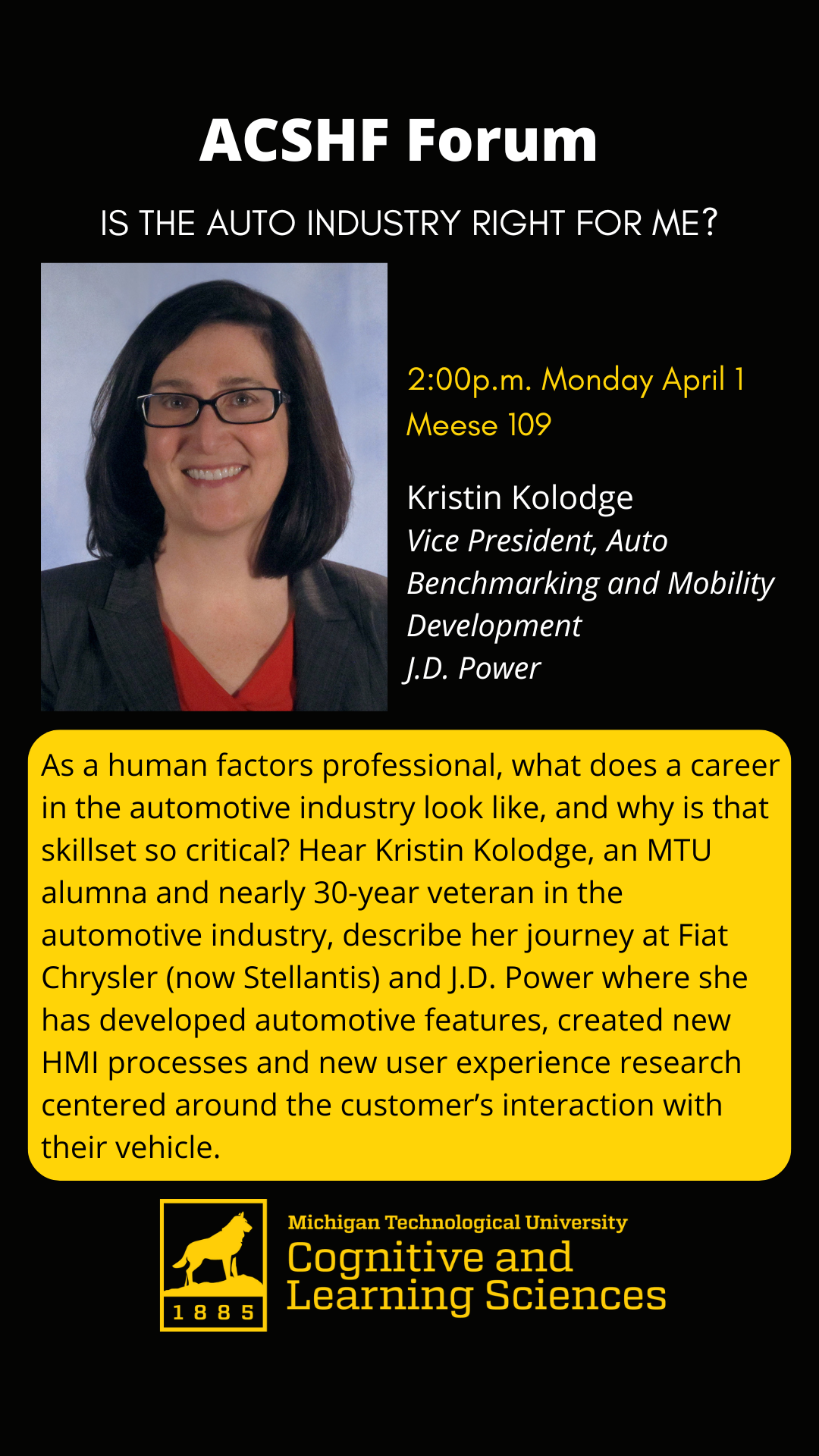
ACSHF Forum: Kristin Kolodge

The Department of Cognitive and Learning Sciences will host Kristin Kolodge at the next Applied Cognitive Science and Human Factors forum Monday April 1, in Meese 109, from 2:00 p.m. to 3:00 p.m. and via Zoom.

“Is the Auto Industry Right for Me?”
As a human factors professional, what does a career in the automotive industry look like, and why is that skillset so critical? Hear Kristin Kolodge, an MTU alumna and nearly 30-year veteran in the automotive industry, describe her journey at Fiat Chrysler (now Stellantis) and J.D. Power where she has developed automotive features, created new HMI processes and new user experience research centered around the customer’s interaction with their vehicle.

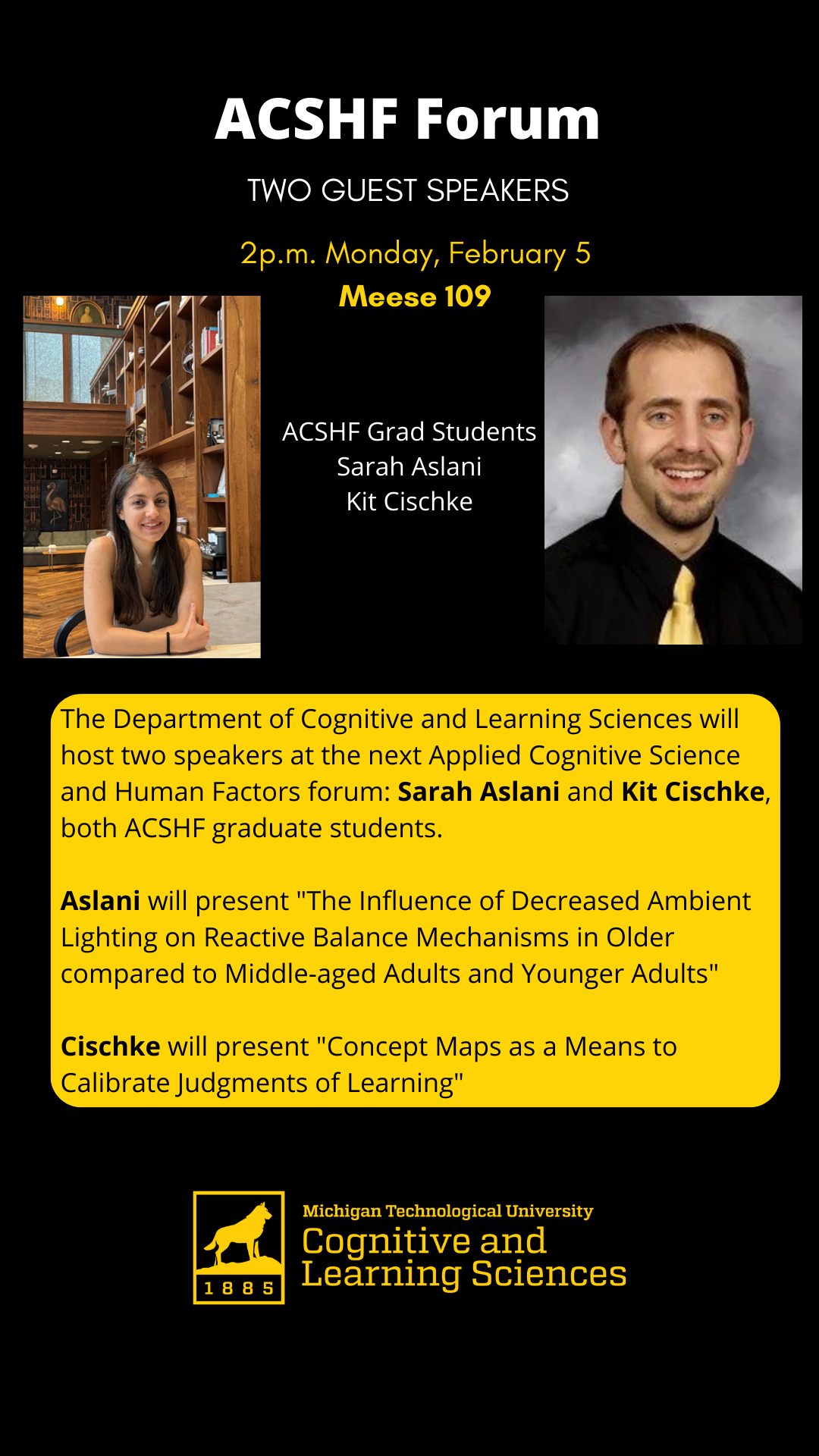
ACSHF Forum: Sarah Aslani and Kit Cischke

The Department of Cognitive and Learning Sciences will host two speakers at the next Applied Cognitive Science and Human Factors forum: Sarah Aslani and Kit Cischke, both ACSHF graduate students. Their presentations will be from 2:00 to 3:00 p.m. Monday (February 5) in Meese 109.

Aslani will present “The Influence of Decreased Ambient Lighting on Reactive Balance Mechanisms in Older compared to Middle-aged Adults and Younger Adults”

Abstract:
Falls, a significant health concern, particularly impact the elderly, with an estimated 30 million incidents annually in the United States alone. Older adults face increased fall risks due to factors like gait variability, reduced strength, sensory decline, and environmental hazards. Postural control, vital for preventing falls, involves a complex interplay of visual, vestibular, somatosensory, and neuromuscular systems. Reactive balance, crucial for avoiding falls, is affected by aging and lighting conditions. Aging contributes to sensory and motor decline, impacting muscle function, coordination, and walking abilities. Visual and vestibular systems play essential roles in postural control, and their decline with age affects balance. Dark environments accentuate the reliance on the vestibular system, influencing balance recovery. Few studies explore the impact of dim lighting on balance recovery, especially in older adults. This study aims to investigate the differences in reactive balance control among older, middle-aged, and young adults in decreased ambient lighting conditions. The hypothesis suggests that dark
environments will decrease overall balance recovery ability in older adults compared to younger and middle-aged groups. Additionally, it predicts that balance recovery stepping characteristics, especially response initiation time, will be more adversely affected in the dark for older adults. This research contributes to understanding the age-related variations in balance control, particularly in challenging lighting conditions, offering insights for fall prevention strategies.

Cischke will present “Concept Maps as a Means to Calibrate Judgments of Learning”

Abstract:
Students often struggle with accurately assessing their own knowledge, also known as metacognition. They frequently rely on unreliable cues such as material familiarity or past homework grades and adjust their studying habits accordingly. In the context of learning new material, a metacognitive assessment of this type is referred to as a “judgment of learning” (JOL). Delaying a JOL after learning the material has been shown to lead to more precise judgments, which is thought to be due to a covert memory access made for the material. Concept maps are diagrams used in various fields to visualize knowledge, particularly the connections between concepts. They mimic the structure of human memory and require both overt and covert memory accesses when creating or reviewing them. Between the memory accesses in a constructive activity, concept mapping, and the testing effect (where testing increases retention of material), concept maps may be an effective tool to calibrate JOLs. This talk discusses some experimental findings on JOL calibration in a situation where the material to be learned is conceptual and there is a self-directed study period before the assessment. The material was technical in nature and new to all of the subjects. Some subjects made a numeric JOL, some completed a concept mapping activity before the JOL, and some did neither. We compare the study times, JOL calibration, and test results of the subjects. The results suggest that concept mapping, when used as an educational intervention in the classroom, can positively influence study efforts and test outcomes while being considered relatively enjoyable by the students.

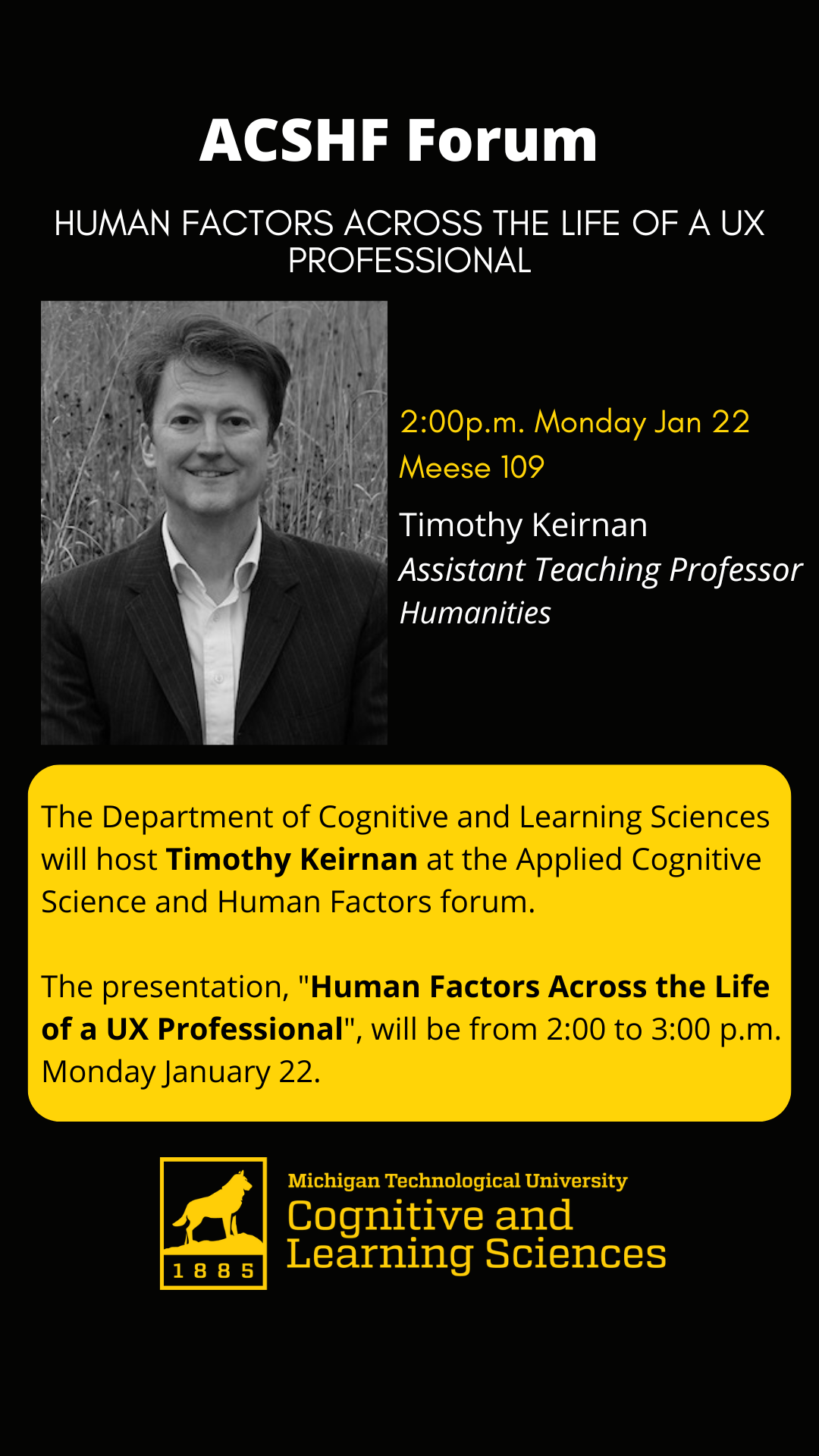
ACSHF Forum: Timothy Keirnan

The Department of Cognitive and Learning Sciences will host Timothy Keirnan (Humanities) at the next Applied Cognitive Science and Human Factors forum Monday January 22 in Meese 109, from 2:00 p.m. to 3:00 p.m.

Join us for a presentation by Timothy Keirnan, a new professor in Humanities with 30 years of experience across the fields of automotive, audio engineering, financial services, and software. From working in recording studios wondering who designed the equipment, to designing the HMI of Ford’s award-winning Pro Power Onboard feature in F150 trucks and Transit vans with a multidisciplinary team of coworkers, Tim has found human factors engineers to be running a parallel course to his career all the way along. In 25 minutes, he will describe his dawning realization of HF as an essential professional discipline to product design and recount some tales from working with its literature and HF engineers at some workplaces. The second 25 minutes will be audience participation to discuss anything in the presentation plus the challenge HF and UX professionals still have in industry to be involved early and often enough on projects.

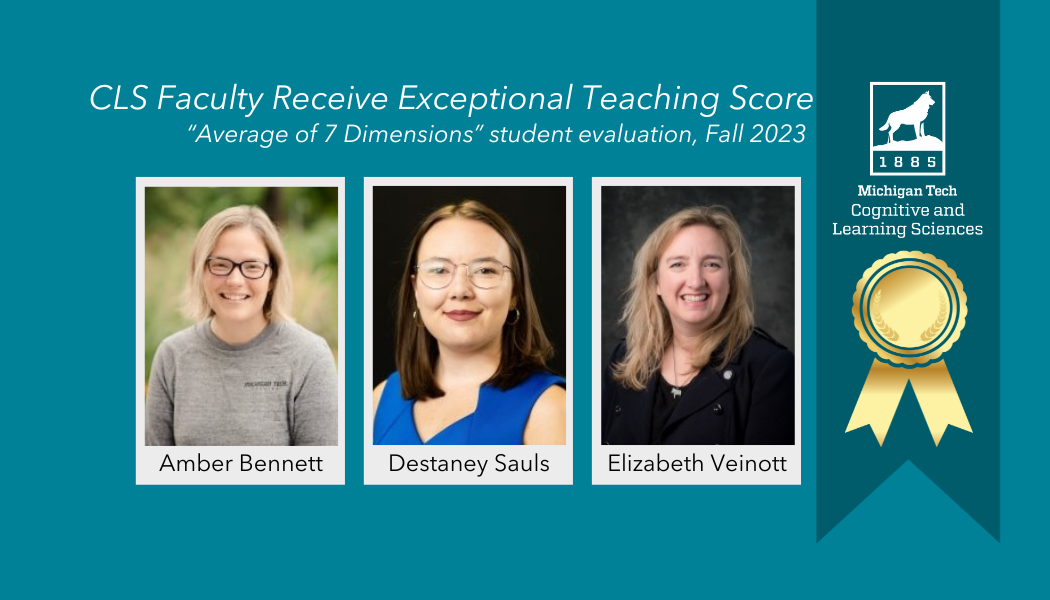
CLS Faculty Receive Exceptional Teaching Score – Fall 2023

Cognitive and Learning Sciences’ faculty Amber Bennett, Destaney Sauls, and Elizabeth Veinott have been identified as three of only 80 instructors who received an exceptional “Average of 7 Dimensions” student evaluation score for fall semester 2023.

Each of their scores were in the top 10% of similarly sized sections university-wide that had at least a 50% response rate and a minimum of 5 responses. Only 106 sections out of more than 1,452 surveyed were rated this highly by students.

Andrew Storer, Interim Provost and Senior Vice President for Academic Affairs, recently congratulated the faculty stating, “On behalf of Michigan Tech’s students, I want you to know that I am aware of your accomplishment. I know that exceptional teaching takes a great deal of time and effort, and I appreciate your commitment to the success of our students. Providing excellent learning opportunities is an important part of Michigan Tech’s mission.”


Michigan Tech’s Department of Cognitive and Learning Sciences offers bachelor of science degrees in Psychology and Human Factors, along with a Minor in Psychology. We also offer an Accelerated Masters degree in Applied Cognitive Science and Human Factors (ACSHF), which typically requires only one additional year of course work. Our graduate program includes masters and doctoral degrees in Applied Cognitive Science and Human Factors (ACSHF).

Questions? Contact us at cls@mtu.edu. And follow us @clsmtu on Instagram and Facebook for the latest happenings

ACSHF Forum: Grad Student Presentations

The Department of Cognitive and Learning Sciences will host two speakers at the next Applied Cognitive Science and Human Factors forum: Anne Inger Mortvedt and Erin Matas, both ACSHF graduate students. Their presentations will be from 2:00 to 3:00 p.m. Monday November 13 in Meese 109.

Mortvedt will present “Usability Assessment of Newly Developed Injury Prevention Program: Insights from Coaches and Players”

Abstract:
This study explores the perceptions of coaches and handball players regarding an 8-week injury prevention program aimed at reducing ACL injuries. Semi-structured interviews were conducted with coaches and a sample of players who participated in the program, providing in-depth qualitative insights about what usability characteristics affect use of an exercise program. Coaches expressed concerns about program efficiency and perceived effectiveness, leading to hesitancy in adopting it for the long term. They stressed the importance of player education and understanding, the need for adaptability in program implementation, and a “propose” rather than “impose” approach. Players had mixed feelings about the program, appreciating perceived improvements in some exercises but finding it too time-consuming and lacking evidence of effectiveness. They proposed ideas to make the training more enjoyable, emphasizing the significance of perceived effectiveness and efficiency, but also introducing playful ways to implement injury prevention training. The study underscores the importance of perceived effectiveness, program efficiency, and player enjoyment in designing successful exercise interventions. These findings can inform the development of an exercise intervention usability scale, enhancing program adoption and long-term adherence.

Matas will present “Shifting the Lens: Applying Cognitive Task Analysis Methods to the Academic Search Domain”

Abstract:
Although the information-seeking behavior of undergraduate students in library search has been examined, the role that cognitive complexity plays in search remains largely unexplored. In a pilot study, students participating in a library search exercise were interviewed using Cognitive Task Analysis (CTA) methods to explore their mental models of the search task. Results from CTAs, such as task diagrams and concept maps, captured the cognitively complex elements for students and will be compared to expert search strategies. Implications for this work to support new library system evaluation and future experiments are discussed. Future experiments will delve deeper into practical strategies for mitigating cognitive complexity and improving search, making search more accessible and effective for people.

Shruti Amre Recipient of Dean’s Award for Outstanding Scholarship

The Department of Cognitive and Learning Sciences is proud to announce that PhD Candidate Shruti Amre has been awarded the Dean’s Award for Outstanding Scholarship. Exceptional graduate students are nominated by their program or department for this award in the year of their graduation. Nominees will have demonstrated academic or professional qualities that set them apart within their academic program.

Congratulations Shruti!

Shruti’s advisor is Dr. Kelly Steelman (CLS).

CLS Students Tour Production Plant for Boss Plow

In October, a group of MTU Human Factors students toured the BOSS SnowPlow headquarters and plant in Iron Mountain, MI. BOSS is a leader in the snow and ice management business with a growing product line and increased development of human-centered processes and equipment.

Katrina Carlson, a graduate student in the Applied Cognitive Science and Human Factors program, organized the trip for the department after completing a summer internship at BOSS. Students toured the BOSS plant, Product Development Lab, and Virtual Reality facilities to learn about the role of human factors in consumer product design as well as production technique and quality assurance.

HFES MTU Chapter Meeting

Come join us for our first HFES (Human Factors and Ergonomics Society) MTU Chapter meeting on November 9 at 6:00 p.m.. We will be meeting via Zoom and discussing opportunities with the club for Spring semester. We will have links to both our InvolvementLink and Discord to keep you up to date on all the club activities!

Reach out to Brandon Woolman (BrWoolma@mtu.edu) for a link or questions.

A close-up of a logo

Description automatically generated