
When split-second choices mean the difference between success and failure, how do expert decision-makers act without the luxury of time? That’s the core question driving Naturalistic Decision Making (NDM)—a field of research that studies how people navigate complex, high-stakes, real-world environments.
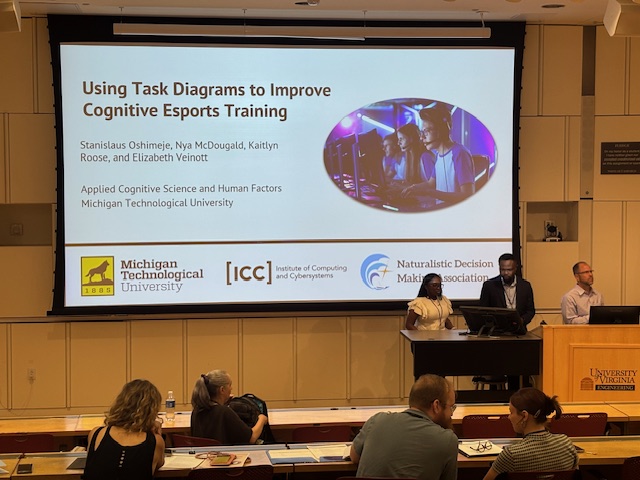
This year, six students and three faculty traveled to the 18th International Conference on Naturalistic Decision Making at the University of Virginia in Charlottesville to present their work, exchange ideas, and connect with world-renowned experts in cognition and decision science.
We caught up with two student attendees, Jonathan Holland and Stanislaus Oshimeje, to hear about their experiences, key research takeaways, and advice for students preparing for their first international conference.
What Exactly Is Naturalistic Decision Making?
For those unfamiliar with NDM, both students offered clear ways to picture the field:
“Naturalistic Decision Making is the study of how people make decisions in real-world situations, often in real time and under pressure. For example, researchers may study doctors, firefighters, or emergency responders during events like life-saving surgeries or active fires. The goal is to better understand these decision-making processes and identify ways to improve them.”
— Jonathan Holland
“A simple example would be a baseball player deciding when to swing at a fast-moving pitch or a soccer player making a split-second decision about whether to shoot at the goal or pass to a teammate. NDM examines how experience helps people recognize important cues, anticipate what may happen next, and choose an effective course of action under time pressure, uncertainty, and complexity.”
— Stanislaus Oshimeje
While traditional decision theory often focuses on how people evaluate options in controlled lab settings, NDM zeroes in on expert intuition and real-world execution.
High-Stakes Connections & Standout Sessions
Attending an international gathering brings a unique mix of high-level academic discussions and meaningful informal networking.
Keynote Highlights: Learning from Leaders
The session kicked off with Dan Dworkis, Chief Medical Officer at the Mission Critical Team Institute. As an ER physician and applied scientist, Dan explores how complex systems perform under crisis—a topic he dives into regularly on The Emergency Mind Podcast.
Next up was former NASA astronaut Marsha Ivins, who captivated the room with fascinating stories of human spaceflight, weaving together lessons on teamwork, adaptability, and decision-making in the most extreme environment imaginable.
Finally, Timothy Wilson (University of Virginia) took the stage. As a foundational figure in human factors whose seminal paper on verbal protocols is taught directly in Michigan Tech’s Human Factors curriculum, his keynote was a standout full-circle moment for our students.
How Language Shapes Action
Johnathan was particularly drawn to a talk entitled “Metaphor as Cognitive Infrastructure: Surfacing Mental Models in Naturalistic Decision Making” by Sharon Small of the Clean Language Institute. In her presentation, Small explored how the everyday metaphors we use actively frame our thinking and direct our behavior under pressure.
Following the presentation, Jonathan reconnected with Small to dive deeper into how these subtle linguistic choices ripple through team dynamics, ultimately shaping how groups process information and solve high-stakes problems together.
Meeting the Giants of the Field
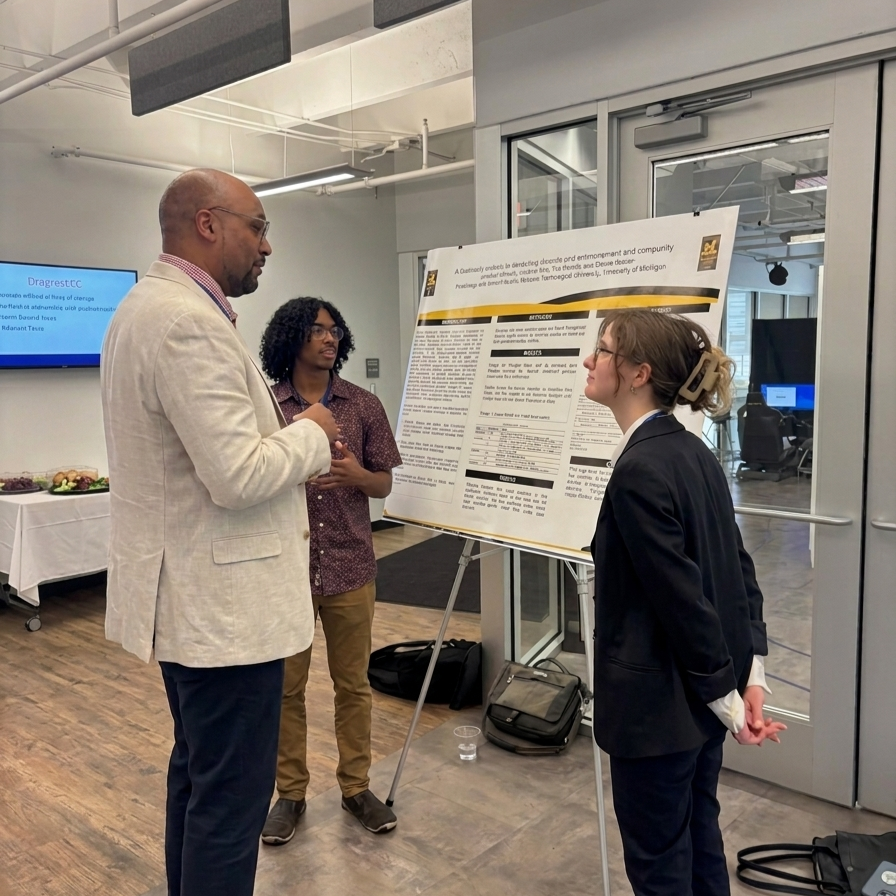
For Stanislaus, whose current research uses NDM frameworks to analyze rapid decision-making in competitive esports, the conference served as a powerful validation of his work. Along with his co-author, Nya McDougald (ACSHF), Stanislaus took to the stage to present his year-long project. They shared their findings directly with an audience of international experts—including the very researchers whose publications had built the foundation of their own literature review.
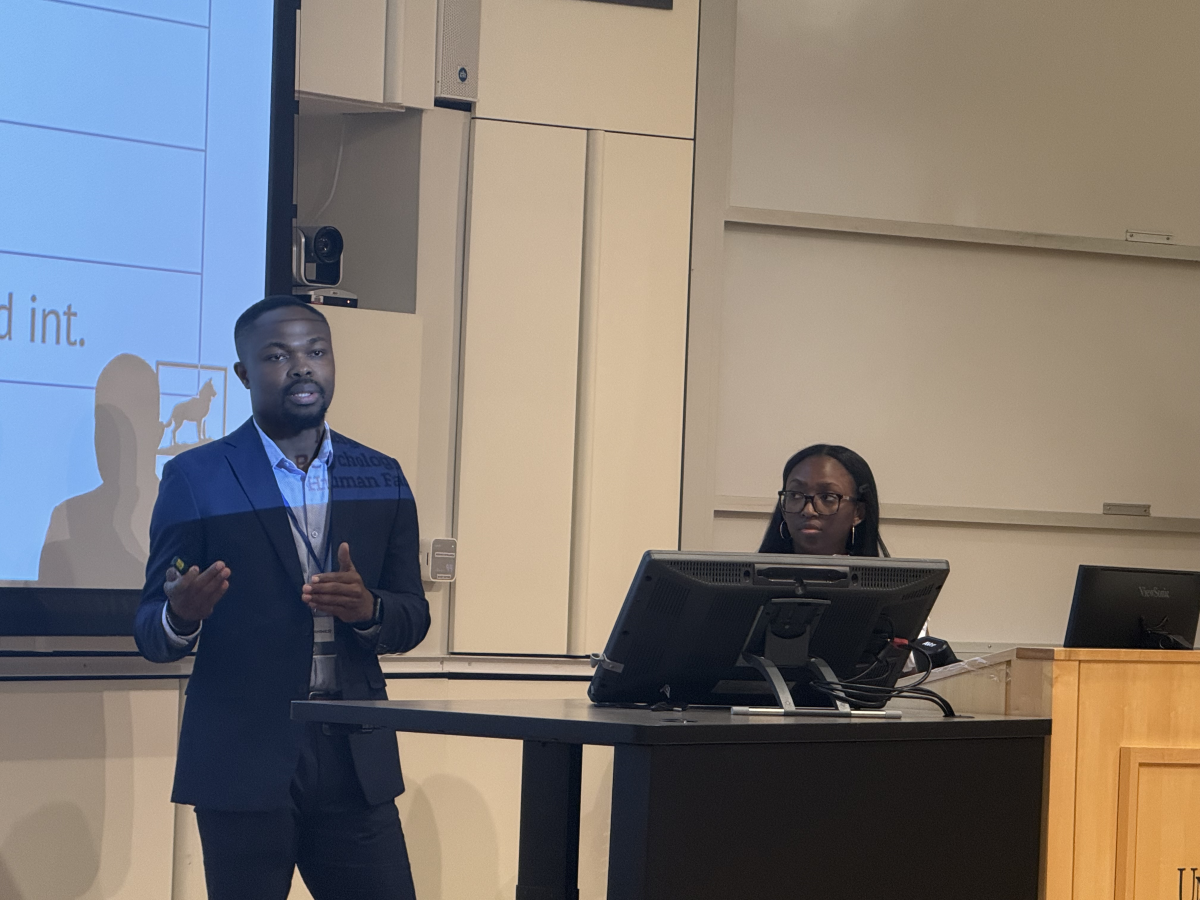
Beyond delivering his talk, Stanislaus had the opportunity to connect with Gary Klein, a founder and pioneer in the Naturalistic Decision Making field and founder and Chief Scientist of ShadowBox, to discuss his esports research.
The conference also offered attendees a rare, behind-the-scenes look at the broader academic ecosystem including interactive experiences embedded throughout the event that translated NDM science into action.
One such experience entitled Cognitive Skills Training for Emergency Medical Technicians and Paramedics-An Interactive Demonstration, invited attendees to perform a sensemaking diagnosis designed for Emergency Medical Services (EMS) personnel visiting homes and determining if a patient needed to be transported to the hospital.
By sitting in on discussions between veteran scholars and funding organizations, attendees gained firsthand insight into how basic research is pitched, valued, and ultimately translated into practical, real-world tools.
Unwinding in Charlottesville
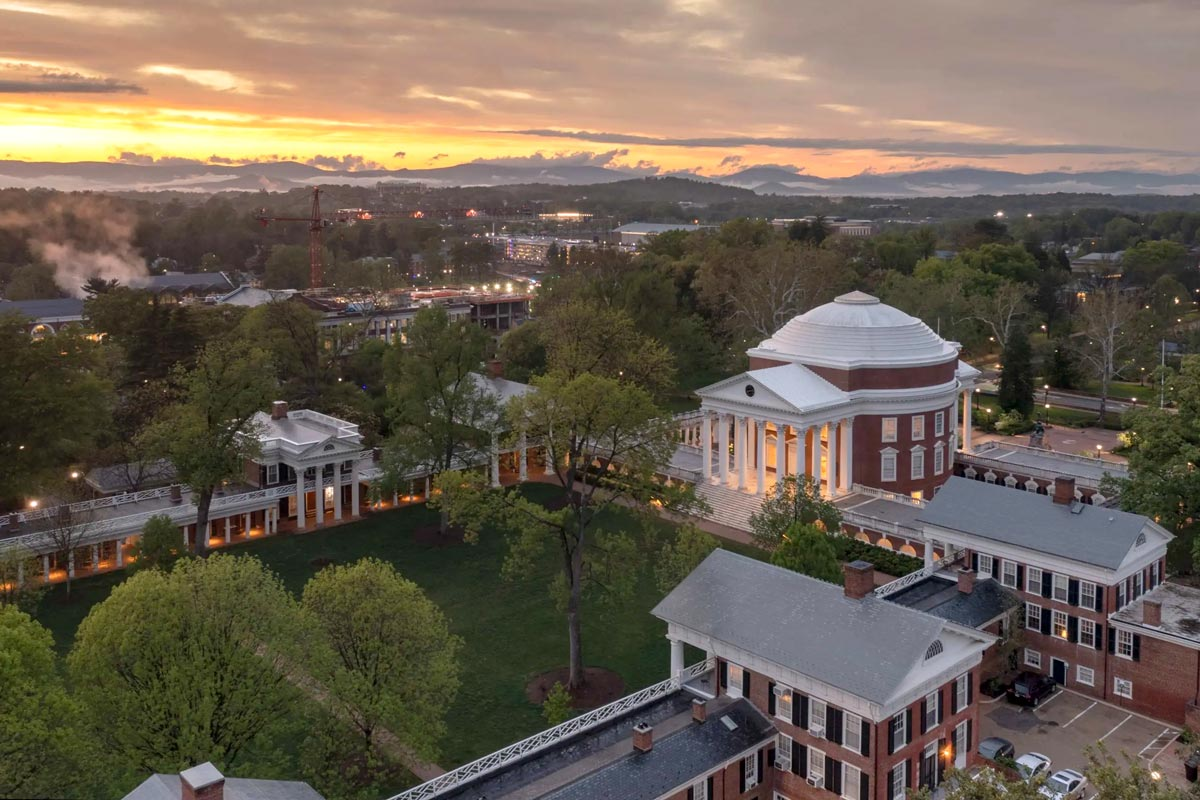
Between dense schedules and back-to-back presentations, taking time to unwind proved essential for processing the flood of new ideas. Stepping out into Charlottesville provided a striking backdrop for reflection, with Jonathan taking advantage of quiet evening walks across the expansive grounds to digest the day’s insights.
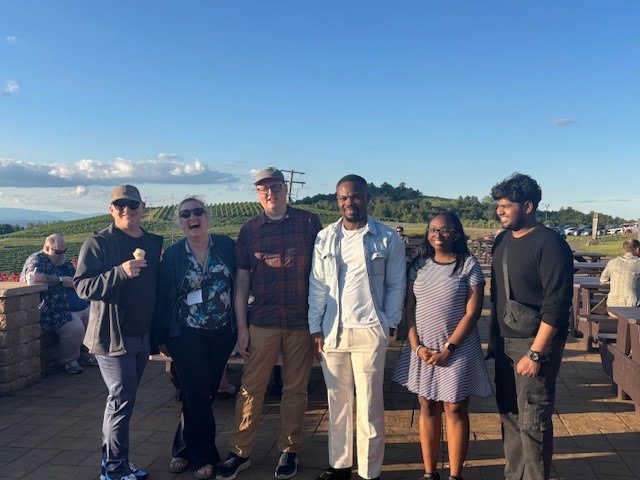
Stanislaus joined a group excursion up to Carter Mountain Orchard, where attendees took in sweeping views of Charlottesville over local wine, bonding with fellow researchers in a relaxed, informal setting.
International Conference Advice: Words of Wisdom
Presenting research on an international stage can be daunting. Both Jonathan and Stanislaus shared encouraging words for students stepping up to the microphone for the first time:
Trust your Preparation
“Trust yourself—you know more than you may realize. Try not to feel intimidated. Instead, view the conference as a rare chance to learn and ask questions. Many attendees have built their careers around a specific topic and are more than happy to talk about their work and nerd out with someone who is genuinely curious.”
— Jonathan Holland
Make Connections Intentionally
“Do not attend only to present your work and then leave. Introduce yourself to other students, researchers, and professionals whose work interests you. Ask questions, attend social activities, and talk to people about their research. A brief conversation can lead to valuable feedback, future collaborations, mentorship, or career opportunities.”
— Stanislaus Oshimeje
Embrace the Shift from Page to Stage
Translating a year’s worth of paper writing into a 20-minute talk is intense, but receiving constructive feedback from leaders in the field turns initial anxiety into genuine confidence. You don’t need to know everything—you just need to share your work clearly and be open to growing.
To learn more about the event and upcoming initiatives, visit the Naturalistic Decision Making Association.