Category: Uncategorized

Driving Safety Forward: Human Factors Students Present at MTU Railroad Night 2026

Human Factors was proudly represented at Michigan Technological University’s annual Railroad Night! Hosted by MTU’s Rail Transportation Program (RTP) and led by Professor Pasi Lautala, Railroad Night is one of the program’s most cherished traditions. The annual event brings together Michigan Tech students, faculty, and rail-industry leaders to showcase and explore cutting-edge research emerging from the university.

For the past several years, Psychology and Human Factors faculty and students have joined the lineup to share research aimed at improving road and rail safety. At this year’s event, four researchers from Professor Elizabeth Veinott’s lab presented driving and rail safety studies utilizing Michigan Tech’s high-fidelity NADS MiniSIM driving simulator.

Exploring Interface Modality and Driver Performance
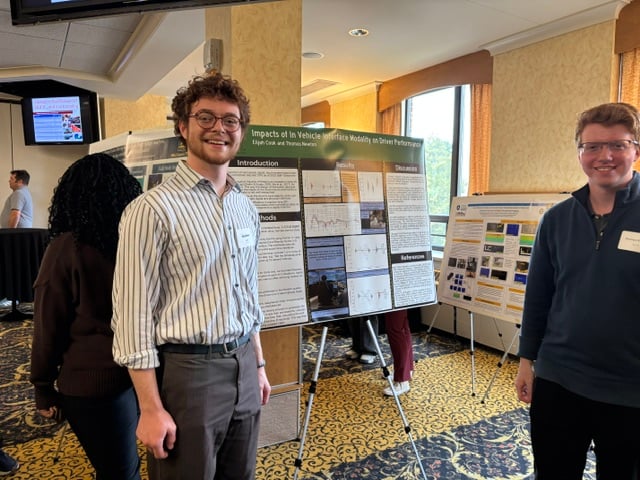
Two young men stand near a research poster smiling towards the camera
Eli Cook (left) and Thomas Newton (right) presented a poster on their research

Undergraduate researchers Eli Cook (HF) and Thomas Newton (HF) presented a poster titled “Impacts of Interface Modality on Driver Performance.” Developed under the mentorship of Dr. Jeffery Pettibone during the Research Methods course last spring, their study examined how different user interface designs affect operator performance and focus. Utilizing a tablet to display their custom-designed user interface, Eli and Thomas have since expanded their work to explore early warning systems for oncoming rail crossings.

When asked how it felt to present their research on a large scale, Thomas shared, “There’s always going to be nerves, at least in my experience. I’ve been working on this poster for the better part of a year now and I still stumble over words occasionally. At the same time, we’re all there to connect over cool research, so I’m truly just having fun.”

This highlights the broader value of events like Railroad Night: students gain an opportunity to share their research while drawing inspiration from others. Thomas noted, “I had the wonderful opportunity to chat with someone from the civil engineering side of rail design. It turns out there’s a blue plaque posted at every rail crossing with a direct line to the railroad’s emergency response team. Very few people outside of rail studies know it exists because there’s little public education and the signs are easy to miss. Learning that immediately made me think, ‘This is a classic human factors problem!’”

A Systems Approach to Road and Rail Safety
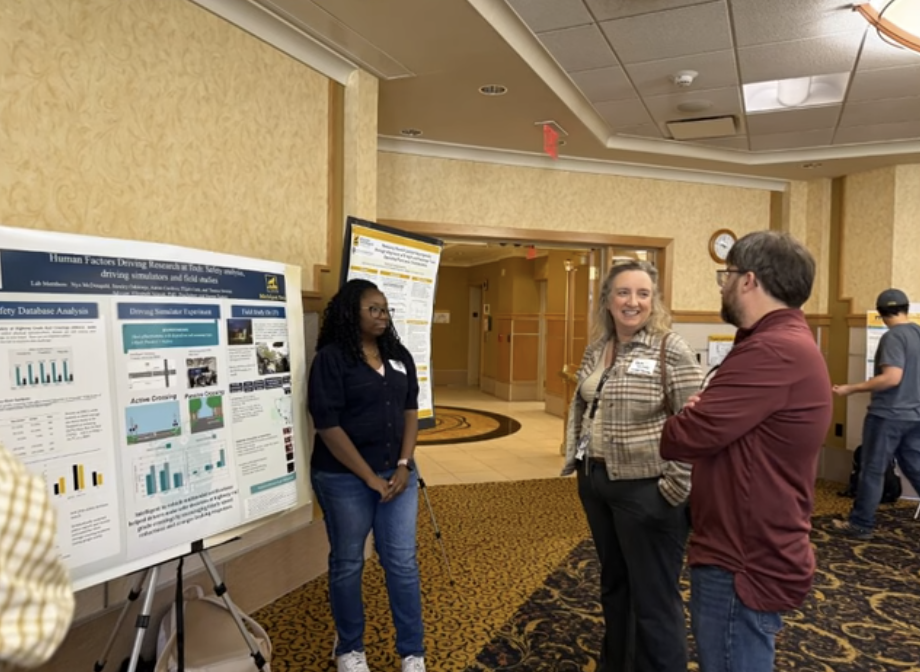
A young woman stands near a research poster while her professor, also a woman, stands near by
Nya McDougald (left) and Dr. Veinott (center) discuss the lab research

Undergraduate Aaron Cordova (HF) and PhD student Nya McDougald (ACSHF) presented a poster titled “Human Factors Driving Research at Tech: Safety Analysis, Driving Simulators and Field Studies.”

Their presentation highlighted how the lab takes a systems approach to improving road safety by bridging theory, real-world applications, and multi-method research. Their process includes analyzing naturalistic data from the Federal Railroad Administration (FRA) safety portal to identify critical patterns in real-world driving behavior. These patterns then inform controlled experiments in the NADS MiniSIM driving simulator to test operator responses to hazards and evaluate in-vehicle interventions. Finally, the team conducts on-road field studies to test these interventions in real-world environments. This interdisciplinary human factors research involves ongoing collaborations with Civil Engineering Professors Pasi Lautala and Kuilin Zhang.
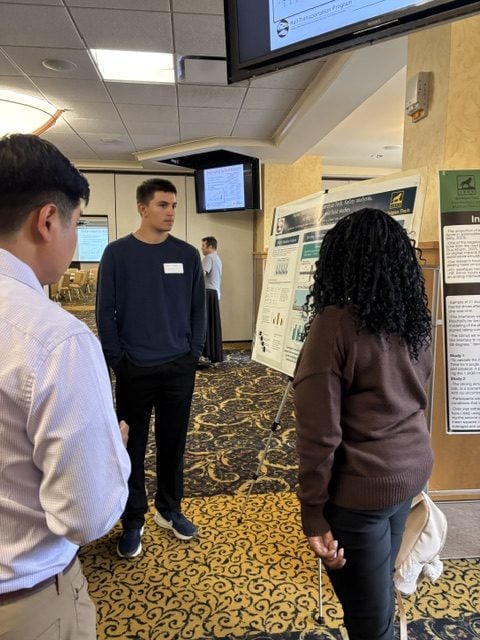
Aaron Cordova (center) presented part of the research poster

Reflecting on the Event

We spoke with Nya after the presentation to ask about her experiences. “I usually go into presentations with nerves, a bad habit I know!” she said. “It can be tricky at events at Rail Night because it can feel like Human Factors is the odd one out at times, even though safety research is a big part of the railroad industry.” 

That boundary-spanning perspective is precisely what makes Dr. Veinott’s lab so impactful. By bringing Human Factors into practical domains, the team offers fresh solutions to longstanding safety, design, and human-interaction challenges.

Reflecting on lab work more broadly, Thomas added, “It’s a fantastic experience! We get to do exciting, novel research on topics that directly impact daily life. It’s not without its challenges, but any lab doing innovative work is bound to hit roadblocks. It’s never anything we can’t tackle together as a team.”

Looking Ahead

Events like Railroad Night highlight the vital role interdisciplinary collaboration plays in tackling complex engineering and safety challenges. By combining human-centered research with advanced simulation and field data, Michigan Tech’s Human Factors researchers are helping shape a safer future for both road and rail transportation.

Interested in exploring Human Factors degree pathways at Michigan Tech? Check out our Human Factor’s Bachelor’s degree program here!
MTU Researchers Champion Rail Safety at InnovaRail 2026

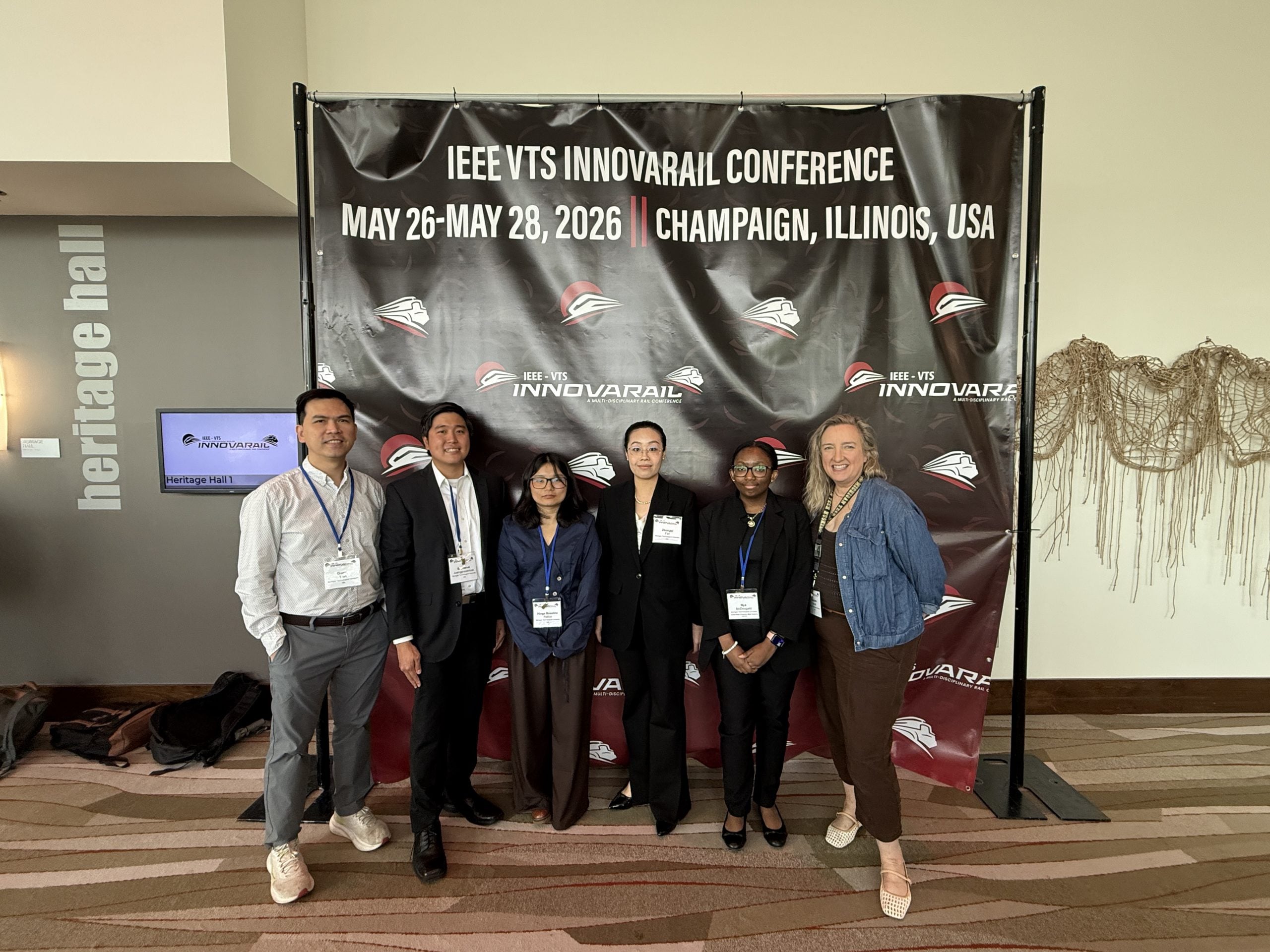
Last week, researchers from the Department of Psychology and Human Factors (PHF) and the Department of Civil and Environmental Engineering traveled to the University of Illinois Urbana-Champaign (UIUC) to attend the IEEE InnovaRail 2026 conference.

The annual event brings together leading minds in rail technology, engineering, and safety to discuss the future of railway infrastructure and innovation.

Dr. Elizabeth Veinott (PHF) delivered a talk titled, “A cognitive engineering approach to mapping cues to improve safety at highway-rail grade crossings.” The research—co-authored by recent ACSHF PhD graduate Dr. Anusha Kannan and current ACSHF graduate student Nya McDougald—highlighted different HF methods we use in engineering psychology to improve safety at highway-rail intersections with examples from our research.

The conference provided an opportunity for Michigan Tech’s interdisciplinary delegation of faculty and graduate students to collaborate, share ideas, and represent the university on a national stage.

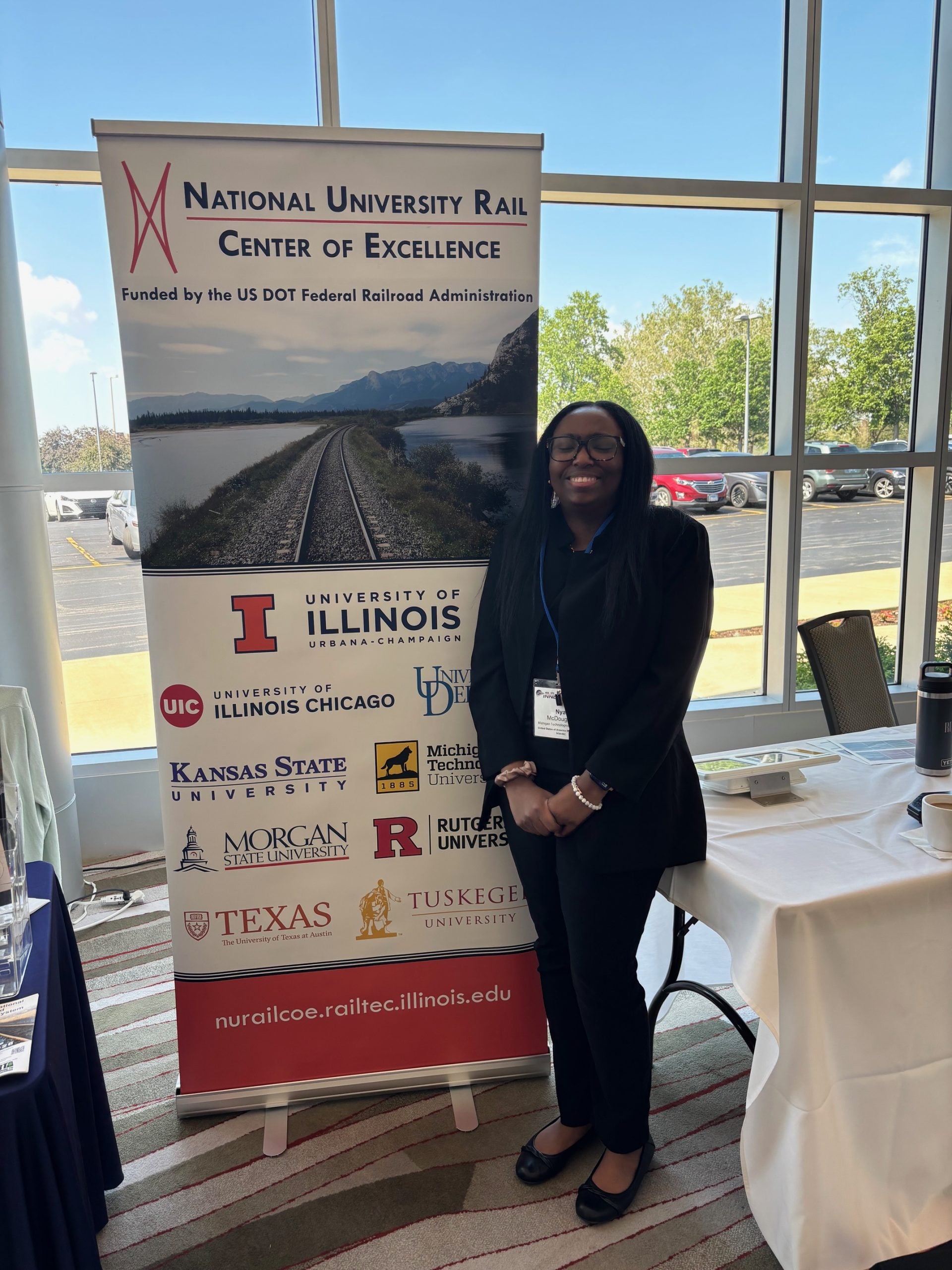
Graduate student and co-author Nya McDougald at the InnovaRail 2026 conference.


Faculty and graduate students from MTU’s PHF and Civil and Environmental Engineering departments at UIUC.

PhD Student Spotlight

Jen Shaud Helps Advance Conversations on Disability Equity in Higher Ed

An ACSHF PhD student, Jen Shaud, recently contributed to The Chronicle of Higher Education’s latest piece: “Are That Many Students Really Faking Disabilities?”

Jen is studying what helps students with disabilities stay in school and reach graduation. Her work includes surveying students—both with and without disabilities—as well as the faculty members who teach them.

In her research, Jen asks what encourages students to seek accommodations and, more importantly, what stops them from asking. Both Jen’s work and other studies show that staying in school isn’t just about earning passing grades; it’s about feeling like you belong on campus. Many students hesitate to ask for help because they fear peers or teachers will think they’re looking for an ‘easy out.’ Jen is exploring how we can change those attitudes and give students the tools to speak up for themselves so they can thrive from day one.

Bridging Minds and Miles: MTU Students Shine at the Inaugural Superior Psychology Data Blizzard

A group of our Michigan Tech graduate and undergraduate students made the trek to Northern Michigan University for the first annual Superior Psychology Data Blizzard. The brand-new event is the result of Dr. Jason Harman (MTU) and Dr. Jon Barch’s (NMU) desire to establish and foster a collaborative ecosystem between our two programs. The two groups held a poster session and gave presentations about their ongoing research.

Poster Presentations

Sarah Atkinson, an MS student at MTU, shared that “The poster presentations were filled with the sharing of ideas and differing research areas that everyone was working on. Questions were welcome, along with curiosity about the different research areas that each institution/students were working on.”

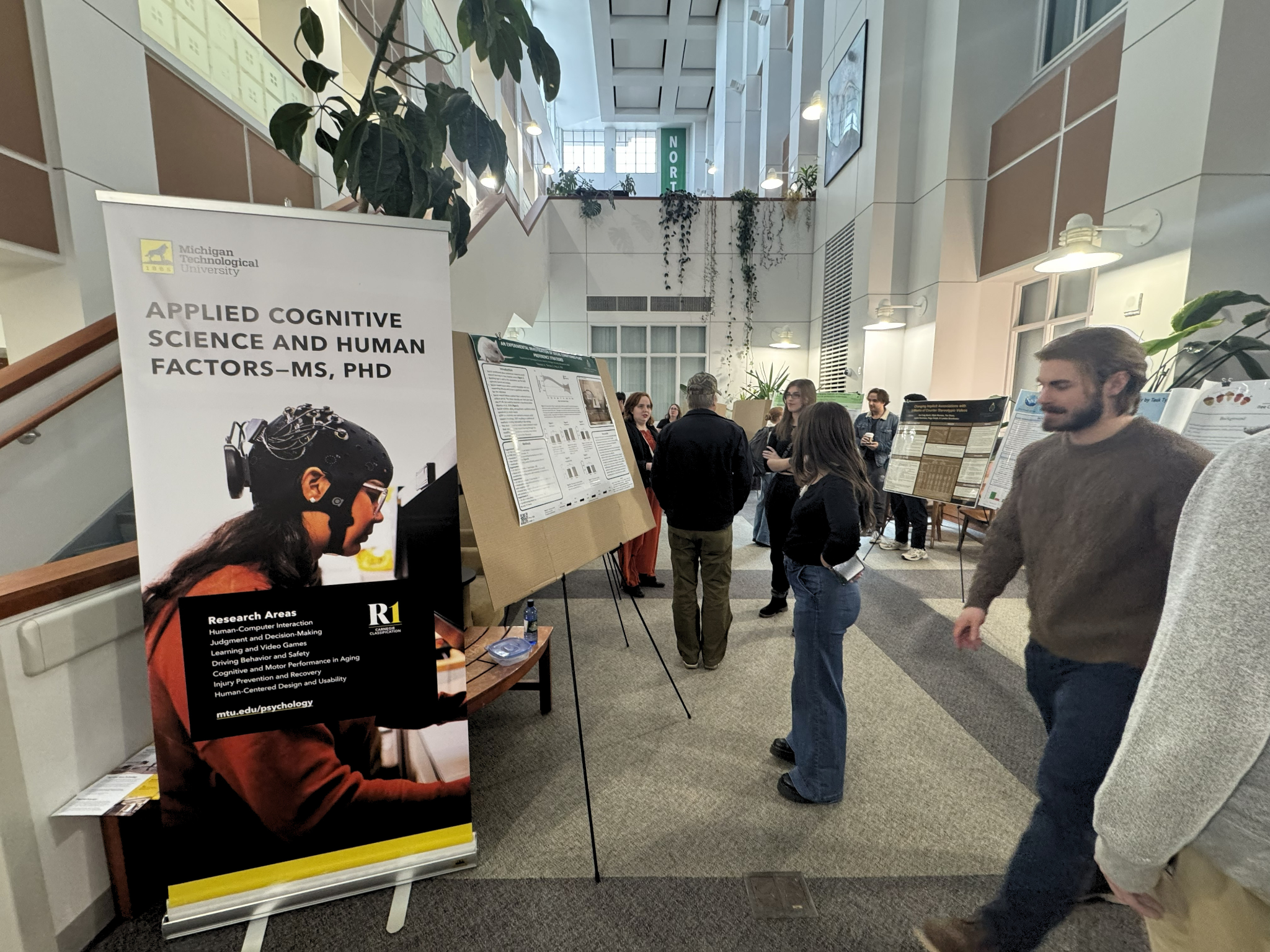
MTU and NMU students mingle around easels displaying research posters in a hall at NMU
The poster session featured current research conducted by MTU and NMU students.

Elijah Nieman, a 2nd-year PhD student at MTU and an NMU alumnus, noted the strategic value of the visit: “The main goal for the event was to present and share our research generally, but also to find or create opportunities to collaborate on future projects.” 

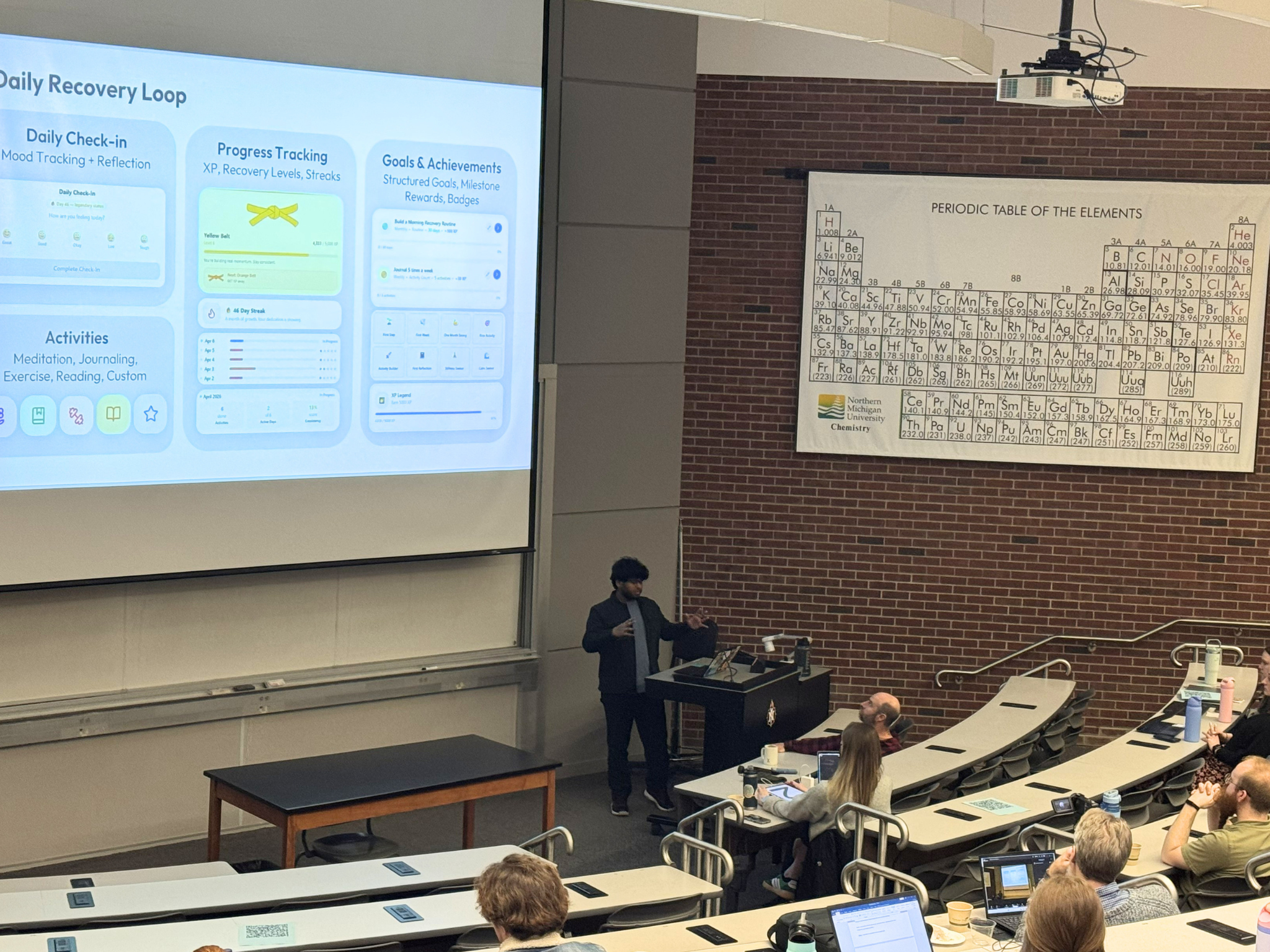
For Nithish Raja Loganathan, the event marked a significant personal milestone. “It was my first time presenting at a human factors–related event. Presenting my project, Recovery Ninja, and receiving questions and feedback from others made the experience both encouraging and really valuable.”

Nithish Raja Loganathan presents his project on a large projection screen to a group of students
Nithish Raja Loganathan presented his project Recovery Ninja

The Impact of Collaboration

Many of our students reported that the draw to NMU was the chance to see research through a different lens. While MTU is a powerhouse for Human Factors and PhD-level research, NMU’s Department of Psychological Science offers a vibrant, neuroscience-centric environment. 

Nithish shared his experience viewing the research from NMU students: “One thing that really stood out to me was the strong focus on neuroscience in many of the projects. It was really interesting to learn about the different ways students are studying human behavior through neuroscience. Seeing that perspective gave me a new way of thinking about how neuroscience and human factors research can connect.” 

Beyond the research, the event also highlighted clear pathways for student growth. Elijah noted how the relationship between the two schools can benefit academic careers. “There’s some potential for MTU undergrads to consider going there for an MS, or for students from their programs to come here—that’s what I did, getting my BS in Neuroscience and MS in Psychology before coming to the PhD program at Tech.” 

When asked to sum up his experience in a single sentence, Stanley Oshimeje said, “The event highlighted the value of bringing students and researchers together to exchange ideas, strengthen connections, and inspire future work.” 

Looking Forward to Next Year

A huge round of applause goes out to all the students who shared their hard work. We are already looking forward to making this a staple of the academic calendar for years to come!

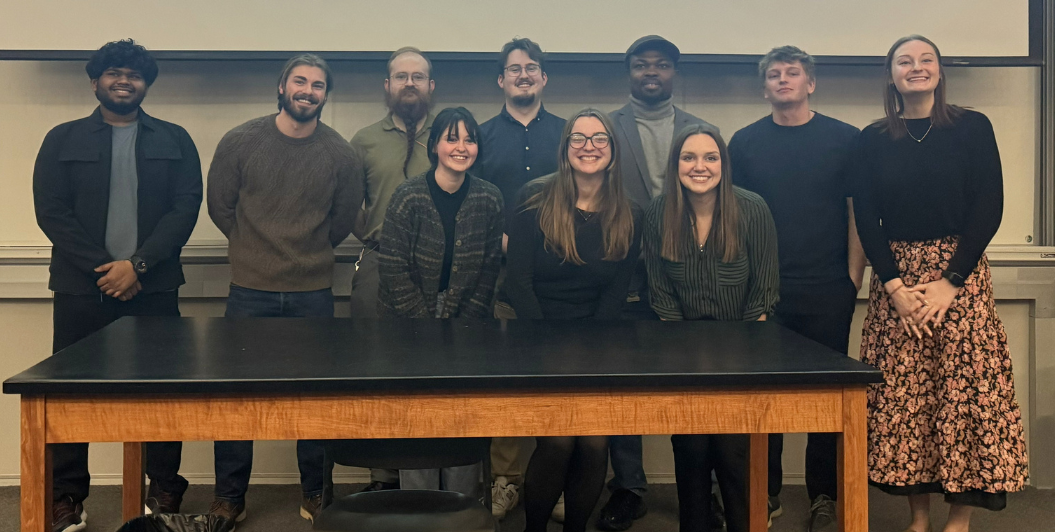
Both NMU and MTU students gather for a group photo
After all the presentations and discussion, both MTU and NMU students agreed that they were looking forward to visiting again next year.

Graduate Students:

Brandon Woolman, Jessica Brassard, Nithish Raja Karuppiah Loganathan, Elijah Nieman, Stanley Oshimeje, and Sarah.

Undergraduate Students:

Morgan Aufdencamp, Brianna Sleeman, and Justine Klein.

Special thanks to Jason Harman for coordinating and to Jon Barch at NMU for hosting such a productive exchange. Everyone is already looking forward to doing it again next year!

Setting the Stage: My Undergraduate Start at MPA

Written by Viviana Cotter

My name is Viviana Cotter. I am a second year Psychology major concentrating in Clinical/Counseling and minoring in Law and Society. Within the Psychology and Human Factors Department, I serve as a Student/Administrative Aide, Teaching Assistant, and Research Assistant. I also serve as the Treasurer for the Association of Psychology Students. 

In April, I was given the opportunity to attend the Midwestern Psychological Association conference in Chicago.

Viviana Cotter walking along a river in Chicago at night
Picture of Viviana Cotter walking the Chicago Riverwalk in downtown Chicago, Illinois during the night

During the conference, I attended a variety of poster sessions and paper presentations. There were so many researchers covering topics such as the direct and indirect benefits of animal companionship and the social, epistemic, and existential functions of blame. It was a wonderful experience because not only was I given the opportunity to learn about current research, but I was also able to see how the field of psychology is advancing and evolving.

It was enlightening to talk with fellow undergraduate students – discussing their research, asking questions, and learning about their future plans with their research. Additionally, the space provided me the opportunity to engage with graduate school representatives, where I was able to learn about different graduate programs and the opportunities they provide. 

Learning From MTU Graduate Students

I traveled with four MTU graduate researchers: Elijah Nieman, Lauren Sprague, Jen Shaud, and Brandon Woolman. Each presented their research findings during a poster session or paper talk. 

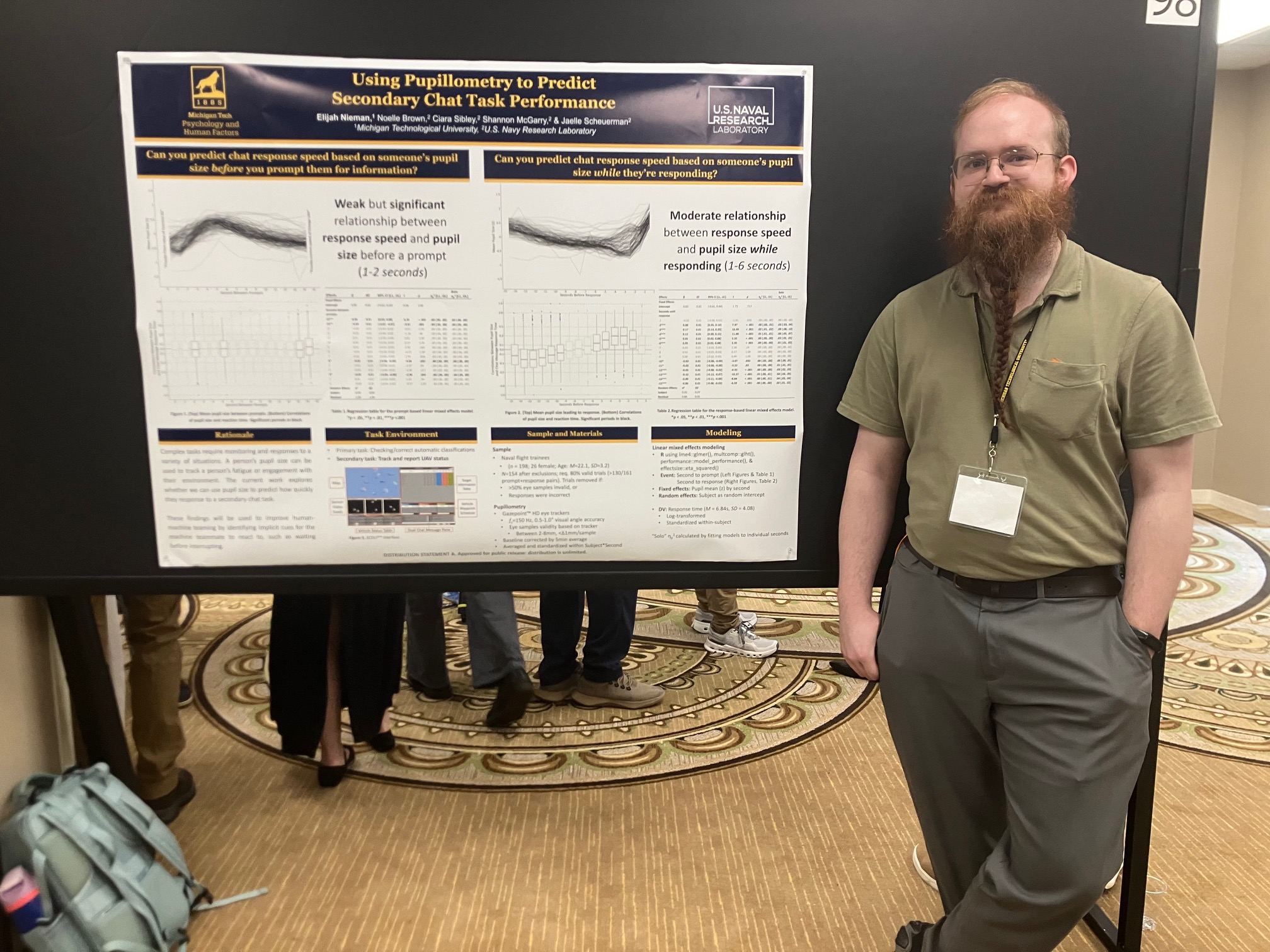
Elijah Nieman standing to the side of his research poster "Using Pupillometry to Predict Secondary Chat Task Performance"
Elijah Nieman presented his research on “Using Pupillometry to Predict Secondary Chat Task Performance” during the poster board session.
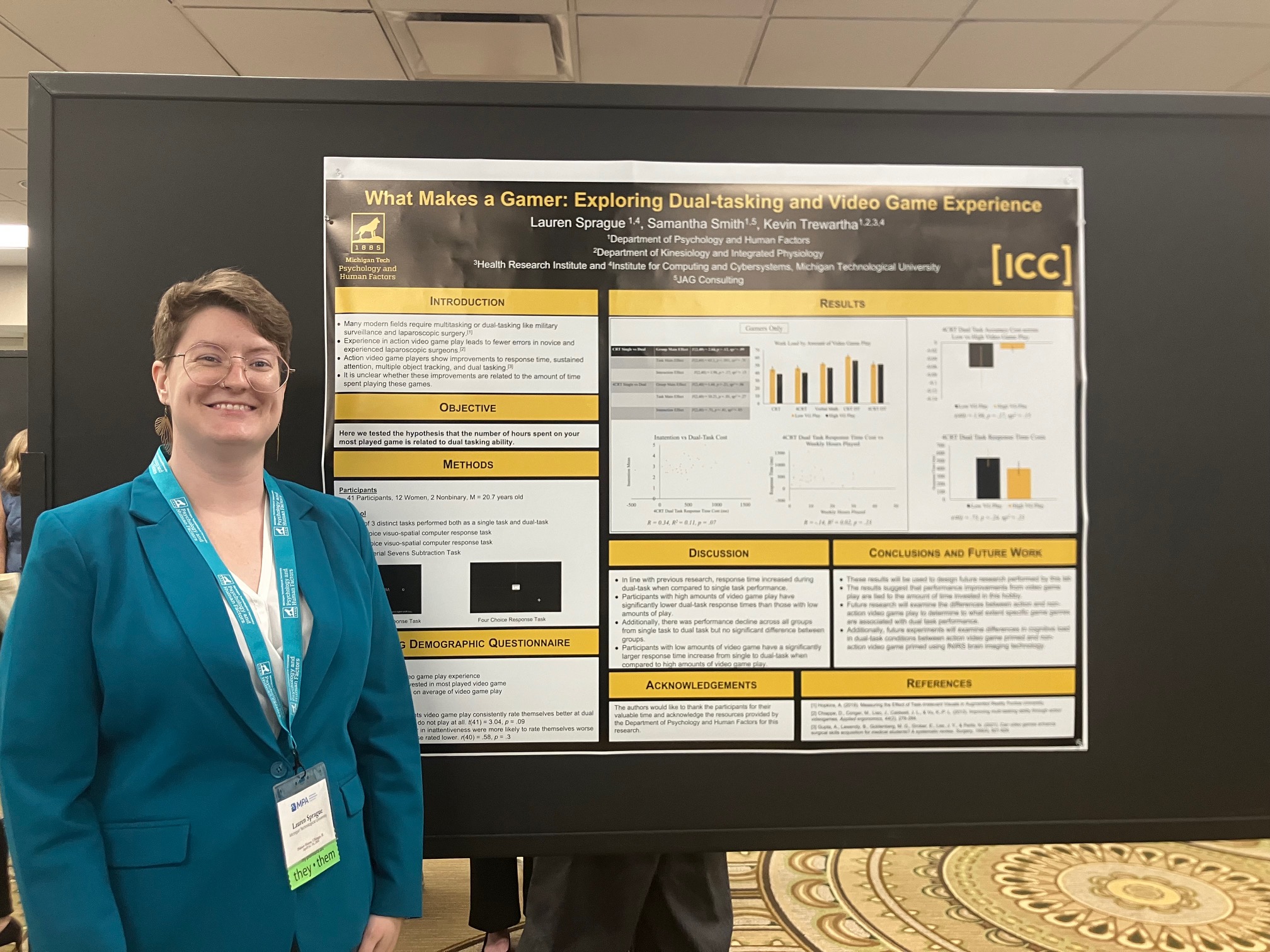
Lauren Sprague standing next to their research poster “What Makes a Gamer: Exploring Dual-Tasking and Video Game Experience.”
During the same session, Lauren Sprague presented their research on “What Makes a Gamer: Exploring Dual-Tasking and Video Game Experience.
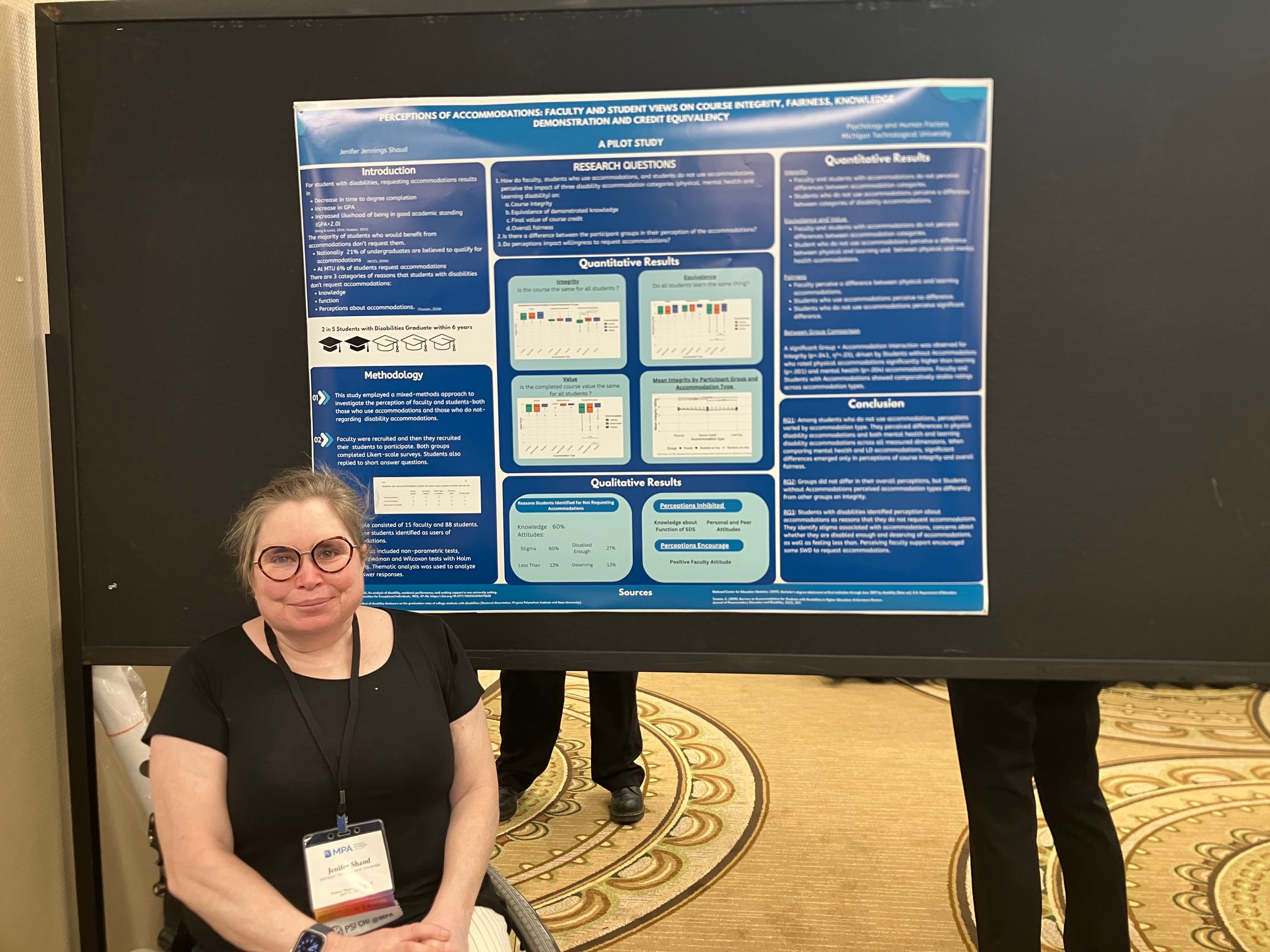
Jen Shaud standing beside her research poster "Perceptions of Accommodations: Faculty and Student Views on Course Integrity, Fairness, Knowledge Demonstration and Credit Equivaliency”
On Saturday, Jen Shaud presented their research on “Perceptions of Accommodations: Faculty and Student Views on Course Integrity, Fairness, Knowledge Demonstration and Credit Equivaliency” during the morning poster session. 
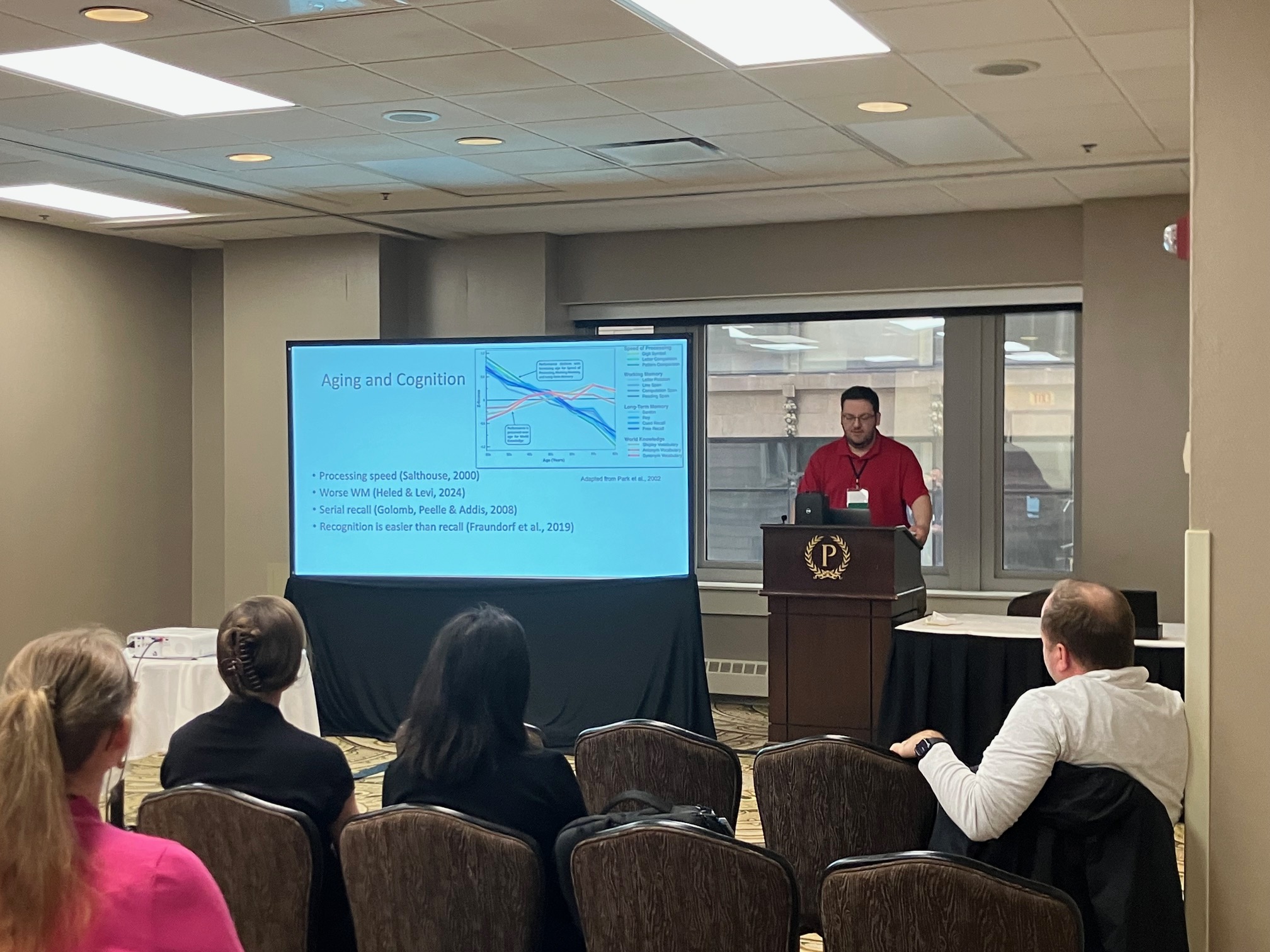
Brandon Woolman standing at a podium in front of a crowd presenting his research “Characterizing Age Difference in a Novel Motor Sequence Learning Task.”
Also on Saturday, Brandon Woolman participated in a paper talk, discussing his research on “Characterizing Age Difference in a Novel Motor Sequence Learning Task.” 

This opportunity was a significant moment for me as an undergraduate and aspiring researcher. I am walking away from this conference with a much clearer understanding of how it all works, and what I can expect in my own future. 

I plan to return next year to present the research that Dr. Destaney Sauls and I are currently working on. Currently, we are deep into research on communal narcissism and working to map its complex traits onto the Trifurcated Model. Stepping back onto that conference floor next year to present our model will feel like a full-circle moment in my development as a researcher and I can’t wait.  

MTU Psychology Celebrates 20 Years and $2M in Research Awards

Michigan Tech’s psychology program celebrated its 20th anniversary in academic year 2024-25—and also marked its best year yet for research funding.

Psychology research at Michigan Tech embraces a wide variety of specialties and practical applications. One of the hallmarks of the program is how it intentionally engages undergraduate students in interdisciplinary research.

Read the full story in the College of Sciences and Arts blog.