Tag: Machine learning

From Dashboards to Decisions: AI for Business Information Systems

Your Business Systems Aren’t Just Software Anymore.

If you’ve ever thought, “Why does it take three dashboards, two spreadsheets, and a weekly meeting to answer a simple business question?” you’re already bumping into the problems that Business Information Systems are meant to solve. And you’ve probably already had a close encounter with how AI is changing the game.

A Business Information System (BIS) is the setup of tools, software, and processes organizations use to gather, store, and analyze business data. A BIS allows teams to understand information, such as sales trends, customer behavior, inventory levels, financial performance, and more.

Most organizations rely heavily on business information systems. Below are a few examples and their capabilities.

  • ERP (Enterprise Resource Planning): Integrates core operations (finance, purchasing, inventory, manufacturing, and HR) into one system (e.g., SAP, Oracle).
  • CRM (Customer Relationship Management): Manages customer data and interactions, such as sales pipelines, marketing campaigns, service cases (e.g., Salesforce).
  • HRIS (Human Resource Information System): Handles HR data and processes, such as payroll, benefits, recruiting, and performance (e.g., Workday).
  • SCM (Supply Chain Management): Plans and manages supply chain activities, such as procurement, logistics, warehousing, distribution.
  • BI (Business Intelligence): Tools for dashboards, reporting, and analysis to support decisions (e.g., Power BI, Tableau).
  • DSS (Decision Support System): Combines data and models to help evaluate options (pricing, capacity, risk scenarios).
  • WMS (Warehouse Management System): Tracks warehouse inventory, picking/packing, replenishment, and shipping.
  • POS (Point of Sale): Captures sales transactions in retail and often links to inventory and customer data.

The previous problem was this one: for the longest time, most of these systems still behaved like filing cabinets. They stored information, but they didn’t think with you. Or even like you.

But that scenario has been changing fast.

How AI for Business Information Systems Works (In Real Life).

That is, updated and new Business Information Systems are increasingly becoming adept at answering plain-English questions: Why are returns up? What’s driving churn? What happens if we change lead times? And then providing useful answers with recommended next steps.

These insights demonstrate how AI has transformed BIS. That is, instead of reporting only what happened, AI-enhanced BIS can learn from data, spot patterns, flag risks, forecast demand, and support better and quicker decisions through recommendations and automation. In other words, it can help teams move from “What happened?” to “What should we do next?”

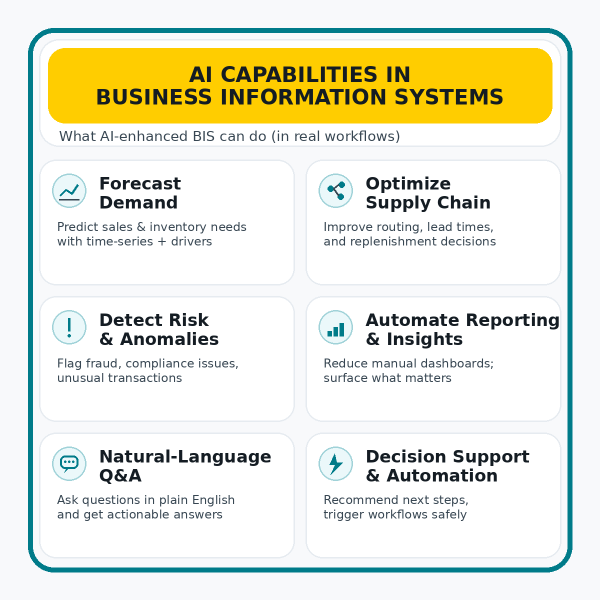
In day-to-day business operations, then, AI often shows up in several practical but high-impact ways:

  • Forecasting demand more accurately (so you’re not overstocked or out of stock)
  • Improving supply chain and logistics (inventory levels, shipping routes, lead times)
  • Assessing risk and detecting anomalies (fraud, compliance flags, unusual transactions)
  • Automating reporting and surfacing insights (less manual work, more usable information)
  • Helping teams interact with enterprise systems using natural language (ask a question, get an answer, think about next steps)
Some Recent Examples of AI Being Embedded into Platforms

Many organizations have already embedded AI into the software platforms on which they heavily rely.

Case Study: Embedding AI into CRM to Support Workflow and Reduce Response Times

Industrial Scientific’s support team was overwhelmed and morale was declining. Why? The team was handling upwards of 1,200 requests/month (device issues, troubleshooting, documentation). To fulfill these requests, employees often had to consult multiple departments. As a result, response times stretched to days, damaging the customer experience.

To solve this program, the organization built an AI support pipeline (“SensAI”) that connects Salesforce (CRM) with Oracle Cloud Infrastructure generative AI and a documentation knowledge base. When an inquiry lands in Salesforce, it triggers an automated workflow that uses RAG (retrieval-augmented generation) over product docs. Through Salesforce, it then returns a response that is tailored to the customer’s support contract.

As a result, response times dropped from days to minutes (near-immediate support for routine inquiries). The system responded to 2,230+ emails and cut 185+ hours of staff time, not only saving money but also reducing a ton of employee stress.

The Bottom line: AI is no longer just a tool on the side; it is quickly becoming the interface and accelerator for business systems.

Earn Michigan Tech’s Online Certificate in AI for Business Information Systems.

If you want to evaluate AI tools, implement them responsibly, and translate AI into measurable outcomes, you need a foundation in both AI concepts and business information systems. Michigan Tech’s online graduate certificate in AI for Business Information Systems is built to provide exactly that, demonstrating how AI integrates with core business systems to streamline decision-making, improve accuracy, and drive cost savings.

In just 9 credits, you’ll complete two required courses: BA 5200: Information System Management and Data Analytics and MIS 5000: Emerging Technologies. Then, choose one elective: MIS 4400: Business Intelligence and Analytics or MIS 5100: Information Systems Projects.

This certificate is a strong fit for leaders, business professionals, managers, and IT analysts who want to guide AI adoption, strengthen BI/analytics capabilities, or move into digital transformation and AI-enabled roles.

Parth Bhatt Powers Through With Python

Above: A high-resolution, drone-captured image of seagulls gathering on the beach in St. Ignace, Michigan.

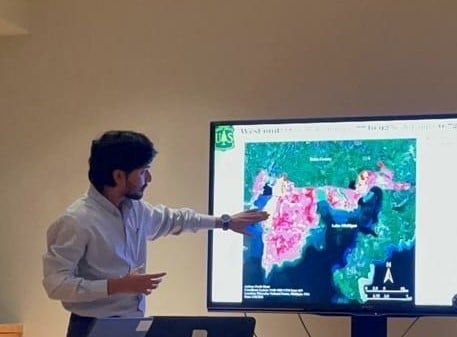
Dr. Parth Bhatt is definitely making his mark at Michigan Tech’s College of Forest Resources and Environmental Science. Arriving in only 2016, he quickly earned both his master’s degree and then his doctorate from the CFRES. And on important projects, too. That is, during his PhD, he worked with the Nature Conservancy and the U.S. Forest Service to map the Hiawatha National Forest according to its natural habitat communities. To do so, he used both sensing and machine learning techniques.

Parth Bhatt in the classroom teaching a Python with GIS class.
Dr. Parth Bhatt in the classroom.

But this was not his first use of machine learning to depict and analyze complex natural phenomenon. Before coming to Tech, Parth Bhatt worked with the Indian Space Research Organization (ISRO).

Currently, Parth (which he prefers to be called) is a Teaching Assistant Professor / Researcher in the CFRES, who has a passion for Python, remote sensing, and more.

Recently, I’ve collaborated with him to help promote his courses and to grow with Global Campus.

Discovering Python’s Capabilities

But let’s take a step back for a second. Despite his current expertise in and enthusiasm for Python , it was at Michigan Tech that Parth first developed his passion for this programming tool.

As an MS student, he took the class Python Programming for ArcGIS. Here, he learned more about Python and applying some of its techniques to automate repetitive tasks. Impressed with this tool, Parth then attended a GIS conference in which he saw people using Python in almost every field. At this event, he thought to himself, “I need to get better at this.” So he buckled down on his studying, taking in several NASA sponsored online webinars.

And get better he did. And quickly!

He ended up teaching several courses at the undergraduate and graduate level. He was enthusiastically in the classroom for Introduction to GIS, Introduction to GIS for Natural Resources Management, GIS Project Management, and Seminar in GIS.

It is obvious that Parth is a very busy and motivated professional. That is, he is currently instructing a non-credit, 7-week course (Python for Modern GIS and Remote Sensing). And while doing so, he is also developing a for-credit graduate certificate for Spring 2024.

Because this programming language is his passion, I asked him to explain it to me.

Q. Summarize Python for a layperson.

A. Python is a popular programming language for making a person’s day to day work/research life easier and efficient. It has gained widespread popularity in the past decade. Overall, it is extremely useful in the field of GIS and Remote Sensing (or any field for that matter) due to its dynamic nature, ease of use, and versatile, large open community support.

Q. What distinguishes Python from other programming languages when it comes to being used in GIS environments?

A. Well, as I said before, Python is easy to use and implement. It is also very efficient and powerful for data visualization and processing.

Due to Python’s open-source nature, it can be combined with all the major GIS softwares like ArcGIS Pro, ArcGIS Online, QGIS etc. Therefore, it offers a great amount of working flexibility. And from a developer’s perspective, all the major advances are occurring within Python, as compared to other languages such as R. Over the last decade, Python has emerged as a winner in terms of the most liked and used programming languages by the GIS community.

Q: What excites you about applying Python in GIS environments? What is this tool best used for? How have you used it?

A. The possibilities are endless. Python can be used in anything from opening a simple excel sheet filled with various GIS data to visualizing, manipulating, and handling big data. It also has hundreds of useful libraries that are applicable for various geospatial analysis. To me, any modern GIS and Remote Sensing curriculum is incomplete without this language and tool.

In my work, I have used Python to automate various GIS tasks: updating a dataset attribute table with hundreds of rows and columns (basically data cleaning); classifying complex forest ecosystems using machine learning; as well as analyzing data, making charts, conducting accuracy assessments, and performing various geospatial analysis tasks. Furthermore, I have assessed change in terms of urbanization, detected algal blooms, and calculated fire burn ratios.

Q. You’re teaching a non-credit course “Python for Modern GIS and Remote Sensing.” Please briefly explain what this course is about and who should take it.

A: I’m excited about this course, which is new to Michigan Tech. No one has taught Python for GIS in either an online or non-credit format before.

In a nutshell, this course teaches beginning and intermediate-level Python skills as they are applied in the GIS environment. It is suitable for anyone who deals with (or is planning to deal with) GIS and Remote Sensing on a daily basis. Of course, anyone who wants to add to their skill set and make their work more efficient should take it.

As you know, Coding/Programming is an essential skill set to have in our current times, especially for fields such as GIS, Forestry, Ecology, Geology, Civil and Environmental Engineering, and Data Science.

For example, right now in my course, I have students from diverse backgrounds, as well as professionals working in the GIS Industry. They are enjoying the asynchronous class format and the assignments. I am looking forward to incorporating their feedback in the next edition of the course, which will be in Spring 2024.

On a broader scale, Python is basically used in every application that’s related to the the five earth elements (Air, Water, Land, Fire, and Space). For example, it’s playing a big part in NASA’s first ever Mars drone application

Dr. Parth Bhatt
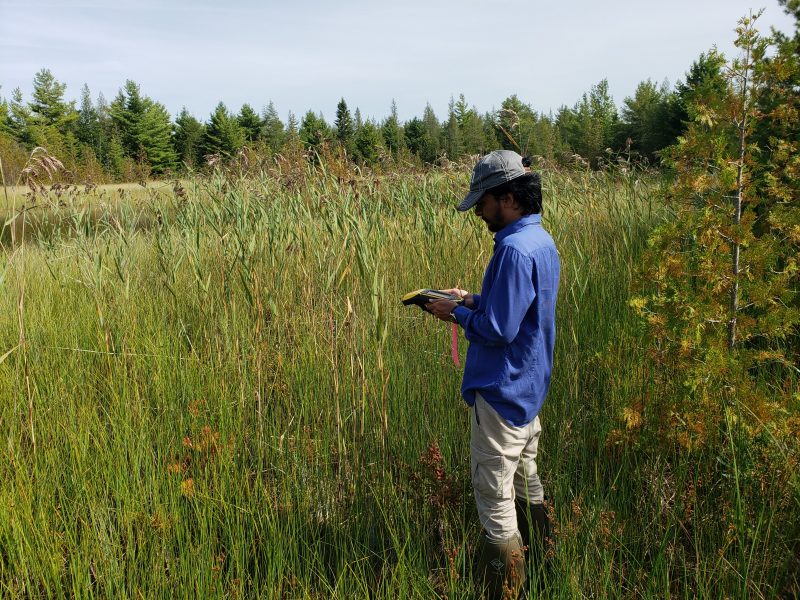
Dr. Parth Bhatt in the field, doing GIS work with Python.
Dr. Parth Bhatt in the field, doing GIS work.

Q. How can professionals use Python to manage or solve prevailing environmental and sustainability challenges, such as land use, forest fires, and the effects of climate change?

A. Python offers hundreds of unique libraries, which can be implemented to any/all kind of GIS and Remote Sensing datasets. Developers can make useful tools according to their needs and applications. As a result, they can enhance their decision making processes.

For example, professionals at the multidisciplinary Michigan Tech Research Institute (MTRI) use Python programming to address complex ecological problems, make wildfire prediction models, analyze efficient road networks, asses infrastructure, and map and monitor land use/cover and pristine wetlands.

Overall, this is an exciting time to teach this course. We are living in a world where climate change is happening rapidly and things surrounding us are constantly changing (whether they are environmental, economical, or political).

Q. I agree that we need all hands on deck when it comes to solving climate change and sustainability issues. But what is a personal example of your use of Python to contend with pressing environmental problems?

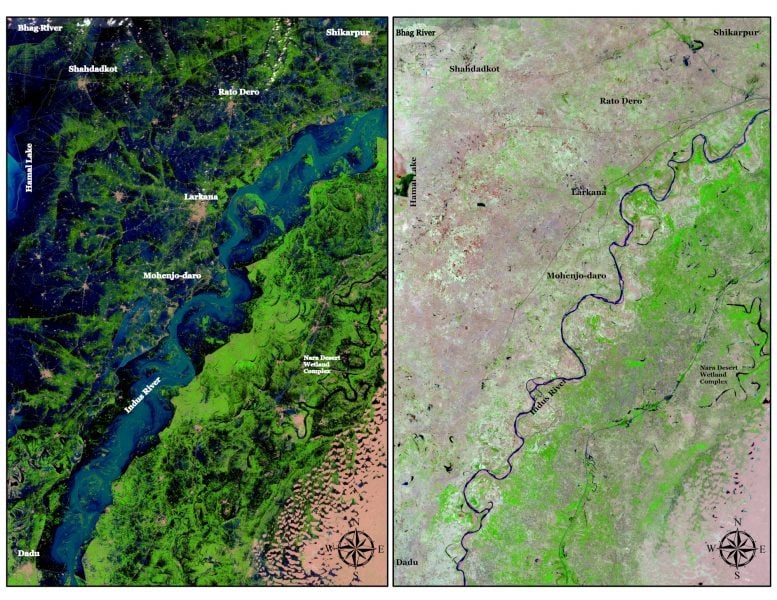
This image, which shows the extent of the damage after the flood, was created with a change detection algorithm and Python.
This image, which shows the extent of the damage after the flood, was created using a change detection algorithm.

In my own work, I have used this tool to document the effects of the historic flood in Pakistan. The flood, which was in mid-June ’22, affected more than 33 million people and destroyed or damaged more than one million houses.

In fact, the floods affected all four of the country’s provinces or about 15% of the country’s population.

Floodwaters inundated tens of thousands of square kilometers of the country, causing at least 1,100 deaths. Because of the 2023 monsoon season, Pakistan is still struggling to recover from this event.

Q. What motivates you? And what is next on your journey at Michigan Tech?

A. I love teaching, doing research, and solving complex problems. These drives require me stay current with, if not slightly ahead of, my field. Furthermore, I believe that if I am not up to date with my knowledge, I won’t be able to offer anything new and beneficial to students.

As Gandhi so eloquently said, “You must be the change you wish to see in the world.” In other words, I have to keep updating and offering advanced skills, not only for my personal growth, but also for students so they can succeed in their careers.

And for the College of Forest Resources and Environmental Sciences, I’m glad to help grow its online offerings. My non-credit course marks the beginning of our online education program. That is, we are designing other useful and applied courses, such as ArcGIS Online. Also, starting in 2024, we plan to be offering the first ever Master’s of Geographical Information Science online degree certification. Look out for it on Michigan Tech’s Global Campus.

One more thing: I’m holding an information session on Oct. 20 at 10:30 AM for Carthage College in Kenosha, Wisconsin. The session will introduce the Online GIS programs from the CFRES. However, the Michigan Tech community is also welcome to attend. You will be asked to sign in with your MTU email (or the email associated with your Zoom account) to join the session. If you have any questions about this session or anything else, email me at ppbhatt@mtu.edu.

Q. Any final thoughts?

As excited as I am about learning new materials and tools, the biggest reward of teaching occurs when you run into or hear from a student and they say, “Thank you for teaching me that GIS thing, it’s helping me big time in my job or research.”