
Search Results for "thesis and dissertations MS Office tips"

Education in Tune with Industry Raises Michigan Tech’s Job Placement Rate to Nearly 95 Percent

As Michigan Governor Rick Snyder takes the podium at Delta College today to talk about the need for more highly skilled workers to meet Michigan employers’ needs, Michigan Tech reports that its job placement rate has risen to an astonishing 94.6 percent.

At its most recent Career Fair in September, the University hosted 720 recruiters from 245 companies. Students participated in more than 4,200 interviews at the event and in the days immediately following it. The University has another Career Fair scheduled for February 2012.

“Employers measure us by the performance of our alumni working at their companies,” said Jim Turnquist, director of Career Services. “We have a reputation for excellence.”

And employers are willing to pay for excellence, Turnquist noted. For example, the average salary reported by a 2011 Michigan Tech graduate in software engineering was $67,000; biomedical engineering, $60,000; and electrical engineering, $58,561. The national average salary of a 2011 college graduate was $51,171, according to the latest report from the National Association of Colleges and Employers.

In Snyder’s fifth special message to the Legislature since he took office Jan. 1, the governor is expected to outline his plan for improving ties among employers, educators and students to better match job skills to employers’ needs.

“At a time when many are questioning the value of a college education, we stress an education that meets both the needs of the students and the requirements of industry. It’s part of our DNA at Michigan Tech,” said President Glenn Mroz. “We work hand in hand with the industries that employ our graduates, through co-ops, internships and our signature Enterprise Program–where students work in teams to solve industry problems–to make sure our graduates are well-qualified to enter the workforce.”

During the economic downturn in 2009, the University’s traditionally high job placement rate dropped to 83.1 percent, still well above the national average of 63.7 percent. But Turnquist saw the economy starting to take a turn for the better in late 2010, as more recruiters began coming to campus.

“Companies are retooling and reengineering, and they’re hiring our people to do it,” he said.

by Jennifer Donovan, director, public relations
Published in Tech Today
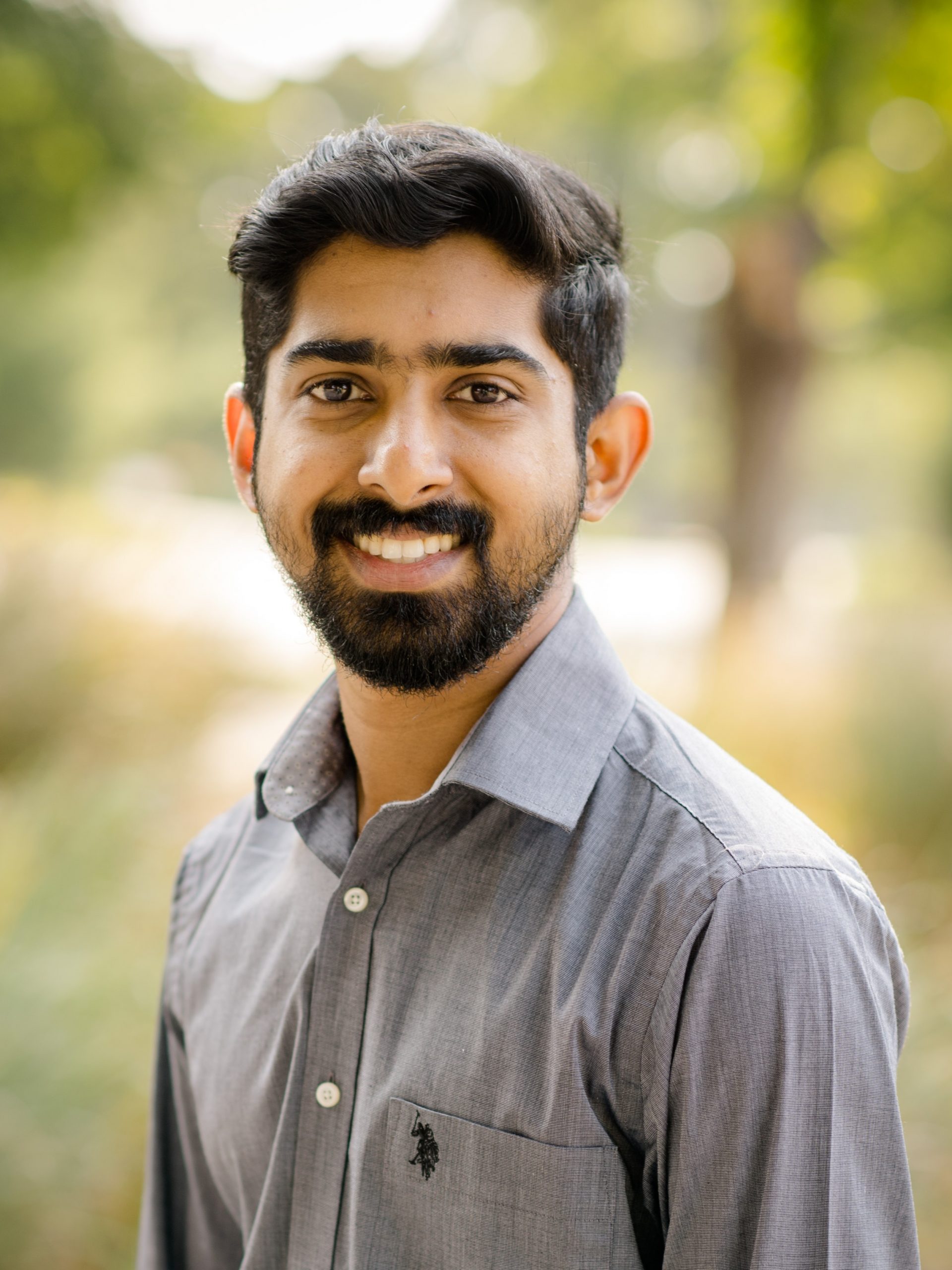
Finishing Fellowship – Summer 2025 – Raj Santhosh

From an early age, I was interested in automobiles and machines. So, when the time came to decide on which path to choose for my undergrad degree, I chose Mechanical Engineering without any doubt. That eventually led me to Michigan Tech to pursue a master’s degree in mechanical engineering. At Michigan Tech, I got the opportunity to work with Dr. Darrell Robinette on Connected Vehicle research as part of the Department of Energy’s ARPA-E NEXTCAR project. This project opened a whole new world of opportunities into the possibilities and the impact vehicle connectivity and automation could have on our daily lives. So, with some inspiration from Dr. Robinette and Dr. Jeffrey Naber, as my co-advisors, I decided to pursue a doctoral degree in Mechanical Engineering with a focus on leveraging vehicle connectivity and automation to improve energy efficiency of passenger vehicles.


On my PhD journey, I got the opportunity to work on the Department of Energy’s “Energy Optimization of Light and Heavy-Duty Vehicle Cohorts of Mixed Connectivity, Automation and Propulsion System Capabilities via Meshed V2V-V2I and Expanded Data Sharing” where we demonstrated on-track, the energy savings potential of multi-vehicle cohorts using connectivity and automation. I was also lucky to be part of the Department of Energy’s “Connected and Automated Vehicle Model Validation” project and the General Motors sponsored SAE AutoDrive Challenge II. Along with this, I also got the opportunity to spend six months as a Research Intern at General Motors’ Software Defined Vehicle Research Laboratory, where I worked on implementing perception systems and multi-object tracking algorithms for a simulation environment.


For my PhD research, I investigated the energy saving potential of various vehicle cohort combinations that could have while driving on a limited access highway, leveraging connectivity to optimize powertrain operation on various hybrid electric vehicles and train a neural network to use connected vehicle information to chart a course through an urban driving environment.


I want to use this opportunity to express my sincere gratitude towards Graduate School, dean and the Graduate Dean Awards Advisory Panel for awarding me the Finishing Fellowship for the Summer of 2025. This fellowship will greatly help me complete my doctoral research and extend my professional career. Along with that, I would like to thank the Department of Energy’s ARPA-E and Vehicle Technologies Office for providing support throughout my PhD along with General Motors and the Society of Automotive Engineers. I am also deeply grateful to my co-advisors, Dr. Darrell Robinette and Dr. Jeffrey Naber for their support and guidance throughout the years at Michigan Tech.

Professional Research Experience Program (PREP)

The Professional Research Experience Program (PREP) is designed by the NIST Boulder Laboratories to provide valuable laboratory experience and financial assistance to undergraduate, graduate, and post-graduate students. Fellowships are awarded to assure continued growth and progress of science and engineering in the United States.

For additional information about research areas at NIST go to www.boulder.nist.gov.
All PREP applicants must be full-time students, who are U.S. citizens (or hold permanent residence visas) and have and maintain at least a 3.0 GPA.

Deadline: May 28, 2010

Contact Information:

For questions, please contact
Rosemary O’Connor
Office of the Director
NIST
325 Broadway, MC 104.01
Boulder, CO 80305-3328
(303) 497-5238
roconnor@boulder.nist.gov

Christmas for the Needy

The MBA Student Association is leading the “Adopting a Family” program this holiday season.

Help collect unused clothing, toys and other items for a local family with four boys aged 5, 9, 11 and 12 who love hockey, floor hockey and LEGOs. The boys wear medium T-shirts and sizes 12, 12 slim, 10 husky, and 5T pants.

Place items in the “Adopt a Family” box in the lobby of the AOB. Feel free to wrap your donations, but attach a note telling what’s inside.

As well, cash donations will be accepted in the office of the School of Business and Economics and will be used to purchase food and other necessities for the family’s holiday celebration.

Donations will be accepted until Wednesday, Dec. 21.  For more information please contact the MBA Association President Zachary Hitt at zthitt@mtu.edu.

Posted in Tech Today.

John A. Knauss Marine Policy Fellowship

John A. Knauss Marine Policy Fellowship from the National Sea Grant Office (NSGO)

The NOAA Sea Grant John A. Knauss Marine Policy Fellowship, established in 1979, provides a unique educational experience to graduate students who have an interest in ocean, coastal and Great Lakes resources and in the national policy decisions affecting those resources. The program matches highly qualified graduate students with “hosts” in the legislative and executive branch of government located in the Washington, D.C. area, for a one year paid fellowship. Provides up to $56,500 to each Fellow.

http://seagrant.noaa.gov/FundingFellowships/KnaussFellowship.aspx

Reminder: Dance and Dinner Hosted for Betty Chavis Scholarship Fund

Two events will be held to honor Betty Chavis, and proceeds will benefit the new Betty Chavis Scholarship Fund.

Chavis came to Michigan Tech as an admissions officer in the 1980s; directed multiethnic programs; and then recruited students on behalf of the Graduate School. The community knows Chavis in part through her leadership in spearheading the annual Parade of Nations.

The first event on behalf of her scholarship fund is “So You Think You Can’t Dance: We’ll Show You How,” which will be from 1 to 4 p.m., Saturday, April 16, in the Memorial Union Commons. Admission is by donation. The event, hosted by the students and alumnae of the Society of Intellectual Sisters, is in conjunction with their 20-Year Reunion festivities during Spring Fling Weekend.

For more information, contact Darnishia Slade at dslade@mtu.edu .

The second event will be a banquet held at 5:30 p.m., Saturday, April 16, at the Magnuson Franklin Square Inn.

Tickets are $50 and are available at www.tickets.mtu.edu, by calling 487-2073, or at the SDC Box Office.

To give directly to the Betty Chavis Scholarship Fund, call the Michigan Tech Fund at 487-2310, or mail a check to the Betty Chavis Scholarship Fund, c/o Michigan Tech Fund, or visit www.mtu.edu/giving. For more information, contact Chris Anderson at csanders@mtu.edu, or Carol Argentati at 487-2474 or caargent@mtu.edu.

Posted in Tech Today.

Michigan Tech Rallies Around Haitians

Far from their devastated homeland, Haitian members of the Michigan Tech community struggled to track down family members and friends in the wake of last week’s disasterous earthquake. Here is the story of Fredline Ilorme, a graduate student in civil engineering, who writes about the longest 24 hours of her life.

“Hello Global Citizens,

“The day looked like any other day to me as I woke up and got ready, thinking about everything I needed to accomplish. I was far from thinking about my family in Haiti, how long it had been since I talked to them and the last things we said.

“However, sometime in the evening, everything changed. I had just gotten to my office when I received a call from a friend about an earthquake in Haiti. A quick Google, and I had an idea of the magnitude of the situation. My first thoughts: my family. Are they okay? Did the house fall on them?

“Quickly rushed back home and spent the entire night trying to reach any one of them by phone. To no avail. News was bad. Many of our most cherished historical buildings–the national palace, the ministries, the cathedral, some hospitals and schools–had fallen. All in thirty seconds. Did my people have time to escape? As I gathered info from my friends on Facebook and through some other friends by phone and online, things seemed dire. Some of my friends had been able to reach their families; they were okay. But still I could not reach any of mine.

“As I watched the videos, the images of the fallen structures, I thought I was losing all I have ever had: my family, my friends, my country. How could this happen? What had we done to deserve this? Weren’t the past year’s four hurricanes enough?

“My friends on Facebook, the ones who called or emailed trying to give me hope, told me to keep trying, and tomorrow I might reach them. I felt hopeless. Why hadn’t they answered till now if other people had found out about their loved ones? They must be gone as everything around them.

“I got tired of staying inside. Went for a drive, but the car could not get me to my people. Could only get me around Houghton. Wasting gas, polluting the environment, and putting myself at risk for nothing. That’s not what my parents would have wanted me to do.

“Went back home. Got some rest and continued the calls. And early the next morning, a miracle happened. I got through. I reached Jessie, a former Tech student. She was alive. Quick talk as no electricity to recharge phones, but she said she’s okay. Continued trying. I got one of my aunties for five seconds. FIVE seconds. But I heard her voice. She was alive. Could the other ones still be? Continued calling and found her again. She said everyone was fine except for two they had not heard from, but that did not mean they were not okay. Sigh of relief. This was good news. They had survived. I regained strength.

“As emails of comfort and support kept pouring in, I continued to regain more strength. I had not lost everything. The country was still worth being rebuilt, for them, with them. Now that I was stronger, I could help others. Tried to locate their loved ones for them and offered advice and comfort. During the next day, got confirmation that all of my family was okay.

“Still, not everyone was as lucky as my family. Casualties are high, and there is lots of damage. But I have hope. Hope for Haiti. Because its citizens acted bravely in the face of this terrible tragedy. Because they were there for each other, and because since everything has started, every country in the world has been with us, from the closest ones–Dominican Republic, Cuba, Puerto Rico, United States, Canada, Brazil, Venezuela, Colombia; some further away, like France and Spain; and some even further, like China.

“But closer to me, the response has also been amazing–the number of emails and calls from students, faculty and staff at Tech and organizations like NOSOTROS [Tech’s Hispanic Student Organization] have given me hope. Rebuilding will be tough, but we will do it together, with our countrymen and our friends and partners from around the world.

“Thanks to you all, and thanks for keeping Haiti in your thoughts and prayers.”

Library Offers Workshop Series

The Van Pelt and Opie Library will offer a series of workshops during the week of March 15 covering a variety of topics and disciplines. All of the workshops are free and will take place in library instruction room 242 at 1 p.m. each day. Preregistration is not required and anyone can attend. The workshop series will include five events:

Monday, March 15

Experience the New IEEE Xplore Digital Library

Last month, IEEE launched a substantial upgrade to the IEEE Xplore digital library. This workshop will demonstrate this new user interface with enhanced search and browse tools to make research easier, faster and more productive. This workshop will be taught by Reference and Instruction Librarian Amanda Binoniemi (abinonie@mtu.edu).

Tuesday, March 16

Humanities Resources and Project Muse

The workshop will feature Project Muse, a full-text database of scholarly journals in the humanities and social sciences. Come and learn about other resources and services the library offers or request a guided tour to our new web interface. This workshop will be taught by Reference, Interlibrary Loan and Copyright Librarian Nora Allred (nsallred@mtu.edu) .

Wednesday, March 17

Chemical Engineering Resources

Learn how to access an online guide to chemical engineering information and receive an introduction to three e-book resources: Knovel Chemistry and Chemical Engineering full-text handbooks, Kirk-Othmer Encyclopedia of Chemical Technology and SpringerLink. This workshop will be taught by Reference Librarian and Coordinator for Library Instruction Dave Bezotte (dbezotte@mtu.edu) .

Thursday, March 18

Scientific Research Resources from Federal Agencies

Every year the US Government publishes the scientific findings of agencies like NASA, the Geologic Survey, the Transportation Board, the Department of Defense and more. The Michigan Tech library has access to these reports through Science.gov, developed by the Office of Science and Technology Information. This workshop will cover the Science.gov database and will field questions on any other government databases as requested. The workshop will be taught by Government Documents Librarian Rhianna Williams (rlwillia@mtu.edu).

Friday, March 19

Electronic Resources and HuskyFetch

This workshop will explain how HuskyFetch (SFX) works, how it interconnects with available resources and how to diagnose where breakdowns occur. Bring your questions and suggestions for an open discussion. This workshop will be taught by the Library’s Digital Resources Coordinator Mies Martin (miesmart@mtu.edu) .

These and other workshops are available to be repeated at departmental meetings, as graduate student training opportunities, and in support of research and publication.

More information is available by calling 877-2507, emailing reflib@mtu.edu, or by contacting the individual librarians listed above.

Published in Tech Today

US House of Representatives Passes Resolution Honoring Michigan Tech

US Rep. Bart Stupak’s office issued the following news release Tuesday:

The US House of Representatives unanimously passed a resolution Sept. 14 introduced by Congressman Bart Stupak (D-Menominee) honoring Michigan Tech on its 125th anniversary and for its contributions to Michigan and the country.

“For 125 years, Michigan Tech has educated thousands of students in some of the areas most vital to the future success of our nation, such as science, engineering and mathematics,” Stupak said. “I thank my colleagues for joining me today to honor Michigan Tech and its students as they continue to be world leaders in innovative technological research and education.”

Michigan Tech was first chartered as the Michigan School of Mines in 1885, and in 1927 was renamed the Michigan College of Mining and Technology with the added responsibility to “promote the welfare of the industries of the State.” The school continued its educational mission, and in 1963 the state’s new constitution renamed the school Michigan College of Science and Technology, followed shortly in 1964 by the name it holds today.

The school’s mission is to create the future with the vision of continued growth as a premier technological research university of international stature, delivering education, new knowledge, and innovation for the needs of our world.

Michigan Tech hosts 7,000 students and provides an exceptionally high quality of education in science, technology, engineering and mathematics fields, graduating 83 percent of students in those disciplines.

In 1990, the school’s A.E. Seaman Mineralogical Museum was designated as the official “mineralogical museum” of Michigan with the second-largest holdings of any university mineralogical museum in the nation.

Michigan Tech’s students also enjoy success outside the classroom. The school’s athletic programs are highly successful competitively as well as academically. Michigan Tech’s student athletes are consistently among the top in the nation with the highest grade point averages, while performing exceptionally well in their respective sports led by the successes of the women’s basketball team, which for the last two years has made it to the NCAA Division II Elite Eight.

“I congratulate Michigan Tech on its 125th anniversary and look forward to watching it continue to play an important role in northern Michigan for years to come,” said Stupak.

East Asia & Pacific Summer Institutes (EAPSI) research program

NSF’s OIIA/ISE announces opportunity for U.S. graduate students to participate in research experiences in East Asian countries in summer 2014 through the East Asia & Pacific Summer Institutes (EAPSI) program. EAPSI supports 200-205 graduate students each year to do research in the lab of their choice in any of seven locations: Australia, China, Japan, Korea, New Zealand, Singapore or Taiwan.

Each institute has a fixed start and end date, and includes a pre-departure orientation near NSF and an in-country language and culture orientation.

An EAPSI award includes a $5,000 stipend and round trip air ticket provided by NSF, and a living allowance provided by NSF’s counterpart funding agency in the host location.

The program is open to U.S. citizens and permanent residents enrolled in research-oriented graduate programs in NSF-funded STEM fields.

The application deadline for summer 2014 is November 25, 2013.

See EAPSI program announcement and more information at: http://www.nsf.gov/eapsi.

EAPSI is an excellent opportunity for U.S. graduate students to advance their research in collaboration with high-caliber scientists and engineers in East Asia and to build professional networks in a scientifically important region of the world. The program is entirely funded by ISE and our international partners: there is no cost to NSF directorates or to your PIs. It’s an excellent opportunity to leverage our resources to advance international research and education opportunities for your community.

Contact: Anne Emig, Program Manager for EAPSI
International Science & Engineering
Office of International & Integrative Activities
National Science Foundation
Phone: 703-292-7241
Email: aemig@nsf.gov