Category: News

Team Michigan Tech selected as a DEVELOP Phase winner in DOE’s Power at Sea Prize

Team Michigan Tech is a winner of the Department of Energy’s Power at Sea Prize DEVELOP Phase, carrying a $75,000 cash award.

The DEVELOP Phase is the second stage of the Power at Sea Prize, open to the 20 teams that won the CONCEPT Phase in November 2024. The DEVELOP phase participants competed for a prize pool of up to $1,500,000. In addition to cash prizes, competitors will receive multiple types of support throughout the competition, including webinars, networking sessions, and training in marine energy, applications in the blue economy, commercialization best practices, or other topics of interest.

About the two phases

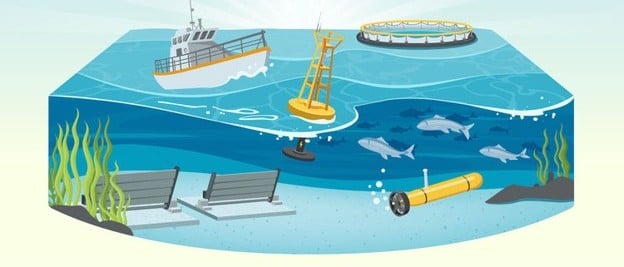
In the CONCEPT Phase, competitors selected a blue economy application their proposed system, subsystem, or component would support, and identified an integration challenge their solution intends to address. Concepts can power any off-grid use in the ocean with marine energy, which includes power from waves, tides, and ocean currents. In November 2024, DOE awarded $10,000 each to 20 CONCEPT Phase winners, including Team Michigan Tech.

Phase 1
CONCEPT
$10,000 · Nov. 2024
Phase 2 — Current
DEVELOP
$75,000 · 2025
Next step
Future tech development
Post-prize pathway

In the DEVELOP Phase,awardees work to advance their concept and prepare it for future technology development after the prize concludes.

CONCEPT Phase winners

The following teams are CONCEPT Phase winners (as announced by DOE, in alphabetical order). Team Michigan Tech, based in the university’s Mechanical and Aerospace Engineering Department, consists of Abishek Subramanian (PhD student)​; Zach Hardy (Undergraduate student)​; Dr. Shangyan Zou; Dr. Tania Demonte Gonzales​; Dr. Gordon Parker; and Dr. Wayne Weaver​.

BlueBio&Beyond — Hoboken, NJ Cal Poly Mechanical Engineering — San Luis Obispo, CA
Changzheng Huang — Irvine, CA E-Wave Technologies — Hoboken, NJ
ODU Ocean Wave Energy — Norfolk, VA OffshoreLink — Hoboken, NJ
Oscilla Power Inc. — Seattle, WA Pittsburgh Coastal Energy — Pittsburgh, PA
Poseidon’s Kite — Keswick, VA SEAquestration Team — Ithaca, NY
Seatrec, Inc. — Vista, CA Streaming Energy — Wendell, NC
Team Michigan Tech — Houghton, MI Wave Water Works — Farmington Hills, MI
WaveRiders — Calverton, MD Waverocker Energy — Montrose, CA

About the Power at Sea Prize

The Power at Sea Prize was established and funded by the U.S. Department of Energy’s Hydropower and Hydrokinetic Office (H2O), formerly the Water Power Technologies Office (WPTO). It is part of DOE’s American-Made program and is administered by the National Laboratory of the Rockies.

The prize was developed in collaboration with the following federal partners:

Pacific Northwest National Laboratory • U.S. Integrated Ocean Observing System • NOAA National Sea Grant • NOAA Ocean Acidification Program • NOAA Fisheries Office of Aquaculture


More information about the Power at Sea Prize, including the full DOE announcement and details on all participating teams, is available at the link below.
Power at Sea Prize — full details

Read the official DOE announcement and learn more about the prize on HeroX.

Michigan Tech Formula SAE Finishes 20th at Michigan International Speedway

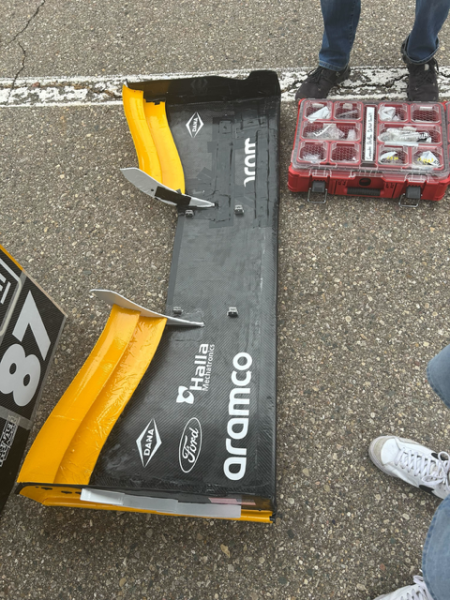
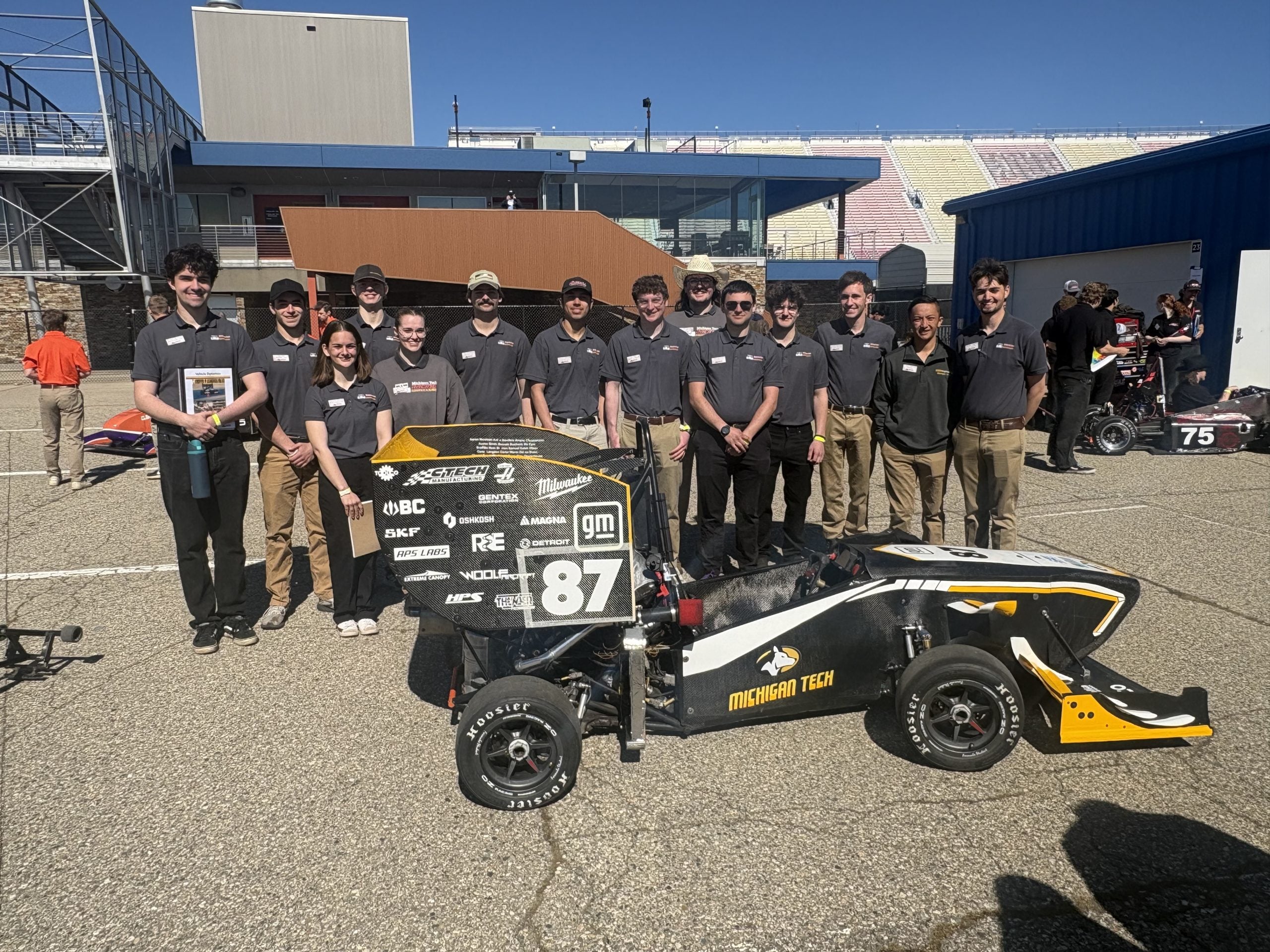
Michigan Tech Formula SAE team with their car, May 2026.
Michigan Tech Formula SAE team representatives with car #87 at Michigan International Speedway, May 2026.

Michigan Tech’s Formula SAE team competed May 16–20 at Michigan International Speedway in Brooklyn, Michigan, finishing 20th overall among 114 teams — and first among the eight Michigan universities competing in the IC (internal combustion) engine category.

Strong Start: Inspections and Design Presentations

The week opened on a high note. The team’s car passed all technical inspections and performance requirements on the first attempt — a significant accomplishment in a field of 114 competitors. The team also delivered their design and cost strategy presentations to competition judges, with a goal of advancing to Design Finals.

Drama on the Track — and a Swift Recovery

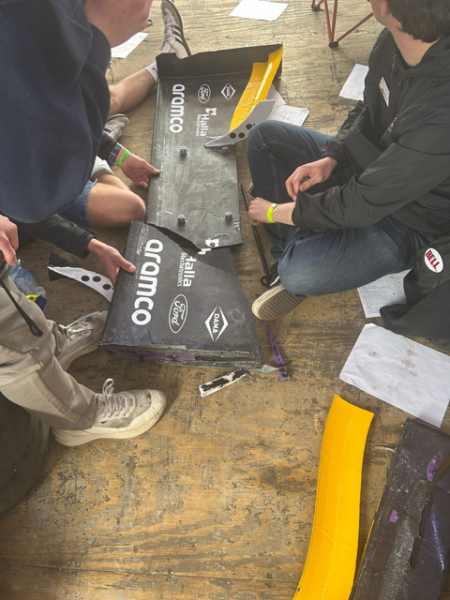
Dynamic event day brought an early test of character. After clocking a 4th-place time in the acceleration event, the car spun and struck a wall. The driver walked away unharmed, but the car sustained significant damage.

What happened next impressed everyone watching. The team attacked the problem immediately and had the car repaired and back on track within two hours, going on to complete every remaining dynamic event — acceleration, skidpad, autocross, and endurance.

I am proud about the way the team gathered to support each other and work the problem.” — Dr. Jim DeClerck, Team Advisor

Parents and spectators around the paddock echoed those sentiments, commenting on the team’s remarkable composure and resilience under pressure.

Final Result

When the final scores were tallied, Michigan Tech placed 20th overall in a field of 114 teams — a result that reflects both the team’s engineering excellence and their ability to perform when it counts most. Notably, Michigan Tech earned the top score among the eight Michigan universities competing in the IC category.

Congratulations to the entire Michigan Tech Formula SAE team — Go Huskies!

Follow the team at formulasae.mtu.edu and on Facebook and Instagram.

Research on the Rise: MAE Department Research Expenditures up 40%

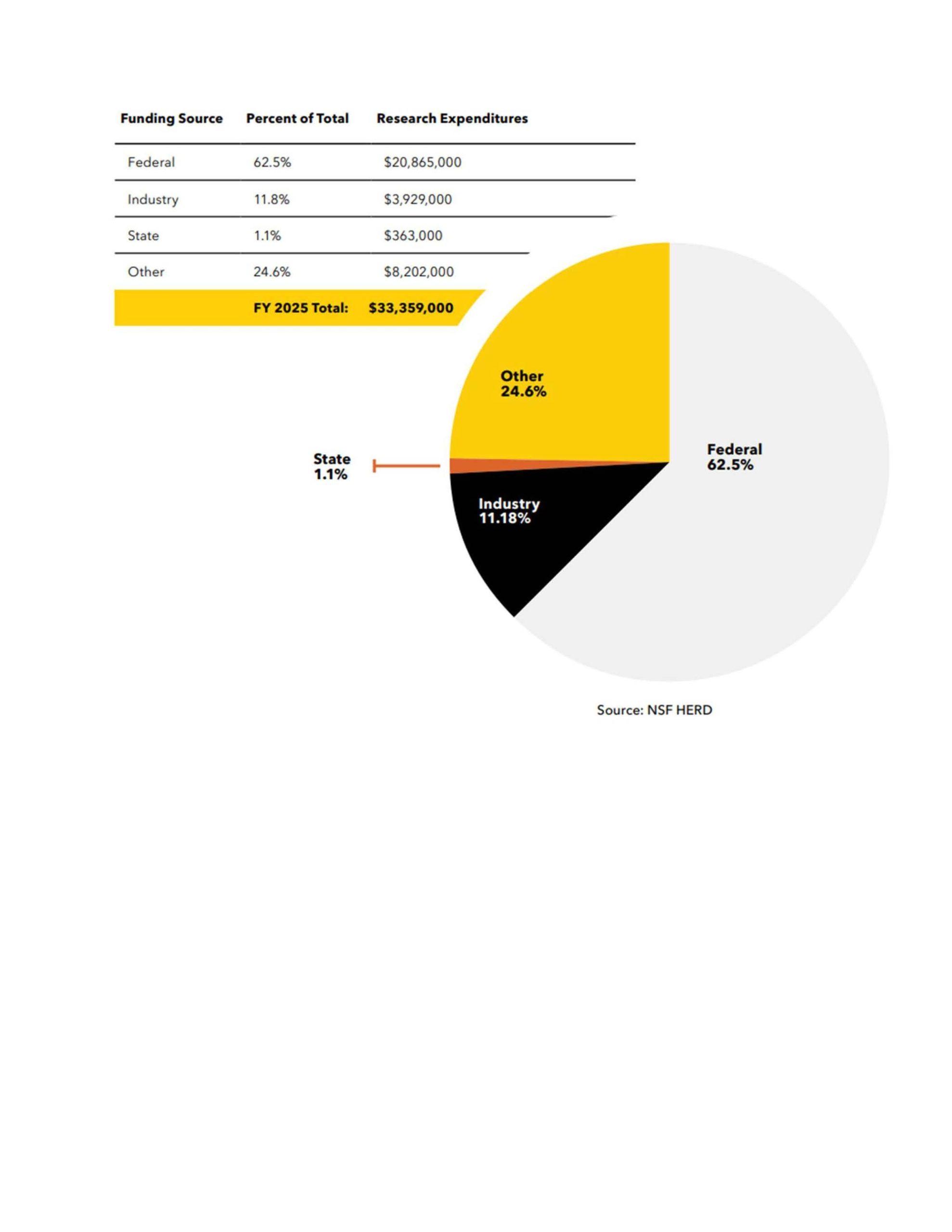
Research activity in Michigan Tech’s Department of Mechanical and Aerospace Engineering is accelerating—fast. This year, the department saw a 40% increase in research expenditures, reflecting the growing impact and competitiveness of MAE’s research portfolio. Michigan Tech MAE’s research culture is highly collaborative and multidisciplinary, bringing together faculty across engineering, the physical and life sciences, and business. Projects span scales from the nano to the global and advance knowledge in manufacturing, design, mechanics, materials, and energy systems.

Multi-scale technologies continue to shape emerging engineering applications—from biomedical devices and smart sensing systems to nano- and multifunctional materials and molecular modeling tools. Michigan Tech’s MAE researchers are at the forefront of these innovations, supported by major federal sponsors including the U.S. Department of Energy (DOE), NASA, the U.S. Department of Defense (DoD), and the National Science Foundation (NSF).

Department research expenditures for FY2025, as reported to HERD.

Research Themes Funded in FY 2024–25

  • Advanced Energy and Power Systems: Electrical grid integration, renewable energy, advanced engine technologies, and emissions reduction.
  • Environmental Engineering and Bio-Energy Conversion: Waste-to-energy systems, bioremediation solutions, and sustainable technologies (scaling the STRAP process, using machine learning to ID plastics in the recycling stream).
  • Materials Science and Structural Integrity: Failure prediction, fracture mechanics, and composite material characterization.
  • Autonomous Systems and Electronics: Autonomous vehicle safety, sensing technologies, and electronics hardening.

The department’s growth also expands opportunities for undergraduate researchers. Through the College of Engineering’s Research Experience for Undergraduates (REU) program, students—from first-year to senior level—work alongside faculty on real-world projects. Recent REU topics range from underwater communication for autonomous vehicles to transformative approaches in recycling and sustainable materials.

With research momentum building, the MAE department is poised to continue driving innovation across industries and disciplines.

Dr. Greg Odegard Named Fellow of the American Society for Composites

Dr. Greg Odegard, John O. Hallquist Endowed Chair in Computational Mechanics in the Department of Mechanical and Aerospace Engineering, has been named a Fellow of the American Society for Composites (ASC).

Election as an ASC Fellow recognizes members who have made genuinely outstanding contributions to the composites community through research, practice, education, and service.

In announcing the honor, ASC highlighted Odegard’s far-reaching influence in the field:

“The rigor and breadth of Odegard’s work are its most impressive qualities, but the subjects of his work are also relevant and timely to the fields of polymer nanocomposites, advanced composite materials, biomaterials, polymers, and piezoelectric materials. He was among the first to couple engineering mechanics and molecular modeling in the field of advanced composites. His research is highly cited and he has supervised 20 doctoral students to completion and currently supervises four.”

A dedicated member of ASC for more than 14 years, Odegard co-chaired the 38th ASC Annual Technical Conference in 2023, serves on the Executive and Publications Committees, and has chaired eleven conference sessions since 2010.

Odegard’s pioneering research in computational modeling and multiscale simulation of composite materials supports the design of next-generation materials for aerospace, defense, and biomedical applications. His election as an ASC Fellow reflects both his technical excellence and long-standing commitment to advancing the composites community.

Paul van Susante Named AIAA Associate Fellow

Dr. Paul van Susante, associate professor with Michigan Technological University.

The American Institute of Aeronautics and Astronautics (AIAA) has named Dr. Paul J. van Susante, associate professor of mechanical and aerospace engineering at Michigan Technological University, to its Class of 2026 Associate Fellows. This honor recognizes individuals who have made “outstanding contributions to the arts, sciences, or technology of aeronautics or astronautics”. Associate Fellows must be recommended by three AIAA members and have at least 12 years of professional experience.

In the organization’s press release, AIAA President Dan Hastings acknowledged the significance of this achievement:

Congratulations to each member of the Class of 2026 Associate Fellows. This distinguished group of professionals has performed extraordinary work and advanced the state of science and technology in aeronautics and astronautics. They exemplify a dedication to excellence in their specific technical disciplines. We are proud of their achievements as they shape the future of aerospace.”

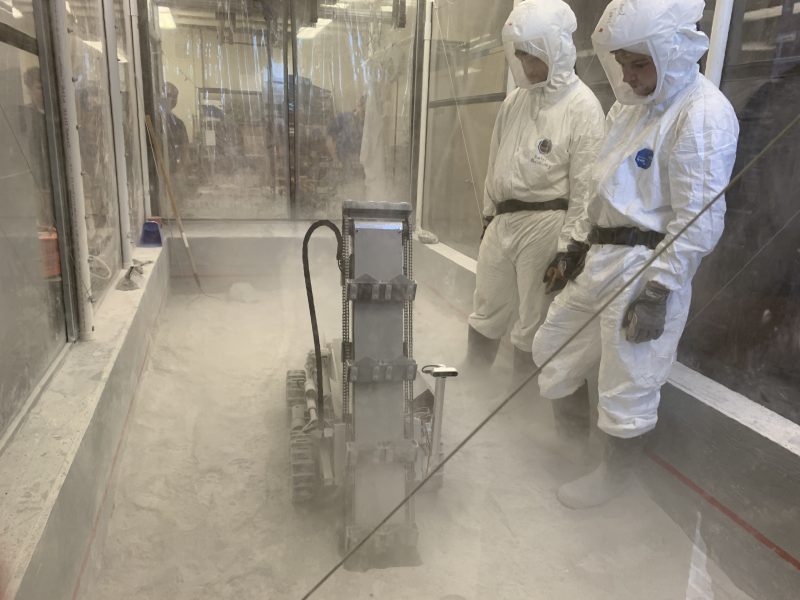
At Michigan Tech, van Susante directs the Planetary Surface Technology Development Lab (PSTDL), also known as HuskyWorks, where his team develops technologies for lunar and Martian excavation, mobility, and in-situ resource utilization (ISRU).

HuskyWorks operates unique facilities for space hardware testing, including a Dusty Thermal Vacuum Chamber and lunar regolith simulant testbeds, enabling realistic planetary surface experiments. The group recently partnered with industry to build the first simulated “lunar road”, demonstrating regolith-based paving techniques to reduce lunar dust hazards.

Dr. van Susante will be formally inducted as an AIAA Associate Fellow during the AIAA SciTech Forum in January 2026.

Michigan Tech Expands Mechanical and Aerospace Engineering Faculty with Eight New Hires

New appointments strengthen research and teaching in support of the University’s new Aerospace Engineering degree and growing enrollment.

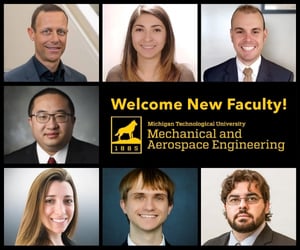
Michigan Technological University’s Department of Mechanical and Aerospace Engineering (MAE) is expanding its faculty in response to strong growth in student enrollment, increasing national demand for expertise in key engineering fields, and the launch of our BSAE degree program. We’ve added eight new faculty members to join our flight crew for the 2025-26 academic year, strengthening our research and teaching capacity.


Top Row: Roland Platz (left), Aslihan Vuruskan (center), Kevin Howard (right); Middle Row: Ze Feng (Ted) Gan; Bottom Row: Tania Demonte Gonzalez (left), Geordan Gutow (center), Andrew Oliva (right). Not Pictured: Madelyn (Hoying) MacRobbie.

Tania Demonte Gonzalez, Assistant Teaching Professor – Ph.D., Michigan Tech. Dynamic systems modeling and control. Senior Personnel on DOE-funded Marine Energy project; published in Energies on nonlinear predictive control of wave energy converters.

Ze Feng (Ted) Gan, Assistant Professor – Ph.D., Penn State. Rotorcraft aeroacoustics and electrified aerospace propulsion. Authored “Challenges and Opportunities for Low Noise Electric Aircraft” in the International Journal of Aeroacoustics.

Geordan Gutow, Assistant Professor – Ph.D., Georgia Tech. Robotics, dynamics, applied mathematics, and AI. Former Intelligence Community Postdoctoral Fellow at Carnegie Mellon. Leads eight funded projects, including Air Force– and NSF-supported initiatives in space operations and multi-agent planning.

Kevin Howard, Assistant Professor – Ph.D., University of Minnesota. Former CFD technical expert and supervisor at Ford Motor Company, specializing in aerodynamics for consumer vehicles and NASCAR racecars.

Madelyn (Hoying) MacRobbie, Assistant Professor – Ph.D. expected August 2025, MIT/Harvard Medical School. Aerospace physiology and in-space medical systems. 2023 Emerging Space Leader awardee; her research includes studying physiological adaptation to altered gravity. (Starting January 2026.)

Andrew Oliva, Assistant Professor – Ph.D., University of Notre Dame. Aerothermodynamics and hypersonic flow. Published in Physics of Fluids. Will spearhead MAE’s hypersonics program in support of the new aerospace degree.

Roland Platz, Assistant Professor – Ph.D. (Dr.-Ing.), Technical University of Darmstadt. Former Research Professor at Deggendorf Institute of Technology (Germany). Research interests: Structural mechanics and dynamics, machine and rotor dynamics, smart structures, and uncertainty quantification. Other career highlights: Coordinated a major German Research Foundation (DFG)-funded collaborative research center with TU Darmstadt, head of the Weissenburg Technology and Study Center.

Aslihan Vuruskan, Assistant Teaching Professor – Ph.D., Missouri S&T. Aerodynamics and CFD. Amelia Earhart Fellowship recipient; published optimization work in the Journal of Aircraft.

With these faculty joining in the 2025–26 academic year, Michigan Tech MAE is building robust capacity in aerospace and mechanical engineering research and education aligned with national priorities.

The Future is Now: A New Era for the MAE Department

We are pleased to report on the significant momentum and growth within our department. The launch of our new Bachelor of Science in Aerospace Engineering program has been a resounding success, driving a record number of first-year student enrollments.

Enrollment Growth and Strategic Expansion

This fall, our department saw a total of 400 student deposits, a remarkable increase from our typical 315. The new aerospace engineering program enrolled 70 students, while our mechanical engineering program maintained a robust class of 340 students. This data defies conventional expectations that the introduction of a new program might cannibalize enrollment from an established one. Instead, it demonstrates strong, synergistic growth across both disciplines. Our department now accounts for an impressive 24% of all deposits across the university, positioning us as a key driver of institutional growth. To support this significant expansion, we are also welcoming eight new faculty members this year to bolster both our new and existing programs.

Investing in World-Class Infrastructure

To accommodate this expansion and ensure our students and faculty have access to cutting-edge resources, we are in the midst of a major infrastructure overhaul. Renovations — spanning four floors of the department’s buildings — are on schedule to be completed by the end of the year. This project includes the development of new, specialized laboratories for wind tunnels, turbines, and rocket engines, along with modernized lecture halls and a dedicated student collaboration space designed to foster interdisciplinary work and innovation.

This strategic investment in our facilities, combined with our strong enrollment trends, underscores our commitment to excellence in both education and research. We are confident that these enhancements will further strengthen our position as a leader in mechanical and aerospace engineering, preparing the next generation of industry and academic leaders.

New Faculty Spotlight: Q&A with Fei Long

Faculty Q&A: Meet Fei Long, assistant professor of mechanical and aerospace engineering at Michigan Tech

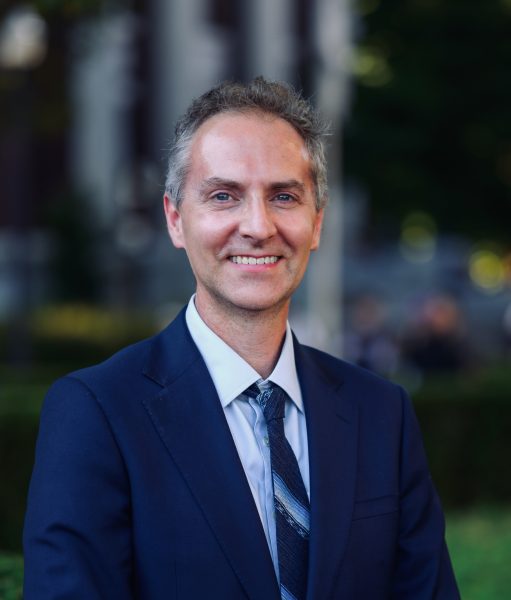
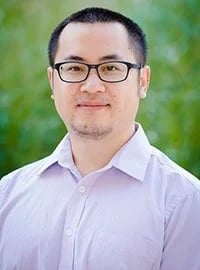
Fei Long Portrait
Fei Long

Assistant Teaching Professor Fei Long joined the MAE Department in 2013, first as a post-doctoral research associate for one year, and then as an instructor and faculty member. His areas of research expertise include nanomaterials and scanning probe microscopy, sustainable manufacturing, Machine Learning, and waste characterization and recycling. 

What drew you to Michigan Tech?

FL: My journey here has been somewhat unique, but I feel fortunate to be at Michigan Tech. After my Ph.D., I worked as an application scientist at Bruker, a scientific instrument company. While I gained valuable experience, the travel-intensive nature of the job led me to seek a return to academia. 

It was a bit of serendipity that Professor Reza Shahbazian-Yassar posted a postdoc opening at Michigan Tech in a Bruker user forum. I reached out, we had a great conversation, and I began my postdoc in what is now the Department of Mechanical and Aerospace Engineering (MAE). Following my postdoc, I continued teaching in MAE while growing my research and publications, and in fall 2024, I was thrilled to join the department as a tenure-track assistant professor. Beyond the professional opportunities, both my wife and I appreciate the friendly and supportive people at Michigan Tech, and the peace and natural beauty of Houghton. Coming from a huge city like Shanghai (with its 24.8 million people!), we’ve truly embraced the Yooper lifestyle.

New Faculty Spotlight: Q&A with Chloe He

Faculty Q&A: Meet Chloe He, assistant teaching professor of mechanical and aerospace engineering at Michigan Tech

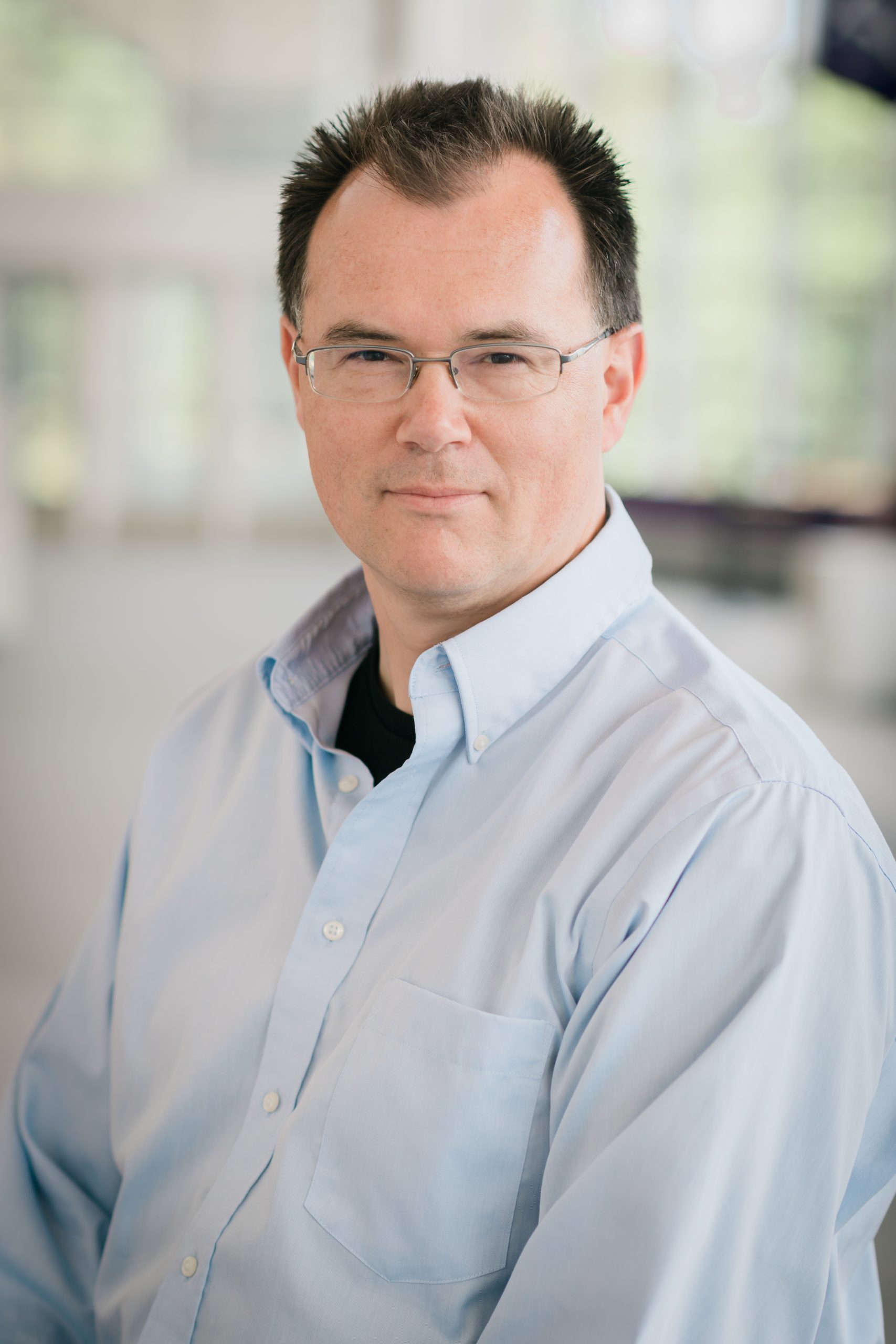
Chloe He portrait
Chloe He

Dr. Chloe He was a lecturer in the MAE department at Michigan Tech in Spring 2024, and is now an assistant teaching professor started in Fall 2024. She holds a BA in Environmental and Energy Engineering from Beijing University of Technology, a MS in Mechanical and Aerospace Engineering from New Mexico State University and PhD in Mechanical and Aerospace Engineering from Michigan Technological University. Dr. He is specialized in heat transfer, with a particular focus on leveraging chemical surface treatment techniques to enhance thermal performance in experimental settings.

What drew you to Michigan Tech?
CH: I first came to Michigan Tech as a PhD student. What really drew me in was a combination of academic opportunity and personal passion. When I was a master’s student at New Mexico State, my advisor, Dr. Chunpei Cai, accepted a job at Michigan Tech and invited me to continue my studies under his guidance. I did some research into Michigan Tech and was impressed by the research facilities and academic environment. The bonus? I love snowboarding, and Michigan Tech offered me both professional growth and access to great winter sports.

Michigan Technological University Spring 2025 MAE Senior Recognition Banquet & Order of the Engineer Ceremony

Keynote Speaker

Dr. Brandon Dilworth is the Group Leader of the Mechanical Engineering Group at MIT Lincoln Laboratory, a federally funded research and development center within the Department of Defense. Brandon is a graduate of Michigan Tech, completing a Master’s in ME in 2006, and a PhD in ME in 2009, with Dr. Jason Blough serving as the advisor for both degrees. Brandon has served as a member of the Executive Board for the Society of Experimental Mechanics, and is a current member of the External Advisory Board for Michigan Tech’s Mechanical and Aerospace Engineering Department. He also completed the Program for Leadership Development with Harvard Business School’s Executive Leadership Program in 2021. Outside of the professional environment, Brandon is the father of two children, Lucy (14) and Jack (11), and attempts to utilize as much “free time” as possible to explore hobbies that blend outdoor activities with spending quality time with his children.