

Author: Becky Barnard

Ellie Zimmermann Receives 2026 NASA NSTGRO Fellowship for Lunar Resource Separation Research

Ellie Zimmermann, PhD candidate in the Department of Mechanical and Aerospace Engineering at Michigan Technological University, is a 2026 NASA NSTGRO fellow developing RaPPTORS, a lunar volatile gas separation system, in the Planetary Surface Technology Development Lab.
Zimmermann’s research focuses on technology that could make long-term human presence possible on the Moon.

Ellie Zimmermann, a PhD candidate in the Department of Mechanical and Aerospace Engineering at Michigan Technological University, has been selected as one of 50 recipients of the 2026 NASA Space Technology Graduate Research Opportunities (NSTGRO) fellowship, selected from doctoral programs across 27 universities nationwide. The fellowship will support her research on Radiative Passive Processing Technology for Offworld Resource Separation (RaPPTORS), a proposed system for separating lunar volatile compounds to support future resource utilization on the Moon.

Solving a Key Problem for Lunar Exploration

RaPPTORS addresses a fundamental challenge in in situ resource utilization (ISRU), which is the practice of using resources available on other planetary bodies rather than launching everything from Earth. The Moon’s permanently shadowed regions may hold frozen deposits of water, methanol, and other volatile compounds. When those deposits are heated for extraction, everything vaporizes at once. Astronauts can’t drink water laced with methanol, and life support systems can’t tolerate contaminants, so the resulting gas mixture is useless until separated into individual components.

RaPPTORS is designed to use the Moon’s own extremely cold environment to accomplish that separation and liquefaction passively, minimizing moving parts and relying on heat-transfer properties rather than mechanical complexity. Zimmermann is currently developing computational models, with hardware testing planned as the research progresses.

Zimmermann’s research is based in Michigan Tech’s Planetary Surface Technology Development Lab (PSTDL), also known as HuskyWorks, led by Associate Professor Paul van Susante. The lab has been a consistent presence in NASA’s most competitive research and challenge programs.

“Ellie’s RaPPTORS project is a great example of the challenging type of work the PSTDL was founded for: developing and testing new technologies to start and sustain humans during lunar and Martian exploration. Ellie’s selection is a testament to her drive and quality as a researcher and well deserved. I look forward to seeing her continue to grow and seeing where she takes this research,” said Paul van Susante, associate professor and Lou and Herbert Wacker Professor of Mechanical Engineering.

The NSTGRO fellowship includes up to 10 weeks per year of on-site research at a NASA center. For her first on-site visit, Zimmermann is considering NASA Glenn Research Center in Cleveland, which specializes in cryogenic fluids and heat transfer, or NASA Marshall Space Flight Center in Alabama, where her research collaborator works.
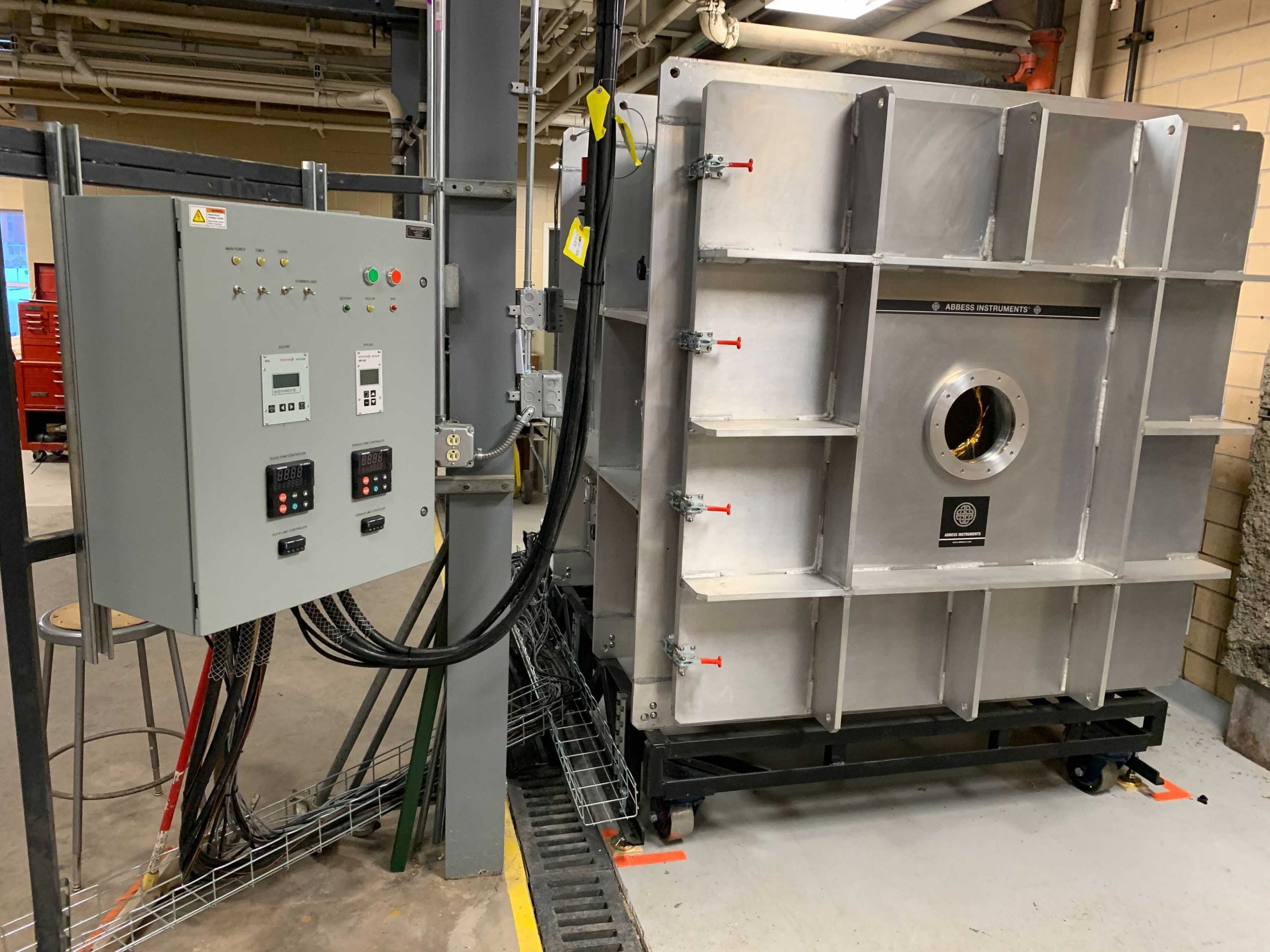
The thermal vacuum chamber at Michigan Tech’s Planetary Surface Technology Development Lab (PSTDL), used to simulate lunar surface conditions for hardware testing related to in situ resource utilization research.
The thermal vacuum chamber at Michigan Tech’s Planetary Surface Technology Development Lab (PSTDL), also known as HuskyWorks, is used to simulate the extreme temperature and pressure conditions of the lunar surface for hardware testing. PhD candidate Ellie Zimmermann uses the facility in her research on RaPPTORS, a lunar volatile gas separation system funded by a 2026 NASA NSTGRO fellowship.

A Renaissance Approach to Lunar Research

Zimmermann also holds a NASA Michigan Space Grant Consortium (MSGC) fellowship and co-authored two peer-reviewed journal papers before beginning her PhD: “Thermal Prospecting for Lunar Water with a Percussive Hot Cone Penetrometer” in Advances in Space Research, and “Supporting Human Exploration of Mars: Experimental Evaluation of Thermal Drilling for Water Extraction from Martian Glacier Ice” in the ASCE Journal of Aerospace Engineering.

Before transferring to Michigan Tech as an undergraduate, Zimmermann spent three years at Grand Valley State University studying statistics and English. Both have proved useful in engineering: statistics sharpens how she evaluates experimental data and determines whether evidence actually supports a conclusion, while her English background strengthens her scientific communication. That appetite for knowledge across disciplines didn’t stop at the lab door. Her doctoral project demands fluency well beyond traditional mechanical engineering: thermal-fluid behavior, chemical processes, instrumentation, and data acquisition. Zimmermann approaches those challenges by building her own understanding first, then consulting subject-matter experts to pressure-test her assumptions.

“I really like learning,” she said. “A PhD is an entirely new realm of not just learning, but applying that knowledge.”

That instinct runs through everything she does, and is shaping her future plans. Zimmermann describes her largest ambition as becoming a modern-day Renaissance person, and sees her PhD as one chapter in a longer project of deliberate, wide-ranging curiosity. “One of my biggest life goals is to become a modern-day Renaissance [person]: a jack of all trades, master of some,” she wrote after her interview. “One of the most exciting aspects of my current research — and pursuing a PhD in general — is how much interdisciplinary knowledge I have acquired since I started the degree, and how much more I will gain before I reach the end.” 

After completing her PhD, she plans to finish her English degree. She is weighing a research and development role at NASA against a teaching-focused faculty position — both paths that would let her keep building the kind of cross-disciplinary expertise she sees as essential to solving problems no single field can address alone.
PhD Candidate Will Johnston Named a 2026 Rising Star in Mechanical Engineering for Advanced 3D Printing Research

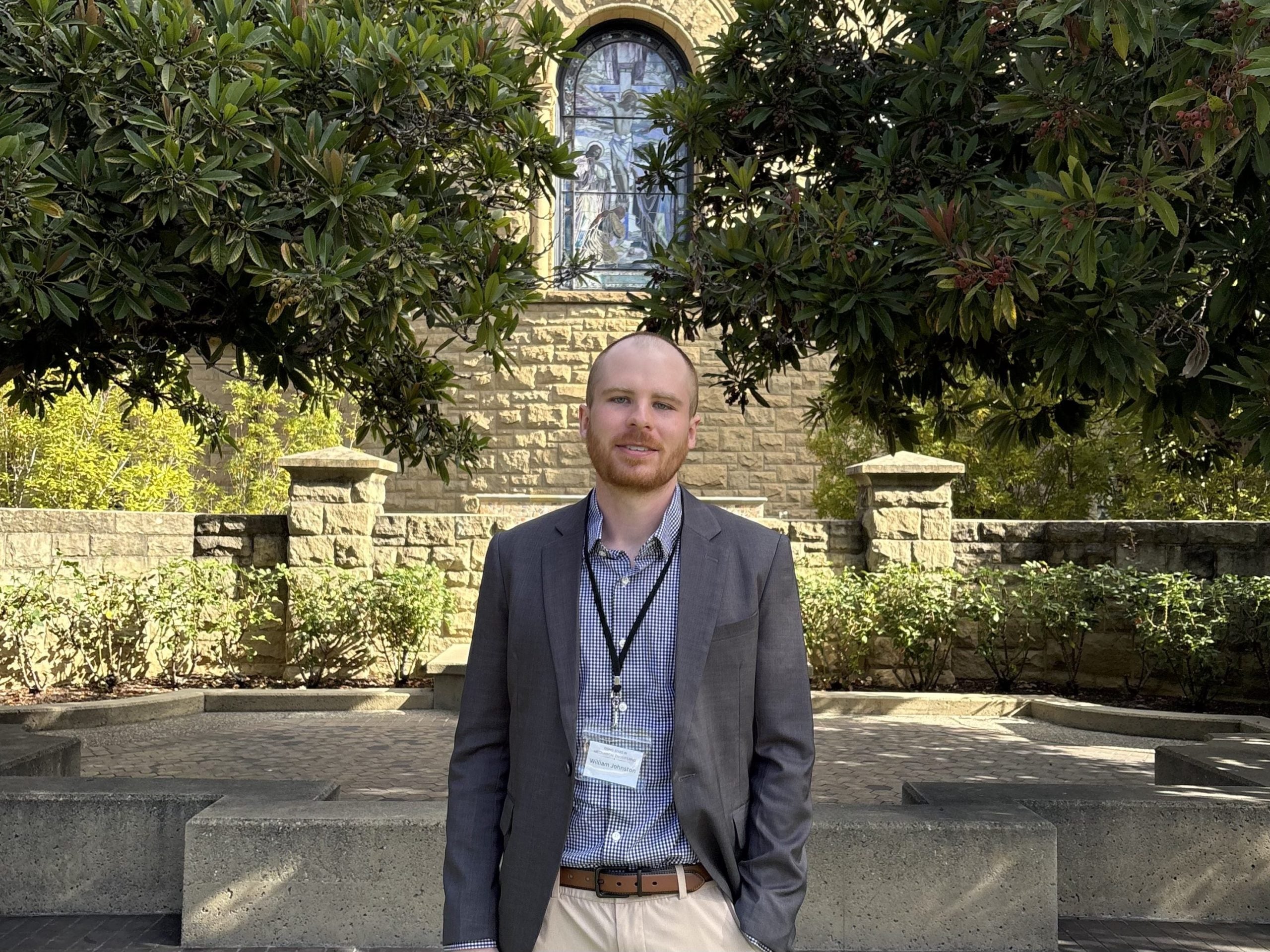
Will Johnston, PhD candidate in the Department of Mechanical and Aerospace Engineering at Michigan Technological University and a 2026 Rising Star in Mechanical Engineering, is a National Science Foundation Graduate Research Fellow whose research focuses on 3D-printed tensegrity-assisted inflatable structures with applications in aerospace, deployable space systems, and biomedical devices.

Michigan Tech PhD candidate Will Johnston was selected for the 2026 Rising Stars in Mechanical Engineering workshop, a competitive program that prepares emerging researchers for academic careers. Held at Stanford University in September, the workshop brought together approximately 30 doctoral students and postdoctoral researchers from across the country. The program, which rotates annually among Stanford, MIT, UC Berkeley, and Carnegie Mellon University, prepares early-career researchers for academic careers in mechanical engineering. 

Turning a 3D-Printing Defect into a Design Feature

Johnston, a member of Michigan Technological University’s Mechanics, Acoustics, and Dynamics Lab (MADLab), focuses his dissertation research on tensegrity-assisted inflatable structures: 3D-printed inflatables with an internal fiber architecture that gives them precise, controllable shapes that are nearly impossible to achieve with conventional inflatables. The technology has potential applications in aerospace components, deployable space structures and biomedical devices such as stents. 

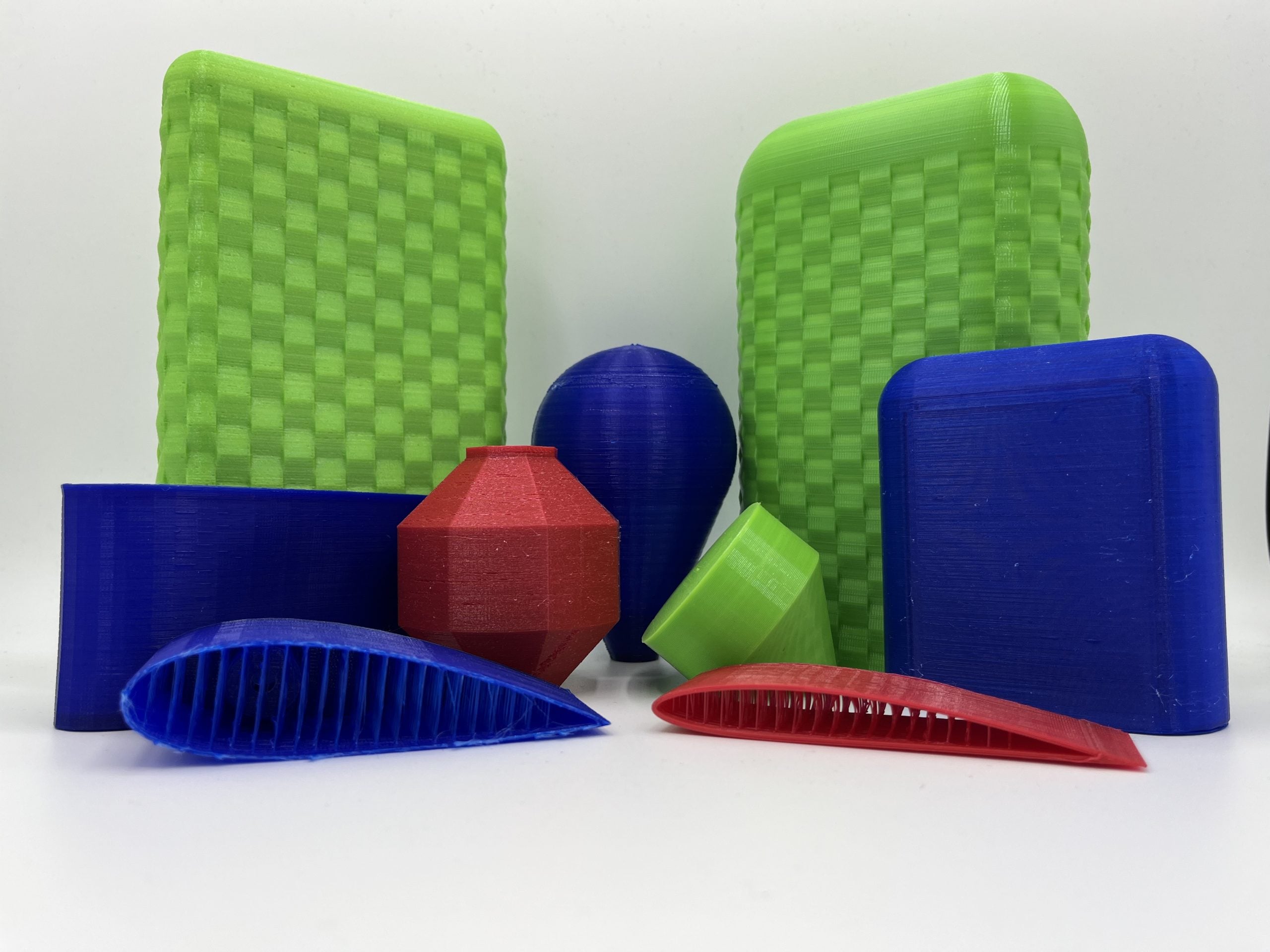
Tensegrity-assisted inflatable structures, with a cross-section showing internal fiber support structure
TenseFlatables are a 3D-printed tensegrity-assisted inflatable structure developed by Michigan Tech PhD candidate Will Johnston and Associate Professor Bhisham Sharma in the Mechanics, Acoustics, and Dynamics Lab (MADLab). Unlike conventional inflatables, TenseFlatables use an internal fiber architecture to achieve precise, controllable shapes, with potential applications in aerospace components, deployable space structures, and biomedical devices.

At the workshop, Johnston delivered a lightning talk that inverts conventional engineering logic: in 3D printing, stringing (the taffy-like filaments a printer leaves as it moves between points) is typically treated as a defect to be eliminated. Johnston’s work leverages stringing as a design feature, using those fibers to build structures with properties that conventional manufacturing can’t replicate. By rethinking how 3D-printed fibers behave, Johnston is developing inflatable structures whose shapes and mechanical properties can be controlled through their internal architecture.

A Manufacturing Researcher at the Right Moment

Johnston was one of the few manufacturing-focused researchers in the cohort. Workshop organizers highlighted manufacturing as an area of growing emphasis across leading engineering programs, noting that Stanford itself is expanding its faculty in the field. It’s an advantage Johnston has cultivated deliberately, since his research bridges multiple engineering disciplines. “If you’re interested in hiring a manufacturing person who can go beyond manufacturing, that’s what I bring,” Johnston said.

“Will has a gift for seeing possibilities where others see limitations, and the persistence to turn those possibilities into working technologies,” said Bhisham Sharma, associate professor in the Department of Mechanical and Aerospace Engineering, who has advised Johnston since his undergraduate days at Wichita State University and brought him to Michigan Tech in 2023. “He is the strongest student I have advised — not simply because of what he has accomplished, but because of the originality and independence of his thinking. His selection is well deserved and reflects the caliber of research our graduate students can pursue at Michigan Tech.”

Recognition, Research, and the Road to a Faculty Career

Johnston is a National Science Foundation (NSF) Graduate Research Fellow, co-inventor on a U.S. patent for inflatable structure fabrication, and the student team lead behind TenseFlatables, which won first place in the Manufacturing and Materials category at the SAE Create the Future Design Contest, and AeroFeathers, which won an honorable mention in SAE’s Aerospace and Defense category.

The workshop also covered the faculty job search, including research and teaching statements and how to communicate a research vision to hiring committees. Johnston is currently applying for assistant professor positions and plans to defend his dissertation in the spring of 2027. 

New Faculty Spotlight: Q&A with Fei Long

Faculty Q&A: Meet Fei Long, assistant professor of mechanical and aerospace engineering at Michigan Tech

Fei Long Portrait
Fei Long

Assistant Teaching Professor Fei Long joined the MAE Department in 2013, first as a post-doctoral research associate for one year, and then as an instructor and faculty member. His areas of research expertise include nanomaterials and scanning probe microscopy, sustainable manufacturing, Machine Learning, and waste characterization and recycling. 

What drew you to Michigan Tech?

FL: My journey here has been somewhat unique, but I feel fortunate to be at Michigan Tech. After my Ph.D., I worked as an application scientist at Bruker, a scientific instrument company. While I gained valuable experience, the travel-intensive nature of the job led me to seek a return to academia. 

It was a bit of serendipity that Professor Reza Shahbazian-Yassar posted a postdoc opening at Michigan Tech in a Bruker user forum. I reached out, we had a great conversation, and I began my postdoc in what is now the Department of Mechanical and Aerospace Engineering (MAE). Following my postdoc, I continued teaching in MAE while growing my research and publications, and in fall 2024, I was thrilled to join the department as a tenure-track assistant professor. Beyond the professional opportunities, both my wife and I appreciate the friendly and supportive people at Michigan Tech, and the peace and natural beauty of Houghton. Coming from a huge city like Shanghai (with its 24.8 million people!), we’ve truly embraced the Yooper lifestyle.

New Faculty Spotlight: Q&A with Chloe He

Faculty Q&A: Meet Chloe He, assistant teaching professor of mechanical and aerospace engineering at Michigan Tech

Chloe He portrait
Chloe He

Dr. Chloe He was a lecturer in the MAE department at Michigan Tech in Spring 2024, and is now an assistant teaching professor started in Fall 2024. She holds a BA in Environmental and Energy Engineering from Beijing University of Technology, a MS in Mechanical and Aerospace Engineering from New Mexico State University and PhD in Mechanical and Aerospace Engineering from Michigan Technological University. Dr. He is specialized in heat transfer, with a particular focus on leveraging chemical surface treatment techniques to enhance thermal performance in experimental settings.

What drew you to Michigan Tech?
CH: I first came to Michigan Tech as a PhD student. What really drew me in was a combination of academic opportunity and personal passion. When I was a master’s student at New Mexico State, my advisor, Dr. Chunpei Cai, accepted a job at Michigan Tech and invited me to continue my studies under his guidance. I did some research into Michigan Tech and was impressed by the research facilities and academic environment. The bonus? I love snowboarding, and Michigan Tech offered me both professional growth and access to great winter sports.

New Faculty Spotlight: Wei Wei

Wei Wei
Wei Wei

Wei Wei joined the Department of Mechanical and Aerospace Engineering as an associate professor in Fall 2024. She earned her PhD in Materials Science and Engineering at Michigan Tech. Prior to joining the MAE faculty, she was an associate professor in the Department of Mechanical Engineering at Wichita State University.

What drew you to Michigan Tech?

WW: I spent five years at Michigan Tech for my PhD—the first five years after moving to the U.S. During that time, I made some of the best friends of my life and really felt at home here. Ever since, I knew I wanted to make my way back. Plus, Michigan Tech has the right facilities for my research, making it the perfect place to be.