
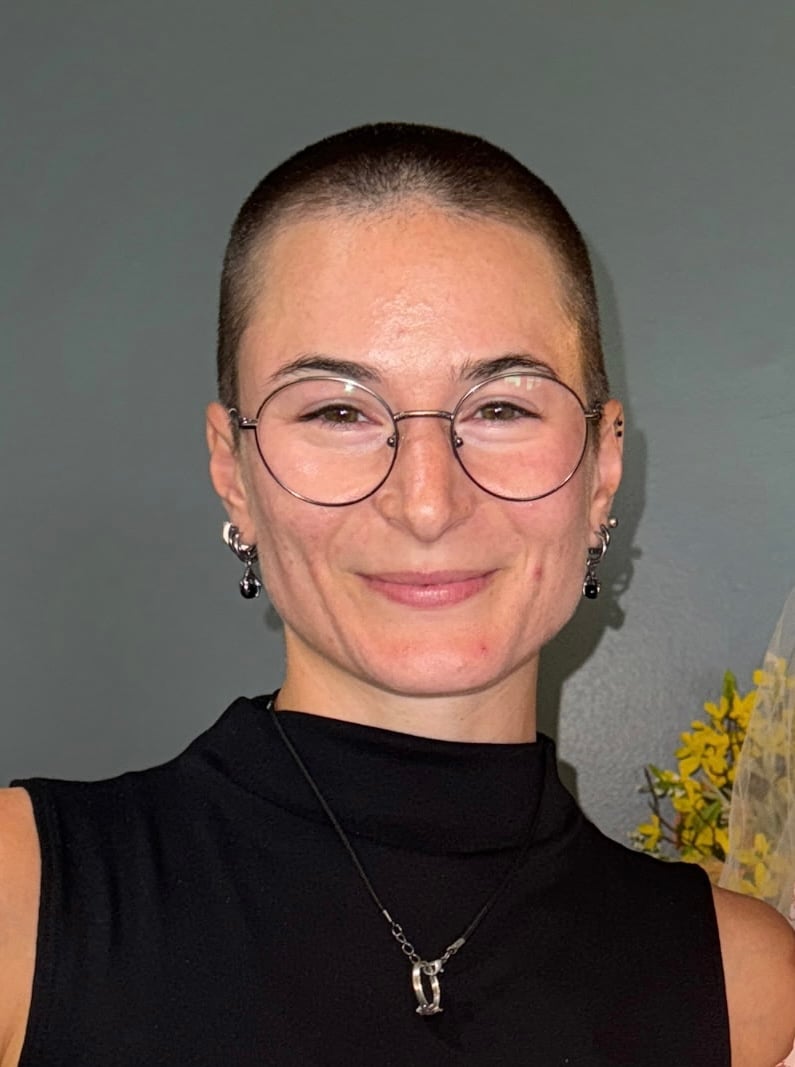
Ellie Zimmermann, a PhD candidate in the Department of Mechanical and Aerospace Engineering at Michigan Technological University, has been selected as one of 50 recipients of the 2026 NASA Space Technology Graduate Research Opportunities (NSTGRO) fellowship, selected from doctoral programs across 27 universities nationwide. The fellowship will support her research on Radiative Passive Processing Technology for Offworld Resource Separation (RaPPTORS), a proposed system for separating lunar volatile compounds to support future resource utilization on the Moon.
Solving a Key Problem for Lunar Exploration
RaPPTORS addresses a fundamental challenge in in situ resource utilization (ISRU), which is the practice of using resources available on other planetary bodies rather than launching everything from Earth. The Moon’s permanently shadowed regions may hold frozen deposits of water, methanol, and other volatile compounds. When those deposits are heated for extraction, everything vaporizes at once. Astronauts can’t drink water laced with methanol, and life support systems can’t tolerate contaminants, so the resulting gas mixture is useless until separated into individual components.
RaPPTORS is designed to use the Moon’s own extremely cold environment to accomplish that separation and liquefaction passively, minimizing moving parts and relying on heat-transfer properties rather than mechanical complexity. Zimmermann is currently developing computational models, with hardware testing planned as the research progresses.
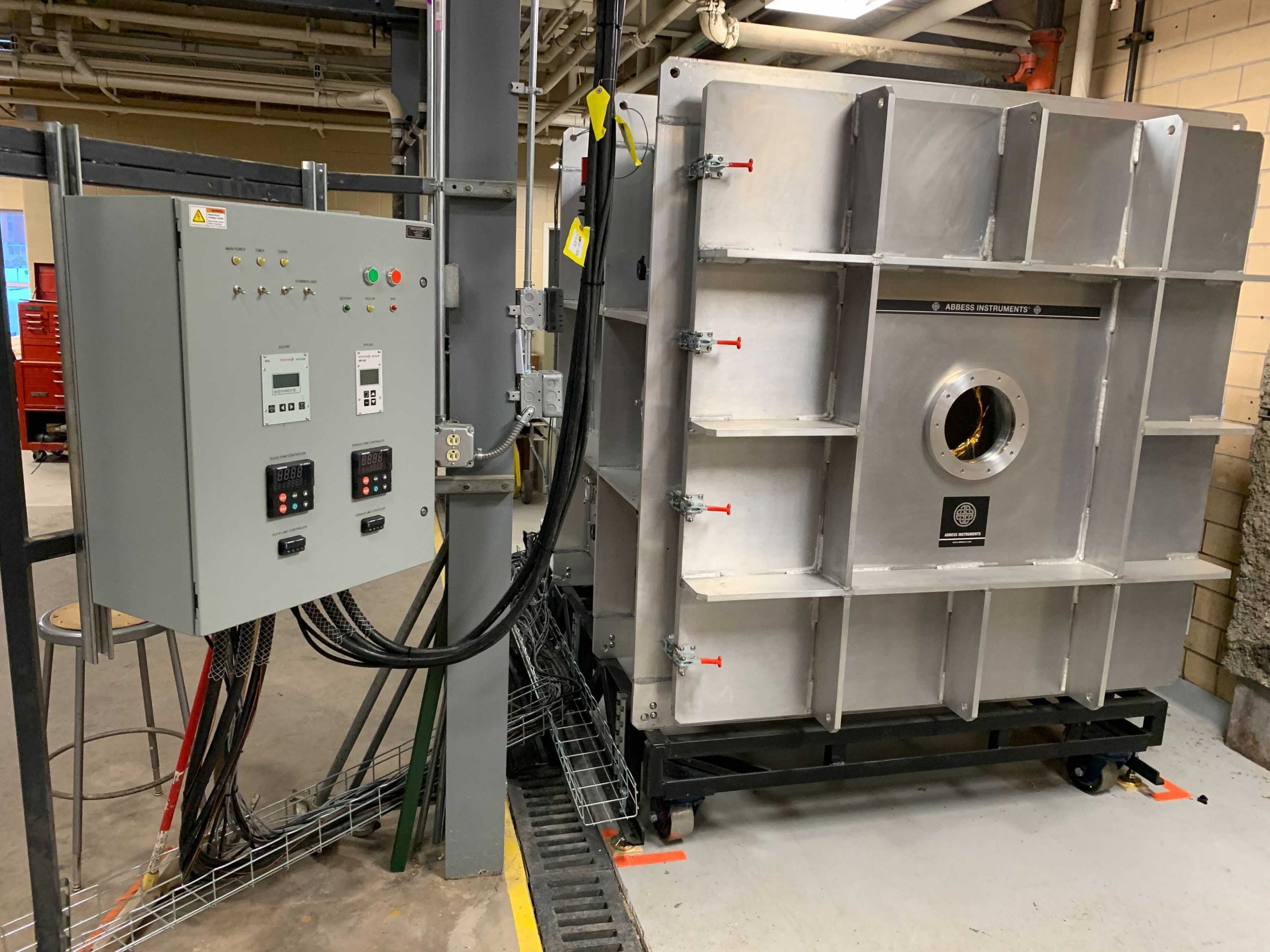
Zimmermann’s research is based in Michigan Tech’s Planetary Surface Technology Development Lab (PSTDL), also known as HuskyWorks, led by Associate Professor Paul van Susante. The lab has been a consistent presence in NASA’s most competitive research and challenge programs.
“Ellie’s RaPPTORS project is a great example of the challenging type of work the PSTDL was founded for: developing and testing new technologies to start and sustain humans during lunar and Martian exploration. Ellie’s selection is a testament to her drive and quality as a researcher and well deserved. I look forward to seeing her continue to grow and seeing where she takes this research,” said Paul van Susante, associate professor and Lou and Herbert Wacker Professor of Mechanical Engineering.
The NSTGRO fellowship includes up to 10 weeks per year of on-site research at a NASA center. For her first on-site visit, Zimmermann is considering NASA Glenn Research Center in Cleveland, which specializes in cryogenic fluids and heat transfer, or NASA Marshall Space Flight Center in Alabama, where her research collaborator works.
A Renaissance Approach to Lunar Research
Zimmermann also holds a NASA Michigan Space Grant Consortium (MSGC) fellowship and co-authored two peer-reviewed journal papers before beginning her PhD: “Thermal Prospecting for Lunar Water with a Percussive Hot Cone Penetrometer” in Advances in Space Research, and “Supporting Human Exploration of Mars: Experimental Evaluation of Thermal Drilling for Water Extraction from Martian Glacier Ice” in the ASCE Journal of Aerospace Engineering.
Before transferring to Michigan Tech as an undergraduate, Zimmermann spent three years at Grand Valley State University studying statistics and English. Both have proved useful in engineering: statistics sharpens how she evaluates experimental data and determines whether evidence actually supports a conclusion, while her English background strengthens her scientific communication. That appetite for knowledge across disciplines didn’t stop at the lab door. Her doctoral project demands fluency well beyond traditional mechanical engineering: thermal-fluid behavior, chemical processes, instrumentation, and data acquisition. Zimmermann approaches those challenges by building her own understanding first, then consulting subject-matter experts to pressure-test her assumptions.
“I really like learning,” she said. “A PhD is an entirely new realm of not just learning, but applying that knowledge.”
That instinct runs through everything she does, and is shaping her future plans. Zimmermann describes her largest ambition as becoming a modern-day Renaissance person, and sees her PhD as one chapter in a longer project of deliberate, wide-ranging curiosity. “One of my biggest life goals is to become a modern-day Renaissance [person]: a jack of all trades, master of some,” she wrote after her interview. “One of the most exciting aspects of my current research — and pursuing a PhD in general — is how much interdisciplinary knowledge I have acquired since I started the degree, and how much more I will gain before I reach the end.”
After completing her PhD, she plans to finish her English degree. She is weighing a research and development role at NASA against a teaching-focused faculty position — both paths that would let her keep building the kind of cross-disciplinary expertise she sees as essential to solving problems no single field can address alone.