Category: Students

Team Michigan Tech selected as a DEVELOP Phase winner in DOE’s Power at Sea Prize

Team Michigan Tech is a winner of the Department of Energy’s Power at Sea Prize DEVELOP Phase, carrying a $75,000 cash award.

The DEVELOP Phase is the second stage of the Power at Sea Prize, open to the 20 teams that won the CONCEPT Phase in November 2024. The DEVELOP phase participants competed for a prize pool of up to $1,500,000. In addition to cash prizes, competitors will receive multiple types of support throughout the competition, including webinars, networking sessions, and training in marine energy, applications in the blue economy, commercialization best practices, or other topics of interest.

About the two phases

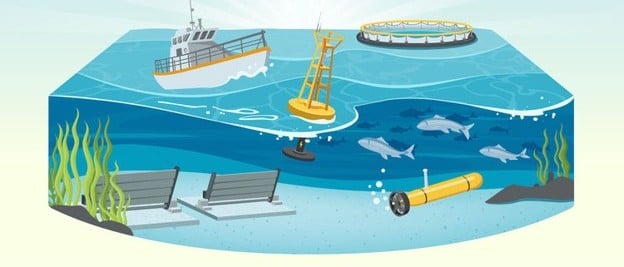
In the CONCEPT Phase, competitors selected a blue economy application their proposed system, subsystem, or component would support, and identified an integration challenge their solution intends to address. Concepts can power any off-grid use in the ocean with marine energy, which includes power from waves, tides, and ocean currents. In November 2024, DOE awarded $10,000 each to 20 CONCEPT Phase winners, including Team Michigan Tech.

Phase 1
CONCEPT
$10,000 · Nov. 2024
Phase 2 — Current
DEVELOP
$75,000 · 2025
Next step
Future tech development
Post-prize pathway

In the DEVELOP Phase,awardees work to advance their concept and prepare it for future technology development after the prize concludes.

CONCEPT Phase winners

The following teams are CONCEPT Phase winners (as announced by DOE, in alphabetical order). Team Michigan Tech, based in the university’s Mechanical and Aerospace Engineering Department, consists of Abishek Subramanian (PhD student)​; Zach Hardy (Undergraduate student)​; Dr. Shangyan Zou; Dr. Tania Demonte Gonzales​; Dr. Gordon Parker; and Dr. Wayne Weaver​.

BlueBio&Beyond — Hoboken, NJ Cal Poly Mechanical Engineering — San Luis Obispo, CA
Changzheng Huang — Irvine, CA E-Wave Technologies — Hoboken, NJ
ODU Ocean Wave Energy — Norfolk, VA OffshoreLink — Hoboken, NJ
Oscilla Power Inc. — Seattle, WA Pittsburgh Coastal Energy — Pittsburgh, PA
Poseidon’s Kite — Keswick, VA SEAquestration Team — Ithaca, NY
Seatrec, Inc. — Vista, CA Streaming Energy — Wendell, NC
Team Michigan Tech — Houghton, MI Wave Water Works — Farmington Hills, MI
WaveRiders — Calverton, MD Waverocker Energy — Montrose, CA

About the Power at Sea Prize

The Power at Sea Prize was established and funded by the U.S. Department of Energy’s Hydropower and Hydrokinetic Office (H2O), formerly the Water Power Technologies Office (WPTO). It is part of DOE’s American-Made program and is administered by the National Laboratory of the Rockies.

The prize was developed in collaboration with the following federal partners:

Pacific Northwest National Laboratory • U.S. Integrated Ocean Observing System • NOAA National Sea Grant • NOAA Ocean Acidification Program • NOAA Fisheries Office of Aquaculture


More information about the Power at Sea Prize, including the full DOE announcement and details on all participating teams, is available at the link below.
Power at Sea Prize — full details

Read the official DOE announcement and learn more about the prize on HeroX.

Michigan Tech Formula SAE Finishes 20th at Michigan International Speedway

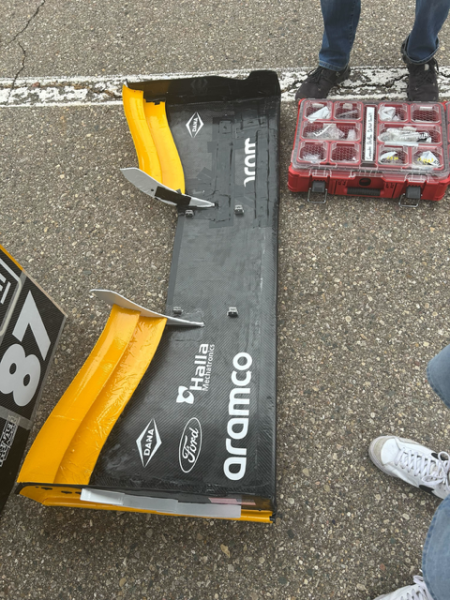
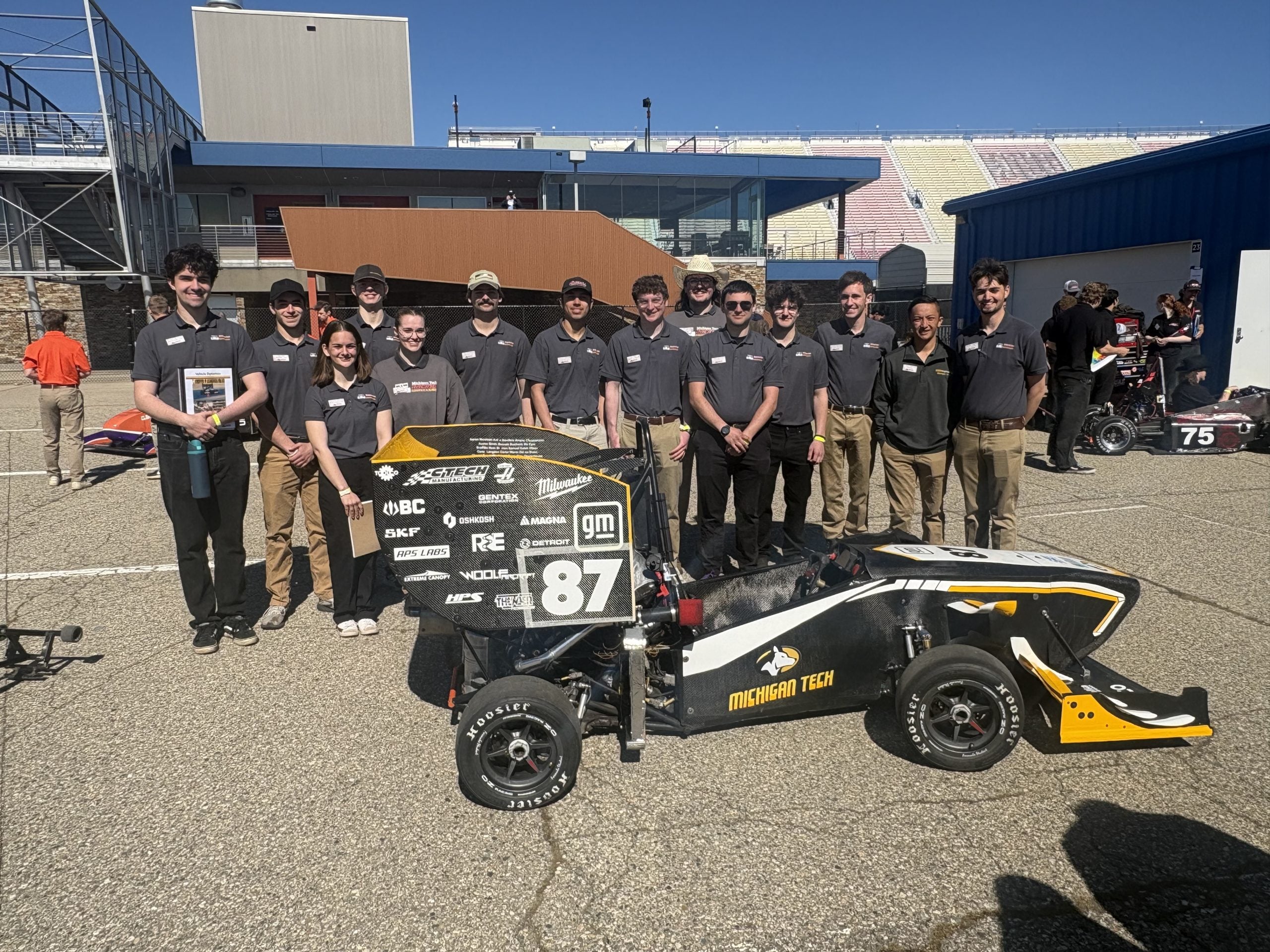
Michigan Tech Formula SAE team with their car, May 2026.
Michigan Tech Formula SAE team representatives with car #87 at Michigan International Speedway, May 2026.

Michigan Tech’s Formula SAE team competed May 16–20 at Michigan International Speedway in Brooklyn, Michigan, finishing 20th overall among 114 teams — and first among the eight Michigan universities competing in the IC (internal combustion) engine category.

Strong Start: Inspections and Design Presentations

The week opened on a high note. The team’s car passed all technical inspections and performance requirements on the first attempt — a significant accomplishment in a field of 114 competitors. The team also delivered their design and cost strategy presentations to competition judges, with a goal of advancing to Design Finals.

Drama on the Track — and a Swift Recovery

Dynamic event day brought an early test of character. After clocking a 4th-place time in the acceleration event, the car spun and struck a wall. The driver walked away unharmed, but the car sustained significant damage.

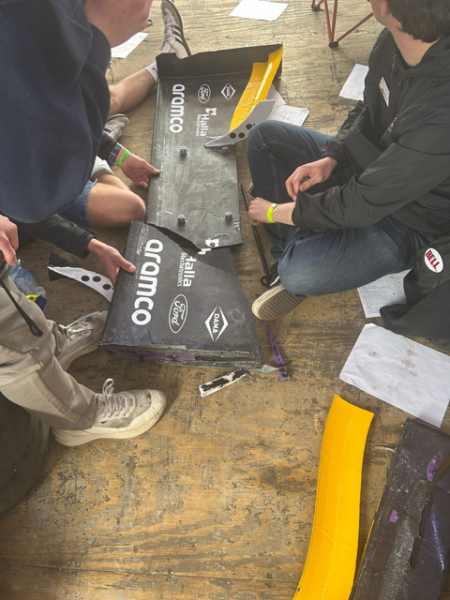
What happened next impressed everyone watching. The team attacked the problem immediately and had the car repaired and back on track within two hours, going on to complete every remaining dynamic event — acceleration, skidpad, autocross, and endurance.

I am proud about the way the team gathered to support each other and work the problem.” — Dr. Jim DeClerck, Team Advisor

Parents and spectators around the paddock echoed those sentiments, commenting on the team’s remarkable composure and resilience under pressure.

Final Result

When the final scores were tallied, Michigan Tech placed 20th overall in a field of 114 teams — a result that reflects both the team’s engineering excellence and their ability to perform when it counts most. Notably, Michigan Tech earned the top score among the eight Michigan universities competing in the IC category.

Congratulations to the entire Michigan Tech Formula SAE team — Go Huskies!

Follow the team at formulasae.mtu.edu and on Facebook and Instagram.

New Faculty Spotlight: Q&A with Fei Long

Faculty Q&A: Meet Fei Long, assistant professor of mechanical and aerospace engineering at Michigan Tech

Fei Long Portrait
Fei Long

Assistant Teaching Professor Fei Long joined the MAE Department in 2013, first as a post-doctoral research associate for one year, and then as an instructor and faculty member. His areas of research expertise include nanomaterials and scanning probe microscopy, sustainable manufacturing, Machine Learning, and waste characterization and recycling. 

What drew you to Michigan Tech?

FL: My journey here has been somewhat unique, but I feel fortunate to be at Michigan Tech. After my Ph.D., I worked as an application scientist at Bruker, a scientific instrument company. While I gained valuable experience, the travel-intensive nature of the job led me to seek a return to academia. 

It was a bit of serendipity that Professor Reza Shahbazian-Yassar posted a postdoc opening at Michigan Tech in a Bruker user forum. I reached out, we had a great conversation, and I began my postdoc in what is now the Department of Mechanical and Aerospace Engineering (MAE). Following my postdoc, I continued teaching in MAE while growing my research and publications, and in fall 2024, I was thrilled to join the department as a tenure-track assistant professor. Beyond the professional opportunities, both my wife and I appreciate the friendly and supportive people at Michigan Tech, and the peace and natural beauty of Houghton. Coming from a huge city like Shanghai (with its 24.8 million people!), we’ve truly embraced the Yooper lifestyle.

New Faculty Spotlight: Q&A with Chloe He

Faculty Q&A: Meet Chloe He, assistant teaching professor of mechanical and aerospace engineering at Michigan Tech

Chloe He portrait
Chloe He

Dr. Chloe He was a lecturer in the MAE department at Michigan Tech in Spring 2024, and is now an assistant teaching professor started in Fall 2024. She holds a BA in Environmental and Energy Engineering from Beijing University of Technology, a MS in Mechanical and Aerospace Engineering from New Mexico State University and PhD in Mechanical and Aerospace Engineering from Michigan Technological University. Dr. He is specialized in heat transfer, with a particular focus on leveraging chemical surface treatment techniques to enhance thermal performance in experimental settings.

What drew you to Michigan Tech?
CH: I first came to Michigan Tech as a PhD student. What really drew me in was a combination of academic opportunity and personal passion. When I was a master’s student at New Mexico State, my advisor, Dr. Chunpei Cai, accepted a job at Michigan Tech and invited me to continue my studies under his guidance. I did some research into Michigan Tech and was impressed by the research facilities and academic environment. The bonus? I love snowboarding, and Michigan Tech offered me both professional growth and access to great winter sports.

Michigan Technological University Fall 2024 MAE Senior Recognition Banquet & Order of the Engineer Ceremony

Keynote Speaker

Eric Little is a professor of Mechanical and Manufacturing Engineering at St. Cloud State University in St. Cloud, Minnesota, and a lecturer in Mechanical Engineering at the University of Minnesota’s Twin Cities campus. He also works as a patent agent at Schwegman Lundberg and Woessner, a law firm based in Minneapolis, and as an engineering and business consultant for several startup companies. With over 20 years of experience in engineering and entrepreneurship, Eric has expertise in the research, development, and commercialization of innovative products and technologies across a range of industries, including automotive, acoustics, mechanical testing/control, and medical devices. His background includes serving as a postdoctoral fellow at the University of Minnesota’s Earl Bakken Medical Devices Center and co-founding two medical device start-ups focused on cardiac care. Eric has authored several peer-reviewed journal articles and conference papers, and he is a passionate advocate for STEM education. Eric earned a bachelor’s degree in business, along with bachelor’s, master’s, and PhD degrees in Mechanical Engineering-Engineering Mechanics from Michigan Tech. He also holds a law degree with a focus on Intellectual Property from William Mitchell College of Law in St. Paul, Minnesota. An enthusiastic advocate of Michigan Tech, Eric is equally dedicated to supporting Upper Peninsula establishments such as the Downtowner, KBC, and Nuitini’s.

PSTDL Researchers at 2024 Space Resources Roundtable

Michigan Tech’s Planetary Surface Technology Development Lab (PSTDL), led by Assistant Professor Paul van Susante (ME-EM), was represented at the 24th meeting of the Space Resources Roundtable (SRR), held in Golden, Colorado, on June 3–7.

Van Susante presented a poster and chaired a session at the event, and Research Engineer Chuck Carey (ME-EM) and four students presented. The presentations and posters were well received, and Michigan Tech was well represented by the team.

Van Susante chaired the session “Regolith Excavation and Conveyance.” His poster topic was “Lunar and Mars ISRU, Excavation and Construction Test Capabilities and Project Progress at the MTU-PSTDL.”

Carey presented a talk on “Testing a Novel Lunar Regolith Compaction Device for Site Preparation.”

Ph.D. candidate Travis Wavrunek (mechanical engineering) presented a talk on “Development of the TEthered Mechanism for Persistent Energy Storage and Transmission (TEMPEST) System for the Watts on the Moon Challenge.”

Recent graduate Ellie Zimmermann ’24 (B.S. Mechanical Engineering) presented a talk on “Cryogenic Vacuum Testing of a Heated Cone Penetrometer for Thermal Detection and Quantification of Water in Icy Lunar Regolith Simulant.” Zimmermann is an incoming PSTDL Ph.D. student.

Undergraduate student Robin Austerberry (mechanical engineering) presented a poster on “Durability Testing of a Lunar Surface Excavation Rover.”

Recent graduate Christi LeCaptain ’24 (B.S. Mechanical Engineering), the outgoing team lead for MTU Lunabotics, participated with the rest of Michigan Tech’s representatives in a site visit with Lunar Outpost, one of our research project partners. LeCaptain is also an incoming PSTDL Ph.D. student.

The SRR promotes knowledge, advances education, and provides information on availability, applicability and status of development of the resources of space beyond the atmosphere of the Earth.

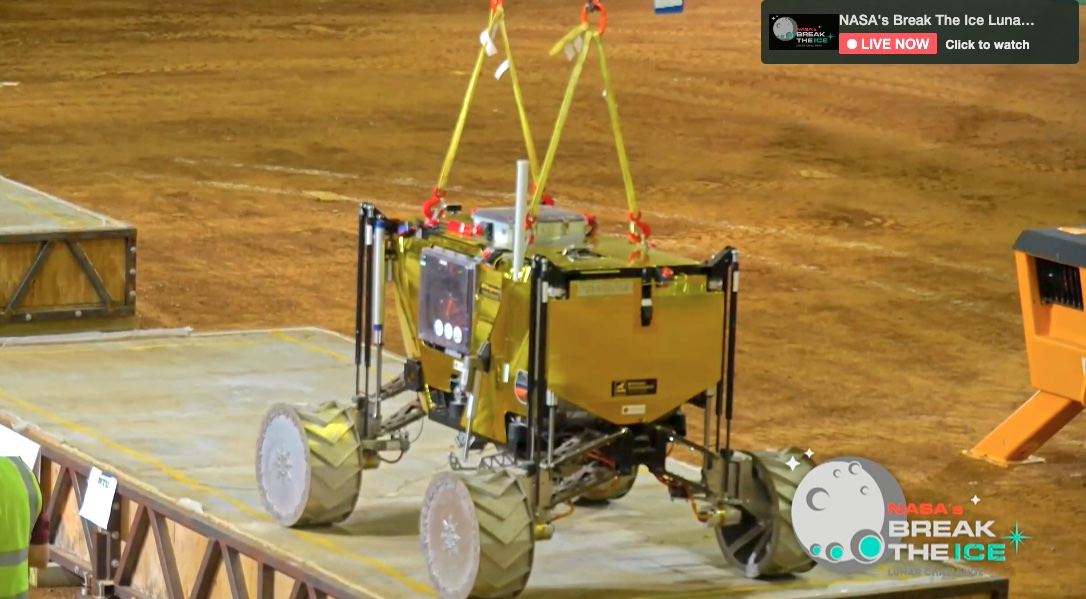
Michigan Tech’s PSTDL Competing in Break the Ice Challenge Finals

Paul van Susante (ME-EM) and 16 student researchers from Michigan Tech’s Planetary Surface Technology Development Lab (PSTDL) are in Huntsville, Alabama, this week competing in the final round of NASA’s Break the Ice Lunar Challenge, being held June 8–15, 2024, at Alabama A&M University.

Begun in 2020, the Break the Ice Lunar Challenge asked competitors to propose robotic systems that can use resources found on the lunar surface in regolith (icy moon dust) to aid astronauts living on the moon. The PSTDL is one of six teams competing in the finals—three led by universities and three led by industry companies.

Yesterday and today (June 11–12), the PSTDL is participating in Phase 2, Level 3 of the challenge—its final round, and the culmination of more than three years of work and four rounds of the competition. The finals are being livestreamed on NASA’s Break the Ice Lunar Challenge website.

The PSTDL took part in the excavation portion of the challenge yesterday. If the schedule remains accurate, the team will compete in the transportation portion today (June 12) at 4 p.m. ET.

Watch for the results to be announced by NASA on FacebookX (formerly Twitter), Instagram, and Break the Ice’s news page and main page.

How We Got Here

  • December 2022: The PSTDL is one of 15 teams selected to advance to the semifinals after competing in the Phase 2 qualifying round.
  • December 2023: NASA narrows the field to six finalists — including the PSTDL.
  • February 2024: Alabama A&M is selected to host the challenge’s final round.

Update

NASA mentioned Michigan Tech’s Planetary Surface Technology Development Lab as one of three teams that “performed exceptionally well” in the excavation portion of the final round of the Break the Ice Lunar Challenge. Along with the two prize-winning teams, NASA invited the PSTDL to use the thermal vacuum chambers at its Marshall Space Flight Center to continue testing and development.

Play video
Preview image for  video

Ana Dyreson Presents at 2024 Power Systems and Photovoltaic Events

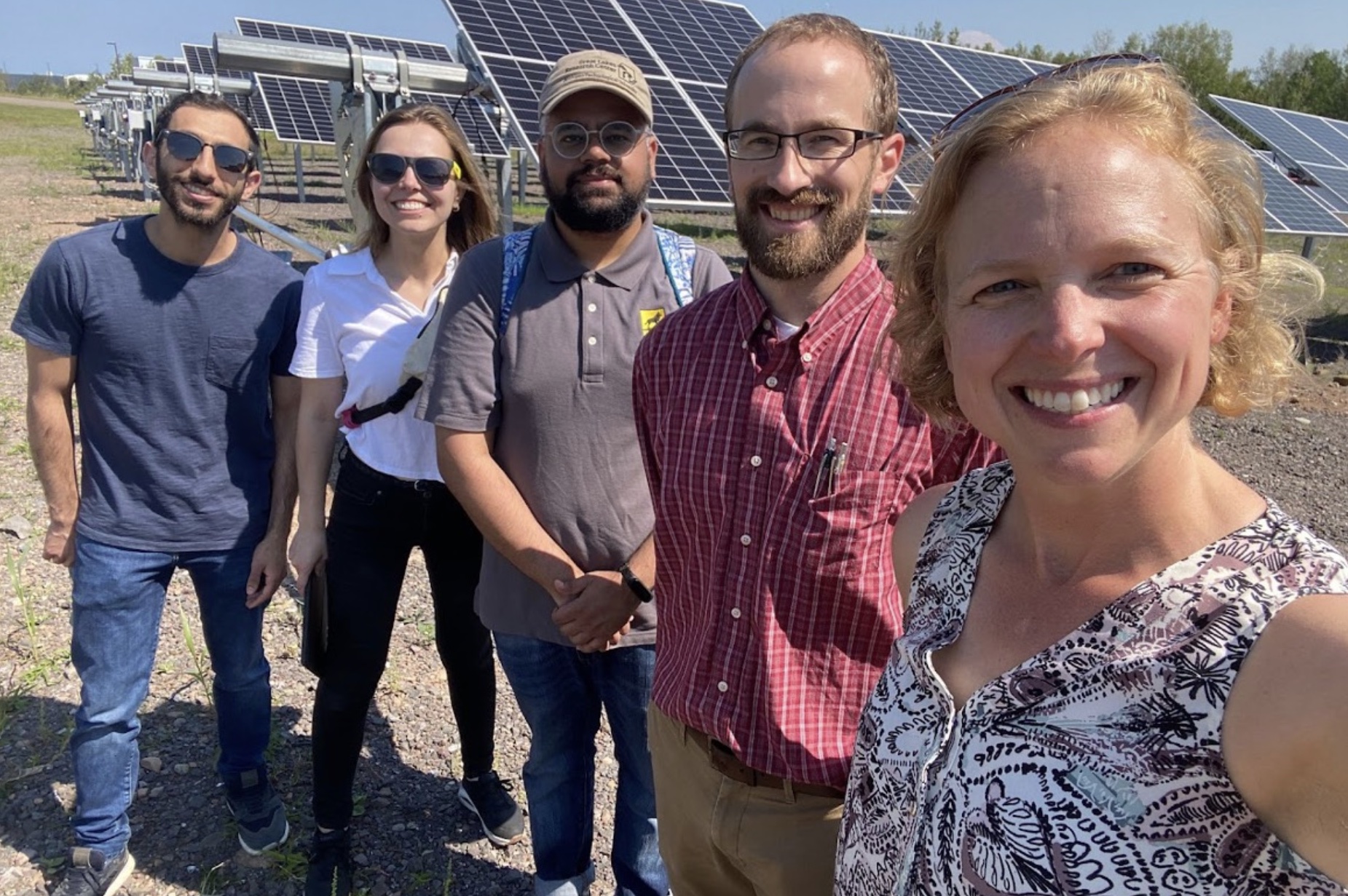
Group of five people standing outside near a solar panel array.
Graduate Students: Ayush Chutani, Jonathan Aurand, Shelbie Wickett, Adnan Hilal, Jacob Chizek, David Wallis, Keith Holliday. Some of the students are shown, with Ana Dyreson on the right.

Ana Dyreson (ME-EM) attended the Power Systems Engineering Consortium (PSERC) Industry Advisory Board meeting at Cornell University, held May 29–30.

Dyreson presented on the PSERC project “Incorporating climate impacts into electricity system planning models: review and case study.”

She also attended and presented at the Photovoltaic Performance Modeling Consortium (PVPMC) Workshop in Salt Lake City, Utah, held May 7–9.

Dyreson presented on the panel “Modeling Snow Effects on PV Systems.” The presentation topic was “Snow shedding from single-axis tracking PV systems: observations from the Michigan Regional Test Center and implications for modeling widespread snow events.” The presentation was co-authored by Ph.D. students Shelbie Wickett and Ayush Chutani (both mechanical engineering-engineering mechanics).

Ana Dyreson is an assistant professor in ME-EM. She leads the Great Lakes Energy Group, where she uses energy analysis and grid-scale modeling to study the performance of renewable technologies and the operation of future electric power systems, with a focus on the impacts of climate change on those systems in the U.S. Great Lakes region.

Register Soon for New Summer Graduate Courses in Internal Combustion Engines (ICE)

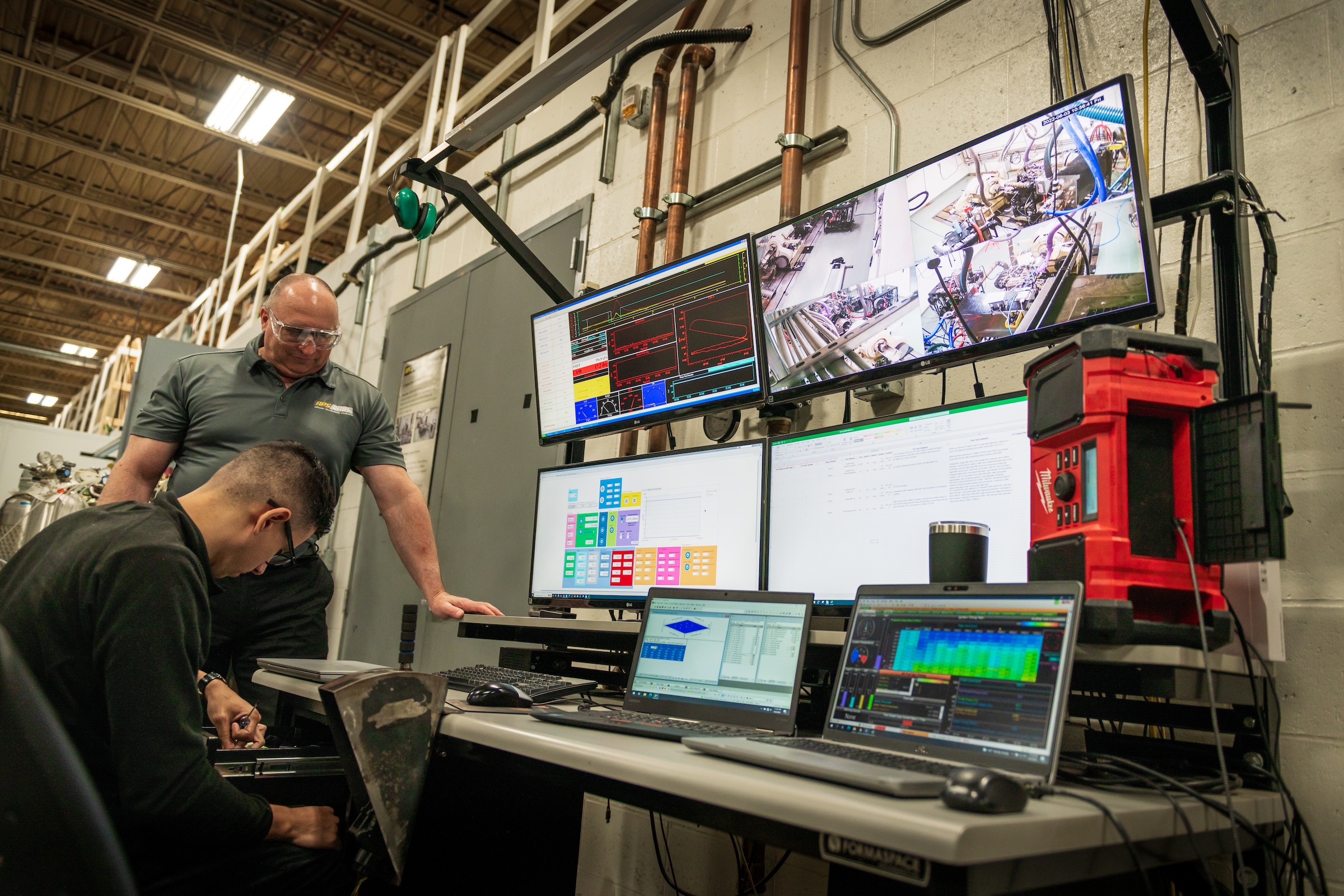
Dr. Jeff Naber is the Richard and Elizabeth Henes Endowed Professor at Michigan Tech. He also serves as director of the Advanced Power Systems Research Center.

Discover the latest breakthroughs in Internal Combustion Engines with MTU and USCAR.

Michigan Tech is proud to announce an expansion of graduate-level courses in the specialized area of internal combustion engines (ICE). These courses are available on campus at Michigan Tech, and will also be available soon online, via the MTU Global Campus.

Students can enroll in these individually if they require expertise in a certain area. Or they can take several to create a graduate certificate that provides more advanced, specialized knowledge in internal combustion engines. Currently, the Department of Mechanical Engineering-Engineering Mechanics is developing a 15-course ICE graduate certificate. 

Alternatively, students may pursue an MS in Mechanical Engineering with a focus area on ICE. 

As with all graduate programs, the online application is free. And no GRE is required.

For more details, contact Michigan Tech Professor Jeff Naber at jnaber@mtu.edu and Michigan Tech Adjunct Professor Dr. Andrea Strzelec at strzelec@uscar.org

Enroll In Summer Classes

Courses are starting right away. In fact, there are several graduate-level offerings on deck for Summer 2024 and one brand-new course for Fall 2024.

Summer 2024 Courses

  • SI Engine Fundamentals (MEEM 5201) June 19-21, 2024 lab course
  • SI Engine Controls (MEEM 5203) July 10-12, 2024 lab course
  • Thermodynamics Refresher (MEEM 3990) June 10 – Aug. 8, 2024

New Course for Fall 2024

  • Thermodynamics for Engine Systems (MEEM 5990) is available, along with our existing courses.

Learn From Industry Experts

These courses have been developed by Dr. Jeff Naber in collaboration with Dr. Andrea Strzelec, Sr. Research Scientist at USCAR. Strzelec, who holds a Ph.D. in Combustion Engineering from the University of Wisconsin-Madison Engine Research Center, specializes in transportation and fuels, as well as engine research.

USCAR, the United States Council for Automotive Research, is an umbrella organization that facilitates pre-competitive research and development collaboration among three major American automotive manufacturers: General Motors, Ford, and Stellantis (previously Chrysler). 

The organization’s main objective is strengthening the U.S. auto industry’s technology base. It does so by promoting cooperative research efforts, reducing costs, supporting regulatory compliance, and accelerating the development of advanced technologies.

Read more

Rev Up Your ICE Knowledge With New Program From MTU and USCAR

Tania Demonte Gonzalez receives Best Presentation Award at INORE’s 2023 European Symposium

Photo of Tania Demonte Gonzalez, who conducts research on wave energy converter nonlinear control.

Tania Demonte Gonzalez (PhD candidate, ME-EM) conducts research on wave energy converter nonlinear control and is part of the graduate student team using MTU Wave, the campus-based wave tank. She was awarded Michigan Tech’s Topping Teaching Fellowship in the Fall of 2022 and is a remote intern at the National Renewable Energy Laboratory (NREL) in Colorado.

Tania recently attended the International Network on Offshore Renewable Energy’s (INORE) 2023 European Symposium, a five-day meeting for researchers specializing in offshore renewable energy. The symposium provides many opportunities for early-stage researchers to come together, learn from one another, and establish new relationships that can greatly benefit their research and career journeys.


As part of the attendee research presentations, Tania gave a talk on “Time-Varying Hydrodynamic Modeling of a Variable Geometry Oscillating Surge Wave Energy Converter” and received one of two Best Presentation Awards. The presentation was a collaboration with NREL’s Dr. Nathan Tom and discussed the methods used to find a time-varying model for variable geometry surge wave energy converters. More details will be available in an upcoming publication.

Congratulations on this achievement, Tania.