
Category: Psychology

Water and Well-being

Lake Superior in spring

This month, students in Dr. Samantha Smith’s Environmental Psychology class will examine natural environments and how they play a key role in our overall well-being. What better time than during World Water Day, observed each year on March 22.

Water is not only essential for life, but psychological research shows that water is one of the features found in both natural and built environments that can help reduce stress and autonomic arousal due to our innate connection to the natural world (Kaplan & Kaplan, 1989; Ulrich, 1981; Ulrich et al., 1991; White et al., 2010). There is also evidence that living closer to “blue spaces” (e.g., rivers, lakes, oceans) is associated with lower psychological distress (Nutsford et al., 2016). 

During the semester, students will discuss how water features can be incorporated into built environments such as mental health care facilities, providing restorative benefits to both patients and healthcare workers. The course will also give students the opportunity to experience the calming effects of a stream, lake, or waterfall out in the local natural environment.

Hungarian Falls, Hubbell, MI

 PSY3800 Environmental Psychology will be offered again this summer (Track B) and has been added to the General Education (HASS) list effective summer 2023.


The focus of this year’s World Water Day is on accelerating change to solve the water and sanitation crisis. The global campaign, called “Be the change” encourages people to take action in their own lives to change the way we use, consume and manage water. Every action—no matter how small—will make a difference.

Related stories: 

Huskies Follow the Research Trail to Explore the Psychology of Nature

Samantha Smith Selected for Deans’ Teaching Showcase

Photo credit: @hartphotoco
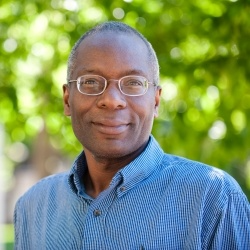
Hungwe Awarded Carnegie African Diaspora Fellowship

We are excited to announce that Kedmon Hungwe, a professor in the Department of Cognitive & Learning Sciences, has been awarded a fellowship by the Carnegie African Diaspora Fellowship Program. Professor Hungwe will be collaborating with Rhodes University and Dr. Clement Simuja on the project “Co-Developing and Designing a Digital Literacy Curriculum for Pre-Service Teachers in a Developing Country University” in South Africa.

The project will focus on designing and developing a digital literacy curriculum for pre-service teachers based on South Africa’s Department of Basic Education Digital Learning Framework and the UNESCO global framework. The project will run for 90 days during the summer of 2023 and will include curriculum co-development, research collaboration, and graduate student teaching and mentoring.

The Carnegie African Diaspora Fellowship Program provides funding and structure for African-born academics at accredited higher education institutions in the United States and Canada to collaborate with colleagues at accredited higher education African institutions on capacity-building projects. The program is designed to strengthen capacity at host institutions and develop long-term, mutually beneficial collaborations between universities in Africa and the United States and Canada. The fellowship is funded by Carnegie Corporation of New York and managed by the Institute of International Education in collaboration with the Association of African Universities.

This project is a great opportunity for Professor Hungwe to use his expertise and knowledge in STEM Education to help develop a curriculum that will benefit pre-service teachers in South Africa. We wish Professor Hungwe all the best on this exciting venture and look forward to hearing about the outcomes of this project.

See a full list of newly selected projects, hosts and scholars.

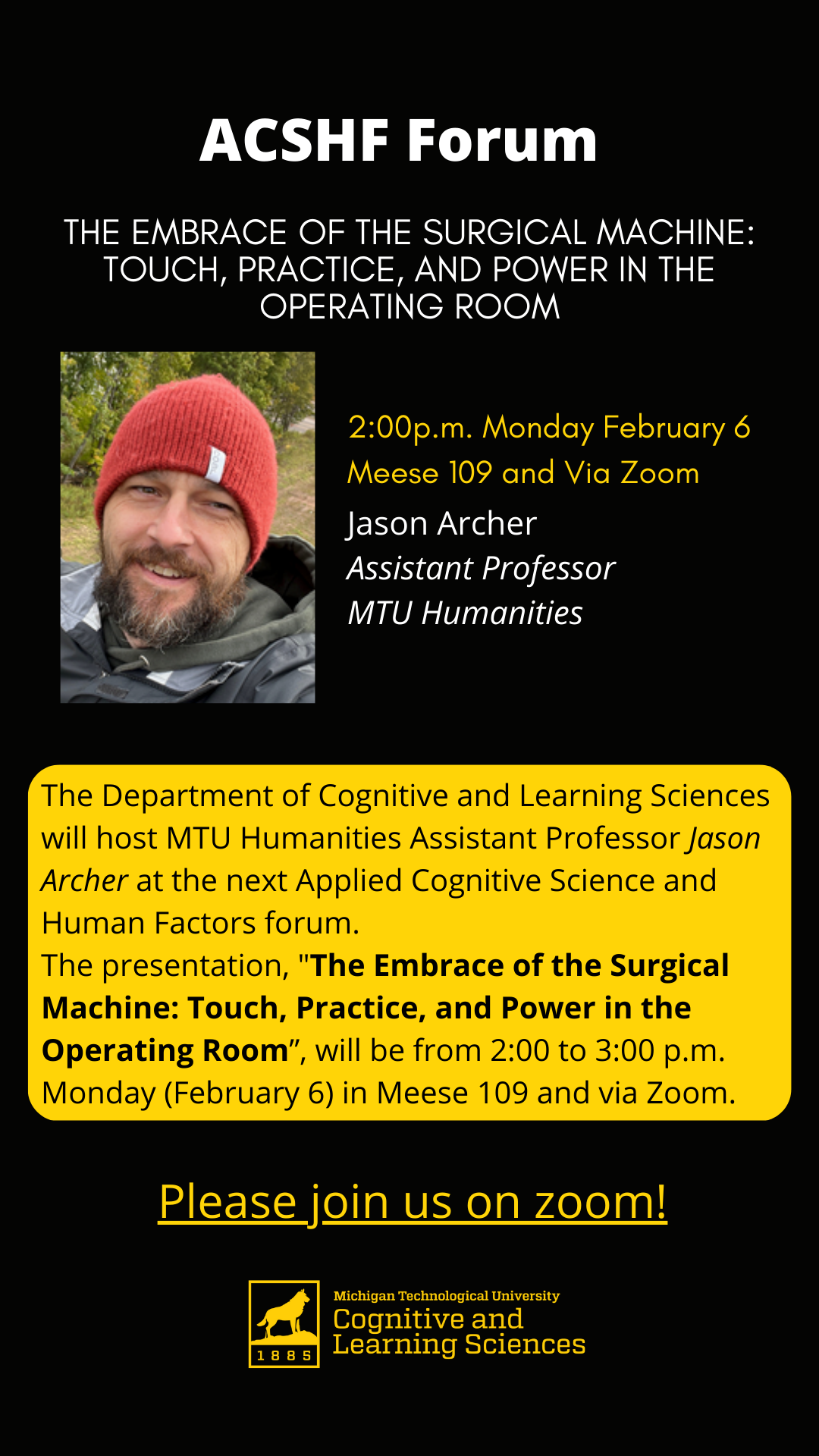
ACSHF Forum: Jason Archer

The Department of Cognitive and Learning Sciences will host MTU Humanities Assistant Professor Jason Archer at the next Applied Cognitive Science and Human Factors forum.

The presentation, “The Embrace of the Surgical Machine: Touch, Practice, and Power in the Operating Room”, will be from 2:00 to 3:00 p.m. Monday (February 6) in Meese 109 and via Zoom

In this presentation, Jason Archer will talk about his work in the area of Human Machine Communication, focusing on research related to the da Vinci Surgical System (dVSS), a system widely used in robotic-assisted surgery. Dr. Archer will discuss how concerns with touch-oriented media sparked his investigation of the dVSS, explain the challenges of doing research in a surgical setting, and share stories from interviews with robotic surgeons, and observations from the OR, that help highlight some of his findings.

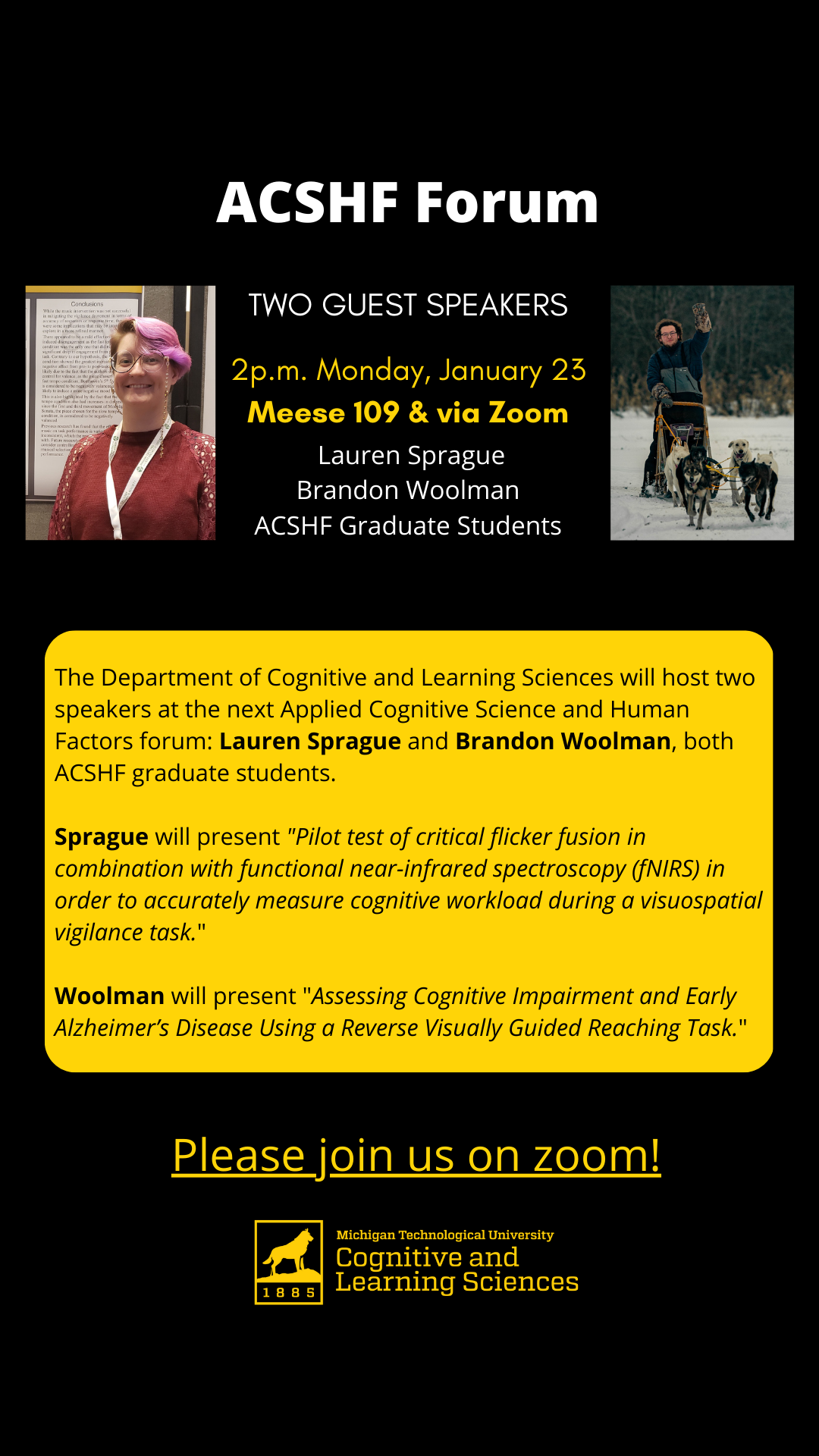
ACSHF Forum: Grad Student Presentations

The Department of Cognitive and Learning Sciences will host ACSHF PhD Students Lauren Sprague and Brandon Woolman at the next Applied Cognitive Science and Human Factors forum. Their presentations will be from 2:00 to 3:00 p.m. Monday (January 23) in Meese 109 and via Zoom.

Sprague will present “Pilot test of critical flicker fusion in combination with functional near-infrared spectroscopy (fNIRS) in order to accurately measure cognitive workload during a visuospatial vigilance task.

Abstract:
Vigilance tasks are largely considered to be stressful to perform, difficult to stay on task, and cognitively draining due to the mental demands of sustaining attention. These tasks, which involve the monitoring of an environment for critical signals while avoiding more frequent neutral signals, induce what has been dubbed the vigilance decrement. The vigilance decrement typically involves a decline in performance as well as an increase in response time. During the investigation of this decrement, some tools need to be validated before they should be used to investigate it. Functional near-infrared spectroscopy is a non-invasive brain imaging technique that provides real-time data on changes in light absorption caused by the hemodynamic activity of the brain region in question. This hemodynamic activity provides information about cognitive effort. The flicker fusion threshold is the frequency at which an observer perceives a flickering light as static. This threshold can provide information about cortical arousal, alertness, fatigue, and cognitive workload. This study seeks to determine if these two methods, utilized alongside the NASA-TLX a measure of mental workload, can provide detailed information about the cognitive effort of a task as well as any decline in mental resources due to the mental effort of a visuospatial vigilance task.  

Woolman will present “Assessing Cognitive Impairment and Early Alzheimer’s Disease Using a Reverse Visually Guided Reaching Task.

Abstract:
Alzheimer’s Disease (AD) is the most common form of dementia, which is known for its impacts on cognitive functions, especially memory. Early signs of AD can be difficult to diagnose (Porsteinsson et al., 2021), neuropsychological test batteries designed for dementia are only moderately reliable. Recent findings in the field of motor behavior have show novel motor tasks to be sensitive to cognitive differences between younger and older adults. Some motor tasks have shown to be more sensitive to cognitive deficits compared to neuropsychological test batteries (Watral & Trewartha, 2021). For example, tasks like the visuomotor rotation task, where participants adapt to a visuomotor perturbation, have been identified as a means for assessing cognition (Buch, Young & Contreras-Vidal, 2003). Recent work by Tippet and Sergio (2006) developed a reverse visually guided reaching task (rVGR) in which participants make a series of aimed movements toward a target. During the rVGR task, the visual cursor moves in the opposite direction of the physical reach, forcing the participant to correct their movements by reversing the reaching direction. Measures of performance in this task, such as movement speed and inconsistency of movements, have been shown to change in preclinical Alzheimer’s populations (Hawkins & Sergio, 2014). The current investigation seeks to further characterize rVGR performance differences between younger adults, older adults, and individuals with early AD (diagnosed with MCI or mild AD). For this purpose, we are recruiting 20 younger adults, 20 healthy older adults, and 20 early AD patients. We are testing the prediction that participants with AD should perform similarly to the controls on a VGR task but show significant deficits on the rVGR task. Additionally, correlations will be examined between performance on a neuropsychological battery and the rVGR task performance to test the prediction that performance on the motor task are related to changes in cognition in AD. This work may provide the foundation for using motor tasks as a diagnostic tool for cognitive impairments in preclinical stages of MCI and Alzheimer’s Disease. Early diagnosis of cognitive impairments due to MCI and AD could allow physicians to maximize the effectiveness of available treatment methods for slowing the progression of the disease.

CLS Faculty Receive Exceptional Teaching Score

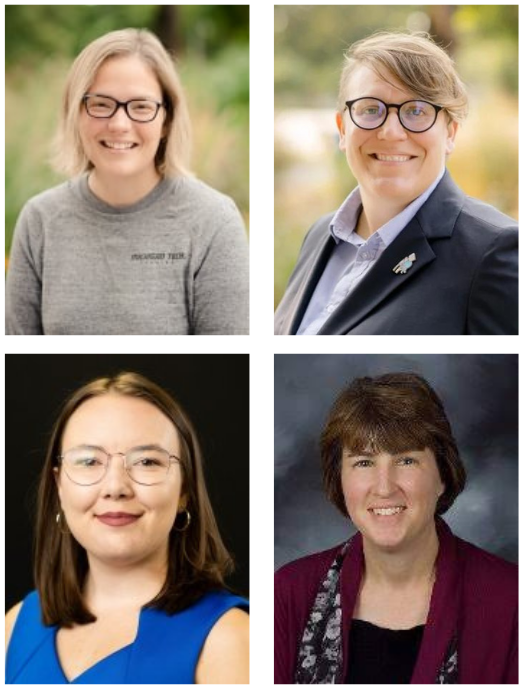
photos of Amber Bennett, Kelly Steelman, Linda Wanless, and Destaney Sauls
Clockwise starting top left: Amber Bennett, Kelly Steelman, Linda Wanless, and Destaney Sauls

Cognitive and Learning Sciences’ faculty Amber Bennett, Destaney Sauls, Kelly Steelman, and Linda Wanless (CTL) have been identified as four of only 70 instructors who received an exceptional “Average of 7 Dimensions” student evaluation score for fall semester 2022.

Each of their scores were in the top 10% of similarly sized sections university-wide that had at least a 50% response rate and a minimum of 5 responses. Only 91 sections out of more than 1,379 surveyed were rated this highly by students.

Andrew Storer, Interim Provost and Senior Vice President for Academic Affairs, recently congratulated the faculty stating, “On behalf of Michigan Tech’s students, I want you to know that I am aware of your accomplishment. I know that exceptional teaching takes a great deal of time and effort, and I appreciate your commitment to the success of our students. Providing excellent learning opportunities is an important part of Michigan Tech’s mission.”


Michigan Tech’s Department of Cognitive and Learning Sciences offers bachelor of science degrees in Psychology and Human Factors, along with a Minor in Psychology. We also offer an Accelerated Masters degree in Applied Cognitive Science and Human Factors (ACSHF), which typically requires only one additional year of course work. Our graduate program includes masters and doctoral degrees in Applied Cognitive Science and Human Factors (ACSHF).

Questions? Contact us at cls@mtu.edu. And follow us @clsmtu on Instagram and Facebook for the latest happenings.

ACSHF Forum: Destaney Sauls

Destaney Sauls, Department of Cognitive and Learning Sciences (CLS) Visiting Instructor, will kick off the spring semester forums for Applied Cognitive Science and Human Factors (ACSHF) with her presentation, “Tried and True: The Role of Perceived Loyalty in Friendship Functioning,” from 2-3 p.m. Monday (January 9) in Meese 109 and via Zoom.

Abstract: Research concerning social relationships has often suggested that loyalty is an important feature of a wide variety of relationships – however, this research has also produced inconsistent results regarding the actual impact of loyalty. Generally speaking, much of the research concerning social relationships has focused on romantic relationships, rather than platonic. The current research utilizes the context of a platonic friendship to examine the possibility that perceived loyalty may be more impactful on a relationship than actual loyalty – essentially, how loyal someone is might matter, but what might matter more is how loyal their friend “thinks” they are.

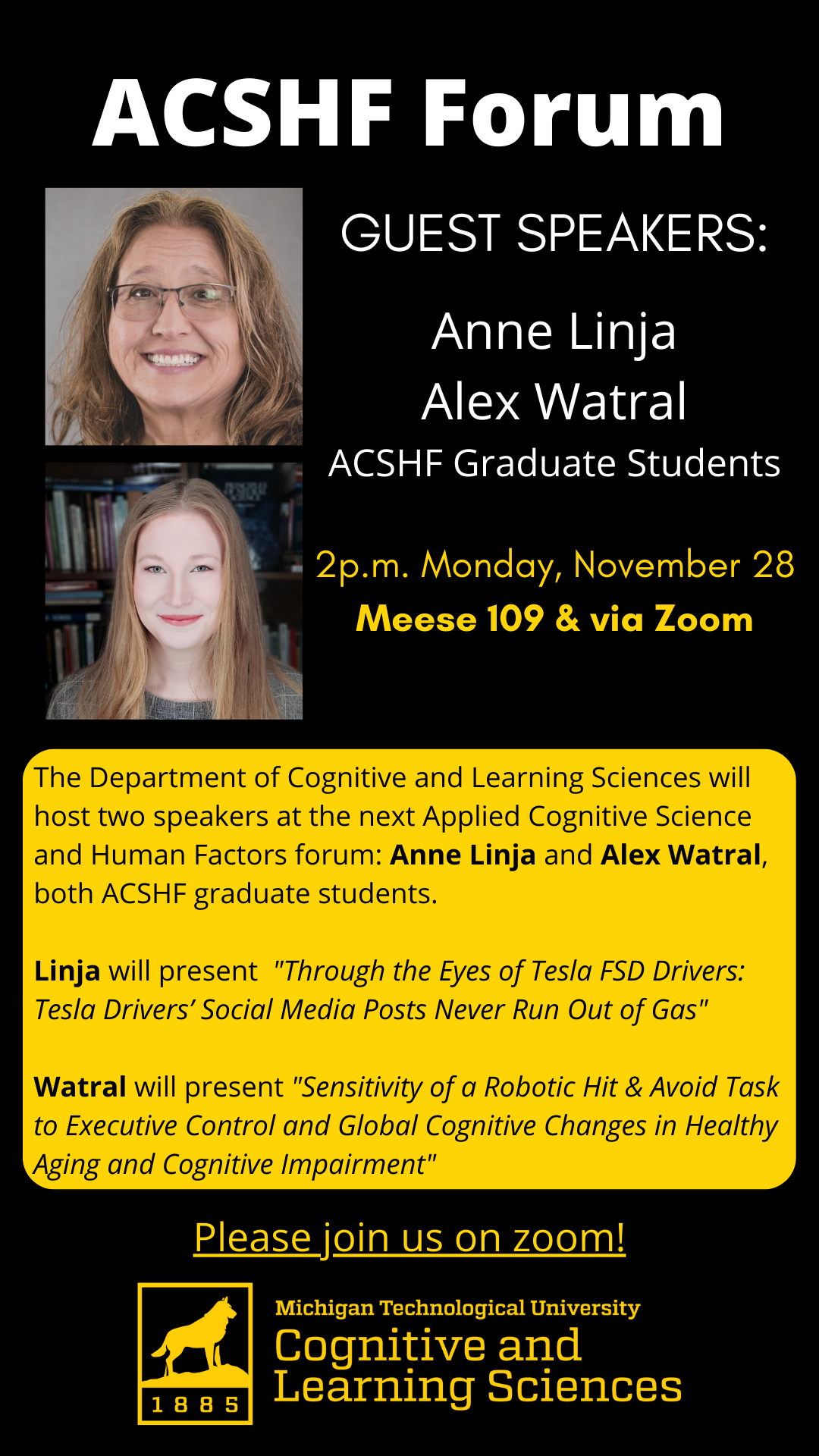
ACSHF Forum: Grad Student Presentations

The Department of Cognitive and Learning Sciences will host ACSHF PhD Students Anne Linja and Alex Watral at the next Applied Cognitive Science and Human Factors forum. Their presentations will be from 2:00 to 3:00 p.m. Monday (November 28) in Meese 109 and via Zoom.

Linja will present her research titled “Through the Eyes of Tesla FSD Drivers: Tesla Drivers’ Social Media Posts Never Run Out of Gas”

Abstract: With the recent deployment of the latest generation of Tesla’s Full Self-Driving (FSD) mode, consumers are using semi-autonomous vehicles in both highway and residential driving for the
first time. As a result, drivers are facing complex and unanticipated situations with an unproven technology, which is a central challenge for cooperative cognition. One way to support cooperative
cognition in such situations is to inform and educate the user about potential limitations. Because these limitations are not always easily discovered, users have turned to the internet and social media
to document their experiences, seek answers to questions they have, provide advice on features to others, and assist other drivers with less FSD experience. In this presentation, I will explore a novel approach to supporting cooperative cognition: Using social media posts can help characterize the limitations of the automation in order to get information about the limitations of the system and explanations and workarounds for how to deal with these limitations. Ultimately, our goal is to determine the kinds of problems being reported via social media that might be useful in helping users anticipate and develop a better mental model of an AI system that they rely on. To do so, we examine a corpus of social media posts about FSD problems to identify (1) the typical problems reported, (2) the kinds of explanations or answers provided by users, and (3) the feasibility of using such user-generated information to provide training and assistance for new drivers. The results reveal a number of limitations of the FSD system (e.g., lane-keeping and phantom braking) that may be anticipated by drivers, enabling them to predict and avoid the problems, thus allowing better mental models of the system and supporting cooperative cognition of the human-AI system in more situations.

Watral will present her research titled “Sensitivity of a Robotic Hit & Avoid Task to Executive Control and Global Cognitive Changes in Healthy Aging and Cognitive Impairment”

Abstract: We recently found that a rapid motor decision-making task is sensitive to age differences in executive control and can isolate the cognitive from the sensorimotor contributions to task performance (Watral & Trewartha, 2021). However, we are also interested in this task’s ability to distinguish between healthy aging and cognitive impairment as seen in the early stages of Alzheimer’s. In this presentation, I will revisit the results from Watral & Trewartha (2021) and show preliminary findings comparing task performance between healthy older adults and those who exhibit cognitive impairment. Additionally, task parameters thought to be associated with executive control will be compared to a traditional measure of executive functioning (Trail Making Test) and a global measure of overall cognitive functioning (Montreal Cognitive Assessment).

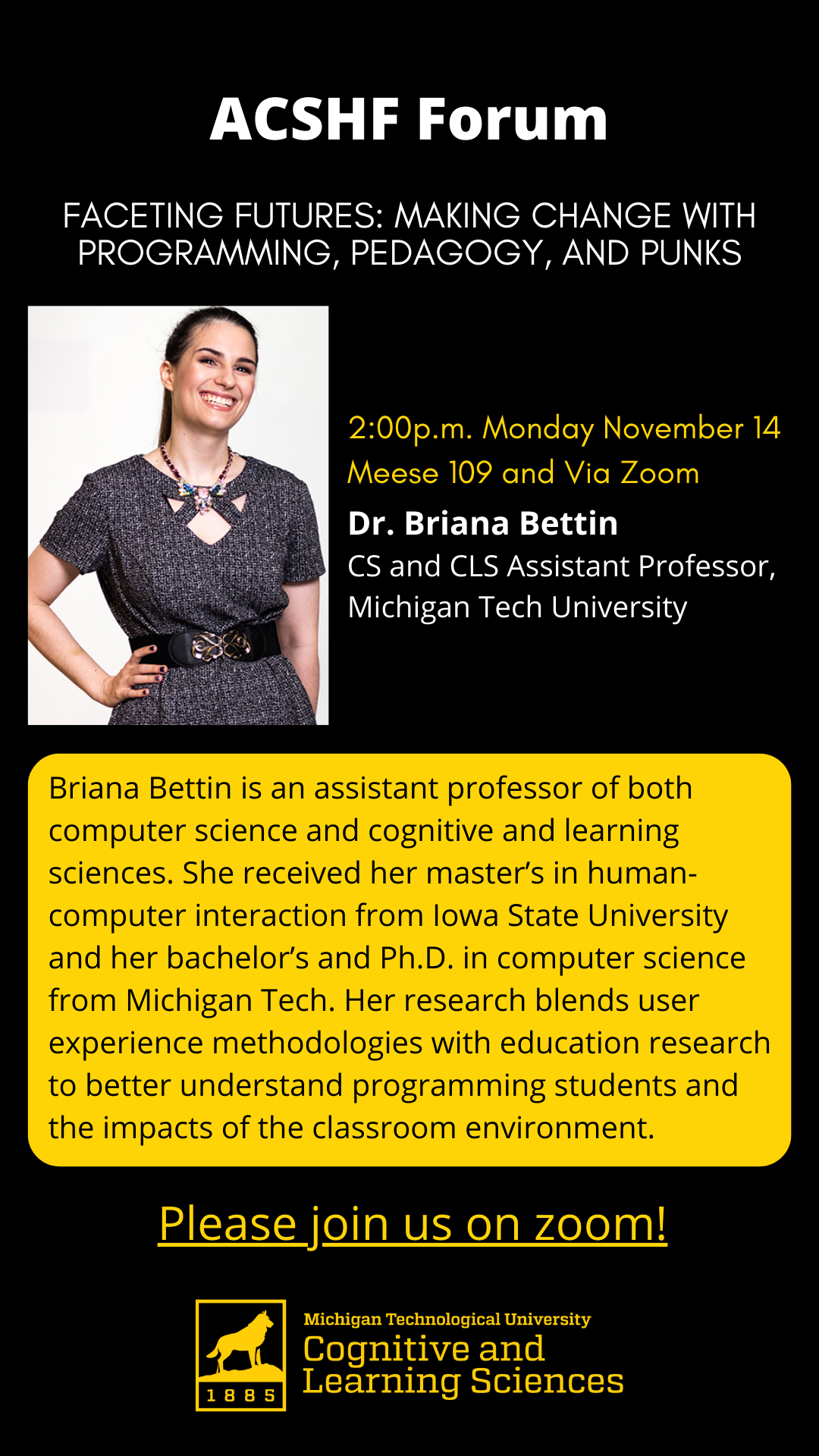
ACSHF Forum: Briana Bettin

The Department of Cognitive and Learning Sciences will host CS and CLS Assistant Professor Dr. Briana Bettin at the next Applied Cognitive Science and Human Factors forum Monday (November 14) from 2:00pm to 3:00pm in Meese 109 and via Zoom.

Briana Bettin is an assistant professor of both computer science and cognitive and learning sciences. She received her master’s in human-computer interaction from Iowa State University and her bachelor’s and Ph.D. in computer science from Michigan Tech. Her research blends user experience methodologies with education research to better understand programming students and the impacts of the classroom environment.

Abstract: Our increasingly digital society requires citizens to effectively communicate about and with computing technologies to thrive. All too often, these technologies impacting our lives are suggested to be apolitical, while details of their design – including their limitations – are obfuscated, ignored, or considered inevitable. Navigating the world of computing and digital landscapes already poses a variety of challenges which can make new obstacles, “glitches”, and outcomes feel insurmountable. Coupled with stereotypical notions suggesting increased difficulty and limited societal impacts of computing and programming, learners of all ages and skills can easily become frustrated and discouraged from learning skills and topics necessary for today’s society. 

This talk explores the need for and explorations toward increasing awareness, understanding, and agency toward computing as a crucial component of modern society. From learning to code to understanding data collection, opportunities abound to transform learner relationships with computing material. Empowering learners to communicate confidently about computing gives them the power through language to begin critically analyzing and reimagining these technologies. With technology demystified and new pathways opened, learners may feel more capable to advocate for and/or create change. This approach to agency formation draws from theories of “punk DIY subculture”, positing that “punk programmers” might be defined as individuals who recognize faulty societal norms in technology design, and “DIY” approaches to subvert them. By toppling barriers to entry, giving learners a voice, and inspiring agency, more “punk programming pedagogy” may play a key part in reimagining the multifaceted possibilities of our sociotechnical futures.

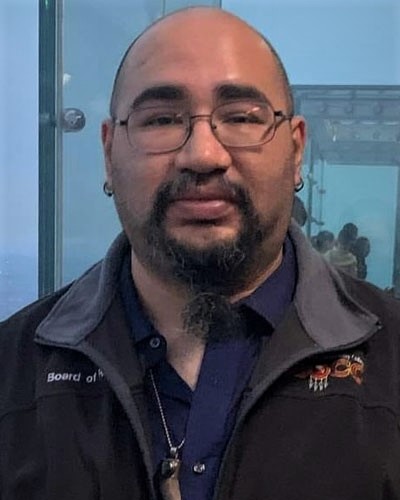
Robin Chosa appointed to Michigan Board of Counseling

Michigan Tech alumnus Robin Chosa has been appointed by Gov. Gretchen Whitmer to the Michigan Board of Counseling.

Chosa earned the degree Bachelor of Science in Psychology from Michigan Technological University in 2015 and is the operations manager for the Ford Center in Alberta. He is also chairman of the Keweenaw Bay Ojibwa Community College Board of Regents and the owner of Rez Robbins LLC. The Baraga-based business operates as a food vendor providing catering for local festivals and pow wows on the Keweenaw Bay Indian Community.

Susie Amato-Henderson, associate professor and former CLS chair gave input on the nomination process. “They were hoping to find a candidate from the UP with strong community ties, ideally from a traditionally underrepresented community. Robin instantly came to mind as his tie to the whole community, and especially to the Ojibwa community, are strong. I knew that he had spoken out previously, following some tragic losses in the community, regarding the need for mental health treatment services. He will bring a much needed underrepresented perspective to the board.

Robin will serve as a strong advocate for the needs of rural communities, and also for the needs of indigenous communities and people. I know he will be a fantastic addition to the board!

Susie Amato-Henderson, CLS associate professor

If approved by the state senate, Chosa will represent the general public on the board, which oversees licensing of counselors and counseling practices.

The Department of Cognitive and Learning Sciences congratulates Robin on being appointed to this key post in the governor’s office.


Michigan Tech’s Department of Cognitive and Learning Sciences offers bachelor of science degrees in Psychology and Human Factors, along with a Minor in Psychology. We also offer an Accelerated Masters degree in Applied Cognitive Science and Human Factors (ACSHF), which typically requires only one additional year of course work. Our graduate program includes masters and doctoral degrees in Applied Cognitive Science and Human Factors (ACSHF).

Questions? Contact us at cls@mtu.edu. And follow us @clsmtu on Instagram and Facebook for the latest happenings.

http://www.keweenawreport.com/news/local-news/baraga-man-appointed-to-state-counseling-board/

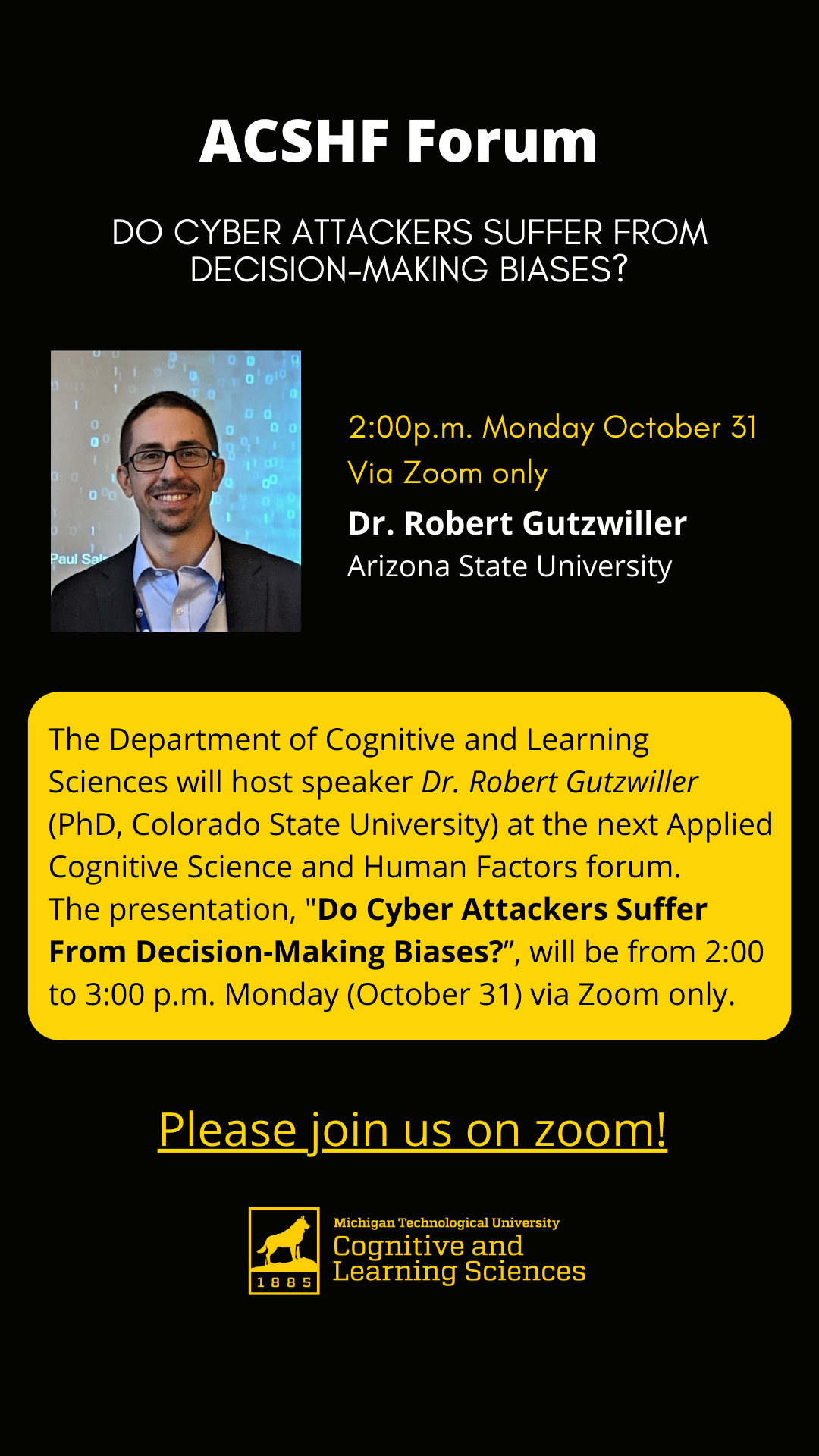
ACSHF Forum: Robert Gutzwiller

The Department of Cognitive and Learning Sciences will host Dr. Robert Gutzwiller (Arizona State University) at the next Applied Cognitive Science and Human Factors Forum on Monday (Oct. 31) from 2-3 p.m. via Zoom only.

Title:
Do Cyber Attackers Suffer From Decision-Making Biases?

ABSTRACT:
We report on whether cyber attacker behaviors contain decision making biases. Data from a prior experiment were analyzed in an exploratory fashion, making use of think-aloud responses from a small group of red teamers. The analysis provided new observational evidence of traditional decision-making biases in red team behaviors (confirmation bias, anchoring, and take-the-best heuristic use). These biases may disrupt red team decisions and goals, and simultaneously increase their risk of detection. Interestingly, at least part of the bias induction may be related to the use of cyber deception. Future directions include the development of behavioral measurement techniques for these and additional cognitive biases in cyber operators, examining the role of attacker traits, and identifying the conditions where biases can be induced successfully in experimental conditions