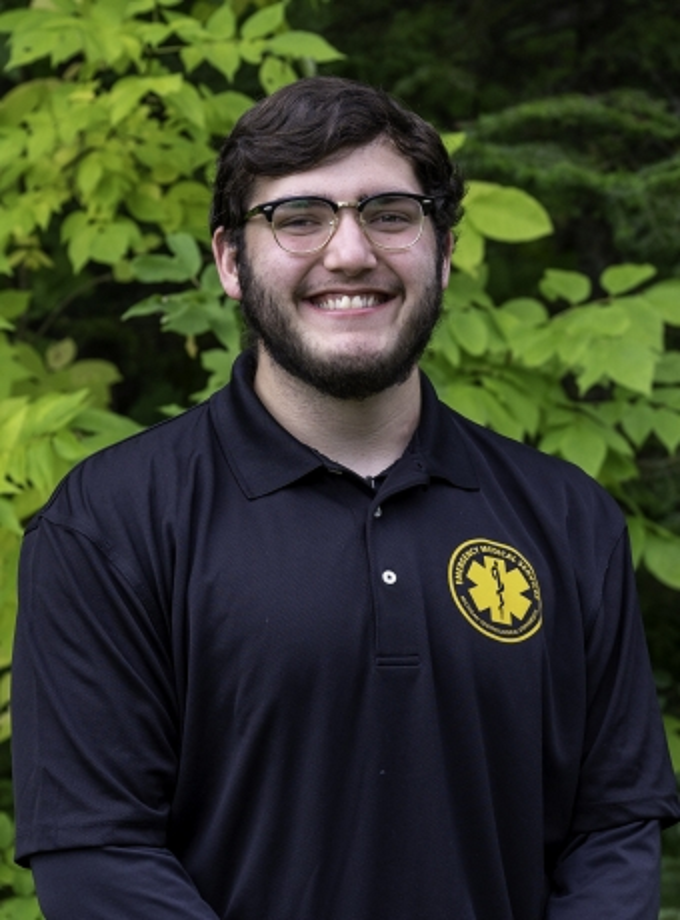
Today we are talking with Dalton Williams, a third-year Exercise Science major and Psychology minor. We’ve gotten to know Dalton, here in the CLS department, as he has been our work-study student since starting Michigan Tech in fall 2020. He seems to have an endless amount of energy and drive—see list below 🙂—so we wanted to learn a bit more about him outside his duties in the Meese Center.
For some background, Dalton’s extensive list of campus involvement includes: Emergency Medical Services (EMS) Squad Leader, Orientation Team Leader, Summer Youth Programs Counselor, Athletic Training Student Aide, and member of Association of Psychology Students (APS), Pre-Health Association, Beta Sigma Theta, Quiz Bowl, Smash Club, and Fighting Game Club.
Let’s start our Q&A at the beginning . . .
Q: Growing up in Ithaca, Michigan how did you decide on Michigan Tech for your undergraduate studies?
A: A couple of my close friends in high school were committed to Michigan Tech relatively early, so on a whim I decided to go with them for a campus visit. I immediately fell in love with the area and the campus facilities. I also discovered that the university had a good program for exercise science and physical therapy, as well as a free EMS training course—a program I had been interested in for a while. So I applied, and here I am!
Q: What do you feel are the advantages of adding a psych minor to your exercise science major?
A: Physical Therapy doctorate programs have several psychology course prerequisites such as intro to psych, developmental psych, and abnormal psych. After that, it doesn’t take many more psychology courses to earn the minor. Beyond that however, I believe that anyone in a health-related field should have a strong understanding of the mind, as the brain drives everything the body does. Specifically for my major, getting someone motivated enough to exercise, working with a wide variety of people of all ages and personalities, and having a comprehensive understanding of how the mind influences motor function are all important lessons I have learned while pursuing my psych minor.
Q: You’ve been involved in a wide variety of organizations around campus over the past three years, including becoming a fully certified EMS volunteer. What are some of the top benefits you have gained from being a member of these organizations?
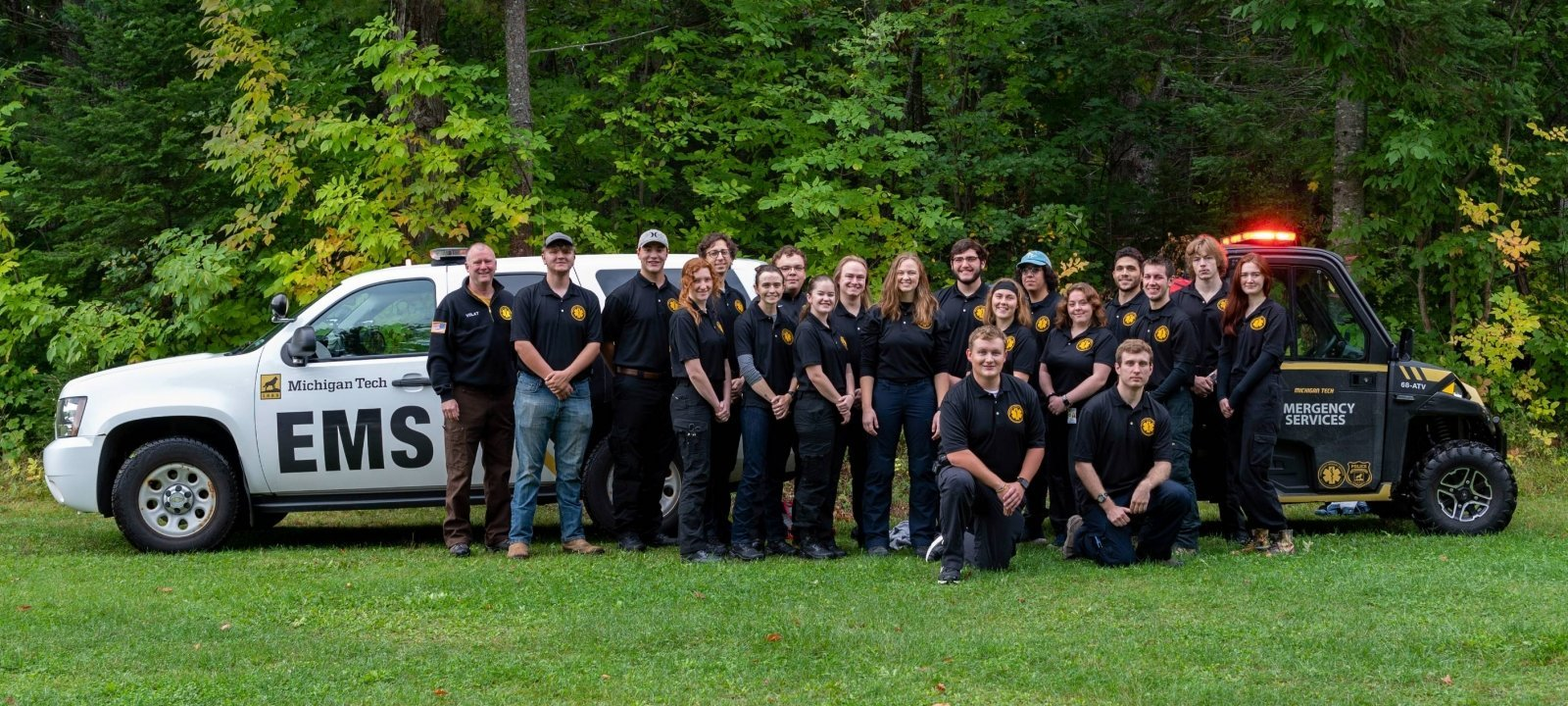
A: The organizations that I am lucky to be a part of have taught me skills and lessons that not only make me a more well-rounded person, but a better pre-health professional. Michigan Tech’s Emergency Medical Services ( EMS) is definitely the organization I am most passionate about, and for good reason. Tech EMS training was a life changing experience, during which I met lifelong friends and beneficial study habits. Being a part of EMS and Michigan Tech’s Athletic Training Student Aide (ATSA) program taught me very practical new skill sets as well as discipline and interpersonal skills.
Q: What do you aspire to do after completing your undergraduate degree?
A: I plan on going to physical therapy school and earning a Doctorate of Physical Therapy (DPT) degree. From there, I would love to work as a sports medicine physical therapist to rehabilitate athletes.
Q: Anything else you would like to share with us?
A: My advice to all upcoming college students is to take it one day at a time. The balance between work, school, one’s personal and social life, and everything in between can feel overwhelming at times. I find that if I focus on what I need to get done today to make tomorrow less overwhelming, I can always keep on keeping on!
CLS would like to recognize Dalton and all EMS and emergency personnel on this National First Responders Day, October 28, 2022. From day-to-day incidents to large-scale emergencies, career and volunteer first responders selflessly serve to keep us all safe. Thank you!!
Read more on the benefits of adding a psychology minor to your major in our blog story: Alumni Spotlight: Emilee (Philson) Stanczyk
Michigan Tech’s Department of Cognitive and Learning Sciences offers bachelor of science degrees in Psychology and Human Factors, along with a Minor in Psychology. We also offer an Accelerated Masters degree in Applied Cognitive Science and Human Factors (ACSHF), which typically requires only one additional year of course work.
Questions? Contact us at cls@mtu.edu. And follow us @clsmtu on Instagram and Facebook for the latest happenings.