
Tag: ACSHF

MTU Researchers Champion Rail Safety at InnovaRail 2026

Last week, researchers from the Department of Psychology and Human Factors (PHF) and the Department of Civil and Environmental Engineering traveled to the University of Illinois Urbana-Champaign (UIUC) to attend the IEEE InnovaRail 2026 conference.

The annual event brings together leading minds in rail technology, engineering, and safety to discuss the future of railway infrastructure and innovation.

Dr. Elizabeth Veinott (PHF) delivered a talk titled, “A cognitive engineering approach to mapping cues to improve safety at highway-rail grade crossings.” The research—co-authored by recent ACSHF PhD graduate Dr. Anusha Kannan and current ACSHF graduate student Nya McDougald—highlighted different HF methods we use in engineering psychology to improve safety at highway-rail intersections with examples from our research.

The conference provided an opportunity for Michigan Tech’s interdisciplinary delegation of faculty and graduate students to collaborate, share ideas, and represent the university on a national stage.
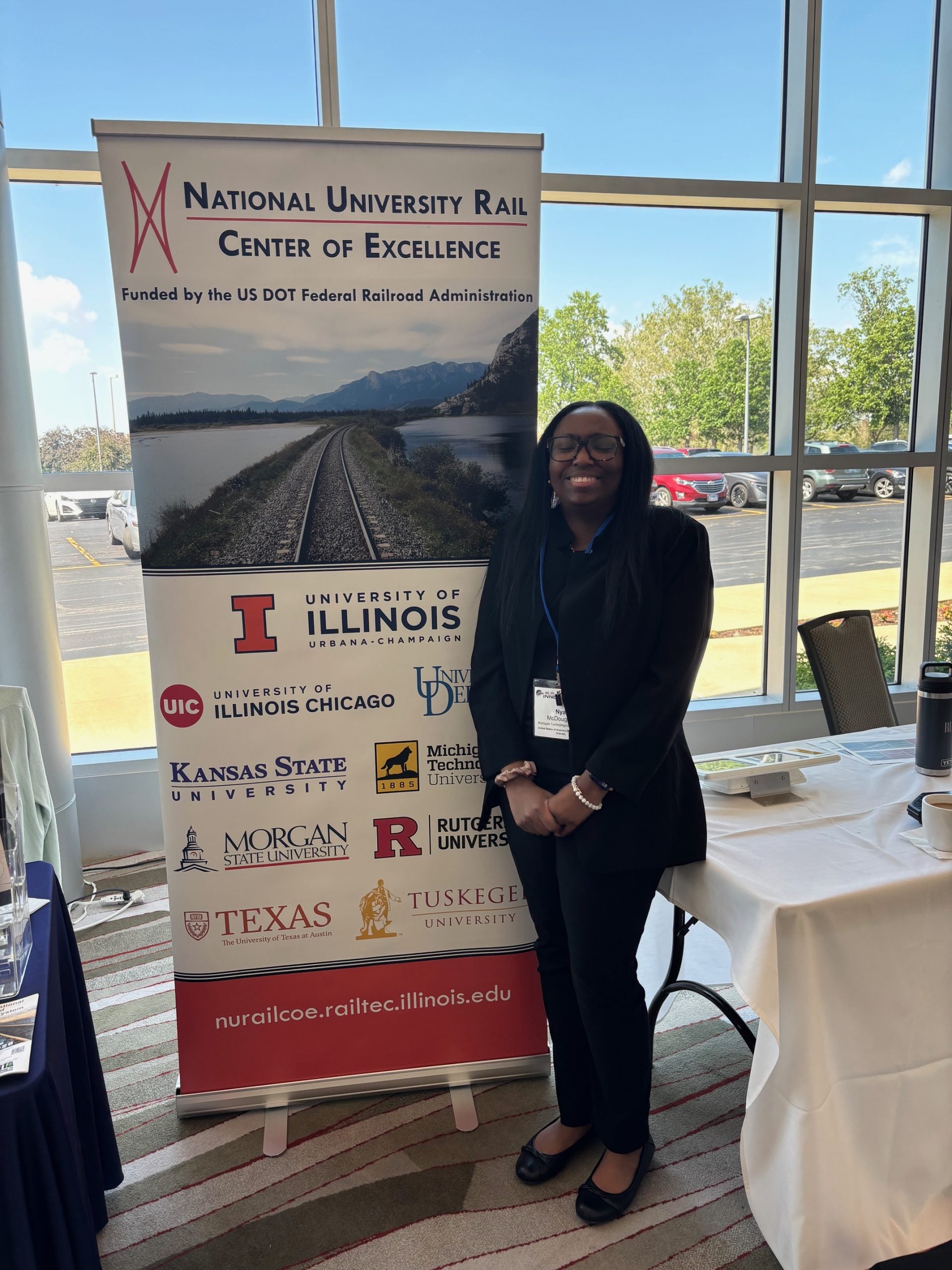
Graduate student and co-author Nya McDougald at the InnovaRail 2026 conference.


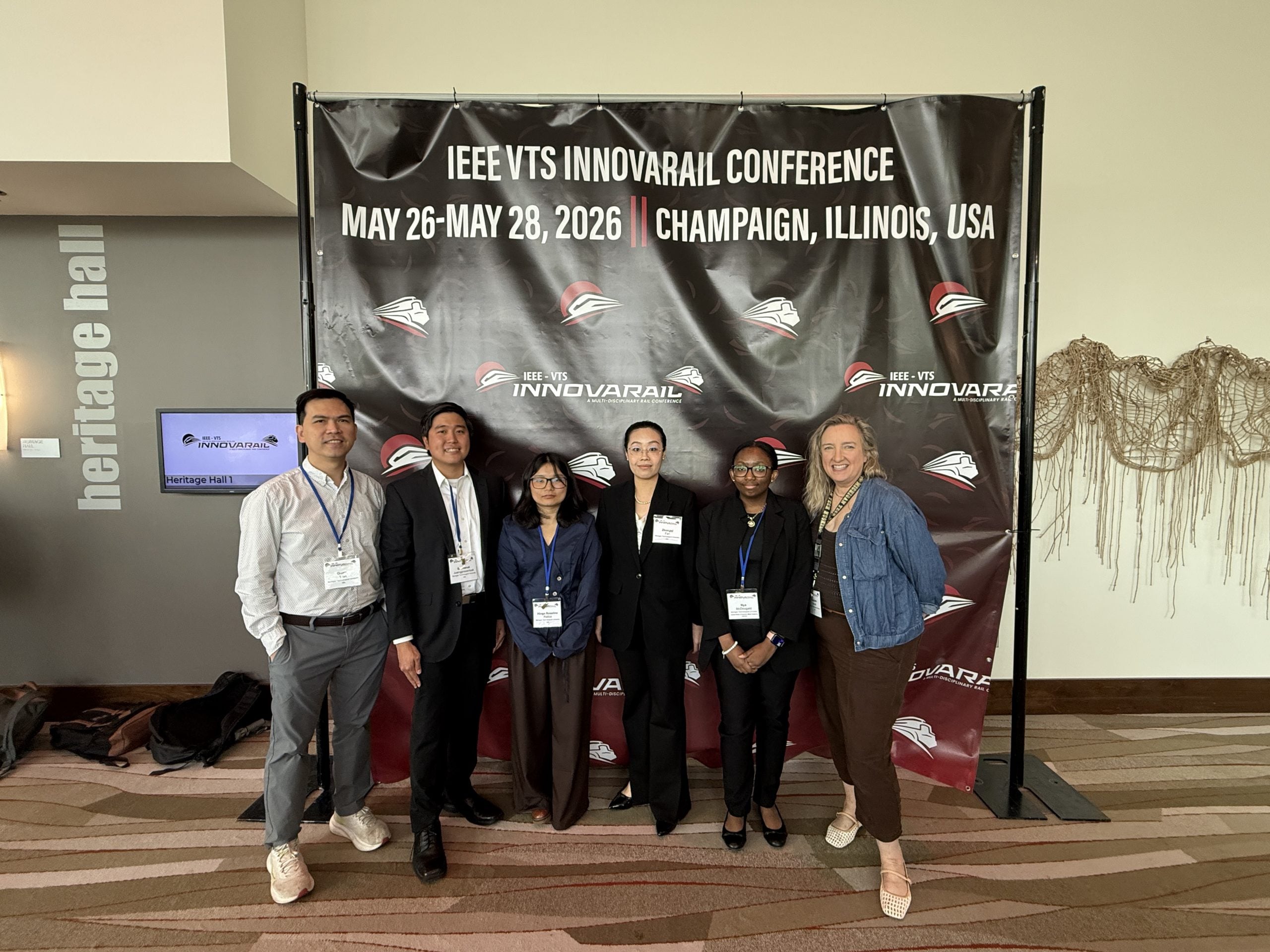
Faculty and graduate students from MTU’s PHF and Civil and Environmental Engineering departments at UIUC.

PhD Student Spotlight

Jen Shaud Helps Advance Conversations on Disability Equity in Higher Ed

An ACSHF PhD student, Jen Shaud, recently contributed to The Chronicle of Higher Education’s latest piece: “Are That Many Students Really Faking Disabilities?”

Jen is studying what helps students with disabilities stay in school and reach graduation. Her work includes surveying students—both with and without disabilities—as well as the faculty members who teach them.

In her research, Jen asks what encourages students to seek accommodations and, more importantly, what stops them from asking. Both Jen’s work and other studies show that staying in school isn’t just about earning passing grades; it’s about feeling like you belong on campus. Many students hesitate to ask for help because they fear peers or teachers will think they’re looking for an ‘easy out.’ Jen is exploring how we can change those attitudes and give students the tools to speak up for themselves so they can thrive from day one.

ACSHF Forum: Grad Student Presentations

The Department of Psychology and Human Factors will host two speakers at the next Applied Cognitive Science and Human Factors (ACSHF) Forum: Laura Albrant and Kat Rawhouser, both ACSHF Ph.D. students. Their presentations will be from 2-3 p.m. on Monday, March 17, in M&M 610.

Photo of Laura Albrant
Laura Albrant
ACSHF PhD Student
Photo of Kat Rawhouser
Kat Rawhouser
ACSHF PhD Student

Laura Albrant: “Examining Student Resolutions of Automated Critiques

Laura Albrant’s study examines the submission data of students in an introductory engineering courses who modify their code in response to automated critique and how this process evolves over multiple submissions. Her research is grounded in data collected from students in Engineering Fundamentals (EF) courses who used our automated feedback tool, WebTA. This tool provides instant feedback on code syntax, logic, and style, tailored for first-year college students. She analyzed student interactions over four semesters, examining the effectiveness of EF students’ abilities to resolve critiques. This comparative analysis highlights differences in problem-solving strategies, engagement levels, and learning approaches in engineering fundamentals students. The data gathered from four semesters of engineering fundamentals courses, includes detailed logs of each submission, such as submission times, errors identified, critique counts, and resolution times. By analyzing patterns across different submissions, she tracked how student learning evolved over time and varied across disciplines. This approach allowed her to identify effective strategies in automated feedback design that cater to the diverse needs of learners from different educational backgrounds.

Kat Rawhouser: “Lessons from Needs Assessments”

Needs assessments can come in all forms and they can yield a great deal of useful information. In human factors, psychology and cognitive sciences we can learn much from reviewing and doing such assessment before research. From understanding demographics, to being about to connect with key players to gain access to a community or group this method of assessment has a yield in social, cultural and empirical information allowing for understanding by the researcher. This topic will cover the basics of needs assessment, how it can be used and provide an example of how assessing community needs can yield results during implementation.

ACSHF Keynote Speaker – Why Josh Stole the Password: A Decision Neuroscience Approach to Insider Threat in Information Security

Robert West, an Elizabeth P. Allen Distinguished University Professor in the Department of Psychology and Neuroscience at DePauw University, will be this year’s ACSHF keynote speaker. This event will take place on Monday, February 8th, 2021 at 2:00pm via Zoom. The Zoom link will be released closer to the event.

Abstract:
Cybercrime has a significant impact on nations, corporations, and individuals. Violations of information security can reduce consumer confidence and valuation at the corporate level, and jeopardize social and financial well-being at the personal level. Research in Information Systems reveals that up to 50% of violations or breaches of information security may result from insider threat, reflecting the actions of an individual operating within an organization. Considerable behavioral research has explored the organizational and individual factors that contribute to violations of information security related to insider threat. Building upon this tradition, my laboratory has been interested in exploring the neural foundation of decision making related to insider threat using EEG methods. This research reveals that there are robust ERP components that are sensitive to ethical decision making in the context of information security. Furthermore, this neural activity is modulated by individual differences (e.g., self-control, moral belief) that are known to be predictors of violations of information in real-world context. In the talk, I will explore the findings of some of our recent research in order to demonstrate the utility of a decision neuroscience approach to providing insight into the neural correlates of ethical decision making in the context of information security.