Author: Chodwell Verenga

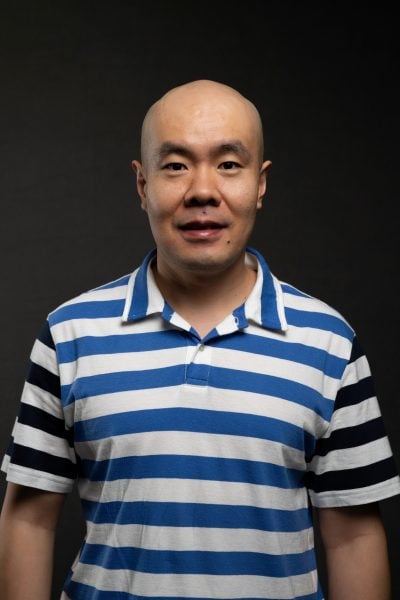
Tucker D. Nielsen Represents MTU for MAGS Distinguished Thesis Award!

Tucker D. Nielsen, MS in Rhetoric, Theory and Culture, 2026

I’m fascinated by how we communicate ideas, narratives, and discourse. While I started my undergraduate in Computer Engineering and Computer Sciences, I eventually switched to English in 2020 to better study written and spoken communications. After graduating, I decided to pursue a master’s in Rhetoric, Theory and Culture to research writing center and composition pedagogy, as these are vital spots where students learn to articulate their work and themselves. My undergraduate work in the Writing Center and seeing students complain about first-year composition inspired me to research methods to make the class more relatable to STEM students and those with visual/tactile learning methods.

“Four Lessons to Build Upon” introduces tactile learning methods amongst the abstract concepts of first-year university composition courses. Students in the course I taught used LEGO bricks paired up with the four core assignments to reinforce the communicated abstract concepts. The study aimed to improve students’ understanding of rhetorical concepts used throughout their lives, such as critical thinking, analysis, and visualization. I hope this research is used as a starting ground for college instructors and professors to adopt similar methods for connecting students to rhetorical concepts.

I continue studying rhetoric in my second master’s degree in Industrial Heritage and Archaeology, and my research focus has shifted to authorized heritage narratives within West Lake Superior tourism. My current research involves how people communicate their stories and the agencies at work to utilize these stories across West Lake Superior. My full-time position as the Thompson Scholar Program Coordinator also requires me to engage with rhetoric in assisting students with program requirements, establishing community through public service, and creating programs/recruitment materials.

I’m thankful to the Humanities Graduate Department for nominating me and the Graduate Deans Award Advisory Panel for selecting me to represent Michigan Technological University. I felt the Humanities Department’s support through both my bachelor’s and master’s degrees. I especially want to thank my advisor Dr. Holly Hassel for her insight into composition pedagogy studies and thorough experience in pedagogical research; she assisted me greatly from the initial research design to the final defense. My committee of Dr. Jennifer Nish, Dr. Mark Rouleau, and M. Bartley Seigel also helped through the defense process and provided their industry insight for my work. I finally thank all the students, faculty, staff, and alumni of Michigan Tech who I’ve worked with for their guidance and support.

Copper Shores Community Health Foundation Graduate Assistantship – Spring 2026 – Brandon Woolman

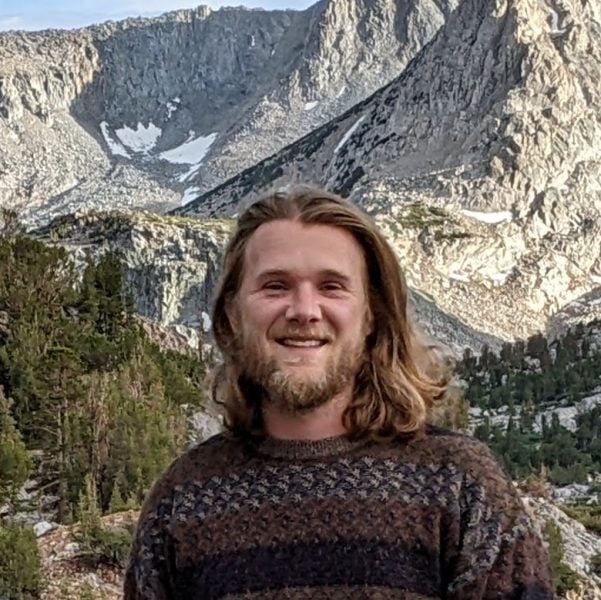
Brandon Woolman, PhD in Applied Cognitive Science and Human Factors, 2026

I joined the Applied Cognitive Science and Human Factors department at Michigan Tech in Fall 2021. With a background in cognitive neuroscience, I was interested in joining the Aging, Cognition, and Action lab. After some training I was onboarded for a project, funded by the National Institute of Health, investigating early-stage Alzheimer’s Disease and long-term retention in two types of movement adaptation: visuomotor rotation and force-field adaptation. The ultimate goal of this work was to identify behavioral markers of cognitive impairment in pre-clinical stages of Alzheimer’s disease that could facilitate earlier diagnosis. This work helped me not only learn valuable research skills but fueled my passion for research.

I have spent my years at Tech investigating the impacts of aging and cognitive decline on motor learning. My dissertation seeks to distinguish the overlapping- and unique- neural networks involved in motor sequence learning and movement adaptation. We plan to measure changes in oxygenated hemoglobin in the pre-frontal cortex using functional near-infrared spectroscopy (fNIRS). We expect this region to be of importance to the explicit memory systems involved in motor learning. This work will contribute to our understanding of how healthy aging impacts motor learning, and how this knowledge may help us improve cognitive assessment and neuropsychological evaluations in neurodegenerative diseases in later adulthood.

I am grateful for the support from the Copper Shores Community Health Foundation for helping fund my final semester at Michigan Tech. I would also like to thank my advisor, Dr. Kevin Trewartha, for his support and guidance throughout my graduate school journey. I am excited to complete my PhD and continue my passion for health-related research.

Copper Shores Community Health Foundation Graduate Assistantship – Spring 2026 – Natalia Krakhaleva

Natalia Krakhaleva, PhD in Chemical Engineering, 2026

With sincere gratitude, I would like to thank the Copper Shores Community Health Foundation and the Graduate Dean Awards Advisory Panel for selecting me to receive the Graduate Assistantship. It is an honor to have my work recognized in this way.


My name is Natalia Krakhaleva, and I am a third-year Ph.D. candidate in Chemical Engineering at Michigan Technological University. I am working on developing electrochemical biosensors that can be used for non-invasive vitamin D screening with tear fluid. Vitamin D deficiency is a common health concern linked to metabolic, immune, and neurological disorders. Improving access to early diagnostic technologies, particularly for rural populations in the Upper Peninsula with limited healthcare access and reduced sunlight exposure, is the long-term aim of this work to support preventive health strategies and improve regional well-being.
Through my graduate studies, I have had the privilege of working under the guidance of Dr. Adrienne R. Minerick and Dr. Yixin Liu, whose mentorship has shaped my scientific approach and encouraged the purposeful alignment of my research with community health needs. I am thankful to the Department of Chemical Engineering for their continuous support and for creating an environment that promotes scientific excellence and collaborative growth.


Alongside my academic work, my commitment to community engagement and student support is reflected in my role as Chair of the Graduate Society of Women Engineers and as a Student Mental Health and Well-Being Ambassador, where I promote inclusion, leadership development, and resilience.
This assistantship will allow me to dedicate focused time to advancing my dissertation research and further strengthening the public health relevance of my work, particularly its application within local communities. I am grateful for the Foundation’s confidence in my work and remain determined to contribute engineering solutions that improve quality of life within the region.

Copper Shores Community Health Foundation Graduate Assistantship – Spring 2026 – Shuo Sun

Shuo Sun, PhD in Statistics, 2026

I began my Ph.D. journey in Statistics in the Department of Mathematical Sciences at Michigan Technological University in 2021, during the height of the COVID-19 pandemic, just after welcoming my newborn baby. Balancing academic life, research responsibilities, and family has been both challenging and deeply rewarding. Over the past several years, I have greatly enjoyed my experiences at Michigan Tech—teaching undergraduate statistics courses, assisting in math labs, conducting research, and engaging with the university community.

My research focuses on developing and applying advanced statistical and computational methods for biomedical and clinical data analysis. Specifically, I work on high-dimensional gene network modeling, machine learning–based fracture-risk prediction, domain adaptation for cross-cohort data, and reinforcement learning for personalized cardiac therapy. These projects combine theory, computation, and real-world health data to create interpretable and generalizable models that advance precision medicine and biomedical discovery.

Outside of academics, I enjoy sports and have been an active member of the Michigan Tech Basketball Club for three years. I also spend my free time reading, exploring music, and staying active with my family.

I am sincerely grateful for the support of the Copper Shores Community Health Foundation (CSCHF), which provides me with the valuable opportunity to focus more deeply on my research and complete meaningful work that connects statistical innovation with real-world health improvement.

Finishing Fellowship Award – Spring 2026 – Gabriel Ahrendt

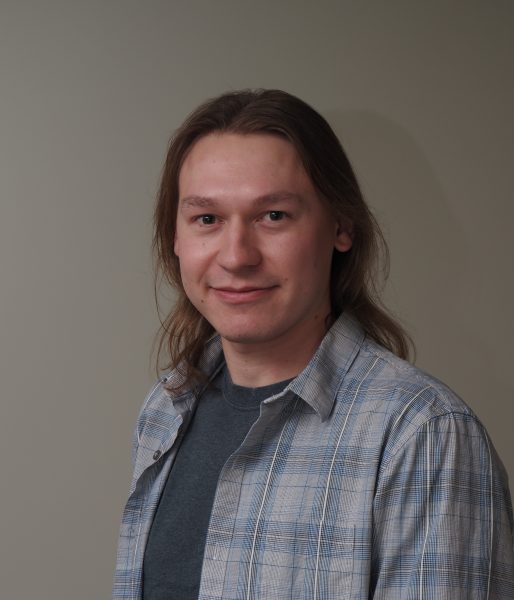
Gabriel Ahrendt, PhD in Geophysics, 2026

I began my PhD research at the beginning of the pandemic, TA-ing labs online and trying to carry out experimental research in a quarantined lab. This taught me a degree of flexibility and spontaneity that has carried through the rest of my degree. Over the course of my PhD I’ve TA’d geology classes, a multi-university course on climate science and policy, I’ve taught the Summer Youth Program for geology, organized a workshop in Washington DC on the UN framework Convention on Climate Change, sampled geological areas for the USGS mapping and exploration efforts, organized social and research events for graduate student government, was coordinator of the GSG softball league, sat on the advisory boards of a forest conservation campaign and an international ecological network, helped organize physics and geological conferences at MTU, and even organized a couple music and art festivals. I like to think that, starting a PhD directly after Peace Corps service, I continued my community focused ethos and incorporated it into my degree.

My research has focused on deciphering the early processes of Earth and solar system evolution, including planetary magnetic field evolution, tectonic dynamics, and paleoenvironmental conditions. While these processes have shaped the modern Earth system, many aspects remain poorly understood. Within this framework, I have carried out three research projects using paleomagnetic, rock-magnetic, geochemical, and electron microscopy methods.

The first project, analyzing Iron-Nickel alloys in meteorites has demonstrated the possibility of analyzing primary magnetic signals in a large suite of meteorites that were previously thought to be bereft of primary magnetic signals. The second project on Iron formations has demonstrated a novel way to interpret paleoenvironments of formation based on rock -magnetic analysis. The third project on Upper Peninsula dike swarms provide a more detailed reconstruction of the 2.1–1.85 billion-year-old tectonic history of the Lake Superior region, constrain its geodynamic evolution, and offer crucial insights into the Earth’s magnetic field history, including the timing of the solid inner core formation.

I am grateful to the Graduate school, my advisor, and my committee for this opportunity to carry out interesting and novel research while also being an active and engaged community organizer.

Nominations Open for 2026 MAGS Excellence in Teaching Awards

Nominations are now open for the Midwestern Association of Graduate Schools (MAGS) Excellence in Teaching Awards. Michigan Tech may nominate one student at the MS and PhD level. Each graduate program may nominate one student at the MS and PhD level. Nominations are due to the Graduate School no later than 4pm, December 10, 2025.

 Eligible students

  • will have been enrolled at Michigan Tech during the 2025 calendar year and have a teaching appointment
  • will have earned the Michigan Tech Outstanding Graduate Student Teaching Award
  • will exemplify excellence in the teaching and learning mission of Michigan Tech

See the application page for complete details on what is required for a nomination.

The King-Chávez-Parks Future Faculty Fellowship Program – Fall 2025 – Emily Mydlowski

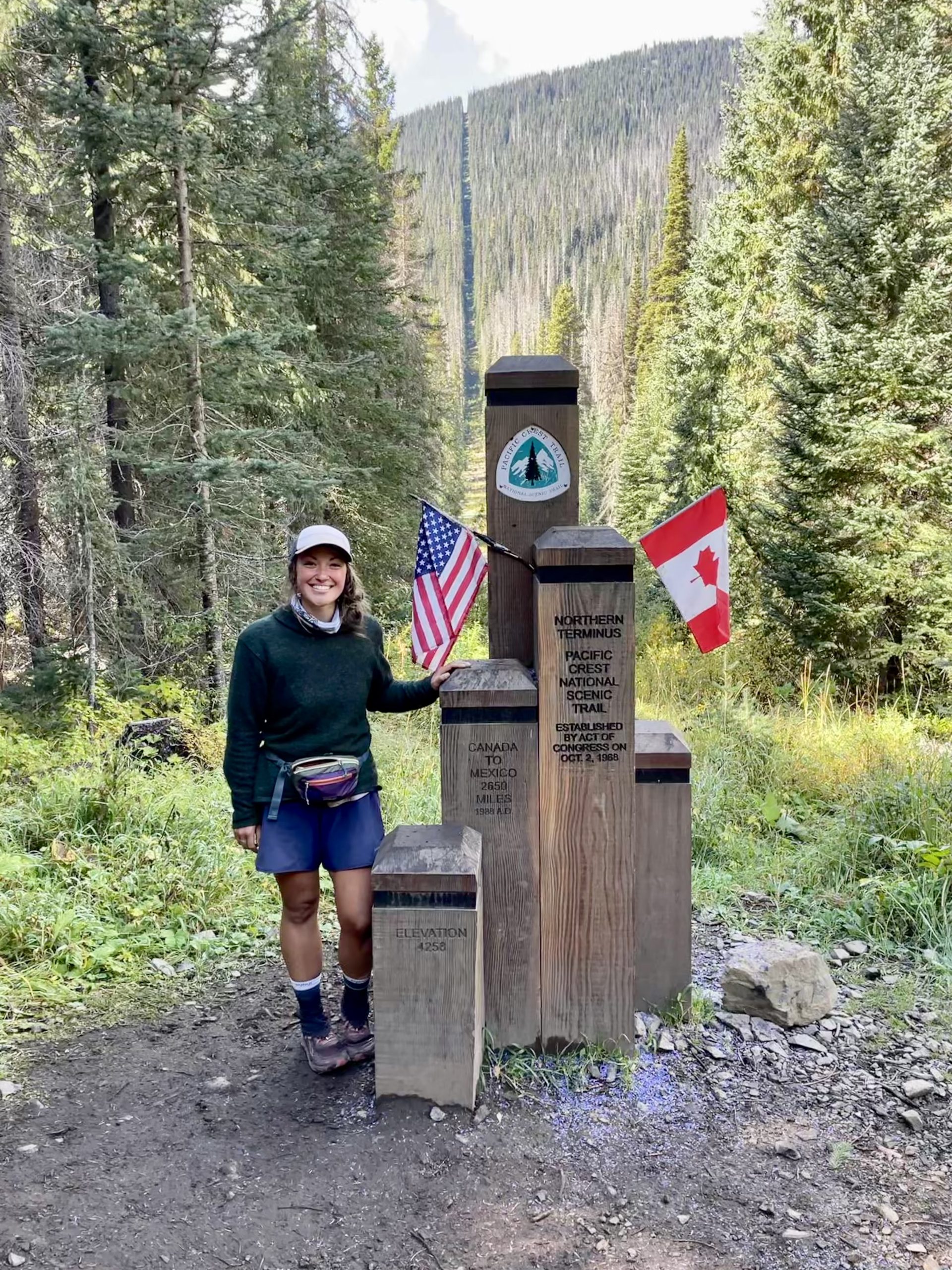
Emily Mydlowski, PhD in Forest Science, 2025

I am a second-year doctoral student in Forest Science at Michigan Technological University, where my research focuses on plant ecology, herbivory, and community ecology. My dissertation examines how moose browsing and wildfire interact to shape forest succession at Isle Royale National Park, while also using remote sensing and GIS to study patterns of white satin moth defoliation of aspen trees across the island.

As a first-generation college student, my path to a PhD has not been linear. I earned my bachelor’s and master’s degrees in Biology from Northern Michigan University, where I fell in love with ecological research as a McNair Scholar and developed a deep appreciation for the natural history of the upper Great Lakes. Between degrees, I stepped away from academia to work before embarking on a 2,000-mile solo backpacking trip across California, Oregon, and Washington. Somewhere along the trail, I realized I wanted to return to graduate school and pursue a career in teaching. My time on the trail taught me that big goals are achieved through small, steady steps–a mindset that continues to guide my academic journey.

Teaching is one of my greatest joys. I have led labs in plant biology, ecology, and evolution, guest lectured in undergraduate courses, and led field research crews. I strive to create a supportive environment where students feel encouraged to ask questions, think critically, and connect classroom concepts to the ecosystems around them.

Receiving the King-Chávez-Parks Future Faculty Fellowship is an incredible honor. This support provides the stability to complete my dissertation and continue my work as a researcher, educator, and mentor. I am grateful to my advisor, my department, and the many mentors who have guided me–and I am excited to inspire the next generation of scientists to be curious and see how tangible science can be.

Submission and Formatting 101: Master the Dissertation, Thesis, and Report Process

Students who are completing a dissertation, thesis, or report are invited to join the Graduate School to learn about the resources available to them to assist in scheduling their defense, formatting their documents, and submitting their documents.  In one afternoon, you can learn everything you need to be successful and complete your degree in a timely fashion!  Faculty and staff who assist students with submissions are also welcome to attend.  Attend the entire event, or stop in for the seminar that interests you.

  • When: Tuesday, September 9, 2025, 2 – 4pm (see detailed schedule below)
  • Who: Students completing a dissertation, thesis or report; faculty and staff who assist students with submission
  • Where: Virtual and in-person (Admin 404 – limit for room is 30); (register to attend online and receive participation instructions)
  • Registration: Please register to receive handouts via email or attend online. The seminar will be available online as well as on campus.

If you are unable to join us, the event will be taped and available online after the event. The previous semester’s seminars are always available online.

Information on submitting, formatting, and more can be found online for dissertations and theses or reports.

Detailed schedule

  • 2:00 – 3:00 p.m. – Submission 101
    Learn what is required to submit your document to the Graduate School and the deadlines for the upcoming semester.  Best for students who are completing their degree this semester or next semester.
  • 3:00 – 4:00 p.m. – Formatting 101-103
    Learn about templates, checking your document with Adobe Acrobat, and how to use copyrighted materials. You’ll also learn where resources are on the web page so you can learn more about the topics that interest you.
  • 4:00 – 4:30 p.m. – Questions
    Have a question that hasn’t been answered yet? We’ll be available to answer any additional questions you have

Spring 2026 Finishing Fellowship Nominations Open

Applications for Spring 2026 finishing fellowships are being accepted and are due no later than 4 p.m. on September 25, 2025 to the Graduate School. Please email applications to gradschool@mtu.edu.

Instructions on the application and evaluation process are found online. Students are eligible if all of the following criteria are met:

  1. Must be a PhD student.
  2. Must expect to finish during the semester supported as a finishing fellow.
  3. Must have submitted no more than one previous application for a finishing fellowship.
  4. Must be eligible for candidacy (tuition charged at Research Mode rate) at the time of application.
  5. Must not hold a final oral examination (“defense”) prior to the start of the award semester.

Finishing Fellowships provide support to PhD candidates who are close to completing their degrees. These fellowships are available through the generosity of alumni and friends of the University. They are intended to recognize outstanding PhD candidates who are in need of financial support to finish their degrees and are also contributing to the attainment of goals outlined in The Michigan Tech Plan. The Graduate School anticipates funding up to ten fellowships with support ranging from $2000 to full support (stipend + tuition). Students who receive full support through a Finishing Fellowship may not accept any other employment. For example, students cannot be fully supported by a Finishing Fellowship and accept support as a GTA or GRA.