Tag: Applied Cognitive Science and Human Factors

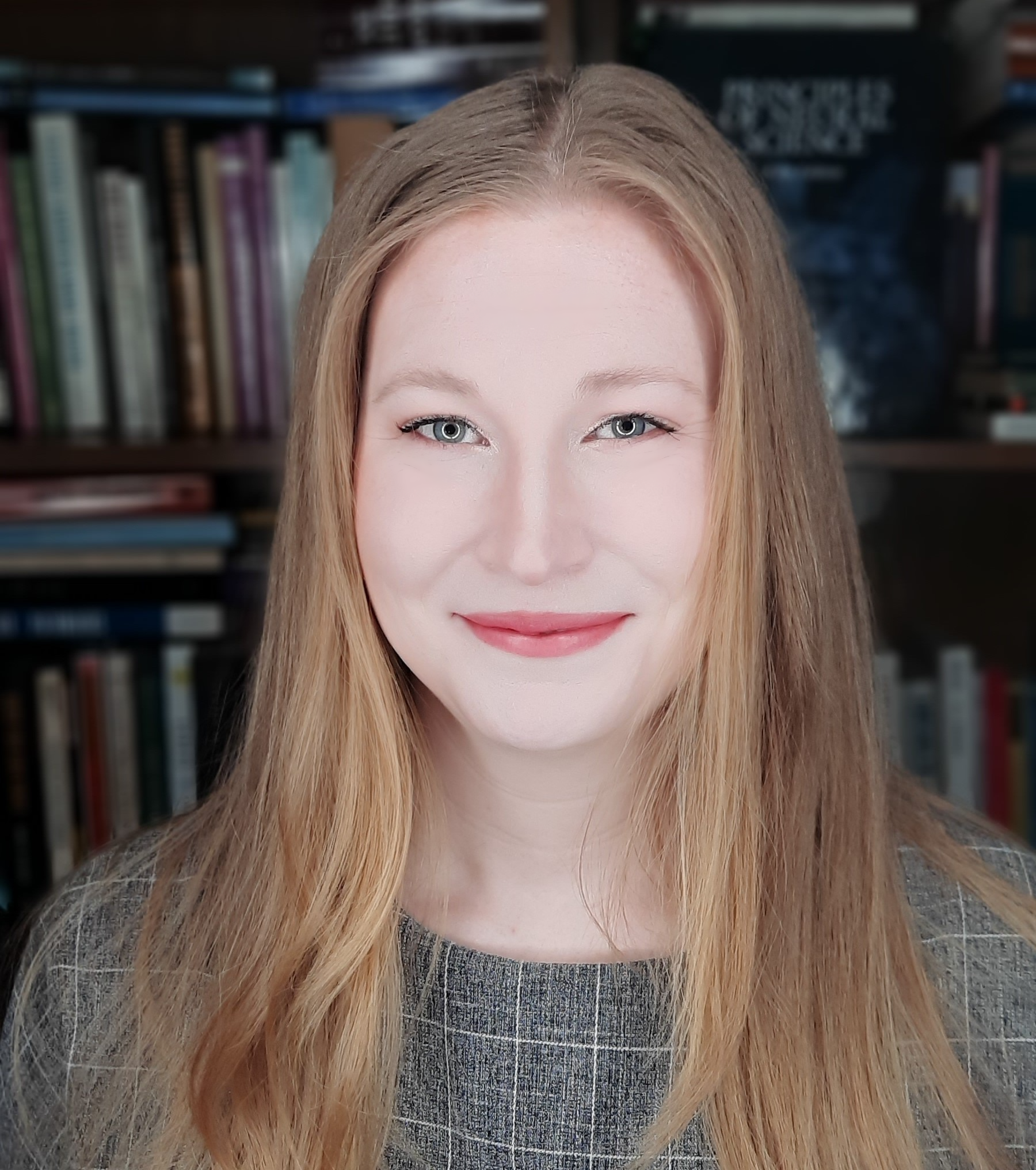
Finishing Fellowship Award – Spring 2026 – Katrina Carlson

Katrina Carlson, PhD in Applied Cognitive Science & Human Factors, 2026

It has been such an honor and privilege to be part of the Department of Psychology and Human Factors at MTU as a graduate student since the Fall of 2020. I have always had an interest in psychology and research, but when I started with one class at a time while working full-time, I did not have a clear direction. I have been fortunate to work with outstanding professors and inspiring fellow students. Kelly Steelman, as Department Chair, first presented me with the question that had been studied at Michigan Tech for the last 30 years, first started with research by Sheryl Sorby: Why do engineering students with improved spatial skills through a remedial course end up doing better in their other STEM courses and have a higher retention rate than students who did not take the course? It intrigued me.

Research for my Master’s degree in Applied Cognitive Science and Human Factors, which I earned in Spring 2024, began with the relationship between spatial skills and Engineering Self-efficacy, with assistance from my co-advisor, Michelle Jarvie-Eggart. While there were increases in scores pre- to post-semester for the remedial group, there was no significant difference between the two groups.

My dissertation research has focused on assessing spatial visualization skills, the ability to mentally rotate 3D shapes. These skills are assessed using receptive measures of ability, such as the demonstration of understanding on a multiple-choice test, such as the Purdue Spatial Visualization Test with Rotations (PSVT: R) or the Mental Rotations Test (MRT). I have developed, with one of my advisors, Shane Mueller, an assessment of productive spatial visualization skills, or the ability to produce a physical demonstration of spatial knowledge. The evaluation is digital and scorable, and it is now available online. Research to date has indicated a strong correlation between scores on the productive assessment and a traditional receptive measure, indicating the reliability of the productive measure. Current research is examining the validity of the measure for first-year engineering students.

I would like to express my gratitude to the Graduate Dean Awards Advisory Panel for granting me this award. I also want to thank my advisors, along with the faculty, staff, and students of the PHF Department, for their inspiration and continued support.

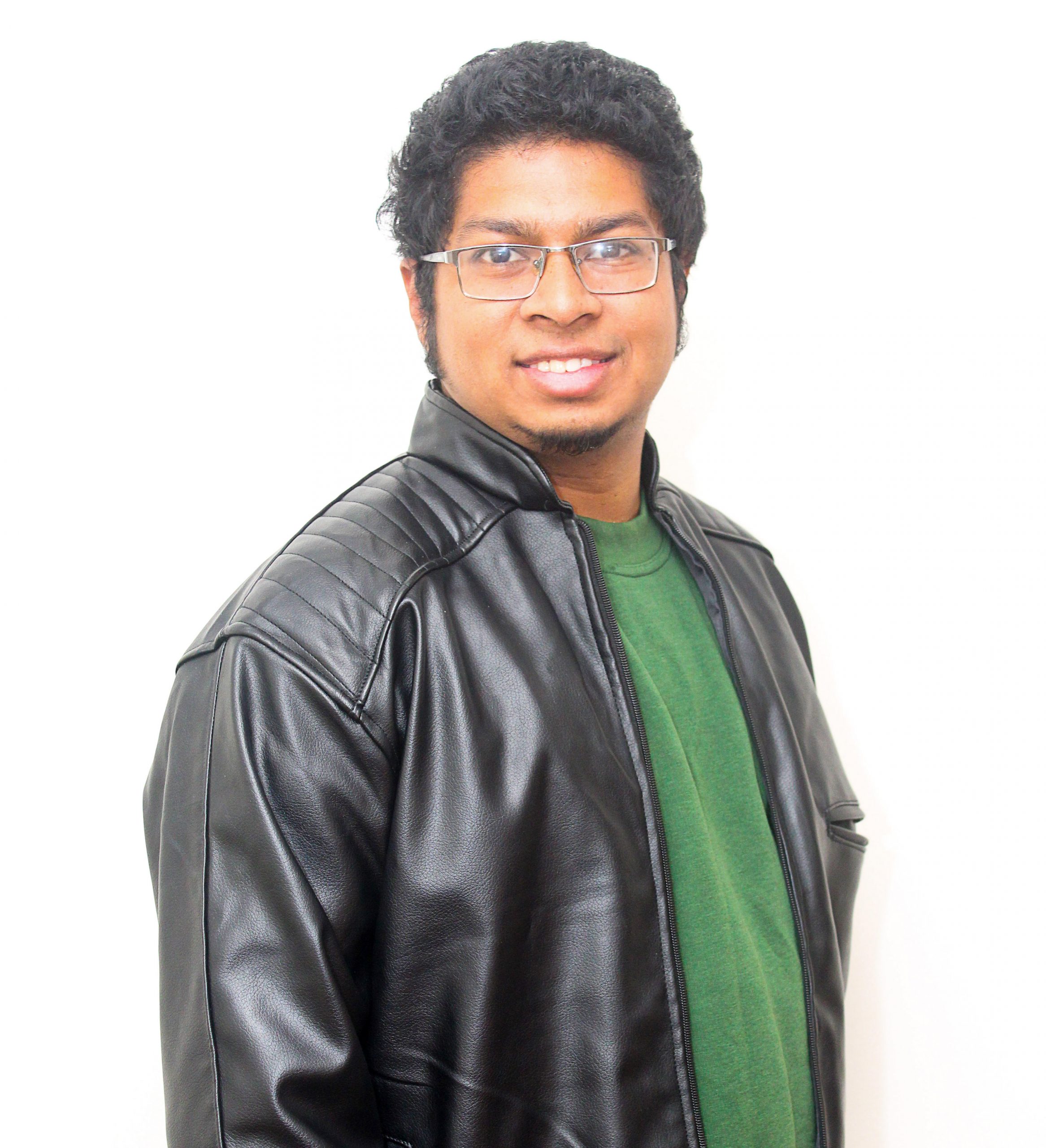
Finishing Fellowship Award – Spring 2026 – Anusha Kannan

The first time I attended a Sensation and Perception class as an undergraduate elective, I realized how much I enjoyed cognitive science. I was curious about how our minds work and why we make certain decisions. When I looked for programs to study this further, I found myself traveling from my home in Dubai all the way to Houghton. It was a long trip, but one of the best decisions I have made.

My research focuses on how we can reduce risk by using planning methods that help people think ahead. These methods can improve how we design human-AI systems. I am especially interested in making technology more human centered and safer to use. Right now, I am studying how drivers make decisions in high-risk situations, like railroad crossings. I hope this work helps improve safety and guides designers to create smarter and more helpful AI systems.

I want to sincerely thank the Graduate Dean Awards Advisory Panel for selecting me for this fellowship. I am also very grateful to my advisor, Dr. Elizabeth Veinott, for her constant support during my PhD. Her guidance and encouragement have helped me grow as a researcher and prepare for my future career.

Doctoral Finishing Fellowship – Spring 2024 Recipient – Elizabeth Lehman

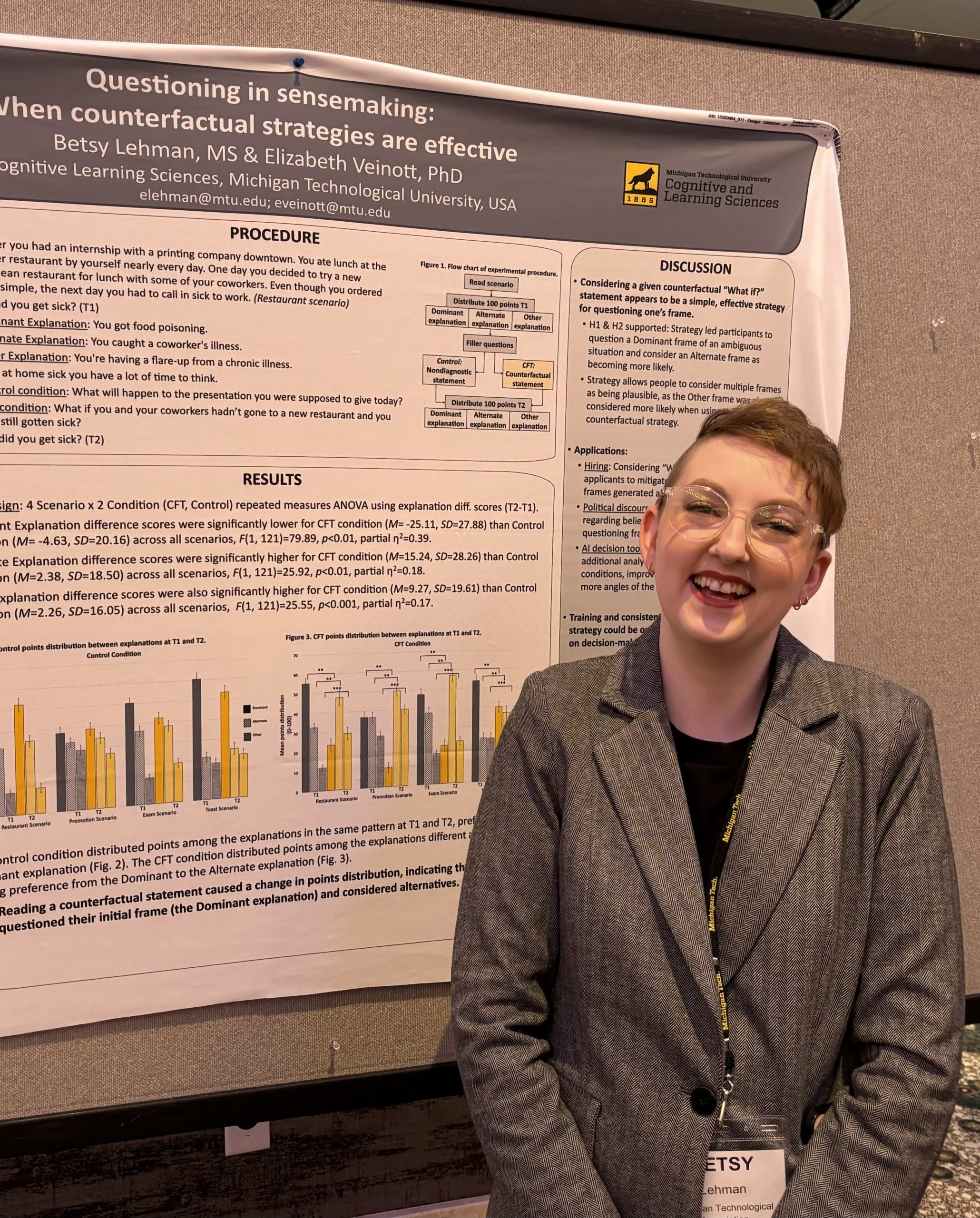
Elizabeth Lehman standing in front of a poster presentation at a conference
Elizabeth Lehman – Applied Cognitive Science and Human Factors

I have always been fascinated with psychology, particularly the way people think and make decisions. We make judgments about our experiences all the time – from everyday social interactions to big events on the news – so it’s an area that is relevant and potentially very impactful. As a lifelong Yooper, I feel lucky to be getting an amazing education from the Applied Cognitive Science & Human Factors program. It has really highlighted the importance of both basic research and how to apply it effectively to real-world domains.

My dissertation research explores the ways in which people question their theories of events – particularly in ambiguous situations. I believe studying strategies used to question theories can lead to effective methods for changing them. As a social cognition researcher, I combine theoretical perspectives like motivated reasoning and sensemaking in analytical domains to understand how people form theories about events and what causes people to rethink them. I am experimentally testing strategies to promote questioning one’s theory. These strategies can then be used in domains like hiring to mitigate decision-making biases.

I want to give a heartfelt Thank You! to the Graduate Dean Awards Advisory Panel for granting me this award. I want to thank my advisor Dr. Beth Veinott for all of her support with my PhD research and preparing me for an academic career. Her enthusiastic and thorough guidance has been invaluable. Additionally, I thank the ADVANCE Initiative and everyone in the Cognitive & Learning Sciences department for their continued support.

Doctoral Finishing Fellowship – Spring 2024 Recipient – Anne Inger Mortvedt

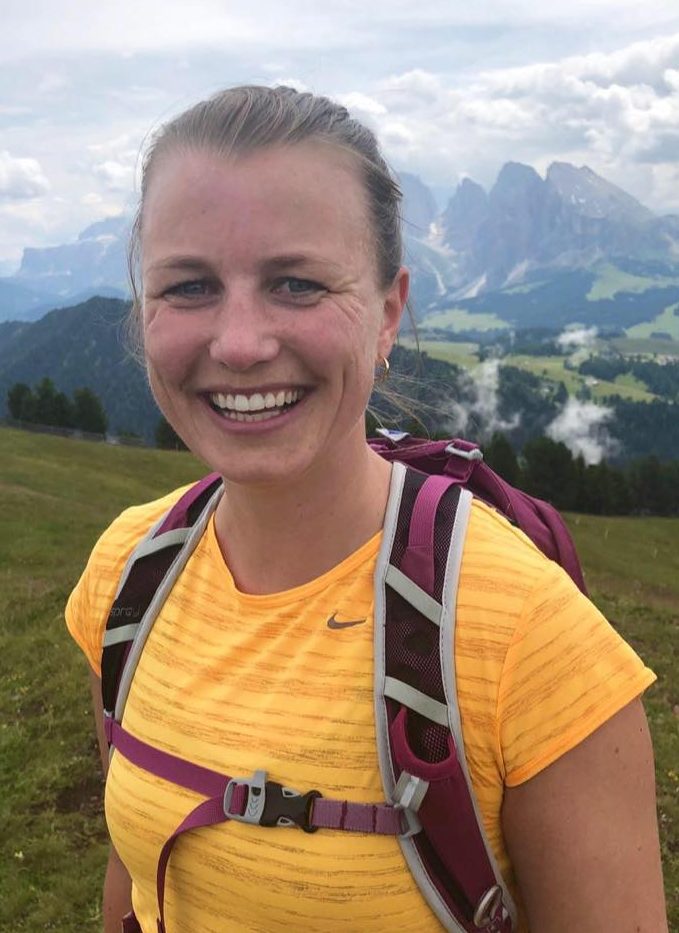
Anne Mortvedt wearing a backpack standing on a hillside with mountains and clouds behind
Anne Inger Mortvedt – Applied Cognitive Science and Human Factors

I am sincerely grateful to the Graduate Dean Awards Advisory Panel and the Dean for selecting me as a Finishing Fellowship awardee. Receiving this honor marks a joyous milestone in my PhD journey, and I am eager to embark on the final phase of my academic pursuit.

My academic journey began in Oslo, Norway, where I earned a BSc in Physiotherapy and a MSc in Sports Physiotherapy. Driven by a passion for promoting preventive health measures, I ventured into the field of Exercise and Sports Medicine. Through my Master’s thesis, I connected with my current advisor, Dr. Erich Petushek, who encouraged me to explore solutions beyond traditional Sport Medicine boundaries. This led me to a Ph.D. position in the Applied Cognitive Science and Human Factors (ACSHF) program at Michigan Technological University (MTU).

Choosing to specialize in Human Factors in Sports Medicine, I focused on preventative measures to reduce the risk of injuries and diseases. My research involves developing an exercise intervention usability scale to predict and identify barriers for intervention uptake and adherence, bridging the realms of Human Factors and Exercise/Sports Medicine.

The Finishing Fellowship is pivotal in providing the necessary support to conclude my Ph.D. journey. I express my gratitude not only for the financial support but also for reaffirming the value of the work I am passionate about. Special thanks go to my advisor, Dr. Erich Petushek, for unwavering support and guidance, my committee members, and the faculty and friends in the ACSHF program.

As I look to the future with excitement, I am eager to make meaningful contributions to the field. This fellowship reinforces my commitment to advancing research at the intersection of Human Factors and Exercise/Sports Medicine, and I am enthusiastic about the opportunities that lie ahead. Once again, thank you for this invaluable support in my academic pursuit.

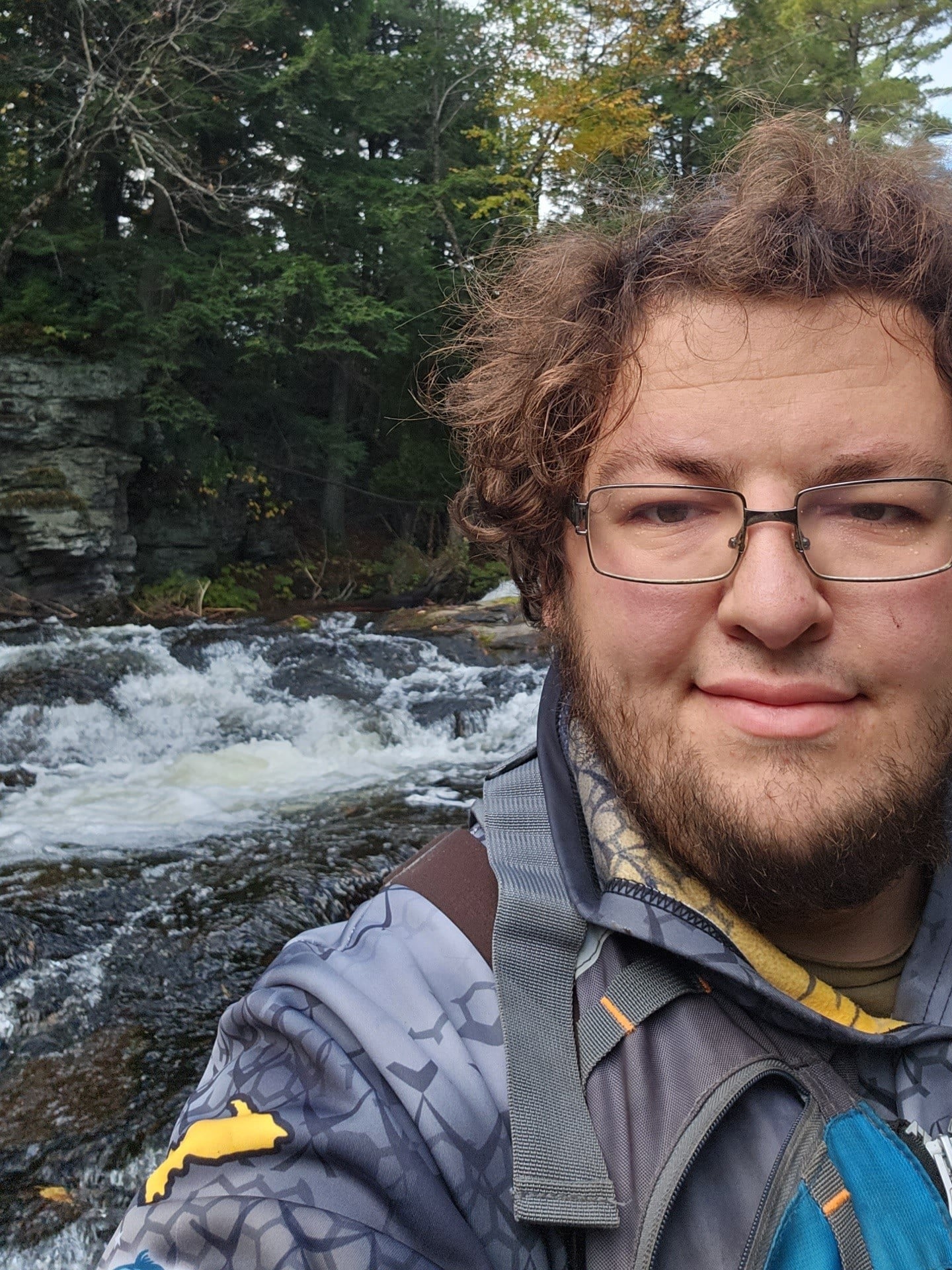
Doctoral Finishing Fellowship – Fall 2023 Recipient – Tauseef Ibne Mamun

I am proud to have been awarded the finishing fellowship for my Ph.D. at Michigan Technological University; my journey has shaped me into a versatile human factors specialist (human factors, in simple terms, involves bridging the gap between humans and field ‘X’ to make that field more accessible and user-friendly for humans) with expertise spanning artificial intelligence, autonomous vehicles, rail safety, and public health. Drawing on my computer science background, I have always been captivated by the advancement of powerful AI systems and their potential to become more accessible, trustworthy, and dependable for humans. My primary research focus centers around explainable artificial intelligence (XAI) and its significance in comprehending the cognitive dynamics between humans and AI in autonomous vehicles.

Beyond my dissertation on XAI and human-AI team cognition in autonomous vehicles, I have actively engaged in research within the transportation and health sectors. This active involvement has substantially enhanced my comprehension of the human factors associated with these domains.

The advent of commercially available AI systems in autonomous vehicles represents remarkable progress. However, similar to other state-of-the-art AI systems, understanding these new AI systems within the context of autonomous vehicles can pose challenges for both vehicle occupants and individuals outside the vehicle. Instead of solely concentrating on explaining ‘why’ AI systems have made specific decisions, I firmly hold the belief that providing explanations on ‘how’ AI systems ‘may behave’ in specific patterns can be more effective. By making these behavioral patterns more understandable for users and drivers, we can elevate human-AI team cognition. To address these research questions, I have adopted a mixed-method approach for my Ph. D. dissertation that combines simulated quantitative behavioral studies with cognitive task analysis methodologies.

I express my gratitude to the graduate dean awards advisory panel for selecting me as the recipient of the finishing fellowship. I am also deeply appreciative of the guidance and support provided by my mentors, Dr. Shane T. Mueller, and Dr. Elizabeth Veinott, as well as the other esteemed members of the Cognitive and Learning Sciences department at MTU. Their contributions have made Houghton feel like a second home to me. I would like to extend my gratitude to Dr. Robert Hoffman for his unwavering support throughout this journey. Finally, I would like to express my heartfelt appreciation to my wife, Dr. Lamia Alam, and my other family members for their unwavering support and understanding throughout the challenging phases of my Ph.D. journey. Their patience and encouragement have been invaluable to me.

Doctoral Finishing Fellowship – Summer 2023 Recipient – Shruti Amre

My research centers on the human factor aspects of Advanced Driver Assist Systems (ADAS). ADAS features are semi-autonomous features that enable drivers to relinquish operational control of the vehicle to automate part of the total drive. Features that use ADAS, like Tesla’s Autopilot (hands-on-wheel) or Cadillac’s Super Cruise (hands-free), are not entirely self-driving and require drivers to monitor their environment if the automation turns off or malfunctions. Drivers’ inconsistencies in monitoring the external driving environment and the automation status have led to several high-profile accidents involving these semi-automated features. While these features are currently commercially employed, little research to date documents their impact on their effectiveness in promoting driver attention while automation is engaged.

The objective of my work is to understand how the hands-on-wheel and hands-free driver supervision strategies differently affect situational awareness and takeover performance after automated driving. Moreover, my work explores how physiological performance metrics like eye tracking predict the drivers’ cognitive state and the likelihood of making errors. My work has already demonstrated that the hands-free driver supervision strategies fail to mitigate mind wandering and put drivers at higher risk of failing to detect safety-critical changes to the driving environment.

I thank the Graduate Dean Awards Advisory Panel for awarding me with this fellowship. This fellowship will enable me to complete data analysis from my most recent study and dissertation writing. I am deeply indebted to my advisor Dr. Kelly Steelman for her unconditional support in my research endeavors. Additionally, I would like to thank my committee members, Dr. Shane Mueller, Dr. Beth Veinott, and Dr. Joonbum Lee for their invaluable guidance. And last but not least, I would like to give a quick shout-out to the entire CLS department for their support throughout this process.

Doctoral Finishing Fellowship – Spring 2023 Recipient – Alexandra Watral

My interests lie at the intersection of accessibility and efficiency. For this reason, I transitioned away from clinical work and started my PhD in Applied Cognitive Science and Human Factors in January 2019 under the guidance of Dr. Kevin Trewartha. From day one, my research has focused on developing new tools for assessing cognitive decline in older adults through the study of motor skill learning using a specialized robotic device.

My dissertation research focuses on the use of two novel motor skill learning tasks to distinguish between healthy aging, mild cognitive impairment, and the early stages of Alzheimer’s disease. Cognitive decline associated with Alzheimer’s is typically measured using neuropsychological tests that lack sensitivity and specificity to subtle changes in cognitive function associated with disease progression. As such, these tests struggle to correctly diagnoses patients with pre-clinical dementia symptoms (such as mild cognitive impairment) or the early stage of Alzheimer’s disease. Recent research, however, has shown that the ability to adapt our movements to learn a new motor skill may relate to changes in learning and memory that occur early in the development of the disease. My dissertation will explore the relationship between data collected from two motor learning tasks and data collected through a typical battery of neuropsychological tests to diagnose Alzheimer’s-type dementia. We expect that these motor learning tasks can go above and beyond the ability of the neuropsychological battery to detect changes in cognitive functioning. Importantly, these motor learning tasks take about half the time to complete compared to the standard diagnostic procedures. By showing that these tasks are sensitive to subtle changes in cognitive decline, we can increase certainty in the proper diagnosis while minimizing the time and costs associated with the diagnostic procedure. This could lead to earlier and more efficient diagnoses and subsequent earlier treatment to slow the progression of cognitive decline, thereby improving patient and caregiver quality of life.

I would like to thank the Graduate School Awards Advisory Panel for this fellowship, and my advisor, Dr. Kevin Trewartha, for his consistent support and guidance over the last four years.

Dean’s Award for Outstanding Graduate Student Teaching Award– Spring & Fall 2022 Recipients

Congratulations to the following students on receiving the Outstanding Graduate Student Teaching Award!

Noah Agata- Mechanical Engineering
Arslan Amer- Biochemistry/Molecular Biology
Manuel Anderson- Applied Ecology
Yasasya Uthpalawarna Ariyadasa Batugedara Batugedara Mohottalalage- Mathematical Sciences
Kendall Belopavlovich- Rhetoric, Theory and Culture
Kwadwo Ampadu Boateng- Civil Engineering
Aidan Botkin- Mathematical Sciences
Mohanish Kishor Chandurkar- Biomedical Engineering
Louis Chapin- Environmental Engineering
Tania Demonte Gonzalez- Mechanical Eng-Eng Mechanics
Alayna Farrell- Mechanical Eng-Eng Mechanics
Logan Fike- Geology
Samantha Fincannon- Electrical Engineering
Mahalakshmi Madhoolika Jammalamadaka- Mechanical Eng-Eng Mechanics
Larissa Juip- Indust Heritage & Archaeology
Michelle Kelly- Biological Sciences
Ronald Kyllonen- Mechanical Engineering
Kenneth Larsen- Engineering – Environmental
Hyeseon Lee- Mechanical Eng-Eng Mechanics
Tyler Lemahieu- Environmental Engineering
Isaac Lennox- Kinesiology
Fredrica Markson Eduaful- Rhetoric, Theory and Culture
Nusrat Irin Chowdhury Mary- Computer Engineering
Venkata Satya Sai Revanth Mattey- Mechanical Eng-Eng Mechanics
Kathryn Miller- Electrical & Computer Engineer
Oindabi Mukherjee- Physics
Monica Mame Soma Nyansa- Chemistry
Ikechukwu Emmanuel Okoh- Mechanical Eng-Eng Mechanics
Jonathan Oleson- Mechanical Eng-Eng Mechanics
Melanie Ottino- For Molec Genetics & Biotec
Shashank Pathrudkar- Mechanical Eng-Eng Mechanics
Meara Pellar-Kosbar- Data Science
Hailee Petosky- Biological Sciences
Evan Ricchio-Hitchcock- Geological Engineering
Noah Squires- Mechanical Engineering
Caleb Swain- Computer Science
Shruti Rajiv Vaidya- Electrical & Computer Engineer
Elizabeth Wahmhoff- Rhetoric, Theory and Culture
Aaron Wildenborg- Applied Physics
Kieran Young- Computer Science
Zhongtian Zhang- Biomedical Engineering
Noah Zins- Electrical & Computer Engineer

Dean’s Award for Outstanding Graduate Student Teaching Award– Spring & Fall 2021 Recipients

Congratulations to the following students on receiving the Outstanding Graduate Student Teaching Award!

Shahriar Alam- Mechanical Eng-Eng Mechanics
Behnam Azmoon- Civil Engineering
Roya Bagheri- Mechanical Eng-Eng Mechanics
Tanner Barnes- Forest Ecology & Mgmt
Beth Bartel- Geology
Claudia Irmgard Bartlick-Georg- Forest Science
Parth Parimalbhai Bhatt- Forest Science
Shiying Cai- Mechanical Eng-Eng Mechanics
Marina Choy- Rhetoric, Theory and Culture
Madhureeta Das- Computer Engineering
Akshay Shankarrao Dongre- Mechanical Eng-Eng Mechanics
Ian Gannon- Geological Engineering
Gaurish Shreedhar Gokhale- Electrical Engineering
David Hallberg- Electrical Engineering
Ian Herzog- Physics
Madhur Arun Jagtap- Electrical Engineering
Joshua Kemppainen- Mechanical Eng-Eng Mechanics
Seth Kriz- Chemical Engineering
Jessica LaReaux- Civil Engineering
Arianna Laiho- Kinesiology
Nicholas Newberry- Chemistry
Abhishek Patil- Mechanical Eng-Eng Mechanics
Yugandhara Yuvraj Patil- Mechanical Eng-Eng Mechanics
Ashwin Karthik Purushothaman- Mechanical Eng-Eng Mechanics
Ashfiqur Rahman- Electrical Engineering
Gurijala Venkat Prithvi Reddy- Mechanical Eng-Eng Mechanics
Reihaneh Samsami- Civil Engineering
Mujeeb Olushola Shittu- Biochemistry/Molecular Biology
Kevin Sunderland- Biomedical Engineering
Arman Tatar- Civil Engineering
Shardul Tiwari- Environmental & Energy Policy
Laura Vidal Chiesa- Rhetoric, Theory and Culture
Karlee Westrem- Mathematical Sciences

Dean’s Award for Outstanding Graduate Student Teaching Award– Spring & Fall 2020 Recipients

Congratulations to the following students on receiving the Outstanding Graduate Student Teaching Award!

Gabriel Edzordzi Agbozo- Rhetoric, Theory and Culture
Emily Anible- Mathematical Sciences
Aynaz Biniyaz- Civil Engineering
James Davis- Electrical Engineering
William Dion- Biological Sciences
Dylan Gaines- Computer Science
Ryan Ghannam- Biochemistry/Molecular Biology
Anindya Ghoshroy- Electrical Engineering
Dongzhao Jin- Civil Engineering
Shreya Joshi- Atmospheric Sciences
Jeffrey Kabel- Applied Physics
Sarah LewAllen- Biological Sciences
Weibing Li- Statistics
Sergio Miguel Lopez Ramirez- Civil Engineering
Evan Lucas- Electrical Engineering
Susan Mathai- Atmospheric Sciences
Ali Moazzam- Electrical Engineering
Kate Nelson- Geophysics
Shane Oberloier- Electrical Engineering
Divya Kamlesh Pandya- Mechanical Eng-Eng Mechanics
K M Niaz Reza- Electrical Engineering
Nelmary Rodriguez Sepulveda- Geology
Udit Sharma- Mechanical Eng-Eng Mechanics
Cameron Shock- Physics
Ariana Smies- Biomedical Engineering
Mehnaz Tabassum- Electrical Engineering
Cora Taylor- Mechanical Eng-Eng Mechanics
Mikhail Ana Lise Francese Trought- Chemistry
Matthew VanderMolen- Forest Ecology & Mgmt
Isaac Wedig- Integrative Physiology
Menghan Zhao- Mechanical Eng-Eng Mechanics