Tag: Awards

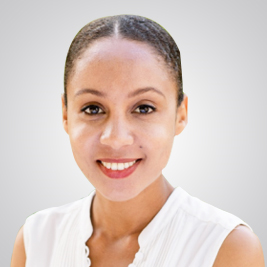
Doctoral Finishing Fellowship Summer 2020 Recipient – Bethel Worku Tarekegne

Bethel Tarekegne is a PhD candidate in Environmental and Energy Policy at Michigan Technological University. She holds a Masters in Energy Policy from the School of Public Policy at University of Maryland, College Park and a Bachelor of Science in Electrical Engineering from Benedict College.

Bethel’s work focuses on examining the intersection of energy, development, policy, and governance. Her current research is motivated by the need to achieve universal energy access in developing economies – mainly in the sub-Saharan Africa region. As an energy access researcher, she focuses on modeling decision tools for electrification planning with a special emphasis on the integration of techno-economic and socio-technical perspectives, rural electrification and social development, energy security and justice, and energy governance and policymaking. Through her work, she tries to understand how electrification projects can be designed from the energy-poor’s perspective in order to have equitable socio-economic outcomes.

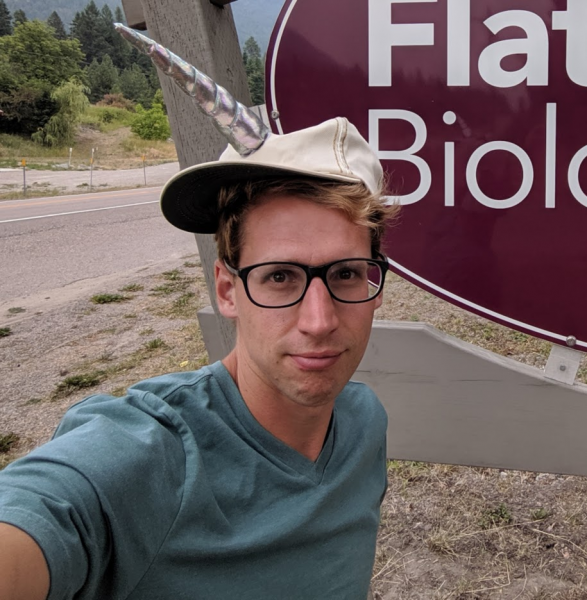
Doctoral Finishing Fellowship Summer 2020 Recipient – Kevin Nevorski

I came to Michigan tech in 2016 to pursue my Ph.D. with Dr. Amy Marcarelli studying nitrogen cycling in steams. The past 4 years have been filled with adventures learning about stream ecosystems, meeting other scientists n my field, and discovering myself. My research is geared toward achieving a better understanding of how different environmental factors in the stream and the surrounding watershed will influence different nitrogen cycling processes. This included regular year-round sampling trips to the Pilgrim River to study seasonal and daily variation in nitrogen cycling. During this sampling, I basked in the warm sun of summer days and shivered during the -20 degree winter blizzards. This sampling encompassed the Father’s Day Flood providing insight into how nitrogen cycles are affected by and recover from severe hydrological events. I was also lucky enough to travel visiting labs and scientists across the country to better understand how nitrogen cycling changes with different environments, watersheds, and ecoregions. From Massachusetts to Oregon, Florida to Alaska we traveled in our lab van often camping along the way. All that excitement can only last so long and I’m looking forward to a summer locked p with my computer and all the data I’ve gathered writing up my findings for publication and getting ready to defend.

Doctoral Finishing Fellowship Summer 2020 Recipient- Haitao Cao

Haitao Cao

I am a Ph.D. candidate studying Geophysics and Seismology in the Department of Geological and Mining Engineering and Sciences. I started working under the supervision of Dr. Wayne Pennington and Dr. Askari for my master program in Fall 2014. My master project focused on numerical simulation on the ambient noise seismic interferometry with an application to CO2 sequestration monitoring. After finishing MS in summer 2016, Dr. Askari offered me an opportunity to continue my PhD program. In my PhD project, we developed optical and acoustic experimental apparatuses to visualize and analyze the behavior of a special seismic waves called crack waves that propagate in hydraulic fractures. Our laboratory experiment on the crack waves helps to better understand the physical properties of fluid-filled reservoirs undersurface.

I cannot express my gratitude and appreciation to the graduate school for awarding me the Finishing fellowship. It will give me peace of mind to finish my dissertation more effectively and publish more papers out of my research in the summer.

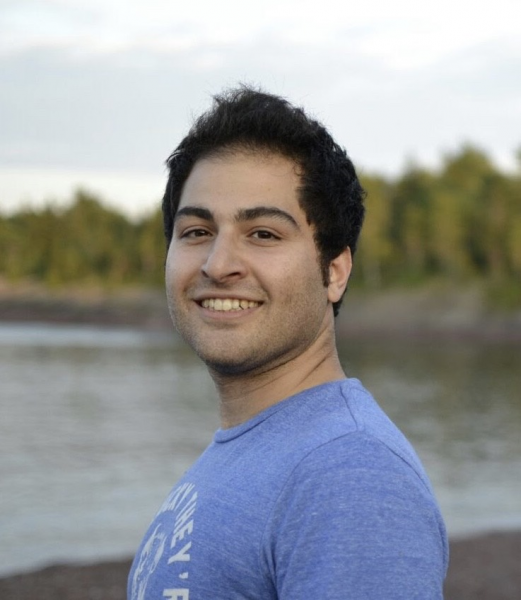
Doctoral Finishing Fellowship Summer 2020 Recipient- Shahab Bayani Ahangar

I have joined Dr. Choi’s research group in Fall 2015 to pursue my PhD studies in Mechanical engineering. In my Ph.D. studies, I have worked on the development of an automated surface plasmon resonance imaging system to visualize dropwise condensation. Our developed microscope can measure the evolution of water film with the thickness as low as 1 Å at 10,000 frames per second. We have shown experimentally the existent of a monolayer thin film between distinct droplets during dropwise condensation for the first time. Our next step would be to understand the effect of this thin film in droplets (nuclei) growth and heat transfer from the surface. I would like to thank the Graduate School for financial support during the last stage of my research.

Doctoral Finishing Fellowship Summer 2020 Recipient- Eassa Hedayati

I am a fourth-year Ph.D. Candidate in Computational Science and Engineering living in the Electrical and Computer Engineering (ECE) Department.  The multidisciplinary nature of my field of study is imposing a special kind of variation in my research area. However, I tried to keep my research around finding sparsities light-field (LF). In doing so, I have been involved simulating LF and compressing it. In pursuing my research, I have used machine learning techniques to further enhance the quality of my research. My research heavily involves computation and use of algorithms, therefore, I had to devote some parts of my time to obtain a Masters in Computer Science.

I am extremely grateful to the Graduate Dean Awards Advisory Panel and dean for recommending me for the Finishing Fellowship for the summer 2020 semester. Furthermore, I am obliged to the Graduate School for providing this generous support. I will make use of the extra time in summer to finish writing my dissertation and add to my publication records. I am looking forward to defending my dissertation in the summer of 2020. I am also grateful to Dr. Jeremy P. Bos for his guidance throughout my Ph.D. studies and to the ECE Department for supporting my academic efforts since I joined the Department in 2017.

Doctoral Finishing Fellowship Summer 2020 Recipient- Elizabeth Barnes

I am compassionate about forest resource conservation, and came to Michigan Tech to pursue a doctoral degree in Forest Science to gain skills in ecological field research, geospatial technologies, and forest management. My studies center on ecological succession in northern forests, and the dual influences of natural disturbance and resource management on shaping the future of maple-dominated hardwoods stands. I specifically carry out research to assess the effect of wind disturbance on canopy openness, understory microclimate, and tree species recruitment and replacement. In addition, I am involved in research to model pathways of forest carbon sequestration, particularly the transfer of carbon from down dead wood to the soil matrix. During my three years at the College of Forest Resources and Environmental Science, I also attained a two-year professional degree in Forestry, endowing me with the technical skills needed to support a career in forest resource management. 

Words cannot express my gratitude for the opportunity provided to me by the Graduate School to complete my Ph.D. in Summer 2020 with the Finishing Fellowship award. I look forward to graduating and entering the fields of forestry, resource conservation, or ecological restoration in the northern Great Lakes.

Doctoral Finishing Fellowship Summer 2020 Recipient- Pratik Umesh Joshi

I started my journey at Michigan Tech in Fall 2015. My Ph.D. research has focused on understanding the behavior of viruses (coded in nature and not in computers!) and developing methods for vaccine and biotherapeutic manufacturing. Prevention against the spread of viral diseases has been one of humankind’s foremost challenges. The current vaccine manufacturing strategy to separate target viral products from the contaminants necessitates an upgrade to increase production capacity using low-cost methods. My research is geared towards characterizing viruses to generalize a method to purify various viral-based biotherapeutics. In these graduate school years, perceiving the complexity of viral interactions has intrigued me to pursue a research career to keep investigating in-depth the nature of viruses and other biotherapeutic agents. These answers will help in developing better technologies to process such intricate moieties.

I consider myself very fortunate to be mentored by Dr. Caryn Heldt who guided me to develop an advanced, scientific thinking process. I am very thankful to be awarded with the Finishing Fellowship for summer 2020 and for the support to focus on my degree completion.

Doctoral Finishing Fellowship Summer 2020 Recipient- Ali Jalooli

CAPTION

I am a Ph.D. Candidate in the Department of Computer Science, studying the optimization of message routing in heterogeneous wireless networks. Over the past years, I have mainly focused on vehicular networks in smart cities. Research in this area is of great importance, as it advances cutting-edge connected and autonomous vehicle technologies. This has far-reaching consequences for many aspects of daily life, given the expanding world of the Internet of Things.  Connected vehicles provide various benefits, spanning from advanced driver assistance, remote diagnostics, and infotainment for consumers to road safety, improving response time for emergency vehicles, and even improving national and international economies by ameliorating traffic congestion. My work at Tech on the underlying networks that drive these technologies enhances the performance and feasibility of robust wireless networks. During my time at Tech, I have also gained teaching experience and increased responsibility in course development and assessment as a teaching assistant and lead instructor.

I am grateful to the graduate school and the graduate dean awards advisory panel for awarding me a Finishing Fellowship. I am also grateful to my advisors, Dr. Kuilin Zhang and Dr. Min Song, for their support and guidance.

Portage Health Foundation Graduate Assistantship Spring 2020 Recipient – Avik Ghosh

Avik Ghosh
Biochemistry and Molecular Biology

I joined Dr. Tanasova’s Lab as a PhD student in the Department of Biochemistry and Molecular Biology in Fall 2017. My research focuses on exploring the impact of nutritional deprivation in cancer cells. Nutritional deprivation has been of interest to the research community as an approach to sensitize cancer cells towards chemotherapy. While many strategies have been undertaken, it is still not clear whether such an approach can be safely applied to all types of cancers. As a researcher in the Tanasova laboratory, I am aiming to understand the outcomes of fructose deprivation in different cancer types.

Our recent development of fluorescent probes that can specifically target cancer-relevant fructose transporter GLUT5 made it possible to conduct targeted studies on assessing the role of this transporter in cancer. Through preliminary assessments, I have found that depriving cancer cells in fructose through GLUT5 inhibition induces different responses in different cancer types. I discovered that in aggressive breast cancer phenotypes, such deprivation causes long-term stress that could positively contribute to the outcome of chemotherapy. In contrast, at an early stage, cancer cells appear to adjust to the induced deprivation and gain resistance. This observed difference provides an essential insight into the diverse nature of cancer and allows us to rationalize the choices of treatment better.

However, considering a required high-level experimental rigor, I still need to perform a large number of experiments that will validate the discovery from different angles. The work will include couple of challenging analyses that are known to be time-consuming and require tuning of conditions to achieve results.

Thus, I sincerely thank Portage Health Fellowship for the support. The award has not only taken care of my tuition/stipend support but also has bought me time from my daily teaching responsibilities to focus on my research better. I would also like to thank my advisor Dr. Marina Tanasova and the Department of Biochemistry and Molecular Biology for the constant support and guidance.


Portage Health Foundation Graduate Assistantship Spring 2020 Recipient – Pegah Kord Forooshani

Pegah Kord Forooshani
Biomedical Engineering

I joined Dr. Bruce Lee’s lab in the Department of Biomedical Engineering in Fall 2016, where we focused on designing biomimetic materials for different biomedical applications. The overall objective of my research is to manipulate a unique reduction-oxidation chemistry found in mussel adhesive proteins to create novel biomimetic model systems for robust antibacterial activity and enhanced wound healing. Specifically, I have been developing biomimetic hydrogel/microgels which can be activated to release Reactive Oxygen Species such as hydroxyl radical (OH˙) and hydrogen peroxide (H2O2). OH˙ is an extremely potent oxidizer which, unlike H2O2, no known enzyme can detoxify it in the bacteria cells, leading to fast and efficient antibacterial activities. H2O2 is a mild oxidizer, which effectively functions as a broad-spectrum biocide and disinfectant in many biomedical applications. The biological responses to H2O2 are highly dependent on its concentration. The introduction of a relatively high concentration of H2O2 is antimicrobial and a relatively lower concentration promoted wound healing. We are anticipating that our H2O2-releasing hydrogels can serve as a simple and inexpensive approach for the treatment of healing-impaired wounds such as diabetic foot ulcers.

I would like to thank Dr. Lee for all of his valuable guidance and support which have provided me with the opportunity to expand my knowledge and skills. I am also incredibly grateful to the Portage Health Foundation for awarding me this assistantship which will enable me to concentrate on my research and complete my doctoral project.