
Tag: Chemical Engineering

Students Build CO2 Scrubber

Komar Kawatra couldn’t be prouder of the students on his research team. “We have developed a CO2 scrubber,” he says. “It was designed at Michigan Tech and built at Michigan Tech by Michigan Tech students.”

Kawatra, who chairs the chemical engineering department, has reason to be gratified by his proteges’ efforts. An 11-foot bench-model smokestack packed with glass beads is percolating away in a lab. Near the top, a proprietary liquid dribbles down. From below, carbon dioxide bubbles up. By the time the gas reaches the top, fully half of the CO2 has been gobbled up by the liquid.

The process not only captures carbon, it binds it in a solid form, making an undisclosed product that can be used as a construction material. The liquid itself can be recovered and used again. The group has applied for a patent and hopes to build a pilot plant in cooperation with an industry partner, Carbontec Energy Corp.

Other scrubbers remove up to 90 percent of the carbon dioxide from a smokestack, Kawatra notes, but the liquid must be processed to strip away the carbon dioxide, which is generally compressed and stored. “This is a very expensive technique, which is probably why we do not see it commonly employed in industry,” says PhD student Brett Spigarelli of Iron Mountain, a member of the research team.

The group is working to make the scrubber remove even more carbon dioxide. In the meantime, it offers a significant benefit to industry.  “Industry has a problem with CO2 capture and sequestration because it is an added cost with no direct benefit to them,” Kawatra says. “But, if it is possible for industry to both capture CO2 and produce a product from the CO2 that they can sell, then they will be much more interested. Our goal is therefore to not only capture the CO2 at the lowest possible cost, but also to manufacture useful, marketable products.”

Building the scrubber has been as much about education as research. In the beginning, Kawatra notes, the scrubber only removed 5 percent of the CO2, and the students were stymied. Then they had their first aha experience—and replaced their opaque pipe with clear plastic so they could see what was actually going on inside.

“You think research is going to be really complex and difficult,” says Spigarelli. “Sometimes, it’s just a matter of looking at things a little differently.”  That small step led to big breakthroughs and, ultimately, to professional recognition. Their poster received second-place honors among the student entries at the 2010 American Institute of Chemical Engineers National Meeting, held in Salt Lake City.

The team included five chemical engineering undergraduates, Janelle Paddock, Paul Hagadone, Alison Springer-Wilson, Aliabbas Sherally and Russ Jungnitsch. Involving undergraduates in research does much more than prepare them for careers in academia, says Spigarelli. Research brings classroom lessons to life. “The sooner students can get familiar with these processes, the better prepared they are for the workplace.”

Kawatra’s graduate team members are Justin and Josh Carlson of Escanaba, Joe Halt of Calumet and Urvashi Srivastava of India.

“I have four Yoopers working for me,” Kawatra says, smiling broadly. “We’re one family, and it’s a lot of fun to work with them.”

Published in Tech Today.
National Water Research Institute Fellowships

Deadline: 4/01/2011

The National Water Research Institute (NWRI) is pleased to offer the following fellowships to graduate students (Masters and Ph.D.) at U.S. universities conducting research in the areas of water resources, treatment, and policy:

* NWRI Fellowships (up to $5,000 a year for 1-2 years). Research must pertain to NWRI’s mission, which is to create new sources of water through research and technology and to protect the freshwater and marine environments.

* Ronald B. Linsky Fellowship for Outstanding Water Research (one fellowship of $10,000 a year for 2 years). Applicants must write an additional 1-page essay detailing their technical capabilities, interest in other fields beside the one they are studying, career goals, and where they hope to take their technical expertise and vision in the future.

* NWRI-AMTA Fellowships for Membrane Technology (two fellowships of $10,000 a year for 2 years). Research must pertain to the advancement of membrane technologies in the water, wastewater, or water reuse industries. Funding is provided by the American Membrane Technology Association (AMTA).

Url: http://www.nwri-usa.org/fellowship.htm

National Institutes of Health (NIH) Ruth Kirschstein National Research Service Award (NRSA) F31 Predoctoral Fellowships

Deadline: 2011 deadlines: 4/8, 8/8, and 12/8

The objective of National Institutes of Health (NIH) Ruth L. Kirschstein National Research Service Awards programs is to help ensure that a diverse pool of highly trained scientists are available in adequate numbers and in appropriate research areas to address the Nation’s biomedical, behavioral, and clinical research needs.

The purpose of the predoctoral fellowship (F31) award is to provide support for promising doctoral candidates who will be performing dissertation research and training in scientific health-related fields relevant to the missions of the participating NIH Institutes during the tenure of the award. The Kirschstein-NRSA for Individual Predoctoral Fellows will provide up to five years of support for research training which leads to the PhD or equivalent research degree, the combined MD/PhD degree, or another formally combined professional degree and research doctoral degree in the biomedical, behavioral, or clinical sciences.

Applicants for the Kirschstein-NRSA F31 award must propose a dissertation research project and training program that fall in a research area within the scientific mission of the participating Institutes. The proposed predoctoral research training must offer an opportunity to enhance the fellow’s understanding of the health-related sciences and extend his/her potential for a productive, independent research career. The training should provide the applicant with the opportunity to interact with members of the scientific community at appropriate scientific meetings and workshops (including NIH-sponsored meetings, where available). The application should document the need for the proposed research training and the expected value of the proposed fellowship experience as it relates to the individual’s goals for a career as an independent researcher.

Each NIH Institute and Center (IC) has a unique scientific purview and different program goals and initiatives that evolve over time. Prospective Fellowship Applicants are encouraged to contact the relevant NIH staff for IC-specific programmatic information: Table of Institute and Center Contacts.

Citizenship: By the time of award, the individual applicant must be a citizen or a non-citizen national of the United States or have been lawfully admitted for permanent residence.

Degree Requirements: A Fellowship Applicant must have a baccalaureate degree and be currently enrolled in a PhD or equivalent research degree program (e.g., EngD, DNSc, Dr PH, DSW, PharmD, PsyD, ScD), a formally combined MD/PhD program, or other combined professional/clinical and research doctoral (e.g., DDS/PhD) in the biomedical, behavioral, or clinical sciences at an accredited domestic or foreign institution. With the exception of the combined degree programs described above, the Kirschstein-NRSA F31 may not be used to support studies leading to the MD, DDS, or other clinical, health-professional training (e.g., DC, DMD, DNP, DO, DPM, DVM, ND, OD, AuD). Neither may these awards be used to support the clinical years of residency training.

Students seeking support for pursuit of a combined degree program (e.g. MD/PhD, or DO/PhD, or DDS/PhD) may be eligible to apply for the Ruth L. Kirschstein National Research Service Awards for Individual Predoctoral MD/PhD Fellows (F30) (PA-09-207).

Duration of Support: Individuals may typically receive up to 5 years of aggregate Kirschstein-NRSA support at the predoctoral level.

Participating Institutes & Centers:

National Institute on Aging (NIA), http://www.nia.nih.gov/
National Institute on Alcohol Abuse and Alcoholism (NIAAA), http://www.niaaa.nih.gov
National Institute on Deafness and Other Communication Disorders (NIDCD), http://www.nidcd.nih.gov/
National Institute of Dental and Craniofacial Research (NIDCR) http://www.nidcr.nih.gov/
National Institute on Drug Abuse (NIDA), http://www.nida.nih.gov/
National Institute of Mental Health (NIMH), http://www.nimh.nih.gov
National Institute of Neurological Disorders and Stroke (NINDS), http://www.ninds.nih.gov
National Center for Complementary and Alternative Medicine (NCCAM), http://www.nccam.nih.gov
Office of Dietary Supplements (ODS), http://ods.od.nih.gov/

Estimated Stipend: $21,180.  (Note: The sponsoring institution is allowed to provide funds to the fellow in addition to the stipends paid by the NIH in accordance with its own formally established policies governing stipend support.)

Application Procedure: To submit an application, applicants should access the FOA via http://www.grants.gov/applicants/apply_for_grants.jsp and follow Steps 1-4.  Applications must be submitted electronically.

Application Guidelines: SF424 (R&R) Individual Fellowship Application Guide

Contact Information: Applicants should refer to the Table of Institute and Center Contacts to obtain participating NIH Institute scientific/research contact information.

Url: http://grants1.nih.gov/grants/guide/pa-files/PA-09-208.html


NASA NSPIRES Research Opportunities

Supporting research in science and technology is an important part of NASA’s overall mission. NASA solicits this research through the release of various research announcements in a wide range of science and technology disciplines. Please bookmark and visit often  http://nspires.nasaprs.com/external to search for NASA research opportunities that may fit with your graduate research focus.

Current Opening:  NASA Space Technology Research Fellowships (NSTRF)

This Fall 2011 Fellowship opportunity is open to US citizens and permanent residents who are pursuing Master’s or Doctoral degrees in relevant space technology disciplines in Science, Technology, Engineering, and Mathematics.   Selected fellows will perform research on their respective campus and at NASA Centers and US Research and Development laboratories.

The maximum amount of an NSTRF award is $60,000 per year for a Master’s candidate and $66,000 per year for a Doctoral candidate – this includes a faculty advisor allowance of $9,000.

If interested, please contact Jodi Lehman (jglehman@mtu.edu).

Graduates featured in Daily Mining Gazette

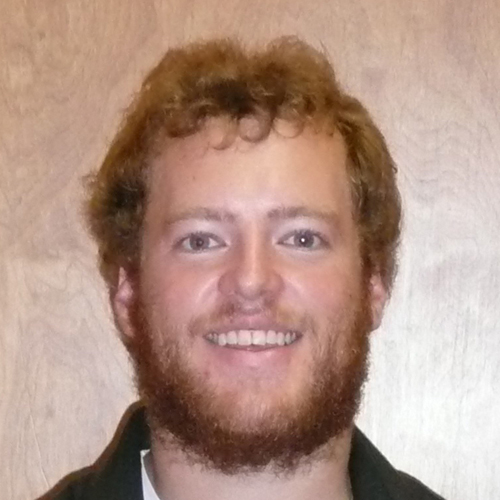
Joshua Carlson, one of our recent graduates.

Michigan Tech held its Midyear Commencement this past Saturday, with the Board of Control granting 292 bachelor’s degree, 85 master’s degrees, and 24 doctorates.

Two of these students, Casey Rudkin and Josh Carlson, were featured in the Daily Mining Gazette.  Casey earned her doctorate in Rhetoric and Technical Communication, and Josh earned his doctorate in Chemical Engineering.

Research Associateship Programs

The mission of the NRC Research Associateship Programs (RAP) is to promote excellence in scientific and technological research conducted by the U. S. government through the administration of programs offering graduate, postdoctoral, and senior level research opportunities at sponsoring federal laboratories and affiliated institutions.

In these programs, prospective applicants select a research project or projects from among the large group of opportunities listed on this website.  Prior to completing an application, prospective applicants should contact the proposed Research Adviser to assure that funding will be available if their application is recommended by NRC panels.  Once mutual interest is established between a prospective applicant and a Research Adviser, an application is submitted through the NRC WebRap system.  Reviews are conducted four times each year and review results are available approximately 6-8 weeks following the application deadline.

There are four review cycles annually. Deadlines for 2011 are:

February 1

May 1

August 1

November 1

Click here for more information: http://sites.nationalacademies.org/pga/rap/

Graduate Research Diversity Supplement

The Directorate for Engineering (ENG) and National Science Foundation (NSF) are again offering Graduate Research Diversity Supplements (GRDS).  Requests for funding of a GRDS should be made by the Principal Investigator of a currently active ENG research award.

GRDS candidates must be United States citizens, nationals, or permanent residents of the United States.  Eligible graduate students must be newly enrolled in, or planning to pursue a PhD in an engineering discipline.

Visit the COS Funding Opportunities site for more information.

SWE Graduate Fellowship Scholarship Postings

Society of Women Engineers has posted updated funding opportunities  for undergraduate and graduate level students majoring in any area of engineering.

For a complete listing of graduate scholarship see: http://societyofwomenengineers.swe.org/index.php?option=com_content&task=view&id=264&Itemid=131

For a complete listing of undergraduate scholarships see:  http://societyofwomenengineers.swe.org/index.php?option=com_content&task=view&id=230&Itemid=128

Steinman Fellowship

The National Society of Professional Engineers (NSPE) awards this fellowship to a graduate from an ABET-accredited engineering program entering a graduate program in engineering. To be eligible for the fellowship, a candidate must be a senior in an undergraduate engineering program that is accredited by the Engineering Accreditation Commission (EAC) of the Accreditation Board for Engineering and Technology (ABET). The candidate must also have taken and passed the Fundamentals of Engineering (FE) exam and must have been accepted into a graduate engineering degree program at a school with an EAC-ABET-accredited graduate or undergraduate program. U.S. citizenship is required.

Application deadline: March 1st

Award amount: $10,000

For more information visit: http://www.nspe.org/Students/Scholarships/steinman.html