Tag: Finishing Fellowship

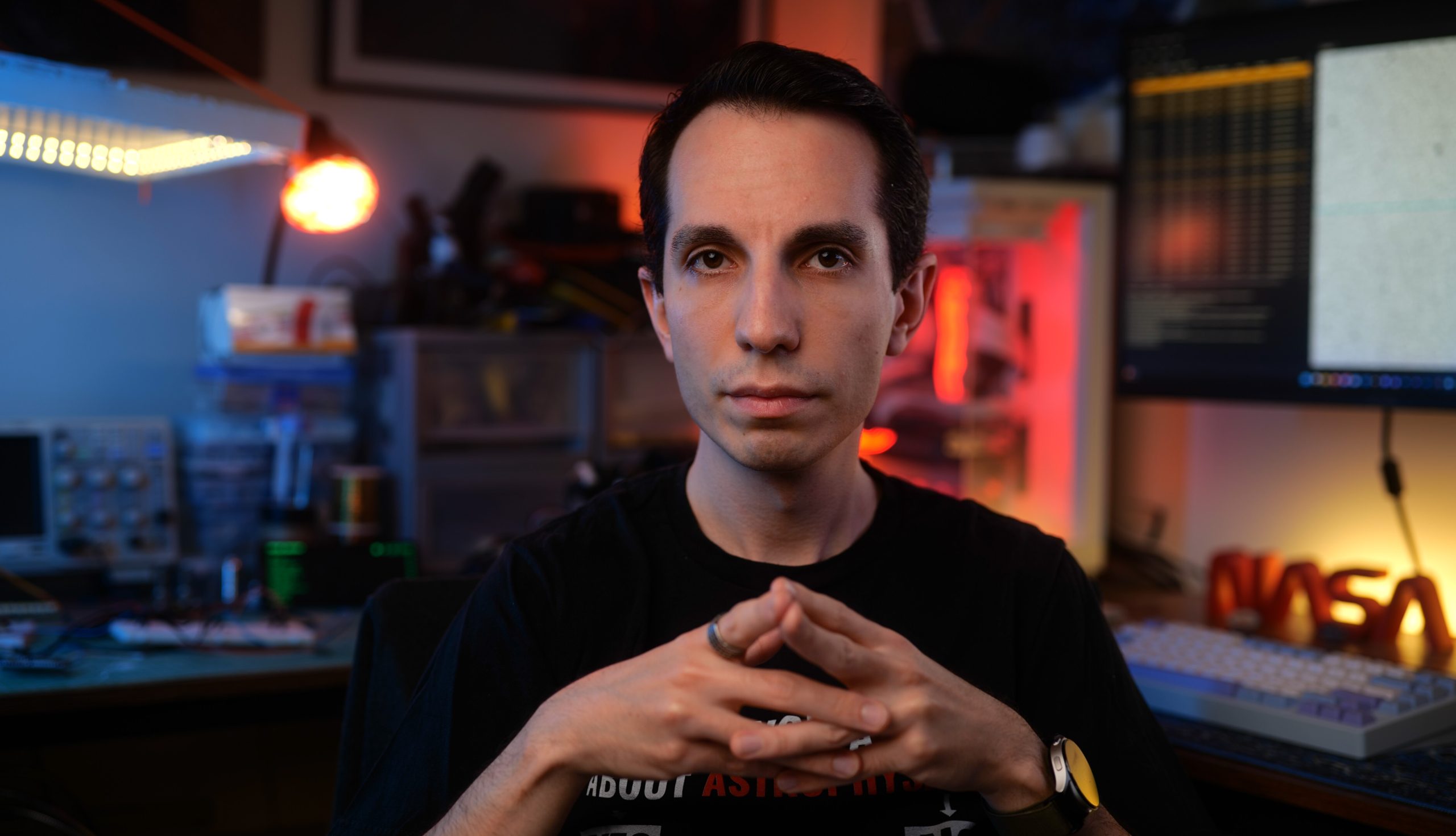
Finishing Fellowship Award – Summer 2026 – Logan Schexnaydre

Logan Schexnaydre, PhD in Computer Engineering, 2026

Autonomous vehicles are becoming more common and can make transportation safer. Yet, it is uncertain how autonomy will affect a vehicle’s energy consumption. While pursuing a PhD in Computer Engineering, I worked to understand how perception systems affect this uncertainty. My research models the effect of lidar sensing and processing on the energy efficiency of automated vehicles.

I explore two ways of saving energy with lidar: automated vehicle following and road grade estimation. First, I show that a leader and follower vehicle can be aligned using lidar, reducing the follower’s aerodynamic drag and energy use. Then, I expand this work to adverse weather by characterizing the effect of snow on lead vehicle estimation. Finally, I show that the lidar can measure the grade of a road ahead of a vehicle, information which can be used for efficient traversal of hilly terrain. This work will enable engineers to design efficient perception systems and autonomous vehicles.

What I appreciate about my time at Michigan Tech is learning how to design technology for the environment and its inhabitants. Enjoying the nature of the Keweenaw with friends I have made here has shown me how important this work is.

Thank you to the Graduate Dean Awards Advisory Panel for awarding me the Finishing Fellowship. I am also grateful to my advisor, Dr. Jeremy Bos, and my dissertation committee for their guidance and support. Without my peers on campus and in my lab, I would not be the researcher I am today. Without my family and friends, I wouldn’t be the person who I am today. Thank you to all who have helped me along the way.

Finishing Fellowship Award – Summer 2026 – Laura Albrant

Gratitude and honor do not express my thankfulness enough to the Graduate School and the Graduate Dean’s Advisory Panel for awarding me this Finishing Fellowship. This fellowship provides me with time, and a weight off my shoulders, to effectively finish my dissertation on schedule. I would like to thank my advisor, Dr. Leo C. Ureel II. Their support, guidance, expertise, patience, trust, and encouragement not only make them the best advisor, but also help me to thrive.

Michigan Tech has been my home since I started my undergraduate degree in Computer Science in Fall of 2018. Now, I am a PhD candidate in the Applied Cognitive Science & Human Factors program within the Psychology and Human Factors department. My research revolves around computer science education, often with a focus on first-year college students using an artificial intelligence tool. It is a lovely blend of my background in computer science and applied human factors with user experience and learning. It allows me to flex my programming and machine learning skills, my UI/UX designing skills, as well as my quantitative/qualitative research and statistical analysis skills.

My dissertation is focused on examining the process of computer science students’ user experience and learning while programming with an interactive, web-based tool called WebTA. This application is also referred to as a code critiquer, providing rich and immediate feedback to students on their code. This software allows students to get quality feedback at any time of day and aids instructors in managing large courses.

As I near completion of my PhD, I am excited to disseminate my work and continue my contributions to academia. I currently aim to become a professor in an interdisciplinary field with CS and HF applications.

Finishing Fellowship Award – Summer 2026 – Join Uddin

Join Uddin, PhD in Applied Physics, 2026

I am a PhD student in Applied Physics. My research focused on photovoltaic band structure modulation by van der Waals core-shell quantum structures. During my Ph.D. studies, I have worked on several research projects that will contribute to the fields of nanotechnology and renewable energy applications.


I developed a UV–Vis spectroscopy–based method to quantify quantum dots (particles <10 nm) in liquids produced via cryo-mediated exfoliation. This approach enables precise quantification across diverse applications, improving research reproducibility, reducing measurement errors, and shortening measurement time.


My research on core–shell heterostructure solar cells demonstrates that integrating novel core materials with suitable shells can achieve measurable power conversion efficiency (PCE). This core material, developed in Dr. Yap’s laboratory, shows significant potential when incorporated into carefully engineered core–shell architectures. These findings highlight a promising pathway toward more efficient, stable, and environmentally friendly materials for next-generation solar cells.


I am sincerely thankful to the Graduate School and the Graduate Dean Advisory Panel for this fellowship. I am deeply grateful to my advisor, Dr. Yap, for his invaluable guidance and unwavering support.

Finishing Fellowship Award – Summer 2026 – Lei Yin

Lei Yin, PhD in Civil Engineering, 2026

I would like to thank the Graduate School and the Graduate Dean’s Advisory Panel for their support through this fellowship. I am a Ph.D. candidate in Civil Engineering at Michigan Technological University. My research focuses on rubber-modified asphalt materials for sustainable pavement design, with an emphasis on improving pavement performance and resilience under cold and wet-freezing conditions.


During my Ph.D. study, I have worked on multiple projects supported by state transportation agencies and county road commissions, involving both laboratory research and field implementation. My work focuses on developing high-rubber-content asphalt materials to enhance pavement durability, sustainability, and resilience to climate-related environmental conditions.


My research has been disseminated through peer-reviewed journal publications and presentations at conferences such as the Transportation Research Board (TRB) Annual Meeting. It investigates the performance and aging behavior of treated crumb rubber-modified asphalt and provides practical guidance for material selection and implementation.


In addition to research, I have contributed to collaborative projects, proposal development, and field testing with agency and industry partners. I am grateful for the support of my advisor, Dr. Zhanping You, and my collaborators throughout my Ph.D. This fellowship will allow me to focus on completing my dissertation and preparing for the next stage of my career.

Finishing Fellowship Award – Summer 2026 – Alyssa Horne

Alyssa Horne, PhD in Physics, 2026

Sponsor: Tech Fund 1942 (Dawson)

My time at Michigan Tech was fueled by a passion for breaking down barriers, both in my community and in research. I was intrigued to join Women in Physics (WiP) because of its openness to everyone and its efforts to provide students with free access to the tools they need. The two most memorable experiences during my co-presidency were organizing the Conference for Undergraduate Women and Gender Minorities in Physics (CU*iP) and the WiP Physics Fellowship. These events allowed us to create an environment that promotes camaraderie and support for everyone in the physics community.


As a physics researcher, I want to find new quantum materials that will help technology reach the atomic-scaling limit to minimize device size and power consumption. A specific example is low-dimensional half-metals, as they allow for perfect spin-dependent transport and provide access to the electron spin degree of freedom for spintronics applications. My dissertation is focused on using spin-polarized density functional theory to accurately model the electron-electron exchange interactions and predict novel low-dimensional quantum materials. This work led us to predict the first quasi-one-dimensional van der Waals half-metal, which is notable due to the van der Waals crystal’s weak interchain bonding that allows for clean exfoliation of the one-dimensional unit. This prediction provides an avenue to experimentally realize a half-metal nanowire.


I would like to thank Dr. Yongmei Jin and Dr. Ranjit Pati for their guidance and mentorship, and the physics department for its support. I would also like to thank the Elizabeth and Richard Henes Center for Quantum Phenomena for its financial support for the WiP Physics Fellowship. I would also like to thank everyone at Michigan Tech who helped make CU*iP a reality. Finally, I would like to thank the Graduate School and the Dean’s Advisory Panel for the Finishing Fellowship.

Finishing Fellowship Award – Summer 2026 – Scott Cho

Scott Cho, PhD in Electrical Engineering, 2026

I am immensely grateful to receive the Finishing Fellowship Award from the Graduate School and the Graduate Dean Awards Advisory Panel. I sincerely thank my advisor, Professor Jin Choi, for his continuous support and guidance throughout my academic journey at Michigan Technological University. I also extend my appreciation to the Electrical Engineering Department and faculty for their unwavering support.


Since joining Michigan Tech in Fall 2023, I have had the privilege of working under Professor Jin Choi, whose mentorship has profoundly shaped my approach to both research and teaching. During my time here, I have been honored to receive the Outstanding Graduate Teaching Award (Spring 2025) and the Dean’s Award for Outstanding Scholarship (Spring 2026), recognizing my contributions to teaching and research.


I have served as a Graduate Teaching Assistant in Digital Logic Design and Digital Signal Processing, and as the Instructor of Record for Circuits in Summer 2025. These experiences have strengthened my commitment to teaching and mentoring students. In addition, I have actively engaged in professional development through programs such as the Engineering Unleashed Faculty Development Workshop (Minnesota, USA), the Emerging Engineering Educators (EMEE) Workshop (Texas, USA, 2025), the iREDEFINE Workshop at the ECEDHA Annual Conference (Virginia, USA, 2025), the Engineering Unleashed UVT Workshop (Ohio, USA, 2025), and the NSF I-Corps Bootcamp (Michigan, USA, 2025), which have further strengthened my teaching philosophy and pedagogical practices.


My doctoral research focuses on advancing the use of antennas beyond traditional communication systems toward sensing applications. As I approach the completion of my PhD dissertation this summer, this fellowship provides critical support, allowing me to dedicate my full attention to finalizing my research and dissertation.
I am deeply thankful for this recognition by the Graduate School and for the support as I complete this important milestone in my academic journey.

Finishing Fellowship Award – Summer 2026 – Libia Hazra

Libia Hazra, PhD in Environmental Engineering, 2026

When I first arrived in Houghton, Michigan, I was stepping into a completely new world. Coming from a very different environment, seeing snow for the first time felt almost magical. I still remember my daughter, who was just four years old at the time, looking around and calling it “Santa’s country” in her own sweet way. That moment has stayed with me throughout my journey.


Moving to Michigan Tech was not just an academic transition, but a life journey for me and my family. Over the years, Houghton has become more than just a place of study—it has become home. Watching my daughter grow here, experiencing her excitement for snow, learning to ski, and embracing a new culture through her eyes has been one of the most meaningful parts of this journey. What once felt unfamiliar gradually became a space of comfort, growth, and belonging.
At Michigan Tech, I have experienced both challenges and achievements, and each of those moments has shaped me. From navigating research, teaching, and life in a new environment, to building connections within the department and the broader university community, I have learned resilience, adaptability, and the value of support systems. I have always felt that Michigan Tech is not just a university, but a family that stands beside you through every step.
Over the course of my research, I have focused on the bioaccumulation of persistent contaminants such as PCBs and mercury in fish from the Laurentian Great Lakes and inland lake systems, with particular attention to communities that rely heavily on fish as a primary food source. This work has contributed to supporting subsistence fishing communities, including collaborations with the Keweenaw Bay Indian Community, by providing insights into contaminant pathways and promoting safer fish consumption practices.


I never imagined that I would have the opportunity to work with local communities, especially the Native North American Ojibwe community. I carry deep respect and gratitude for their values and way of life—particularly their belief that nature deserves respect and care, and the way they continue to live in harmony with it while serving humanity. In many ways, this experience has reshaped my own perspective and sense of responsibility.

Receiving the Finishing Fellowship is a deeply meaningful milestone for me. It represents not only academic recognition but also the culmination of years of dedication, growth, and perseverance. I am truly grateful for this opportunity, which allows me to focus on completing my PhD and take the next step in my journey.
As I look ahead, I carry with me the experiences, lessons, and memories that Michigan Tech has given me—both as a researcher and as a person. This journey has shown me that no matter how unfamiliar a place may seem at first, with support, determination, and community, everything becomes possible.
I am sincerely grateful to Michigan Technological University, my advisors, and the entire community for being a part of this journey.

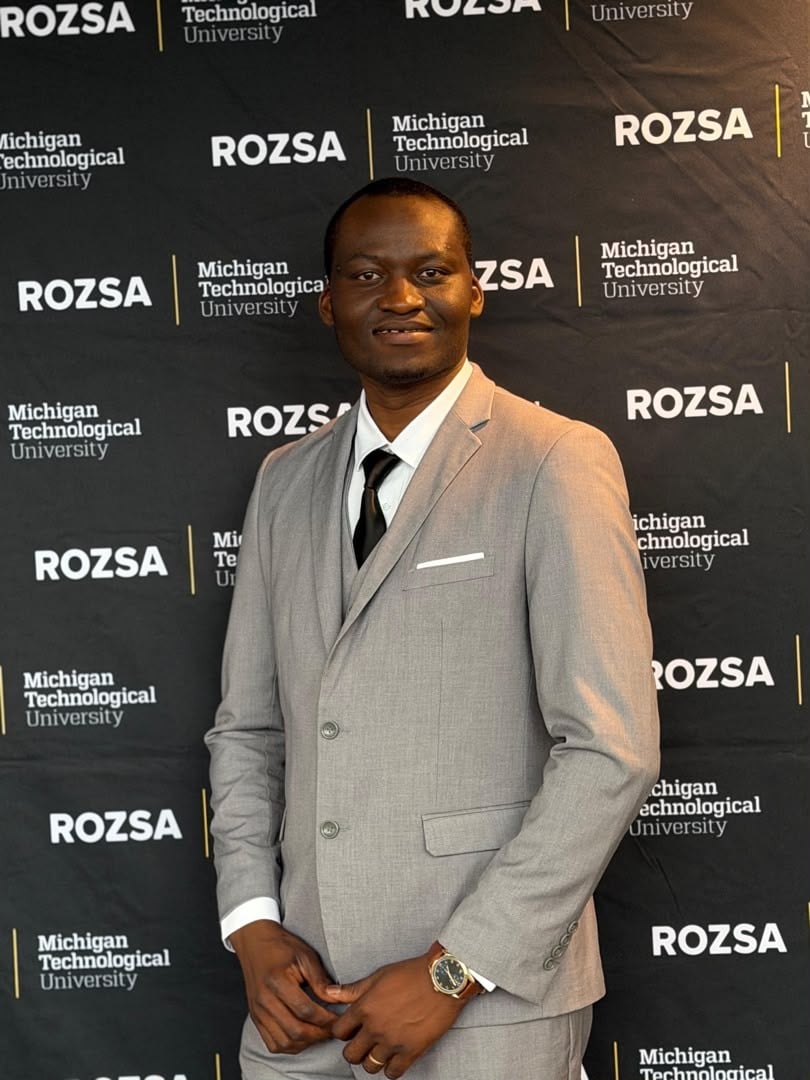
Finishing Fellowship Award – Summer 2026 – Kwabena Boafo

Kwabena Boafo, PhD in Chemical Engineering, 2026

I am sincerely grateful to the Graduate School, the Dean, and the Awards Advisory Panel for selecting me for the Finishing Fellowship. This support is a great honor as I enter the final stage of my doctoral studies. I would also like to express my appreciation to my advisor, Dr. Timothy Eisele, for his guidance, support, and mentorship throughout my research journey. His encouragement and feedback have been invaluable to my development as a researcher.

My journey at Michigan Tech began with my graduate studies in Chemical Engineering, and over the years, this department has provided me with a strong foundation for both academic and professional growth. My PhD research focuses on developing cost-effective and sustainable biohydrometallurgical methods for recovering nickel from low-grade ores and mine tailings. My work explores the use of metal-reducing microorganisms, biomass-derived solutions, and carbon dioxide to improve nickel dissolution while suppressing iron extraction. The broader goal of this research is to support cleaner and more efficient approaches to critical mineral recovery.

What I enjoy most about this work is the opportunity to contribute to a field that connects mineral processing, sustainability, and innovation. Critical minerals are essential for modern energy technologies, and I am proud that my research contributes to efforts aimed at building more environmentally responsible extraction processes. In addition to the technical aspects of my work, I have deeply appreciated the supportive research environment and collaborative spirit within the Department of Chemical Engineering at Michigan Tech.

During the fellowship period, I plan to focus on completing the final stages of my dissertation, preparing my remaining work for publication, and fulfilling all degree requirements. I am excited to complete my PhD and move forward in contributing to sustainable solutions for critical mineral recovery.

Finishing Fellowship Award – Summer 2026 – Meng Wu

Meng Wu, PhD in Civil Engineering, 2026

I am deeply honored to receive the Finishing Fellowship from the Graduate School and the Graduate Dean Awards Advisory Panel at Michigan Technological University. I sincerely thank the Department of Civil, Environmental, and Geospatial Engineering for its academic support throughout my doctoral journey. I am especially grateful to my advisor, Dr. Zhanping You, for his continuous guidance, encouragement, and mentorship during my Ph.D. program. I also extend my appreciation to my committee members, collaborators, and colleagues for their valuable feedback and support in both research and professional development.

I have had the privilege of conducting research on sustainable pavement materials, with a particular focus on crumb rubber-modified asphalt, asphalt mixture design, and pavement performance evaluation. My work aims to promote more durable, environmentally responsible transportation infrastructure by advancing the use of recycled tire rubber in asphalt. Through laboratory testing, material characterization, and performance analysis, I seek to better understand the behavior of asphalt binders and mixtures and to support practical solutions for more sustainable pavement engineering.

Throughout my doctoral program, I have also contributed through mentoring, laboratory support, and collaborative project work, which have helped me grow as both a researcher and a team member.

This fellowship provides meaningful support as I complete my dissertation and prepare for the next stage of my academic career. I am sincerely grateful for this recognition, and I look forward to continuing to contribute through research, collaboration, and service in the field of sustainable infrastructure.

Finishing Fellowship Award – Summer 2026 – Daniel Amponsah-Berko

Daniel Amponsah-Berko, PhD in Chemical Engineering, 2026

I am deeply honored to receive the Finishing Fellowship and wish to express my sincere gratitude to the Graduate Dean Awards Advisory Panel and the Dean for this recognition. I am also profoundly thankful to my academic advisor, Dr. Timothy Eisele, as well as Dr. Caryn Heldt, Kristi Pieti, and Shelby Stubenrauch for their tremendous support throughout my Ph.D. journey. I sincerely thank the donors for their generous investment, which allows me to focus entirely on completing my dissertation and bringing my research to a successful conclusion.

I am a Ph.D. candidate in Chemical Engineering at Michigan Technological University, where my research addresses one of the most pressing challenges in sustainability: landfill mining and the recovery of high-value materials from waste. My work focuses on understanding aluminum persistence and corrosion to develop efficient separation processes that transform waste into a resource.

Originally from Ghana, I earned my bachelor’s and master’s degrees in petroleum engineering with first-class honors from Tyumen Industrial University in Russia. Transitioning to chemical engineering for my doctorate was a significant pivot, but by the grace of God, through perseverance and hands-on research, I have built deep expertise in mineral processing and hydrometallurgy. My doctoral research, supported by the U.S. Department of Energy (DE-FE0032236), includes designing aerodynamic separation systems and conducting landfill simulations to advance circular economy solutions. Upon graduation, I aim to apply this expertise in the metals and energy industries to address complex environmental and industrial challenges.