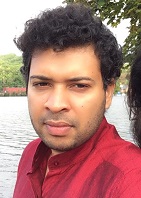
John “Moose” Henderson
Forest Science
As a self-financed student, the fellowship gave me the funds to complete my degree without working full time.
John “Moose” Henderson
Forest Science
As a self-financed student, the fellowship gave me the funds to complete my degree without working full time.
The Graduate School is pleased to announce the awarding of Finishing Fellowships for doctoral candidates. Fellowships are available through the generosity of alumni and friends of the University. They are intended to recognize outstanding PhD candidates who are in need of financial support to finish their degrees.
(listed by nominating department)
Biochemistry and Molecular Biology
Jeffrey Kiiskila
Biological Sciences
Andrew Chapp
Chemistry
Gemechis Dereje Degaga
Ashok Khanal
Shanshan Hou
Computer Science
Gorkem Asilioglu
Zhaoxiang Jin
Electrical Engineering
Aref Majdara
Husam Sweidan
Chaofeng Wang
Forest Science
John Henderson
Geophysics
Marine Foucher
Mechanical Engineering-Engineering Mechanics
Kishan Bellur
Meng Tang
Le Zhao
Xiucheng Zhu
Saeedeh Ziaeefard
Physics
Meghnath Jaishi
Dolendra Karki
Mingxiao Ye
Colin Phifer
Forest Science

What does interdisciplinary mean? For Colin Phifer, a PhD student at Michigan Technological University, it has meant working with the wildlife ecologists he is used to as well as learning the methods and terminology of social scientists, hydrologists, soil scientists and engineers all working on the same questions but from different angles. For the past 4 years, Colin has been one of the over 130 members of an international, interdisciplinary team studying the socio-ecological effects of bioenergy development in four countries (Argentina, Brazil, Mexico and United States). Funded by the National Science Foundation’s Partnerships in International Research and Education program (PIRE), Colin’s research focuses on how land-use change associated with bioenergy development influences native bees, birds and ecosystem services while other PIRE team members examine water, soil, and social and policy impacts. After surveying for both native bees and birds in three of the countries, he is now applying ecosystem service modeling to understand trade-offs with multiple ecosystem services and land-use change.
Colin completed his MSc at the University of Hawaii in conservation biology and his BS from Humboldt State University in California. From bats to birds, plants to pollinators, gibbons to whales, Colin has worked in the US and abroad to conserve biodiversity and provide for human well-being. He wants his work to lead to actionable, impactful science and informed decision-making.
The Finishing Fellowship granted by The Graduate School in spring of 2017 has supported Colin in completing his part of the larger project. When not working, he enjoys cooking, reading a good (science fiction) book, and playing hockey with his son.
Chathura Gunasekara
PhD Candidate in Computational Science and Engineering Program
School of Forest Resource and Environmental Science
Before Chathura started his Ph.D., he did his undergraduate degree in University of Colombo, Sri Lanka, majoring in Computational Physics. He has always been interested in interdisciplinary research, where computational techniques are used to solve tough scientific challenges. He discovered his lifelong career in Bioinformatics, when he joined the lab of Dr. Hairong Wei in 2013. His current research is in plant systems biology and bioinformatics, specifically, identifying genetic regulatory networks.
Plants will always be a vital component in every living species including humans. With the increasing human population, there is an increasing necessity to harness the limited resources to produce enough food from crop plants or timber from economical plants. The recent technological advances in genetics, genomics, and ergonomics have made promising discoveries that we can improve the yield but thanks to the advances in computing capabilities in terms of hardware and software. In recent years, the field of biology has transformed from data scarce discipline to a big data discipline and has become increasingly depended on computational approaches. In his research, he focused on several key areas of this computational challenge and developed solutions which were highly successful.
Being an international student, who worked as a research assistant to support his Ph.D. studies, the finishing fellowship awarded to him from the Graduate School will allow him to completely dedicate his final semester to writing his Ph.D. dissertation and prepare publications to share his research findings to the scientific community. Chathura plans the next phase of his career by joining a high impact research laboratory as a post-doctoral researcher.
The Graduate School is pleased to announce the awarding of Finishing Fellowships for doctoral candidates. Fellowships are available through the generosity of alumni and friends of the University. They are intended to recognize outstanding PhD candidates who are in need of financial support to finish their degrees.
(listed by nominating department)
Biological Sciences
Haiping Liu
Yiping Mao
Chemical Engineering
Rachel Martin
Computational Science and Engineering
Zilong Hu
Forest Science
Chathura Gunasekara
Colin Phifer
Mathematical Sciences
Bryan Freyberg
Mechanical Engineering-Engineering Mechanics
Mohammad Reza Amini
Shuo Wang
Wentao Yao
Le Zhao
Physics
Mohammad Hosain Teimourpour
The Graduate School is pleased to announce the awarding of Finishing Fellowships for doctoral candidates. Fellowships are available through the generosity of alumni and friends of the University. They are intended to recognize outstanding PhD candidates who are in need of financial support to finish their degrees.
(listed by nominating department)
Biological Sciences
Cameron Goble
Biomedical Engineering
Yu Wang
Chemical Engineering
Olumide Winjobi
Civil Engineering
Yadong Dong
Chao Zhang
Electrical Engineering
Guna Bharati
Hanieh Deilamsalehy
Environmental Engineering
Anika Kuczynski
Aditya Kumar
Forest Molecular Genetics and Biotechnology
Sudhir Khodwekar
Mechanical Engineering-Engineering Mechanics
Muraleekrishnan Menon Menon Muraleedharan Nair
Rhetoric, Theory and Culture
Jessica Lauer
The National Wildlife Federation is currently seeking four graduate students to support our NWF EcoLeaders Program. Each fellowship is for a term of 4 -6 months (based on student schedule), and while fellows spend various amounts of time on their projects each week, the average amount of time spent will be 40 hours monthly. The fellow will receive a $3,000 stipend, professional development assistance and networking opportunities, and the possibility of academic credit for successful completion of the project, as an independent study or integration of fellowship project into course curriculula.
Graduate students from any college or university within the U.S are applicable. Current and former employees of National Wildlife Federation and former NWF Campus Ecology Fellows are ineligible to apply. Former NWF interns are eligible to apply following one year from their final work date.
http://www.nwf.org/Campus-Ecology/Get-Involved/Apply-for-a-Fellowship.aspx
The deadline to submit applications is May 7, 2017.
The King-Chávez-Parks Future Faculty Fellowship Program is to increase the pool of traditionally underrepresented candidates pursuing faculty teaching careers in post-secondary education.
Rhetoric, Theory and Culture
Sara Potter
Data Science
Karen Colbert
Environmental and Energy Policy

Marie Richards
Geology
Christine Torres Rosa
Applied Cognitive Science and Human Factors
Amber Kemppainen
Biological Sciences
Ida Fonkoue
Forest Science
Joanna Rogers
The Graduate School is pleased to announce the following graduate student award recipients:
CGS/ProQuest Distinguished Dissertation Award Nominee:
DeVlieg Foundation Fellowships:
Doctoral Finishing Fellowships:
King-Chávez-Parks Future Faculty Fellowships:
Photographs and details of awards and fellowships coordinated by the Graduate School can be found online.