Tag: Human Factors

MTU Researchers Champion Rail Safety at InnovaRail 2026

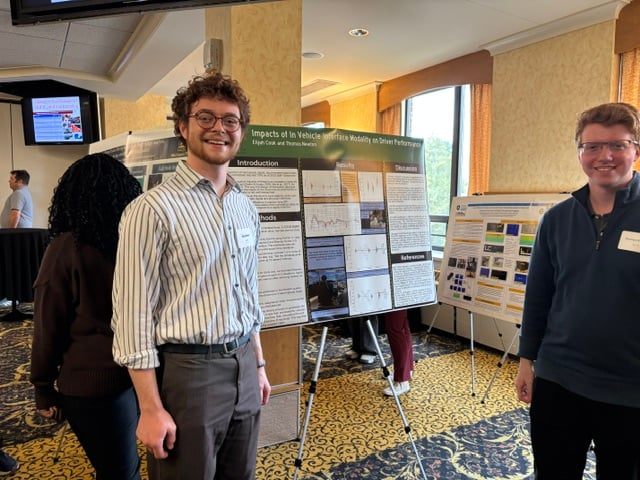
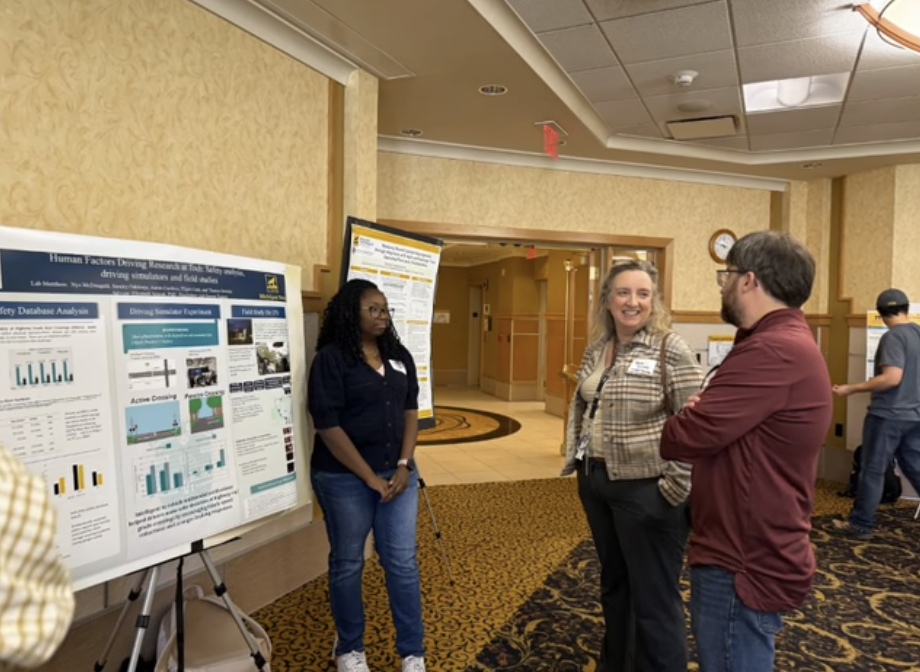
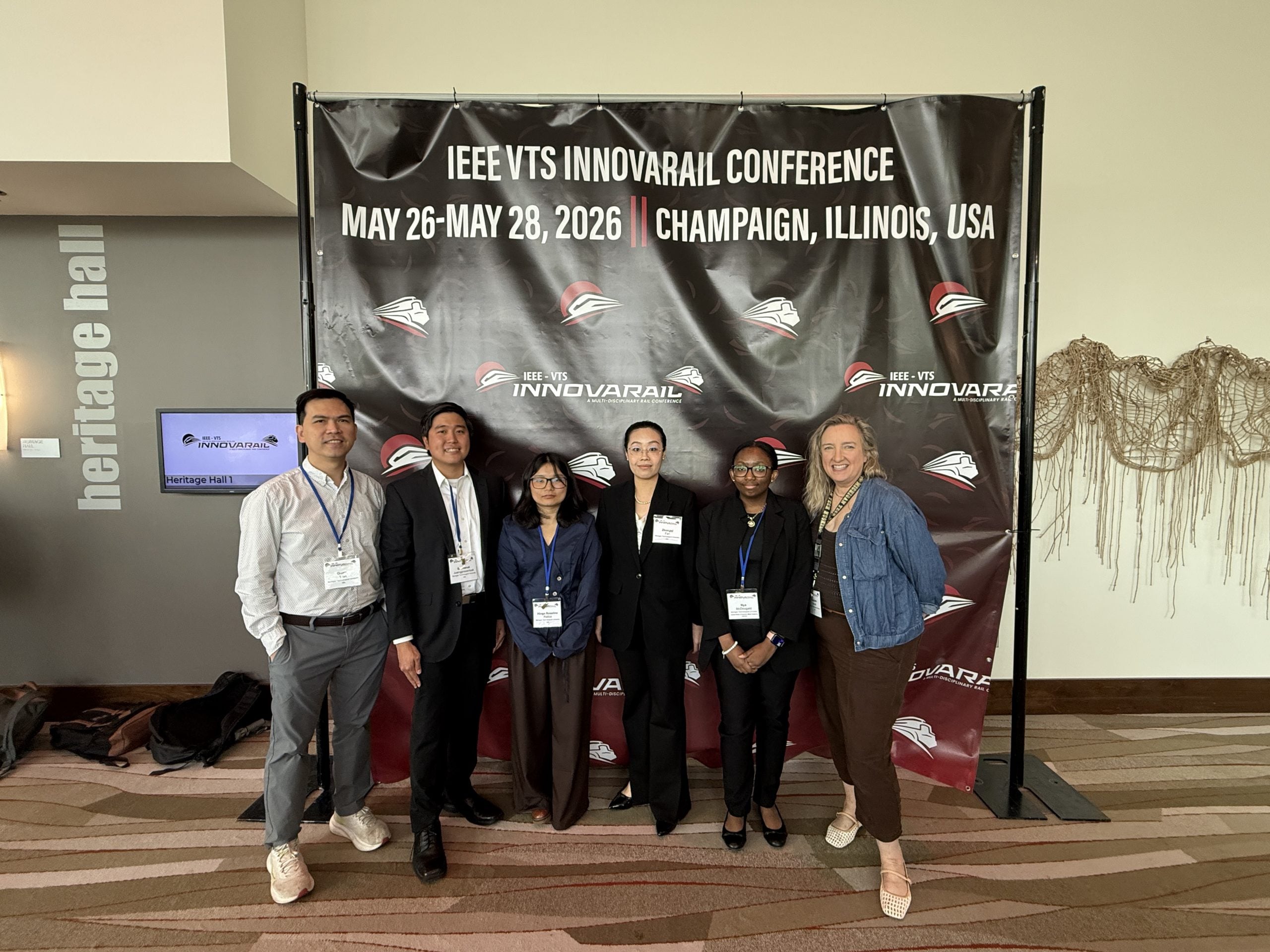
Last week, researchers from the Department of Psychology and Human Factors (PHF) and the Department of Civil and Environmental Engineering traveled to the University of Illinois Urbana-Champaign (UIUC) to attend the IEEE InnovaRail 2026 conference.

The annual event brings together leading minds in rail technology, engineering, and safety to discuss the future of railway infrastructure and innovation.

Dr. Elizabeth Veinott (PHF) delivered a talk titled, “A cognitive engineering approach to mapping cues to improve safety at highway-rail grade crossings.” The research—co-authored by recent ACSHF PhD graduate Dr. Anusha Kannan and current ACSHF graduate student Nya McDougald—highlighted different HF methods we use in engineering psychology to improve safety at highway-rail intersections with examples from our research.

The conference provided an opportunity for Michigan Tech’s interdisciplinary delegation of faculty and graduate students to collaborate, share ideas, and represent the university on a national stage.

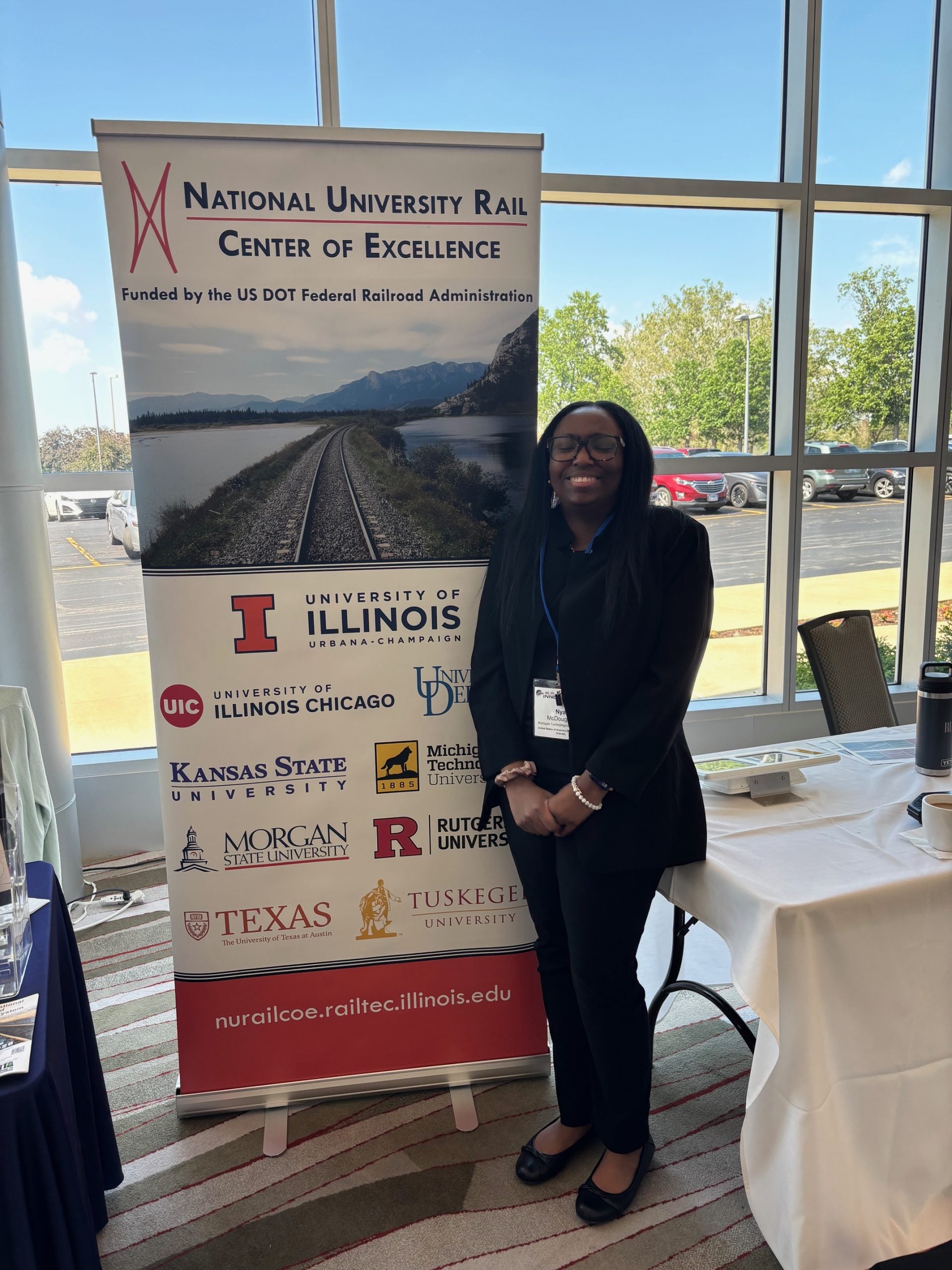
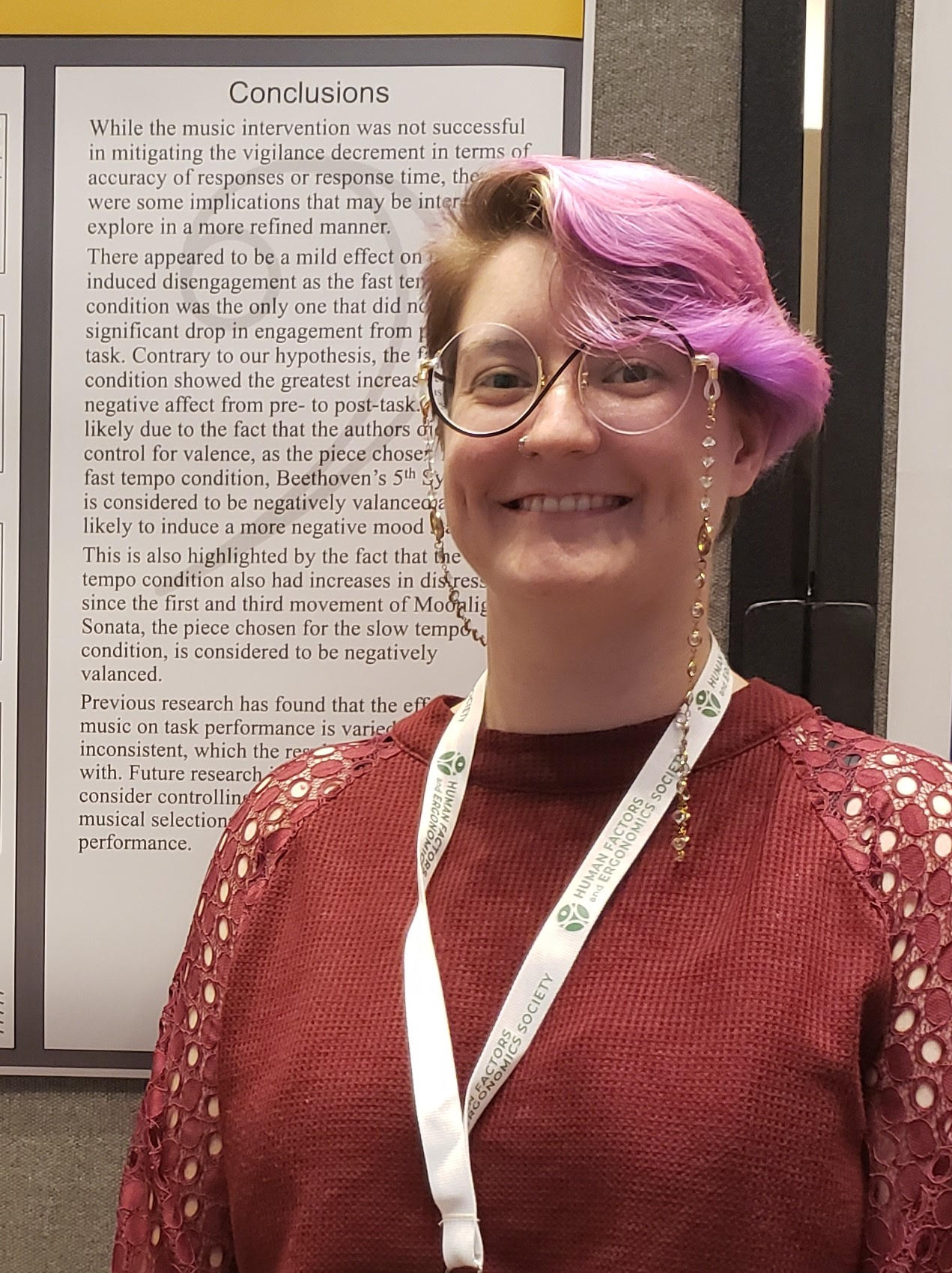
Graduate student and co-author Nya McDougald at the InnovaRail 2026 conference.


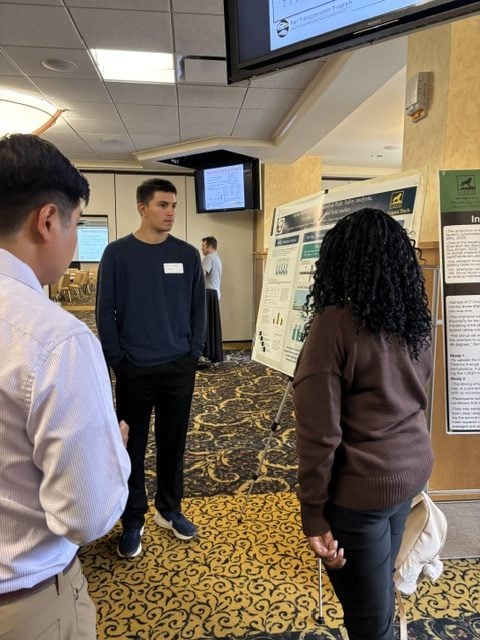
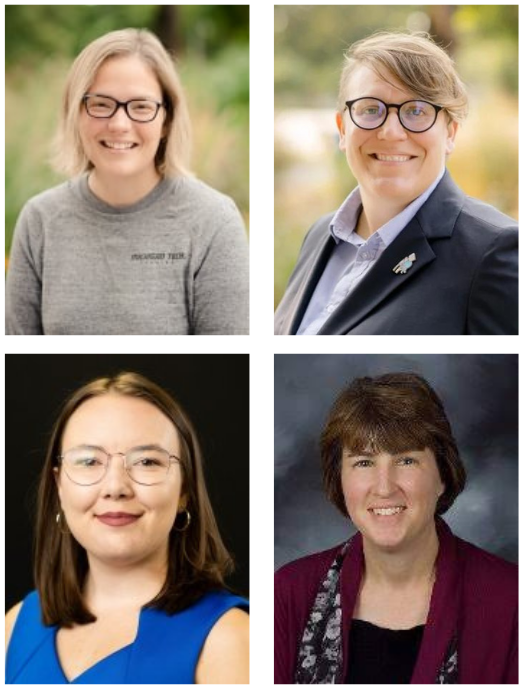
Faculty and graduate students from MTU’s PHF and Civil and Environmental Engineering departments at UIUC.

Graduate students: Creating community through study and tradition

Weekly Study Group

Written by Jen Shaud

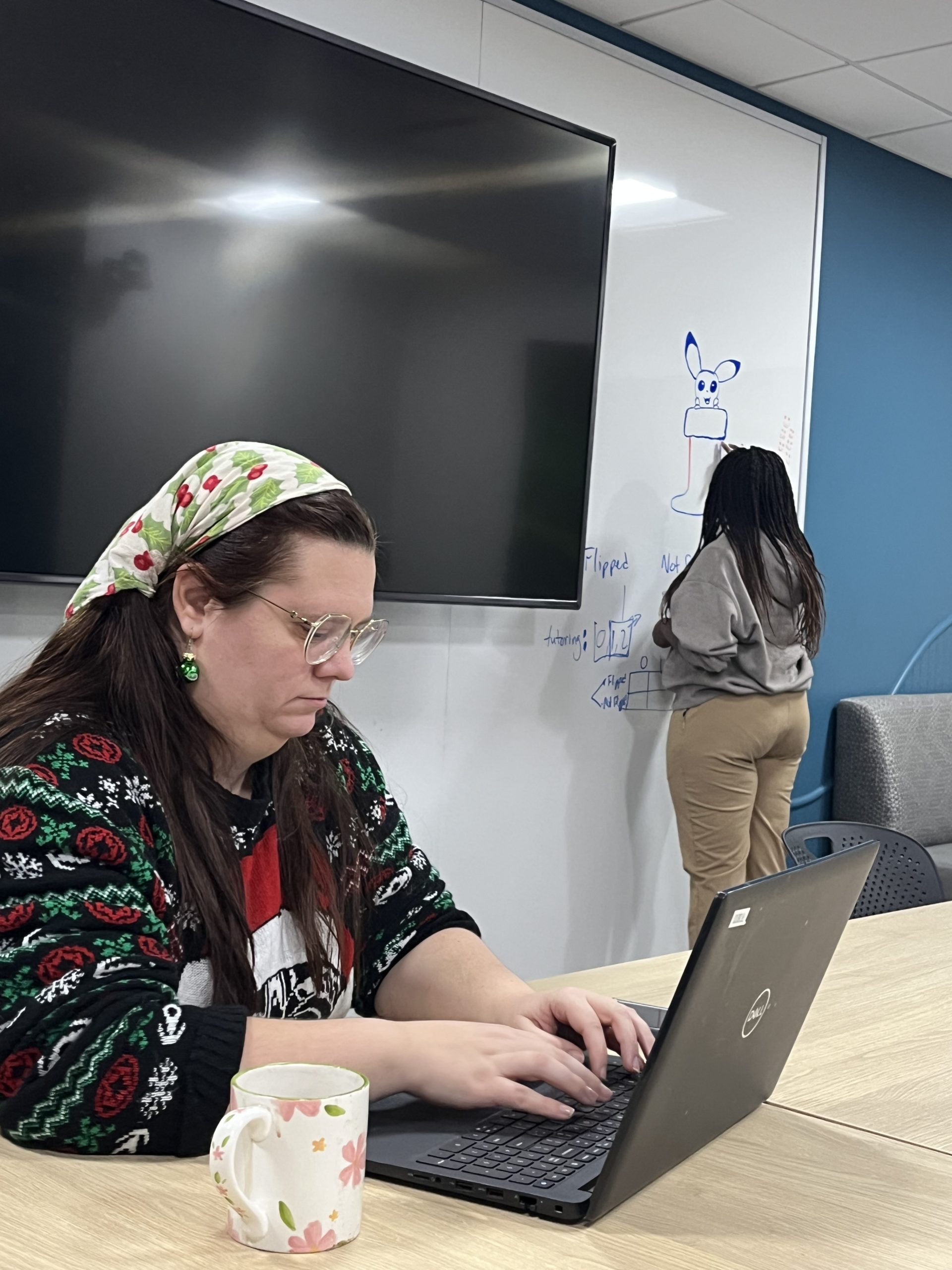
Every week, our department’s graduate students gather for study groups that have become much more than just academic meetings. These sessions are where collaboration meets camaraderie, creating a supportive environment that helps everyone succeed.

The study groups serve as a vital space where students discuss classwork, share insights about their research, and workshop their writing. Whether someone is wrestling with a challenging concept from class, wrestling with stats work or looking for feedback on a draft, there’s always a fellow student ready to offer a fresh perspective or lend a helping hand.

Recently, the groups have taken on an even warmer atmosphere. Holiday carols filled the room as students balanced festive cheer with productive work on class projects. Some students dedicated their time to collaborating on grant proposals, knowing that funding their research is crucial to their academic journey. Through it all, the underlying thread remained the same: graduate students supporting graduate students.

These weekly gatherings remind us that graduate school doesn’t have to be a solitary endeavor. When we come together to share knowledge, resources, and encouragement, we all benefit. The study groups have become proof that academic success and community support go hand in hand.

Four people standing in a group wearing festive holiday sweaters
Students gather for an Ugly Sweater party just before winter break
Our co-working space offers large whiteboards, hot coffee, and plenty of outlets for all of your electronic needs.

ACSHF Forum: Grad Student Presentations

The Department of Psychology and Human Factors will host two speakers at the next Applied Cognitive Science and Human Factors (ACSHF) Forum: Laura Albrant and Kat Rawhouser, both ACSHF Ph.D. students. Their presentations will be from 2-3 p.m. on Monday, March 17, in M&M 610.

Photo of Laura Albrant
Laura Albrant
ACSHF PhD Student
Photo of Kat Rawhouser
Kat Rawhouser
ACSHF PhD Student

Laura Albrant: “Examining Student Resolutions of Automated Critiques

Laura Albrant’s study examines the submission data of students in an introductory engineering courses who modify their code in response to automated critique and how this process evolves over multiple submissions. Her research is grounded in data collected from students in Engineering Fundamentals (EF) courses who used our automated feedback tool, WebTA. This tool provides instant feedback on code syntax, logic, and style, tailored for first-year college students. She analyzed student interactions over four semesters, examining the effectiveness of EF students’ abilities to resolve critiques. This comparative analysis highlights differences in problem-solving strategies, engagement levels, and learning approaches in engineering fundamentals students. The data gathered from four semesters of engineering fundamentals courses, includes detailed logs of each submission, such as submission times, errors identified, critique counts, and resolution times. By analyzing patterns across different submissions, she tracked how student learning evolved over time and varied across disciplines. This approach allowed her to identify effective strategies in automated feedback design that cater to the diverse needs of learners from different educational backgrounds.

Kat Rawhouser: “Lessons from Needs Assessments”

Needs assessments can come in all forms and they can yield a great deal of useful information. In human factors, psychology and cognitive sciences we can learn much from reviewing and doing such assessment before research. From understanding demographics, to being about to connect with key players to gain access to a community or group this method of assessment has a yield in social, cultural and empirical information allowing for understanding by the researcher. This topic will cover the basics of needs assessment, how it can be used and provide an example of how assessing community needs can yield results during implementation.

ACSHF Forum: Chikondi Sepula & Blessings Hwaca

The Department of Cognitive and Learning Sciences will host Chikondi Sepula & Blessings Hwaca from Rhodes University at the next Applied Cognitive Science and Human Factors forum.

There will be two presentations from 2:00 to 3:00 p.m. Monday October 16 via Zoom from Grahamstown, South Africa.

Title: Exploring the Development of Computational Thinking Skills among Pre-Service Teachers through Visual Programming: An Interventionist Case Study
Abstract:
Due to its profound cognitive effect on learners, computational thinking (CT) has gained significant attention and has been increasingly integrated into primary and secondary education worldwide. The integration of CT into educational curricula offers several benefits, including improved learning outcomes, enhanced problem-solving abilities, and the development of skills necessary for the digital landscape of the 21st century. Reflecting this global trend, South Africa introduced CT in primary schools through a dedicated subject called “coding and robotics” in 2023. However, as cited in other contexts, teacher upskilling is a primary challenge faced in successfully integrating CT in South Africa. Many teachers lack the necessary skills to effectively teach this new subject. Recognizing this gap, I was motivated to explore the development of CT skills with pre-service teachers using visual programming. This study will be underpinned by the social-cultural theory (SCT) of Lev Vygotsky. Informed by this theory, the intervention will be guided by a professional development (PD) model called “Code, Connect, Create” and a pedagogical model known as “Use, Modify, Create”. The study will be carried out within the Education Department at Rhodes University. All first-year pre-service teachers who are willing to participate from within the department will be included in the intervention. Data will be collected through the CT Reflective tools, semi-structured interviews, focus-group discussions, and reflective journals. The CT framework proposed by Brennan & Resnick (2012) will be used as a lens to facilitate and assess CT development among the pre-service teachers as a result of the intervention. An evaluative interpretivist case study methodology will be employed in this study, as it allows the detailing of contextual effects of the visual programming approach, as well as enabling and constraining factors that should be considered when developing CT with visual programming.

Title: Working with Secondary School Educators’ on the development of Computational Thinking through lesson planning

Abstract:
Computational Thinking (CT) is a cognitive skill that helps learners to think logically and creatively, becoming more popular as well as necessary at all levels of education globally. By introducing CT into curriculum design and lesson activities, educators together with their learners can benefit in many ways such as effective problem-solving, better learning outcomes, and more holistic preparation for the digital challenges of the 21st century. Two of the obstacles cited in South African STEM Education are the lack of skilled teachers and low interest of learners in the former, which warrants the need for more support and focus from different actors. Since CT is not only for STEM subjects but also for any discipline or challenge, thus educators who understand computational thinking can help students use their skills in different situations and contexts and encourage them to think logically and systematically. As a scholar, I am inspired to investigate how we can promote the development of CT during lesson planning by selected secondary school educators. The intervention study will be carried out with ten educators in Makhanda, Eastern Cape province. The Pattern Recognition, Abstraction, Decomposition, and Algorithms (PRADA) and Vygotsky Social Cultural theory will be used as theoretical frameworks. The data will be collected through Workshops, Journal reflection, Interviews, and Focus Group discussions.

Human Factors and Environmental Cleaning in Operating Rooms

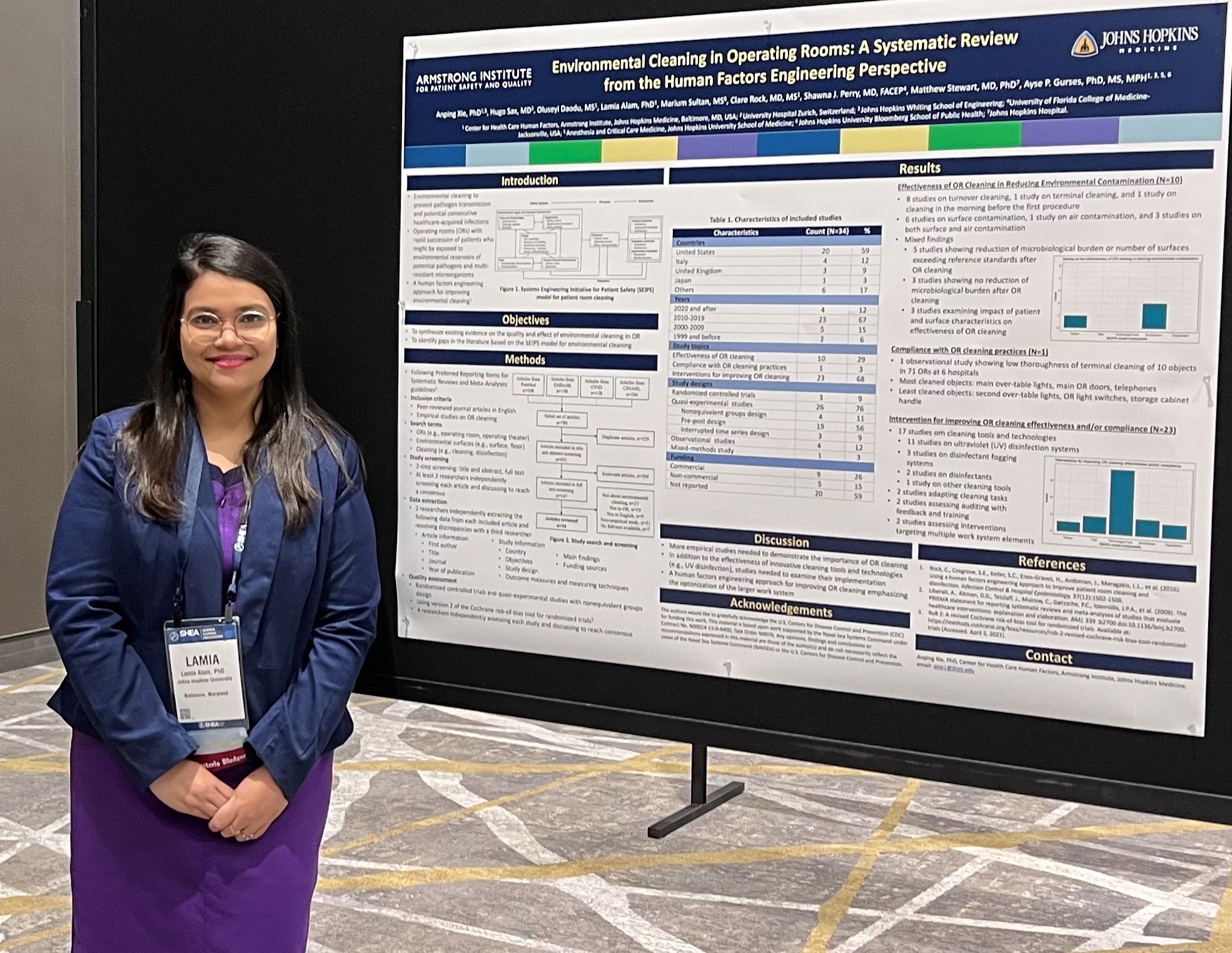
Dr. Lamia Alam, 22′ PhD Applied Cognitive Science and Human Factors (ACSHF) was this week’s guest on the podcast “Infection Controls Matters; Discussions on Infection Prevention” with Martin Kiernan. Dr. Alam’s research was part of the 2023 Society for Healthcare Epidemiology of America (SHEA) Spring Conference in Seattle, WA. Lamia presented the work of her research group at Johns Hopkins titled “Environmental Cleaning in Operating Rooms: A Systematic Review of Human Factors Relating to Cleaning in the Operating Room”.

Podcast guest, CLS alum Dr. Lamia Alam

Lamia received her doctoral degree in ACSHF, fall 2022, under the direction of Dr. Shane Mueller. She is currently a postdoctoral research fellow at Johns Hopkins Armstrong Institute for Patient Safety and Quality.

The SHEA conference is designed for physicians, infection preventionists, healthcare epidemiologists, infectious disease specialists, microbiologists, nurses, pharmacists, and other healthcare professionals interested in healthcare epidemiology, infection prevention, surveillance, research methods, patient safety, environmental issues and quality improvement.


Relevant papers: 1. A. Xie, et al. 2018 Improving Daily Patient Room Cleaning: An Observational Study Using a Human Factors and Systems Engineering Approach IISE Transactions on Occupational Ergonomics and Human Factors 6 3-4 178-191 https://10.1080/24725838.2018.1487348

2. C. Rock, et al. 2016 Using a Human Factors Engineering Approach to Improve Patient Room Cleaning and Disinfection Infect Control Hosp Epidemiol 37 12 1502-1506 https://10.1017/ice.2016.219

2023 CLS Undergraduate Research Symposium

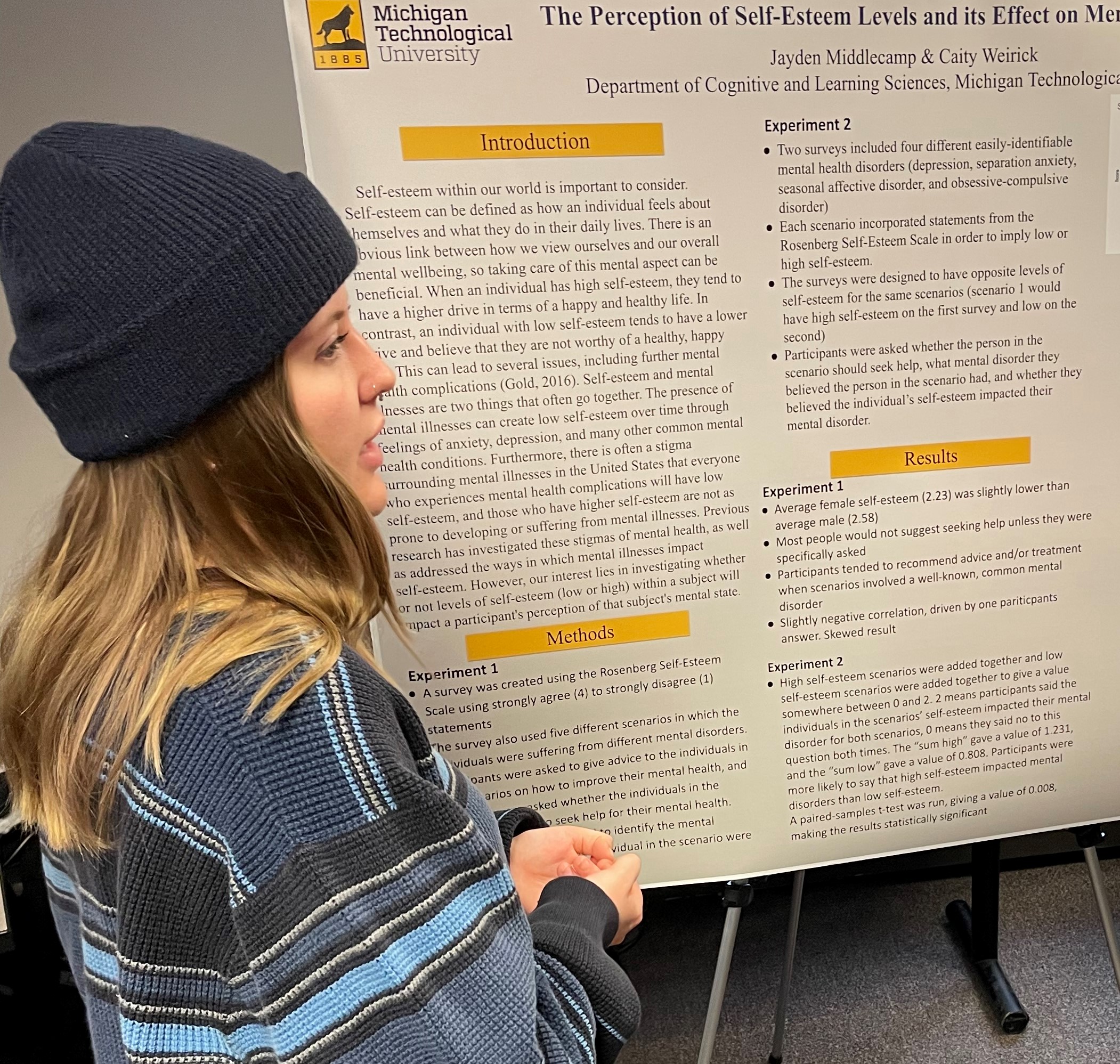
Please join us for the 2023 CLS Undergraduate Research Symposium on Tuesday 4/18  at 3:45-5:00pm in room 110 of the Harold Meese Center. This poster session will feature research conducted by our undergraduates students enrolled in PSY 3001 Research Methods.

Some of the highlights of this symposium include research that:

– Examines thinking styles and strategies for different problem-solving tasks.

– Tests whether the anchoring and adjustment heuristic can be influenced by people’s knowledge.

– Examines whether pets can make us smarter, or at least help us feel less impacted by academic stress.

–  Investigates how students were impacted by  the pandemic and MTUs COVID-19 policies and response.

–  Studies the bystander response to flashmob behavior on campus. 

The full list of presentations/abstracts is here:

https://docs.google.com/document/d/1FVn-7D-znXYIr85EbL5AY21aGcfy3HpB/edit


Michigan Tech’s Department of Cognitive and Learning Sciences offers bachelor of science degrees in Psychology and Human Factors, along with a Minor in Psychology. We also offer an Accelerated Masters degree in Applied Cognitive Science and Human Factors (ACSHF), which typically requires only one additional year of course work. Our graduate program includes masters and doctoral degrees in Applied Cognitive Science and Human Factors (ACSHF).

Questions? Contact us at cls@mtu.edu. And follow us @clsmtu on Instagram and Facebook for the latest happenings.

ACSHF represented at Graduate Research Colloquium

Each spring, Michigan Tech’s Graduate Student Government sponsors the Graduate Research Colloquium (GRC) Poster and Presentation Competition. The GRC offers a unique opportunity for graduate students to showcase their research with the University community and work on their presentation skills for other professional events. Students give oral presentations, present posters, or do both. Judges from a similar field as the presenters score the presentations. The judges also provide valuable insight and feedback on how the students can improve their presentations. The presenters are grouped into different technical sessions, according to their discipline of study.

Applied Cognitive Science and Human Factors (ACSHF) PhD students Anne Inger Mortvedt, Isaac Flint, and Lauren Sprague will give their oral presentations at 1:00pm Wednesday, March 29 in the MUB Alumni Lounge. Lauren will also participate in the poster presentations from 5:00-6:00pm in the Rozsa Lobby, along with ACSHF MS student Nishat Binte Alam.

See abstracts below for more details regarding their research.

Anne Inger Mortvedt
Anne Inger Mørtvedt 

Relationship between Program Usability Characteristics and Intention to Use: Preliminary Data Implementing a Sport Injury Prevention Program by Anne Inger Mortvedt.

Adherence to exercise programs is low across multiple populations. For example, within the target population for ACL injuries, only ~4-20 % of sports teams have implemented evidence-based injury prevention programs. This study explored the relationship between usability characteristics and implementation likelihood for a newly developed ACL injury prevention program.
Twenty-two female handball players, aged 14 to 16, participated in the intervention study. Data on usability characteristics was collected through a modified usability scale similar to the System Usability Scale. Subcomponents of the usability scale included learnability, perceived effectiveness, ease of use, enjoyability and efficiency. Analyses on the total usability scale score revealed a significant difference between pre and post intervention responses, indicating that overall usability decreased over time (p < 0.005). Enjoyability was the subcomponent that primarily drove this change.
Total scale scores were significantly correlated with intention to use/implementation likelihood (Spearman’s rho .54, p = .009). Perceived effectiveness and enjoyability were significantly correlated with intention to use the program (rho 0.50, p = 0.02 and rho 0.50, p= 0.02, respectively), indicating that program adherence is affected by whether they believe the program will work (e.g., reduce injuries) and whether they enjoy performing the program. We did not find any significant relationships between the three other subcomponents (e.g., learnability, ease of use and efficiency) and intention to use.
This preliminary data suggests that program designers may want to make sure participants understand why it is important to perform the program, in addition to developing an exercise program that they seem to enjoy performing. Future studies should capture more data on the usability scale/subscales to ensure the factor structure is consistent and items display appropriate psychometric properties.

Lauren Sprague
Lauren Sprague

Pilot test of critical flicker fusion in combination with functional near infrared spectroscopy (fNIRS) in order to accurately measure cognitive workload during a visuospatial vigilance task by Lauren Sprague [abstract unavailable prior to post]

Isaac Flint
Isaac Flint

Exploring the difference in Movement Corrections following Visual and Physical perturbations by Isaac Flint

Making online movement corrections is vital to a person’s ability to navigate the environments they live in. Failures often result in injury, such as tripping, car collisions, or bumping into hazardous surfaces. This experiment explores the behavioral (movement characteristics) and cortical (EEG) responses following two types of perturbations to arm-reaching movements, with a sample of young adult Michigan Tech students. Visual perturbations were administered by changing the visual location of a curser compared to a participant’s hand position during random experimental trials. Physical (mechanical) perturbations were administered via a robotic arm that unexpectedly moved participants’ arms during other random experimental trials. These experimental trials were further divided into two sizes of perturbations.
One size that placed the cursor outside of a set of obstacles, and one where the perturbation put the cursor on a collision course if the participant did not make a movement correction. Our results show that the type and size of perturbation had an impact on not only the behavioral characteristics of the movement corrections, but also the EEG event-related potentials that followed the perturbation. Differences were also observed for trials with collisions and trials without collisions. These results are a step toward understanding the neuro-cognitive correlates of online movement corrections. This knowledge will inform future work assessing how age and cognitive declines in an aging population may affect their ability to make successful movement corrections.

Nishat Binte Alam
Nishat Binte Alam

Types of Questions Teachers Ask to Engage Students in Making Sense of a Student Contribution by Nishant Binte Alam

In the student center classroom, where teachers constantly make decisions based on what is happening surrounding them, what they are noticing, and how they are interpreting student contributions, a teacher’s interpretation and response to student mathematical contributions plays an important role to shape and direct students’ thinking.
In particular, failing to ask productive questions that help students to engage in a sense-making discussion could deteriorate cognitive opportunities. This research is planning to study what types of questions teachers indicate they would ask to engage students in making sense of a high-leverage student mathematical contribution, what Leatham et al. (2015) refer to as a MOST (Mathematically Significant Pedagogical Opportunities to Build on Student Thinking) and their reasoning about why particular questions are or are not productive. In this study, a scenario-based survey questionnaire will be sent via email to 100 middle and high school teachers. In the given scenario, a MOST has surfaced, and teachers will be asked three questions about how they would respond in the scenario.
This research could lead us to determine if teachers are selecting the questions which are likely to be productive in supporting students’ mathematical thinking and why they select the questions that they do. Knowing this will inform future work with teachers to productively use student thinking in their teaching.

For a complete list of oral and poster presentations see 2023 Abstract Booklet.


No other graduate program influences the next generation like ACSHF. At Michigan tech, we address applied cognitive science problems by using basic research in applied settings to bridge the gap between people and technology. Program specializations span the interests of multiple faculty and research groups who work in state-of-the-art labs. For more information, contact ACSHF graduate program director Kevin Trewartha.

Bettin paper in SIGCSE 2023 Proceedings

Briana Bettin’s (CLS/CS) paper, “Challenges, Choice, & Change: Experiences and Reflections from the First Semester of a Technology and Human Futures Course,” was recently published in the SIGCSE 2023 Proceedings of the 54th ACM Technical Symposium, March 2023.  

The paper explores survey responses from graduate students who completed Bettin’s newly designed course, “Reimagining Technofuturism” during spring 2022. The course explored facets of human identity and societal systems in order to understand technology’s role, how technology impacts our human futures and how we might design differently in order to arrive at future technologies that better center human identities and futures.

In the paper Bettin discusses the general design of the course as well as literature background that suggests courses like this are novel but growing in presence nationwide. In addition to the overall value of the course—exploring how design choices, emphasizing computing technology design, impact society and the ways identity can alter those impacts for individuals and groups.

The paper contains student quotes that Bettin pulled together with a narrative thread. Bettin closed the paper with her own quote as she reflected on the outcomes of the course:

“I expected some level of general interest and engagement, but marvel at how much the students consistently exceeded my expectations. From diverse discussion examples to a breadth of project directions—the students not only grappled with the complex and vast space, but seemed to enjoy “tackling” such depth in some meaningful way.”

The ACM Technical Symposium is SIGCSE’s flagship conference. It has been held annually in the United States since 1970. This year, for the first time, the conference is being held in Toronto, Canada, March 15-18, 2023.

Briana Bettin is an assistant professor in the departments of computer science and cognitive and learning sciences (psychology and human factors). She received her master’s in human-computer interaction from Iowa State University and her bachelor’s and PhD in computer science from Michigan Tech. Her research work broadly centers computing education with focus on human interests, impacts, and learning within our increasingly technological society. Her goal is to help us all learn to better live with, work with, (re)imagine with, and be represented equitably within the increasingly digital landscape of our world.

Related story: Q&A with Teaching Award Winner Briana Bettin

CLS Faculty Receive Exceptional Teaching Score

photos of Amber Bennett, Kelly Steelman, Linda Wanless, and Destaney Sauls
Clockwise starting top left: Amber Bennett, Kelly Steelman, Linda Wanless, and Destaney Sauls

Cognitive and Learning Sciences’ faculty Amber Bennett, Destaney Sauls, Kelly Steelman, and Linda Wanless (CTL) have been identified as four of only 70 instructors who received an exceptional “Average of 7 Dimensions” student evaluation score for fall semester 2022.

Each of their scores were in the top 10% of similarly sized sections university-wide that had at least a 50% response rate and a minimum of 5 responses. Only 91 sections out of more than 1,379 surveyed were rated this highly by students.

Andrew Storer, Interim Provost and Senior Vice President for Academic Affairs, recently congratulated the faculty stating, “On behalf of Michigan Tech’s students, I want you to know that I am aware of your accomplishment. I know that exceptional teaching takes a great deal of time and effort, and I appreciate your commitment to the success of our students. Providing excellent learning opportunities is an important part of Michigan Tech’s mission.”


Michigan Tech’s Department of Cognitive and Learning Sciences offers bachelor of science degrees in Psychology and Human Factors, along with a Minor in Psychology. We also offer an Accelerated Masters degree in Applied Cognitive Science and Human Factors (ACSHF), which typically requires only one additional year of course work. Our graduate program includes masters and doctoral degrees in Applied Cognitive Science and Human Factors (ACSHF).

Questions? Contact us at cls@mtu.edu. And follow us @clsmtu on Instagram and Facebook for the latest happenings.

Graduate Spotlight: Matt Chard

It’s beginning to look a lot like . . . mid-year commencement here at Michigan Tech! As we wind down the semester and wind up the excitement, lets find out what’s next for our most recent accelerated masters student, Matt Chard, in this Q&A spotlight.

Matt earned the degree Bachelor in Management Information Systems (MIS) from Michigan Tech in fall 2021. The following semester he continued his studies with the accelerated masters program in Applied Cognitive Science and Human Factors (ACSHF). One year later, Matt will graduate with a masters degree in ACSHF and begin his career as a Human Factors Engineer with Pacific Science & Engineering in San Diego, CA.

Q: As a MIS undergrad, what attracted you to the ACSHF masters program?

A: As part of my MIS degree, I had a user-centered design class where I first learned about UX/human factors and the class left me wanting more. After hearing about the ACSHF program, it was clearly the right direction for me. I was hooked.

Q: What advantages do you feel you have gained from adding an ACSHF accelerated masters to your business degree?

A: My MIS undergraduate program taught me how to develop and maintain technical systems, which was a great starting point to then learn the scientific basis and human factor tools in the ACSHF program. The combination of degrees and skills learned are needed to inform complex human machine interface solutions, which is what I will be doing for my job at Pacific Science and Engineering after I graduate.

Q: To give us a better idea of what information and skill set someone obtains from adding an accelerated masters in ACSHF to their undergrad degree, what type of courses did you complete during your additional year in the program?

A: A combination of several classes such as the human factors specific courses, and the applied cognitive science course taught me the fundamental science and research. For example, learning about working memory capacity will be useful when designing a system that requires a user to manage several tasks at once. On the other hand, courses such as the cognitive task analysis class taught me about the tools and methods needed to solve problems.

Q: Were you able to take advantage of any internships or co-ops during your time at Michigan Tech? If so, can you tell us a bit about them?

A: Yes! During my undergraduate degree I interned at several companies, and I was mostly working on systems within manufacturing settings. My most recent internship was my first professional experience in the human factors field, and it was a big change of pace for me. Though I was always focused on designing user friendly systems in previous internships, I am now able to use human factors tools combined with scientific based evidence to inform my decisions around user needs, which is what human factors is all about.

Q: What new opportunities and/or adventures are you looking forward to in your move to the west coast?

A: I am excited to take advantage of the year around sunshine in San Diego by getting out to surf and rock climbing. Though, I will miss being able to sneak in a ski right before class in Houghton.

Q: Anything else you’d like to share with a prospective undergraduate or graduate student considering a degree in Applied Psychology and Human Factors at Michigan Tech?

A: It can be difficult to conceptualize what a human factors expert may actually do day-to-day in the real world. I would encourage anyone who is considering the program to reach out to the faculty to learn from their diverse backgrounds. You might be surprised to hear about all the opportunities out there, and you might also discover the program to be a great match, as it was for me!

CLS congratulates Matt and wishes him all the best in his new position at PSE!


Pacific Science and Engineering mission: The majority of accidents, particularly major accidents, are attributed to human error. Those errors are almost always due to bad design. Pacific Science & Engineering (PSE) exists to create science-driven human-machine interfaces that allow humans to safely and effectively operate high consequence and high complexity systems. Function drives form, always.

#humanfactors, #humancentereddesign


Michigan Tech’s Department of Cognitive and Learning Sciences offers bachelor of science degrees in Psychology and Human Factors, along with a Minor in Psychology. We also offer an Accelerated Masters degree in Applied Cognitive Science and Human Factors (ACSHF), which typically requires only one additional year of course work. Our graduate program includes masters and doctoral degrees in Applied Cognitive Science and Human Factors (ACSHF).

Questions? Contact us at cls@mtu.edu. And follow us @clsmtu on Instagram and Facebook for the latest happenings.