
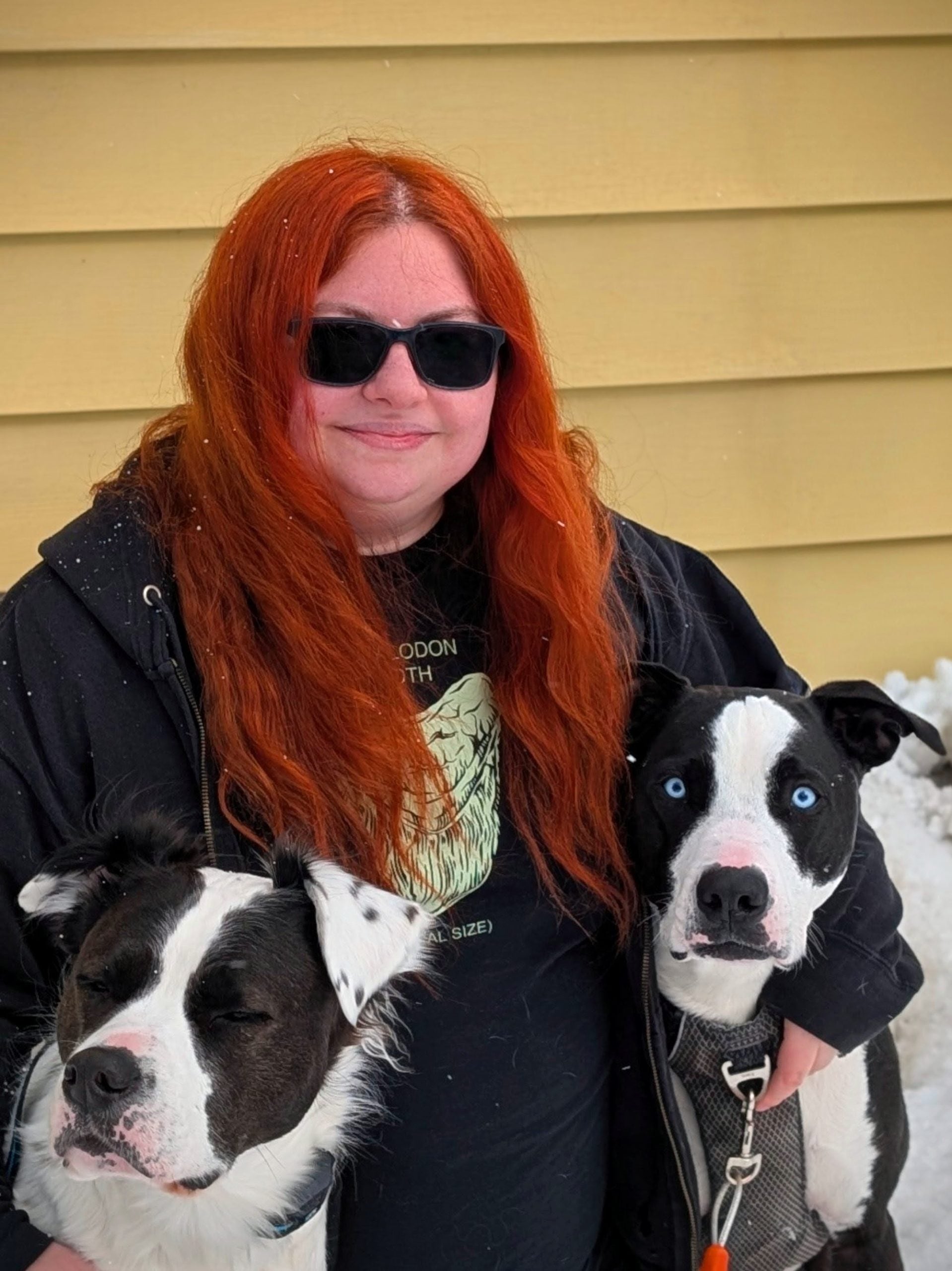
Breeanne Heusdens, PhD in Geophysics, 2026
I have spent an incredible time, both length and quality, at MTU. The Keweenaw was my favorite campus location since touring universities for my undergraduate choices, and I have completed both my BS in Geological Engineering and my MS in Geophysics here prior to returning once more for this PhD opportunity. Being in the GMES department, I quickly knew most of the professors and became involved in many opportunities like AIPG and my accelerated MS, all the way to becoming involved with working with HPCs in my current project. I have also been able to travel to AGU conferences with other students in working with my advisor to share our research, as well as gain important exposure to other professionals in our field.
My research focuses on drone-borne ground penetrating radar data for use in soil moisture predictions. These predictions can be used by large farms to optimize irrigation for water conservation due to the variance of soil types and different crop needs. I developed a signal denoiser via continuous wavelet transform and deep learning that can significantly improve the signal feature clarity and remove most obscuring noise. I now work with a data projection through deep learning to convert the individual signals into subsurface permittivity images that will become the soil moisture maps. Developing these machine learning and data science skills were an important step in developing applicable research experience for the future, despite a less computationally focused background.
I am grateful to my advisors Dr. Askari and Dr. Chatterjee in GMES and my committee members for their support throughout my PhD learning process, as well as the SoilX project at Worcester Polytechnic Institute for collaborating with MTU, making this opportunity possible. Thank you to the graduate school and decision panel for awarding me the finishing fellowship and giving me the opportunity to represent MTU with my best novel research.