Author: Rukudzo Muripira

Submission and Formatting 101: Master the Dissertation, Thesis, and Report Process

Students who are completing a dissertation, thesis, or report are invited to join the Graduate School to learn about the resources available to them to assist in scheduling their defense, formatting their documents, and submitting their documents.  In one afternoon, you can learn everything you need to be successful and complete your degree in a timely fashion!  Faculty and staff who assist students with submissions are also welcome to attend.  Attend the entire event, or stop in for the seminar that interests you.

  • When: Wednesday, September 16, 2026, 2 – 4pm (see detailed schedule below)
  • Who: Students completing a dissertation, thesis or report; faculty and staff who assist students with submission
  • Where: Virtual and in-person (Admin 404 – limit for room is 30); (register to attend online and receive participation instructions)
  • Registration: Please register to receive handouts via email or attend online. The seminar will be available online as well as on campus.

If you are unable to join us, the event will be taped and available online after the event. The previous semester’s seminars are always available online.

Information on submitting, formatting, and more can be found online for dissertations and theses or reports.

Detailed schedule

  • 2:00 – 3:00 p.m. – Submission 101
    Learn what is required to submit your document to the Graduate School and the deadlines for the upcoming semester.  Best for students who are completing their degree this semester or next semester.
  • 3:00 – 4:00 p.m. – Formatting 101-103
    Learn about templates, checking your document with Adobe Acrobat, and how to use copyrighted materials. You’ll also learn where resources are on the web page so you can learn more about the topics that interest you.
  • 4:00 – 4:30 p.m. – Questions
    Have a question that hasn’t been answered yet? We’ll be available to answer any additional questions you have

Spring 2027 Finishing Fellowship Nominations Open

Applications for Spring 2027 finishing fellowships are being accepted and are due no later than 4 p.m. on October 14, 2026 to the Graduate School. 

Instructions on the application and evaluation process are found online. Please note that the process for student applications and advisor references has been changed for the Spring 2027 application period. Students are eligible if all of the following criteria are met:

  1. Must be a PhD student.
  2. Must expect to finish during the semester supported as a finishing fellow.
  3. Must have submitted no more than one previous application for a finishing fellowship.
  4. Must be eligible for candidacy (tuition charged at Research Mode rate) at the time of application.
  5. Must not hold a final oral examination (“defense”) prior to the start of the award semester.

Finishing Fellowships provide support to PhD candidates who are close to completing their degrees. These fellowships are available through the generosity of alumni and friends of the University. They are intended to recognize outstanding PhD candidates who are in need of financial support to finish their degrees and are also contributing to the attainment of goals outlined in The Michigan Tech Plan. Students who receive full support through a Finishing Fellowship may not accept any other employment. For example, students cannot be fully supported by a Finishing Fellowship and accept support as a GTA or GRA.

Nominations open for the 2026 CGS/ProQuest Distinguished Dissertation Award

Nominations are now open for the 2026 Council of Graduate Schools (CGS)/ProQuest Distinguished Dissertation Award. Please submit nominations to the Graduate School no later than 4pm, May 28, 2026, following our online instructions. This year, nominations are being accepted from dissertations in the fields of:

  1. Mathematics, Physical Sciences, and Engineering
  2. Social Sciences (note: history is classed within the humanities and is not a field of competition in 2026)

Michigan Tech may nominate one student in each field. PhD students who have completed all of their degree requirements between July 1, 2024, and June 30, 2026, are eligible. The fields of competition for 2027 will be Biological/Life Sciences and Humanities and Fine Arts (including history).

A nomination packet must be submitted by the department chair or college dean to our google form no later than 4 p.m. on May 28, 2026. Contact Debra Charlesworth (gradschool@mtu.edu) if you have any questions about the competition.

Fall 2026 Finishing Fellowship Nominations Open

Applications for Fall 2026 finishing fellowships are being accepted and are due no later than 4 p.m. on June 10, 2026 to the Graduate School. 

Instructions on the application and evaluation process are found online. Please note that instructions for advisor recommendation letters have changed for the Fall 2026 application period. Students are eligible if all of the following criteria are met:

  1. Must be a PhD student.
  2. Must expect to finish during the semester supported as a finishing fellow.
  3. Must have submitted no more than one previous application for a finishing fellowship.
  4. Must be eligible for candidacy (tuition charged at Research Mode rate) at the time of application.
  5. Must not hold a final oral examination (“defense”) prior to the start of the award semester.

Finishing Fellowships provide support to PhD candidates who are close to completing their degrees. These fellowships are available through the generosity of alumni and friends of the University. They are intended to recognize outstanding PhD candidates who are in need of financial support to finish their degrees and are also contributing to the attainment of goals outlined in The Michigan Tech Plan. Students who receive full support through a Finishing Fellowship may not accept any other employment. For example, students cannot be fully supported by a Finishing Fellowship and accept support as a GTA or GRA.

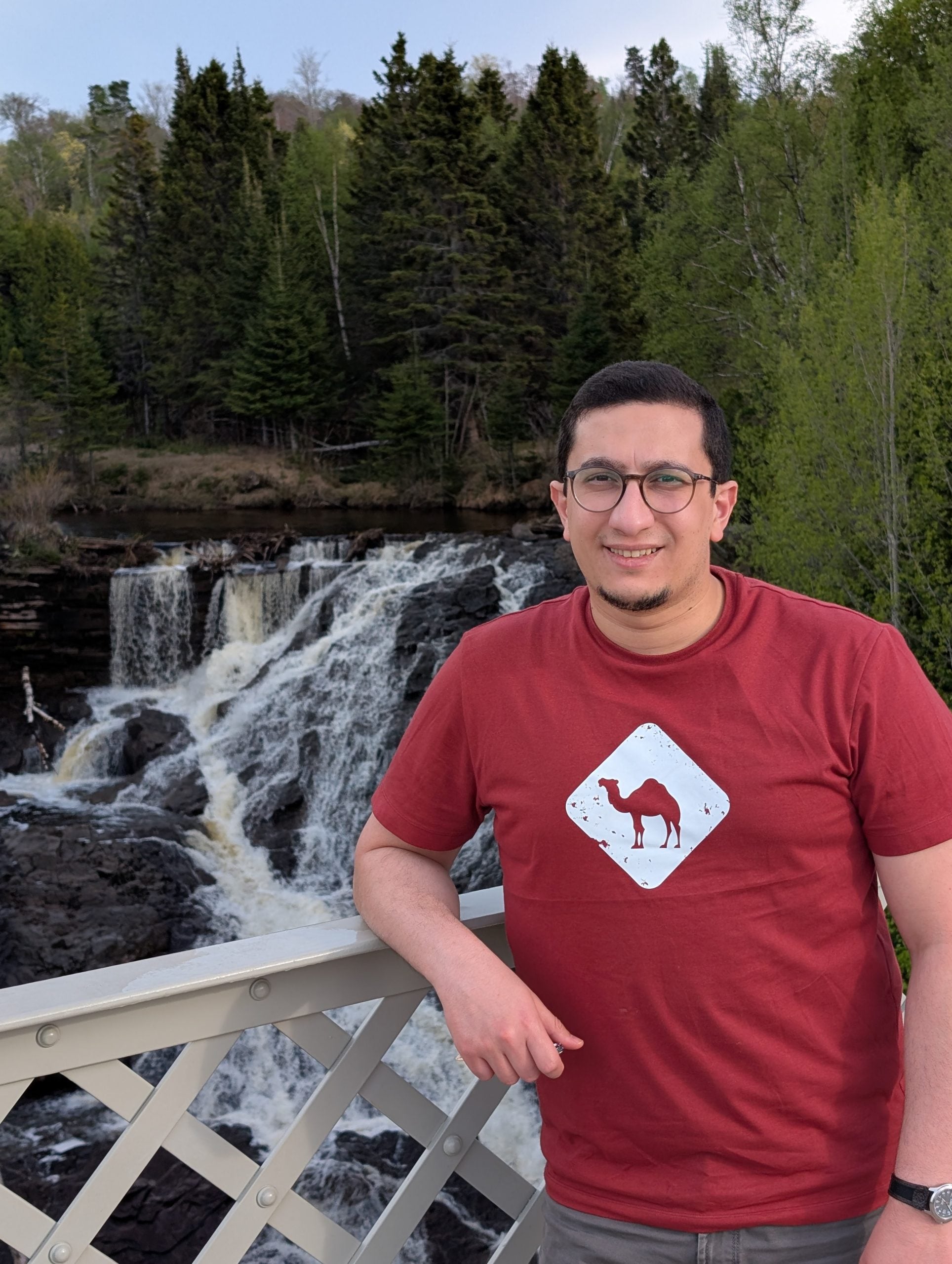
DeVlieg Graduate Summer 2026 Research Recipient – Zaid Bakri

Zaid Bakri, PhD in Atmospheric Sciences, 2026

I am a fifth-year PhD candidate in Atmospheric Sciences, originally from Amman, Jordan, where I earned my Bachelor’s and Master’s degrees in Physics from the University of Jordan. Growing up in a region characterized by low precipitation and highly inconsistent rainfall patterns sparked my curiosity about how rain forms and why it varies so much. This early interest motivated me to pursue research that contributes to a deeper understanding of our planet.

I have always been fascinated by how weather evolves over time, but it was during my research at Michigan Tech that I began to appreciate the complex role clouds play in shaping weather and climate. My work focuses on developing an imaging system capable of retrieving the size distribution of cloud droplets generated in a controlled laboratory environment. This allows us to study how cloud droplets grow in response to different atmospheric processes and conditions.

Throughout my PhD, alongside coursework and seminars, I have gained a deeper understanding of atmospheric science and cloud physics, thanks to the guidance of outstanding researchers in the field, especially my advisor, Claudio Mazzoleni. I am grateful to be part of a program that has allowed me to collaborate with the team behind the Pi Cloud Chamber at Michigan Tech, where cutting-edge research is being conducted.

I deeply appreciate the supportive and inclusive environment within the Atmospheric Sciences program and the Physics Department. I am especially thankful to work with an advisor who is consistently encouraging, supportive, and approachable, which has made my PhD journey a smooth and rewarding experience.

DeVlieg Foundation Fellowship Winner Summer 2026

The Graduate School is pleased to announce the recipient of the 2026 DeVlieg Foundation Fellowship. This competitive award recognizes outstanding graduate student demonstrating significant potential and pursuing research in engineering, wildlife, biology, and related fields critical to innovation.

We are proud to congratulate this year’s fellow for exceptional academic achievements and research proposals:

  • Zaid Bakri – Department of Physics

This vital fellowship support is made possible through a valued partnership with The DeVlieg Foundation. Established by Charles B. DeVlieg with deep roots in Michigan’s industrial heritage, the Foundation is dedicated to fostering excellence and advancing innovation.

The DeVlieg Foundation Fellowship provides crucial financial assistance, enabling this promising scholar to dedicate himself more fully to research endeavors, develop novel solutions, and contribute to the advancement of technology.

Michigan Tech extends its sincere gratitude to The DeVlieg Foundation for its sustained generosity and commitment to nurturing the next generation of engineering leaders and researchers. We look forward to the impactful contributions this fellow will undoubtedly make.

Discover more about The DeVlieg Foundation Fellowship.

Nominations Sought for KCP Future Faculty Fellowships

Applications are being accepted for the KCP Future Faculty Fellowship, a program funded by the State of Michigan.  The purpose of the King-Chávez-Parks Future Faculty Fellowship Program is to increase the pool of academically and economically disadvantaged candidates pursuing faculty teaching careers in post-secondary education.  

Funding may begin in fall of 2026. Applications are due no later than 4pm on April 20, 2026.

Applicants will complete the following steps:

KCP fellowships provide students up to $20,000 (MS students) or $35,000 (PhD students) to pursue their degrees.  Funds may be used to support students, including faculty and staff, pursuing degrees at Michigan Tech.  For Michigan Tech students, the Graduate School and nominating department must also contribute matching funds to help support the student.
Complete information about eligibility criteria and materials needed for an application is available on our web page. Please note that applications will be submitted through the MILogin Citizens Portal. Questions about eligibility or the application procedure can be directed to Dr. Debra Charlesworth. Applicants may work with Lea Marlor to prepare their educational and career goal statement.

Finishing Fellowship Award – Spring 2026 – Yi Xu

Yi Xu, PhD in Statistics, 2026

I am deeply honored to receive the Finishing Fellowship Award from the Graduate School and the Graduate Dean Awards Advisory Panel. I sincerely thank the Department of Mathematical Sciences for the academic advising and continued support. I am especially grateful to my advisor, Dr. Yeonwoo Rho, for her unwavering encouragement and guidance throughout my doctoral program. I also extend my thanks to the faculty in the math department for their professional instruction and feedback throughout my coursework.


I have had the privilege of working under my advisor, Dr. Yeonwoo Rho, on functional data analysis. I would like to express my sincere gratitude to Dr. Rho for her invaluable guidance and mentorship, from shaping my research to encouraging my professional development. My research focuses on statistical methods for detecting change points in the mean or variance in high-dimensional or functional time series using random projections, with applications in finance, climate science, and biomedical science.


Alongside my research, I have worked as a Graduate Teaching Instructor for undergraduate math courses. I would like to thank my teaching supervisor, Ann Humes, who provided comprehensive training and helped me develop an instructional framework. I am also grateful to my teaching mentors, Tim Wagner and MaryFran Desrochers, for their guidance on effective teaching practices. These experiences have strengthened my commitment to high-quality instruction.

In addition, I have been proud to serve as the department representative in the graduate student government. I appreciate my colleagues for their participation and engagement, which have contributed to a supportive community. This service has also strengthened my leadership and collaboration skills.
I look forward to continuing to contribute through research, teaching, and service. This fellowship will provide crucial support as I complete my dissertation and prepare for the next stage of my academic career.

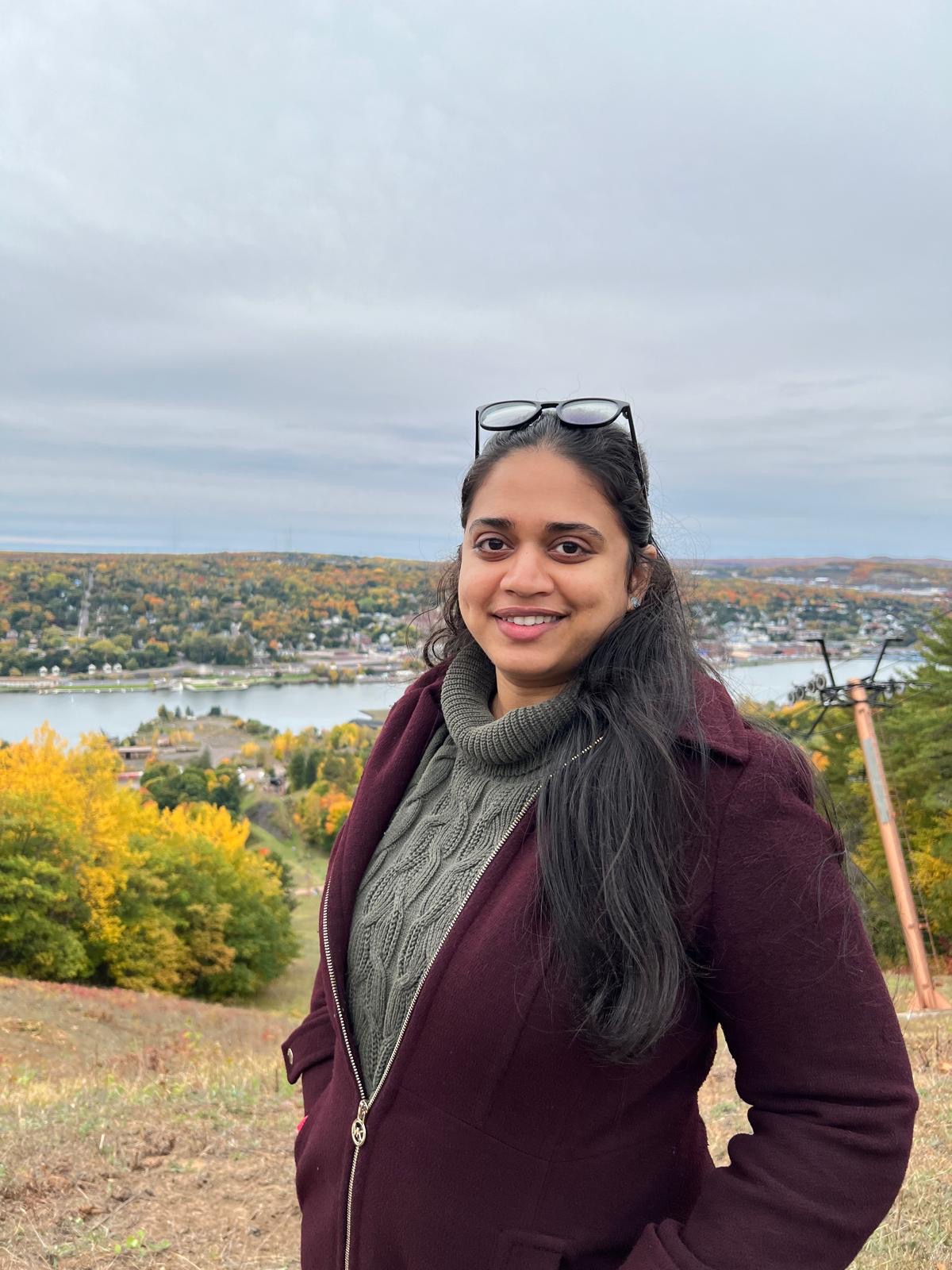
Finishing Fellowship Award – Spring 2026 – Varsha Kumar

Varsha Kumar, PhD in Electrical Engineering, 2026

I’m a PhD student in Electrical engineering. My research focus on understanding the effects of boundaries which lead to the formation of high-quality factor resonance in finite-size dielectric metasurface. I have performed theoretical studies and computational studies using electromagnetic full wave simulations to understand the nature of the complex resonance response from the fragmented metasurface. The high-quality factors enabled by the finite metasurface are beneficial for enhanced light matter interactions that are important for sensing, lasing, wave-guiding, filtering and imaging applications. I also had the opportunity to instruct labs as a graduate teaching assistant for many semesters, which helped me develop my teaching skills.

I sincerely thank the Graduate school and the Graduate Dean Advisory Panel for this fellowship. I’m grateful to my advisor Dr. Elena Semouchkina for her guidance and support.

Finishing Fellowship Award – Spring 2026 – Katrina Carlson

Katrina Carlson, PhD in Applied Cognitive Science & Human Factors, 2026

It has been such an honor and privilege to be part of the Department of Psychology and Human Factors at MTU as a graduate student since the Fall of 2020. I have always had an interest in psychology and research, but when I started with one class at a time while working full-time, I did not have a clear direction. I have been fortunate to work with outstanding professors and inspiring fellow students. Kelly Steelman, as Department Chair, first presented me with the question that had been studied at Michigan Tech for the last 30 years, first started with research by Sheryl Sorby: Why do engineering students with improved spatial skills through a remedial course end up doing better in their other STEM courses and have a higher retention rate than students who did not take the course? It intrigued me.

Research for my Master’s degree in Applied Cognitive Science and Human Factors, which I earned in Spring 2024, began with the relationship between spatial skills and Engineering Self-efficacy, with assistance from my co-advisor, Michelle Jarvie-Eggart. While there were increases in scores pre- to post-semester for the remedial group, there was no significant difference between the two groups.

My dissertation research has focused on assessing spatial visualization skills, the ability to mentally rotate 3D shapes. These skills are assessed using receptive measures of ability, such as the demonstration of understanding on a multiple-choice test, such as the Purdue Spatial Visualization Test with Rotations (PSVT: R) or the Mental Rotations Test (MRT). I have developed, with one of my advisors, Shane Mueller, an assessment of productive spatial visualization skills, or the ability to produce a physical demonstration of spatial knowledge. The evaluation is digital and scorable, and it is now available online. Research to date has indicated a strong correlation between scores on the productive assessment and a traditional receptive measure, indicating the reliability of the productive measure. Current research is examining the validity of the measure for first-year engineering students.

I would like to express my gratitude to the Graduate Dean Awards Advisory Panel for granting me this award. I also want to thank my advisors, along with the faculty, staff, and students of the PHF Department, for their inspiration and continued support.