Finishing Fellowship Award – Summer 2026 – Nor Serocki

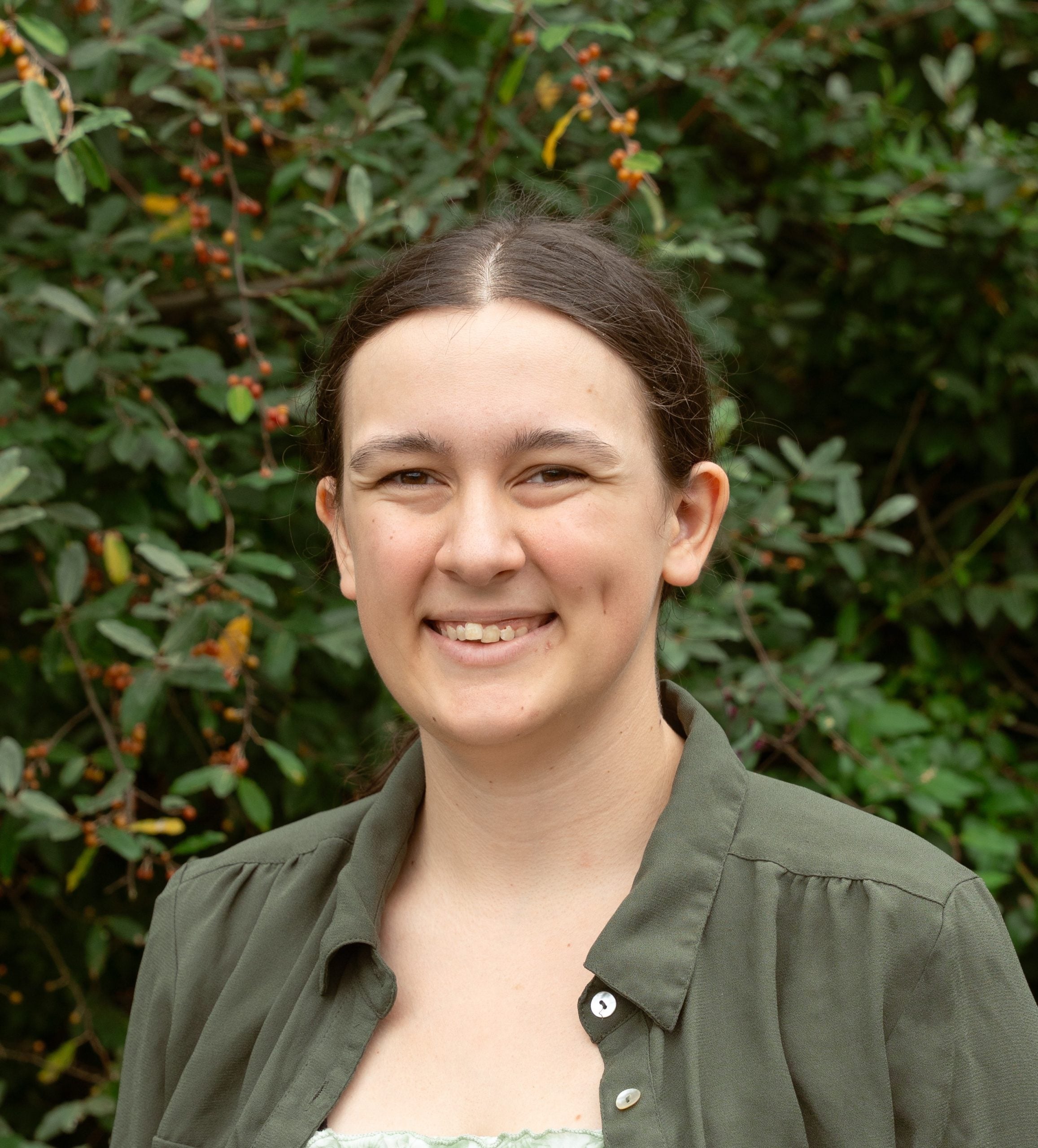
Nor Serocki, PhD in Forest Science, 2026

I am honored to be accepting the Graduate School Finishing Fellowship for the summer semester of 2026. As I approach the end of my educational journey, it is vital to express how important the support of the Michigan Tech community has been to my path and my success. It is because of this community of students, researchers, educators, and staff that I have reached this point in my career, and this award is a further investment in my education.


I joined the Michigan Tech community as an undergraduate in 2010, completing a Bachelor of Science in Applied Ecology and Environmental Science in 2014. My experience as an undergraduate at Tech taught me the importance of passion in one’s work, which I was also able to apply to my work post-graduation with the Michigan Tech Research Institute. It was during my time at MTRI that I found my passion in researching and understanding peatlands, and decided that when I returned to graduate school, I would focus on these important ecosystems.


My research focuses on the Alaska Peatland Experiment, which was founded in 2005 in order to understand the impacts of a changing climate on peatland carbon storage. Peatlands are vital carbon sinks, storing 30% of soil carbon while only covering 3% of terrestrial surface area. Because of this, my dissertation strives to understand the trends in peatland carbon storage over time, model the impacts of shifting environmental conditions on carbon sink strength, and map carbon flux using satellite imagery.


It has been an exceptional honor to be a member of the Michigan Tech community, and I thank that community for displaying this faith in me as I approach the end of my degree timeline. I look forward to completing my research, and to beginning the career that Michigan Tech has prepared me for.

Fall 2026 Finishing Fellowship Nominations Open

Applications for Fall 2026 finishing fellowships are being accepted and are due no later than 4 p.m. on June 10, 2026 to the Graduate School. 

Instructions on the application and evaluation process are found online. Please note that instructions for advisor recommendation letters have changed for the Fall 2026 application period. Students are eligible if all of the following criteria are met:

  1. Must be a PhD student.
  2. Must expect to finish during the semester supported as a finishing fellow.
  3. Must have submitted no more than one previous application for a finishing fellowship.
  4. Must be eligible for candidacy (tuition charged at Research Mode rate) at the time of application.
  5. Must not hold a final oral examination (“defense”) prior to the start of the award semester.

Finishing Fellowships provide support to PhD candidates who are close to completing their degrees. These fellowships are available through the generosity of alumni and friends of the University. They are intended to recognize outstanding PhD candidates who are in need of financial support to finish their degrees and are also contributing to the attainment of goals outlined in The Michigan Tech Plan. Students who receive full support through a Finishing Fellowship may not accept any other employment. For example, students cannot be fully supported by a Finishing Fellowship and accept support as a GTA or GRA.

Michigan Space Grant Consortium Fellowship – Summer 2026 – Sam Jensen

Sam Jensen, MS in Geophysics, 2026

Hey! My name is Sam Jensen, and I’m a first year Master’s student at MTU. I am involved with the GMES department’s drone based geophysics program, focusing on magnetic surveys around the Keweenaw Peninsula/greater U.P. area. I am originally from Gladstone, MI and have been passionate about teaching during my time as a grad student. I hope to one day become a professor of geophysics, with the main goal of inspiring students as I have been inspired. I am also involved with Graduate Student Government at MTU, and was recently elected president of the organization.

My great grandfather, Paul Serafin, attended this university when it was still called the Michigan College of Mining and Technology (all the way back in 1932!). My grandfather, David Palo, was born and raised in the Keweenaw and I was lucky enough to explore this area with him since I was a small child. I knew MTU was where I wanted to be, but it took me a few years before I realized exactly what I wanted to do. If there’s one thing I’d like to say to undergraduates, it’s to never be afraid to switch paths. Money plays a large role in many peoples’ career decisions, but it shouldn’t be the largest factor. As cliché as it sounds, I think following your heart is more meaningful than (almost) any amount of zeros in a starting salary.

I am happy to have gotten my undergraduate degree in Applied Geophysics also from MTU. In my time here, I have realized how special the Keweenaw Peninsula truly is. The location, history, geology, and people are all so unique here. I am an avid outdoorsman – from backpacking in summer to ice fishing in winter, I am grateful to call this place my home.

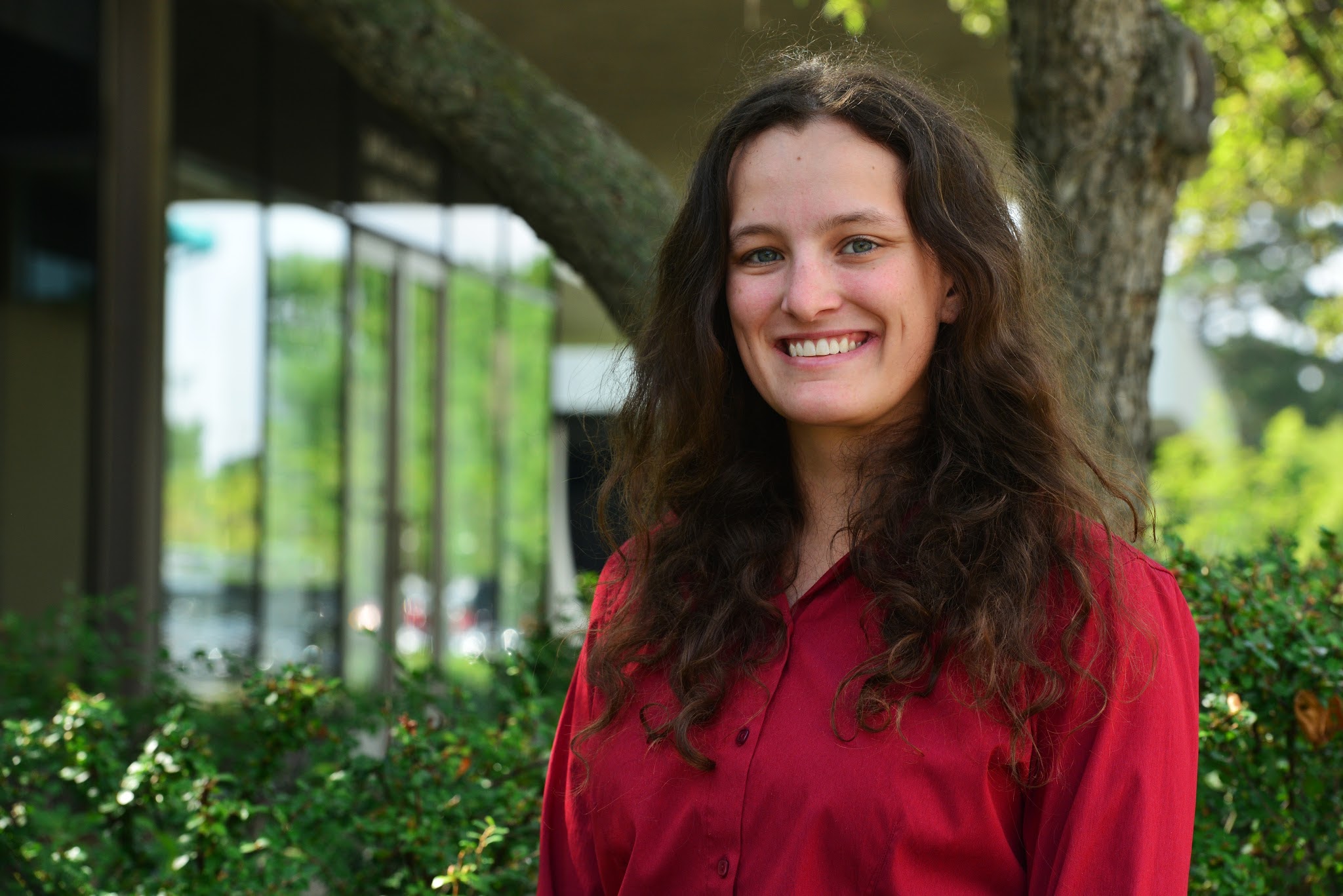
Michigan Space Grant Consortium Fellowship – Summer 2026 – Mari Leland

Mari Leland, PhD in Biological Sciences, 2026

I began my Ph.D. at Michigan Technological University in the Fall of 2024, joining Dr. Vick-Majors’ lab and the Biological Sciences department. My research focuses on annual patterns in lake microbial communities and organic matter, emphasizing the role of winter in shaping year-round processes. With a background in biological engineering, especially bioinformatics, my work integrates my passion for environmental sciences with emerging genetic technologies to gain a deeper understanding of complex ecological processes.


Through collaboration with a network of scientists across North America, I study how lakes spanning gradients of organic matter and phosphorus are impacted by winter conditions. Simply, I view lakes through the lens of color, ‘brownness’ vs ‘greenness’, to understand how changing winters may impact annual patterns in diverse lakes. I look forward to not only addressing these questions but translating this information from the literature into publicly accessible formats. As a born and raised Minnesotan, I understand the importance of lakes in everyday life and want to connect my science to the communities who experience and depend on these ecosystems firsthand.


I’m very grateful to my advisor, Dr. Vick-Majors, for her mentorship as I make my way through my program and her encouragement as I pursue my interests through my research. I would like to thank the project partners and collaborators whose hard work makes my research possible. I’m also thankful to my peers and colleagues who provide support and perspectives that strengthen my work.

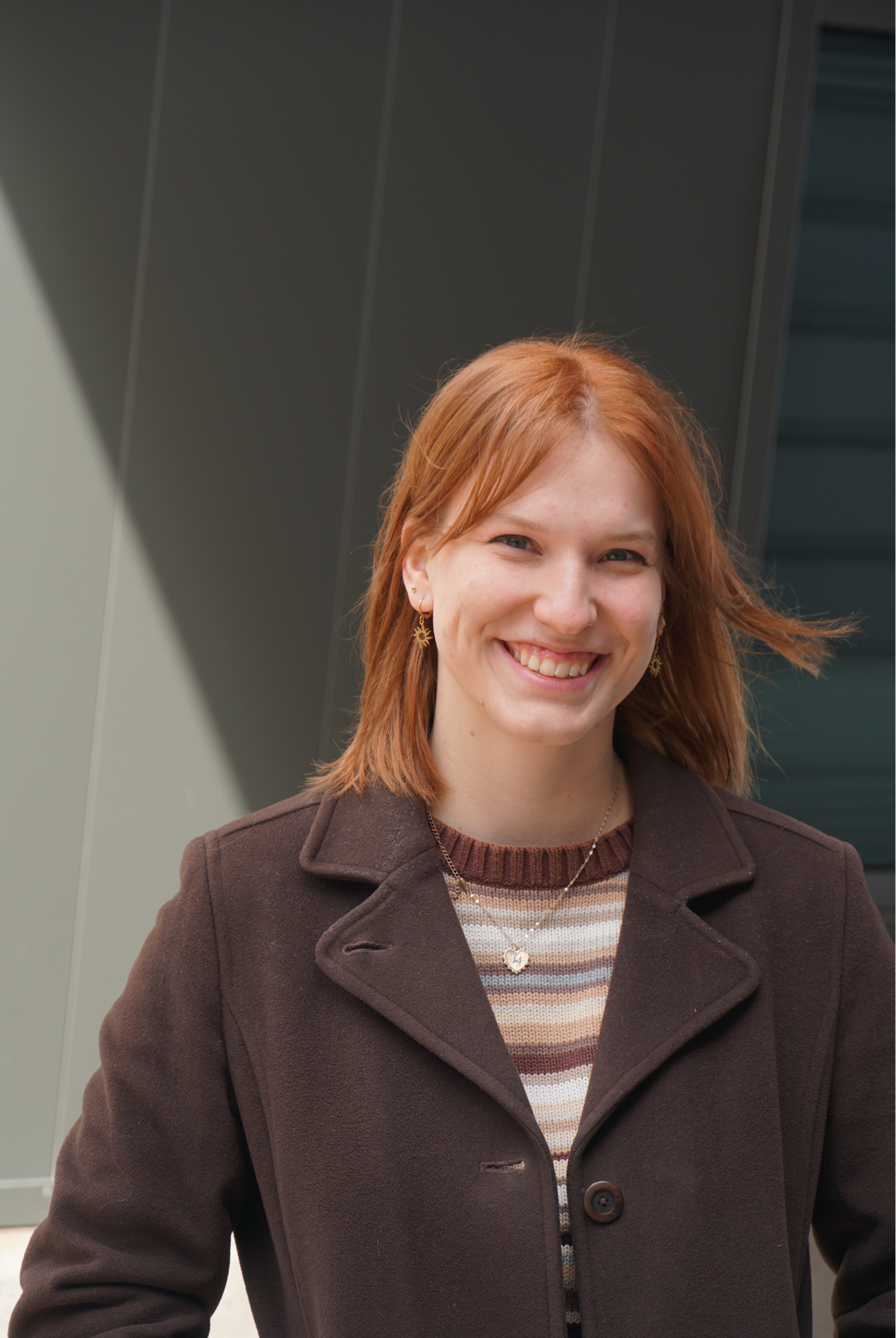
Michigan Space Grant Consortium Fellowship – Summer 2026 – Gabrielle DuCheny

Gabrielle DuCheny, MS in Mechanical Engineering, 2026

I am a first-year master’s student in Mechanical Engineering. I started my schooling at Michigan Tech in 2021, getting my bachelor’s in Mechanical Engineering along with a minor in ecology. I graduated with my bachelor’s degree in spring 2025 and after spending a summer doing research work in acoustics and 3D printing I decided to get my master’s in Mechanical Engineering.

I have always loved nature and the outdoors for as long as I can remember and wanted to help protect it and the peacefulness and beauty it provides. My research is focused on acoustics, specifically psychoacoustics and how people perceive noise. For my research I am helping to test and design drone blades that are less annoying keeping outdoor areas pleasant to be in. I have learned a lot about acoustics since starting my masters and it has presented opportunities for me to gain skills in acoustic testing and work on multiple different projects in the field. As a graduate student I also had a chance to TA for a lab this past semester which I think has helped me improve my teaching skills and was something that I really enjoyed.

I am thankful for the opportunity to further my research through the MSGC as well as the opportunity that I have been given to further my education through Michigan Tech. I am also grateful for my advisor Dr. Sharma for helping me to grow academically as I work on my research.

Michigan Space Grant Consortium (MSGC) Fellowships Awarded to Six Michigan Tech Graduate Students

The Graduate School is pleased to announce the recipients of the Michigan Space Grant Consortium (MSGC) Graduate Fellowships. Sponsored by the National Aeronautics and Space Administration (NASA), these fellowships are awarded to students who are pursuing research in fields aligned with NASA’s strategic interests, including STEM education and space-related science and technology.

This year, six exceptional graduate students from Michigan Tech have been selected for this honor. Their diverse research projects span from atmospheric physics to advanced mechanical engineering, highlighting the interdisciplinary nature of space-related research on our campus.

MSGC Fellowship Winners

The MSGC fellowship program aims to foster awareness of and education in space-related science and technology while supporting the next generation of researchers. Each fellowship provides funding to support the students’ research expenses and stipends, allowing them to focus on innovative projects that contribute to our understanding of the Earth and the universe beyond.

We are incredibly proud of these students for their hard work and dedication to their respective fields. Receiving an MSGC fellowship is a testament to the high caliber of research being conducted by our graduate students and their potential to make significant contributions to the scientific community and NASA’s mission.

The Graduate School congratulates Gabby, Nicholas, Sam, Mari, Samantha, and Dayana on this prestigious achievement and looks forward to seeing the results of their funded research.

For more information on the Michigan Space Grant Consortium and future funding opportunities, please visit the MSGC website or the Graduate School’s funding page.

Michigan Celebrates Graduate and Professional Student Appreciation Week

Michigan Governor Gretchen Whitmer has officially declared April 6–10, 2026, as Graduate and Professional Student Appreciation Week.

This week is dedicated to celebrating more than 80,000 graduate and professional students across Michigan’s universities and recognizes the important role they play in advancing research, innovation, and economic growth.

Why We are Celebrating:

  • Economic Drivers: Graduate students play a direct role in strengthening Michigan’s economy through research, development, and collaboration with industry partners that drive innovation and progress.
  • Future Leaders: Today’s graduate and professional students are tomorrow’s leaders, contributing across fields such as healthcare, education, engineering, business, public service, and beyond.
  • Community Impact: Their work and dedication influence communities across Michigan and beyond, creating lasting impact in many areas of society.

Join us this week in recognizing and celebrating the contributions of our graduate and professional students.

To our graduate and professional students, thank you.
Your dedication to solving complex challenges, advancing knowledge, and striving for excellence makes a lasting impact on Michigan and beyond.


“Graduate and professional students are the future teaching professionals, researchers, and leaders of the state, the nation, and the world.” – Governor Gretchen Whitmer

Jester Itliong Represents Michigan Tech as MAGS 3MT Finalist

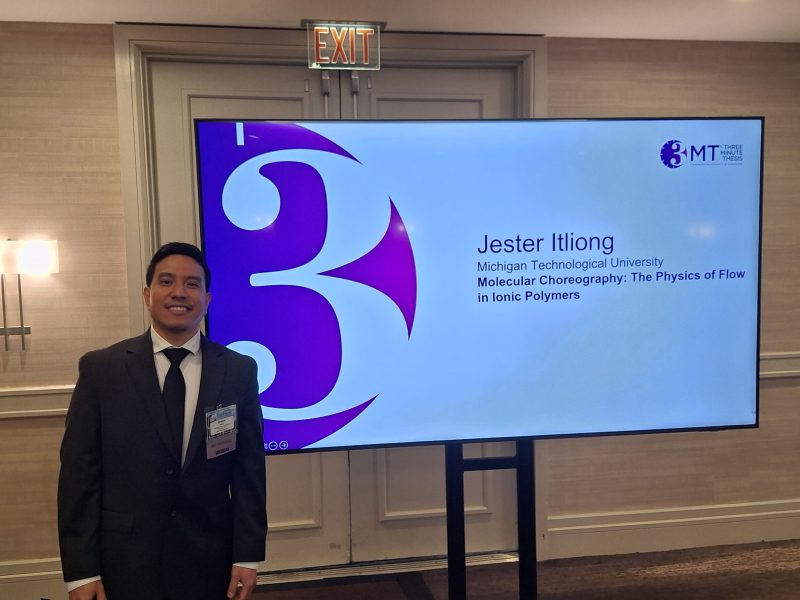
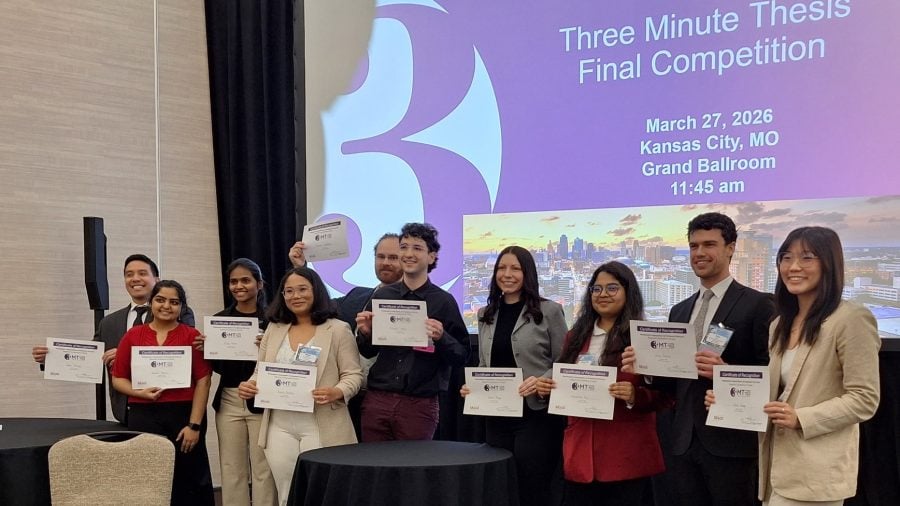
Michigan Tech physics PhD candidate Jester Itliong recently proved the importance of clear communication and high impact research on a regional stage. Competing at the Midwestern Association of Graduate Schools (MAGS) Three Minute Thesis (3MT) competition in Kansas City, Missouri, on March 27, 2026, Itliong advanced to the final round, placing him among the top researchers in the Midwest.

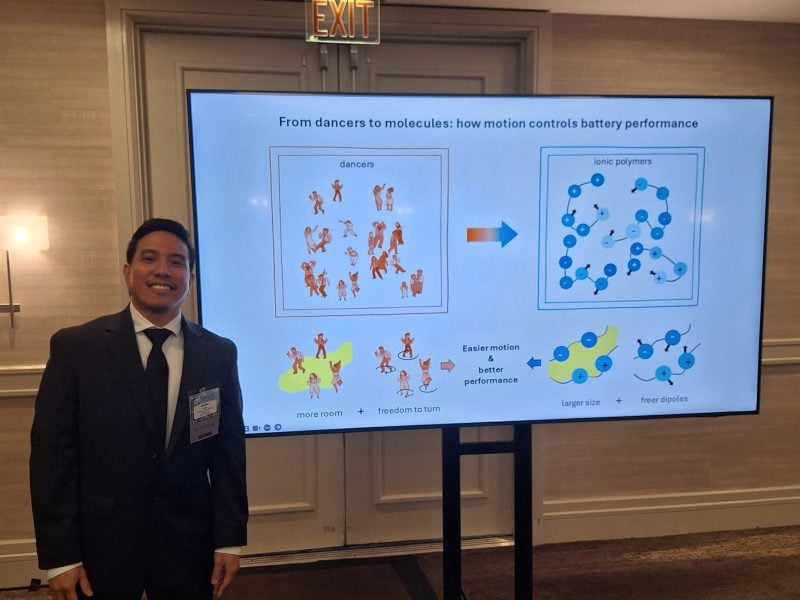
The 3MT competition challenges graduate students to explain years of complex research in a three minute presentation suitable for a general audience using only one static PowerPoint slide. Itliong earned his spot as Michigan Tech’s sole representative after winning first place at the university’s local 3MT competition in December 2025.

Molecular Choreography

Among the competitors from major institutions across the region, Itliong stood out with his presentation, Molecular Choreography: The Physics of Flow in Ionic Polymers. Advised by Issei Nakamura, associate professor of physics, Itliong’s research focuses on soft condensed matter.

Using coarse grained molecular dynamics simulations, he investigates how molecular features like size, charge, and polarity govern viscosity and ion transport in ionic liquids. These materials are essential for next generation batteries and ion conducting membranes because they allow for charge transport without the need for volatile solvents. By bridging the gap between molecular design and macroscopic behavior, his work provides the insights needed to tailor these materials for better performance in clean energy and electronics.

A Passion for Communication

Reaching the MAGS finals is a significant milestone. Out of the dozens of university winners who presented in the preliminary heats, only 10 were selected to move on to the final stage. Itliong’s ability to translate the abstract physics of polymer flow into an engaging narrative highlighted the caliber of research being conducted in the Michigan Tech Department of Physics.

While he values the analytical rigor of his simulations, Itliong is especially passionate about communicating science. He has presented his work at the APS March Meeting annually since 2023 and now entering the final stage of his doctoral program.

The Graduate School and the Graduate Student Government (GSG) congratulate Jester on his success at MAGS. His achievement underscores the importance of the 3MT mission: helping graduate students develop the skills to communicate the value of their work to the public, policymakers, and industry leaders.

Jester wishes to thank the Graduate Dean Awards Advisory Panel, the Department of Physics, and Dr. Nakamura for their continued support.

To learn more about graduate research opportunities and upcoming competitions, visit the Michigan Tech Graduate School Fellowships Page.

Good News From The Graduate School – April 2026

All of us in the Graduate School are excited to assist you and help you succeed. Please check your email regularly for updates from the Graduate School. Be sure to visit the Graduate School Blog for updates, news, and funding opportunities.

Michigan Tech Experience


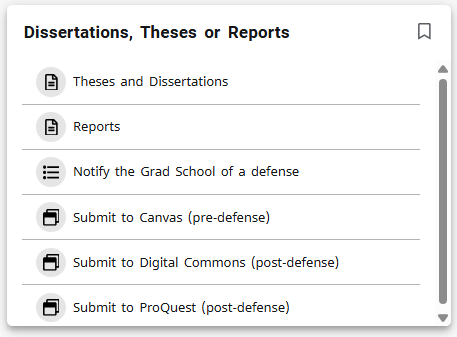
As the semester is quickly coming to a close, we encourage you to explore and bookmark the Experience page and make sure to save the “My Graduate Degree” card to your homepage (shown at right) for easy access and the “Dissertations, Theses or Report” card if you’re completing a research-based degree.

Things you will find on Experience:

  • Registration and Class Details
  • Forms and Deadlines
  • Academic Audit
  • Hold Information
  • Billing Information
  • Payroll and Direct Deposit Information

Make sure to bookmark your Degree Progress Checklist (or use the My Graduate Degree card in Experience to find it). It provides a helpful list of resources to support you as you complete your graduate degree.

Additional Resources

April Important Deadlines:

Deadline Date Description
April 13, 2026 – Last day to submit committee-approved post-defense dissertation, thesis, or report to the Graduate School for spring completion of degree.
April 13, 2026 – Submit all other degree completion paperwork (including applicable certificate degree schedules) to Graduate School—check your
 Degree Progress Checklist for items needed.
– Submit petition to enter candidacy to be eligible for candidacy for the next semester.
April 20, 2026 Deadline for KCP Future Faculty Fellowship applications.
April 29, 2026 Grace period for deadline for thesis, dissertation, or report.

Upcoming Events

Undergraduate Research & Scholarship Symposium
The Undergraduate Research & Scholarship Symposium will take place on Friday, March 27, 2026, from 1-3:30 p.m. in the Rozsa Center. This event showcases student-led research across disciplines and offers a great opportunity to explore innovative projects and engage with presenters. Graduate students are encouraged to attend to connect with undergraduate researchers in their areas of interest. Registration information will be available soon.

Let’s Talk with Student Mental Health and Well-Being
Stop by on Monday, April 6, 2026, from 1–3 p.m. in the Academic Office Building, Room 101 for a free, informal, and confidential conversation with an MTU counselor. This is a great opportunity to talk through any concerns, get support, or learn more about available mental health resources. All students are welcome.

Math Sciences Seminar Series – Brian Hopkins
Join the Math Sciences Seminar Series featuring Brian Hopkins on Friday, April 10, 2026, from 1-2 p.m. in Fisher Hall, Room 133. This seminar offers an opportunity to explore current topics and research in mathematics. All are welcome to attend.

Graduate Student Commencement Rehearsal
Graduating students are encouraged to attend the commencement rehearsal on Thursday, April 23, 2026, from 1–2 p.m. in the Multipurpose Room of the Student Development Complex (SDC). Please plan to arrive by 12:45 p.m. to prepare for the ceremony.

Graduate Student Commencement Ceremony The graduate student commencement ceremony is on Friday, April 24, 2026, at 3:00 p.m. in the John J. MacInnes Student Ice Arena of the Student Development Complex (SDC). Live streaming is available beginning on the morning of the ceremony.

Local Events

For ideas on how to spend your free time, be sure to check out the Local Area Events Calendar, there’s something for everyone. Check out the Rozsa website for on-campus events. To explore additional seminars, workshops, and Graduate School sponsored events, visit the MTU Events Calendar. This calendar highlights upcoming opportunities across campus, making it easy to stay informed and engaged throughout the semester!

Beyond the Classroom

The Graduate Student Government (GSG) is your key to connecting with the grad student community. They organize tons of activities, from professional development workshops and the Graduate Research Colloquium to social events and mixers. Getting involved with the GSG is a fantastic way to meet people from different departments, share your ideas, and help shape a fun and supportive campus environment. To find out about upcoming events or to learn how you can participate, check out their website.

Have any questions? Please reach out to the Graduate School anytime via email: gradschool@mtu.edu, phone: (906) 487-2327, or visit us in the Admin Building on the 4th floor.


Stay Informed 

 Keep up with campus updates all semester: 

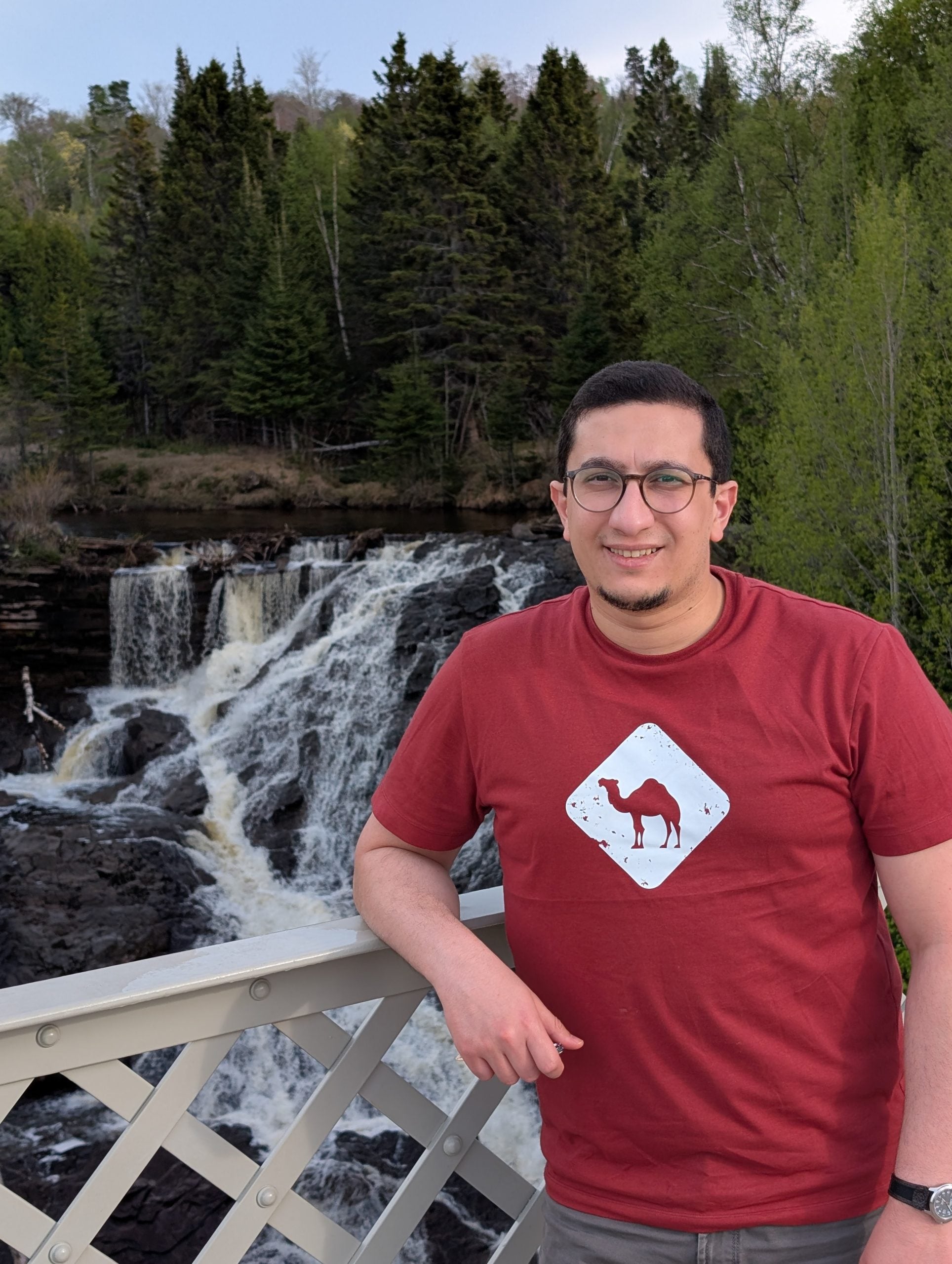
DeVlieg Graduate Summer 2026 Research Recipient – Zaid Bakri

Zaid Bakri, PhD in Atmospheric Sciences, 2026

I am a fifth-year PhD candidate in Atmospheric Sciences, originally from Amman, Jordan, where I earned my Bachelor’s and Master’s degrees in Physics from the University of Jordan. Growing up in a region characterized by low precipitation and highly inconsistent rainfall patterns sparked my curiosity about how rain forms and why it varies so much. This early interest motivated me to pursue research that contributes to a deeper understanding of our planet.

I have always been fascinated by how weather evolves over time, but it was during my research at Michigan Tech that I began to appreciate the complex role clouds play in shaping weather and climate. My work focuses on developing an imaging system capable of retrieving the size distribution of cloud droplets generated in a controlled laboratory environment. This allows us to study how cloud droplets grow in response to different atmospheric processes and conditions.

Throughout my PhD, alongside coursework and seminars, I have gained a deeper understanding of atmospheric science and cloud physics, thanks to the guidance of outstanding researchers in the field, especially my advisor, Claudio Mazzoleni. I am grateful to be part of a program that has allowed me to collaborate with the team behind the Pi Cloud Chamber at Michigan Tech, where cutting-edge research is being conducted.

I deeply appreciate the supportive and inclusive environment within the Atmospheric Sciences program and the Physics Department. I am especially thankful to work with an advisor who is consistently encouraging, supportive, and approachable, which has made my PhD journey a smooth and rewarding experience.