
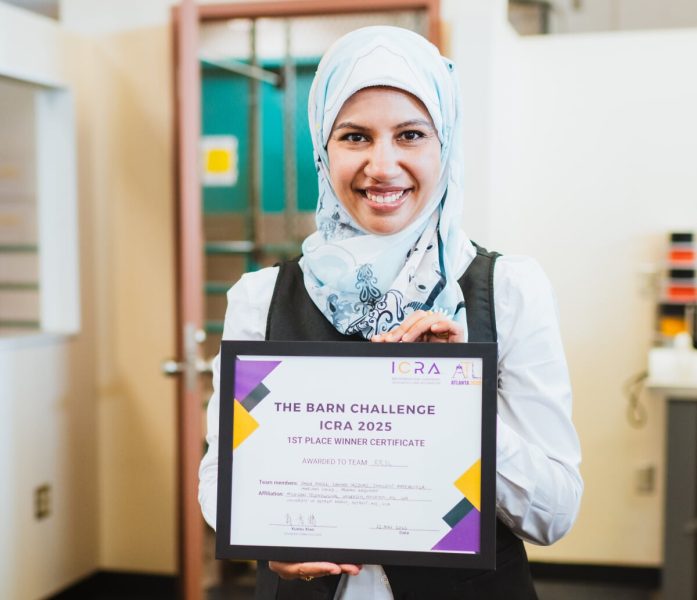
Oak Ridge Associated Universities Award
Oak Ridge Associated Universities (ORAU) has awarded Dr. Amna Mazen, a faculty member with a joint appointment between Applied Computing and MMET at MTU, $5,000 toward her research.
The ORAU is a 501(c)(3), not-for-profit organization that has been working with government agencies, universities, and corporate entities since 1946 to integrate academia, government, and industry to advance the nation’s learning, health, and scientific knowledge. “Through our specialized teams of subject matter experts, decades of experience, and collaborations with our consortium of more than 170 major Ph.D.-granting institutions, ORAU is a recognized leader when the priorities of our federal, state, local, and commercial customers require innovative solutions.” (ORAU, 2026).
Members of the ORAU can participate by proposing an idea, providing credible research to support it, and securing a shared $5,000 from the college they choose to participate in.
The ORAU Ralph E. Powe Junior Faculty Enhancement Award aims to support junior faculty members in the first 2-3 years of their term. Each university member is allowed to submit only 2 proposals. These include the reference page and the proposal itself, which cannot exceed 1-2 pages.
Committees within the ORAU then choose two candidates from the hundreds who have submitted proposals. Those who are chosen must submit their proposals during the month of January and receive feedback responses by the end of May to the start of June.
Learn more about the ORAU here: https://www.orau.org/about/index.html
Oil Sampling and Detection Research Overview
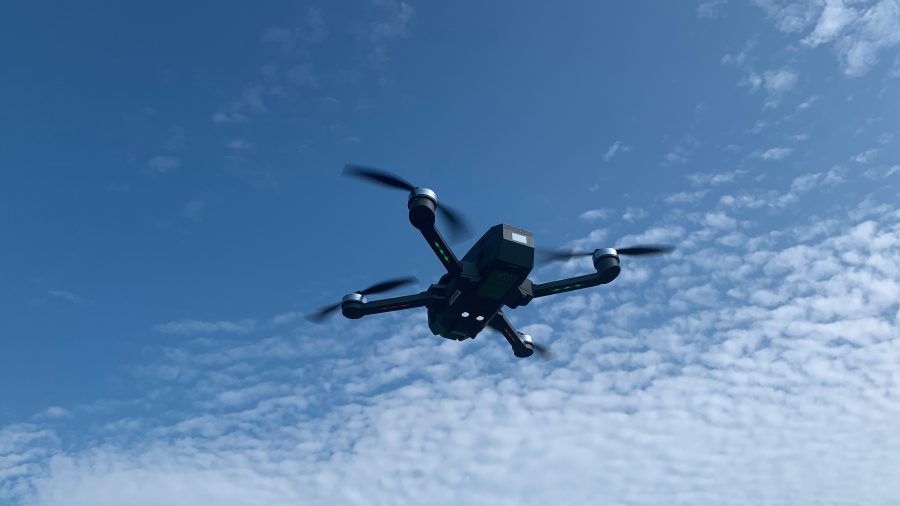
Future research by Dr. Amna in oil sampling and detection involves deploying automated drones for both detecting oil spills, and collecting samples, with specialized lab groups responsible for classifying the oil types.
Traditional methods of oil extraction include sending a team to collect samples of oil from various bodies of water. However, this can be very time-consuming – locating specialists is no easy task.
An alternative method would involve using drones alongside specialists who hold a drone license. To ensure a smooth and steady process, Dr. Amna proposes that sampling of these oil spills and segmentation should be performed using automated drones.
This approach allows for drones to rapidly determine spill size while cutting costs and reducing time delays compared to previous methods. By pairing licensed pilots with automation, Dr. Amna’s proposal shifts oil spill response from slow, resource-heavy surveys to fast, data-driven action.