
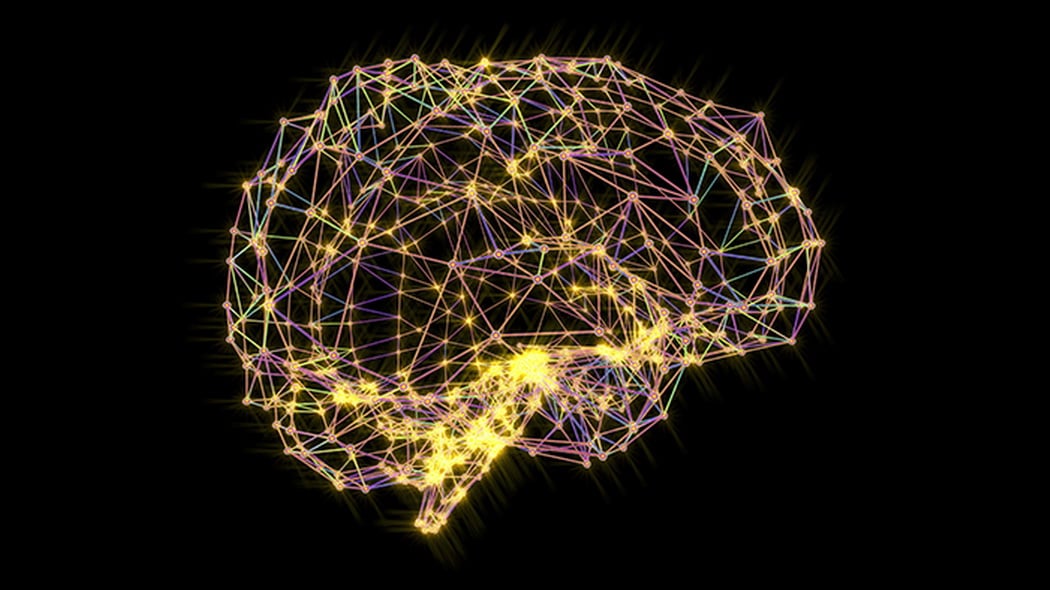
Advances in artificial intelligence and robotics are increasingly drawing inspiration from one of nature’s most efficient computing systems: the human brain.
At the forefront of this emerging field is Dr. Hongyu An’s research into Neuromorphic Robotics where robots are equipped with brain-inspired processors that enable them to perceive, learn, and make decisions with remarkable efficiency.
“Unlike conventional robots that rely on power-intensive processors and predefined programming, neuromorphic robots can adapt to new environments, process information locally in real time, and operate with significantly lower energy demands” (Hongyu An, 2026).
Neuromorphic Computing Vs. Traditional AI
There are two clear distinctions that set Neuromorphic Computing apart from traditional forms of Artificial Intelligence. Below are Dr. An’s responses highlighting these differences.
- How information is encoded
“Conventional computers (CPUs, GPUs) use square‑wave voltage signals to represent binary 0s and 1s—everything is digital, on/off, and highly precise. In contrast, a neuromorphic system tries to mimic the brain’s language: it uses spikes—short bursts of electrical activity, much like the action potentials that real neurons fire.”
- The entire computing architecture is different
“Because of that fundamental difference in signaling, neuromorphic AI doesn’t run on the traditional von Neumann architecture (where memory and processing are separated, causing constant data shuffling). Instead, we aim to achieve distributed, brain-like computing—where different groups of neurons work in parallel, each handling different sensory inputs (vision, touch, sound) simultaneously. This allows the system to process information in a massively parallel and event‑driven way, making it not only more energy‑efficient but also much faster for certain real‑time tasks, much like how our own brain effortlessly integrates sight, sound, and balance while we move.”
Challenges, Discoveries, and Measuring Success
According to Dr. Hongyu An, one of the greatest challenges in developing neuromorphic robots lies in balancing biological realism with practical engineering constraints. The human brain contains approximately 86 billion neurons, each connected through thousands of synapses, while even a rodent brain consists of tens of millions of neurons, states Dr. Hongyu An. Beyond their sheer number, neurons perform highly complex computations through intricate biochemical processes. Attempting to replicate every detail of this biological complexity in a physical robot would be computationally infeasible, consume excessive power, and ultimately provide little practical benefit. Instead, the research focuses on abstraction—identifying which neural mechanisms are essential for intelligent behavior while simplifying those that are not.
According to Dr. An, processes such as spatial coding and associative learning are critical for navigation and adaptation, whereas modeling every underlying ion channel or biochemical interaction is unnecessary. Finding the optimal balance between biological fidelity, algorithmic performance, and hardware efficiency remains one of the project’s most significant scientific and engineering challenges.
To determine that the robot is actually learning, Dr. An’s team employs well-established behavioral experiments adapted from neuroscience. Rather than relying on pre-programmed maps or instructions, the robot is placed in unfamiliar environments and must learn through repeated experience.
Dr. Hongyu An mentioned T-maze experiments, and how the robot learns to associate sensory cues with the correct path, gradually improving its choices over successive trials. Alongside this, he speaks on Barnes maze experiments too, stating it [robots] navigate a circular platform with multiple exits, using environmental landmarks to locate a single safe escape route.
“Researchers evaluate not only whether the robot reaches its goal but also whether its navigation becomes faster, more direct, and more efficient over time. These improvements form a measurable learning curve, demonstrating that the robot is adapting based on experience rather than simply following predetermined rules.” (Hongyu An, 2026).
Ethical Concerns
As Neuromorphic Robotics pushes the boundaries of artificial intelligence, ethical considerations are becoming as significant as the technological breakthroughs themselves. Dr. Hongyu An highlights the two most important concerns below:
First, value alignment and behavioral drift: Because the robot continues learning after deployment, there’s a risk that its behavior could gradually shift away from its initial safety constraints or the user’s expectations. That’s exactly why we place such a strong emphasis on explainability.
“If we can trace why every decision was made, then we can clearly define ethical rules and safety boundaries in a way that’s transparent and enforceable. In other words, explainability gives us the tool to hardcode moral guardrails: we can monitor the robot’s evolving behavior, audit its decisions, and step in if it starts learning something unsafe. It turns ethics from an abstract principle into something we can practically implement—making the robot not just smarter, but safer and more trustworthy.” (Hongyu An, 2026).
Second, privacy and data residency: The robot stores a detailed internal model of its user’s environment and habits, entirely on‑board. This raises risks if the robot is stolen, sold, or decommissioned—the learned ‘memory’ becomes a sensitive data asset. That’s why we prioritize secure, resettable memory architectures, ensuring that user data is never exposed without explicit consent.
Looking Ahead: Neuromorphic Robotics Breakthroughs
Two breakthroughs would accelerate our [An’s team] research enormously.
First, from neuroscience: The discovery of place cells and grid cells—work that earned the 2014 Nobel Prize for O’Keefe and the Mosers. These cells reveal how the brain builds an internal ‘cognitive map’ for navigation.
“For our robot, this gives us a biologically grounded blueprint for spatial awareness and self‑localization, allowing it to navigate unknown environments just like an animal exploring a maze.” (Hongyu An, 2026).
Second, from computer engineering: Neuromorphic hardware like Intel’s Loihi. Loihi is a brain‑inspired processor that runs spiking neural networks on‑chip, with up to 1 million neurons per chip and extreme energy efficiency—milliwatts instead of watts. It supports on‑chip learning and runs entirely locally, which is ideal for untethered robots in space or disaster zones where cloud computing isn’t an option.
These breakthroughs provide both the theory (how brains encode space) and the hardware (low‑power, adaptive chips) to make self‑learning, energy‑efficient robots a practical reality.
Neuromorphic robotics is reshaping the future of Artificial Intelligence by combining insights from engineering and neuroscience. Dr. An’s research provides clear demonstrations of how brain-inspired computing can drive innovation. This allows for new possibilities for more scientific discoveries.