
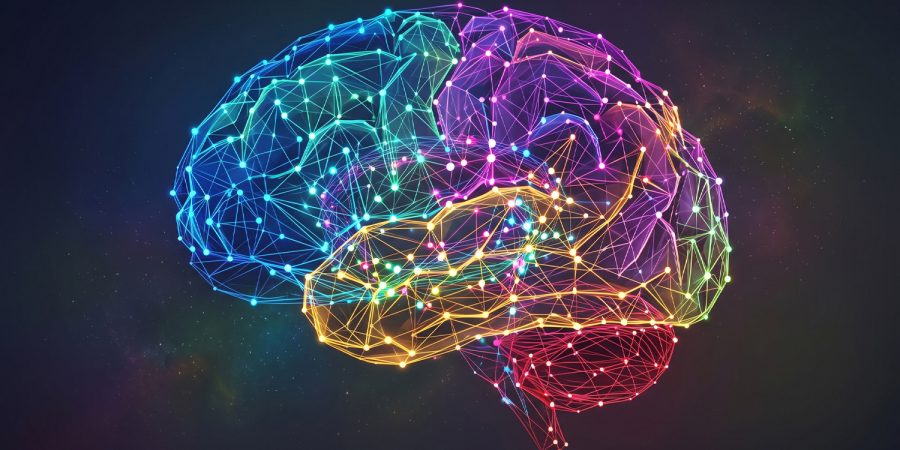
Imagine a treatment that uses tiny electrical impulses to help people with Parkinson’s Disease regain control over movements that they thought were lost forever. Deep Brain Stimulation (DBS) has transformed the lives of many patients, creating a sense of new-found hope when medications alone are no longer enough. Despite the overwhelming success of DBS treatments, scientists continue to search for the answers to their questions: How does DBS affect the brain and how it can be more effective?
To gain a better understanding of this topic, Dr. Hongyu An provides valuable insight into his research that will help explain the science behind DBS and thus, paving the way for more personalized and effective treatments for people living with Parkinson’s Disease.
Insight into the Research
Dr. Hongyu An mentions his motivation of turning his engineering knowledge into tangible relief for patients. “This aspiration became vividly real because of my wife and partner, Dr. Yan Zhang. She works in kidney disease research and took me to numerous patient education seminars and support groups.” (Hongyu An, 2026). Through these seminars and support groups, An’s understanding of the brain grew clearer and gave him that extra push that allowed him to apply neuromorphic AI to treating neural disorders, describing it as a natural transition into this new field of research and learning.
Current DBS treatments are open-loop, delivering continuous, fixed stimulation to the brain regardless of the patient’s real-time condition. However, this approach has several drawbacks, causing side effects, wastes energy, and fails to adapt to the natural fluctuations in symptoms that occur throughout the day. “Our research aims to change that [current treatments] by developing adaptive DBS. We plan to collect neural signals—specifically, beta oscillations from the subthalamic nucleus (STN) —and use this biomarker as a feedback signal to dynamically adjust the stimulation intensity. In other words, the system “listens” to the brain and responds in real time, making it more efficient, reducing side effects, and better tailored to each patient’s moment‑by‑moment needs. That is why we call it adaptive DBS.” (Hongyu An, 2026).
Challenges Involved
Adaptive Deep Brain Stimulation (DBS) relies on real-time processing of brain signals to adjust stimulation as a patient’s symptoms change.
According to An, the two biggest challenges are balancing wearability, and achieving true adaptability. “First, intelligent real‑time processing requires powerful computing, yet an implantable device must be small and energy‑efficient—so we are using neuromorphic computing to resolve this. Second, Parkinson’s is progressive and varies greatly between patients and even within a single day, so the system must autonomously adjust stimulation parameters in real time, without frequent manual tuning. These are the core obstacles we are working to overcome.” (Hongyu An, 2026).
Evaluating Effectiveness
When asked about the ways in which patients’ DBS settings are working effectively, Hongyu An mentions the usage of two complementary approaches which include neural biomarkers, and behavioral and clinical assessments.
First Objective: Neural Biomarkers
The power spectrum of beta oscillations recorded from the subthalamic nucleus (STN). Higher beta power indicates more severe symptoms, while lower power suggests effective suppression.
Second Objective: Behavioral and Clinical Assessments
We Have patients perform tasks such as finger tapping, gait analysis, and fill out symptom questionnaires as external references. Additionally, since Parkinson’s disease can also affect memory and cognition, we include memory‑related tests to measure reaction time and cognitive performance. Combining these neural and behavioral measures gives us a comprehensive picture of how well the treatment is working.
The Future of DBS Technology
With the constant evolution of Deep Brain Stimulation technology, its potential reaches beyond improving movement in people with Parkinson’s Disease. Hongyu An’s research reflects a shift towards more intelligent, personalized treatments that respond to a patient’s changing needs in real time by not only addressing motor symptoms, but also cognitive and emotional challenges.
Looking ahead, advances in artificial intelligence, machine learning, and neuromorphic computing could transform DBS into a fully autonomous system capable of continuously learning and adapting without the need for manual adjustments.
The implications extend well beyond Parkinson’s disease. The same closed-loop technology being developed for adaptive DBS is already being explored in a neuromorphic hippocampal memory prosthesis, designed to restore memory function in people affected by conditions such as stroke, epilepsy, dementia, and traumatic brain injury. By replacing damaged neural pathways with brain-inspired computing, this research points toward a future where intelligent neuro-prosthetics can restore lost brain function across a range of neurological disorders. As Dr. Hongyu An states, “This project gives me great hope: the same technology that helps a Parkinson’s patient walk steadily could one day help an Alzheimer’s patient remember a loved one’s face. That is the broader vision I am working toward.”
Click here to read about Dr. Hongyu An’s research into Neuromorphic Robots