Category: News

Reflecting on Year One of Essential Education: Connection, Collaboration, and Continued Growth

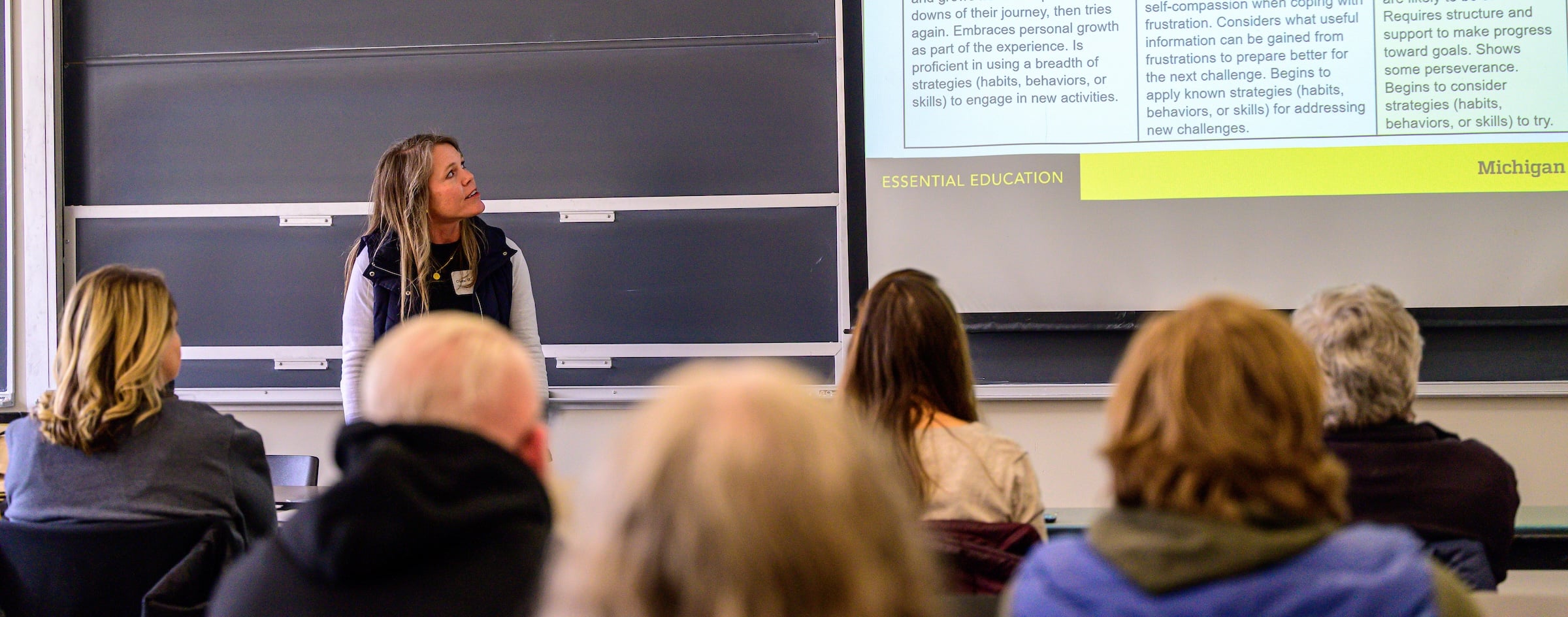
Participants listening to a presentation at the Essential Ed Symposium

This spring, faculty, staff, and campus partners came together at the 2026 Essential Education Symposium to reflect on the first year of Essential Education at Michigan Tech and to work toward a shared vision for student learning.

The Symposium showed that Essential Education is collaborative, evolving, and focused on helping students connect their academic experiences.

Building an Integrative Learning Experience

Essential Education supports integrative learning by connecting general education, majors, and future careers, while building skills to address complex problems from multiple perspectives.

The curriculum emphasizes high-impact, experiential learning, engaging students in applied, collaborative experiences throughout their time at Michigan Tech. It offers flexibility for students through customizable pathways and for instructors in teaching and assessment methods.

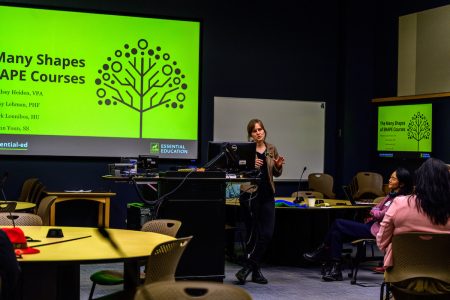
Essential Education highlights the relevance of SHAPE disciplines (Social Sciences, Humanities, and Arts for the People and Economy/Environment) through real-world and interdisciplinary experiences, helping students understand the purpose and value of their education.

Symposium Sessions Spark Reflection and Conversation

Throughout the Symposium, attendees explored how these goals are taking shape in classrooms, programs, and partnerships across campus.

Symposium feedback revealed that participants valued sessions that offered practical examples and ideas, such as “Husky Folio Made Easy,” “Reflection and Metacognition Seminar,” and “Purposeful Teaching with AI,” as well as interactive peer feedback workshops like “Teaching Squares.” These provided strategies for reflection, assessment, and engagement.

Faculty also expressed appreciation for concrete examples of Essential Abilities integrated in course design, assignments, and assessments in adaptable, meaningful ways.

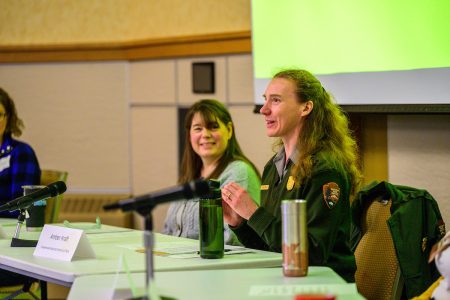
Panels and presentations sparked conversations about student learning and community engagement. Attendees noted that the ePortfolio panel highlighted hands-on learning successes, the community partners panel showcased effective collaborations, and the student panel revealed both opportunities and challenges faced during Essential Education implementation.

In addition, Marika Seigel, associate provost for undergraduate education, presented a reflection on the community’s collective progress over the past year, which was another meaningful moment that underscored how much work has already been accomplished through collaboration across departments and programs.

Collaboration Across Campus

Beyond the formal sessions, many participants emphasized that one of the Symposium’s greatest strengths was the opportunity to connect with colleagues.

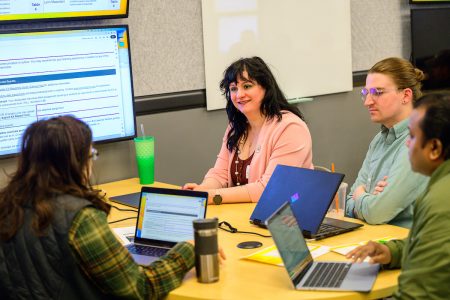
Informal conversations, cross-departmental networking, and hearing directly from instructors about their experiences created space for authentic dialogue, idea-sharing, and community building. For some participants, leading or co-presenting a session was itself a rewarding experience — a chance to contribute to the broader conversation around teaching and learning at Michigan Tech.

Symposium conversations reflected a commitment to supporting students academically and to developing them into adaptable, engaged individuals for a complex world.

Recognizing the 2026 Exemplary Instructors

The Symposium also recognized faculty and staff who exemplify Essential Education’s goals and values through the 2026 Exemplary Instructors Seminar.

This year’s honorees included:

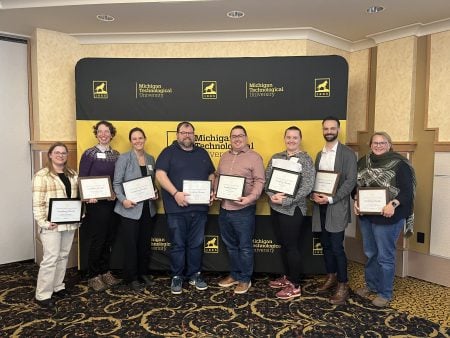
Several of this year’s Essential Education Exemplary Instructors pose for a photo during the Essential Education Symposium. The award recognizes educators who exemplify the goals and values of Essential Education through innovative and impactful teaching practices.

Seminar

  • Kayla Michelson

Foundations & SHAPE

  • Dr. Leeann Youn
  • D-Jay Bidwell
  • Jordan Dagenais
  • Dr. Laura Kasson Fiss
  • Claire Helakoski
  • Jack Van Treese

Activities for Well-being and Success

  • Katy Ellenich

Math, Science, & STEM

  • Nick Folcik
  • Ann M. Humes

Experience

  • Dr. Tara L. Bal
  • Dr. Angie Carter

Arts & Culture and Intercultural Competency

  • Anne Beffel

These instructors were recognized for their commitment to learning, innovative teaching, and the creation of high-impact educational experiences across the Essential Education curriculum.

Looking Ahead

As Essential Education evolves, the Symposium celebrated progress and reminded attendees that this work is ongoing.

Over the past year, faculty and staff have experimented with new approaches, refined assessments, integrated high-impact learning, and helped students understand the value of their education.

As the first year of Essential Education comes to a close, the Symposium offered an encouraging reminder that this work is being shaped collectively — through experimentation, collaboration, reflection, and a willingness to learn from one another.

Add a Minor to your Major – Husky Minor Fair – Save the Date

What: Michigan Tech Academic Minor Fair
When: Wednesday, January 28, 2026, 3:30pm – 5 pm
Where: East Reading Room – Van Pelt Library on Campus

The National Association of Colleges and Employers (NACE) surveyed employers in 2025 to inquire what talents they were looking for in new graduates. The top 10 skills employers are searching for include:

  • Problem-solving skills (88,3%)
  • Ability to work in a team (81.0%)
  • Communication skills (written) (77.1%)
  • Initiative (73.7%)
  • Strong work ethic (73.2%)
  • Technical skills (73.2%)
  • Communication skills (verbal) (69.3%)
  • Flexibility/adaptability ((67.0%)
  • Analytical/quantitative skills (67.0%)
  • Detail-Oriented (65.9%)

Additional valued skills included: Interpersonal Skills, Computer Skills, Leadership, Entrepreneurial Skills, Creativity, and Strategic Planning Skills.

Employers noted they wanted to hear how prospective hires acquired these skills in their diverse coursework, projects, and experiences, sharing these stories through their resumes and in the follow-up interviews. Employers stated this would provide recruiters with evidence that the candidate had acquired and already utilized skills to do the job and excel at it. 

In today’s competitive job market, employers are looking for flexible candidates who can bring diverse skills and knowledge to their role on the corporate/project teams. Completing an academic minor in addition to your major adds skills noted as employer desired above. A completed minor can end up enriching a student’s professional career and personal life. Minors give you a unique edge in your career/job search, by illustrating your unique combination of abilities that set you apart from other professionals in your field. 

The Michigan Tech Minor Fair is an opportunity for students to explore curriculum that can help them identify their own personal interests, give you an “edge up” in your job search, while adding skills that will prepare you for a career that has yet to be created. We hope to see you on Wednesday, January 28 at 3:30 pm – 5 pm in the Van Pelt Library East Reading Room to help you explore your minor opportunities.

Come learn about Minors that could add to your Major at the Michigan Tech Minors Fair:

  • *AI Ethics (HU) 
  • Communication Studies (HU)
  • *Diversity Studies (HU)
  • Ethics & Philosophy (HU)
  • *Global Cultures (HU)
  • German (HU)
  • German International (HU)
  • Journalism (HU)
  • Media Production (HU)
  • Spanish (HU)
  • Spanish International (HU) 
  • Writing (HU)
  • American Studies (SS)
  • Global Community (SS)
  • Development Partnerships (SS)
  • Global Studies (SS)
  • Law and Society (SS)
  • Public History (SS)
  • *Public Policy and Law (SS)
  • Social and Behavioral Studies (SS)
  • *Sustainability Studies (SS)
  • Applied Geophysics (GMES)
  • Earth Sciences (GMES)
  • Geological Engineering (GMES)
  • Mining (GMES)
  • Systems Engineering (Eng Fundamentals)
  • Cyber Security (Applied Computing)
  • Data Acquisition (Applied Computing)
  • Industrial Controls (Applied Computing)
  • Biomedical Engineering (Biomed Eng)
  • Biomaterials Engineering (Biomed Eng)
  • Medical Devices and Instrumentation (Biomed Eng)
  • Tissue and STEM Cell Engineering (Biomed Eng)
  • Public Health (KIP)
  • *Population Health (KIP)
  • Coaching (KIP)
  • Sustainable Biomaterials (CFRES)
  • Ecology (CFRES)
  • Plant Biotechnology (CFRES)
  • Plant Sciences (CFRES)
  • Computer Science (College of Computing)
  • Mathematics (Math)
  • Statistics (Math)
  • Psychology (PHF)
  • *Human Centered Design (PHF)
  • *Sneak peek at Individual Health and Wellness (PHF)
  • Mineral Processing (Chem Eng)
  • Polymer Science and Engineering (Chem Eng)
  • Alternative Energy Technology (Chem Eng)
  • Bioprocess Engineering (Chem Eng)
  • Ecological Engineering (Civil, Environ, Geospatial Eng)
  • Construction Management (Civil, Environ, Geospatial Eng)
  • Surveying (Civil, Environ, Geospatial Eng)
  • Railroad Engineering (Civil, Environ, Geospatial Eng)
  • Municipal Engineering (Civil, Environ, Geospatial Eng)
  • Water Resource Recovery Technology (Civil, Environ, Geospatial Eng)
  • Aerospace Engineering (MAE)
  • Manufacturing (MAE)
  • Business (CoB)
  • Business IT Solutions (CoB)
  • Construction Management (CoB)
  • Economics (CoB)
  • *Economics and Society (CoB)
  • *Entrepreneurship (CoB)
  • Entrepreneurship, Technology, and Innovation (CoB)
  • FinTech (CoB)
  • Global Business (CoB)
  • Art (VPA)
  • *Creativity and Expression (VPA)
  • Jazz Studies (VPA)
  • Music (VPA)
  • Music Composition (VPA)
  • Music Performance (VPA)
  • Sound (VAP)
  • Theatre Arts (VPA)
  • Theatre Performance (VPA)
  • Technical Theatre (VPA)
  • Chemistry (Chemistry)
  • Medicinal Chemistry (Chemistry)
  • Electrical Engineering (ECE)

Key for Departments:

  • Chem Eng – Chemical Engineering
  • PHF – Psychology and Human-Factors
  • Math – Mathematics
  • CFRES – College of Forest Resources and Environmental Science
  • MAE – Mechanical and Aerospace Engineering
  • CoB – College of Business
  • VPA – Visual and Performing Arts

* Michigan Tech Essential Education Minors

For academic units still wanting to participate in the Minors Fair, contact Steve Patchin at shpatchi@mtu.edu

Save the Date – Michigan Tech’s 2026 Essential Education Symposium

Michigan Tech’s 2nd Annual Essential Education Symposium will take place on Wednesday, April 29, 2026, on campus, the week after Spring Semester Final Exams. The 1st Annual Essential Ed Symposium took place on Wednesday, April 30, 2025. It was highlighted by our special guest, Shane Sutherland, Founder/CEO/CMM of PebblePad, an internationally recognized higher-education ePortfolio platform. His lunchtime Keynote focused on how other academic institutions around the world are using ePortfolios to maximize student reflection, communicate skill acquisition and application, and document their academic accomplishments to future employers and academic programs.

The 2026 Essential Ed Symposium will feature highlights from the launch of each element of Essential Education. More exciting sessions relating to Essential Ed, its impact on students, faculty support resources, and best practices, skill needs of future employers, will be announced in early spring. These elements are highlighted in this short video, “What is Michigan Tech’s Essential Education?” 

We encourage you to visit Michigan Tech Essential Ed YouTube channel . This is the home of the videos being created to promote Michigan Tech’s Essential Education program rollout, including outlining the value of this educational experience to current and future students. Videos of future Symposium presentations and materials serving as resources for instructors teaching Essential Education program courses will also be available on this channel. 

Here are some quick links to a sample of the 2025 Symposium presentations, beginning with highlights of the full event. 

For more information on the rollout of Michigan Tech’s Tech Forward 1.0 initiative, Essential Education, review Michigan Tech’s Essential Education Newsblog.

Ongoing Improvement in Essential Education Courses: A Mid-Semester Guide for Instructors

At the core of the Essential Education program is a commitment to continuous improvement of student learning through the Essential Abilities (EA) assessment process. This faculty-driven system provides both structure and flexibility, helping instructors intentionally design, assess, and enhance their courses each semester through two main components: the Planning Tool and EA-Assessment Reporting.

  • The Planning Tool, completed at the start of each semester, helps instructors identify supported Essential Abilities, confirm course alignment, and request support or offer feedback.
  • EA-Assessment Reporting, at the end of the semester, prompts instructors to reflect on how these abilities were integrated, evaluate student performance, and plan improvements for future courses.

To balance ongoing engagement with workload, Essential Ed faculty follow a 3-Year Improvement Cycle. Instructors complete the Planning Tool every semester throughout the cycle. Meanwhile, their end-of-semester responsibilities gradually shift—from detailed assessment reporting and improvement planning toward sharing updates and focusing more on professional development—supporting continuous improvement while managing workload.

Week 7: Mid-Semester Check-In: How’s Your Essential Abilities Plan Holding Up?

As we settle into the rhythm of the semester, it’s worth taking a moment to reflect on the work many of you did back at the start — completing the Essential Abilities (EA) Planning Tool.

Though it was brief (approximately 15 minutes), that step helped lay the groundwork for more intentional teaching by:

  • Clarifying which Essential Abilities your course supports
  • Encouraging alignment between assignments and Essential Abilities
  • Creating a space to flag support needs or raise questions

Now, with classes in full swing, you may already be seeing the benefit of that early intentionality — whether it’s clearer assignment design, more focused student feedback, or simply a stronger sense of direction. A quick self-check now can help ensure that things stay on track—or give you space to course-correct, if needed.

Quick Check — Which best describes your experience so far?

  • Students have submitted assignments showing Essential Abilities, and I’m satisfied with my plan, and I’m satisfied with how my plan is unfolding.
  • Students haven’t submitted yet, but I’m confident in my plan.
  • I’m beginning to think my original plan may not work as expected and might need revising.

If you relate to the third point or feel unsure, reach out to your Course List Team for help you revisiting your plan, realigning assignments, or troubleshooting challenges. Also, visit the Essential Ed Resource Hub for Instructors in Canvas, which offers updated tools to support you—whether you’re revising your plan mid-semester or preparing for reporting. It includes support contacts, editable rubrics, a setup guide with a growing number of examples from fellow instructors.

Why This Matters Now

This fall marks the soft launch of the Essential Abilities assessment process. Selected courses—typically those taken by first-year students—are participating in the phased launch of EA Reporting. Instructors teaching 1xxx- and 2xxx-level courses on the Foundations, Math, and Science lists are asked to complete an EA Report at semester’s end.

Early planning makes the process smoother and more meaningful because you will have already:

  • Identified which Essential Abilities you’re focusing on
  • Aligned those abilities with your assignments or activities
  • Set clear expectations for how students demonstrate those abilities

If you’re not required to report this semester, it’s still a good time to reflect on how your EA goals are unfolding. Taking a few notes now will be especially helpful later, when EA Reporting is fully launched and you teach the course again.

The EA Report is essentially a check-in: Did things go as planned? What worked well? What might you adjust next time? We’ll share more about the reporting process next week—including who will need to complete a report this term.

By Jean Straw DeClerck, Office of Assessment for Curricular Effectiveness

Essential Education important Fall Dates for course proposal submission

Reminder of important Fall Essential Ed course proposal dates.

– Oct 15 (Wed): White binder course proposals complete & posted to department summary sheet
– Oct 17 (Fri): Proposals for Essential Ed courses due to Essential Ed Steering Committee via Google form
– Oct 27 (Mon): White binder proposals/changes reviewed by Deans & sent to Registrar’s Office for processing
– Nov 21 (Fri): Degree audit changes due to Registrar’s Office
– Dec 5 (Fri): Essential Education Steering Committee review of proposals complete; list of approved changes forwarded to Registrar.s Office

The Course Proposal Form is live for courses you would like to propose and submit before the deadline. Stay tuned for next Thursdays Tech Today article regarding the role of Essential Educations Steering Committee and Course List Teams. Did you miss a Thursday Michigan Tech Essential Ed Update? Find it at Michigan Techs Essential Ed Newsblog.

Building Bridges: Michigan Tech & Keweenaw Community Foundation Collaborate on Essential Ed Experiences

Beginning early in 2025, Michigan Tech University and the Keweenaw Community Foundation (KCF) co-hosted a series of community focus groups, bringing together more than 50 local organizations to explore how MTU students and faculty can engage meaningfully with the local community. The discussions, centered around the university’s new Essential Education Experiences (E3) program, highlighted ways to connect classroom learning with hands-on service opportunities while ensuring that collaborations are mutually beneficial for both students and community partners.

Michigan Tech Essential Education Experiences are a new type of course, launching this Fall 2025, designed to provide students with a transformative education that integrates civic engagement, interdisciplinary learning, and real-world problem-solving. Through hands-on learning projects outside of the traditional classroom, these courses will equip students with the skills needed to navigate a rapidly changing world while fostering meaningful partnerships with local organizations. 

Leading the effort is Cassandra Reed-VanDam, the E3 manager at Michigan Tech, who emphasized the importance of fostering long-term relationships between the university and the local community.

“These focus groups allowed us to hear directly from community partners about their priorities and how Michigan Tech can collaborate in meaningful ways,” said Reed-VanDam. “We want to ensure that these projects are valuable not only for student learning, but also for the organizations and constituents they serve.”

A Collaborative Approach to Community-Engaged Learning

Held at the KCF office Community Room located in the Hancock Community Hub, with one session taking place in Keweenaw County, each focus group centered on different themes, including education, arts and culture, government and social services, and environmental stewardship. Participants engaged in thoughtful conversations about how students could support local initiatives through coursework, research, and volunteerism.

“When we learned more about the MTU E3 program, we saw an excellent opportunity to help provide capacity and support to our community partners while helping students and faculty at MTU engage locally. The ‘mutual benefit’ value alignment drew us in to partner with MTU, and we are looking forward to the future of this new initiative,” stated Robin Meneguzzo, KCF Executive Director.

The sessions allowed community leaders, nonprofit organizations, and faculty members to identify key areas where student involvement could make a difference. Ideas ranged from helping local museums develop digital content and improving nonprofit social media strategies to tackling environmental challenges and mentoring local youth.

Additionally, discussions explored ways to enhance student engagement, align project timelines with academic calendars, and improve logistical support such as transportation and funding. Many organizations shared insights on fostering structured communication channels with the university and developing effective long-term planning for student projects to ensure successful collaborations.

Looking Ahead: Next Steps for Collaboration

As Michigan Tech continues to refine the Essential Education Experiences program, the insights gained from these focus groups will help shape its structure. Potential next steps include developing a formalized project matching system to pair faculty and students with community needs more effectively, strengthening communication platforms to ensure that expectations and responsibilities are clear on both sides and establishing long-term partnerships between faculty and local organizations to create sustainable, impactful projects.

These conversations mark the beginning of an evolving collaboration between Michigan Tech, the Keweenaw Community Foundation, and the broader community. By working together, students can gain real-world experience while making a meaningful difference in our local community.

For community partners, this initiative represents an opportunity to gain actionable insights, develop creative solutions, and receive valuable support from Michigan Tech. As the program develops, local organizations are encouraged to stay involved and continue shaping the future of community engagement at MTU. 

If you would like to join the E3 Community of Practice here on campus, please contact Cassandra Reed-VanDam (cmvandam@mtu.edu), the Essential Education Experience Manager at Michigan Tech.

Essential Education is here! Your guide to the new curriculum

This fall marks the official launch of Essential Education, a new general education program that began as a part of Tech Forward 1.0 conversations seven years ago. Essential Ed represents a strategic evolution of our curriculum, and we’re dedicated to helping you navigate it.

Every Thursday this academic year, we’ll use Tech Today to highlight the many components of Essential Education. You’ll get a closer look at the key elements, and we’ll share the accompanying programs and resources designed to assist instructors, community partners, and in navigating this new curriculum.

For a deeper dive into any topic, visit the Essential Education News Blog . We’ve already developed a number of resources to get you started:

  • What is Michigan Tech’s Essential Education? The Essential Ed website provides a comprehensive overview of the program’s core elements.
  • Introducing HuskyFolio powered by PebblePad. Learn about the value of Folio Thinking and how the new HuskyFolio platform will be gradually integrated into the curriculum at the HuskyFolio website .
  • Essential Education Minors – Find the current list of minors. Degree audits will be linked here once they are finalized.
  • Essential Education Experiences – Get all the details on the new Essential Education Experiences website.
  • Essential Education Resource Hub for Instructors – If you are teaching an Essential Ed course, this Resource Hub is your one-stop-shop in Canvas. It offers step-by-step guidance—including a Course Setup Guide, instructions for Instructor EA reporting and HuskyFolio—as well as specialized tools and support for course lists, Essential Abilities, large-class teaching, and more.
  • Essential Education YouTube Channel – Our new channel features videos you can use in the classroom or just to learn more about Essential Ed, featuring corporate partners discussing the value of Essential Abilities, highlights from our first symposium, and more. We’ll be adding new content all year to showcase how Essential – Education prepares our students for success.

If you ever miss a Thursday Update, just check the Essential Education News Blog to catch up and continue exploring this signature program.

Join Us for the Essential Education Symposium

Calling all faculty, staff, academic advisors, and campus partners—don’t miss the upcoming Essential Education Symposium on Wednesday, April 30, from 8 a.m. to 3:15 p.m. in the Memorial Union Building (MUB).

This full-day event is your opportunity to dive deeper into Michigan Tech’s Essential Education program, ask questions, explore best practices, and build meaningful connections across campus and beyond.

Why Attend?

Whether you’re directly involved in teaching Essential Education (EssEd) courses or simply want to better understand how this initiative impacts our university community, this symposium was designed for you. With training sessions, panel discussions, and collaborative working sessions, there’s something for everyone—from seasoned faculty to new advisors to campus partners and staff.

Featuring Keynote Speaker: Shane Sutherland

We’re excited to welcome Shane Sutherland, Founder, CEO, and Chief Mischief Maker of PebblePad, as our keynote speaker. Shane brings a global perspective to reflective learning and will share insights on: “How are other higher education institutions around the world using this powerful reflective tool?” Don’t miss this chance to hear from a leader in the field of e-portfolios and learning design.

Agenda Overview

  • Registration and Breakfast – 8:00 am
  • Opening Presentation – 9:00 am
    • “Why Essential Education”
  • Block 1 – 9:30 am
    • “Question Assumptions, Communicate Quantitatively – Strategies For Teaching And Assessment”
    • “Profiles Of Incoming Students And Current Graduates” 
    • “Coaching Students To Success In Essential Education” 
  • Block 2 – 10:30 am
    • “Getting Started With Pebblepad”
    • “Panel: Building Community Partnerships For Essential Education Experiences”
    • “Don’t Panic, It’s Organic! Strategies For Embedding Essential Ed Minor Themes In Your Course”
  • Block 3 – 11:30 am
    • “Engage, Reflect, Storytell”
    • “Welcoming Challenge: talking about failure”
    • “Community Partner & Faculty Mixer”
  • Lunch – Keynote – 12:30 pm
    • Shane Sutherland, Founder, CEO, and Chief Mischief Maker of PebblePad
      • “The Power of ePortfolios Around the World”
  • Block 4 – 1:30 pm
    • “The Success Toolkit: Developing Practical Activities For MTU’s First-Year Seminars”
    • “What Is An Eportfolio?”
    • “Build-A-Minor Workshop: Centering The U.P. In An Essential Ed Minor” 
  • Closing Panel – 2:30 pm
    • Industry Representatives & Deans
      • “What Is The Value Of Essential Education To Future Students/Employers?”
  • Wrap-Up – Awards & Recognitions – 3:00 pm

Ready to Join Us? Register by April 25

We’re excited to host a day of learning, reflection, and community-building. Whether you’re new to Essential Education or already involved, your voice matters—and your presence will help shape the future of teaching and learning at Michigan Tech.

Questions? Reach out to us at essential-ed-l@mtu.edu.

Let’s shape what’s essential—together.

Registration Now Open for Michigan Tech Essential Education Symposium

Registration is now open for the Michigan Tech Essential Education Symposium, which will be held on April 30 in the Memorial Union Building. This free event is open to all Michigan Tech faculty and staff, as well as guests from local community organizations.

Check-in and breakfast begin at 8 a.m. with the opening welcome address starting at 9 a.m. Lunch will feature a keynote address from Shane Sutherland, founder, CEO and “chief mischief maker” of PebblePad, Michigan Tech’s ePortfolio platform.

The symposium will offer 12 sessions throughout the day with themes such as:

  • Industry and student generational experts discussing trends in student attributes and industry talent needs.
  • Reflection as storytelling.
  • Using Husky Folio to connect student experiences to development of Essential Abilities.
  • Embedding Essential Education minor themes into existing classes.
  • Building partnerships between faculty and community organizations to develop Essential Education Experiences.
  • What students can learn from us when we get comfortable talking about failure.
  • Question assumptions and communicate quantitatively — strategies for teaching, Husky Folio, and assessment.
  • Resources for academic advisors — coaching students to success in Essential Education.
  • Building a U.P.-themed Essential Ed minor.

The symposium will conclude at 3:15 p.m. A panel of industry representatives and deans will conclude the event by discussing the value of Essential Education to our future graduates and their future careers, followed by an awards and recognition ceremony.

Session titles, more defined session content, and presenters will be communicated as the event progresses. Please contact the Essential Education Implementation Leadership Team at essential-ed-l@mtu.edu with any questions.

CTL and Essential Education Lunch and Learn

Make plans to attend a Lunch and Learn hosted by the William G. Jackson Center for Teaching and Learning (CTL) and Essential Education at Michigan Tech.

The Lunch and Learn is titled “Building an Essential Ed Experience: (Re)Designing Your Course to Become an E3.”

When: Tuesday, March 4, from 12-1 p.m.
Where: MUB Ballroom A
Registration: Register to Attend the Lunch and Learn (registration is required).
Interested in designing and teaching an Essential Education Experience (E3)? Join E3 leadership and fellow instructors for a course redesign workshop. E3 courses should prepare students for an ever-changing, dynamic and diverse world by increasing social awareness, global understandings and/or cultural competencies through hands-on learning. Students will apply their learning toward a project or activity that engages with community beyond the traditional classroom.

This workshop will cover the basics of E3 requirements and provide participants time to workshop with others an existing or proposed Essential Education Experience course, while learning more about practical tools for transforming their own courses into E3s. Faculty who are interested in E3 courses but don’t have a specific course in mind yet are welcome to attend and can expect to gain insights that will aid in future course development.

Lunch will be provided to those who register.

For questions or to request accommodations, including dietary, please feel free to contact the CTL at ctl@mtu.edu or 906-487-3000.