Author: Aleksey Smirnov

New Resistivity and IP System Enhances Geophysics Training in GMES

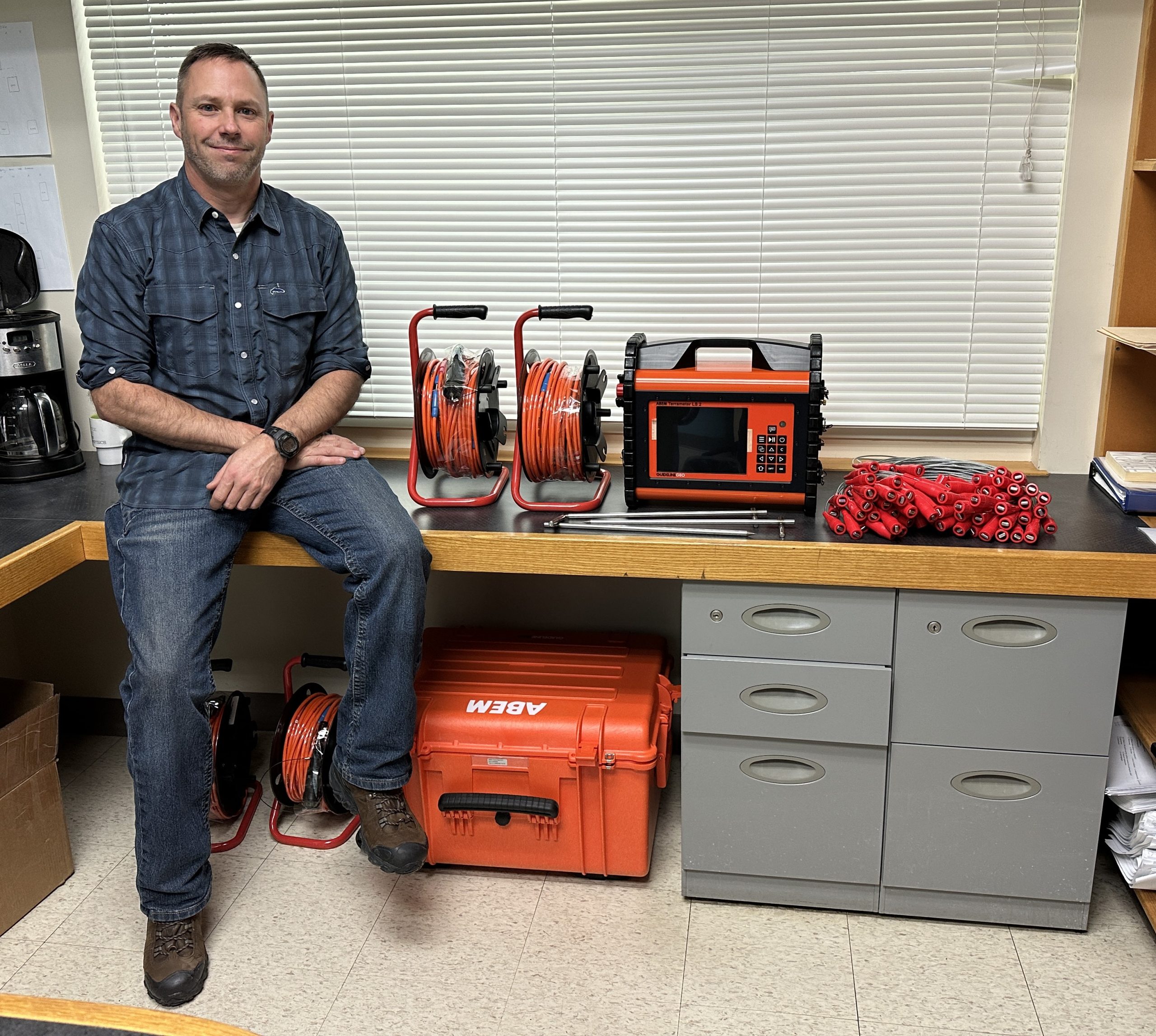
The geophysical instrumentation capabilities of the Department of Geological and Mining Engineering and Sciences (GMES) have recently been expanded with the acquisition of a state-of-the-art ABEM Terrameter LS 2 resistivity and induced polarization (IP) surveying system. This purchase was made possible through the Carl Schwenk Faculty Fellow Endowment Fund.

Dr. Jeremy Shannon, Carl Schwenk Faculty Fellow, with the new ABEM Terrameter LS 2 system.

This investment reflects GMES’s ongoing commitment to providing students with hands-on training and technical skills that align with current and emerging workforce needs. The new system replaces an older instrument and enables the addition of an induced polarization module to our summer field geophysics course, taught by the Carl Schwenk Faculty Fellow, Teaching Professor Dr. Jeremy Shannon.

Carl Schwenk was deeply committed to geoscience education and to ensuring that future generations of geoscientists and geoengineers had access to modern tools and meaningful field experiences. By sharing his success with his alma mater, he created a lasting impact that continues to benefit our students today. We remain deeply grateful for his vision and generosity.

Gifts like the Carl Schwenk Faculty Fellow Endowment Fund demonstrate how alumni and friends can make a tangible, lasting difference in student education. Continued philanthropic support allows GMES to invest in cutting-edge equipment, strengthen experiential learning, and prepare students to lead in a rapidly evolving geoscience profession.

Written by Aleksey Smirnov, Chair of Geological and Mining Engineering and Sciences.

GMES Expands into Drone-Based Geophysics: A New Frontier for Education and Research

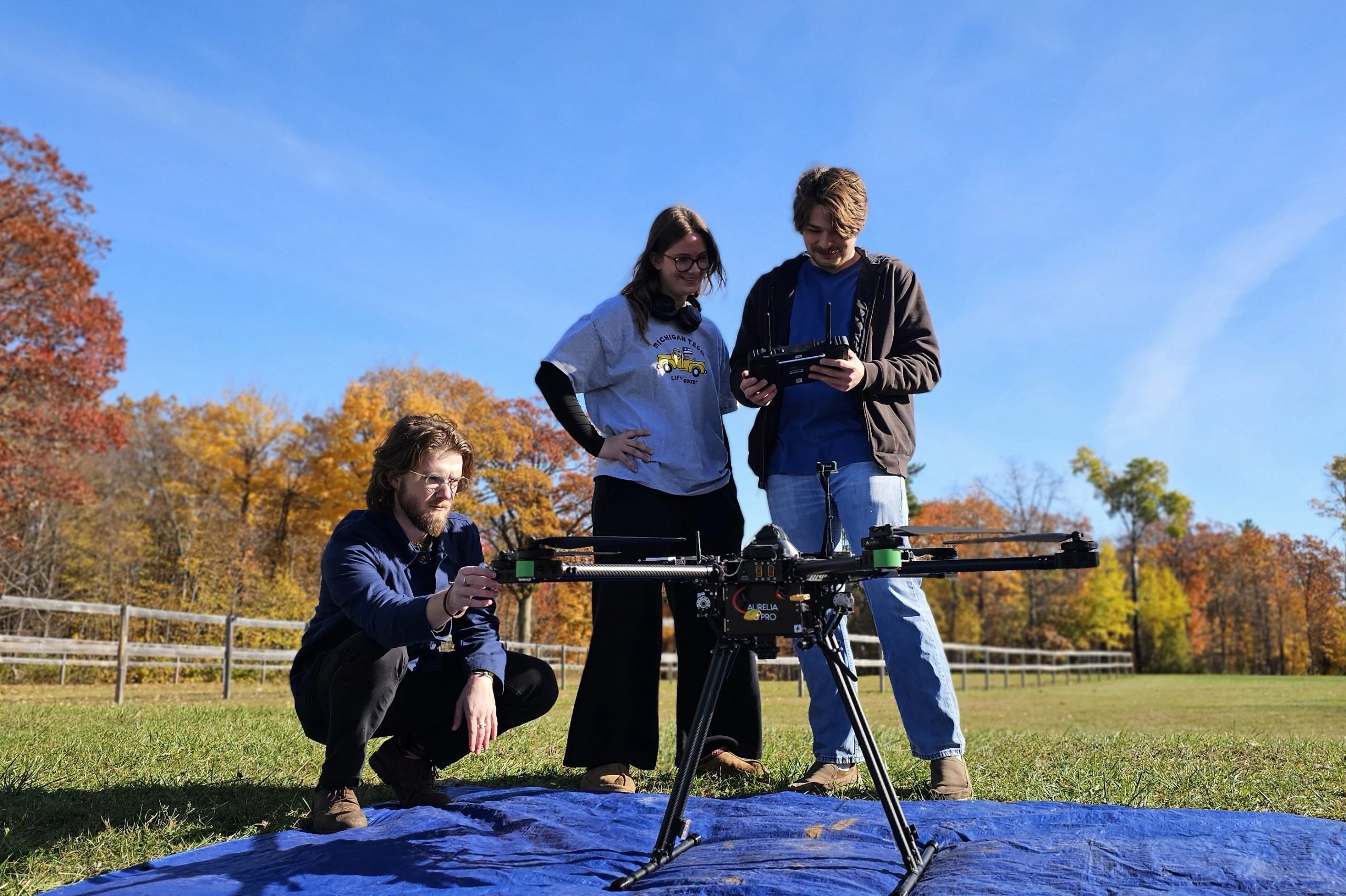
(left to right) PhD candidate Gabriel Ahrendt, undergraduate researcher Miah Mol, and MS student Samuel Jensen from the Earth and Environmental Magnetism research group are gearing up our drone-based geophysics platform for its next test flight.

The Department of Geological and Mining Engineering and Sciences (GMES) at Michigan Technological University is always looking for opportunities to expand our education and research into new, forward-looking areas. Drone-based geophysics is one such area—an emerging field that is rapidly transforming how we investigate and understand the subsurface.

Drone-based geophysics offers remarkable potential for geoscience and engineering practice. By
combining unmanned aerial systems with advanced geophysical sensors, we can safely and efficiently
collect high-resolution data in challenging or previously inaccessible environments. These capabilities
are reshaping mineral exploration, environmental assessment, hazard mapping, and infrastructure
monitoring.

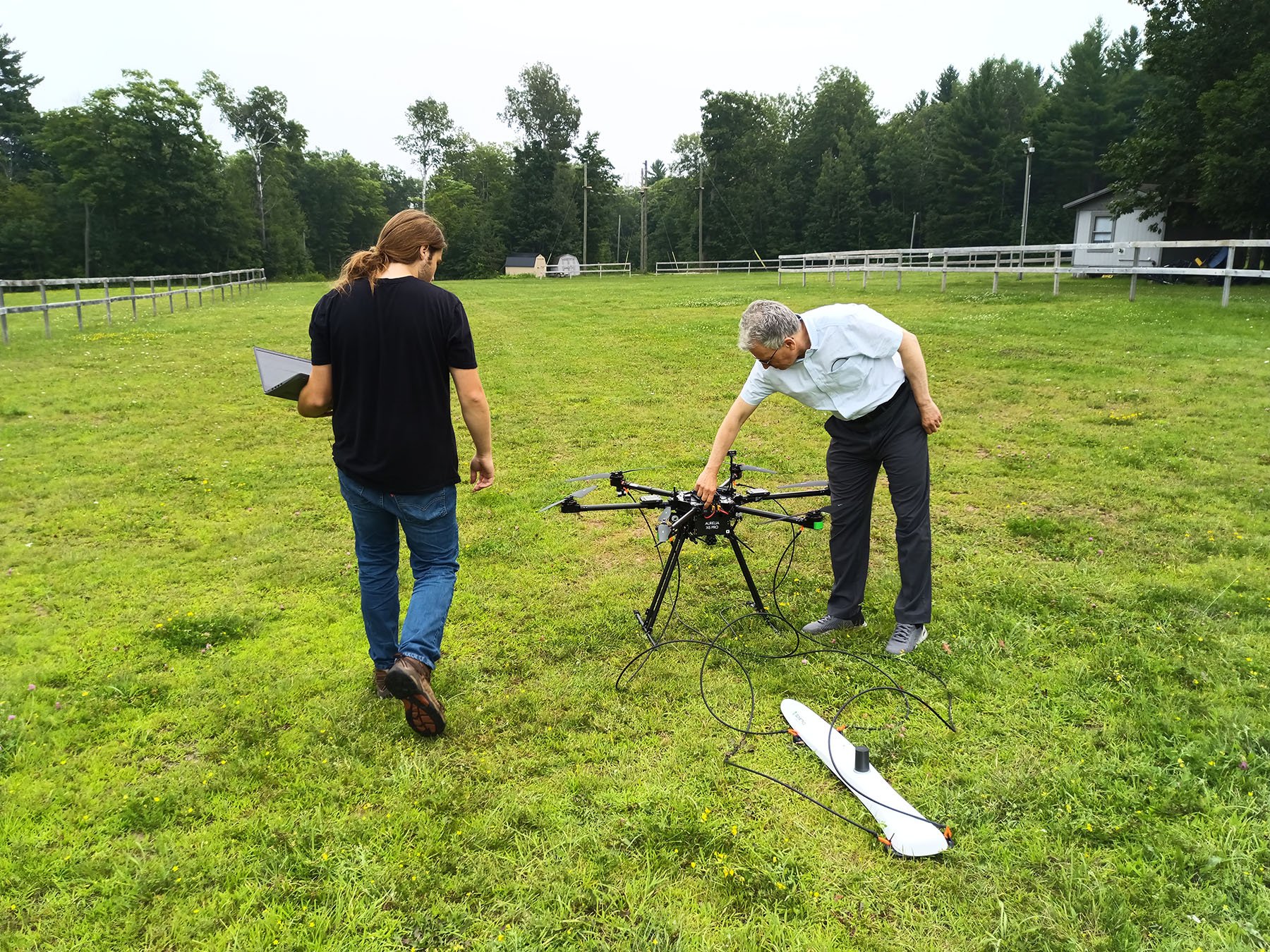
To provide our students with this increasingly sought-after skill set — valued across industry, government agencies, and research organizations — we have launched the development of a new drone-based geophysics curriculum. To support this initiative, the department has acquired a high-capacity Aurelia X6 Pro V2 drone paired with a Geometrics MagArrow II magnetometer, one of the most advanced airborne magnetic systems available. This effort is currently led by Professor Aleksey Smirnov, chair of GMES, together with MS student Samuel Jensen. Both have recently completed comprehensive training and earned professional unmanned aerial vehicle pilot licenses, ensuring safe and compliant deployment of these systems in research and instructional settings.

Sam Jensen and Aleksey Smirnov prepare a drone for its first outdoor flight, with tall trees in the background.
Sam Jensen and Aleksey Smirnov are preparing for the first flight of the Aurelia X6 Pro drone equipped with the Geometrics MagArrow II magnetometer.

Our vision is to develop a suite of drone-based geophysics courses covering not only airborne data acquisition but also advanced data processing and visualization. Students will use the state-of-the-art Seequent Oasis Montaj geophysical software — recently acquired to support the Applied Geophysics program — to work with real flight datasets, learn industry-standard workflows, and build strong practical expertise.

Our future research directions include a wide range of potential applications, such as high-resolution magnetic mapping of Precambrian rocks in the Upper Peninsula of Michigan, critical minerals and geological hydrogen exploration, surveys of mine tailings and legacy mining landscapes for environmental and safety assessments, geologic mapping of fault zones and structural features, and magnetic mapping for archaeological investigations.

We are also actively seeking collaborations with other departments and research centers at Michigan Tech, as well as partners outside the university, to broaden the impact and interdisciplinary reach of this developing program.

Looking ahead, we plan to expand our toolkit with additional drone-compatible geophysical methods, including electromagnetics and ground-penetrating radar, further enhancing opportunities for education and research.

We are excited about the hands-on learning and research possibilities that drone-based geophysics will offer, and we hope that this work will inspire more students to join GMES and contribute to the continued success of the department. Stay tuned for updates…

PE Limited’s $6.5M Contribution Revolutionizes GMES Teaching and Research

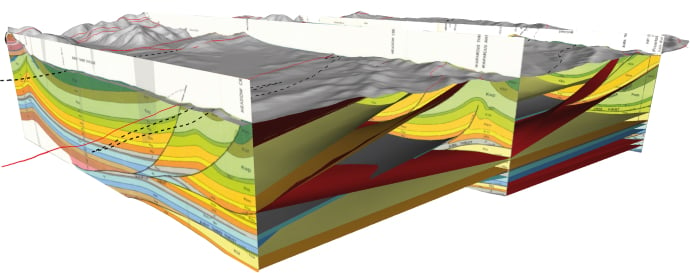
MOVE, a geologic modeling software, provides a full digital environment for best-practice structural modeling to reduce risk and uncertainty in geological models.

Michigan Technological University’s Department of Geological and Mining Engineering and Sciences
(GMES) has received a generous donation from PE Limited, a global leader in petroleum engineering
software. The $6,564,992.28 contribution consists of ten licenses for the state-of-the-art MOVE suite
and ten licenses for the IPM suite of products. This innovative software will be critical in advancing
education and academic research by enabling cutting-edge structural modeling and minimizing risk in
geological models.

“This generous donation from PE Limited is a game-changer for our department,” said Dr. Aleksey
Smirnov.

GMES will install the MOVE and IPM software in a computer lab and integrate it into the curriculum,
transforming structural geology education for undergraduate and graduate students. Courses like
GE3050 Structural Geology, a requirement for GMES undergraduates, GE4610 Formation Evaluation and
Petroleum Engineering, and graduate-level classes will leverage this powerful tool to enhance learning
outcomes. Furthermore, MOVE will play a vital role in academic, non-commercial research on tectonics
and structural geology, including mapping Michigan’s iconic Keweenaw Fault and other complex systems
in the Upper Peninsula. The IMP Suite will support our ongoing and future research activities in the
areas of critical mineral extraction, subsurface fluid-flow modeling, and geomechanics.

Dr. Aleksey Smirnov, Chair of the GMES Department, believes in the donation’s transformative impact.
“This generous donation from PE Limited is a game-changer for our department,” said Dr. Aleksey
Smirnov. It empowers our students and researchers to work with industry-leading tools, elevating their
education and research to the next level.”

Since its founding in 1990, PE Limited has been developing software solutions for the oil and gas
industry. PE Limited supports accredited universities offering advanced geology and petroleum
engineering programs through its educational licensing program, fostering the next generation of
industry innovators.

Learn more about the MOVE and IPM suite of products and its role in shaping geologic modeling
excellence.

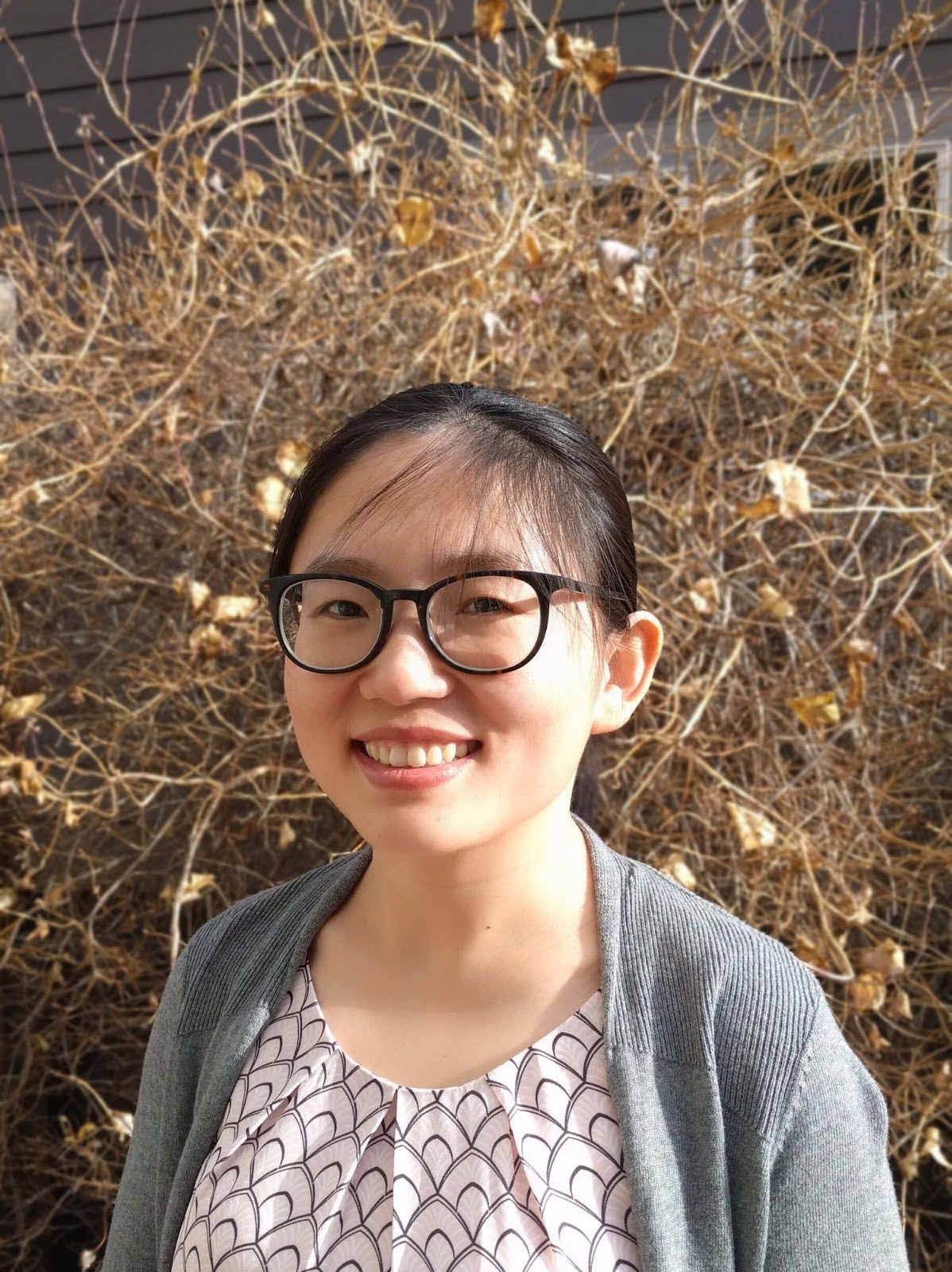
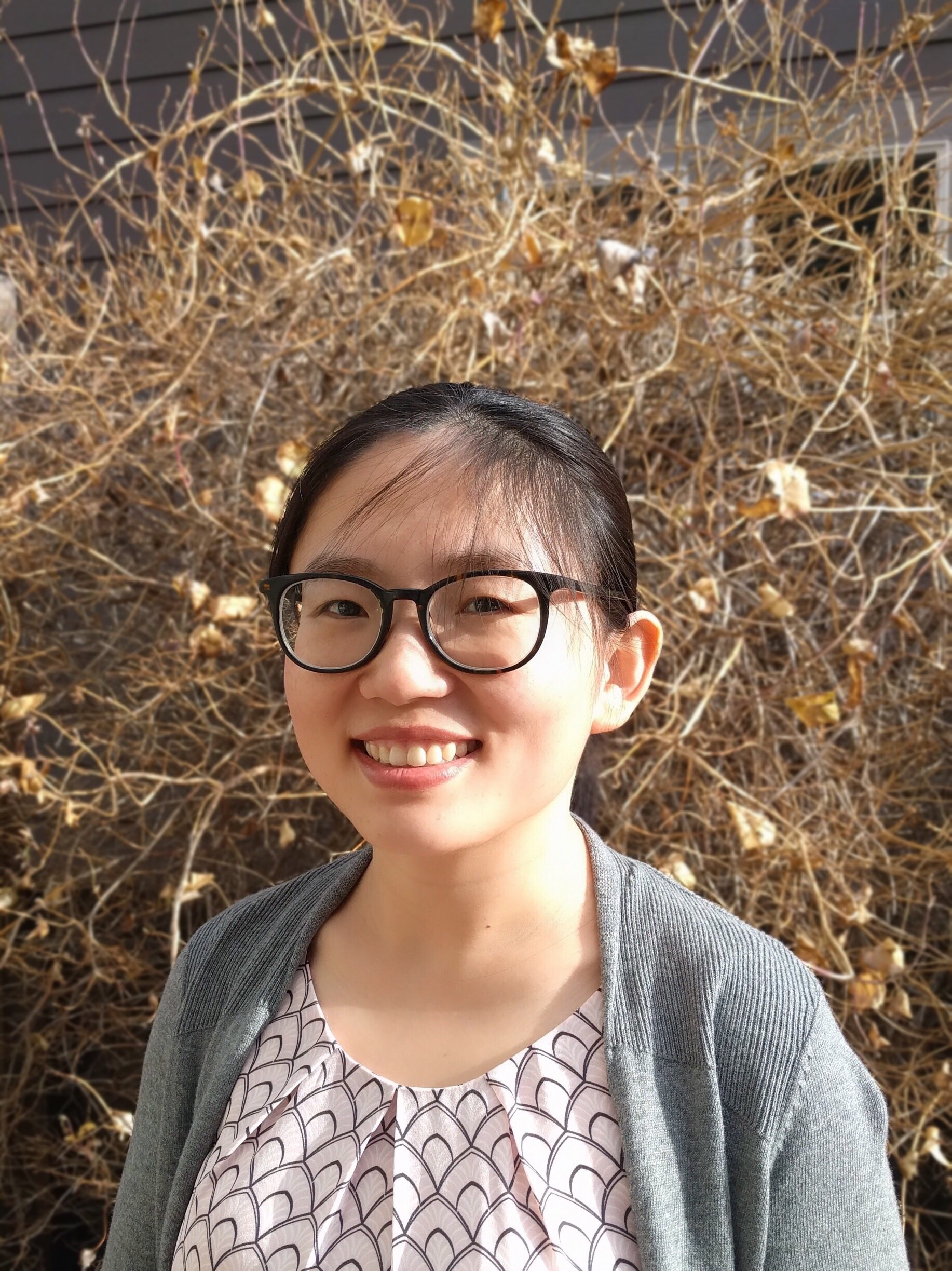
Dr. Yanrui (Daisy) Ning Joins the GMES Faculty

The Department of Geological and Mining Engineering and Sciences at Michigan Technological
University is pleased to welcome Dr. Yanrui (Daisy) Ning as the newest member of our faculty in
Geological Engineering. Dr. Ning brings extensive experience and technical expertise that will
strengthen the department’s teaching and research portfolio in subsurface energy systems and
resource engineering.

Dr. Ning earned her Ph.D. in Petroleum Engineering from the Colorado School of Mines in 2017,
where she also served as a Research Assistant Professor in the Department of Geophysics. Her
research focuses on carbon capture, utilization, and storage (CCUS), enhanced geothermal
systems, subsurface hydrogen storage, and critical minerals. She applies an integrated approach
that combines multiphase flow modeling, geomechanics, advanced computational simulation,
machine learning, and distributed fiber-optic sensing to advance the understanding and
sustainable management of subsurface energy systems.

In her new role at Michigan Tech, Dr. Ning will contribute to both teaching and research in
support of the Geological Engineering program. Her expertise in subsurface energy systems
directly supports the national priorities of strengthening U.S. energy security, expanding
domestic resource production, and ensuring a stable supply of critical minerals. She is also
advancing emerging fields such as geological hydrogen exploration and carbon management,
which align with the nation’s goals of responsible resource development and technological
innovation in the energy sector.

“Dr. Ning’s expertise in subsurface energy systems and her multidisciplinary approach
will enhance our capabilities in critical areas such as carbon storage, geothermal
energy, critical minerals, and geological hydrogen,” said Aleksey Smirnov, Chair of the
Department of Geological and Mining Engineering and Sciences. “We are excited to
have her on board as we continue to grow our Geological Engineering program and
expand our impact on the sustainable development of Earth’s resources.”

Please join us in welcoming Dr. Daisy Ning to Michigan Tech and the GMES community.

In Memoriam: Professor Emeritus William (Bill) Rose

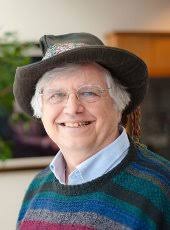
William (Bill) Rose

It is with deep sadness that we announce the passing of Professor Emeritus William (Bill) Rose on July 18. A distinguished colleague, devoted mentor, treasured friend, and visionary community leader, Bill began his journey with the Department of Geological and Mining Engineering and Sciences (GMES) in 1970, shortly after earning his PhD from Dartmouth College. He dedicated his entire 41-year faculty career to Michigan Tech and the Keweenaw community.

As department chair from 1990 to 1998, Bill led us through transformative growth, expanding graduate programs, increasing external research support, and integrating new technologies into geoscience education and outreach. He was instrumental in establishing signature programs such as the International Masters in Volcanology and Geotechniques (INVOGE) and the Peace Corps Master’s International program in Mitigation of Geologic Natural Hazards—initiatives that have significantly impacted our students and enhanced our global reputation.

Even in retirement, Bill remained deeply engaged, promoting public understanding of geoheritage and sharing his passion for science and culture with the broader community. His generosity, vision, and tireless mentorship have left an indelible mark on all who have had the privilege of knowing him. Many of his students returned decades later to reconnect, a testament to the lasting impact he had on their lives.

Our hearts go out to his wife, Nanno, his sons Christopher and Jason, and their families.

We recognize that no brief message can fully capture his profound impact or enduring legacy. In the coming days, we will share more information and plan a proper tribute to honor Bill’s life and contributions.

Department of Geological and Mining Engineering and Sciences

Lucas Maxon Awarded Prestigious Copper Club Scholarship for 2025–26

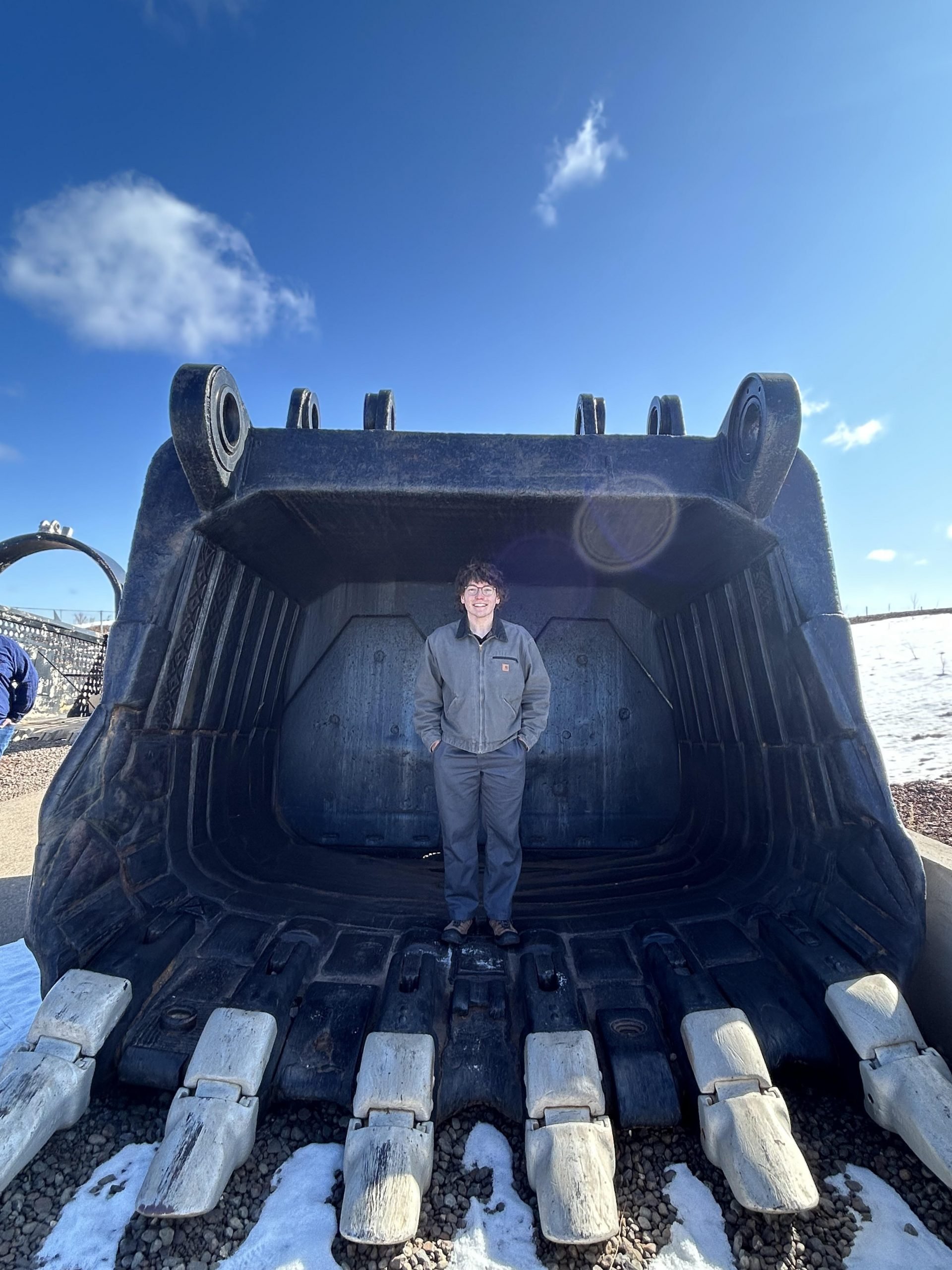
Lucas Maxon stands inside the large bucket of a surface mining haul truck, illustrating the massive scale of the equipment.
Lucas Maxon exploring the scale of surface mining equipment firsthand.

The Department of Geological and Mining Engineering and Sciences (GMES) at Michigan Technological University is proud to announce that Lucas Maxon, a standout senior in the mining engineering bachelor’s program, has been awarded a Copper Club Scholarship for the 2025–26 academic year. This prestigious award, presented annually by The Copper Club—a New York-based nonprofit that promotes the copper industry—recognizes Lucas’s academic excellence, leadership, and dedication to the future of mining.

Founded in 1944, The Copper Club, Inc. is the leading organization supporting the copper industry through networking, educational grants, and industry events. Its scholarship program is highly competitive, providing support to students majoring in geoscience and related fields, with a focus on the production and development of copper and copper products. Recipients are selected based on outstanding academic achievement and potential for leadership in the industry.

Lucas has shown remarkable commitment to his studies and the mining profession. His active involvement in the Society for Mining, Metallurgy, and Exploration (SME) and his role on the nationally recognized AggCelerate student team highlight both his technical skills and collaborative leadership.

For Lucas, the path to mining engineering was rooted in both heritage and personal passion. “I was born and raised in a historic iron mining town. The mining stopped a long time ago, but the history remains. I have always found the historic mining of my hometown very interesting,” he shared. “As I grew up, I also discovered my love for engineering and problem-solving, and knew it was the path for me. It was a no-brainer from there to combine the two. I took a tour of the GMES department in my senior year of high school, just to confirm that mining engineering was the right path for me, and that Tech was where I wanted to be. Before the tour was even over, I knew this was the right degree for me and an amazing place to get it.”

This scholarship not only provides financial support but also connects Maxon with a network of professionals and opportunities within the copper industry. It underscores the department’s commitment to cultivating talent that will drive the future of mining engineering. Lucas’s award is the latest addition to the roster of GMES students who have earned this honor, including  Alice Schmaltz, Jacob Maxon, Emily Street, and Cory Burkwald.

Congratulations to Lucas Maxon on this well-deserved honor!

Celebrating the 2025 WAAIME SME Scholarship Recipients

We are proud to congratulate this year’s GMES recipients of the WAAIME SME scholarships! All of these Michigan Tech grad students in mining engineering, Brighton Muwi, Daniel Muchabaiwa, Kudakwashe Mutanga, Mirza Ubed Baig, and geology student Ben Mperekwa, received awards. These outstanding students have demonstrated exceptional dedication to their academic and professional journeys in the fields of mining, metallurgy, geology, and related disciplines.

The WAAIME scholarship is awarded annually to students who exhibit academic excellence, leadership potential, and a passion for advancing the future of the mining and minerals industry. This prestigious award supports their educational pursuits and recognizes their contributions to shaping the future of mining and earth sciences.

Championing Academic Excellence and Innovation
Each recipient is committed to academic excellence and a drive to innovate and contribute to the fields of mining and geology. Through their hard work, these students represent the next generation of industry leaders who will tackle challenges, drive sustainable practices, and lead advancements in the mining and mineral exploration industries.

Empowering Tomorrow’s Industry Leaders
Receiving the WAAIME SME scholarship is a testament to the recipients’ dedication and potential. This support allows them to further their education, pursue internship opportunities, and engage with industry professionals who will mentor them throughout their careers.

We celebrate each recipient’s hard work and the bright future they represent. Congratulations again to all the WAAIME SME scholarship winners – your achievements inspire us all and pave the way for a stronger, more innovative future in mining and geological sciences.

Stay tuned for more updates and stories from our incredible students as they continue to achieve and impact the world of earth sciences!