
Tag: awards

PhD Candidate Will Johnston Named a 2026 Rising Star in Mechanical Engineering for Advanced 3D Printing Research

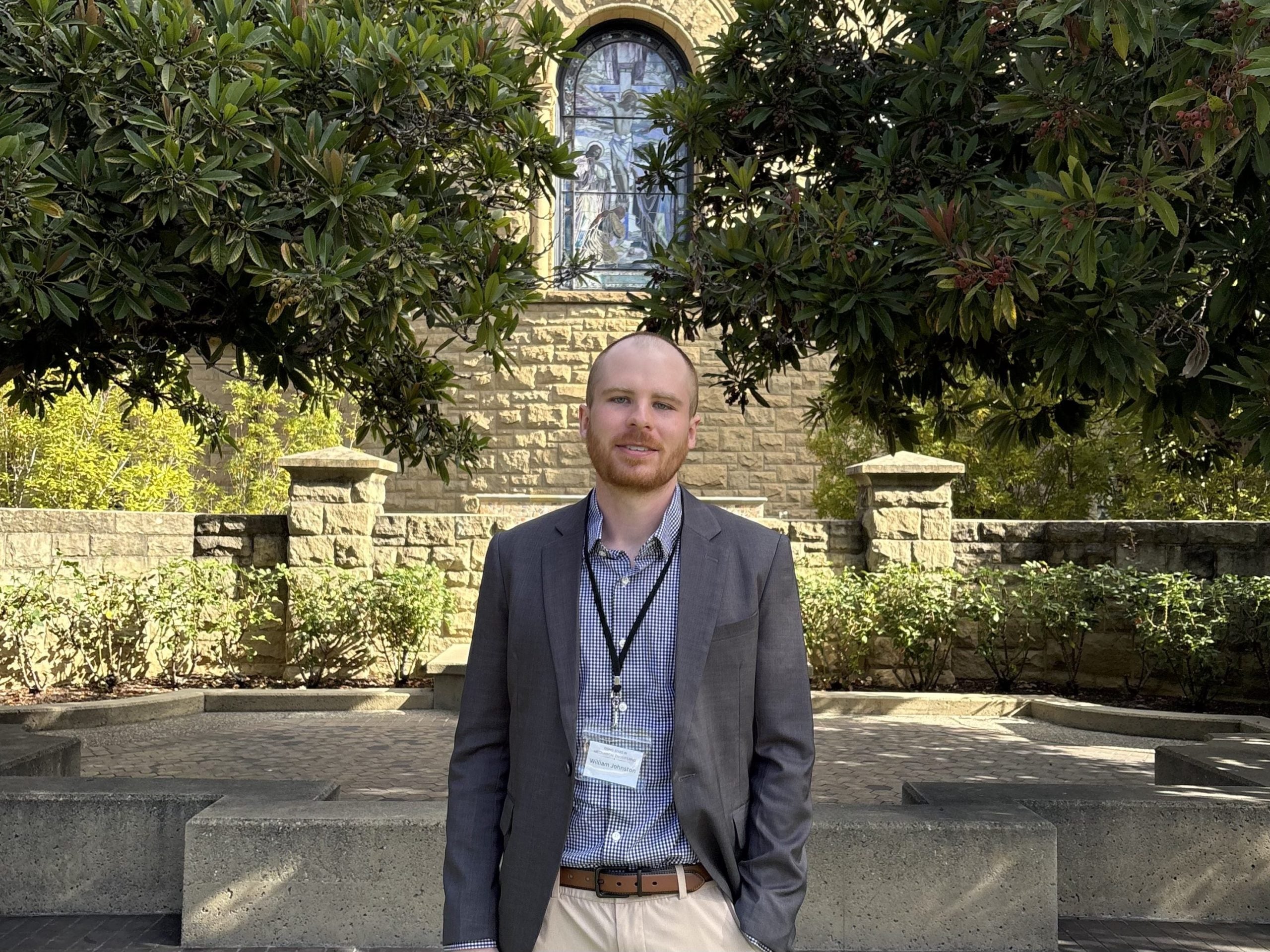
Will Johnston, PhD candidate in the Department of Mechanical and Aerospace Engineering at Michigan Technological University and a 2026 Rising Star in Mechanical Engineering, is a National Science Foundation Graduate Research Fellow whose research focuses on 3D-printed tensegrity-assisted inflatable structures with applications in aerospace, deployable space systems, and biomedical devices.

Michigan Tech PhD candidate Will Johnston was selected for the 2026 Rising Stars in Mechanical Engineering workshop, a competitive program that prepares emerging researchers for academic careers. Held at Stanford University in September, the workshop brought together approximately 30 doctoral students and postdoctoral researchers from across the country. The program, which rotates annually among Stanford, MIT, UC Berkeley, and Carnegie Mellon University, prepares early-career researchers for academic careers in mechanical engineering. 

Turning a 3D-Printing Defect into a Design Feature

Johnston, a member of Michigan Technological University’s Mechanics, Acoustics, and Dynamics Lab (MADLab), focuses his dissertation research on tensegrity-assisted inflatable structures: 3D-printed inflatables with an internal fiber architecture that gives them precise, controllable shapes that are nearly impossible to achieve with conventional inflatables. The technology has potential applications in aerospace components, deployable space structures and biomedical devices such as stents. 
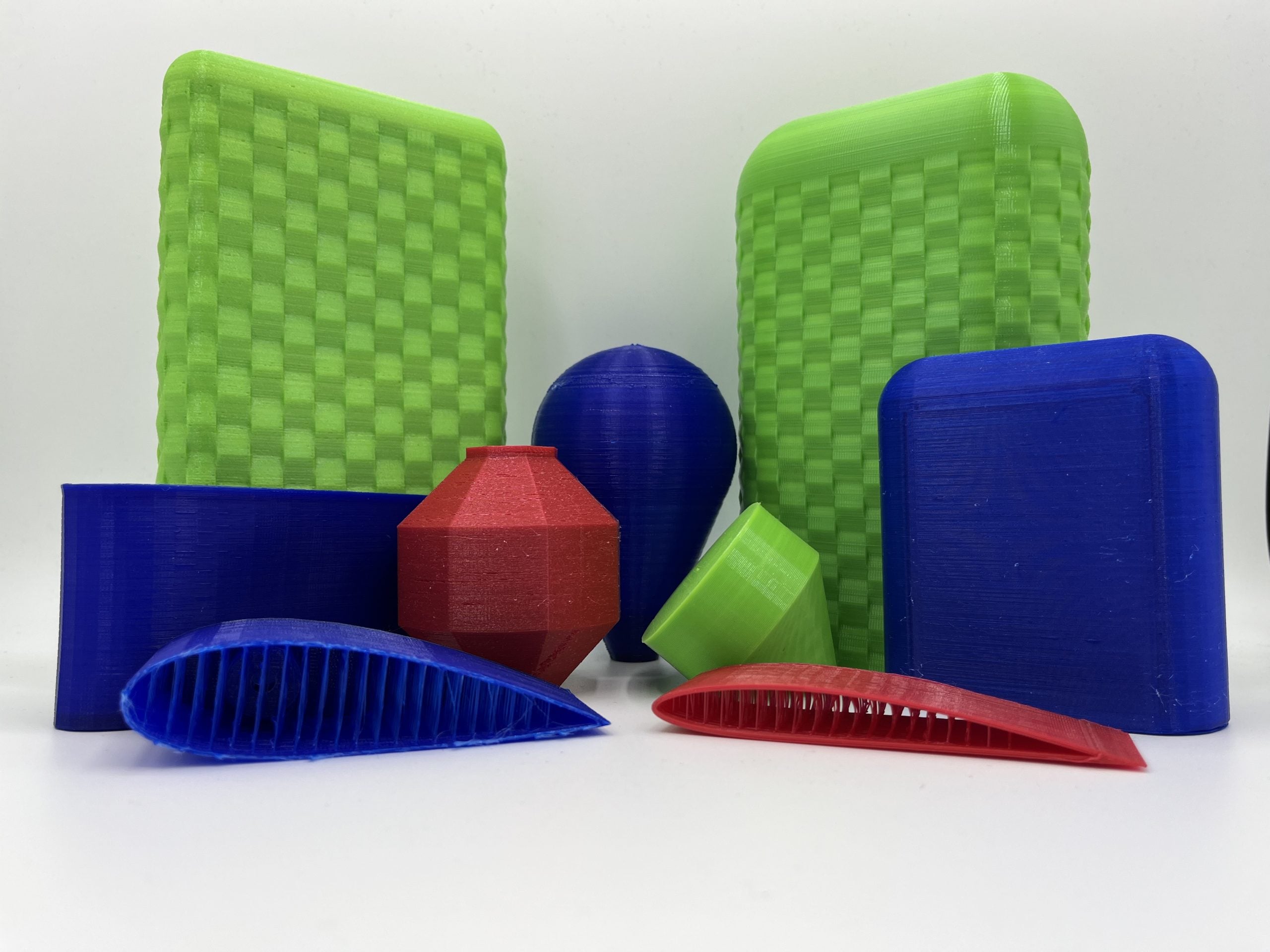
Tensegrity-assisted inflatable structures, with a cross-section showing internal fiber support structure
TenseFlatables are a 3D-printed tensegrity-assisted inflatable structure developed by Michigan Tech PhD candidate Will Johnston and Associate Professor Bhisham Sharma in the Mechanics, Acoustics, and Dynamics Lab (MADLab). Unlike conventional inflatables, TenseFlatables use an internal fiber architecture to achieve precise, controllable shapes, with potential applications in aerospace components, deployable space structures, and biomedical devices.

At the workshop, Johnston delivered a lightning talk that inverts conventional engineering logic: in 3D printing, stringing (the taffy-like filaments a printer leaves as it moves between points) is typically treated as a defect to be eliminated. Johnston’s work leverages stringing as a design feature, using those fibers to build structures with properties that conventional manufacturing can’t replicate. By rethinking how 3D-printed fibers behave, Johnston is developing inflatable structures whose shapes and mechanical properties can be controlled through their internal architecture.

A Manufacturing Researcher at the Right Moment

Johnston was one of the few manufacturing-focused researchers in the cohort. Workshop organizers highlighted manufacturing as an area of growing emphasis across leading engineering programs, noting that Stanford itself is expanding its faculty in the field. It’s an advantage Johnston has cultivated deliberately, since his research bridges multiple engineering disciplines. “If you’re interested in hiring a manufacturing person who can go beyond manufacturing, that’s what I bring,” Johnston said.

“Will has a gift for seeing possibilities where others see limitations, and the persistence to turn those possibilities into working technologies,” said Bhisham Sharma, associate professor in the Department of Mechanical and Aerospace Engineering, who has advised Johnston since his undergraduate days at Wichita State University and brought him to Michigan Tech in 2023. “He is the strongest student I have advised — not simply because of what he has accomplished, but because of the originality and independence of his thinking. His selection is well deserved and reflects the caliber of research our graduate students can pursue at Michigan Tech.”

Recognition, Research, and the Road to a Faculty Career

Johnston is a National Science Foundation (NSF) Graduate Research Fellow, co-inventor on a U.S. patent for inflatable structure fabrication, and the student team lead behind TenseFlatables, which won first place in the Manufacturing and Materials category at the SAE Create the Future Design Contest, and AeroFeathers, which won an honorable mention in SAE’s Aerospace and Defense category.

The workshop also covered the faculty job search, including research and teaching statements and how to communicate a research vision to hiring committees. Johnston is currently applying for assistant professor positions and plans to defend his dissertation in the spring of 2027. 

Tania Demonte Gonzalez receives Best Presentation Award at INORE’s 2023 European Symposium

Photo of Tania Demonte Gonzalez, who conducts research on wave energy converter nonlinear control.

Tania Demonte Gonzalez (PhD candidate, ME-EM) conducts research on wave energy converter nonlinear control and is part of the graduate student team using MTU Wave, the campus-based wave tank. She was awarded Michigan Tech’s Topping Teaching Fellowship in the Fall of 2022 and is a remote intern at the National Renewable Energy Laboratory (NREL) in Colorado.

Tania recently attended the International Network on Offshore Renewable Energy’s (INORE) 2023 European Symposium, a five-day meeting for researchers specializing in offshore renewable energy. The symposium provides many opportunities for early-stage researchers to come together, learn from one another, and establish new relationships that can greatly benefit their research and career journeys.


As part of the attendee research presentations, Tania gave a talk on “Time-Varying Hydrodynamic Modeling of a Variable Geometry Oscillating Surge Wave Energy Converter” and received one of two Best Presentation Awards. The presentation was a collaboration with NREL’s Dr. Nathan Tom and discussed the methods used to find a time-varying model for variable geometry surge wave energy converters. More details will be available in an upcoming publication.

Congratulations on this achievement, Tania.

Nina Mahmoudian Receives a Young Investigator Program Award from Office of Naval Research

image123120-horizOnly 36 faculty across the US were invited to join the Young Investigator Program (YIP) from the Office of Naval Research this year; additionally, only a small percent of faculty receive the CAREER Award from the National Science Foundation (NSF). Nina Mahmoudian, an assistant professor of mechanical engineering-engineering mechanics at Michigan Technological University, is one of a select few to receive both in the same year.

Read More

Odegard Earns Exceptional Graduate Faculty Mentor Award

Dr. Greg Odegard was recently presented wit the 2015 Exceptional Graduate Faculty Mentor Award from the Graduate School at the 2015 Graduate Research Awards Banquet. This Merit Award for Exceptional Graduate Student Mentor recognizes advocacy for graduate students, being available and encouraging to students, and creativity/interdisciplinary collaboration in new opportunities for graduate student.

Senior Recognition Banquet

IMG_4021The mechanical engineering-engineering mechanics department held its semi-annual Senior Capstone Design Day Program. Eight teams presented the fruits of their efforts over the past two semesters during presentations to industry reps, faculty, staff, and students. The teams also displayed posters and, in some cases, their prototypes in the rear first-floor hallway of the MEEM building.

Keynote Speaker: Gerald E. McGlynn III, 1984 B.S. in Mechanical Engineering, Michigan Tech, Intellectual Property Attorney, Howard and Howard; J.D., cum laude, from Detroit College of Law in 1988  

Michigan Tech students join in international PACE contest

PAMDMichigan Tech students participated with other university students in an multi-year international competition to design a Portable Assisted Mobility Device (PAMD) through the Partners for the Advancement of Collaborative Engineering Education (PACE) program. There were 7 international teams and 45 universities from around the world involved, showing the “collaborative engineering” purpose of the PACE program. At the 2014 PACE Global Annual Forum in Turin (Italy) the projects were evaluated by an international team of judges including GM/Opel, Siemens, PLM Software, Autodesk, Oracle, and HP.
The winning PAMD team included RWTH Aachen University, TU Darmstadt (both in Germany), Michigan Technological University, the University of Cincinnati and the ITESM Estado de Mexico.  

Michigan Tech in Global Trajectory Optimization Competition

ed03

The Michigan Tech Space Trajectory Optimization Team was ranked 20 in the 7th Global Trajectory Optimization Competition. This Competition is an event that takes place every one-two years over roughly one month during which the best aerospace engineers and mathematicians worldwide challenge themselves to solve a “nearly-impossible” problem of interplanetary trajectory design.

The 7th edition of the competition was organized by Politecnico di Torino – Università di Roma “Sapienza”, Italy. There were 38 participating teams worldwide. The first place in the 7th edition of the competition is the Outer Planets Mission Analysis Group of the Jet Propulsion Laboratory, USA.