Category: Faculty and Staff

David Nitz Honored by Argentina Community for Contributions to Education, Commitment to Students

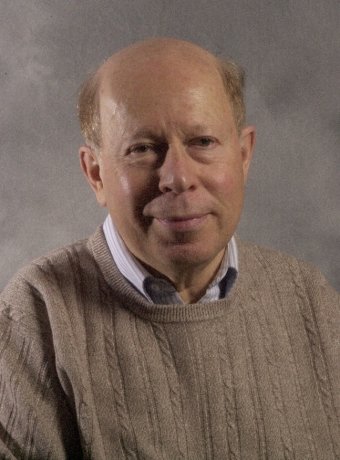
Professor David Nitz

Professor Emeritus David Nitz was recently honored for his efforts to build bridges for Michigan Tech students from Malargüe, Argentina.

Malargüe is home of the Pierre Auger Observatory, the world’s largest cosmic ray detector, covering an area of 3,000 square kilometers. It is operated by a collaboration of more than 400 scientists from 17 countries with the aim of studying the highest energy particles of the universe — ultra-high energy cosmic rays.

On Jan. 6, the Municipality of Malargüe held a recognition breakfast in Nitz’s honor, highlighting his long-standing contribution to education and his commitment to supporting Malargüe students who attended Tech. 

During the event, local authorities presented Nitz with Ordinance No. 2,362/2025 from Malargüe’s city council, which officially designated a public street as “David F. Nitz Street.” The tribute, covered by local newspaper Ser y Hacer de Malargüe, reflects the deep appreciation of the community for a professional career that not only advanced scientific knowledge but also created lasting educational opportunities for students. 

The event also emphasized the human dimension of Nitz’s work. Together with his wife, he played a key role in accompanying Malargüe students during their academic experience in Houghton. For many, adapting to a new country, language and academic culture was a significant challenge. In this context, the guidance and personal support provided by Nitz and his family became essential. Over the years, his home served as a place of orientation, reassurance and emotional support for students far from their families, helping ensure not only their academic success but also their personal well-being.

Nitz’s sustained commitment helped strengthen the Malargüe Scholarship Program, which since 2001 has enabled several students to access high-quality education abroad, expanding their academic and professional horizons. In many cases, the emotional and practical support provided to participants by mentors like Nitz was crucial to sustaining their educational journey.

Malargüe’s recognition of Nitz symbolizes more than personal achievement. It highlights the importance of cooperation, mentorship and educational opportunity as drivers of local development. By naming a street after him, Malargüe honors a man who helped open doors for young talent and reinforced the idea that investing in education creates lasting benefits for individuals and communities alike.

Find David F. Nitz Street on Google Maps here.

Calle David F. Nitz
Calle David F. Nitz

About the Physics Department

Physicists at Michigan Technological University help students apply academic concepts to real-world issues. Our physicists take on the big questions to discover how the universe works—from the smallest particles to the largest galaxies. The Physics Department offers three undergraduate degrees and three graduate degrees. Supercharge your physics skills to meet the demands of a technology-driven society at a flagship public research university powered by science, technology, engineering, and math. Graduate with the theoretical knowledge and practical experience needed to solve real-world problems and succeed in academia, research, and tomorrow’s high-tech business landscape.

Questions? Contact us at physics@mtu.edu. Follow us on FacebookTwitter, and YouTube for the latest happenings. Or read more at the Physics Newsblog.
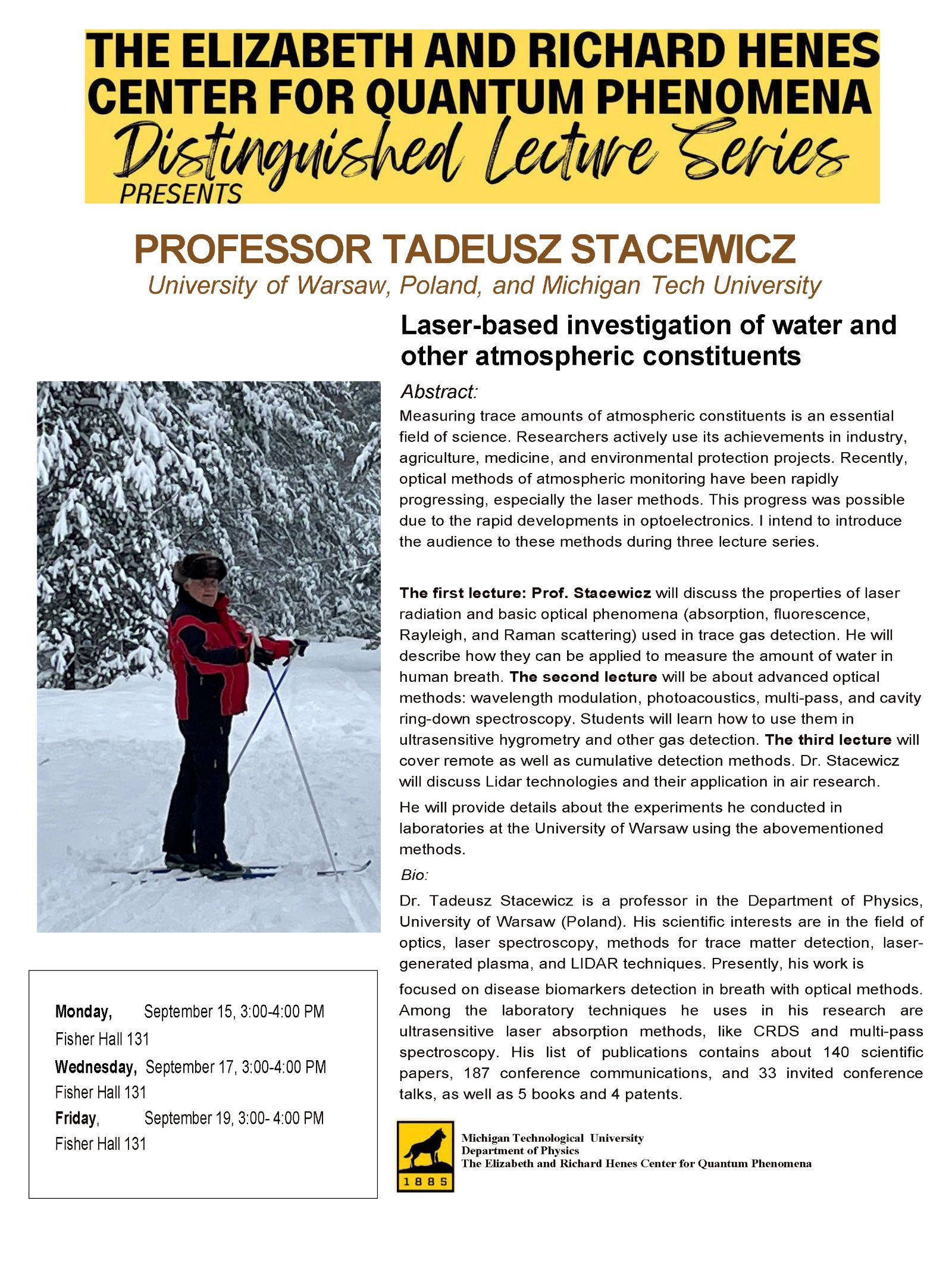
The Henes Center for Quantum Phenomena Distinguished Lecture Series Presents Professor Tadeusz Stacewicz

Professor Stacewicz skiing through a winter scene.
Professor Tadeusz Stacewicz

The Henes Center for Quantum Phenomena and Department of Physics are proud to host a series of talks by Professor Tadeusz Stacewicz of the Department of Physics, University of Warsaw. These talks are part of the The Elizabeth and Richard Henes Center for Quantum Phenomena Distinguished Lecture Series.

Professor Stacewicz will give three talks on laser-based investigation of water and other atmospheric constituents on Monday, September 15, Wednesday, September 17, and Friday, September 19.

In the first lecture, Prof. Stacewicz will discuss the properties of laser radiation and basic optical phenomena (absorption, fluorescence, Rayleigh, and Raman scattering) used in trace gas detection. He will describe how they can be applied to measure the amount of water in human breath.

The second lecture will be about advanced optical methods: wavelength modulation, photoacoustics, multi-pass, and cavity ring-down spectroscopy. Students will learn how to use them in ultrasensitive hygrometry and other gas detection.

The third lecture will cover remote as well as cumulative detection methods. Dr. Stacewicz will discuss Lidar technologies and their application in air research. He will provide details about the experiments he conducted in laboratories at the University of Warsaw using the abovementioned methods.

Talks will be held in Fisher Hall 131, from 3 – 4:00 pm. Everyone is welcome to these engaging presentations.


About the Physics Department

Physicists at Michigan Technological University help students apply academic concepts to real-world issues. Our physicists take on the big questions to discover how the universe works—from the smallest particles to the largest galaxies. The Physics Department offers three undergraduate degrees and three graduate degrees. Supercharge your physics skills to meet the demands of a technology-driven society at a flagship public research university powered by science, technology, engineering, and math. Graduate with the theoretical knowledge and practical experience needed to solve real-world problems and succeed in academia, research, and tomorrow’s high-tech business landscape.

Questions? Contact us at physics@mtu.edu. Follow us on FacebookTwitter, and YouTube for the latest happenings. Or read more at the Physics Newsblog.

2025 Distinguished Professor: Claudio Mazzoleni

Distinguished Professor Claudio Mazzoleni

Congratulations to Claudio Mazzoleni on his selection as a 2025 Distinguished Professor. The Distinguished Professor title recognizes outstanding faculty members who have made substantial contributions to the University as well as their discipline.

Mazzoleni is a professor of physics and director of the Atmospheric Sciences Ph.D. program at Michigan Tech. He has demonstrated exceptional leadership in atmospheric aerosol research, coupled with outstanding teaching and mentorship of students. He is recognized for his research on aerosol properties and their influence on air quality and climate, notably the optical properties of biomass burning aerosols, and aerosol transport and properties at remote sites like Pico Mountain in the Azores, and has pioneered the development of multiple instruments for characterizing aerosol and cloud properties in the laboratory and in the field.

Mazzoleni and his research team have published extensively in high-impact journals, resulting in over 9,000 citations of their work. He has established a strong externally funded research program in atmospheric physics, with support from federal and industrial sources including the National Science Foundation (NSF), National Aeronautics and Space Administration (NASA), and U.S. Department of Energy (DOE). He is also recognized for his dedicated mentorship of undergraduate students and for his collaborative publications with researchers from other prestigious institutions.


About the Physics Department

Physicists at Michigan Technological University help students apply academic concepts to real-world issues. Our physicists take on the big questions to discover how the universe works—from the smallest particles to the largest galaxies. The Physics Department offers three undergraduate degrees and three graduate degrees. Supercharge your physics skills to meet the demands of a technology-driven society at a flagship public research university powered by science, technology, engineering, and math. Graduate with the theoretical knowledge and practical experience needed to solve real-world problems and succeed in academia, research, and tomorrow’s high-tech business landscape.

Questions? Contact us at physics@mtu.edu. Follow us on FacebookTwitter, and YouTube for the latest happenings. Or read more at the Physics Newsblog.

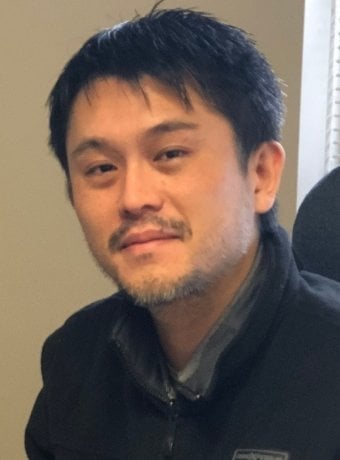
Issei Nakamura Selected for Deans’ Teaching Showcase

Issei Nakamura
Issei Nakamura

College of Sciences and Arts Dean LaReesa Wolfenbarger has selected Issei Nakamura, associate professor of physics, as the featured instructor in this week’s Deans’ Teaching Showcase.

Nakamura will be recognized at an end-of-term event with other spring showcase members and is a candidate for the CTL Instructional Award Series.

Nakamura is an outstanding instructor who has taught a suite of undergraduate and graduate courses in the last 10 years. His teaching in physics spans a broad range of subjects, including classical mechanics, solid-state physics, statistical thermodynamics, modern physics for quantum mechanics, electromagnetism, special theory of relativity, and computational physics.

Nakamura’s experience as a physicist in the classroom has been deeply fulfilling, allowing him to engage closely with students at Michigan Tech. His student-centered approach to active learning extends beyond classroom engagement, encouraging students to tackle small problem sets before or after each lecture. As the course progresses, this “just-in-time” learning strategy reinforces concepts, strengthens retention and allows misconceptions to be addressed in real time.

“The way you structured the homework assignments was very helpful for learning the new material,” one student wrote to Nakamura. “It encouraged critical thinking as we applied the material we learned in class, connecting overarching concepts with the minutiae of the complex math required to understand the topics.”

“Dr. Nakamura continually revises his courses to ensure that students are learning concepts and skills to reflect the workplace they will enter upon graduating,” said Wolfenbarger.

Nakamura’s commitment to innovative teaching continues to evolve. He has restructured his computational physics course, integrating introductory machine learning techniques into the curriculum to align with the growing demand for computational expertise. This course — a core component of the graduate certificate program Advanced Computational Physics — equips students with advanced numerical skills applicable beyond academia. These competencies open doors to careers in research, technology and industries reliant upon modern computational physics.

Nakamura’s philosophy in physics education is to inspire students’ passion for learning by not only deepening their understanding of theoretical principles but also demonstrating their practical applications. He emphasizes the interconnectedness of different areas in physics, recognizing that students often struggle to integrate concepts across disciplines. To help bridge this gap, he encourages students to draw connections between different physics fields. For example, to help students develop a more intuitive grasp of these abstract concepts, he highlights how principles in quantum mechanics or thermodynamics can be interpreted through classical mechanics.

“Issei is an exceptional teacher who cares about engaging students in learning and has made meaningful contributions by incorporating computational components that greatly enhance the physics courses,” said Ravindra Pandey, chair of the Department of Physics.


About the Physics Department

Physicists at Michigan Technological University help students apply academic concepts to real-world issues. Our physicists take on the big questions to discover how the universe works—from the smallest particles to the largest galaxies. The Physics Department offers three undergraduate degrees and three graduate degrees. Supercharge your physics skills to meet the demands of a technology-driven society at a flagship public research university powered by science, technology, engineering, and math. Graduate with the theoretical knowledge and practical experience needed to solve real-world problems and succeed in academia, research, and tomorrow’s high-tech business landscape.

Questions? Contact us at physics@mtu.edu. Follow us on FacebookTwitter, and YouTube for the latest happenings. Or read more at the Physics Newsblog.