Category: Undergraduate Students

Law Club Launches at MTU

A newly established Registered Student Organization (RSO) at Michigan Tech is helping students explore the legal field while making meaningful connections. Law Club at Michigan Technological University creates opportunities for students to explore legal careers, develop professional skills, and engage in meaningful discussions about law and policy.

Law Club MTU meets on Fridays from 5-6pm in the Social Science Annex Lounge in the Annex Building (Building 6, directly behind the Academic Office Building). Free parking is available in Lot 1 or 2, and no permit is necessary after 4pm.

Keep reading to learn more about the Law Club Officers and Advisor stewarding this new student organization.

President: Allie Millina

Allie Millina is a junior majoring in Policy and Law and minoring in Public Health. Allie has gained hands-on experience through a legal research internship with Legal Services of Northern Michigan, where she created case timelines for court, attended client interviews, and observed real settlement hearings and trials. She has worked on policy-focused research projects related to the Global South and interned with Global Detroit where she interviewed refugees about their resettlement process. She also volunteers with Vista Maria, an anti-human trafficking nonprofit.

As President of the Law Club, she is passionate about creating opportunities for students to explore legal careers, develop professional skills, and engage in meaningful discussions about law and policy.

Treasurer: Viviana Cotter

Viviana Cotter is pursuing a degree in Psychology with a concentration in Clinical/Counseling and a minor in Law and Society. She works in the Psychology and Human Factors Department, where she helps manage departmental spending. Additionally, she currently serves as the Treasurer for the Association of Psychology Students at Michigan Tech.

As Treasurer of the Law Club, she is committed to managing the club’s budget and ensuring that funds are allocated to support events, activities, and student initiatives.
Secretary: Gavin Rozak

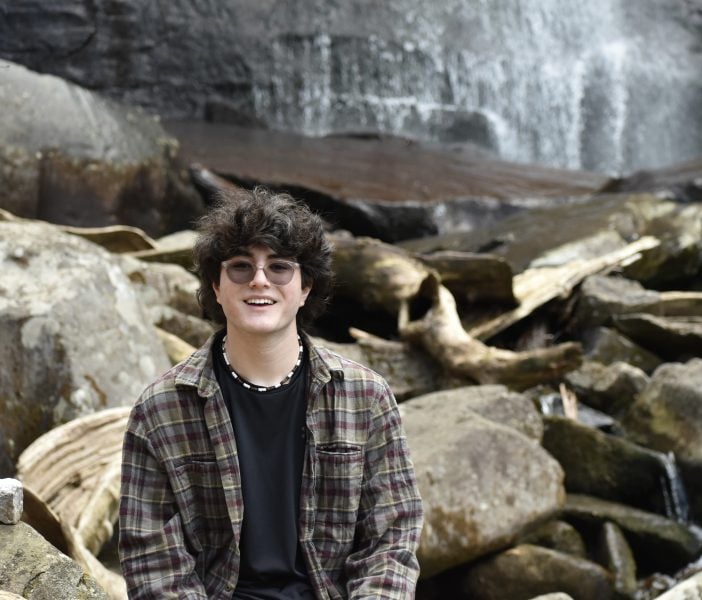
Gavin Rozak is a junior Environmental Science & Policy major at Michigan Technological University, with a minor in Law & Society. By exploring the intersections between law, ecology, and environmental health, he hopes to engage with environmental justice and conservation. Passionate about building a more sustainable future, he aims to enroll in law school in pursuit of becoming an environmental attorney. Environmental volunteering, debate, and current experience working in arboriculture have reinforced his love for the environment and what it has to offer.

He is excited about the opportunities the Law Club has to offer students and the positive dialogue on legal issues it hopes to provide. In his role as Secretary, he wishes to learn alongside others about legal pathways and current events.

Advisor: Susanna Peters

Susanna Peters, MS, JD, taught at Wayne State University Law School before coming to Michigan Tech. Her research and teaching interests include constitutional law, intellectual property, cyberlaw, and prisons. She attended the University of Pennsylvania Law School and had the opportunity of clerking for United States District/Circuit Court Judge Morris Arnold and U.S. Magistrate Judge Komives. In private practice she has worked as a litigation associate at a Los Angeles law firm that specialized in labor law. Ms. Peters also has a M.S. in Agricultural Economics from the University of California at Davis, where her emphasis on resource economics stemmed from summers spent in the Alaskan fishing village of Yakutat. Since being at Tech she has taught Cyberlaw, Intellectual Property, Constitutional Law, Law and Society, Orientation to Legal Careers, American Government, and Perspectives sections entitled “Crime and Incarceration” and “The Work of the First Amendment: Selected Topics in First Amendment Law.

Contact Allie Millina, akmillin@mtu.edu, if you have any questions.

Kendra Lachik Reflects on COP27 Experience

Keweenaw Now recently published a blog post written by Kendra Lachik ‘23 (environmental engineering) about presentations given by Michigan Tech’s delegation to the COP27 climate conference, held in November of 2023 in Sharm El-Sheikh, Egypt. MTU students Anna Kavanaugh (environmental engineering, sustainability science and society), Rose Daily (environmental engineering) and Alexis Pascaris (environmental and energy policy) were quoted in the article about their experiences at the conferences.

You can read Kendra’s article on Keweenaw Now.

Third-Year Sustainable Sciences Student Mariah’s Mexican Adventure

Michigan Tech students spanning majors and class standings embarked on the first Mexico Spring Break study abroad program in early March. Mariah Mellendorf ’25 chronicled the group’s visit to communities in the Yucatan Peninsula to learn about tourism and conduct research.

Read more about Mariah’s Mexico study abroad experience on the Unscripted Research Blog.

MTU students at Chichen Itza

Melia Austin Takes on Costa Rica During Her Study Abroad Trip

Melia Austin
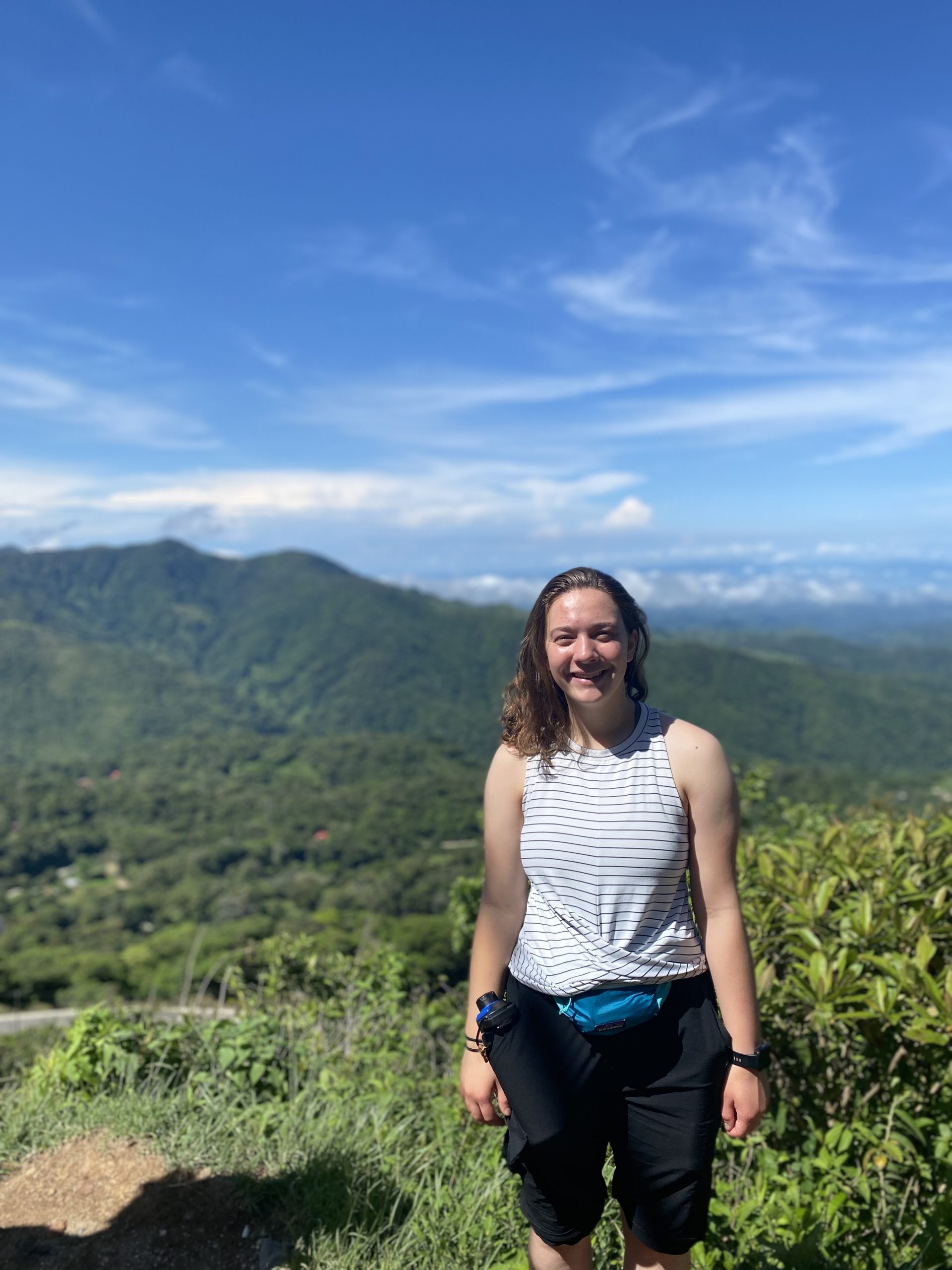
Melia Austin enjoys the view in Costa Rica


Melia Austin immerses herself in her learning. One example: is a trip to Costa Rica during the summer of 2022 with fellow Michigan Tech students interested in sustainability. Building on what they learned at Michigan Tech, they observed what Costa Rica has done to become more sustainable in terms of environment, ecology, water treatment, and more. Plus, Melia immersed herself in the Costa Rican community, where she practiced her Spanish and earned credits toward her minor in Spanish.

Melia said, “I wanted to use what I’ve learned in my Spanish classes to grow in my understanding of the world, and learn about sustainability inside and outside of the classroom.” Day trips around Costa Rica greatly enhanced her learning.

Immersed in Sustainability

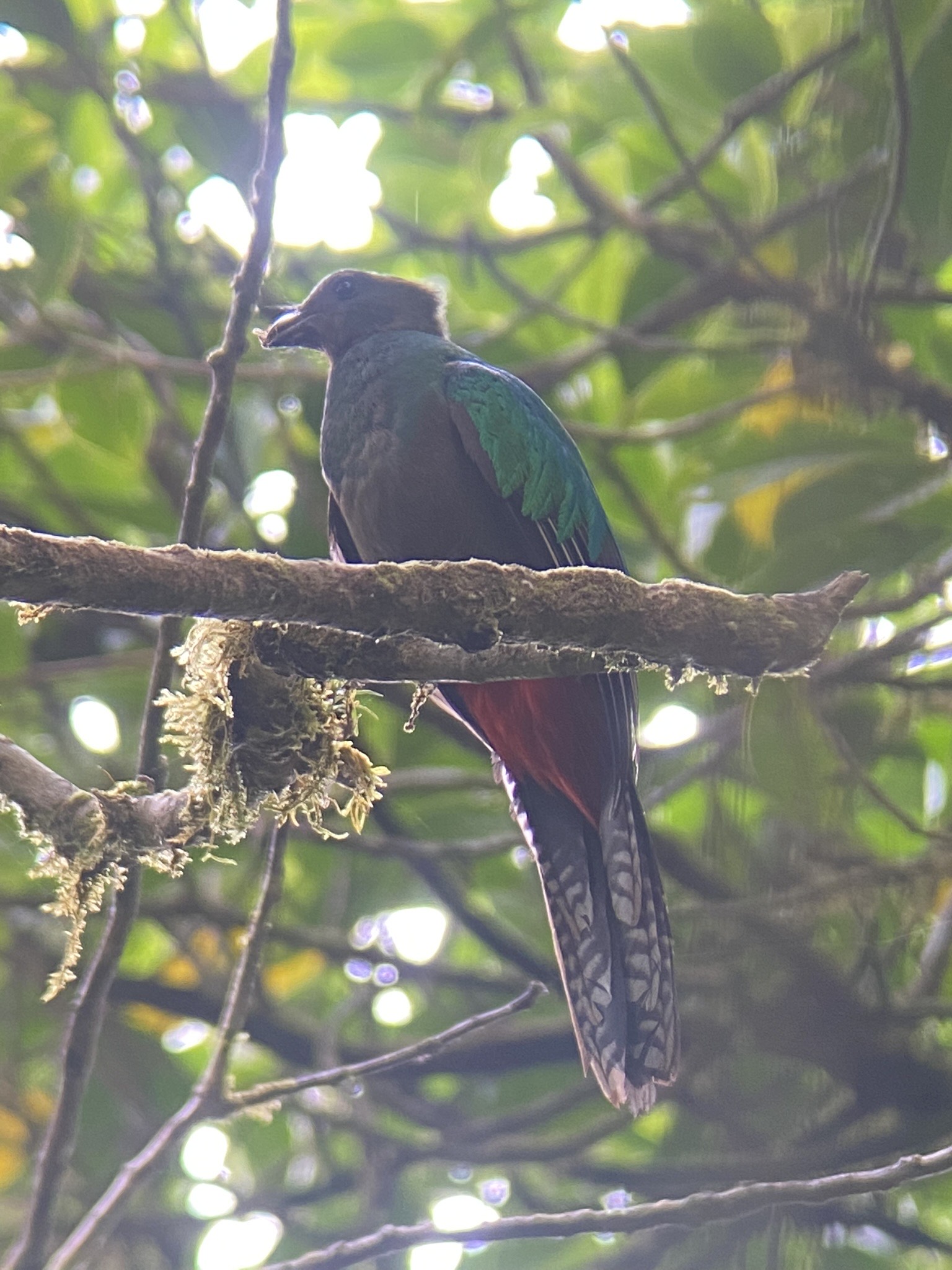
The day trips brought sustainability to life. A visit to a natural hot spring showed how Costa Ricans benefit from this sustainable form of energy. They also hiked through a sustainable forest where they saw a quetzal. This is a rare bird found in Costa Rica. Sustainable forests give species like the quetzal places to thrive. The forest was not only environmentally sustainable, but also socially, and economically sustainable. As a result, Costa Rica is able to identify and manage the impacts of businesses and people on the environment and adjust accordingly to be sustainable. She noted that the rainforest and its management met the criteria of the three pillars of sustainability that they learned about in their classes.

A Quetzal bird.
Quetzal bird sits on a branch in the sustainable rainforest

There were lots Melia enjoyed during her time in Costa Rica. Melia’s favorite thing was “attending a conference about sustainability with graduate students and professors from different universities.” She was able to diversify her learning about sustainability by connecting with others from different universities. This enhanced her experience as she immersed herself in new opportunities to learn about sustainability.

Study Abroad Takeaways From Melia

When asked what advice she would give to students considering studying abroad she said, “You are at a unique point in your life where you have the freedom and autonomy to travel and learn new things that might change how you see the world. It might even change your future plans.” In Costa Rica, she learned to be independent and travel independently. She is applying those learnings in a gap year in Senegal where she volunteers on a hospital ship. Immersing herself in Senegalese culture and the hospital environment, her goal is to gauge her interest in a career in medicine.

Hot spring in Costa Rica with steam rising.
Natural hot spring in Costa Rica

Learn about Melia and the other Michigan Tech students’ experiences in Costa Rica on the Costa Rica blog. Michigan Tech offers a number of study-abroad options in Costa Rica, Cumbria, Mexico, and Wales.


Amtrak Study Away is on Track for 2023

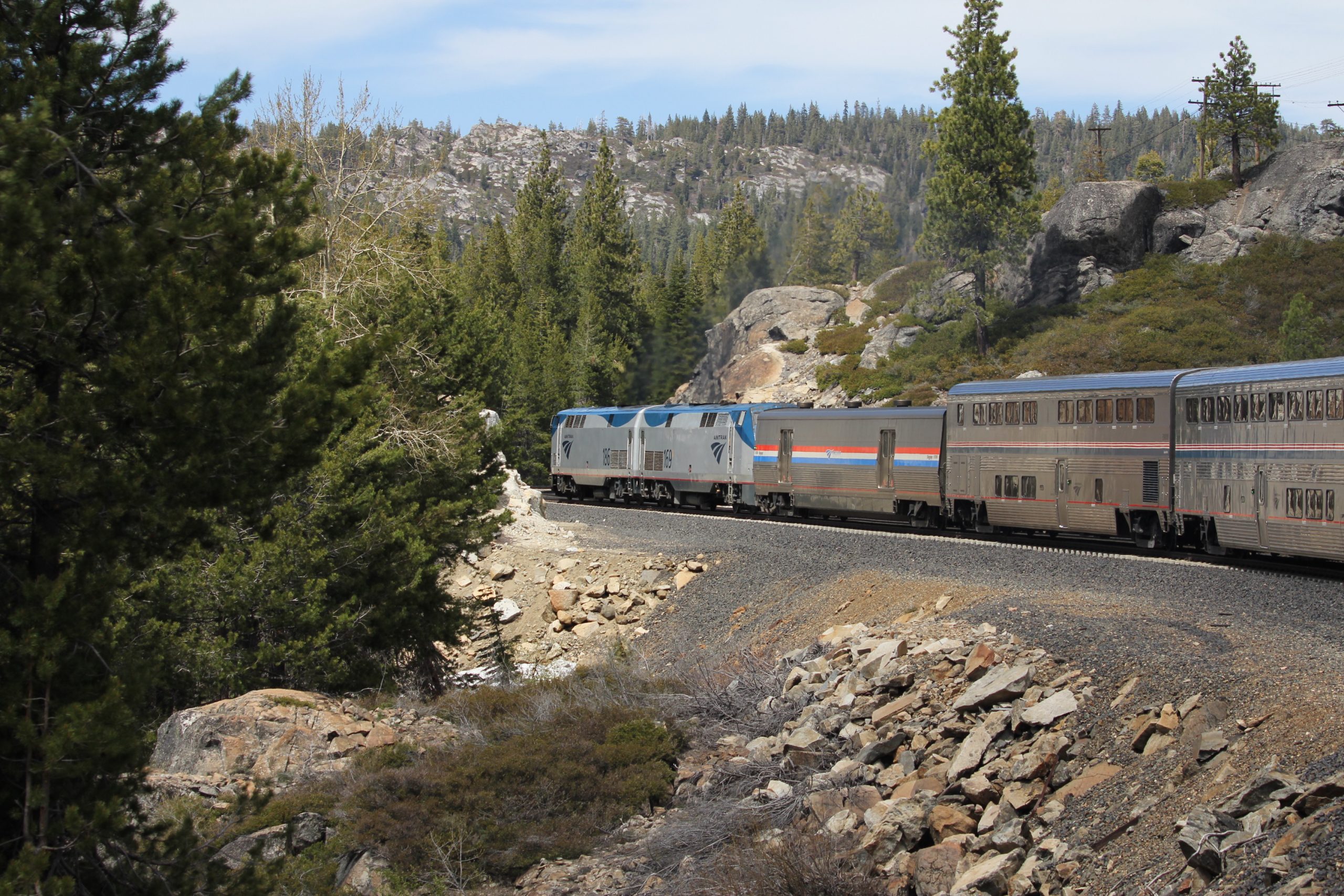
Amtrak passenger train in the mountains
Amtrak’s California Zephyr winds its way through the Colorado Rockies

Last summer, 18 Michigan Tech students boarded a train. They spent 18 days traversing the US practicing and learning about sustainable tourism. Amtrak Study Away directors Mark Rhodes, assistant professor of geography and heritage, and Kathryn Hannum, teaching assistant professor and Policy and Community Development advisor for the Department of Social Sciences, helped the students navigate the US passenger rail service off and on across 6 different cities.

For 20 days, students solely utilized public transit to explore the concepts of sustainable tourism and planning, landscape analysis, and urban deindustrialization. They spent two nights in independently-run hotels across each of the 6 stops and cities along the Empire Builder and California Zephyr Amtrak routes. Students saw firsthand how tourism has been incorporated and resisted from national parks to major metros, to deindustrialized small towns. Students frequently met with city planners, government officials, urban and sustainability studies scholars, and stakeholders in the heritage and hospitality industries.

“Amtrak is a great means for students to learn that not all places see tourism as a net gain. Some places, especially our national parks like Glacier are beginning to combat overtourism. Our students get to speak to local stakeholders to understand many different perspectives on tourism and sustainability,” Rhodes said.

The Community/Real World is the Classroom

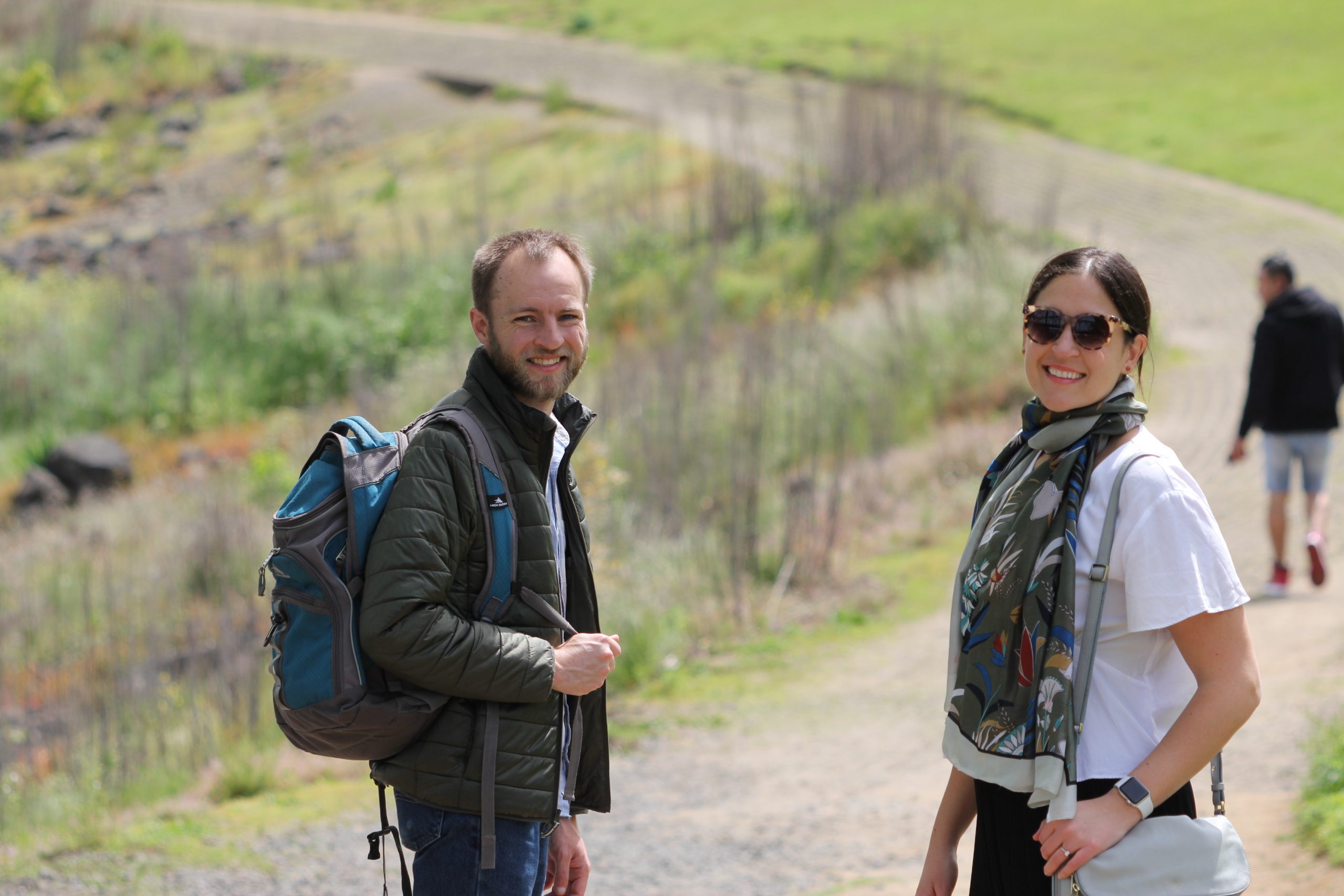
Amtrak Study Away directors Dr. Mark Rhodes and Dr. Kathryn Hannum
Faculty directors, Dr. Mark Rhodes and Dr. Kathryn Hannum

In creating the Amtrak program, Rhodes drew inspiration from other geographers who suggest we need more community-based learning field experiences. Much of Rhodes’s thinking comes from Houston and Lange who aim to destabilize the idea of the “real world/campus and field/classroom” in favor of a more co-constructive and integrated learning experience. Rhodes was able to bring the program to fruition through funding from Michigan Tech’s Next-Gen Gen-Ed, the Institute for Sustainabilty and Resilience, and the Department of Social Sciences.
“It is exciting to give our students a truly immersive and hands-on experience. On the Amtrak program, classes were held on the train, in hotel lobbies, in restaurants, and in actual classrooms. Simultaneously, those spaces functioned as a living laboratory for engaging fieldwork. And the train serves as a mobile dormitory, with dining, recreational, and sleeping areas,” Rhodes said. “Interactions with communities were in dialogue, not scientific observation or one-way explanations. Students brought those experiences, observations, and perspectives back to campus and the Keweenaw via a public event. Students presented key findings, engaged in Q&A, and discussed ideas for how the UP can benefit from tourism, if done sustainably.”
“Being able to compare many different cities, places, and environments in such a short period of time was eye-opening,” said Nick Hatley, an Amtrak Study Away participant and mechanical engineering major. “It was also my first time on a train. It was a unique travel experience.”

Sustainability Science in Society

The Amtrak Study Away program offered other unique opportunities for students. Of the 18 students, three students presented on the possibilities of study away and Amtrak within the realm of sustainability and equity at the Global and Community Engagement conference. Four students will travel to the Annual Meeting of American Association of Geographers in Denver, Colorado to sit on a domestic study away experience panel while also presenting their original research.
The Amtrak Study Away program changed perceptions too. Following the program, 87% of the students stated their perception of public transit changed positively. Post-trip, students responded with a 4.6/5 that they were “extremely likely” to “seek out public transit in the future” and that they were also “extremely likely” (4.7/5) to ride Amtrak again.

All-Aboard for Amtrak Study Away 2023

Applications are now open for Amtrak Tourism 2023 (application and deposit deadline is January 13, 2023), where students can pay just $1000, plus tuition, and experience 6 unique landscapes and many tourism, sustainable planning, and governmental organizations. Program fees include all lodging, transportation, activities (such as a Portland Thorns soccer game, a Local Roots food tour, and the Glenwood Springs hot spring). Students will hike Glacier National Park, help keep Portland Weird, and receive a tour of Knox Farm’s sustainable urban agriculture. Follow all the Amtrak Study Away program exploits from 2022 on Instagram. Reach out to Mark Rhodes with questions.

About the Social Sciences Department

Social Sciences at Michigan Technological University helps students apply academic concepts to real-world issues. We use tools from anthropology, geography, history, political science, and sociology to help find sustainable solutions to complex problems. The department offers five undergraduate degrees, five graduate degrees, and one graduate certificate program in public policy. Regardless of the path you choose, our faculty will help you lay the foundation for a meaningful career.

Robert Hazen, Michigan Tech Social Sciences Major, Shares His Experiences in the Documentation of Historic Structures Course

Hello! My name is Robert Hazen, and I am a Social Sciences major here at Michigan Technological University. This summer I took the four-week course, Documentation of Historic Structures, led by Dr. Sarah Fayen Scarlett (Michigan Technological University), Dr. Hilary-Joy Virtanen (Finlandia University),
and Dr. John Arnold (Keweenaw National Historic Park) where our class was immersed in the history and documentation of the Kemppa Farm in Misery Bay.

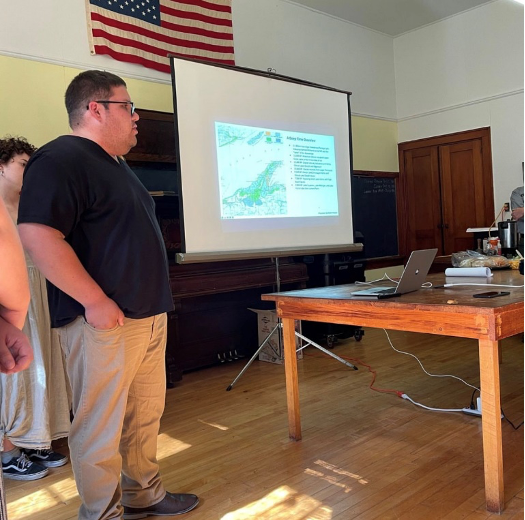
Image of Robert Hazen presenting to the audience of Misery Bay community members.
Robert Hazen shares stories and findings with Misery Bay community members

While many of us have not done documentation work before, we all brought different skill sets to the table and were able to add new skills to our toolbox. All of us came from different backgrounds, have different experiences, and even have different perspectives—all of which are useful in an immersive class like this, especially when hashing out the historic details concerning genealogy, timelines, and land and building use. Over the course of these past four weeks, I feel like we have all grown together, and we have all worked together quite well.

While it feels like you have just met these students, time moves quickly, and we are at the end of the course. We all forged new friendships and part of me is sad that it is over. I am sad that we all did not have more time together, but I am also sad that we left some questions unanswered. When you give a presentation to a community about their community, you are coming to them with the knowledge that they may or may not know, but there are also questions that will go unanswered. I think the one thing about this work is that I am only 95% satisfied with the finished product and 5% disappointed that I can never answer every question.

For this project, I researched and put together slides for the deep-time overview of the Keweenaw Peninsula with a specific focus on Misery Bay. I used my skills as a researcher to find digitized census records, plat maps, historical aerial images, homestead deeds, genealogical records, and other historical documents. This helped guide us in developing a timeline for the Kemppa Farm but given our time restraints and research limitations—the lack of digitized records or records hidden behind a paywall—we never were able to piece together some pieces of the puzzle.

Regardless of our limitations, our class exceeded everyone’s expectations, including our own. While we can all come away with a list of different skill sets, we all should come away with viewing people, buildings, and landscapes through a different lens than those around us—appreciating the time and efforts of past people in shaping the landscape to create a life of their own.

Finally, as an Indigenous scholar, one of my goals is to highlight the importance of Indigenous land use in the Upper Peninsula, acknowledging that we are on the ceded territories of Ojibwe homelands. It is important to acknowledge and understand the importance of land for Ojibwe Peoples, especially the land around Misery Bay. While we do not know the extent of Ojibwe settlements in Misery Bay, historic maps and newfound evidence provides us with more pieces to the puzzle.

While I come away from this course with a renewed sense of appreciation of the past, it is always important to look to the future and think about historic preservation efforts for sites like the Kemppa Farm. I want to thank Dr. Sarah Fayen Scarlett, Dr. Hilary-Joy Virtanen, and Dr. John Arnold for sharing with us all their knowledge and providing us with new tools to navigate the world around us. This was an unforgettable experience, and I know that this group of students is destined to do great things with their futures. I could not be prouder of the work we all put in. Thank you!

Robert Hazen is a Social Sciences major at Michigan Technological University. He is the 2022 winner of Michigan Tech’s Outstanding Future Alumni Award given to recognize the contribution of a student volunteer who supports the Alumni Engagement mission of “Celebrating Traditions. Creating Connections.” Consideration is given to students who are making a difference, and demonstrate a commitment to the success of an existing Michigan Tech tradition, or create a new one!

Read about the field school experience Robert enjoyed.

Social Sciences Announces Student Award Winners

The Department of Social Sciences (SS) would like to recognize the following outstanding undergraduate and graduate students. These awards were recently presented at the departmental end-of-year celebration on April 15th. Honors were extended for excellence in academics, research and teaching.

Graduate Awards

  • Outstanding Graduate Student Teaching Award: Shardul Tiwari (Fall 2021) and Jess Applin (spring 2022) 
  • Graduate School Dean’s Award for Outstanding Scholarship: Talva Jacobson 

Undergraduate Awards

  • MTU’s Outstanding Future Alumni Award: Robert Hazen 
  • Social Sciences Departmental Scholar Award: Maya Klanderman 
  • Social Sciences Outstanding Senior Award: Madelina DiLisi 
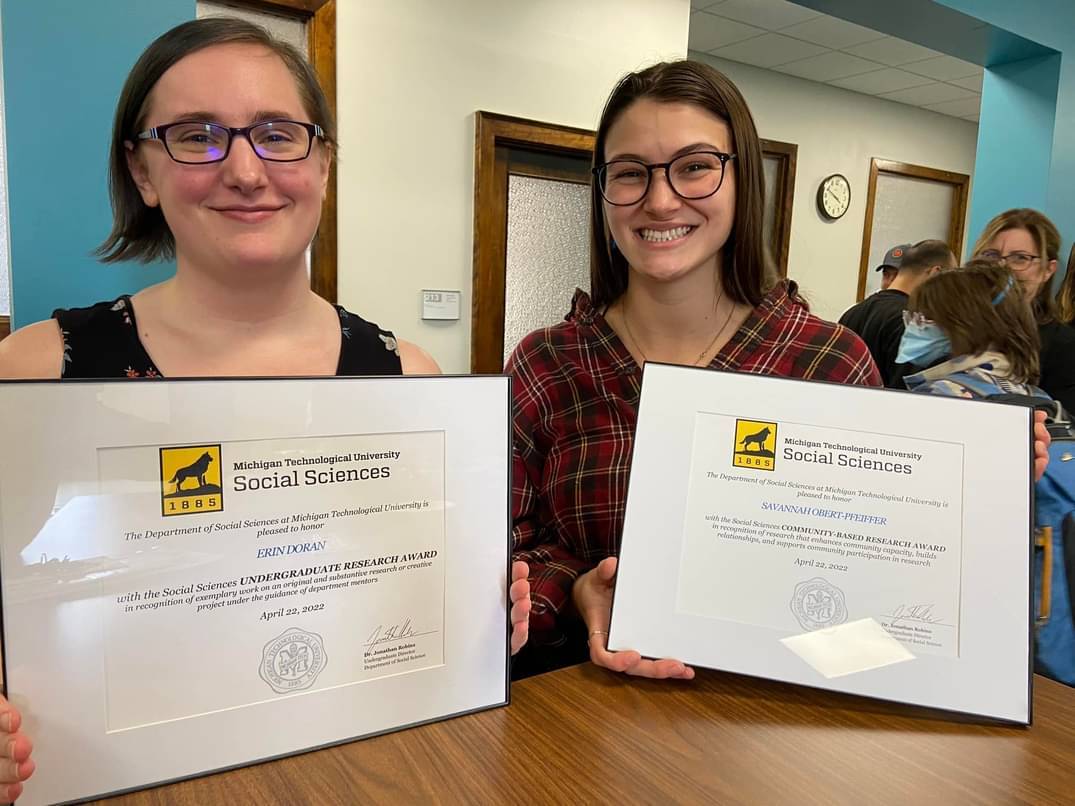
  • Social Sciences Undergraduate Research Award: Erin Doran 
  • Social Sciences Community-Based Research Award: Savannah Obert-Pfeiffer 
  • Social Sciences Community-Based Research Award: Maya Klanderman 

Well done to all our incredible students!

Erin Doran and Savanah Obert-Pfeiffer
Erin Doran and Savannah Obert-Pfeiffer

Congratulations to our December Graduates

Congratulations to our December graduates who have earned the following degrees:

PhD in ENVIORONMENTAL AND ENERGY POLICY
Dr. Brent Burns
Topic: Aging Pipeline Infrastructure in the United States: Emergency or Marvel? How does a Changing Policy Mix, Energy Justice, and Social Media Impact Future Risk Analysis?

MASTER OF SCIENCE IN INDUSTRIAL HERITAGE AND ARCHAEOLOGY
Gary Spikberg
Topic: Augmented Reality as a Tool for Industrial Heritage Education and Interpretations

MS graduates: Ryan Williams, (MS GIS) and Gary Spikberg (MS IHA)

BACHELOR OF SCIENCE IN SOCIAL SCIENCES
Ezra Cotter (Magna Cum Laude)
George Gruver (Summa Cum Laude)

BACHELOR OF SCIENCE IN SUSTAINABILITY SCIENCES AND SOCIETY
Nathan Hatcher
Noah Lawrence

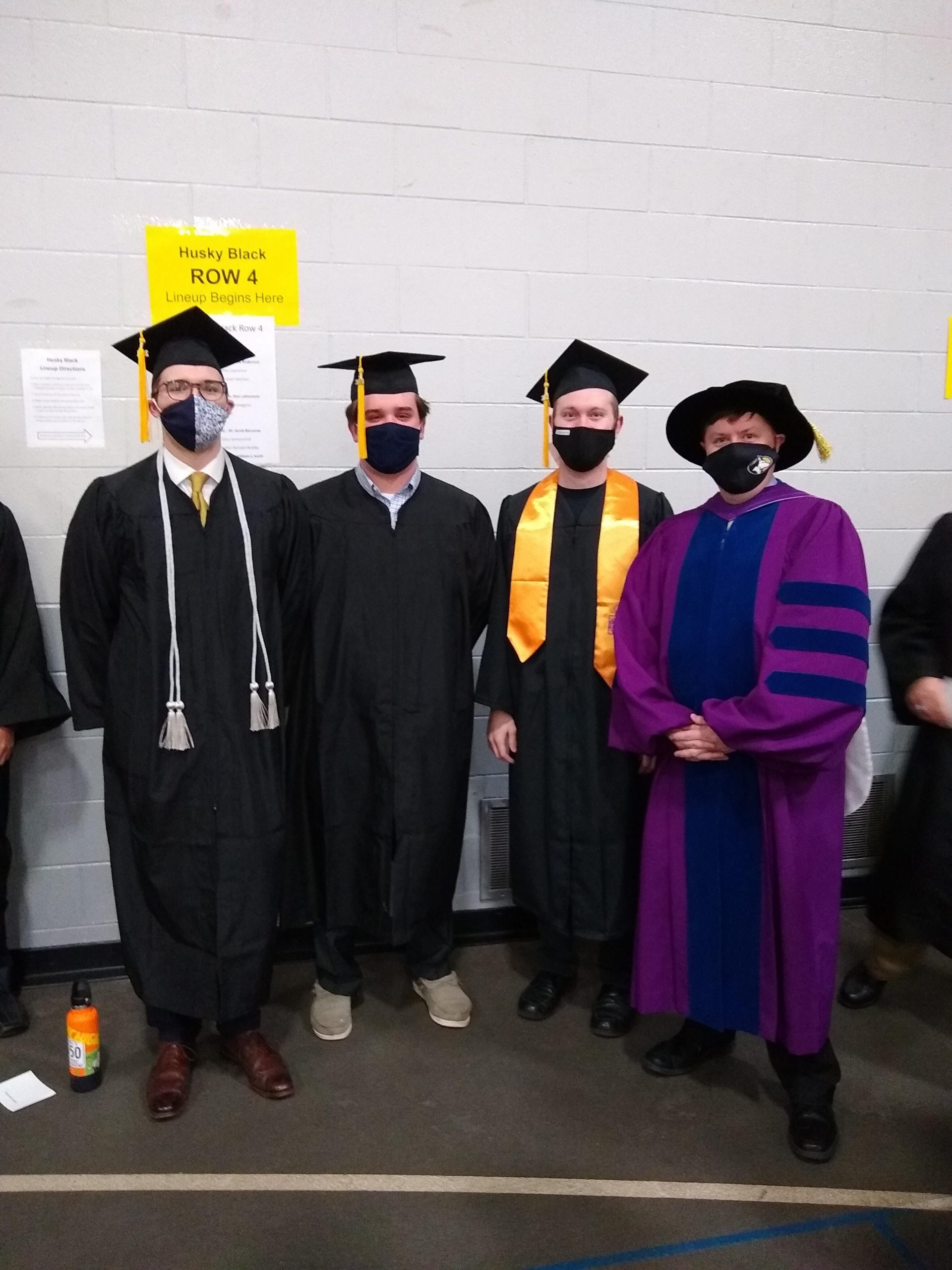
Bachelor of Science Graduates Ezra Cotter, Noah Lawrence, Nathan Hatcher with Department Chair, Dr. Don Lafreniere


Health and Society Film Festival

Students in Richelle Winkler’s Introduction to Sociology class are hosting a virtual Health & Society Film Festival, and invite the public to participate.

The students have selected 11 films ranging from documentaries to comedy and drama. Films address mental health, pandemics, social movements in response to AIDS, birth control, substance abuse, pharmaceuticals, stress, racism, eugenics, maternal mortality and death/dying. The films are all widely available and we ask folks to watch them on their own first, then to participate in Zoom discussions about them and what we can learn from them about health and society.

Discussions will be held between Nov. 16 and Dec. 6, depending on the film. See our website for film descriptions, where to watch, discussion dates/times and links to join the discussion. 
Information on the film festival is located here.