Category: News

Interesting stories about and for our students.

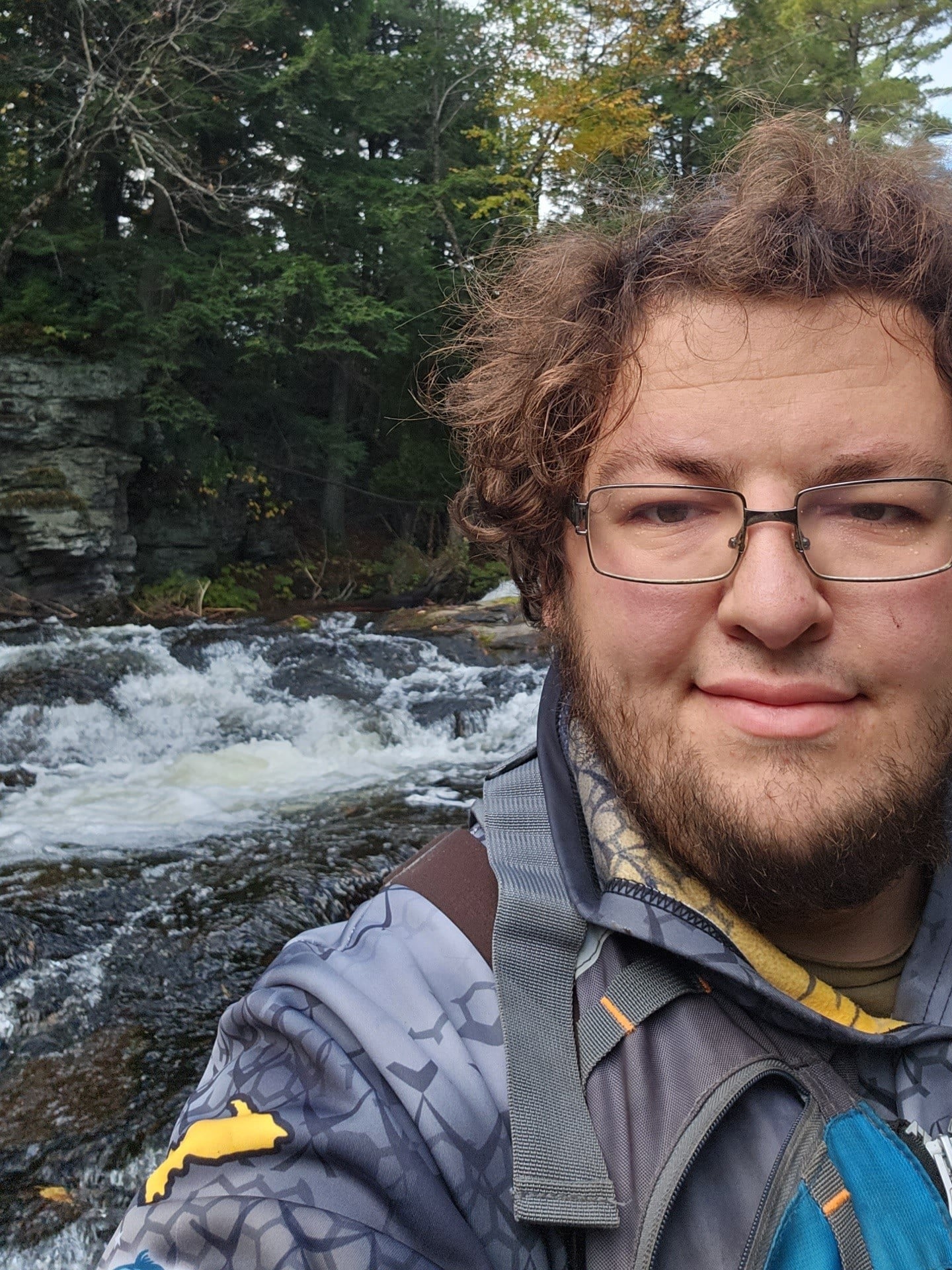
Finishing Fellowship Award – Spring 2026 – Jacob Jackson

Jackson, Jacob
Jacob Jackson, PhD in Biomedical Engineering, 2026

I’m grateful and honored to be awarded a Doctoral Finishing Fellowship. I would like to thank the Graduate Dean Awards Advisory Panel and the Graduate School for their recognition and support as I approach the end of my PhD studies. Their support will let me dedicate my time to completing my dissertation.

I joined Dr. Yu’s Neural Engineering lab as an undergraduate research assistant in 2021 and quickly became fascinated by the brain and developing treatments for neurological conditions. Knowing that our research could improve people’s lives gave me great purpose and drove me to continue onto my PhD.
My research focuses on optimizing deep brain stimulation (DBS) for Parkinson’s Disease (PD) to improve the quality of life of individuals undergoing this treatment. Specifically, I look at optogenetics and adaptive DBS (aDBS). Current clinically used DBS treatment involves delivering high-frequency electrical pulses to target structures in the brain. While effective at treating PD symptoms, adverse effects and limited battery life can limit the quality of life of those implanted. Optogenetics aims to improve on the spatial specificity of DBS by using genetic modification to allow for cells to activate using light. Electrical stimulation is non-specific and can spread to nearby structures whereas using optogenetics, only the specific brain structure is stimulated. aDBS improves the temporal specificity of DBS by using biomarkers found in the neural activity of the brain to deliver stimulation only when the brain needs it. This avoids unnecessary activation to reduce adverse effects and improve battery life of the implanted device. Combining these two powerful optimization strategies creates a more efficient and targeted treatment for PD.

I would like to thank my advisor Dr. Traci Yu for her mentorship throughout this long journey. Her support and guidance helped foster my passion for neural engineering research. I am also grateful for the support of the Biomedical Engineering department and the Michigan Tech community throughout this stage of my journey. As I look forwards to the next chapter, I am thankful for everything I’ve learned and experienced during my time at Michigan Tech.

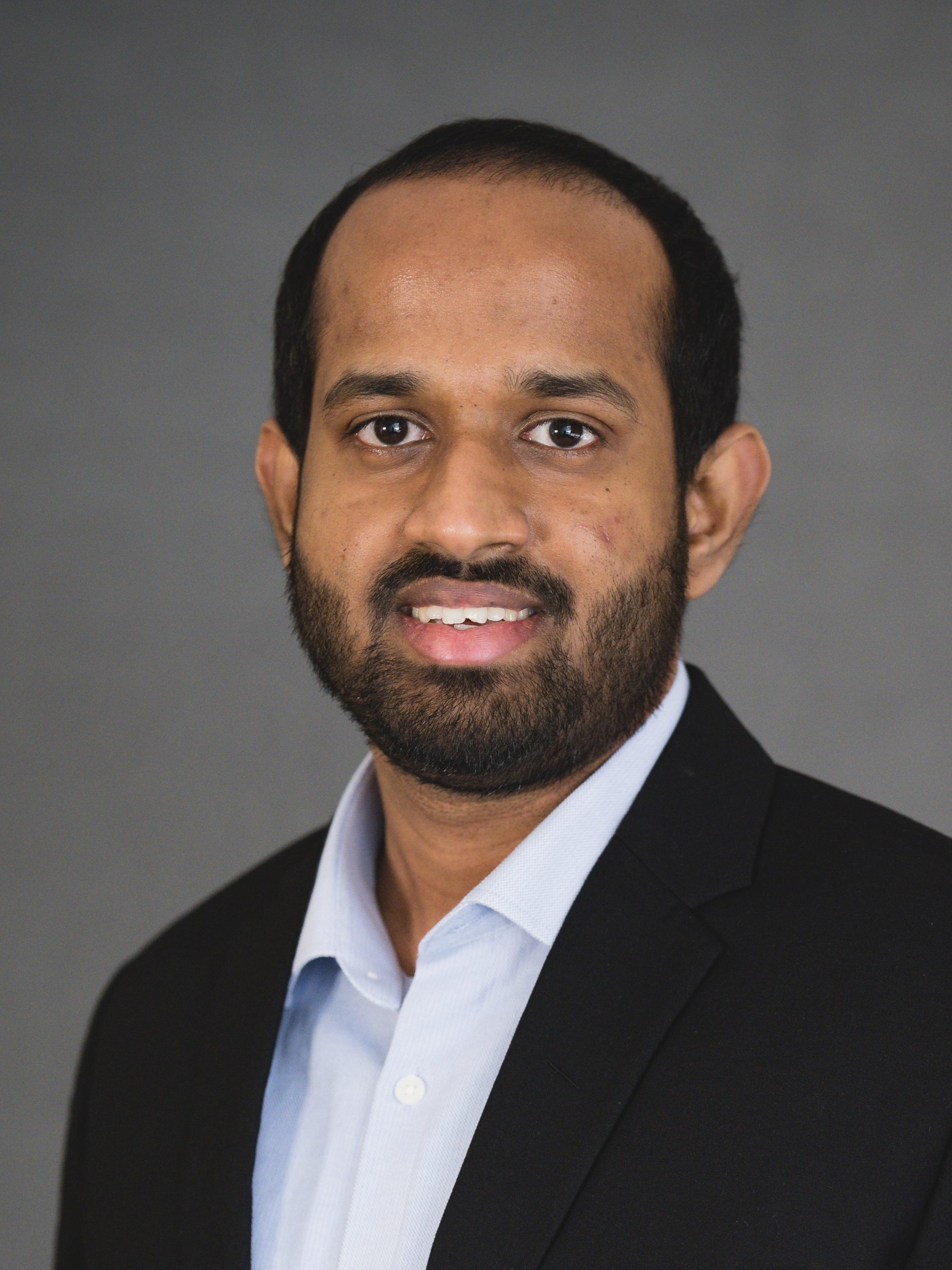
Finishing Fellowship Award – Spring 2026 – Caitlyn Sutherlin

Sutherlin, Caitlyn E.
Caitlyn Sutherlin, PhD in Environmental and Energy Policy, 2026

I started at Michigan Tech in 2022, and I have grown to love the Keweenaw! It has become my home away from home, and I even love the snow. Since I started, I have had the opportunity to teach on campus, work at the Writing Center, teach on Tech Study Away programs in Costa Rica and Wales, attend COP28 in Dubai, and conduct research in El Salvador over 3 separate visits!

My research looks at the incorporation of local traditional knowledge (LTK), which includes Traditional Ecological Knowledge (TEK) and Indigenous knowledge, into adaptation strategies. In my first year, I conducted a photovoice project to identify community connections to Nature in the small town of California in rural El Salvador. My results showed that the way participants connected to their environment impacted their perception of vulnerability to climate change. I also research organizational factors that might affect the incorporation of LTK and local contextual perceptions of vulnerability into adaptation strategies by a non-governmental organization working in the region.

My favorite parts of my research and PhD experience have been the multiple opportunities abroad that I have gotten to pursue! Central America has a really special place in my heart, and so any and all time that I have gotten to spend there are some of my favorite memories!

I want to thank the Graduate Dean Awards Advisory Panel for granting me this Finishing Fellowship! I also want to thank my advisers and committee members, Dr. Angie Carter, Dr. Kari Henquinet, Dr. Luke Bowman, and Dr. Pam Martin for their support in my research and helping me secure grants to pursue my research. I also want to thank my colleagues at the Writing Center, my friends, my partner, and my dog, Ducky!

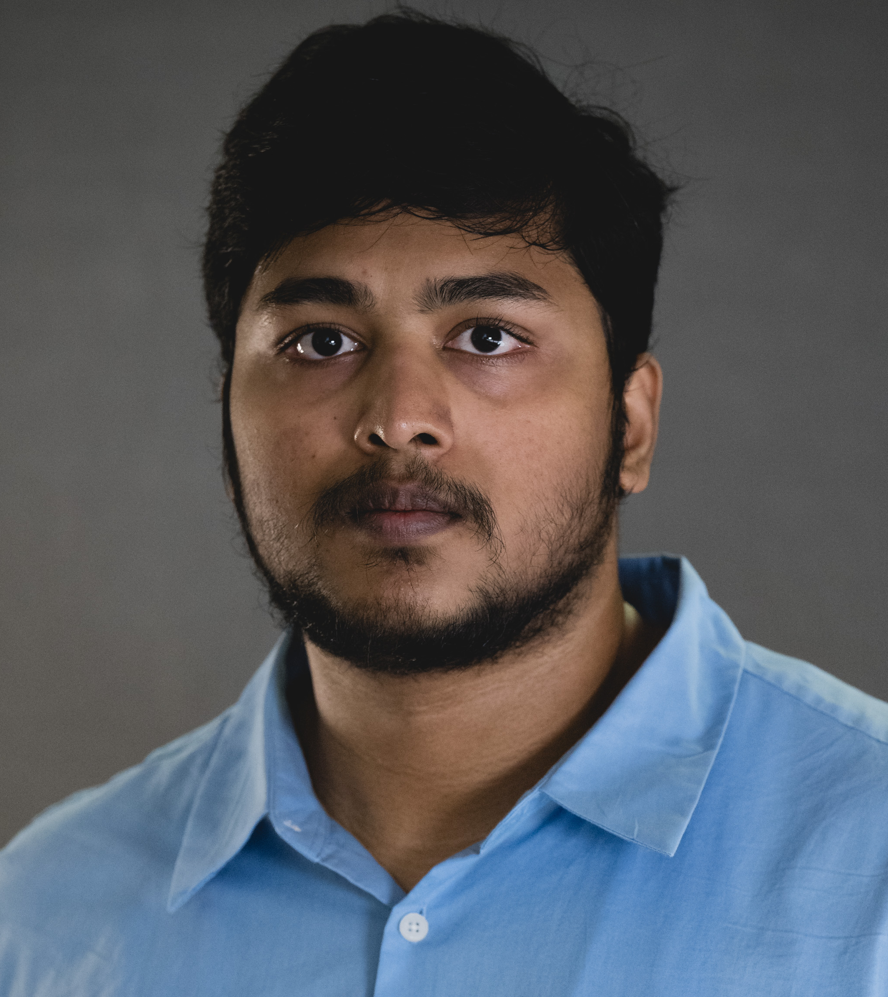
Finishing Fellowship Award – Spring 2026 – Md Khairul Islam

Islam, Md Khairul
Md Khairul Islam, PhD in Computational Science and Engineering, 2026

I am deeply honored to receive the Doctoral Finishing Fellowship and extend my sincere gratitude to the Graduate School and the Graduate Dean Awards Advisory Panel for this recognition. This award offers essential support at this pivotal stage of my Ph.D. journey and affirms the value of my research contributions.

As a Ph.D. candidate in Computational Science and Engineering at Michigan Technological University, my work focuses on advancing bioinformatics, particularly in plant genomics, complex disease associations, and systems biology. I have actively engaged in interdisciplinary collaborations through DOE, NSF, and CDC funded projects, where I developed novel computational frameworks such as PredTORpath, DyGAF, and TGPred. These algorithms combine statistics, machine learning, and biological data analysis to reveal gene regulatory mechanisms across plant and human systems, and are publicly available to support the scientific community.

In addition to research, I have contributed to peer-reviewed publications, mentored graduate helper, and participated in cross-disciplinary initiatives—all of which have shaped my long-term commitment to innovation in computational biology.

I am especially grateful to my advisor, Dr. Hairong Wei, for his unwavering mentorship and guidance, and to my colleagues in both the College of Forest Resources and Environmental Science—where my research is based—and the College of Computing, which hosts my Ph.D. program in Computational Science and Engineering, for their continued support.

This fellowship enables me to focus on completing my dissertation and further pursue impactful research at the intersection of artificial intelligence, genomics, and precision medicine. I am sincerely thankful for this opportunity and remain committed to advancing sustainable agriculture and human health through computational innovation.

Finishing Fellowship Award – Spring 2026 – YI ZHI CHU

Chu, Yi Zhi
Yi Zhi Chu, PhD in Physics, 2026

Which novel materials can be considered for next-generation energy storage applications? Can we design new materials with comparable or even superior mechanical properties by simply substituting their constituent chemical elements? These are some of the questions that have motivated my pursuit of research in computational materials physics.

My journey as a Ph.D. candidate began when I joined the Department of Physics at Michigan Technological University in Fall 2021 with Professor Ravindra Pandey as my advisor. My research focuses on theoretical and computational modeling of materials using Density Functional Theory (DFT), an efficient and powerful approach that allows us to predict materials’ properties from first-principles atomistic simulations.

Working with my co-advisor, Professor Kah Chun Lau, I study the potential hydrogen storage applications of a novel material on a Department of Energy (DOE) funded collaborative project. In addition, during my time at Tech, I have also had the privilege of contributing to the modeling of photocathode materials at Los Alamos National Laboratory. Through these projects, I have been able to explore and address questions that contribute to advancing next-generation energy applications.

I am deeply grateful to the Graduate Dean Awards Advisory Panel for recommending and awarding this fellowship, which supports the final stage of my Ph.D. journey at Tech. I would also like to express my sincere appreciation to my advisors for their unwavering support and guidance.

Spring 2026 Graduate Orientation

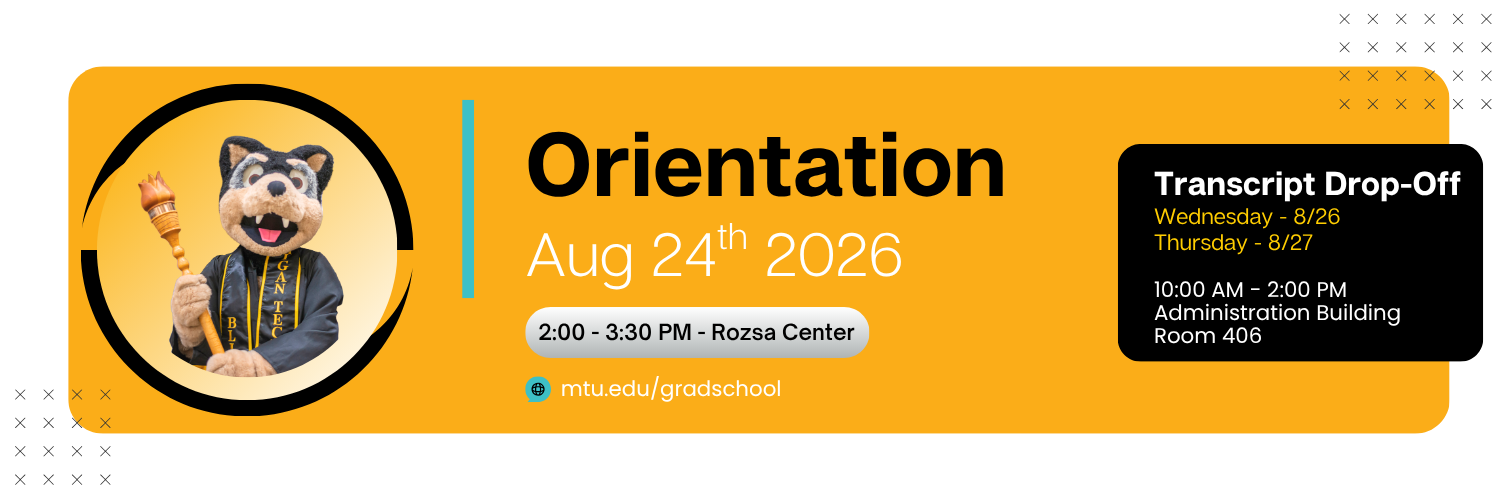
The Graduate School is excited to welcome our new students to campus. A summary of upcoming events is below.

  • The Graduate School Welcome session is on Friday, January 2, 2026, beginning at 2pm in the MUB Ballroom. A presentation is planned for 2-2:30pm, and a reception will begin at 2:30pm. The presentation will be recorded for those unable to attend in person.
  • Orientation to Graduate Studies and Research, our online Basic RCR Training, will begin on December 22 for registered students. It must be completed by February 19, 2026 to avoid a registration hold.
  • Other orientation events, including a tour by the Library and welcome reception by the Graduate School, are described and summarized on our website.
  • We will remind students to register and confirm their enrollment by January 2nd.
  • Steps after admission are summarized on our website.
  • Resources applicable to new students are summarized on our website.

We look forward to working with you to welcome our new and returning students to the 2025-26 academic year!

The King-Chávez-Parks Future Faculty Fellowship Program – Fall 2025 – Emma Johnson

Johnson, Emma C.
Emma Johnson, PhD in Rhetoric, Theory and Culture, 2025

My research encompasses the intersection of media, neoliberalism, and feminism. I am interested in how neoliberalism is represented in media as well as women’s agency within that system. I plan to write my dissertation on how neoliberalism is represented in media through the lens of women. Currently, I am exploring the film and photography of Lauren Greenfield and Sofia Coppola. I am fascinated by how their critiques of capitalism and consumerism both subvert and reify neoliberalism.

I would love to teach a class on how neoliberalism is represented in various media. My goal is to become a professor and teach humanities classes that ask students to consider the world around them, beyond what’s in front of them. I want to invite future students to ask questions about media representation and challenge what they see.

I want to extend my gratitude to the Graduate School, Graduate Dean Awards Advisory Panel, and Dean for this fellowship. I am thankful to the Interim Humanities Department Chair Dr. Kette Thomas, the Rhetoric, Theory & Culture Graduate Program Director Dr. Dana Van Kooy, my co-advisors Dr. Stefka Hristova and Dr. J.W. Hammond, and committee member Dr. Scott Marratto for their guidance and mentoring.

King-Chávez-Parks Future Faculty Fellowship – Fall 2025 – Jordan Dagenais

Dagenais, Jordan P.
Jordan Dagenais, PhD in Rhetoric, Theory and Culture, 2025

I would like to thank the selection committee for choosing me for the 2025 King-Chavez-Parks Future Faculty Fellowship. I would also like to thank my advisor, Dr. Holly Hassel, my department chair, Dr. Kette Thomas, and my program director, Dr. Dana Van Kooy. Finally, I want to thank my family—my mom Susan, my sister Madison, and my cats Bruce, Dinah, and Wally—for always supporting my educational goals. With this fellowship I will be able to achieve my goal of becoming a professor.

I am a first generation college student, so graduate school was initially intimidating. However, I have been graced with wonderful mentors here at Michigan Tech who have helped guide me through the challenges graduate school presents.

I first knew that I wanted to teach when I became an Assistant Scoutmaster for Scouting America Troop 823 out of Fenton, MI. I grew up in the Scouting America program (then referred to as Boy Scouts of America) and always enjoyed leading others. However, it wasn’t until I became an adult leader that I realized I had been teaching for years—and loving it—while I was a scout. Whether showing new scouters the basics of camping or providing advice to aspiring youth leaders, teaching opportunities were always present.

When I began working as a Graduate Teaching Instructor in the Humanities department in 2023, my path was cemented. After just one week of teaching in the writing classroom I knew I had made the right choice, and that teaching is what I’m meant to do.

Being a first generation college student, I want to use this fellowship to help others who don’t have the same access to education that I have been lucky enough to have and concentrate my skills where they will be best served. Upon completion of my degree at Michigan Tech, I plan to teach in the two-year college space in the Ann Arbor area and focus on creating an equitable writing space for all students.

Outstanding Awards – Fall 2025

The Graduate School announces the recipients of the Dean’s Award for Outstanding Scholarship and the Outstanding Graduate Student Teaching Award. Congratulations to all recipients.

Dean’s Award for Outstanding Scholarship

The following recipients of the Dean’s Award for Outstanding Scholarship have demonstrated academic or professional qualities that set them apart within their academic program.

  • Applied Computing – Balaji Nammalvar
  • Mechanical and Aerospace Engineering – Ben Jewell
  • College of Business – Derrick Ayisi
  • College of Forest Resources and Environmental Science – Emma Shedd
  • Humanites – Eugene Brown N. Agyei
  • Chemical Engineering – Grace Dykstra
  • Mathematical Sciences – Hunter Waldron
  • Social Sciences – Larissa Juip
  • Electrical and Computer Engineering – Rishin Patra
  • Biomedical Engineering – Rourke Sylvain
  • Geological and Mining Engineering and Sciences – Sananda Ray
  • Chemistry- Simahudeen Bathir Jaber Sathik Rifayee
  • Civil, Environmental, and Geospatial Engineering – Violet Hung
  • College of Business – Yael Huber
  • Physics – Yi Zhi Chu

Outstanding Graduate Student Teaching Award

The following recipients of the Outstanding Graduate Student Teaching Award are recognized for their excellence in teaching. 

  • Electrical and Computer Engineering – Alex Riebe
  • Electrical and Computer Engineering – Anurag Nagpure
  • Mechanical and Aerospace Engineering – Cooper Evans
  • Computer Science – Daniel Masker
  • Mechanical and Aerospace Engineering – David Wallis
  • Social Sciences – Esther Acheampong
  • College of Forest Resources and Environmental Science – Garrett Kucharski
  • Applied Computing – Innocent Mateyaunga
  • Physics – Jack Grossman
  • Humanites – Jordan Dagenais
  • Mechanical and Aerospace Engineering – Lambert Lotsu
  • Chemistry – Lucas Sheppard
  • Geological and Mining Engineering and Sciences – Priyanka Dhamala
  • College of Forest Resources and Environmental Science – Reed Arneson
  • Computer Science – Ronald Stempien
  • Computer Science – Sarah Larkin
  • Electrical and Computer Engineering – Shadi Alshagarin
  • Mechanical and Aerospace Engineering – Sindhura Repaka
  • Mathematical Sciences – Stephen Acheampong
  • Biomedical Engineering – Victoria Santillan
  • Atmospheric Sciences – Zaid Bakri

Finishing Fellowship Award – Fall 2025 – Victor Humanes Fuente

Victor Humanes Fuente, PhD in Forest Science, 2025

“My unexpected doctoral journey at Michigan Technological University began in June 2022, when I transferred from New York to continue my research under the guidance of Dr. Steve Voelker. This transition was driven by my commitment to an ambitious project I began a year earlier, focused on reconstructing climate variability in the Lake Superior region and understanding large-scale atmospheric circulation patterns across North America.

Over the past four years, my research has taken me to numerous lakes and creeks throughout Michigan’s Upper Peninsula, where, with the support of Dr. Voelker and a dedicated team of undergraduate and graduate students, we have collected thousands of submerged white pine samples preserved underwater for centuries.

Following previous evidence suggesting that white pines growing in specific locations across this region could be highly sensitive to climate, our project aims to determine whether carbon and oxygen stable isotopes in annual growth rings of white pine trees can be used to reliably reconstruct both winter climate conditions along the southern shores of Lake Superior and atmospheric circulation patterns across North America over the past 500 years.

The data we have collected have also enabled us to investigate the effect of Lake Superior on local and regional climate, and how this translates into tree stable isotope variability both spatially and among species. Beyond reconstructing climate, our data have enabled analyses of white pine long-term population dynamics, shedding light on the drivers of white pine fluctuations over centuries.

This research has been made possible through Dr. Steve Voelker’s vision and successful securing of NSF funding, critical financial support from the College of Forest Resources and Environmental Science, and Michigan Tech’s Finishing Fellowship, which will support the completion of my dissertation during the Fall 2025 semester.”

Finishing Fellowship Award – Fall 2025 – Eugene Brown Agyei

Eugene Brown Agyei, PhD in Theory and Culture, 2025

“I began my Ph.D. in the Rhetoric, Theory and Culture program in the Humanities Department in 2021. With a deep interest in understanding how emerging media technologies shape different aspects of human communication, my research has largely centered on the intersection of new media technologies, digital communication and collective action.

My dissertation explores the role of social media algorithms in collective action, with a particular focus on how they shape the structure, visibility and effectiveness of digital activism networks. Using #FixTheCountry in Ghana and #EndSARS in Nigeria as case studies, I investigate the relationship between the organizing strategies of activists (both online and offline) and the affordances and constraints of Twitter (now X). I use computational social network analysis and in-depth interviews to examine activists’ awareness of the platform and network effects, and to explore whether algorithmic folk theories and/or obfuscation techniques play a role in how they use social media for collective action.

During my time at Michigan Tech, I have presented my work at international conferences, including the International Communication Association (ICA) in Canada and Australia, and taught courses in Professional and Technical Communication and Composition. Together, these experiences have been integral to my Ph.D. journey and deepened my engagement with the field of communication. In Fall 2024, I received the Dean’s Outstanding Graduate Teaching Award.

I am incredibly honored to receive the Doctoral Finishing Fellowship from the Graduate School. I truly appreciate the recognition from the Graduate Dean Awards Advisory Panel and the dean, and I’m especially grateful to the donors whose generosity makes this support possible. I would also like to express my sincere appreciation to my advisor, Dr. Sarah Bell, for her support, and to my committee members, Dr. Stefka Hristova, Dr. Richard Canevez, and Dr. Brooke Foucault Welles, for their guidance. I’m also thankful to all the faculty in the Humanities Department for their encouragement throughout this journey.”