Category: Undergraduate Students

Beyond the Classroom: Electronics Hub Summer Spotlights


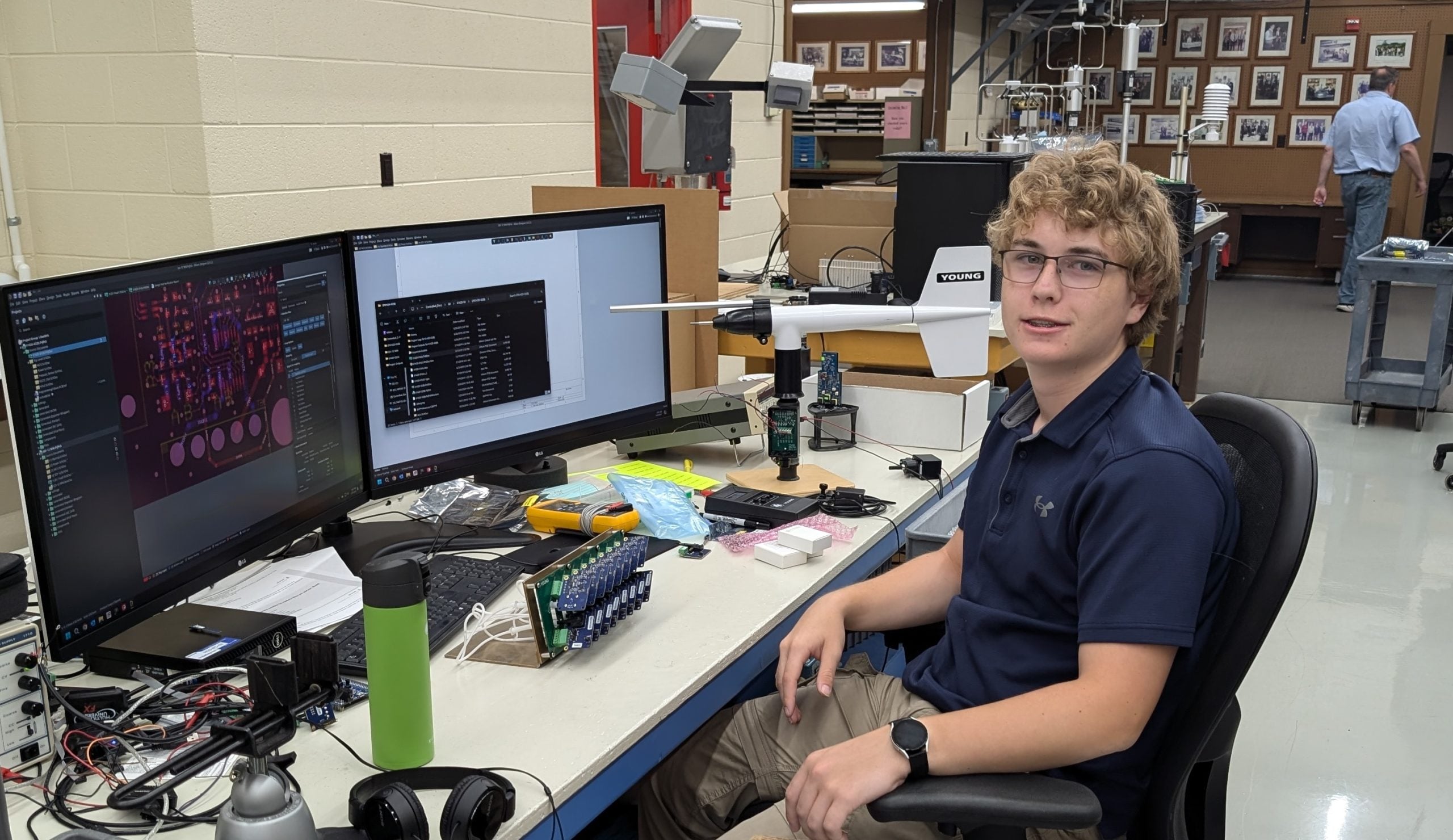
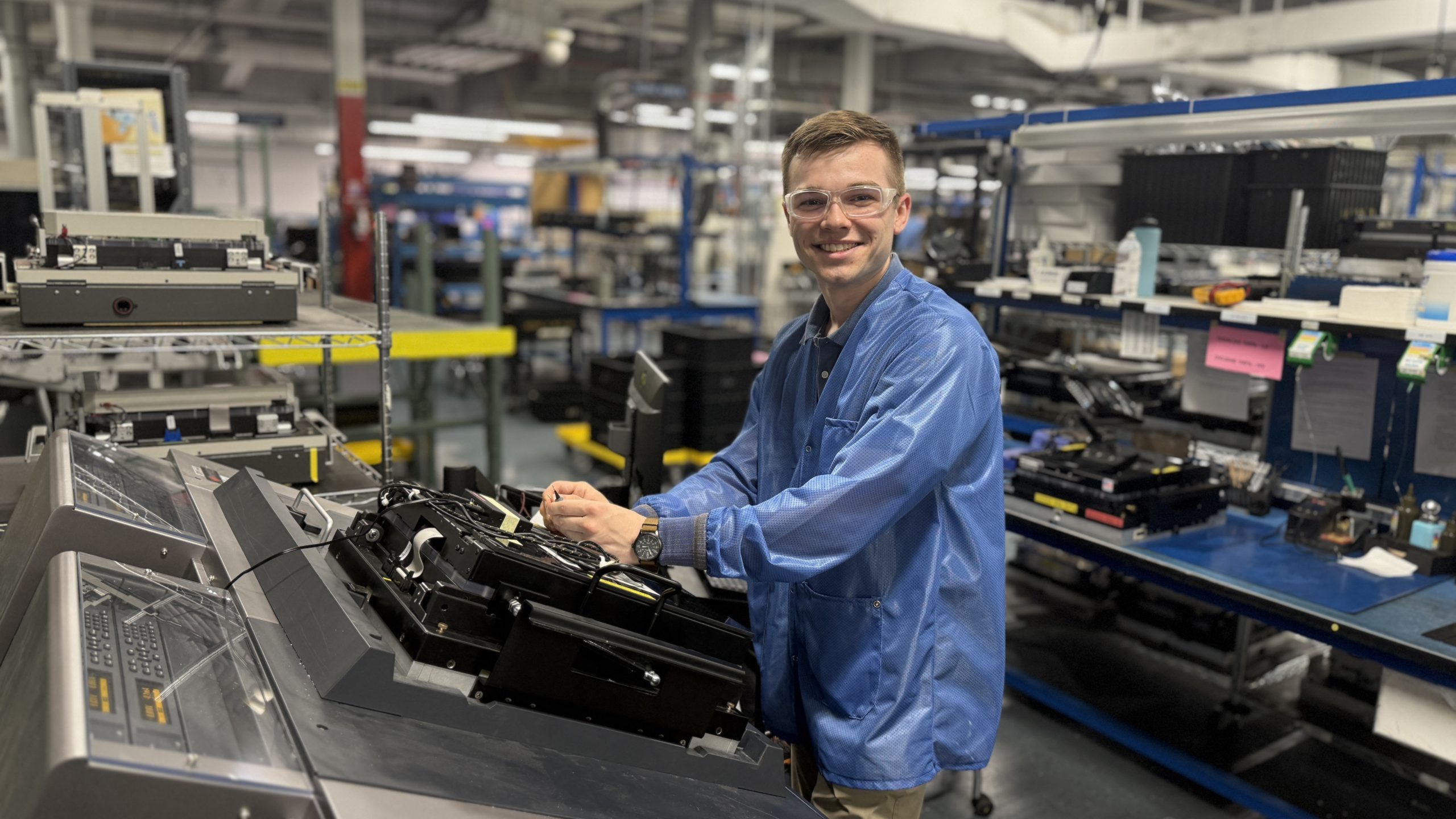
Eli Richardson prepares to test barometers at RM Young. 

Electrical engineering senior Eli Richardson from Traverse City, Michigan takes us inside RM Young Company. Read on to learn how this Michigan Tech student’s passion for electronics fuels both his corporate role and a massive high-power motor project in his garage.

What are you doing this summer?

I’m working at RM Young, based in Traverse City. It’s a company that makes a majority of the weather sensors used all around the world. Most of the components are made entirely in house. My specific role is R&D intern, which is all about updating our old sensors. That includes through-hole components to SMD, designing and programming retrofit boards for older model sensors, and fixing broken PCBs. My primary project is the 05103 wind monitor. I’ve been updating it to use a newer protocol. 

What are some of the challenges?

When I first started, I had no idea what I was doing. I had to learn all these different CAD packages, along with niche programming software. At the same time, my boss wasn’t used to talking with people who didn’t know what was going on, so he’d use a bunch of niche terminology. I’d need to Google what it meant after each conversation—and then hope I was responding to him correctly!

What do you enjoy most?

It’s the freedom I get from having an engineering job that allows me to take a project in whatever direction I think would be best (or sometimes most fun). And at the same time, nobody asks any questions if I get up from my desk and walk around for no real reason. A consistent schedule is really nice, too.

How did you get interested in electronics?

I’ve been interested in electronics for as long as I can remember. I was always intrigued by things that plugged in. I slowly learned more and more about how to plug things in correctly, so to speak, up to the point that I jumped into the deep end of a job here at RM Young where I was expected to know quite a lot. But I had no clue how much I didn’t know.

What are your career goals?

After graduating, I very much hope to continue working at RM Young (if they’ll have me) and see where life takes me from there.

What do you like to do for fun?

For the past 6 months I’ve been trying my best to make a high-power axial flux motor. It takes up a grand majority of my free time. I only have a small portion completed, if I can even call it that. 

What’s an axial flux motor?

Axial flux motors have mostly been used in generators. Recently, though, the high-performance car maker, Koenigsegg, which is owned by Mercedes, made their “dark matter” motor based on axial flux topology. After seeing a video of its construction, I wanted to try making one, myself.

Tell us more

The controller needs to be tuned for the motor to work correctly, and ideally, it is a pure sine wave controller that uses field-oriented control. I will be making a controller with the Open Source Enterprise at Michigan Tech next semester that can hopefully drive the motor. Once it’s all done, I honestly still have no idea what I’ll be able to do with it. 

My design is going to be incredibly heavy and powerful, but the only manufacturing tool I have is a 3D printer. It should work, but I have no idea for how long. I’ll probably buy some kind of CNC machine to make a version 3 that isn’t just made of mostly plastic. At that point I should probably learn some simulation tools to make sure everything is designed in an ideal manner.

If you could create any company or invention what would it be?

I would make axial flux motors and subsequent controllers to go with them. I’m way too fascinated with them!

Beyond the Classroom: Electronics Hub Summer Spotlights

Evelina Hovis, getting ready to inspect the new copper layer on a PCB panel

Electrical engineering senior Evelina Hovis from Grosse Isle, Michigan takes us inside Professor Middlebrook’s PCB Lab. Learn how she tackles manufacturing challenges, analyzes micro-structures under the microscope, and stays organized through it all.

Q: What are you doing this summer? 

A: I am working in the PCB research lab of Professor Chris Middlebrook. My job is to determine the accuracy of the electroplating rates on the lab’s LPKF Contac S4 Electroplating Machine. The work involves testing, data collection, and analyzing the consistency and quality of the plating process. 

Q: What are some of the challenges?

We do a lot of troubleshooting when trying to achieve uniform plating, to narrow down exactly where any issues are coming from. Research involves a lot of trial and error along with careful testing. Another challenge is organizing collected data properly so that results are accurate and easy to analyze.

Q: What do you enjoy most?

A: I really enjoy microsectioning. That involves taking tiny samples of circuit boards, embedding them into resin pucks, grinding them down, and analyzing them under a microscope. It’s really interesting to closely examine the internal structure of the boards and see the results of the manufacturing process in detail. 

Q: How did you end up at Michigan Tech?

A: MTU stood out to me because of its great engineering program. I really enjoy the close-knit campus community, along with the beautiful nature and scenic views in the area.

Q: How did you become interested in electronics?

A: Soon after arriving at Michigan Tech, I started taking circuits and electronics courses and labs. That’s when I realized how much I enjoy circuit building and analysis. Seeing ideas we learned about in the classroom become real and functional through hands-on work was really rewarding. That’s what made me interested in pursuing electronics further. 

Q: What are your career goals? 

A: Once I graduate with my BS in Electrical Engineering next year, I hope to begin working in the electronics or PCB manufacturing industry. I’m also interested in pursuing automotive-related work. I feel optimistic about my career prospects. Electronics and manufacturing continue to grow and evolve. There will always be a need for engineers who can solve problems, improve processes, and adapt to new technologies.

Q: What do you like to do in your spare time?

A: One of my personal hobbies involves making appliqué and custom hoodies. I would love to create a business where I sell my handmade creations. It would feel rewarding to know that other people enjoy something I created and can find beauty in it as well.

Q: How would you change the world if you could? 

A: I would change the way our government operates to make systems more efficient, transparent, and focused on helping our people.

Q: What’s the best advice you’ve ever been given?

A: Ask questions, even if you think they might sound dumb. Sometimes the person explaining something may unintentionally leave out details because they already understand it, so asking questions helps bridge the communication gap. It also creates opportunities to learn from different perspectives.

Q: Any advice of your own you’d like to share?

A: Learn how to manage stress in school or the workplace. Things can become overwhelming very quickly, so it’s important to step back and think, “What’s something I can do today to make tomorrow easier?” Small habits that help you stay organized and prepared can make a huge difference.

The Power of Hands-On Learning: MTU EE Students Share Their Passion for Electronics at Superior Makerfest

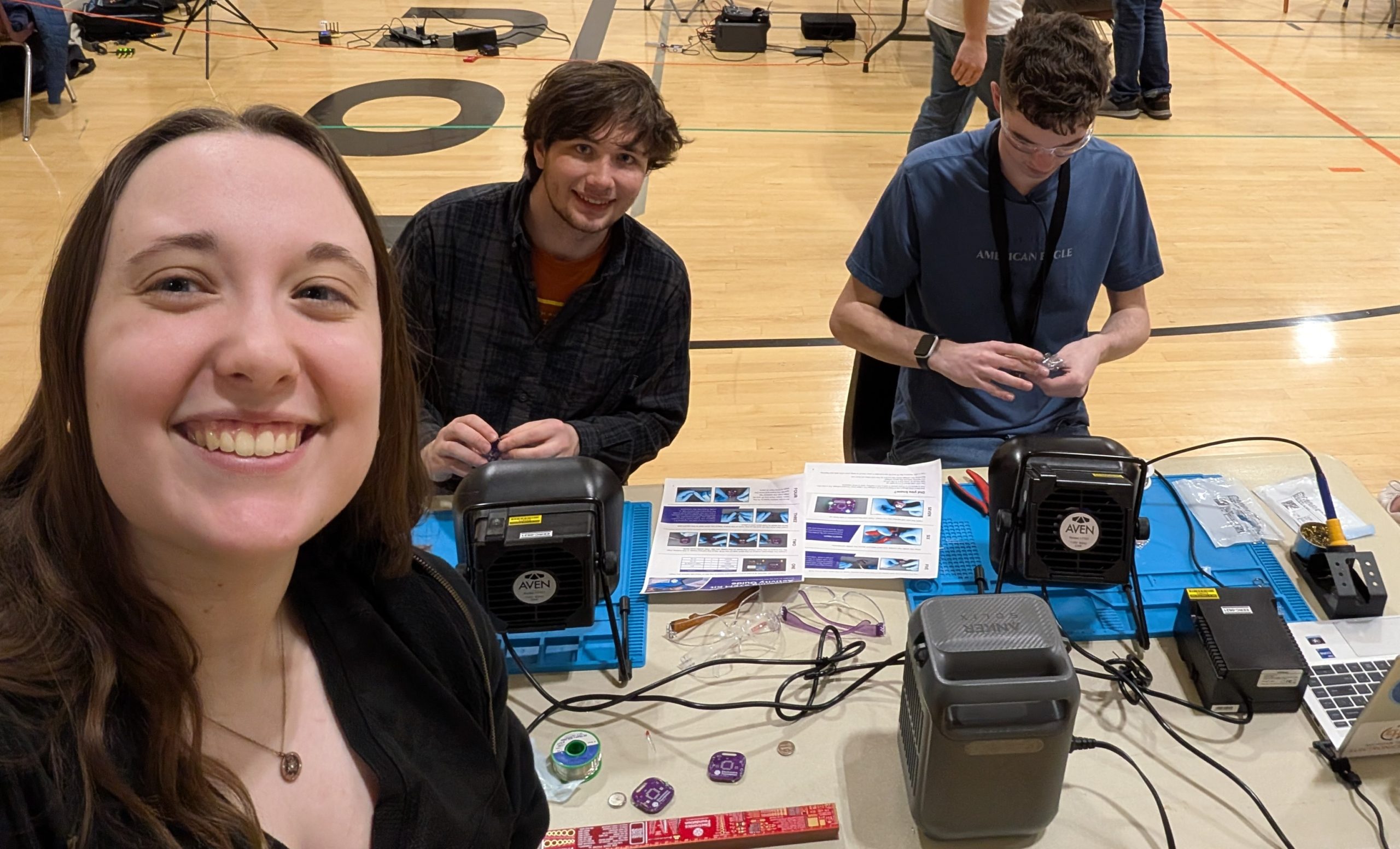
Katelyn Spolnicki and Alex Ossenheimer with a student in a gymnasium using electrical equipment
Katelyn Spolnicki and Alex Ossenheimer spent the Pi Day at Superior Makersfest.

This past Pi Day, a group of students from the Michigan Tech IPC & Electronics Student Chapter headed to Houghton High School. Senior Katelyn Spolnicki, second year-student Alex Ossenheimer, and third-year Sam Freye spent the day at Superior Makerfest, hosted by Superior Fab Lab. They taught attendees of all ages—some as young as five—the essential skill of soldering.

The three electrical engineering students taught attendees how to solder a mini flashlight. The flashlight kits–—boards, components, and a ruler – multifunctional PCB engineering scale printed circuit board ruler measuring tool—were donated by the Electronics Foundation.

Superior Makerfest logo. Detailed description in caption below image
Logo for Superior Fab Lab’s MakerFest 3.14.26, Pi(e) Day Edition — a circular pie chart styled as a pie crust, with six slices depicting different maker materials: LEGO bricks (yellow), wood grain (brown), woven fabric (blue), diamond-plate metal (gray), circuit board (green), and the Superior Fab Lab logo on red. The text “MakerFest 3.14.26” arcs across the top and “Pi(e) Day Edition” along the bottom, with π symbols on both sides.

“It was amazing to see people of all ages get excited about learning to solder,” says Katelyn Spolnicki.

“Being part of the IPC student chapter has been one of the best parts of my college experience. It’s given me hands-on experience, industry connections, and a community of people who share the same interests,” she adds.

Her advice to anyone interested in electronics or electrical engineering? “Get involved early, try new things, and take advantage of opportunities like IPC.”

Spolnicki will graduate from Michigan Tech in just a few weeks. In the short term, she hopes to keep encouraging more students to explore electronics on campus. “Long term I want to work in the electronics industry on meaningful projects, and eventually mentor others entering the field.”

“I’m grateful I had the chance to help at Makerfest,” adds Spolnicki. “Events like this really show how fun and welcoming the electronics community can be.”

I really enjoyed meeting all the kids who stopped by our table to learn about electronics assembly and hand soldering,” adds Ossenheimer.

“I’m a relatively new member of the IPC &  Electronics student chapter. It’s been a fulfilling and refreshing experience to be a part of this group, to have the chance to experience the different facets of electronics and semiconductor engineering and manufacturing firsthand,” he says. “It’s something I plan to keep doing throughout my time at Michigan Tech.”

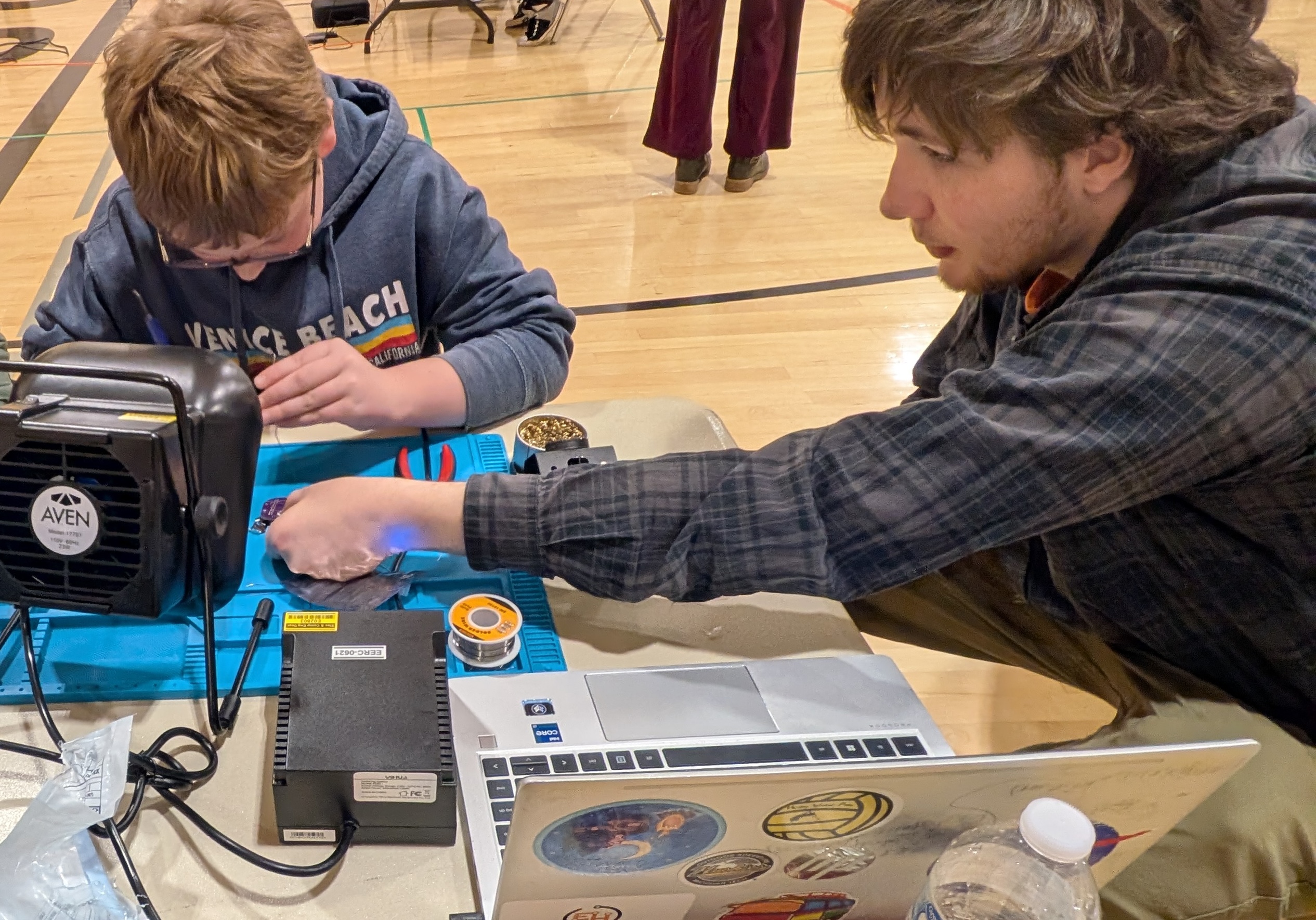
Alex Ossenheimer helping a student build a mini flashlight
Alex Ossenheimer teaches a student to solder a mini flashlight at the Superior Makerfest.

Ossenheimer is majoring in electrical engineering with a concentration in photonics. Similar to electronics, which involves the control of electrons, photonics deals with the control of photons in terms of generating and harnessing light and other forms of radiant energy.

His advice to a younger person interested in electronics: “Start by experimenting with the plethora of free tools out there—websites like Circuit Lab and Multisim Live for simulating circuits, and CAD software like KiCad for designing PCBs and schematics. YouTube is a good resource, too. A lot of people are making amazing videos on a wide variety of topics related to electronics.”

Whether you’re a student, job-seeker, veteran, or a professional, there’s a place for you in the electronics community. Feel free to reach out to ECE Professor Christopher Middlebrook for more information at the Michigan Tech Electronics Hub for ongoing workforce development opportunities in Michigan and beyond.

Three Electrical Engineering Students Earn High-Tech Honors

Michigan Tech electrical engineering students Emily Daley, Rishin Patra and Katelyn Spolnicki have each earned scholarships from the Electronics Foundation.

Established by the Global Electronics Association, the Electronics Foundation is a nonprofit organization committed to developing the next generation of electronics industry professionals. It connects students with industry leaders and supports STEM education through hands-on experiences, scholarships and educational resources.

From Michigan Tech to Taipei: A Journey of Firsts

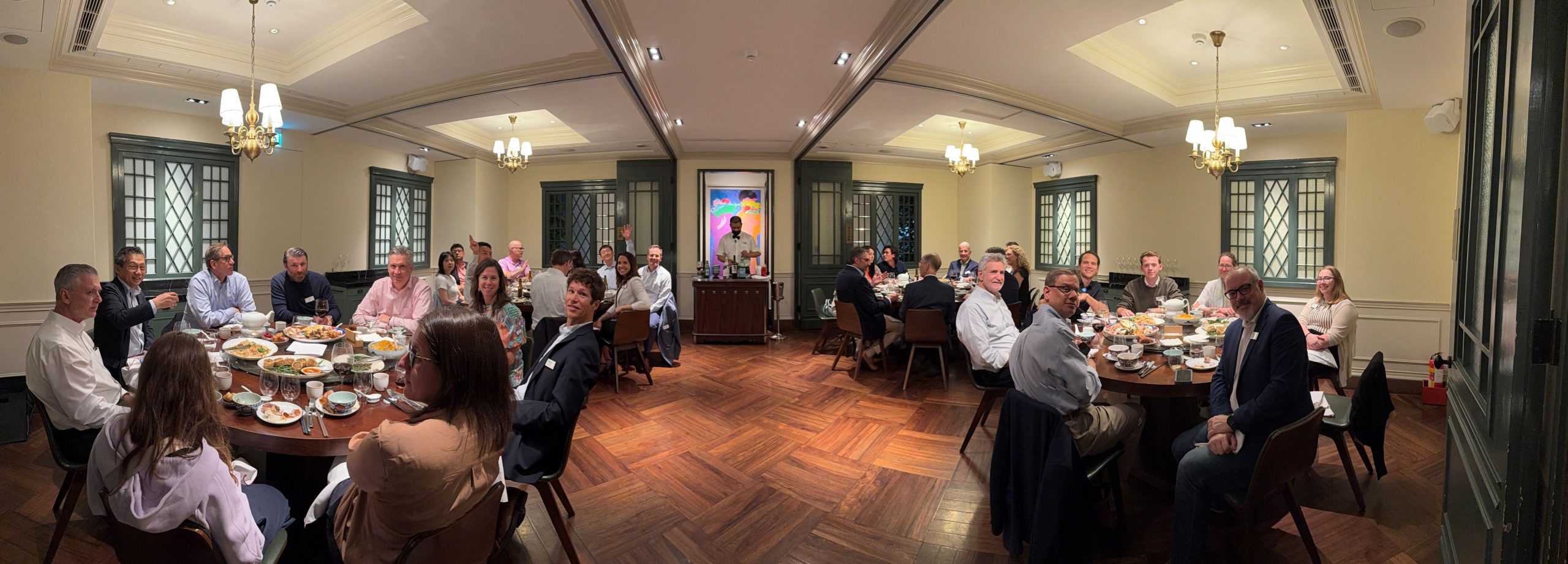
Global Electronics Association Board of Directors Meeting

Growing up in Byron, Michigan, watching her father as an electrician, Emily Daley knew someday she would study electronics. “In elementary school, I began to dream of building my own robot. I could see the mechanical side of things, but electronics held some sort of magic behind them that I wanted to understand.”

During a high-school tour of Michigan Tech, Daley fell for the rugged charm of the Upper Peninsula and went all-in on electrical engineering. Now, just months away from graduation, she’s reflecting on the defining chapter of her college career: serving as a Student Member Liaison for the Global Electronics Association Board of Directors.

Michigan Tech at SPIE Defense and Commercial Sensing 2024

Tim Havens (CS/ICC/GLRC) and Steve Senczyszyn (GLRC) attended and presented at the SPIE Defense and Commercial Sensing conference, held April 21–25 in National Harbor, Maryland.

Senczyszyn presented “Comparing performance of robot operating system (ROS) mapping algorithms in the presence of degraded or obscured depth sensors.” His co-authors include Havens; Tony Pinar (ECE); Adam Webb (MTRI); ECE undergraduate Mohamed Salem; ECE graduates Elizabeth Donoghue, Shelby Wills and Moira Broestl; and U.S. Army engineer Stanton Price.

Havens presented “Synthetic augmentation methods for object detection in infrared overhead imagery.” His co-authors include Ashley Olson (MTRI) and Jonathan Christian and Jason Summers of ARiA.

Dylan Kangas (ECE) presented “Developing robust unmanned surface vehicles with ROS.” His co-authors include Havens, Senczyszyn, Pinar, Keven Li (ME-EM), ECE undergraduates Salem and Tyler Ryynanen, U.S. Army engineers Steven Price and Stanton Price, and Stephen Taylor and Timothy Murphy of the U.S. Navy’s Naval Surface Warfare Center.

Havens and Olsen are also co-authors of a presentation by Summers and Christian of ARiA titled “Generative EO/IR multi-scale vision transformer for improved object detection.”

Oberloier and Forney Celebrate Maker Fest 2024

Shane Oberloier (ECE), Ian Raymond (HU) and undergraduate student William Forney (robotics engineering) were quoted by the Daily Mining Gazette in a story about the 2024 Maker Fest, held March 23 at Houghton High School. This was the second year for the event, put on by Superior Fab Lab.

“It’s the chance to show off the tools we use in the enterprise, show how they can be used and generate interest in it that way.”

William Forney, robotics engineering undergraduate

The event celebrated the process of making and offered nearly 30 hands-on activities. Raymond let visitors engage in stop-motion filmmaking. Forney, an Open Source Hardware Enterprise member, offered 360-degree 3D scans of people’s heads. Also mentioned was the Society of Women Engineers, which ran a booth on building paper circuits.

Read more at the Daily Mining Gazette, by Garrett Neese.

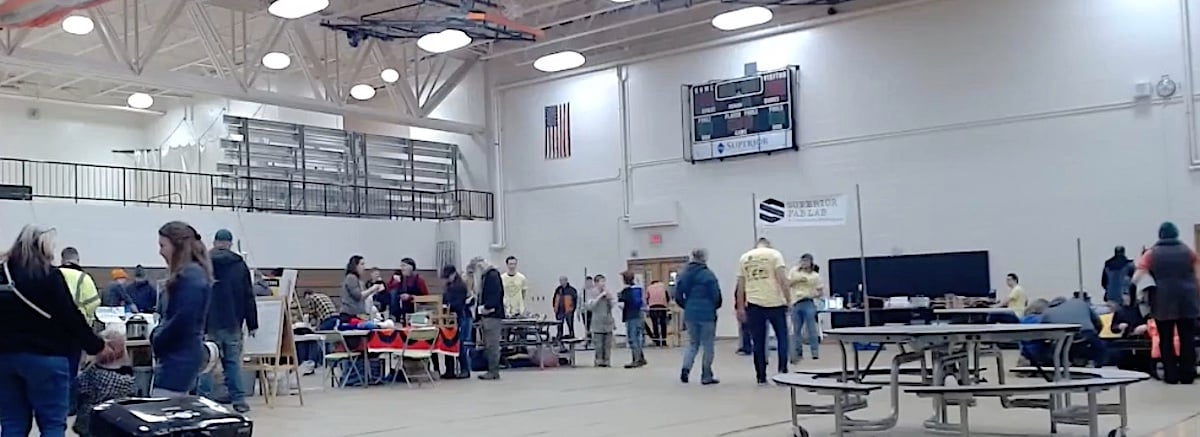
Group of people in an auditorium engaging in activities.
Students and families attend Maker Fest 2024.
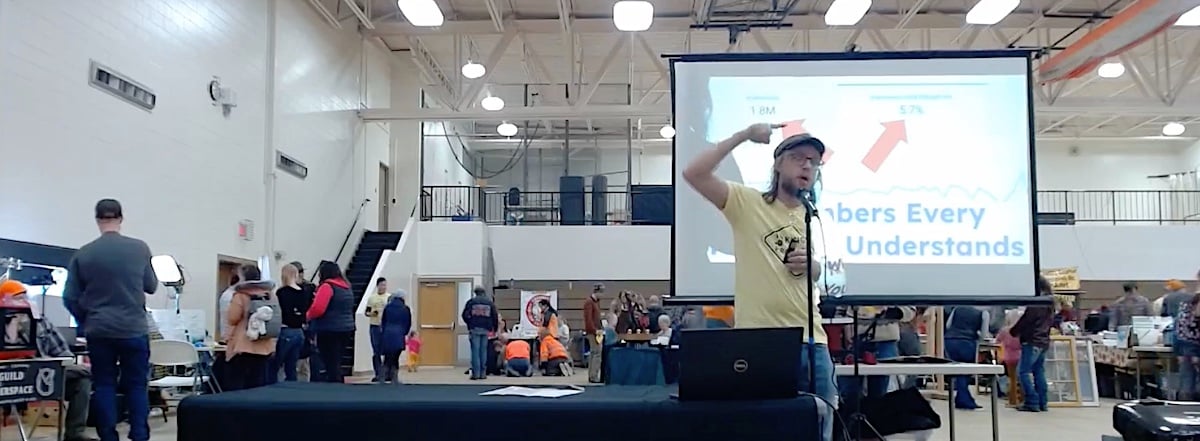
Presenter in front of screen with large group in the background.
Dr. Shane Oberloier gives a presentation on YouTube methods.

Matt Kouba Wins Excellence in Presentation Award at URSS 2023

Winners Announced: Undergraduate Research & Scholarship Symposium

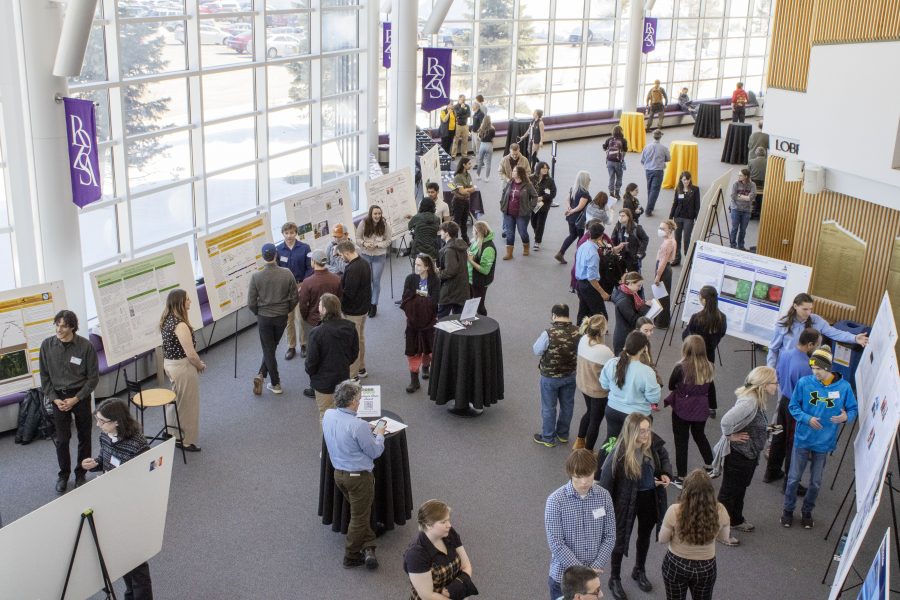
The Pavlis Honors College hosted the Undergraduate Research & Scholarship Symposium (URSS) last Friday (March 24) in conjunction with the Great Lakes Research Center (GLRC). The event featured a panel discussion in which participants discussed how undergraduate research impacted their present work, two poster sessions and a networking social event that culminated with the announcement of the award winners. In addition to Michigan Tech students, students from the Keweenaw Bay Ojibwa Community College shared their work during this year’s URSS.

Thanks to the Portage Health Foundation and the DeVlieg Foundation for supporting the Undergraduate Research Internship Program as well as to the faculty, staff and graduate students who served as judges for the event.

The winners of the 2023 Undergraduate Research & Scholarship Symposium include computer engineering student Matt Kouba for his poster “Low Cost CAN FD and Automotive Ethernet Development Boards.” Kouba was selected for Excellence in Presentation. Kouba’s faculty advisor was Aurenice Oliveira, Electrical and Computer Engineering.

By the Pavlis Honors College.

Extract from the URSS Booklet 2023:

Low Cost CAN FD and Automotive Ethernet Development Boards

Student Presenter: Matt Kouba, Computer Engineering
Faculty Advisor: Aurenice Oliveira, Electrical and Computer Engineering

CAN FD is currently used in nearly every new vehicle, but at Michigan Tech we do not yet have any resources that can be used in a teaching environment.

To design these teaching systems I have used Altium Designer to design the circuit and Printed Circuit Board layout.

When both the CAN FD and Automotive Ethernet learning systems are completed Michigan Tech will have the first low cost Automotive Ethernet development system for use in a classroom.

MTU RedTeam Places Third in CyberSEED CTF

The MTU RedTeam competed in the 2023 CyberSEED Capture the Flag (CTF) competition, held virtually March 4. The highly competitive seven-hour collegiate CTF engaged 333 students and 118 teams from universities across the country.

Placing third, RedTeam Team 1 earned 2,390 points with 93.41% accuracy. Team members were undergraduates Ryan Klemm (computer science), Audrey LaCost (chem informatics), Joshua Stiebel (computer engineering) and Noah Holland (cybersecurity). The team was awarded a $2,000 prize.

ReadTeam Team 2 placed 73rd in the contest. Team members were undergraduates Noah Hansen, Riley Meeves and Mason Staedt (all cybersecurity) and master’s student Gary Tropp (cybersecurity).

RedTeam Team 3 finished 99th in the event. Team members were undergraduates Ava Gullitti (electrical engineering) and Joshua Stevens (cybersecurity) and master’s student Dev Sanghani (cybersecurity). 

The annual CyberSEED CTF event is hosted by the University of Connecticut. The competition’s cybersecurity challenges included a set of flags focusing on reverse engineering, web application security, network traffic analysis, cryptography and other challenges.

Read more on the Computing News Blog.

Maurer, Brock, and Hilliker Present at Defense Manufacturing Conference

The Defense Manufacturing Conference (DMC 2022), was held in Tampa, Florida, on December 5–8. DMC is the nation’s annual forum for enhancing and leveraging the efforts of engineers, managers, technology leaders, scientists, and policy makers across the defense manufacturing industrial base.

Developing Disruptive and Transformational Solutions

Three electrical and computing engineering students presenting their research were:

Michael Maurer (PhD Candidate)
Presentation Title: Periodically Poled Polymers as an Entangled Photon Source

Giard Brock (Undergraduate)
Presentation Title: Ultra-violet Liquid Crystal Display Resin Printer Exposure Method for Rapid Prototyping of Printed Circuit Boards

Austin Hilliker (Undergraduate)
Presentation Title: Utilization of a Commercial Off the Shelf Laser Engraver for Rapid Production of Printed Circuit Boards

Three students check in for the conference.
Giard Brock, Michael Maurer, and Austin Hilliker