Three Electrical Engineering Students Earn High-Tech Honors

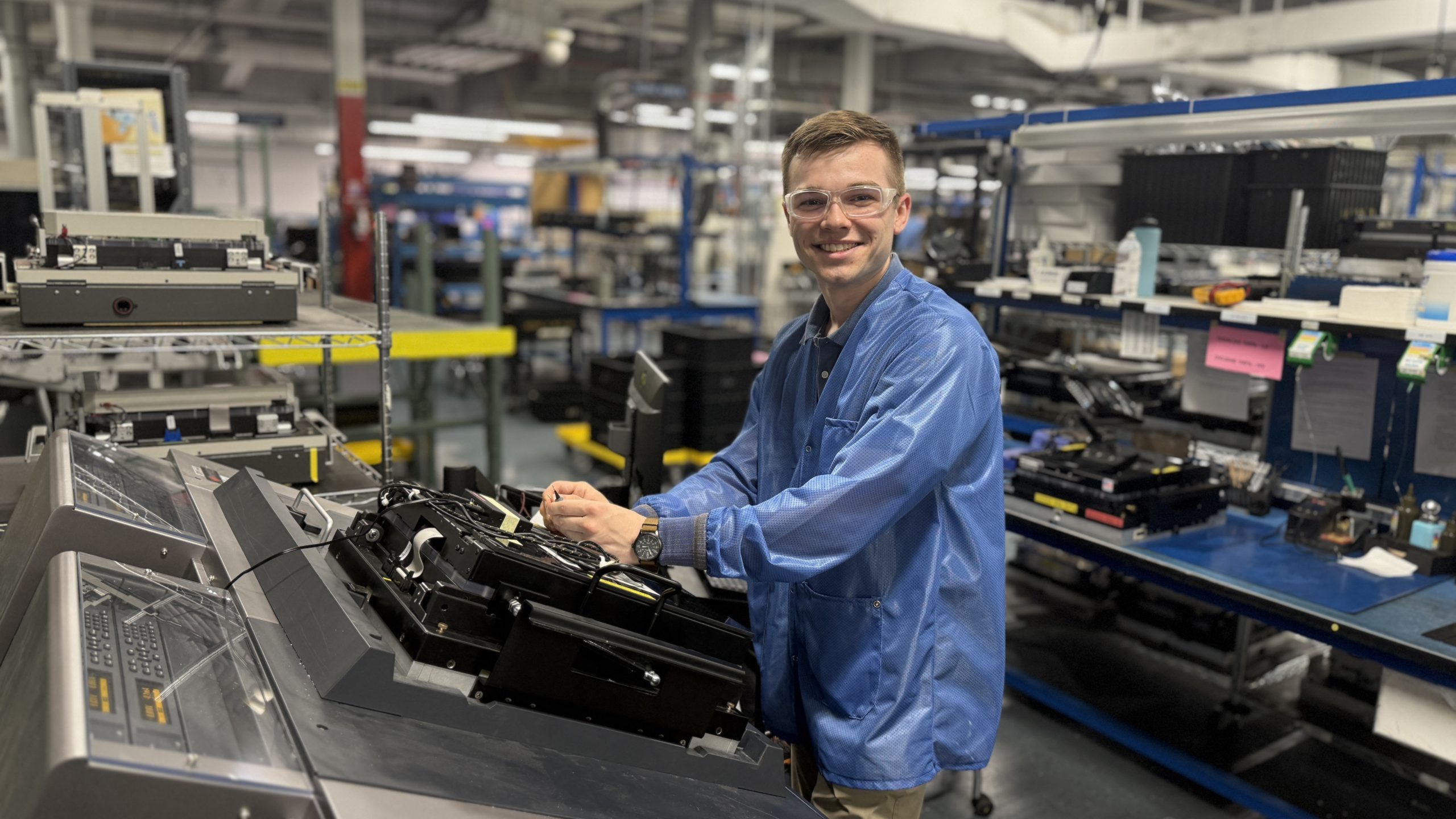
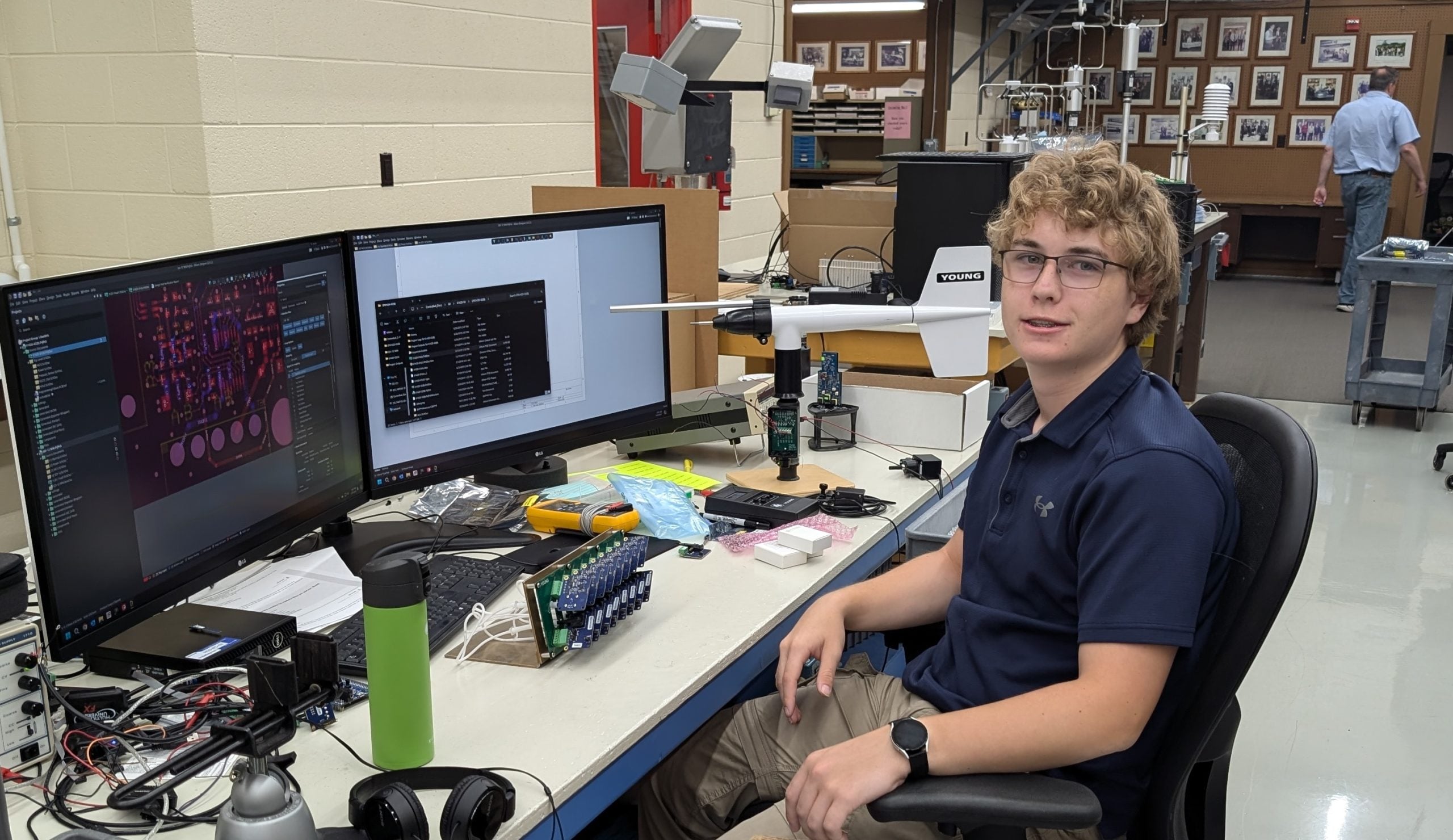
Michigan Tech electrical engineering students Emily Daley, Rishin Patra and Katelyn Spolnicki have each earned scholarships from the Electronics Foundation.

Established by the Global Electronics Association, the Electronics Foundation is a nonprofit organization committed to developing the next generation of electronics industry professionals. It connects students with industry leaders and supports STEM education through hands-on experiences, scholarships and educational resources.

From Michigan Tech to Taipei: A Journey of Firsts

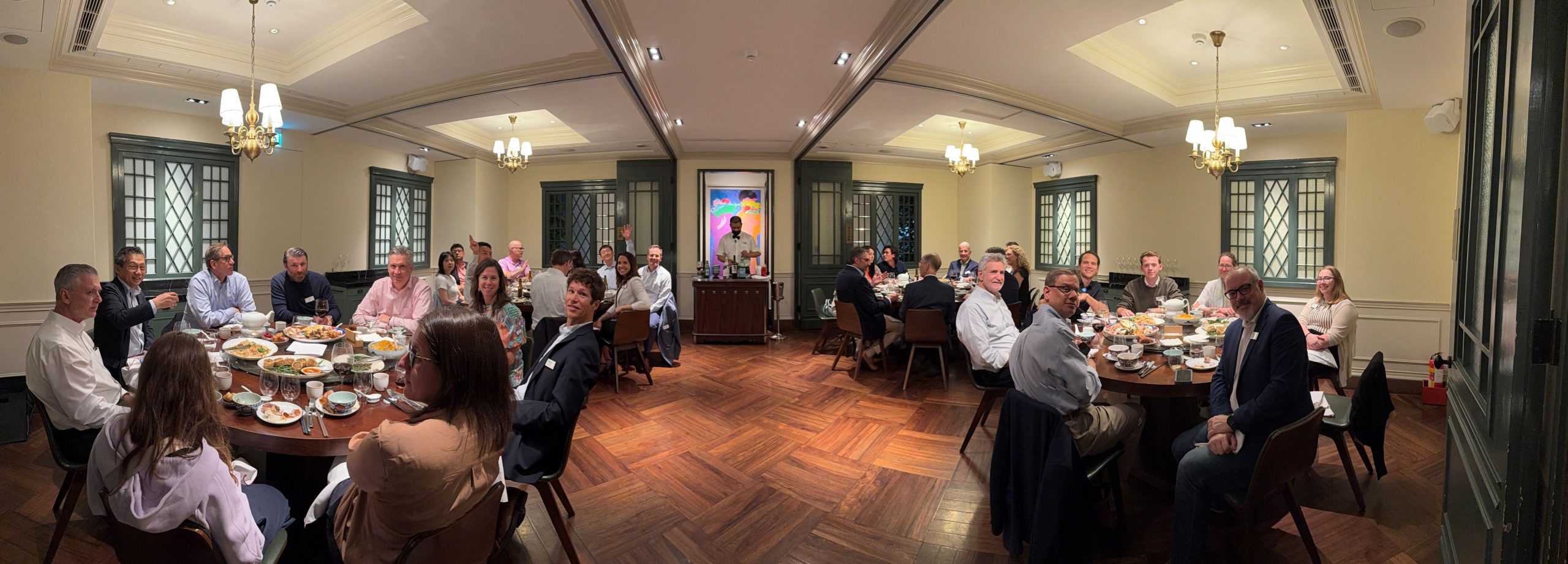
Global Electronics Association Board of Directors Meeting

Growing up in Byron, Michigan, watching her father as an electrician, Emily Daley knew someday she would study electronics. “In elementary school, I began to dream of building my own robot. I could see the mechanical side of things, but electronics held some sort of magic behind them that I wanted to understand.”

During a high-school tour of Michigan Tech, Daley fell for the rugged charm of the Upper Peninsula and went all-in on electrical engineering. Now, just months away from graduation, she’s reflecting on the defining chapter of her college career: serving as a Student Member Liaison for the Global Electronics Association Board of Directors.

Michigan Tech Team Shines at 2025 Bright Manufacturing Challenge

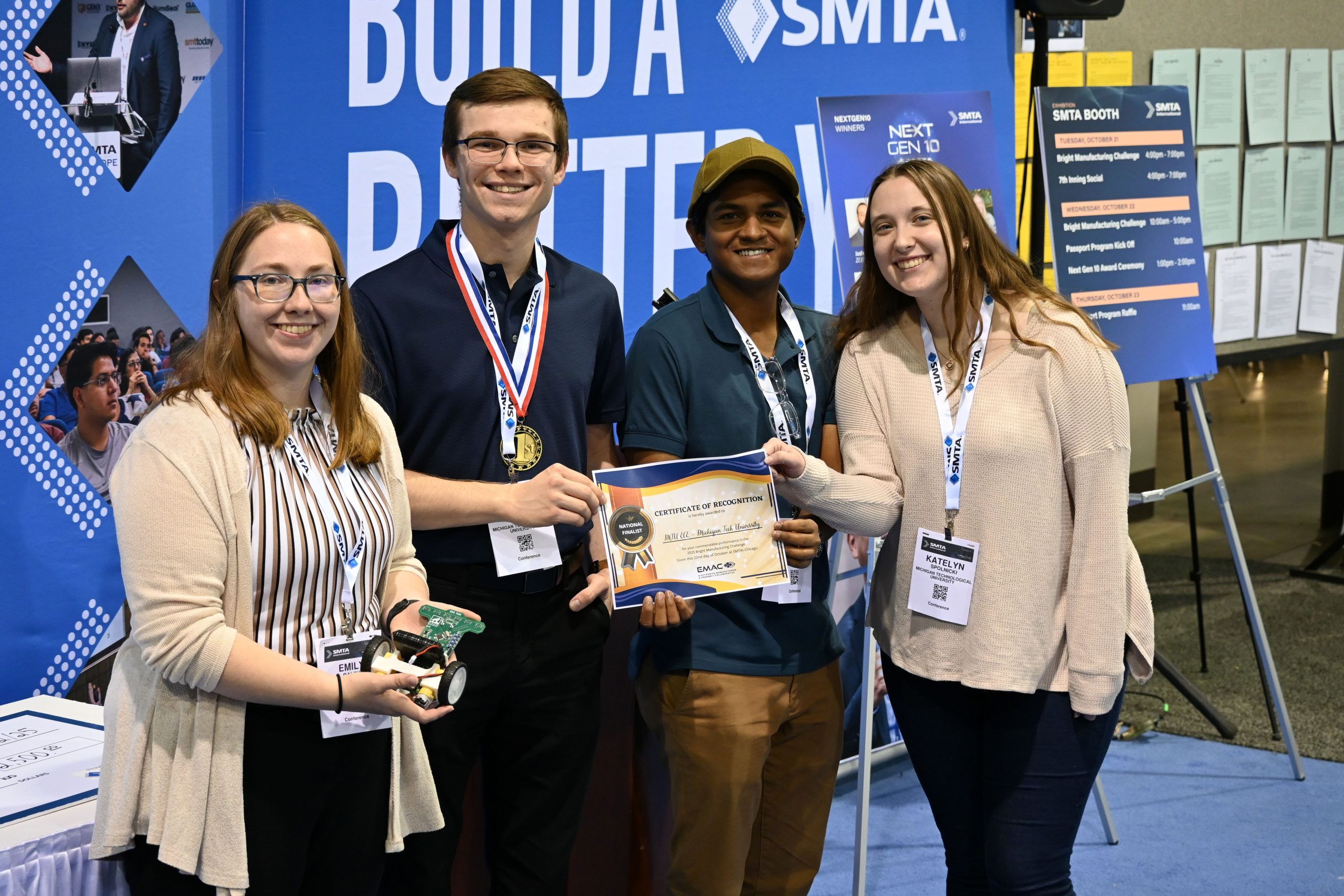
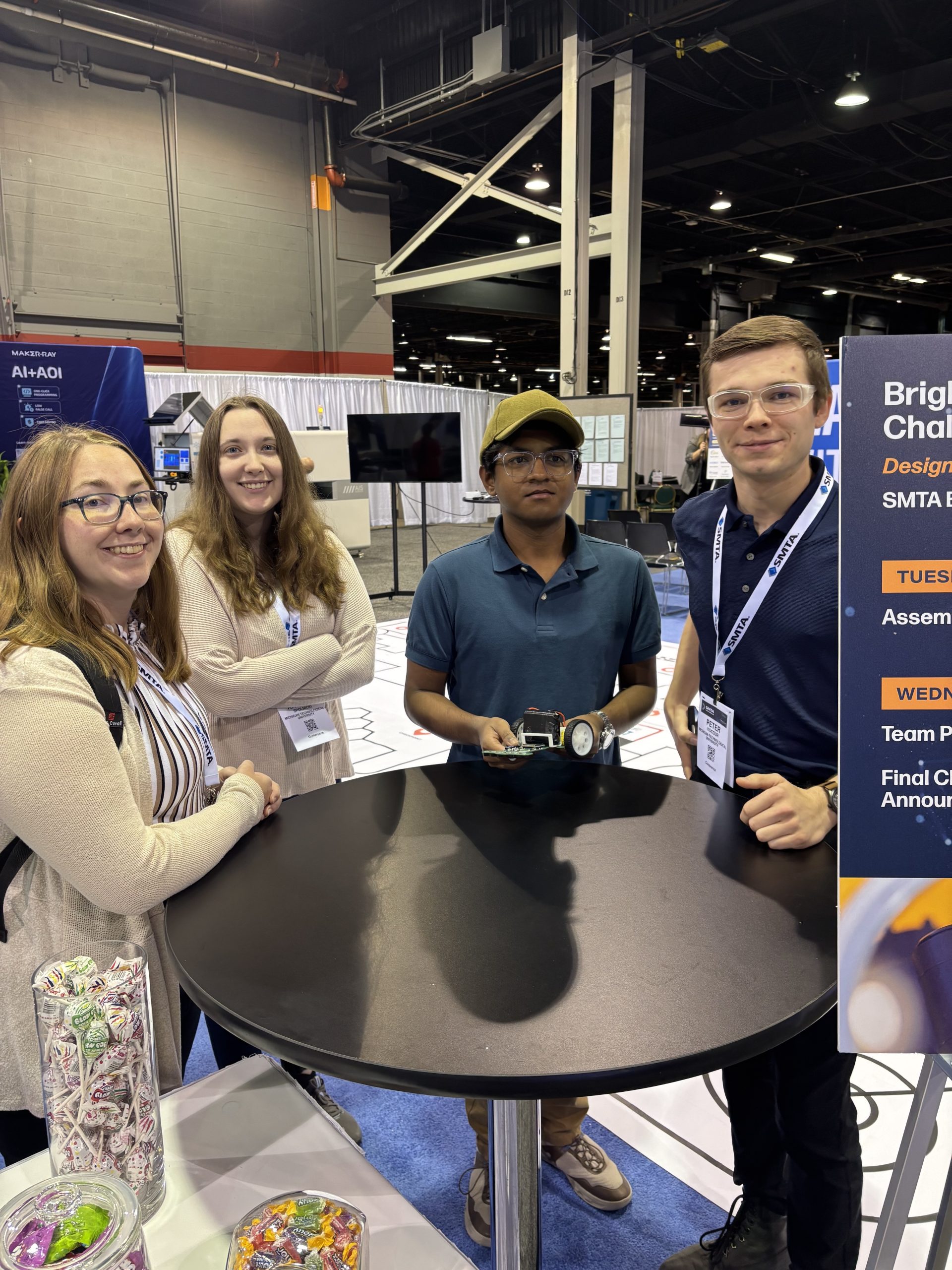
A group photo of three students
L to R: Congrats to Emily, Peter, Rishin and Katelyn!

Michigan Tech undergraduates Emily Daley, Peter Kocour, and Katelyn Spolnicki, and graduate student Rishin Patra secured 3rd place at the recent 2025 Bright Manufacturing Challenge.

The 8-week, national competition is sponsored by EMAC, the Electronics Manufacturing and Assembly Collaborative. It’s an immersive, hands-on experience for student teams who design, fabricate, and test a custom printed circuit board (PCB) to serve as the control center for a robot. The multidisciplinary competition is open to any team of 2–5 members (current college students or recent grads). This year over a dozen teams from around the country took part, including Michigan Tech.

MTU Engineering Students Travel to Chicago for the Bright Manufacturing Challenge

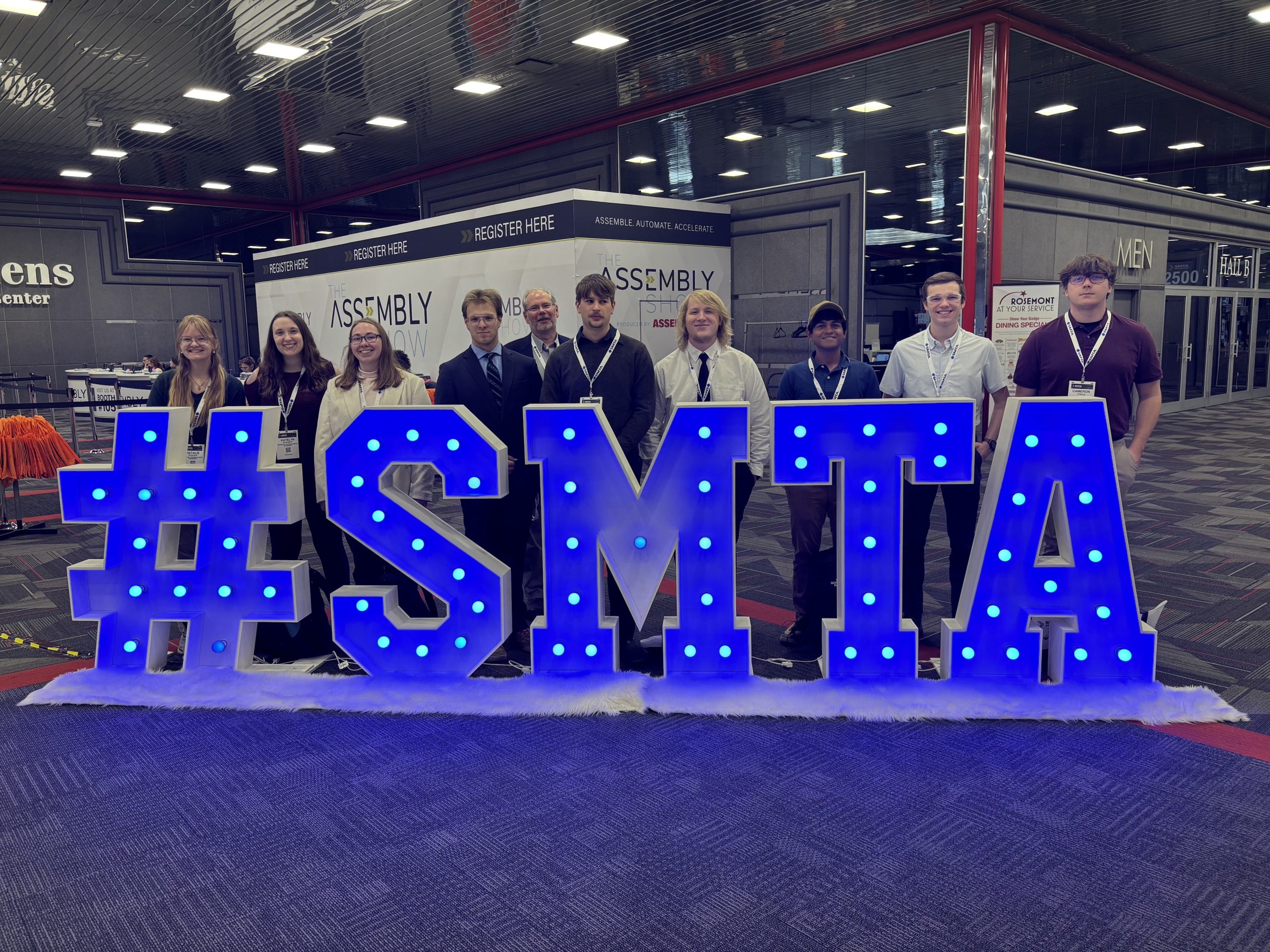
Students standing in front of blue letters that spell out "#SMTA"
ECE Professor Chris Middlebrook with MTU students and others at SMTAI 2025.

This week Michigan Tech ECE Professor Chris Middlebrook and four MTU students traveled to Rosemont, Illinois near Chicago this week to take part in the Bright Manufacturing Challenge and attend the SMTA International 2025 Conference and Expedition.

Group picture of the Michigan Tech Bright Manufacturing Challenge team
The Michigan Tech Bright Manufacturing Challenge team, L to R: Katelyn Spolnicki, Emily Daley, Peter Kocour, and Rishin Patra.

The Bright Manufacturing Challenge is an immersive, hands-on experience where student teams design, fabricate, and test a custom printed circuit board to serve as the control center for a robot. The challenge is hosted by the Electronics Manufacturing & Assembly Collaborative (EMAC). Any teams of 2-5 members can take part in the multidisciplinary, team-based competition, which simulates a real-world engineering product development cycle.

Michigan Tech ECE undergraduates Emily Daley, Peter Kocour, Katelyn Spolnicki, and ECE graduate student Rishin Patra took part in Round 1 (PCB Design) of the challenge back in July 2025. They earned a team prize of $1,000 and placed among the top 8 teams, securing their spot in Round 2 of the challenge (Fabrication DFM Review).

Next up will be Round 3, focusing on assembly, including planning and preparing for the circuit board population. The last phase is Round 4, which involves final integration–and features the grand finale of the competition: a robot challenge

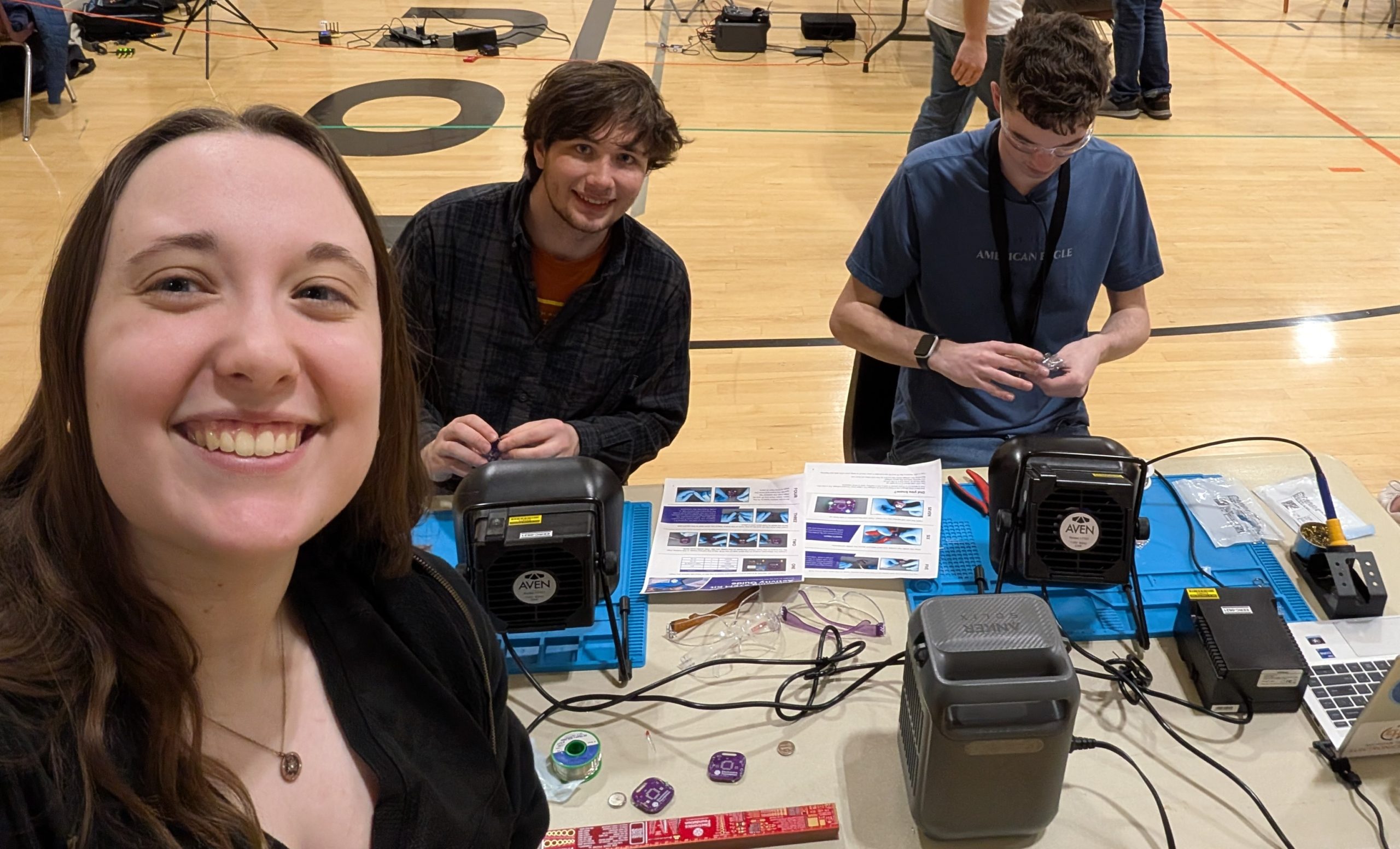
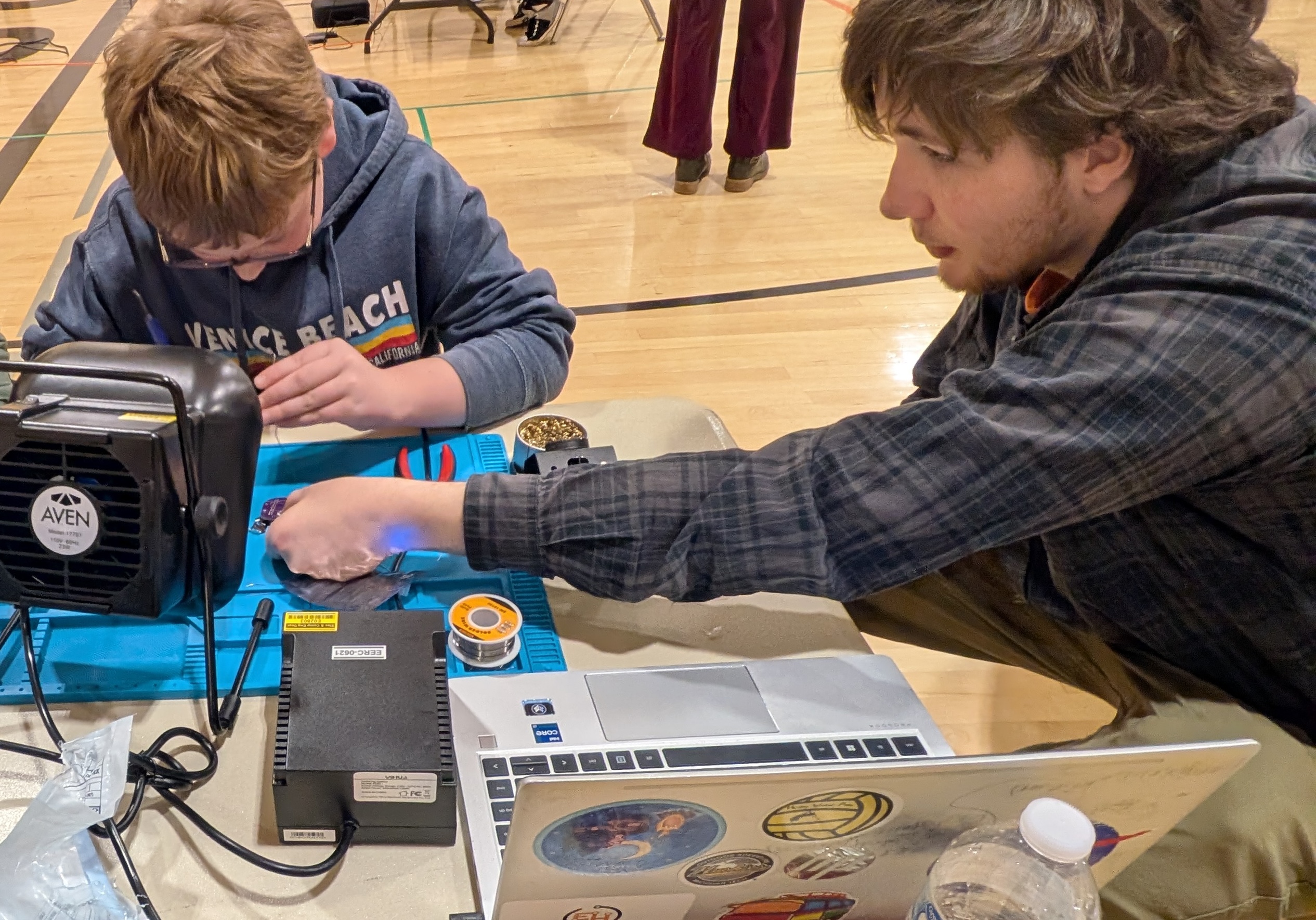
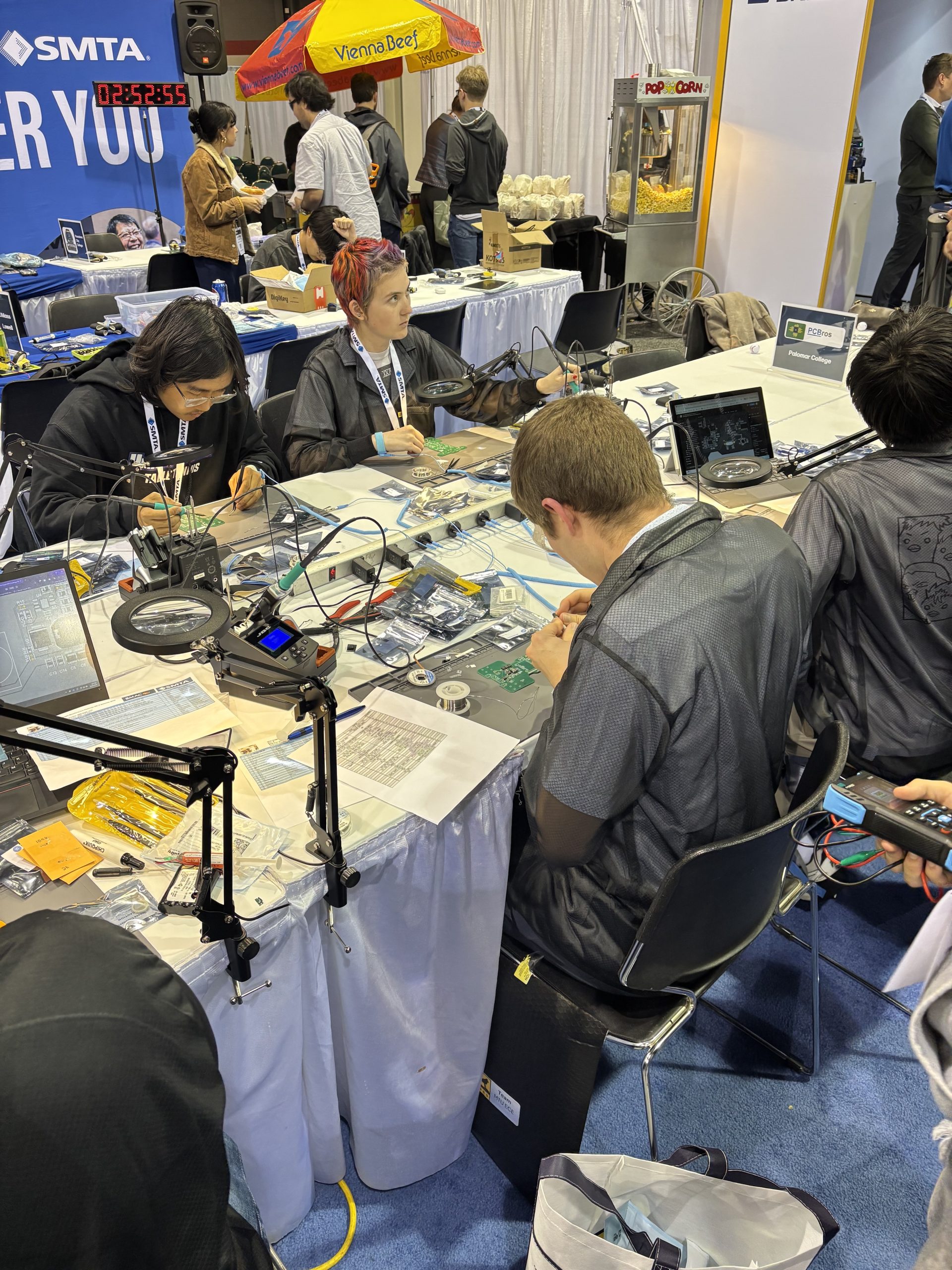
Students at a table working on circuit boards
Hard at work during the Bright Manufacturing Challenge, Round 2

Daley, Kocour, Spolnickiu and Patra are all members of the Michigan Tech’s IPC and Electronics student chapter, advised by Prof. Middlebrook. The chapter focuses on industry connections, plant tours, conference attendances, and all other things to do with the printed circuit board (PCB) or electronics industries.

ORAU Junior Faculty Award for Tan Chen

Tan Chen
Tan Chen

Tan Chen (ECE) was mentioned by the Oak Ridge Associated Universities (ORAU) as the recipient of a Ralph E. Powe Junior Faculty Enhancement Award for the 2024-25 academic year. A total of $175,000 was awarded to 35 junior faculty from ORAU member institutions.

The Powe recipients receive $5,000 in seed money for the 2024–25 academic year, matched by the recipient’s institution.

Chen’s research involves complex dynamics and applied control of robots, such as legged robots and manipulators.

“Each year, ORAU supports the research and professional development of emerging leaders at the universities who are members of our consortium.”

Ken Tobin, ORAU chief research and university partnerships officer

Michigan Tech at SPIE Defense and Commercial Sensing 2024

Tim Havens (CS/ICC/GLRC) and Steve Senczyszyn (GLRC) attended and presented at the SPIE Defense and Commercial Sensing conference, held April 21–25 in National Harbor, Maryland.

Senczyszyn presented “Comparing performance of robot operating system (ROS) mapping algorithms in the presence of degraded or obscured depth sensors.” His co-authors include Havens; Tony Pinar (ECE); Adam Webb (MTRI); ECE undergraduate Mohamed Salem; ECE graduates Elizabeth Donoghue, Shelby Wills and Moira Broestl; and U.S. Army engineer Stanton Price.

Havens presented “Synthetic augmentation methods for object detection in infrared overhead imagery.” His co-authors include Ashley Olson (MTRI) and Jonathan Christian and Jason Summers of ARiA.

Dylan Kangas (ECE) presented “Developing robust unmanned surface vehicles with ROS.” His co-authors include Havens, Senczyszyn, Pinar, Keven Li (ME-EM), ECE undergraduates Salem and Tyler Ryynanen, U.S. Army engineers Steven Price and Stanton Price, and Stephen Taylor and Timothy Murphy of the U.S. Navy’s Naval Surface Warfare Center.

Havens and Olsen are also co-authors of a presentation by Summers and Christian of ARiA titled “Generative EO/IR multi-scale vision transformer for improved object detection.”

Oberloier and Forney Celebrate Maker Fest 2024

Shane Oberloier (ECE), Ian Raymond (HU) and undergraduate student William Forney (robotics engineering) were quoted by the Daily Mining Gazette in a story about the 2024 Maker Fest, held March 23 at Houghton High School. This was the second year for the event, put on by Superior Fab Lab.

“It’s the chance to show off the tools we use in the enterprise, show how they can be used and generate interest in it that way.”

William Forney, robotics engineering undergraduate

The event celebrated the process of making and offered nearly 30 hands-on activities. Raymond let visitors engage in stop-motion filmmaking. Forney, an Open Source Hardware Enterprise member, offered 360-degree 3D scans of people’s heads. Also mentioned was the Society of Women Engineers, which ran a booth on building paper circuits.

Read more at the Daily Mining Gazette, by Garrett Neese.

Group of people in an auditorium engaging in activities.
Students and families attend Maker Fest 2024.
Presenter in front of screen with large group in the background.
Dr. Shane Oberloier gives a presentation on YouTube methods.

Aurenice Oliveira Receives IEEE Outstanding Branch Counselor Award

Aurenice Oliveira working in the mobility lab.

The IEEE Outstanding Branch Counselor and Branch Chapter Advisor Award is for the exceptional and dedicated efforts of Student Branch Counsellors and Branch Chapter Advisors.

This is an international award since the counselors are chosen from all the branches within all the IEEE regions within and outside the USA. The following is Dr. Aurenice Oliveira’s dedication:

“Dear Dr. Aurenice Oliveira,
It is with immense pleasure and great pride that I extend my heartfelt congratulations to you on being selected as a winner of the prestigious IEEE Outstanding Branch Counselor and Branch Chapter Advisor Award for 2023. Your exemplary leadership, dedication, and significant contributions to your Student Branch have been recognized and celebrated.”

IEEE Member and Geographic Activities and Technical Activities Boards

The primary criteria for selection are the enthusiastic support of the Branch Counselor, or Branch Advisor, by his or her students, and the commitment he or she has made to the engineering profession by the fostering of activities that encourage the development of IEEE Student members. The award recipient receives a certificate and other items.

The Member and Geographic Activities and Technical Activities Boards sponsor the cash award to maximum of 20 Outstanding Counsellors and Advisors around the world. Winners are those individuals who, through their work as Counsellors and Advisors, exemplify the Institute’s commitment to the educational, personal, professional, and technical development of students in IEEE related fields of interest.

Durdu Güney on Superlensing

Durdu Güney in the lab.
Durdu Güney in the lab, captured with an optical lensing effect.

Durdu Güney (ECE) was quoted by IEEE Spectrum in a story about a study investigating a new method for “superlensing,” or seeing things smaller than the wavelength of light.

Australian researchers Boris Kuhlmey and coauthor Alessandro Tuniz used numerical calculations to regain high-resolution information needed to amplify a dim signal. The method was used instead of a physical superlens to image objects smaller than the wavelength of light.

The postprocessing central to the Australian approach is similar to techniques routinely used in other areas of microscopy, according to Durdu Güney who studies superlensing at Michigan Tech.

Although the application to imaging is new, Guney says, “conceptually, I think the idea is not very novel.”

His research has used similar techniques in higher optical frequencies, for which superlensing is more advanced. Güney also questions whether the approach will be effective for more complicated objects, some of the features of which may be overwhelmed by noise.

Durdu Güney is an associate professor in Electrical and Computing Engineering. His current research activities include photonic quantum computing, quantum manipulation of light with metamaterials and metasurfaces, magneto-optical metamaterials, and novel noise mitigation techniques for optical imaging. He is on the editorial boards of Opto-Electronic Advances, Journal of Quantum Information Science, Nanomaterials and Nanotechnology, Applied Sciences, and Photonics.

Read more at IEEE Spectrum, by Gwendolyn Rak.

My Story: Carter Dugan, MTUengineer

Carter Dugan ’25, Computer Engineering

Carter Dugan is a computer engineering student. He’s also a member of WCE, the Wireless Communications Enterprise team, part of Michigan Tech’s award-winning Enterprise Program. WCE is focused on technology—wireless, optical, renewable energy and biomedical. The student-run enterprise works as a think-tank for companies looking to push their product lines to a higher level. WCE members also work as entrepreneurs, taking their own ideas to a level where they can be useful for industry and consumers alike. 

Tell us a little about yourself.

Similar to my degree, I have a hardware side and a software side. I write a lot of code in my free time, mainly using either the C or Python programming languages. Outside of those two languages, I know Java and a small amount of C++. My main areas of interest in computer science are artificial intelligence, data science, systems programming, and CS education.

How did you decide to come to Michigan Tech?

I visited many schools in Indiana (my home state) and none of them stood out to me. I was considering not going to college at all after struggling to find a school and community that seemed to suit me. I don’t remember how I heard about Michigan Tech, but I remember visiting in January of 2020 on a Husky Host visit. I watched Broomball, spent time with a group of 10 or so students, and instantly fell in love with the community, the culture and the weather. That night I knew Michigan Tech was the school for me.

Any recipes, formulas, or tips for success?

My first year was during lockdown, so I can’t speak on the average first year experience. However, I know that many students struggle with adjusting to university life and workload regardless of their background, because many are not used to having to work hard for good grades. My number one piece of advice is to be patient with yourself. It took me until this year to get into a comfortable routine and schedule for success, and many who had similar experiences did not make it this far. It is all about having confidence in both your present self and your future self, and trusting in the process of being knocked over and getting back up to try again. If you follow this advice, you will be very successful, even when you falter academically.

“Similar to my degree, I have a hardware side and a software side,” says Carter.

What WCE projects are you working on right now? 

I am very interested in radio technology and joined to learn more about wireless comms. I’m on a team working on a drone that can use a cell tower as a middle man when communicating with the user, something that gives drones a much larger range of control. It is a very interesting and ambitious project, and the time I have spent working on it with my incredibly intelligent teammates has been invaluable and has taught me a lot.

What are the greatest challenges and benefits?

We haven’t run into many challenges, as we have an enthusiastic mentor and a good amount of freedom with the project. WCE itself has a particularly low member count at the moment. We’re taking that challenge by the horns by getting the word out about the enterprise and trying to get younger students into the lab to show them what we’re about. It is going very well, and we believe we’ll  have a very strong group of students of various backgrounds joining in the coming semesters.

The best part about WCE has been working with my team. Like I said, they are all very smart and hard working. Having a team that keeps each other in check and focused has resulted in maintaining a high work ethic. We have a good amount of momentum, and I have enjoyed every second I’ve spent with these people. I have learned so much from them already and look forward to continuing the learning experience.

Do you attend the MTU Career Fair?

My own experience at the MTU Career Fair has been very positive. I have networked with many people from different organizations and companies, resulting in a fantastic internship in the summer of 2023—a telecommunications company in Iron Mountain, Michigan, called CCI Systems. During my time there I gained valuable experience working with AI. It was an experience I’m confident will greatly pay off in the future. The MTU Career Fair has its reputation for a reason. Many companies love Michigan Tech students and grads—that’s because they know the work that goes into being a student at this university.

How did you find your major? 

I originally chose computer engineering because I always loved computer science and electrical engineering, and this degree is a hybrid of the two. However, I have recently discovered that I want to pursue a career in electronic control systems. I am currently taking my first class in that area and I love the content. I hope to secure a job in that field and will do whatever it takes to make that happen.

Have you tried undergraduate research at Tech?

I haven’t done undergraduate research outside of personal projects, but I have many friends who are doing various research projects in their undergrad, from EEs researching quantum computing and photonics to Biochem students doing research on environmental impacts on human cell structure and health.

“This is my club (WMTU) after our first broomball game of 2022-2023.”

How would you change the world if you could?

Making information and education freely available to anyone interested in any field of STEM. Information is more accessible than ever with the internet and now AI, yet so many people do not have access or the know-how to take advantage of it. If we can change this, it would greatly benefit us as individuals and as a species.

What is the best advice you’ve ever been given?

The best advice I’ve been given is to learn to learn instead of learning how to be taught. Relying on others (even professors!) to teach you the content will only get you so far. Almost all of learning is reliant on your self-discipline and passion for the education you are pursuing. Seize every opportunity and trust in the process. Failure is the most vital part of success and you won’t learn anything without it. 

Your advice for first year students? 

Many people will tell you to be your own number one supporter, and many others will tell you that you need to be your own number one critic. You need to be both if you want to succeed to your fullest potential.

“Above all else, be patient with yourself and give yourself time to improve.”

Advice for incoming students, from Carter Dugan