Author: Maryann Wilcox

Beyond the Classroom: Electronics Hub Summer Spotlights


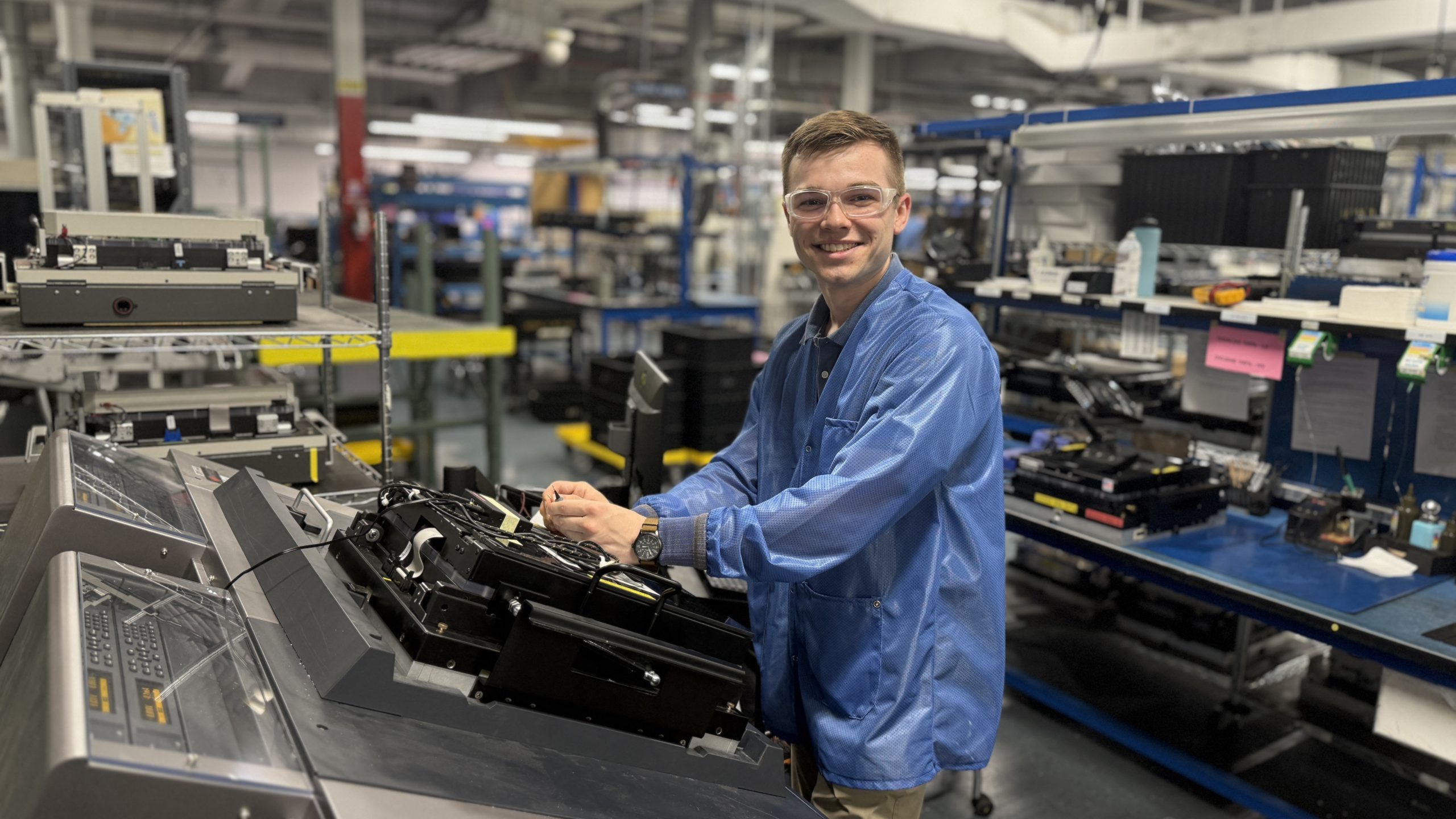
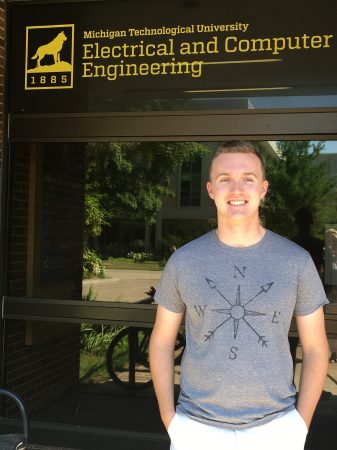
Eli Richardson prepares to test barometers at RM Young. 

Electrical engineering senior Eli Richardson from Traverse City, Michigan takes us inside RM Young Company. Read on to learn how this Michigan Tech student’s passion for electronics fuels both his corporate role and a massive high-power motor project in his garage.

What are you doing this summer?

I’m working at RM Young, based in Traverse City. It’s a company that makes a majority of the weather sensors used all around the world. Most of the components are made entirely in house. My specific role is R&D intern, which is all about updating our old sensors. That includes through-hole components to SMD, designing and programming retrofit boards for older model sensors, and fixing broken PCBs. My primary project is the 05103 wind monitor. I’ve been updating it to use a newer protocol. 

What are some of the challenges?

When I first started, I had no idea what I was doing. I had to learn all these different CAD packages, along with niche programming software. At the same time, my boss wasn’t used to talking with people who didn’t know what was going on, so he’d use a bunch of niche terminology. I’d need to Google what it meant after each conversation—and then hope I was responding to him correctly!

What do you enjoy most?

It’s the freedom I get from having an engineering job that allows me to take a project in whatever direction I think would be best (or sometimes most fun). And at the same time, nobody asks any questions if I get up from my desk and walk around for no real reason. A consistent schedule is really nice, too.

How did you get interested in electronics?

I’ve been interested in electronics for as long as I can remember. I was always intrigued by things that plugged in. I slowly learned more and more about how to plug things in correctly, so to speak, up to the point that I jumped into the deep end of a job here at RM Young where I was expected to know quite a lot. But I had no clue how much I didn’t know.

What are your career goals?

After graduating, I very much hope to continue working at RM Young (if they’ll have me) and see where life takes me from there.

What do you like to do for fun?

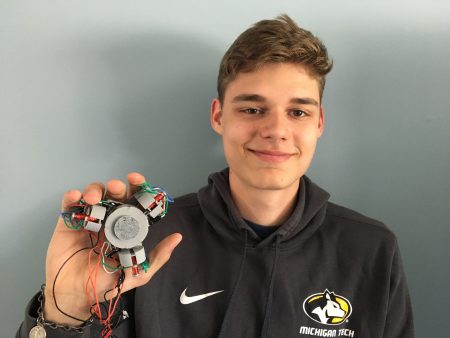
For the past 6 months I’ve been trying my best to make a high-power axial flux motor. It takes up a grand majority of my free time. I only have a small portion completed, if I can even call it that. 

What’s an axial flux motor?

Axial flux motors have mostly been used in generators. Recently, though, the high-performance car maker, Koenigsegg, which is owned by Mercedes, made their “dark matter” motor based on axial flux topology. After seeing a video of its construction, I wanted to try making one, myself.

Tell us more

The controller needs to be tuned for the motor to work correctly, and ideally, it is a pure sine wave controller that uses field-oriented control. I will be making a controller with the Open Source Enterprise at Michigan Tech next semester that can hopefully drive the motor. Once it’s all done, I honestly still have no idea what I’ll be able to do with it. 

My design is going to be incredibly heavy and powerful, but the only manufacturing tool I have is a 3D printer. It should work, but I have no idea for how long. I’ll probably buy some kind of CNC machine to make a version 3 that isn’t just made of mostly plastic. At that point I should probably learn some simulation tools to make sure everything is designed in an ideal manner.

If you could create any company or invention what would it be?

I would make axial flux motors and subsequent controllers to go with them. I’m way too fascinated with them!

Beyond the Classroom: Electronics Hub Summer Spotlights

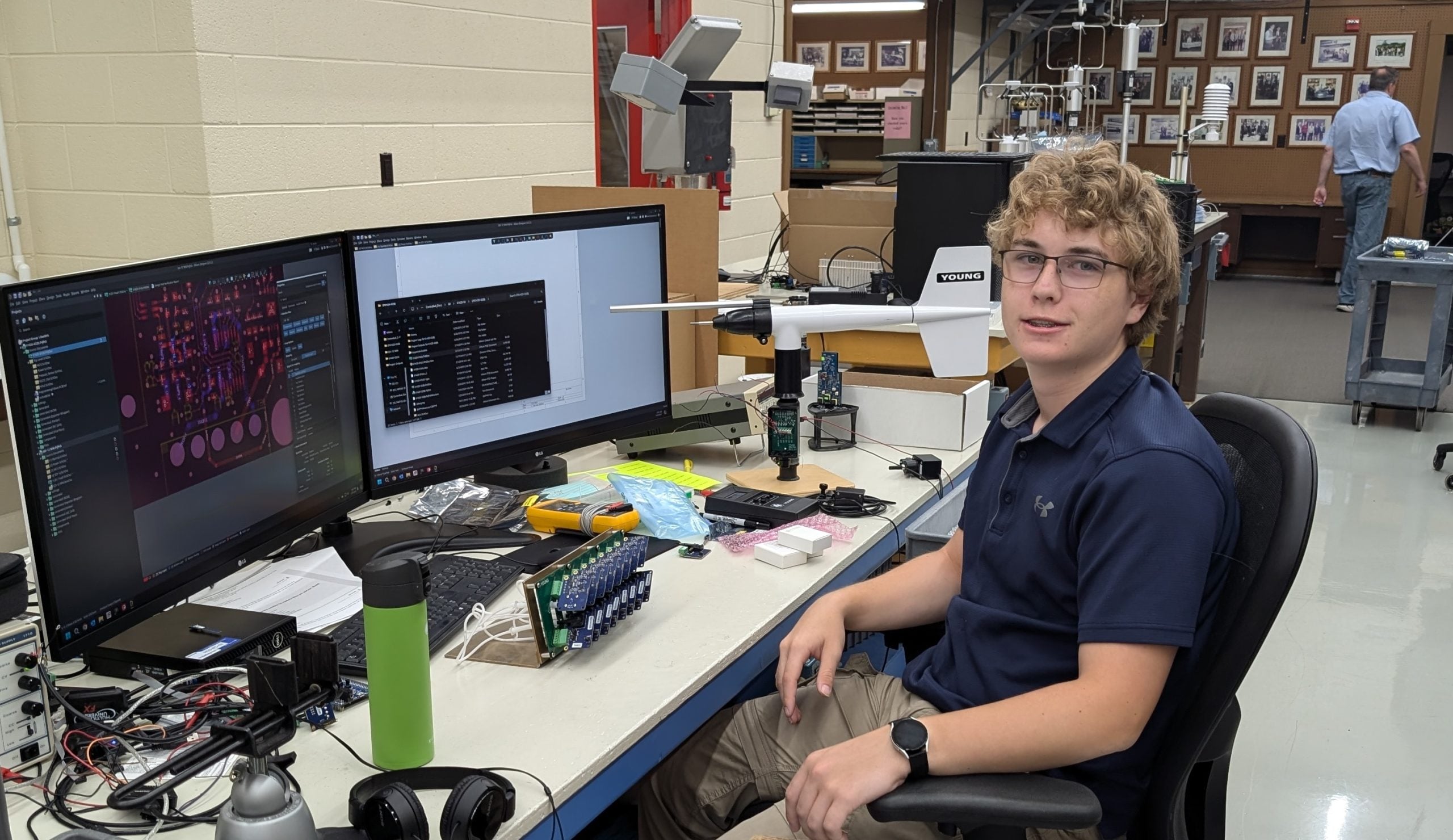
Evelina Hovis, getting ready to inspect the new copper layer on a PCB panel

Electrical engineering senior Evelina Hovis from Grosse Isle, Michigan takes us inside Professor Middlebrook’s PCB Lab. Learn how she tackles manufacturing challenges, analyzes micro-structures under the microscope, and stays organized through it all.

Q: What are you doing this summer? 

A: I am working in the PCB research lab of Professor Chris Middlebrook. My job is to determine the accuracy of the electroplating rates on the lab’s LPKF Contac S4 Electroplating Machine. The work involves testing, data collection, and analyzing the consistency and quality of the plating process. 

Q: What are some of the challenges?

We do a lot of troubleshooting when trying to achieve uniform plating, to narrow down exactly where any issues are coming from. Research involves a lot of trial and error along with careful testing. Another challenge is organizing collected data properly so that results are accurate and easy to analyze.

Q: What do you enjoy most?

A: I really enjoy microsectioning. That involves taking tiny samples of circuit boards, embedding them into resin pucks, grinding them down, and analyzing them under a microscope. It’s really interesting to closely examine the internal structure of the boards and see the results of the manufacturing process in detail. 

Q: How did you end up at Michigan Tech?

A: MTU stood out to me because of its great engineering program. I really enjoy the close-knit campus community, along with the beautiful nature and scenic views in the area.

Q: How did you become interested in electronics?

A: Soon after arriving at Michigan Tech, I started taking circuits and electronics courses and labs. That’s when I realized how much I enjoy circuit building and analysis. Seeing ideas we learned about in the classroom become real and functional through hands-on work was really rewarding. That’s what made me interested in pursuing electronics further. 

Q: What are your career goals? 

A: Once I graduate with my BS in Electrical Engineering next year, I hope to begin working in the electronics or PCB manufacturing industry. I’m also interested in pursuing automotive-related work. I feel optimistic about my career prospects. Electronics and manufacturing continue to grow and evolve. There will always be a need for engineers who can solve problems, improve processes, and adapt to new technologies.

Q: What do you like to do in your spare time?

A: One of my personal hobbies involves making appliqué and custom hoodies. I would love to create a business where I sell my handmade creations. It would feel rewarding to know that other people enjoy something I created and can find beauty in it as well.

Q: How would you change the world if you could? 

A: I would change the way our government operates to make systems more efficient, transparent, and focused on helping our people.

Q: What’s the best advice you’ve ever been given?

A: Ask questions, even if you think they might sound dumb. Sometimes the person explaining something may unintentionally leave out details because they already understand it, so asking questions helps bridge the communication gap. It also creates opportunities to learn from different perspectives.

Q: Any advice of your own you’d like to share?

A: Learn how to manage stress in school or the workplace. Things can become overwhelming very quickly, so it’s important to step back and think, “What’s something I can do today to make tomorrow easier?” Small habits that help you stay organized and prepared can make a huge difference.

Aurenice Oliveira Named ELATES Fellow in National Leadership Program

Aurenice Oliveira, Associate Professor in the Department of Electrical and Computer Engineering at Michigan Tech, has been selected for the Class of 2022-2023 of Drexel University’s Executive Leadership in Academic Technology, Engineering and Science (ELATES) program. The ELATES program is a national leadership development program designed to promote women in academic STEM fields, and faculty allies of all genders, into institutional leadership roles. Oliveira is also a recipient of the first ASEE ELATES fellow scholarship covering program costs and travel expenses. 

The Class of 2022-2023 ELATES Fellows is a prestigious cohort of 30 faculty members from over 25 institutions of higher education across the U.S. and Canada. The ELATES Fellows include experts in engineering, mathematics, and science, all of whom have significant administrative experience on top of their scholarly accomplishments. Oliveira was nominated by the Dean of the College of Engineering Janet Callahan and former ECE Interim Chair Glen Archer, for this intensive, yearlong program, which includes personal and leadership development work as well as series of on-site work in the Philadelphia area.

Oliveira’s research interests focus on hybrid communications and networking including connected and autonomous vehicles communications.  She is currently the IEEE chair for Northeastern Wisconsin Region 4 and recently served as the chair of the NSF ADVANCE Advocates and Allies Advisory Board (A3B) and as Equity (DEIS) Advisor for Michigan Tech Faculty and Chairs Search Teams. She is currently the faculty advisor for two student organizations on campus: The IEEE Student Chapter and Eta Kappa Nu (HKN) Honor Society. Oliveira will be also serving as Michigan Tech’s Vice President for Research Faculty Fellow for this coming academic year in the areas of Research Development and Research Integrity.

“I am excited to participate in a program focused on training an amazing group of women to become leaders in academic STEM fields. I would like to be able to bridge people and ideas as well as to tap into our strengths to create/encourage growth in my department and at Michigan Tech”.

Facilitated by leaders in the fields of STEM research and leadership development, the ELATES curriculum is focused on increasing Fellows’ personal and professional leadership effectiveness, from the ability to lead and manage change initiatives within institutions, to the use of strategic finance and resource management to enhance organizational missions. Pairing online instruction and discussion with intensive, in-person seminar sessions, the program encourages Fellows to apply what they’ve learned at their home institutions. Ultimately, it aims to create a network of exceptional faculty who bring broad organizational perspectives and deep personal capacity to the institutions and societies hey serve.

Sharon Walker, PhD, executive director of the ELATES program and dean of Drexel University’s College of Engineering, shares her excitement for welcoming the newest class of Fellows.

“I am thrilled to welcome this talented new cohort of ELATES fellows as they join the community of distinguished alumnae who are committed to lifelong learning and leadership development.  I am excited to see what impact they will not only have this year on their home campuses, but more broadly to the higher education STEM community in the future.”

To learn more about ELATES at Drexel, visit ELATES online at Drexel.edu/ELATES.

IPC & Electronics Student Chapter Hosts Event

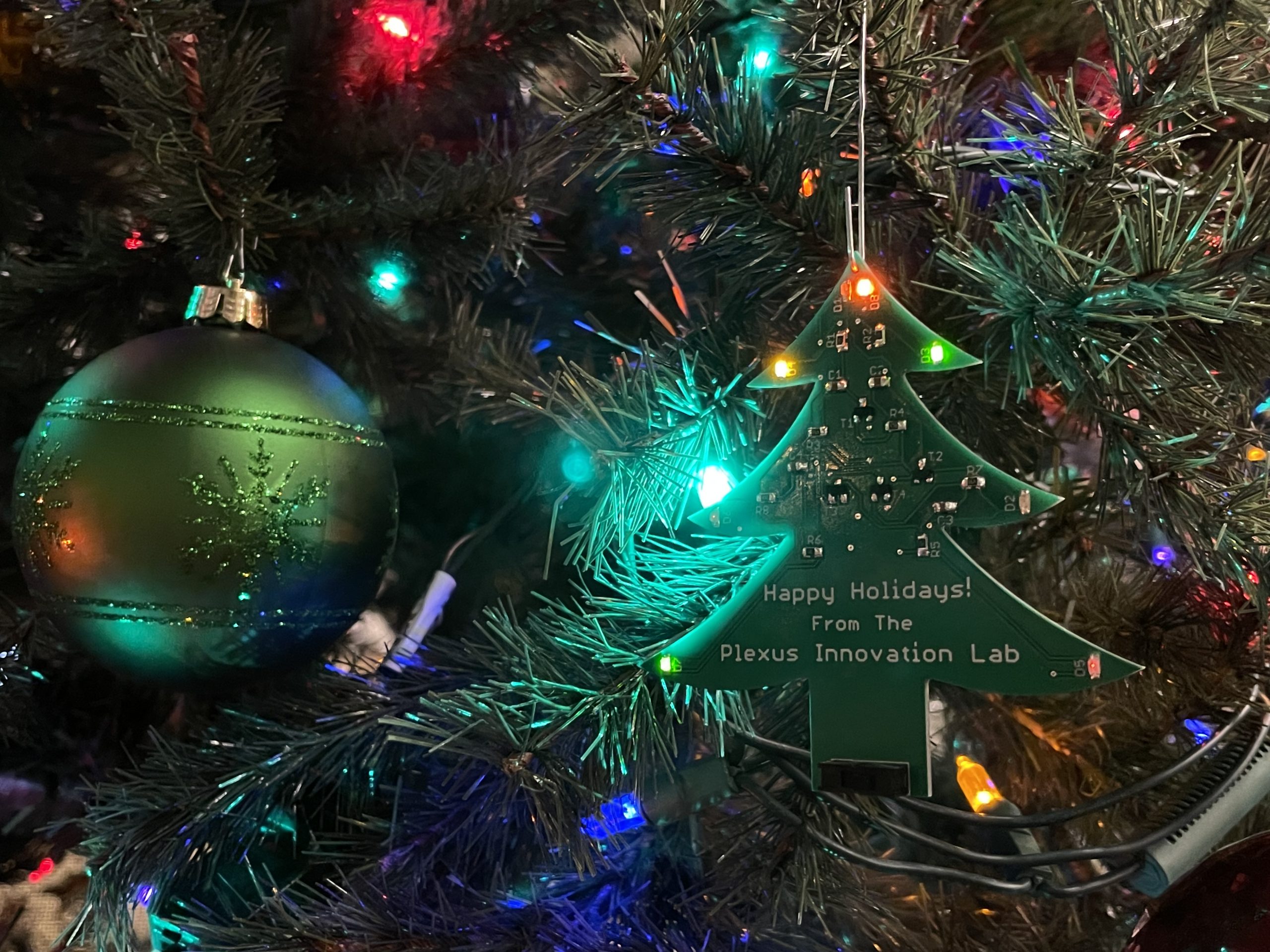
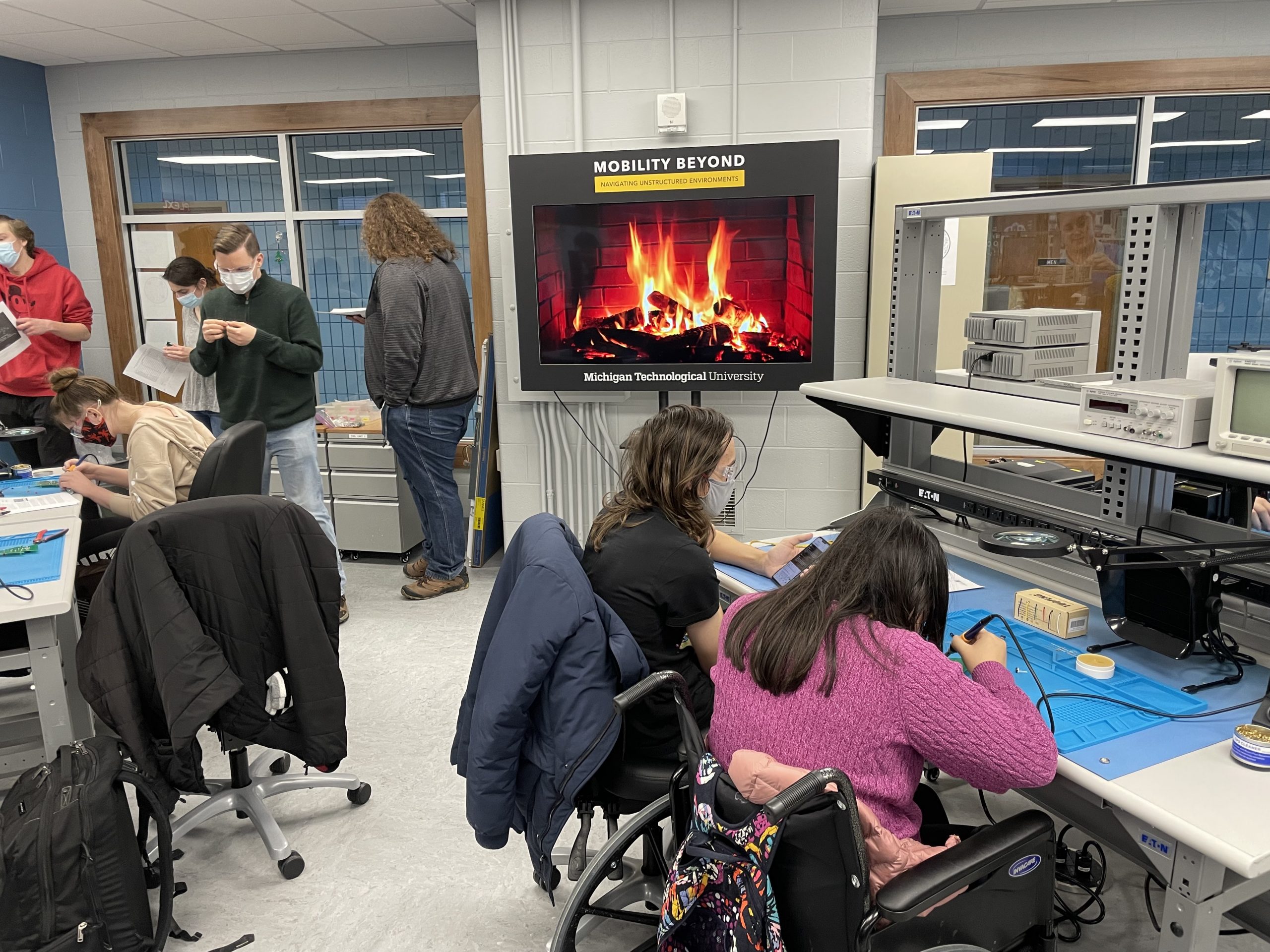
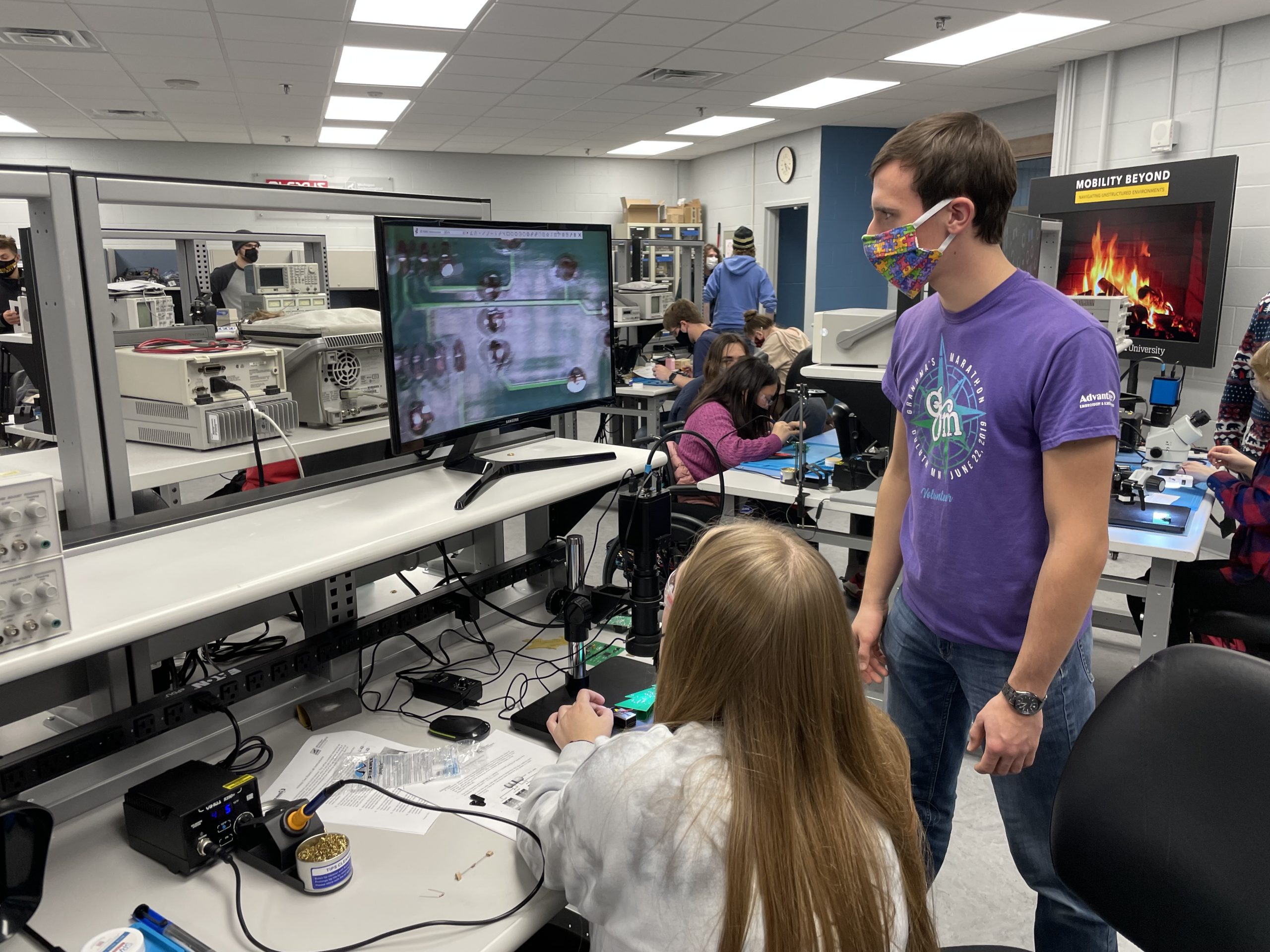
Participants gathered in the Plexus Innovation Lab late last week to create Christmas tree ornaments, an event sponsored by the IPC & Electronics Student Chapter at Michigan Tech with some help from the Blue Marble Security Enterprise. Pictured are students creating their ornaments using the pick and place machines within the lab, and others optically inspecting the boards’ soldered connections to detect and identify defects. https://www.involvement.mtu.edu/organization/ipc-electronics

Picture of the Christmas tree ornament created by participants in the event.
The IPC & Electronics Student Chapter at Michigan Tech hosted a Christmas tree ornament making event.
Picture of students using the pick and place machines to create their ornament in the Plexus Innovation Lab.
Student participants use the pick and place machine to create their ornaments.
Participants in the event inspecting the boards for defects.
Student participants in the event inspect the boards soldered connections to detect/identify defects.

ECE Hosts Work Bees to Make Outreach Kits

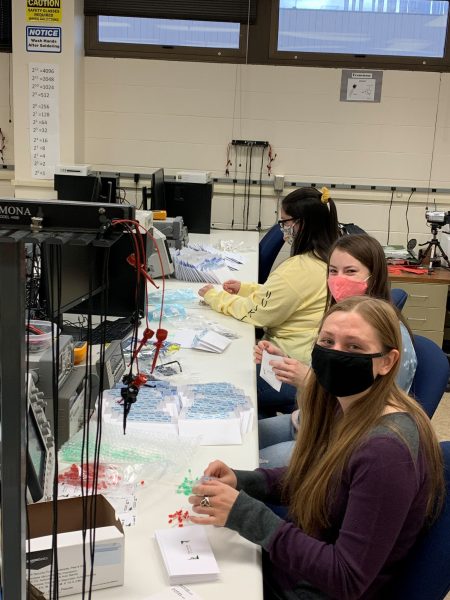
Small group of Society of Women Engineers volunteers preparing outreach kits.
Society of Women Engineers (SWE) members volunteer to prepare holiday tree circuit board kits for use in “near-peer” outreach.

On a Mission to Make Hundreds of Outreach Kits, ECE Hosts Work Bees

by Liz Fujita

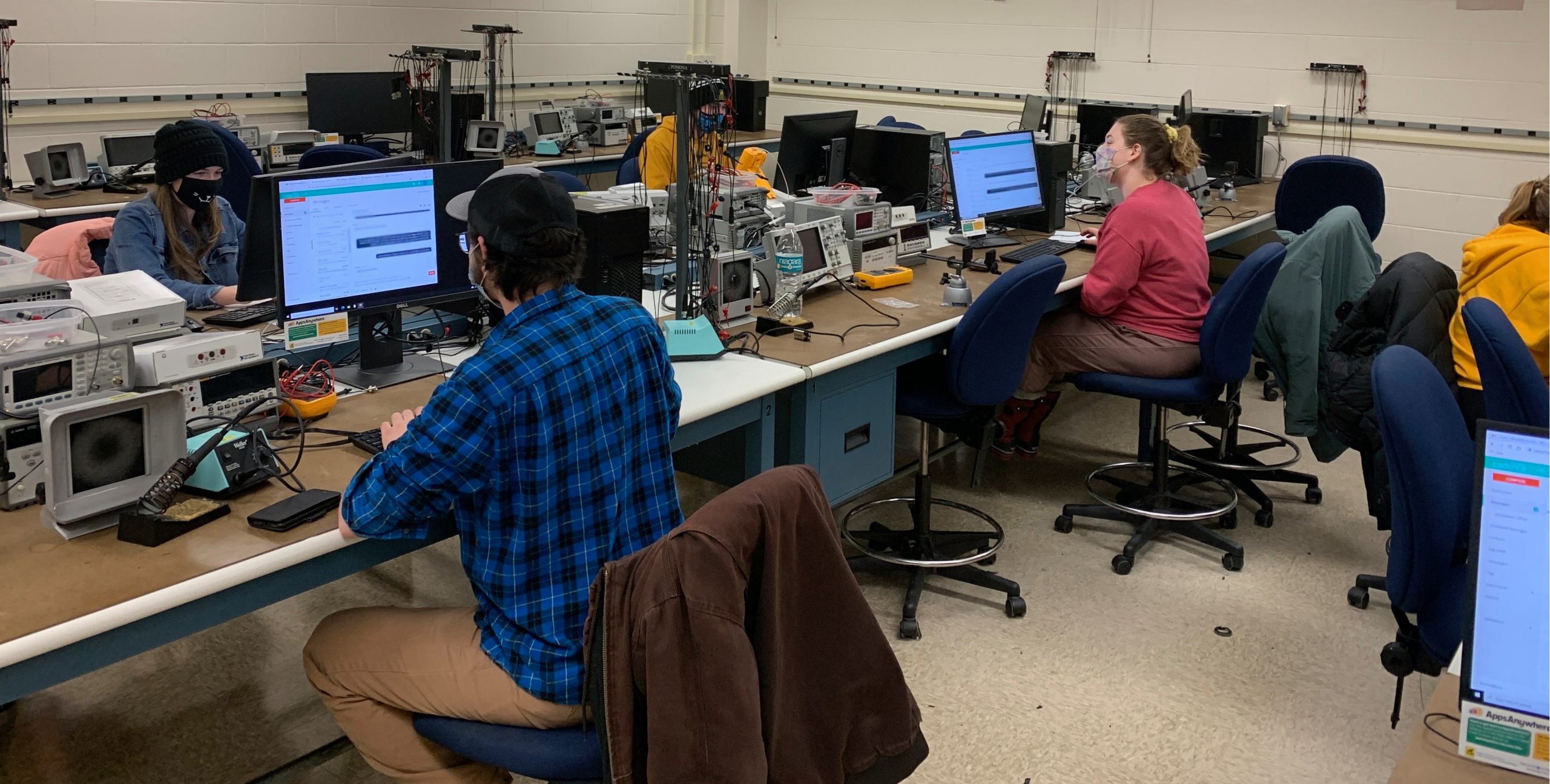
On multiple evenings in October, the lab space in EERC 722 was the image of organized chaos. Bags of LEDs, resistors, capacitors, switches, and batteries spilled out on lab benches, waiting to be counted out into bags. Soldering irons heated up, fume-extracting fans whirring. Empty boxes steadily filled with kits ready to bring to pre-college students. With 600 hands-on outreach kits to prepare, the Department of Electrical and Computer Engineering has been hard at work this fall with the help of phenomenal student volunteers, and there is still plenty more to go. 

Interim chair Dr. Glen Archer is the PI on a grant from the Michigan Space Grant Consortium (MSGC) for the 2020-21 academic year that focuses on getting electrical engineering projects out to pre-college students at multiple levels. Along with co-PI Dr. Gretchen Hein (MMET) and academic advisor Liz Fujita (ECE), the program centers on multiple layers of mentorship.

“It’s an ambitious idea,” says Fujita, who in addition to advising helps to coordinate outreach efforts in the ECE department. “Michigan Tech has a lot of successful outreach programs that rely on this idea of near-peer mentoring—that idea that college students presenting information is more engaging, cooler, and better-received by high school students.” The MSGC proposal calls for several layers of near-peer mentoring to take place at several schools: 

College students teach high school students how to solder and the basics of electronic components with the heart rate monitor boards

Under the guidance of those college mentors, the high school students teach middle school students similar skills on the (slightly easier) tree circuit boards. 

And, lastly, the middle schoolers take bouncy bot kits to their elementary school to teach 4th and 5th graders the basics of circuits. 

All of this requires a tremendous amount of preparation. In October alone, members of Blue Marble Security Enterprise and the Society of Women Engineers spent a combined 50+ hours soldering, counting, stuffing bags, and organizing materials. 

ECE has on multiple occasions joined forces with the Society for Women Engineers. Funding for this project includes support for not only the activity kits themselves (circuit boards, LEDs, resistors, batteries, etc.), but also for soldering stations, storage bins, and travel to schools in the local area as well as downstate. The combined funding secured by SWE and ECE will enable them to prepare 200 of each activity kit.

Notes Archer, “Near-peer mentoring allows younger students to picture themselves in a future state. They see this person in front of them and imagine their own life, in that role.” Although current COVID-19 restrictions leave the group unsure of when they will be able to visit schools, they remain optimistic. And, as work bees continue, they will be more than ready!

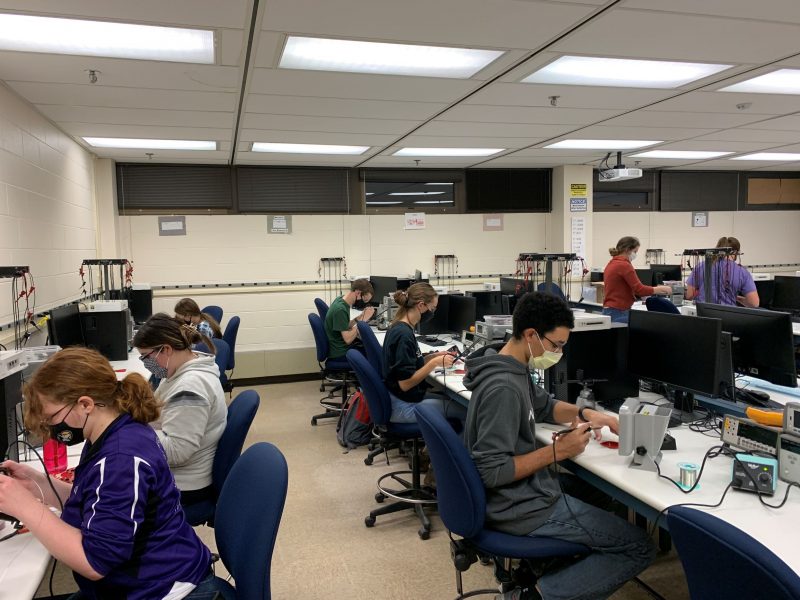
Volunteer ECE students preparing kits for near-peer mentoring projects sponsored by the Michigan Space Grant Consortium (MSGC)

ECE Virtual Senior Recognition and Awards Ceremony Held

The ECE Virtual Senior Recognition and Awards Ceremony was held Thursday, May 7, 2020.

Kit Cischke, senior lecturer and undergraduate program chair, presented ECE’s departmental awards.

Andrew Bratton

Andrew Bratton was the recipient of the 2020 ECE Departmental Scholar Award, given to a senior who best represents student scholarship at Michigan Tech. This outstanding student is considered excellent not only by academic standards, but also for participation in research scholarship activity, levels of intellectual curiosity, creativity, and communication skills. Andrew was nominated by Academic Advisor and Outreach Specialist Liz Fujita.

Samantha Fincannon

The 2020 ECE Woman of Promise was awarded to Samantha Fincannon. Samantha received several nominations for this award. The goal of this program is to recognize women at Michigan Tech who go “above and beyond” what is expected of them in terms of being a well-rounded student – one who has demonstrated academic achievement, campus and community leadership, good citizenship, creativity, etc. In short, women who exemplify the early-on criteria that would be considered when selecting future inductees to the Presidential Council of Alumnae.  The departments’ Women of Promise are recognized at the annual Presidential Council of Alumnae (PCA) Induction Ceremony/Luncheon held during the Fall semester. Recipients are also invited to other PCA activities where they have the opportunity to provide input on a variety of topics.

Katy Lichty

The 2020 Carl S. Schjonberg Outstanding Undergraduate Student Award was given to Katy Lichty. Katy received several nominations for the award. This award is given annually to an outstanding undergraduate student who exemplifies a dedication to learning and a commitment to the University. Professor Schjonberg was a faculty member in the Electrical Engineering Department from 1936 to 1970. He contributed significantly to the growth and development of the department and was dedicated to the education of electrical engineering students. This endowed award was established by his wife as a memorial to his long and dedicated career as an educator.

The EMP Mitigation Testing Senior Design Team
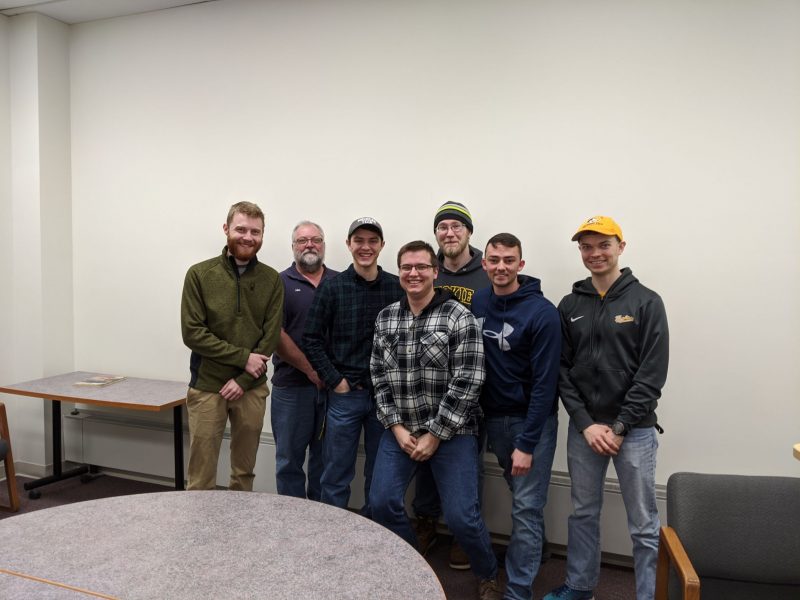
L to R: Chris Bousho, Advisor John Lukowski, Darin Shillair, Joshua Romanowski, Alexander Kellogg, Jacob Phelan and Addison Waege

ECE’s External Advisory Committee (EAC) presented the EMP Mitigation Testing Team with the Larry Kennedy Industry Innovation Award. The team is advised by John Lukowski, and Systems Control of Iron Mountain, MI sponsored the project. Team members are Chris Bousho, Darin Shillair, Joshua Romanowski, Alexander Kellogg, Jacob Phelan, and Addison Waege.

The ECE External Advisory Committee (EAC) is a collection of volunteers from many different industries whose goal is to ensure the ECE academic program is aligned with industry to produce graduates companies would want to hire. Larry Kennedy is an ECE alumnus who served on the EAC for many years and succumbed to illness while serving as chair. Each spring, the EAC members observe ECE’s senior design and enterprise team presentations and poster displays and select a team that best meets or exceeds specific criteria related to today’s industry needs. The Larry Kennedy Industry Innovation Award is given to the senior project that shows the highest level of project management, applied engineering and application to industry.

Each spring, the IEEE – Eta Kappa Nu Honors Society (HKN) polls the ECE student body to select the winner of the Professor of the Year award within the ECE Department. This event allows ECE students the opportunity to thank and encourage outstanding ECE faculty.

Chris Middlebrook

The 2020 HKN Professor of the Year was awarded to Chris Middlebrook. The students said Dr. Middlebrook makes class fun, and takes feedback to maximize understanding. Homework is pointed toward further understanding the material taught. Says a nominator, Professor Middlebrook has taken the PCB Fabrication course and turned it into an incredible experience for students with guest lectures and the lab component. He is hoping to develop this into a focus area, and grow the department’s use for this in the future. He also has been an integral part in the foundation of the new student organization, IPC and Electronics. Dr. Middlebrook is easygoing and funny – he keeps classes light and fun while still getting the required material across. 

Gabe Allis

MasterPiECE Mania is an event held each spring and sponsored by the IEEE (Institute for Electrical and Electronic Engineers) student organization and the ECE department. Students design, build and demonstrate projects and win cash prizes for the best innovation. All majors are welcome to participate. This year’s top prize of $500 was awarded to Gabe Allis for his high torque motor innovation.  Second place ($300) was given to Jared Engwis for his Covid Globe innovation, and third place ($200) went to Jacob Allen for his Smart Respirator. The IEEE student organization is advised by Jeff Burl.

Tim Schulz Receives a 2019 CTL Instructional Award

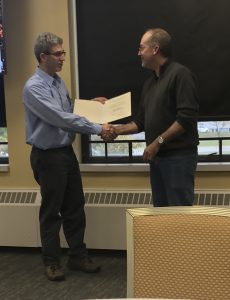
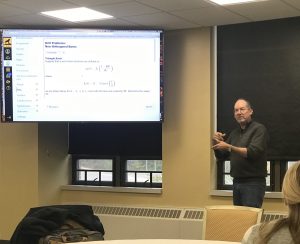
Tim Schulz receives a 2019 Center for Teaching and Learning Instructional Award for his outstanding progress in online course curriculum and learning tool development. Tim is pictured (left) receiving the award from Mike Meyer, director of the Jackson CTL. On the right, Tim is pictured presenting on his curriculum development methods at the awards ceremony held Tuesday, October 22, 2019. Tim was chosen from a pool of Deans’ Teaching Showcase award recipients. Read more about the CTL awards.

New Optics and Photonics Scholarship Available

A new scholarship at Michigan Tech is expected to advance the study of optics and photonics. The Optics and Photonics Scholarship was set up this past year by Michigan Tech Electrical and Computer Engineering alumnus Eustace Dereniak (‘63). Dereniak is a retired Professor and Professor Emeritus of Optical Sciences and Electrical and Computer Engineering at the University of Arizona, Tucson, AZ. He is also a past President of the International Society for Optics and Photonics (SPIE).

Chris Middlebrook, Associate Professor of Electrical and Computer Engineering at Michigan Tech, states that “The establishment of the Optics and Photonics Scholarship for undergraduate ECE students or other engineering students is a huge first step in the future direction of optical research and development at MTU.”

Photonics, the manipulation of light (photons), has revolutionized medical imaging, autonomous vehicles, solar power, optical computers, space optics and 3D printing. Photonics is poised to become the key technology of the future, surpassing electronics with new engineering challenges for the 21st Century.  A photon velocity is about 1000 times faster than electron velocity. Dereniak said, “My goal in establishing this scholarship is to motivate Michigan Tech’s engineering students to become hooked on optics as they investigate Michigan Tech’s optics/photonics curriculum and the unique career opportunities that exist within this rapidly growing field.”

SPIE has offered to match dollar-for-dollar any contributions to the scholarship fund, up to $60,000. Any person or organization that would like to contribute to the scholarship can do so by making a check payable to “Michigan Tech Fund #5392.” They may also contribute online at https://www.mtu.edu/givenow/?code=GIV0 (be sure to specify fund #5392).

James Davis Receives the 2019 Jonathan Bara Award

James Davis is the 2019 recipient of the Jonathan Bara Award, an award given each year to an outstanding teaching assistant in ECE. This endowed award was set up by the family of Jonathan Bara, a 1975 electrical engineering master’s graduate who suffered a heart attack and passed away at the young age of 25. The award was presented at this fall’s Graduate Student Banquet held on September 23rd.

James then accepted the Matt Wolfe award on behalf of the 2019 recipient, Wyatt Adams.  The award was set up by the family of Matt Wolfe, a 1992 BSEE graduate and MSEE candidate who was tragically killed in an automobile accident.