Search Results for "thesis and dissertations acrobat tips"

Keys to Graduate School Success

In a recent article in Tomorrow’s Professor, the authors advocate that the three keys to success are:

  • Follow your passions and talents
  • Pick your advisor and lab wisely
  • Learn to write well

In the article, they expand on these ideas, and offer tips and suggestions to achieve them. One piece that particularly stood out to me is to “follow your passions.” Graduate school is challenging, but your goal is achievable if you lay a good foundation. One piece of that is to find a project that will motivate you even when the research is difficult and it seems like the project can’t be completed.

If you haven’t heard of Tomorrow’s Professor, it’s a great newsletter with tips and article for those pursuing or interested in careers in academia. It’s worth your time to read.

What are your keys to success in graduate school?  Do you agree with the authors?

Conferences: Do Not Hide Under a Bushel

Whether you’re going to your first conference, or fiftieth, there are some great tips in this article from Tomorrow’s Professor to help you get the most out of the experience. A few tips on how to spend your time well at a conference, according to Christopher (2011) include:

  • Attend talks that will strengthen your specific research topics.
  • Attend talks that will broaden and enhance your research.
  • Learn how to have fun at the conference venue.
  • Interact with peers from other universities and organizations. Networking with your peers pays huge dividends. Peers today,
  • leaders tomorrow!
  • Finally, set aside some time to talk to potential mentors and some of the icons of the field. Most senior researchers enjoy interacting with graduate students.

NASA Summer Internships for Graduate Students

NASA offers paid undergraduate and graduate level internships in a variety of disciplines from business and finance to biology, chemistry, physics, earth and life sciences, and engineering.  The deadline has recently been extended to March 1, although offers may begin going out February 2nd.  Students are encouraged to apply by February 1st.

Please visit http://intern.nasa.gov to complete your application and apply for up to 15 opportunities with a single application.  There are currently over 200 opportunities available.

For tips on the internship application: http://www.youtube.com/watch?v=4saIcVc62-8

For tips on searching for and applying to internships and fellowships:
https://intern.nasa.gov/solar/web/public/main/index.cfm?solarAction=video

Fulbright Opportunities

The Fulbright U.S. Student Program offers fellowships for U.S. graduating college seniors, graduate students, young professionals and artists to study, conduct research or be an English teaching assistant abroad for one academic year. In addition, Critical Language Enhancement Awards are available to grantees for study of critical need foreign languages before or concurrently with their grant period. More than 1,500 Americans receive grants to study, research or teach abroad with either full or partial support from the Fulbright Program.
The Fulbright U.S. Student Program offers three kinds of grants: study/research, English Teaching Assistantships (ETAs) and travel-only grants.

Applying: The application for all grants (except the Fulbright-mtvU Fellowship and the Fulbright Public Policy Fellowship) in academic year 2012-2013 is now closed.  The application cycle for 2013-2014 grants will open in spring 2012 with a due date in mid-October 2012.  All participants must have a Bachelor’s degree or equivalent by the start of their grant. Students currently enrolled in an undergraduate or graduate program at a U.S. college or university must apply through the Fulbright Program Adviser (FPA) on campus, whose deadline may be earlier. Prospective applicants who are not enrolled students may apply at-large or though their alma mater’s FPA. Visit the Fulbright U.S. Student Program website for complete application, eligibility and program details.

Study/Research Grants

These fellowships offer up to one academic year of support for study and/or research in academic fields and the creative and performing arts. Applicants propose their own research and/or graduate study project and find their own host affiliation. Grants to study at specific universities are also available for some host countries.

Fulbright English Teaching Assistantships (ETA)

The Fulbright English Teaching Assistant (ETA) Program places recent college graduates and young professionals as English teaching assistants in primary and secondary schools or universities overseas, thus improving foreign students’ English language abilities and knowledge of the United States while increasing the U.S. student’s own language skills and knowledge of the host country. ETAs may also pursue individual study/research plans in addition to their teaching responsibilities.

Fulbright-Fogarty Fellowships in Public Health

Offered in partnership with the Fogarty International Center of the U.S. National Institute of Health, Fulbright-Fogarty fellowships grant medical students and graduate students interested in global health the opportunity to conduct research in public health and clinical research in resource-limited settings.  Fellows spend nine months in one of twelve countries in Sub-Saharan Africa, Asia or South America.  Applying: The application for awards that begin in the 2012-2013 academic year is now closed; the application cycle will open again in spring 2012 for 2013-2014 academic year grants. Applicants must be U.S. citizens and may apply only to one country; applicants for Fulbright-Fogarty fellowships should apply to the general Fulbright Student program in the field of Public Health. Visit the Fulbright-Fogarty webpage for complete application, eligibility and program details.

Travel-Only Grants

Grants for international travel are available to Germany, Hungary and Italy to supplement other fellowships that do not include travel costs or to supplement a student’s own funds for study/research.

Fulbright-mtvU Fellowship

The Fulbright-mtvU Fellowship is a special opportunity for up to four U.S. students to pursue projects around an aspect of international contemporary or popular music as a cultural force for expression. Applying: The application cycle is open from December until March each year for grants in the following academic year; the application and selection are separate from those of the other Fulbright U.S. Student Program opportunities described above. Visit the Fulbright-mtvU Fellowship website for complete application, eligibility and program details.

Fulbright Public Policy Fellowship

The new Fulbright Public Policy Fellowship affords participants the opportunity to serve in professional placements in foreign government ministries or institutions and gain hands-on public sector experience while also carrying out an academic research/study project. The application for awards for the 2012-2013 academic year is now open; all application materials must be submitted by February 1, 2012.

Fulbright Canada Science, Technology Engineering and Math (STEM) Award

The Fulbright Canada STEM Award offers U.S. students support for three years of doctoral study at one of six leading Canadian research universities (McGill University, Université de Montéal, University of Alberta, University of British Columbia, University of Toronto, and University of Waterloo) in both basic and applied fields of science, engineering and mathematics. Applying: The application for awards that begin in the 2012-2013 academic year is now closed; the application and selection are separate from those of the other programs described above. Visit the Fulbright Canada STEM Award website for complete application, eligibility and program details.

Application Advice

Fulbright U.S. Student Alumni Ambassador Program

Fulbright U.S. Student Alumni Ambassadors represent the program’s rich diversity and play a key role in increasing knowledge about Fulbright opportunities to prospective applicants. They provide testimonials about their Fulbright experiences at conferences and campus presentations and offer application tips in written articles, video and podcast interviews, Webinars, and at special events throughout the United States.

Meet the Fulbright U.S. Student Alumni Ambassadors

Fulbright U.S. Student Program Blog

U.S. Student Program applicants can read testimonials and application tips from current grantees and alumni on the Fulbright U.S. Student Program Blog.

Lunch and Learn: “Graduate Fellowship Opportunities at the National Institutes of Health”

In collaboration with Associate Professor Tammy Donahue (ME-EM) and Chair Jason Carter (Exercise Science), Sponsored Programs will host a Lunch and Learn on the NIH Individual Graduate Fellowship Opportunity–Ruth L. Kirschstein National Research Service Award NRSA.

The session is scheduled from noon to 1 p.m., Tuesday, March 15, in Memorial Union Ballroom A-1.

Graduate students and faculty will learn who should apply, what is involved in preparing an application, specific tips for writing a successful NRSA and an inside perspective on the criteria which reviewers use to evaluate applications.

This session will focus on an explanation of the different NRSA funding mechanisms, an understanding of the role of institutes in funding decisions, and how to determine if NIH is a good fit for interested applicants, or if NSF or others are better

Specific proposal development tips will be given on the four main proposal components: candidate qualifications, training plan, mentor statement and research plan.

To register for the event, see lunch and learn.

For more information, contact Jodi Lehman at 487-2875 or jglehman@mtu.edu.

Published in Tech Today.

Session on Ruth L. Kirschstein National Research Service Award

Just a reminder that tomorrow, March 15th from 12:00 to 1:00 in Ballroom A-1 of the Memorial Union Building, is the session on the NIH Individual Graduate Fellowship Opportunity (Ruth L. Kirschstein National Research Service Award NRSA).

Dr. Tammy Donahue, who has served on the NIH study section for NRSA awards 5 times, and Dr. Jason Carter, who has active research support from NIH and a comprehensive understanding of the NRSA, will provide insight and explanation on the different NRSA funding mechanisms, an understanding of the role of institutes in funding decisions, and how to determine if NIH is a good fit for interested applicants or if NSF or others are better.  Specific proposal development tips will be given on the four main proposal components: candidate qualifications, training plan, mentor statement, and research plan.

Graduate students and faculty will gain an understanding of who should apply,  what is involved in preparing an application, specific tips for writing a successful NRSA, and an inside perspective on the criteria which reviewers use to evaluate applications.

Register for this event at:   http://www.admin.mtu.edu/research/vpr/registration/

Drinks and dessert will be provided.

Please contact Jodi Lehman (jglehman@mtu.edu) at 487-2875 with any questions.

How to submit an assignment to Canvas

Canvas is the learning management system that Michigan Tech uses for classes, and the Graduate School uses to collect theses, dissertations, and reports. This post will explain how to submit an assignment for the Graduate School.

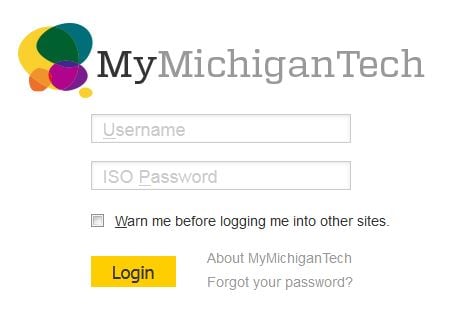
First, log into Canvas with your Michigan Tech ISO ID and password (the same one you use to access Banweb or your e-mail).

The Canvas log in screen. Use your Michigan Tech ID and password.

Thesis, dissertation, presentation, and proposal writing support

The MTMC will also be offering dissertation boot camps on May 23 – June 2 and July 11 – July 21. Dissertation boot camps are writing focus sessions where graduate students can set writing goals to make progress in long projects. Coffee and snacks will be provided, and an MTMC coach will facilitate the event. The bootcamps run the entire time the MTMC is open for two weeks in track A and track B. Graduate students should come ready to write, bringing a laptop and headphones (if needed). Students should expect to research sources outside of bootcamp times. Each grad student will be given a goal of 2 thousand words to reach before the center closes for the day. An MTMC coach will be present to keep writers on task and answer any questions. Anyone interested in signing up for a boot camp can contact me (wedeherd@mtu.edu).

 In addition, the MTMC will offer online appointments, so graduate students can find writing support anytime, anywhere.Online appointments are conducted through asynchronous email interactions between students and coaches. After signing up for an online appointment, writers will automatically be contacted by “mtmc-coach@mtu.edu” (please allow up to one hour for the email to arrive). Writers reply to the email with their attached document (Word and Google Doc are acceptable file formats). Online appointments last 30 minutes. Sessions conclude with coaches returning students’ papers with written comments inside comment bubbles in the document. Students must sign up for online appointments at least 24 hours before the requested appointment time, and be prepared to respond to an email from the MTMC when prompted.

Those interested in signing up for a group can do so by clicking the following link:

https://docs.google.com/a/mtu.edu/forms/d/1xfcphPAN23A6OV8c8WP3X_yc1Q_fXpENDAv6n50DNKM/viewform?usp=send_form


Gagnon to represent Tech for MAGS Competition

Valoree Gagnon

The Graduate School is pleased to announce that Valoree Gagnon is Michigan Tech’s nominee for the Midwestern Association of Graduate Schools Distinguished Thesis Award.  Ms. Gagnon was nominated by her advisor, Dr. C. MacLennan of the Department of Social Sciences.  Her thesis, “Fish Contaminants through the Tribal Perspective: An Ethnography of the Keweenaw Bay Indian Community’s Tribal Fish Harvest,” conducted an ethnographic inquiry on natural resource issues in indigenous communities.  Native American communities are vulnerable to    toxic substances   present in the water they fish, despite the warnings of negative impacts this could have on human health.  Her work could help policy-makers better understand the history and culture behind this dilemma, and allow them to make policies that take into account their traditions.  Her work is being discussed among professionals in the Michigan government responsible for making policies, at the International Joint Commission on the Great Lakes, and is being prepared for presentation at a conference.  She is currently continuing her education as a doctoral student at Michigan Tech with Dr. MacLennan, and is currently funded by an NSF GK-12 Global Watershed Fellowship.

Matthew Van Grinsven

Matthew Van Grinsven was noted by the panel as a nominee of distinction.  He was nominated by his advisor, Dr. A.S. Mayer, who holds a joint appointment in the Department of Civil & Environmental Engineering and the Department of Geological and Mining Engineering and Sciences.  Mr. Van Grinsven’s work examined the relationship between groundwater inflows and coaster brook trout spawning sites.  This work will impact the coaster brook trout conservation efforts within the Salmon Trout River and the Lake Superior basin.  He is currently pursuing a PhD in Forest Science at Michigan Tech.

Three other graduate students were also nominated for consideration.  Lijun Chen was nominated by her advisor, Dr. B. Barkdoll of Civil and Environmental Engineering.  Nayyer Islam was nominated by his advisor, Dr. W. Pennington of the Department of Geological and Mining Engineering and Sciences.  Jillian Schubert was nominated by her advisor, Dr. A. L. Mayer, who holds joint appointments in the Department of Social Sciences and School of Forest Resources and Environmental Policy.  All of the nominations were noteworthy, and the evaluation panel had a difficult task in selecting one nominee to represent Michigan Tech.

The Dean’s Advisory Panel, representing each college or school at Michigan Tech evaluated the nominees.  The faculty on this panel represent a broad range of graduate programs:  J. Gierke (Department of Geological and Mining Engineering and Sciences), S. Martin (Social Sciences), D. Flaspohler (School of Forestry Resources & Environmental Science), X. Wang (School of Technology) and G. Campbell (School of Business and Economics).  Next year’s competition will consider applicants who have completed their degrees between October 1, 2011 and September 30, 2012.  An application consists of an abstract of the thesis, recommendation letter from the advisor, and an electronic copy of the thesis.  Please consider nominating your master’s students next year.

A complete list of former nominees may be found online.