
Tag: Rhetoric Theory and Culture

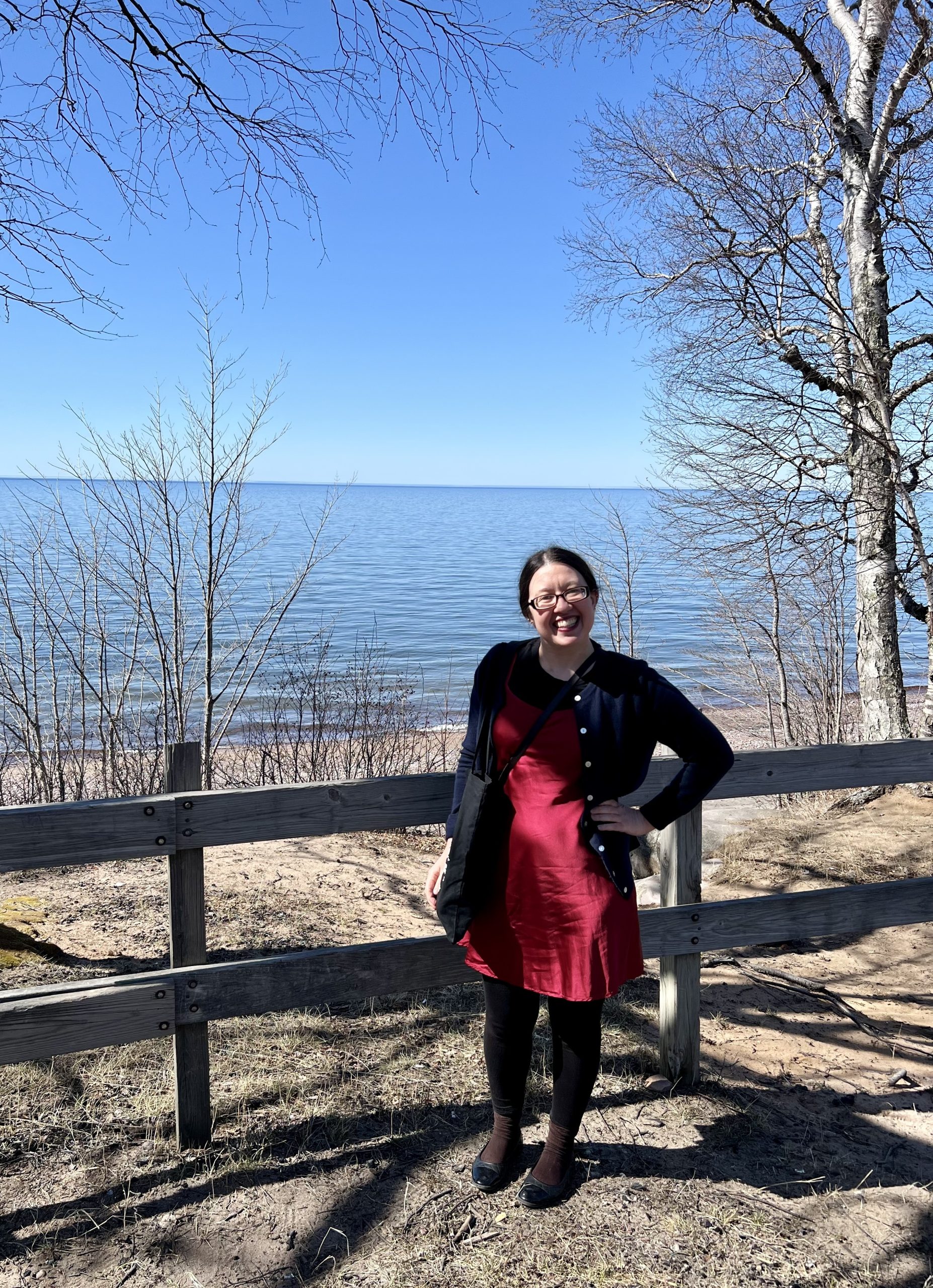
The King-Chávez-Parks Future Faculty Fellowship Program – Fall 2025 – Emma Johnson

Johnson, Emma C.
Emma Johnson, PhD in Rhetoric, Theory and Culture, 2025

My research encompasses the intersection of media, neoliberalism, and feminism. I am interested in how neoliberalism is represented in media as well as women’s agency within that system. I plan to write my dissertation on how neoliberalism is represented in media through the lens of women. Currently, I am exploring the film and photography of Lauren Greenfield and Sofia Coppola. I am fascinated by how their critiques of capitalism and consumerism both subvert and reify neoliberalism.

I would love to teach a class on how neoliberalism is represented in various media. My goal is to become a professor and teach humanities classes that ask students to consider the world around them, beyond what’s in front of them. I want to invite future students to ask questions about media representation and challenge what they see.

I want to extend my gratitude to the Graduate School, Graduate Dean Awards Advisory Panel, and Dean for this fellowship. I am thankful to the Interim Humanities Department Chair Dr. Kette Thomas, the Rhetoric, Theory & Culture Graduate Program Director Dr. Dana Van Kooy, my co-advisors Dr. Stefka Hristova and Dr. J.W. Hammond, and committee member Dr. Scott Marratto for their guidance and mentoring.

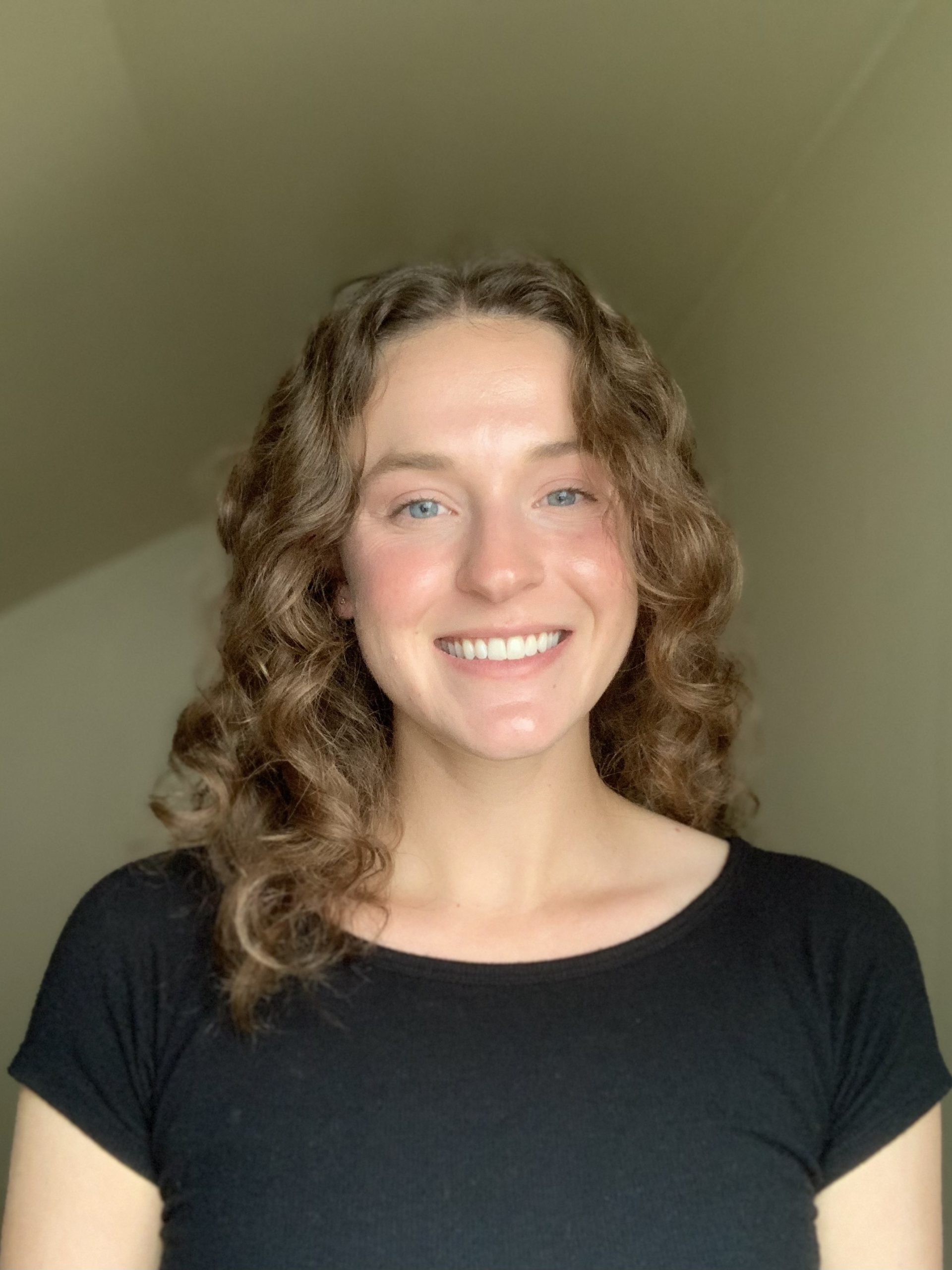
King-Chávez-Parks Future Faculty Fellowship – Fall 2025 – Jordan Dagenais

Dagenais, Jordan P.
Jordan Dagenais, PhD in Rhetoric, Theory and Culture, 2025

I would like to thank the selection committee for choosing me for the 2025 King-Chavez-Parks Future Faculty Fellowship. I would also like to thank my advisor, Dr. Holly Hassel, my department chair, Dr. Kette Thomas, and my program director, Dr. Dana Van Kooy. Finally, I want to thank my family—my mom Susan, my sister Madison, and my cats Bruce, Dinah, and Wally—for always supporting my educational goals. With this fellowship I will be able to achieve my goal of becoming a professor.

I am a first generation college student, so graduate school was initially intimidating. However, I have been graced with wonderful mentors here at Michigan Tech who have helped guide me through the challenges graduate school presents.

I first knew that I wanted to teach when I became an Assistant Scoutmaster for Scouting America Troop 823 out of Fenton, MI. I grew up in the Scouting America program (then referred to as Boy Scouts of America) and always enjoyed leading others. However, it wasn’t until I became an adult leader that I realized I had been teaching for years—and loving it—while I was a scout. Whether showing new scouters the basics of camping or providing advice to aspiring youth leaders, teaching opportunities were always present.

When I began working as a Graduate Teaching Instructor in the Humanities department in 2023, my path was cemented. After just one week of teaching in the writing classroom I knew I had made the right choice, and that teaching is what I’m meant to do.

Being a first generation college student, I want to use this fellowship to help others who don’t have the same access to education that I have been lucky enough to have and concentrate my skills where they will be best served. Upon completion of my degree at Michigan Tech, I plan to teach in the two-year college space in the Ann Arbor area and focus on creating an equitable writing space for all students.

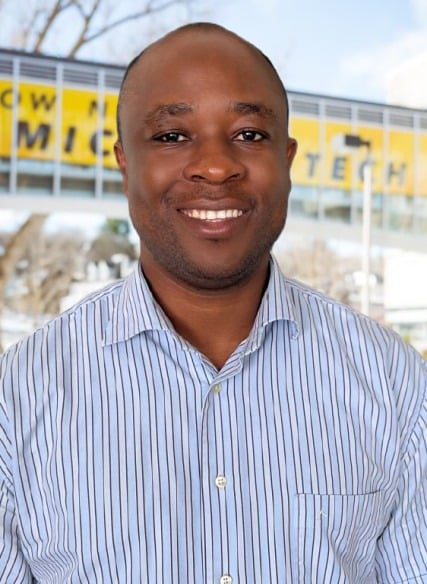
Finishing Fellowship Award – Fall 2025 – Eugene Brown Agyei

Eugene Brown Agyei, PhD in Rhetoric, Theory and Culture, 2025

“I began my Ph.D. in the Rhetoric, Theory and Culture program in the Humanities Department in 2021. With a deep interest in understanding how emerging media technologies shape different aspects of human communication, my research has largely centered on the intersection of new media technologies, digital communication and collective action.

My dissertation explores the role of social media algorithms in collective action, with a particular focus on how they shape the structure, visibility and effectiveness of digital activism networks. Using #FixTheCountry in Ghana and #EndSARS in Nigeria as case studies, I investigate the relationship between the organizing strategies of activists (both online and offline) and the affordances and constraints of Twitter (now X). I use computational social network analysis and in-depth interviews to examine activists’ awareness of the platform and network effects, and to explore whether algorithmic folk theories and/or obfuscation techniques play a role in how they use social media for collective action.

During my time at Michigan Tech, I have presented my work at international conferences, including the International Communication Association (ICA) in Canada and Australia, and taught courses in Professional and Technical Communication and Composition. Together, these experiences have been integral to my Ph.D. journey and deepened my engagement with the field of communication. In Fall 2024, I received the Dean’s Outstanding Graduate Teaching Award.

I am incredibly honored to receive the Doctoral Finishing Fellowship from the Graduate School. I truly appreciate the recognition from the Graduate Dean Awards Advisory Panel and the dean, and I’m especially grateful to the donors whose generosity makes this support possible. I would also like to express my sincere appreciation to my advisor, Dr. Sarah Bell, for her support, and to my committee members, Dr. Stefka Hristova, Dr. Richard Canevez, and Dr. Brooke Foucault Welles, for their guidance. I’m also thankful to all the faculty in the Humanities Department for their encouragement throughout this journey.”

Distinguished Dissertation Award Nominee – Elizabeth Notovny

Elizabeth Notovny, PhD in Rhetoric Theory Culture, 2025

After receiving my Bachelor’s degree in English from the University of Wisconsin-Madison, I came to Michigan Tech in Fall 2020 to join the Rhetoric, Theory, and Culture PhD program. I am now about to start as an Assistant Professor of English at the University of Wisconsin-Whitewater, where I am excited to continue teaching writing courses.

My dissertation, “Distributing Composition: Rhetorical Agency in First-Year Writing,” centered on engaging students in lessons related to rhetorical agency in my composition class. These lessons helped students understand that agency in a writing situation is shared among many interconnected actors, meaning is constructed in collaboration with readers, writers must consider how material forces and their own embodiment contribute to writing, and that there is instability and unpredictability in communication. My work tracked how students in my class conceptualized rhetorical agency and how their conceptions changed throughout the semester, and I offered possibilities for how students might translate their understanding of rhetorical agency into writing process knowledge.

I am very grateful to be nominated for the 2025 CGS/ProQuest Distinguished Dissertation Award. I want to once again extend my thanks to my advisor, Oren Abeles, and committee members Holly Hassel and Jennifer Nish—without them, this work would not have been possible. I also want to thank all of the other wonderful folks in the Humanities Department who supported me throughout graduate school.

Finishing Fellowship Award – Fall 2025 – James Akinola

James Akinola, PhD in Rhetoric Theory Culture, 2025

“When I first heard about Michigan Technological University (MTU) at a digital humanities workshop in far-away Leiden, The Netherlands, in 2019, I was intrigued by its growing reputation, but I never imagined I would one day walk its snow-covered campus as a doctoral student. Since arriving here, I have often asked myself: “what happens when a place lives up to the promise of its name?” MTU has answered that question through a welcoming community, inspiring mentorship, and a research environment that fosters both intellectual growth and personal transformation.

At the outset, the Upper Peninsula’s winters were my first challenge. But with time, what seemed daunting turned into a source of joy and reflection. These moments now form some of my fondest memories. The Department of Humanities has been a rich ground for exploring theory in practice. I especially value the hard work of faculty members in communication, rhetorical pedagogy, digital media, and cultural studies. All of which provided solid theoretical foundations for my ongoing dissertation.

My research explores how digital platforms mediate cultural representation and tourist imaginaries. I focus on the Luxor Hotel & Casino in Las Vegas, an Egyptian-Pyramid-themed environment, to examine how tourists, through user reviews on TripAdvisor, and site owners digitally construct or commodify history, identity, and authenticity. The study, utilizing critical discourse analysis and digital humanities tools, examines how language and visual media reinforce or challenge inherited cultural scripts.

I am grateful to the Graduate School and the Graduate Dean Awards Advisory Panel for awarding me the Fall 2025 Finishing Fellowship. This generous support makes it possible for me to fully dedicate my time to completing the final stages of my dissertation without external work-related pressures. I also thank my advisor, Dr. Stefka Hristova, for her guidance and encouragement on the journey so far.

With MTU’s outstanding support structures, it’s clear that this is a place where innovative research flourishes. I have learned to thrive in community, embrace intellectual rigor, and mentor others along the way. I feel honored to hold this Finishing Fellowship as I carve a niche toward contributing to global conversations, completing my dissertation, and preparing for the next chapter.”

Finishing Fellowship- Spring 2025- Elizabeth Novotny

Elizabeth Novotny, PhD in Rhetoric, Theory, and Culture

I began my PhD in Fall 2020 in the Department of Humanities interdisciplinary Rhetoric, Theory, and Culture program. Through my position as a Graduate Teaching Instructor, I quickly discovered my passion for teaching. At Michigan Tech, I have taught First-Year Composition and other writing courses, such as Advanced Composition and Technical and Professional Communication. I have also served as Assistant Director of our Composition Program.

These experiences led me to specialize in writing studies and my research focuses on the needs of student writers. My dissertation is a classroom research project that investigates how students conceptualize their agency as writers and how this impacts their writing practice. I designed lessons that introduced students to ways of thinking about agency and collected student work throughout a semester, which I analyze through holistic and longitudinal coding to determine the changes in student conceptions of their agency and the effect this has on their writing.

I am very grateful to receive this Doctoral Finishing Fellowship and extend my thanks to the Graduate School and the donors who make this fellowship possible. The time to focus on my research will be invaluable. I also want to thank my advisor, Oren Abeles, and committee members Holly Hassel and Jennifer Nish for consistently going above and beyond to support me and my work.

Finishing Fellowship- Spring 2025- Kendall Belopavlovich

Kendall Belopavlovich, PhD in Rhetoric, Theory and Culture

I’ve been a Husky since 2014, when I started at Michigan Tech as an undecided undergraduate major. Upon finding my way in my first year to the Communication, Culture, and Media program I knew I found a place where I truly fit in. Since then, I’ve been interested in research and was told by several of my faculty mentors that I’d be a good fit for graduate school. I’m so grateful to those folks for introducing me to the idea, because that’s exactly what I wanted! I started my Rhetoric, Theory, and Culture degree in 2020 and have been honored to do the work I’m passionate about.

My dissertation, ““The Animated Frontier: Fluctuations of Power Across Time and Space in Flows of U.S. and Japanese Animated Media“, is a critique of the historical and contemporary relationship between the U.S., Japan, and their marginalized Others through the lens of animation. In addition to this project, I’ve been able to publish several journal articles and book chapters on various critiques of animation, related to queer studies and Indigenous studies. I currently serve as the Indigenous Studies area chair for the Midwest Popular Culture Association conference. I have also had the privilege of working with folks in the CFRES college on projects related to sustainability ethics. In all of the work I’ve done thus far in my degree, I’m grateful for the support, guidance, and mentorship I’ve received from countless people.

I especially want to thank my advisor, Stefka Hristova. Without her support, encouragement, and kindness, I don’t think I’d be able to finish this work. In addition, I’d like to thank my committee, my cohort, and my research partners for their motivation, guidance, and collaboration. Finally, I’d like to thank the Graduate School for their generous fellowship, and for believing in my work. I’m so grateful for this opportunity to finish my degree!

Doctoral Finishing Fellowship – Summer 2024 Recipient – Brilynn Janckila

Brilynn Janckila indoors
Brilynn Janckila – Rhetoric, Theory and Culture

My PhD journey began at Michigan Tech began in August 2020 in the Department of Humanities. Although it was difficult to find my footing while feeling so isolated in a new place, the Rhetoric, Theory, and Culture program welcomed me with open arms. This program, the faculty and staff, and especially my connection to my committee, has shaped my growth as a scholar, teacher, and learner. As a girlhood studies scholar, my research has focused primarily on how the figure of the girl is created—both through media and toys and by girls themselves. In other projects or coursework at Michigan Tech, I’ve focused on feminist methodologies, fan culture, dollhouses, social justice and usability in technical communication, interdisciplinary curriculum, and writing program or writing center administration. Through the support of my advisor, I received the G. Rollie Adams Research Fellowship at The Strong Museum of Play to study dollhouses, girls, and play at their library.

My dissertation explores how girls aged 5-9 view teen girls, and what they think of becoming teen girl. Themes from focus groups include girls’ maturity and self-expression. My study also reviews the Barbie Vlogs and analyzes themes evident throughout the series, including self-expression, self-disclosure, and friendship. This project offers a methodological contribution to girlhood studies and importantly considers little girls’ opinions and ideas. The discussion of media for girls and how media impacts them is largely adult-mediated and I endeavor to begin to recover the voice of girls and ask what they are actually doing with the media and toys they engage with.

I want to give a heartfelt thank you to my committee, Sarah Bell, Patricia Sotirin, and Andrew Fiss, for their support, knowledge, and guidance throughout this project. I also want to thank the Graduate Dean Awards Advisory Panel for granting me this award—according to other scholars, this dedicated time to write will be one of the most exciting and fruitful times of my life!

Doctoral Finishing Fellowship – Spring 2024 Recipient – Basanti Timalsina

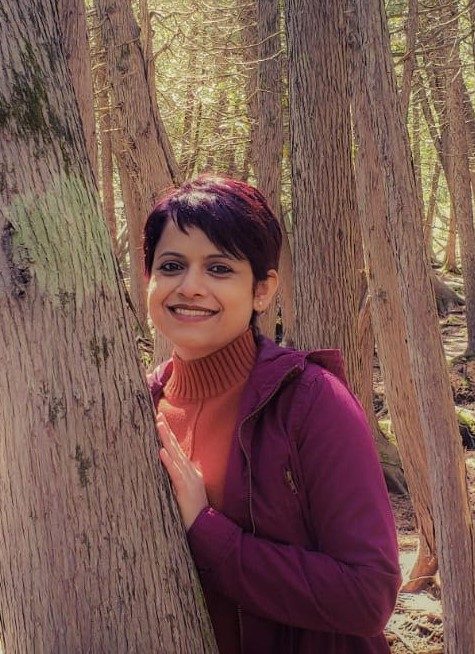
Basanti Timalsina standing in the midst of many tree trunks
Bisanti Timalsina – Rhetoric Theory and Culture

My PhD journey at Michigan Tech began in August 2019 in the Department of Humanities. The interdisciplinary Rhetoric, Theory, and Culture program has uniquely shaped not only my learning, research, and teaching but also my values and identity as an international, interdisciplinary scholar. As a communication and media studies scholar, my research primarily focuses on the connection between digital media and visual culture, centering around cultural practices, interactions between media and society, the influence of media on shaping ideologies and discourse, and the affordances of new media technology in creative reworking and adaptations in digital activism works.

My dissertation examines the active, purposeful, and consistent use of media tools and rhetorical protest strategies, and their roles and impacts in the context of the Indian farmers’ protest movement of 2020-2021. My study also engages in social media content analysis, establishing connections between the narrative formation, visual representation, and protest mobilization, from a rhetorical, discourse, and social justice perspective. The knowledge and experience I have gained during my time at Michigan Tech have helped me in becoming a better scholar in understanding, examining, and analyzing socio-cultural complexities.

I want to extend my gratitude to the Graduate School, Graduate Dean Awards Advisory Panel, and dean for this fellowship. I am also thankful to my advisor, Dr. Stefka Hristova, for her continuous guidance and support.

Distinguished Dissertation Award – Summer 2023 – Marina Choy

I received my Bachelor’s and Master’s degrees from the University of Toulouse Jean Jaures, in France, before joining the Rhetoric, Theory and Culture doctoral program at Michigan Tech in 2017. During the last stages of my dissertation in Fall 2022, I began working as a full-time faculty member and Writing Center manager at the New Mexico Institute of Mining and Technology near Albuquerque, NM. I am now in the midst of moving to Baltimore, MD to start a new position at Johns Hopkins University in Fall 2023.

My dissertation, “Articulating Nationalism through the “Problem of Immigration:” the Case of Foreign Unaccompanied Minors in France” examines how far-right nationalist logics and discourses permeate and articulate the system of protection of foreign unaccompanied minors in France, in the recent context of the so-called European “migrant crisis.” In-depth interviews with child welfare social workers revealed that the very structure and design of the system of protection of foreign minors, articulated through cultural and political perspectives hostile to (im)migration, compromises the protection and chances of integration of this group from the get-go. This case study illustrates national institutional responses to contemporary migration events, and explores the articulation of the question of immigration as a driving force of contemporary nationalism.

I am deeply grateful for my dissertation advisor, Dr. Patricia Sotirin, who has mentored and supported me through my PhD journey and beyond. I would also like to thank my co-advisor Dr. Jennifer Slack, whose feedback was always immensely helpful and critical to my progress, and Dr. Andy Fiss, for his endorsement and support with several professional projects. Thank you all for your support and for endorsing this nomination.