Category: Faculty and Staff

Graduating Statistics Student Looks Back On Three Years of Adventure, Community, and Research

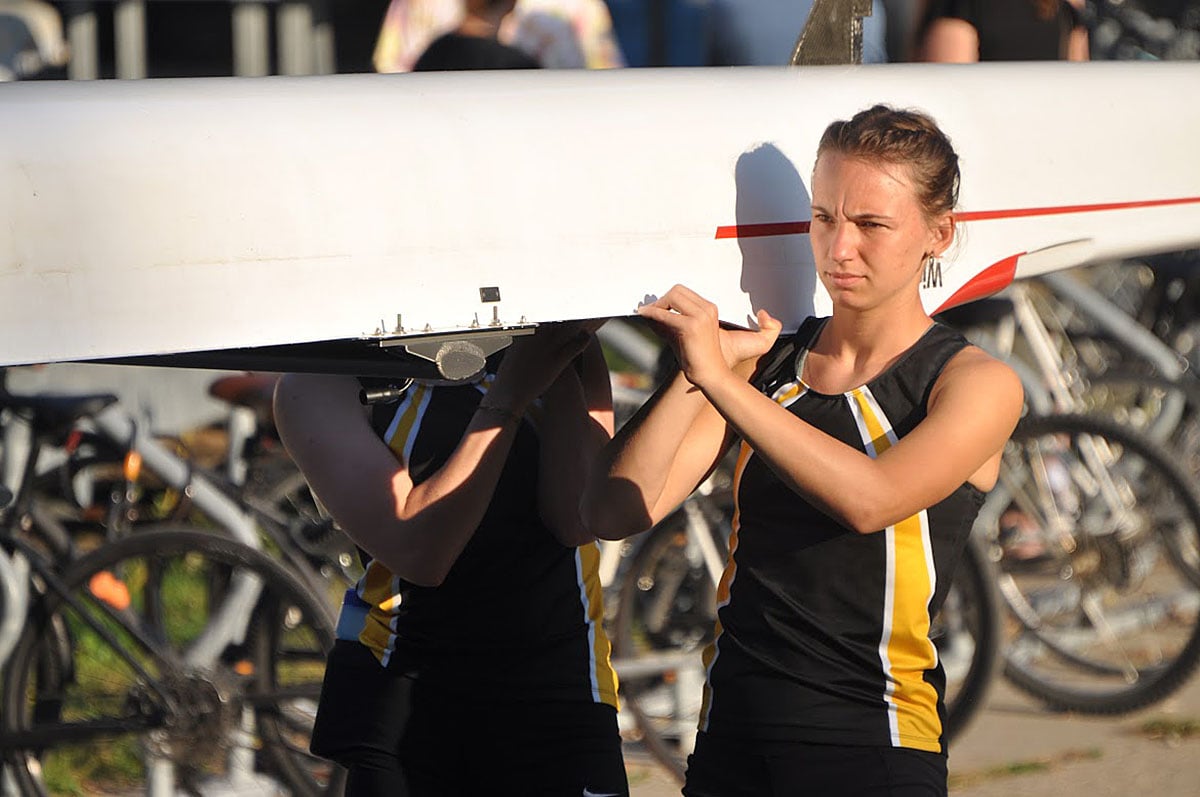
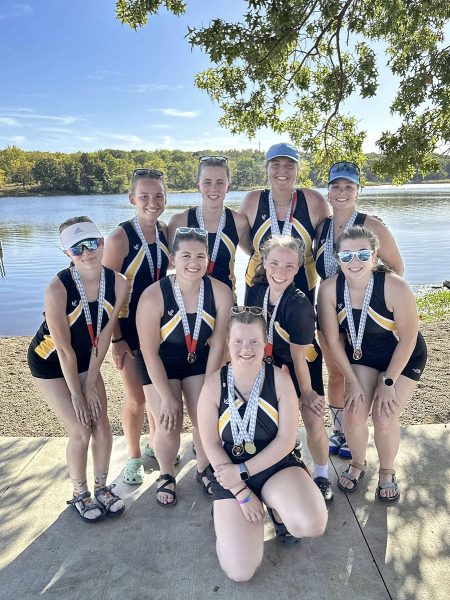
Aili Toyli, wearing her black and gold rowing team uniform, helps carry the boat with her teammates. She has an expression of pure determination.
On the water or in the lab, graduating statistics student Aili Toyli meets every challenge with curiosity and determination. (Image courtesy The Rowing Club at Michigan Tech)

Venturing out into something unfamiliar—whether it’s trying a demanding new hobby, starting an entirely new chapter in your life, or taking on complex biostatistical research—can be daunting. It requires courage, good old-fashioned Husky tenacity, and the support of a community. When Aili Toyli decided to leave her hometown of Parkers Prairie, Minnesota, for the wild wonder of the Keweenaw, she already had two of those three elements on her side—and she was confident she’d find the third at Michigan Tech.

“I came for a visit in the summer and again for the Leading Scholar program. I was really impressed with the university and its collaborative culture,” said Toyli. “Tech promotes the mindset that everyone can succeed, while still pushing students to meet high standards.”

Toyli’s interest in Tech started with a legacy. Her father is an engineer who passed his love of mathematics on to his daughter.

“He definitely loves crunching the numbers and gaining information and insight through math,” said Toyli. “I really liked math in high school. In trying to figure out how that could be applied to a career, I realized I really want to use math to solve real-world problems, and I felt like statistics was a good fit for that.”

Out of Her Comfort Zone, Into the Keweenaw

With her compass firmly pointed north, Toyli made the seven-hour journey to her home away from home. She immediately saw opportunities for adventure on the ski slopes of Mont Ripley, the waters of Lake Superior, and the hiking trails that decorate Keweenaw forests like veins on a leaf. Attending college far from everyone and everything she knew took courage, but on campus, she found a community of people who had faced and overcome the same challenge.

“I know people who go to colleges where everyone’s an hour and a half to two hours from home, and I feel like they don’t necessarily make the same level of connections with their classmates when they’re going home a lot of weekends,” said Toyli. “At Tech, I was having weekend adventures with people I met pretty early on, because everyone’s looking for something to do and to get to know people.”

Even among like-minded Huskies, making friends took effort.

“It was really good for me to come so far away and be pushed out of my comfort zone. But those first few months were definitely a little bit lonely,” said Toyli.

Her cure for homesickness, loneliness, and the freshman blues was to try new things. She joined the Rowing Club at Michigan Tech in her first year, pursuing a sport she had never tried before. Before long, she had a routine that built community by bonding with the same group of people five days a week during practice either in the Student Development Complex or on the Keweenaw Waterway. That routine of camaraderie carried her through the sometimes-choppy waters of college for three years, building the capacity to overcome any challenge.

“This year, we had a day where we rowed from our docks, which are just east of campus, all the way to Breakers Beach, and then we switched out the crews. It’s more than 10 miles one way, but some of us, myself included, rowed there and back. That was a fun challenge, an interesting way to see things outside,” said Toyli.

Between her routine of studies and rowing, she spent her weekends hiking and skiing, taking advantage of everything campus and the Keweenaw has to offer.

“I got involved in a lot. This is a time of life when you have a lot of opportunities to try new things that you might never get the chance to do again,” said Toyli.

Math is a Place for Friendship

Getting to know her peers and trying new things went beyond outdoor activities. One of her first classes in the mathematical sciences department, an exploring numbers course, had her solving open-ended problems side-by-side with other incoming math students. Toyli said the class went a long way toward building connections in her department. Those bonds deepened over the years when she joined an unbreakable chain of mentorship as both a tutor and pupil in the Math Learning Center. Even on slow days, when not many students come in seeking formal tutoring sessions, she and her coworkers still gather there to offer each other guidance and talk about their studies.

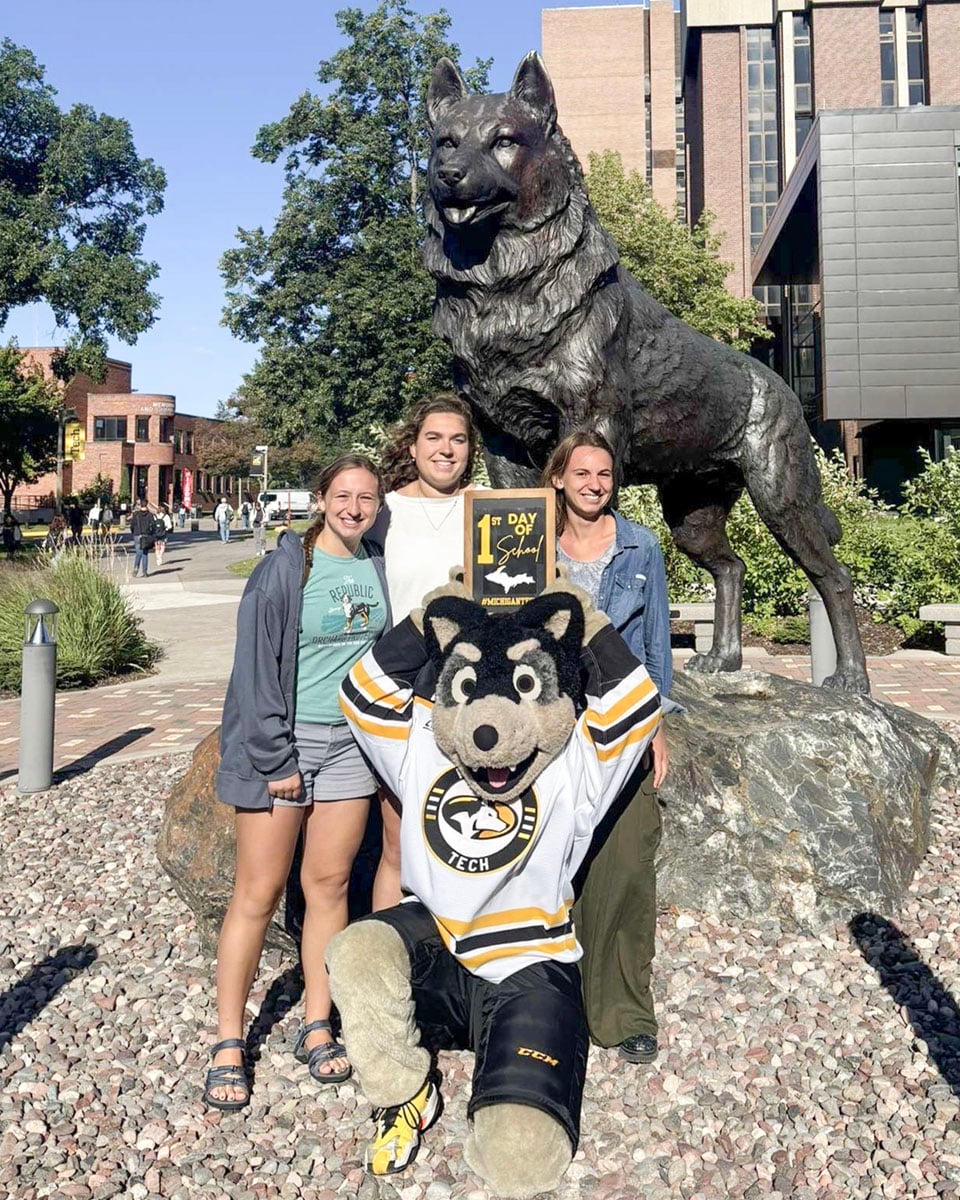
Aili Toyli poses in front of the rock dog statue on Michigan Tech’s campus with Blizzard and two other incoming students. Blizzard kneels in front of the students, holding a sign that says “1st Day of School #MichiganTech” with a gold image of the Upper Peninsula, facing the camera.
From her first day of college to her last, Aili Toyli, right, has grown her community, her research skills, and her expertise. (Image courtesy Aili Toyli)

“The math department as a whole is very social, and that’s a part of its personality. People are very genuinely curious about problems, love to learn, and love to talk about what they’re learning. I’ve really enjoyed that aspect of things,” said Toyli.

Faculty members also encouraged Toyli’s curiosity. In tight-knit classes with Ray Molzon, associate teaching professor of mathematical sciences, she and her peers were encouraged to take initiative in their learning experiences. Toyli proactively took her educational adventures a step further by attending the Iowa Summer Institute of Biostatistics, where she applied her skills as a statistician to the medical field, studying breast cancer risk factors across Iowa. She had found her research niche.

“That definitely strengthened my interest in biostatistics. I got to work with medical data and do statistics, but also it really helped me understand what that field is like, and what work in that field is like,” said Toyli.

A Network of Interdisciplinary Research

Toyli’s drive to do research that solves real-world problems led her to two of the most important connections she would make at Michigan Tech — Weihua Zhou, associate professor of health informatics and applied computing, and Qiuying Sha, distinguished professor of mathematical sciences. She met Zhou at a mathematics department undergraduate research forum her first year at Tech, where they connected over her interest in medical applications of statistics.

“We have multiple successful undergraduate researchers in the department, and Aili definitely is one of our most successful students,” said Zhou.

Toyli’s first project under his mentorship involved examining brain scans of patients with two types of Lewy body dementia — one with Lewy bodies, and one with Parkinson’s disease dementia, which are very similar forms of the disease. It built upon existing research into whether they are two different diseases or the same disease presenting symptoms differently. The project had a deep personal meaning.

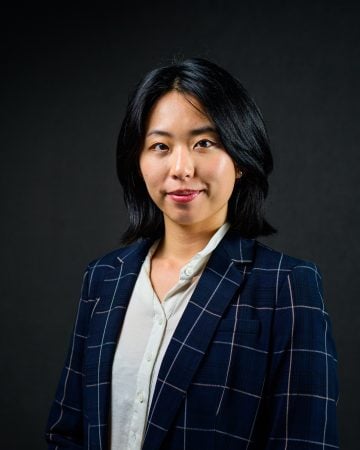
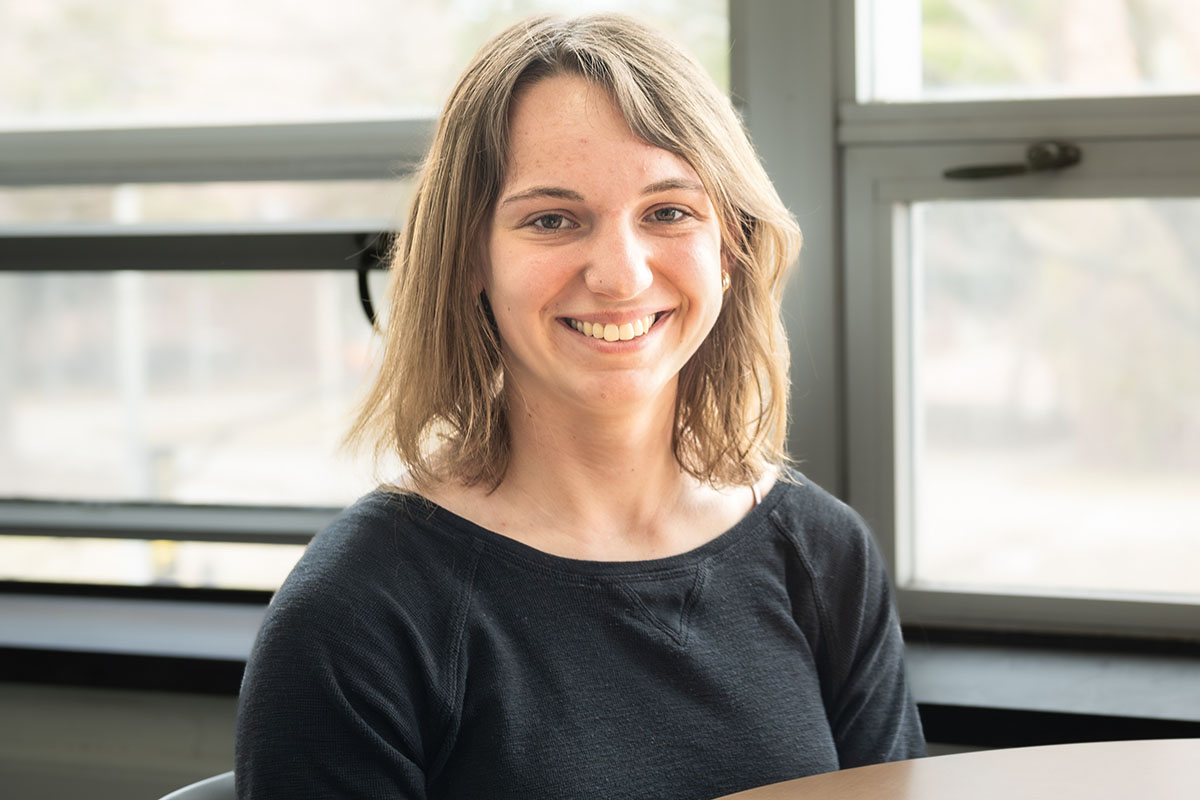
Aili Toyli sits at a table in front of a window on Michigan Tech’s campus. She is smiling and wearing a black shirt.
Aili Toyli is one of more than 20 undergraduate students Weihua Zhou has mentored in his lab.

“Alzheimer’s disease is something that there are pretty high rates of in my family. So I was very familiar with the disease and the burden it can place on people and their families going into this,” said Toyli. “When Dr. Zhou presented about his research tied to that, that was definitely a big part of the reason I reached out to him, because it was an issue I cared a lot about already.”

Zhou’s experience mentoring over 20 undergraduate students in his lab has taught him that personal connection is an asset for many young researchers.

“For undergraduate students, their motivation is very important,” said Zhou. “It comes from two places: one is from the students themselves, and the other is from the faculty. In our lab, we are working on very practical projects. That means they can feel, even see, the impact of their work and are motivated by that.”

While Zhou led the applied computing side of the project, Sha provided guidance on Toyli’s statistical approach. Since Toyli hadn’t yet taken many advanced statistics courses, she delved into many concepts independently, bringing questions to Sha as needed.

“I’m very impressed by Aili,” said Sha. “When she encounters challenges, she takes the initiative to explore the solutions on her own before coming back with thoughtful questions. She’s very confident in moving from learning concepts to applying them independently in research.”

Toyli published “Comparison of Cerebral ECD Perfusion in Patients with Dementia with Lewy Bodies and Parkinson’s Disease Dementia” in Nuclear Medicine Communications based on this research in 2024. Then, her final summer before graduation, she took on another project under Zhou and Sha’s advisement. Toyli took up and revised a manuscript left by an alumn reviewing interactions between the heart and brain. It was accepted and published in Frontiers in Cardiovascular Medicine as “The Heart–Brain Axis: Unraveling the Interconnections Between Cardiovascular and Alzheimer’s Diseases” in 2025.

“This research helped me learn a lot of clinical insight into the biology that we’re looking at,” said Toyli. “Having gone through the process of preparing these papers for publication, it gets easier every time. There are different tricks for handling my data, for the draft and revision process, that I’ve learned to make it go more smoothly each time.”

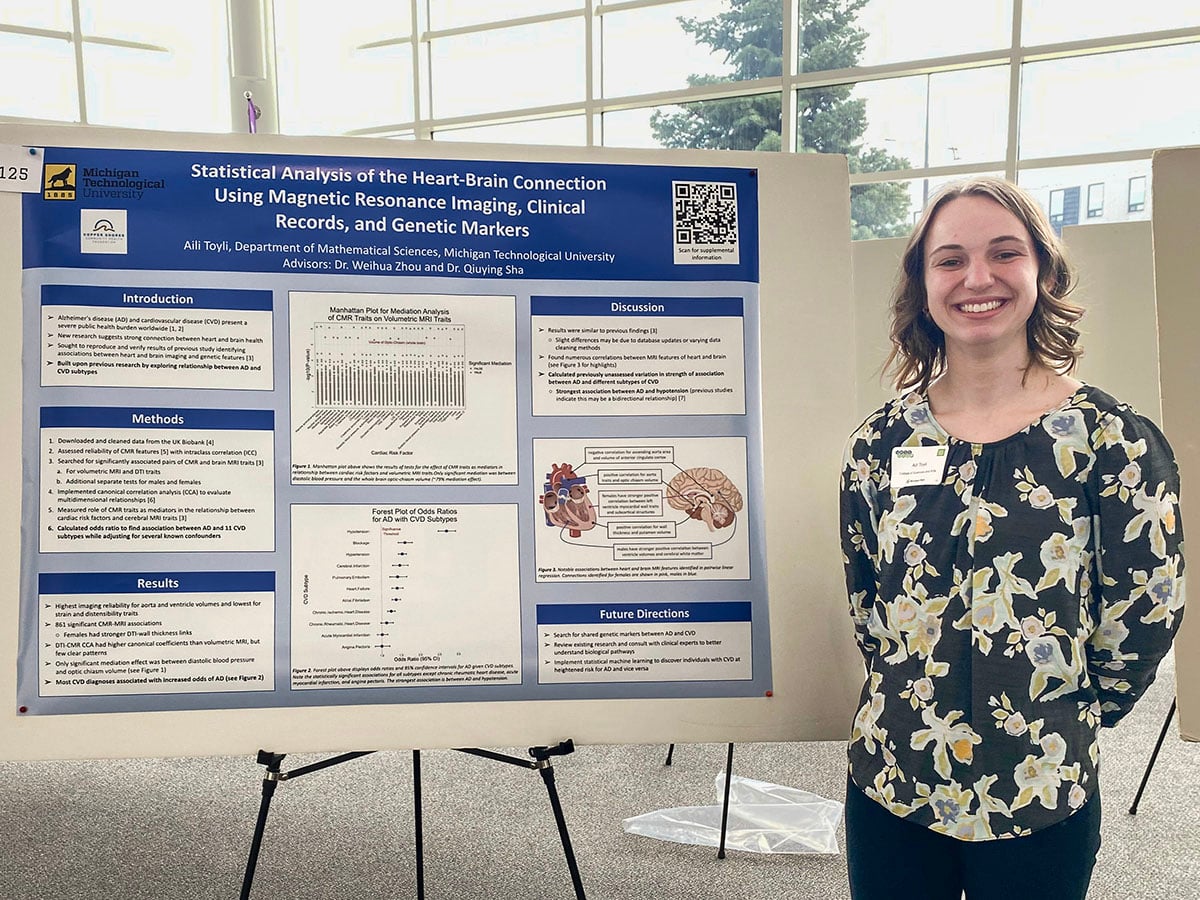
Aili Toyli poses next to a research presentation poster board titled “Statistical Analysis of the Heart-Brain Connection Using Magnetic Resonance Imaging, Clinical Records, and Genetic Markers,” her 2024-25 URIP project.
Aili Toyli’s dogged pursuit of research opportunities on campus earned her funding for two Undergraduate Research Internship Program projects, including the one in this presentation. (Photo courtesy Aili Toyli)

Her pursuit of research opportunities also earned Toyli funding from the Copper Shores Community Health Foundation. Her research was included in a $429,153 National Institutes of Health R15 grant through Tech’s Undergraduate Research Internship Program (URIP) for two consecutive years. She received URIP funding for her research entitled “Statistical Analysis of the Heart-Brain Connection Using Magnetic Resonance Imaging, Clinical Records, and Genetic Markers in 2024-25,” and for “Hierarchical Clustering to Identify Factors Associated with Risk of Cardiovascular Disease and Alzheimer’s Disease” in 2025-26.

“I really think the collaboration between faculty at Michigan Tech provides a more comprehensive learning experience,” said Sha. “Aili works in statistics, and now also works in applied computing, so this interdisciplinary research experience definitely plays a great role in her future after she graduates.”

After graduation, Toyli plans to return to the University of Iowa for a master’s degree in biostatistics. As her quest for knowledge continues, she confidently shares her advice to future Huskies tenaciously seeking adventures in research and interdisciplinary collaboration.

“Mistakes and feeling lost and confused are part of the process initially. Take it one step at a time and continually learn as you work. You have a team supporting you, and small mistakes will happen over the course of the research; it’s just about addressing them, learning from them, and moving on,” said Toyli.


About the College of Sciences and Arts

The College of Sciences and Arts is a global center of academic excellence in the sciences, humanities, and arts for a technological world. Our teacher-scholar model is a foundation for experiential learning, innovative research and scholarship, and civic leadership. The College offers 33 bachelor’s degrees in biological sciences, chemistry, humanities, kinesiology and Integrative physiology, mathematical sciences, physics, psychology and human factors, social sciences, and visual and performing arts. We are home to Michigan Tech’s pre-health professions and ROTC programs. The College offers 25 graduate degrees and certificates. We conduct approximately $12 million in externally funded research in health and wellness, sustainability and resiliency, and the human-technology frontier.

Follow the College on Facebook, Instagram, LinkedInX and the CSA blog. Questions? Contact us at csa@mtu.edu.
Celebrating CSA Grads and Their Three Cs: Curiosity, Commitment, and Commencement

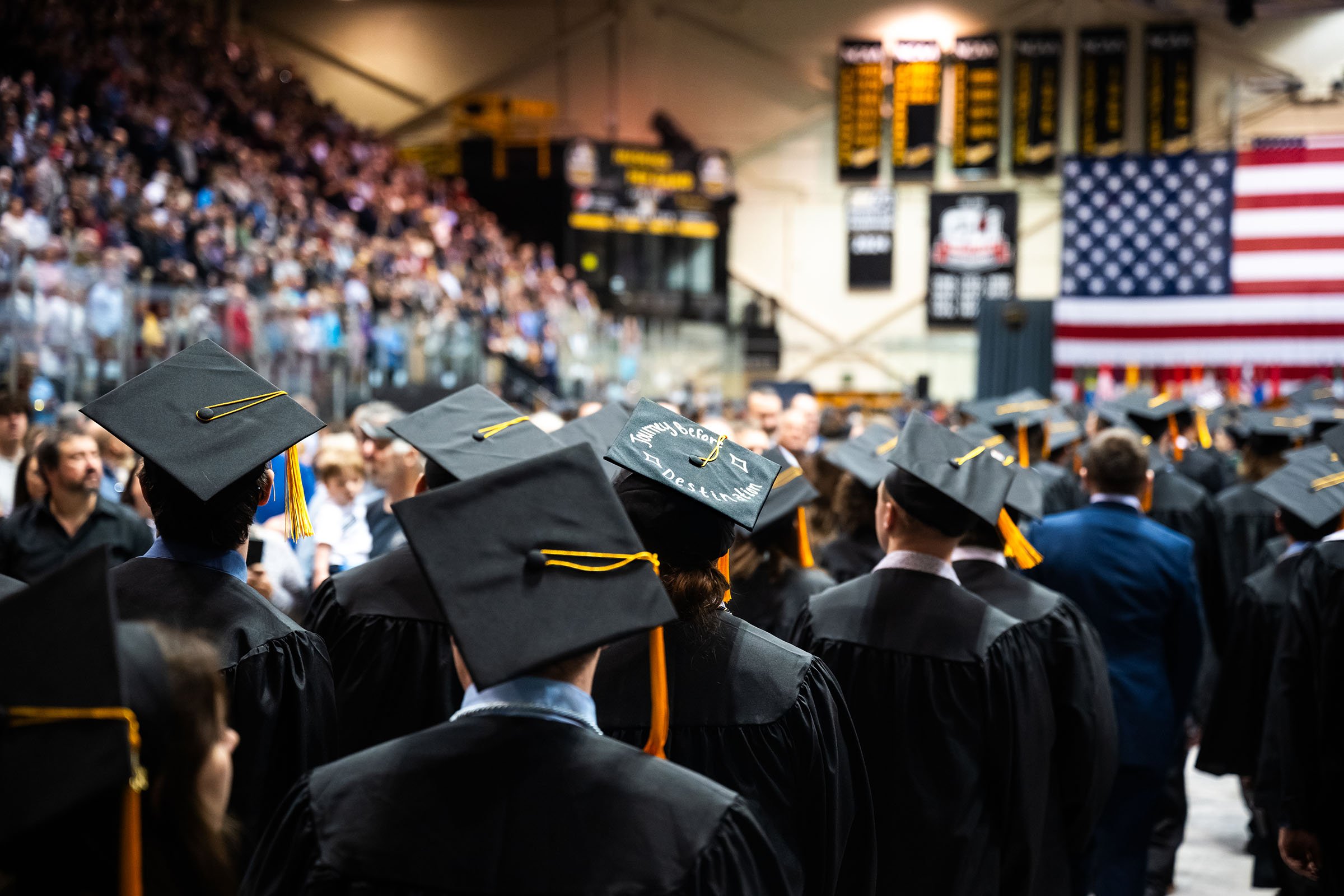
A large group of students in graduation caps and gowns walk away from the camera, toward the graduation podium at the other end of a large multipurpose hall. One graduation cap includes the decorative phrase, “Journey Before Destination.”
Since their first day on campus, our 2025 College of Sciences and Arts grads have marched forward with curiosity and determination. Now, they prepare to take their final steps on campus in Tech’s Midyear Commencement ceremony.

The College of Sciences and Arts applauds our nearly 50 soon-to-be graduates as they march toward Michigan Tech’s Midyear Commencement ceremony on Saturday, Dec. 13. Along with their caps and gowns, they bring with them the support of Husky faculty, staff, and leadership, including CSA Dean LaReesa Wolfenbarger.

“I feel hopeful for the future, knowing that this class is entering the workforce. They want to make a difference and have positive impacts through their work and accomplishments,” said Wolfenbarger.

Husky Returns as AFROTC Detachment Commander

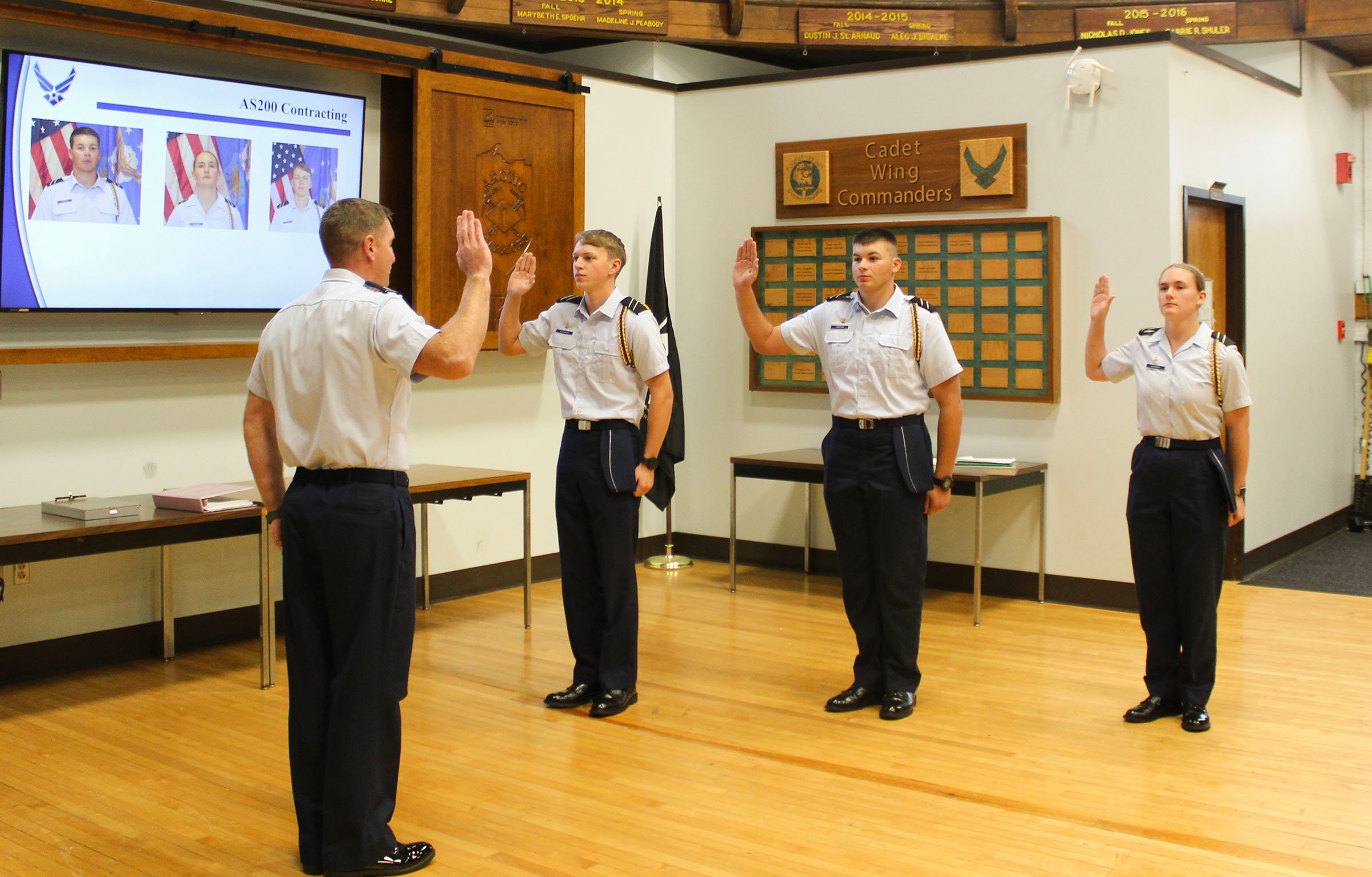
Lieutenant Colonel Hans Korth, left, administers the oath of enlistment to new scholarship cadets for the 2025 academic year.
Alumni Lieutenant Colonel Hans Korth, left, returns to Michigan Tech as the Air Force Reserve Officer Training Corps (AFROTC) detachment commander. (Photos courtesy of Hans Korth)

Lieutenant Colonel Hans Korth couldn’t be happier to be back on campus as the alumnus takes command of Air Force Reserve Officer Training Corps (AFROTC) Detachment 400, the Guardians of the North. On his first Veteran’s Day since he returned, Korth is reflecting on those called to serve with both empathy and appreciation. He hopes that the community will join him in honoring all who have served.

College of Sciences and Arts Welcomes New Faculty, Celebrates New Appointments

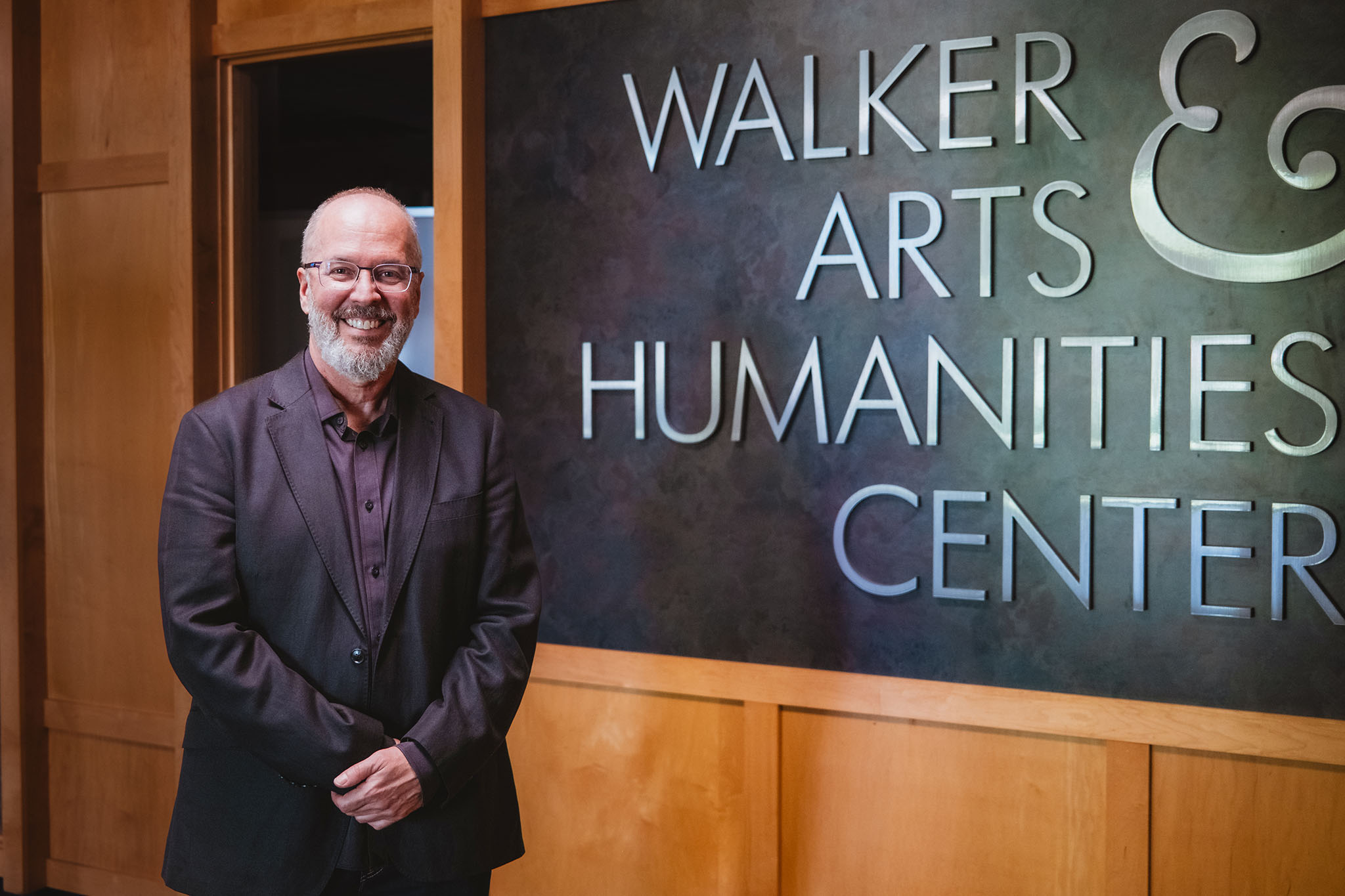
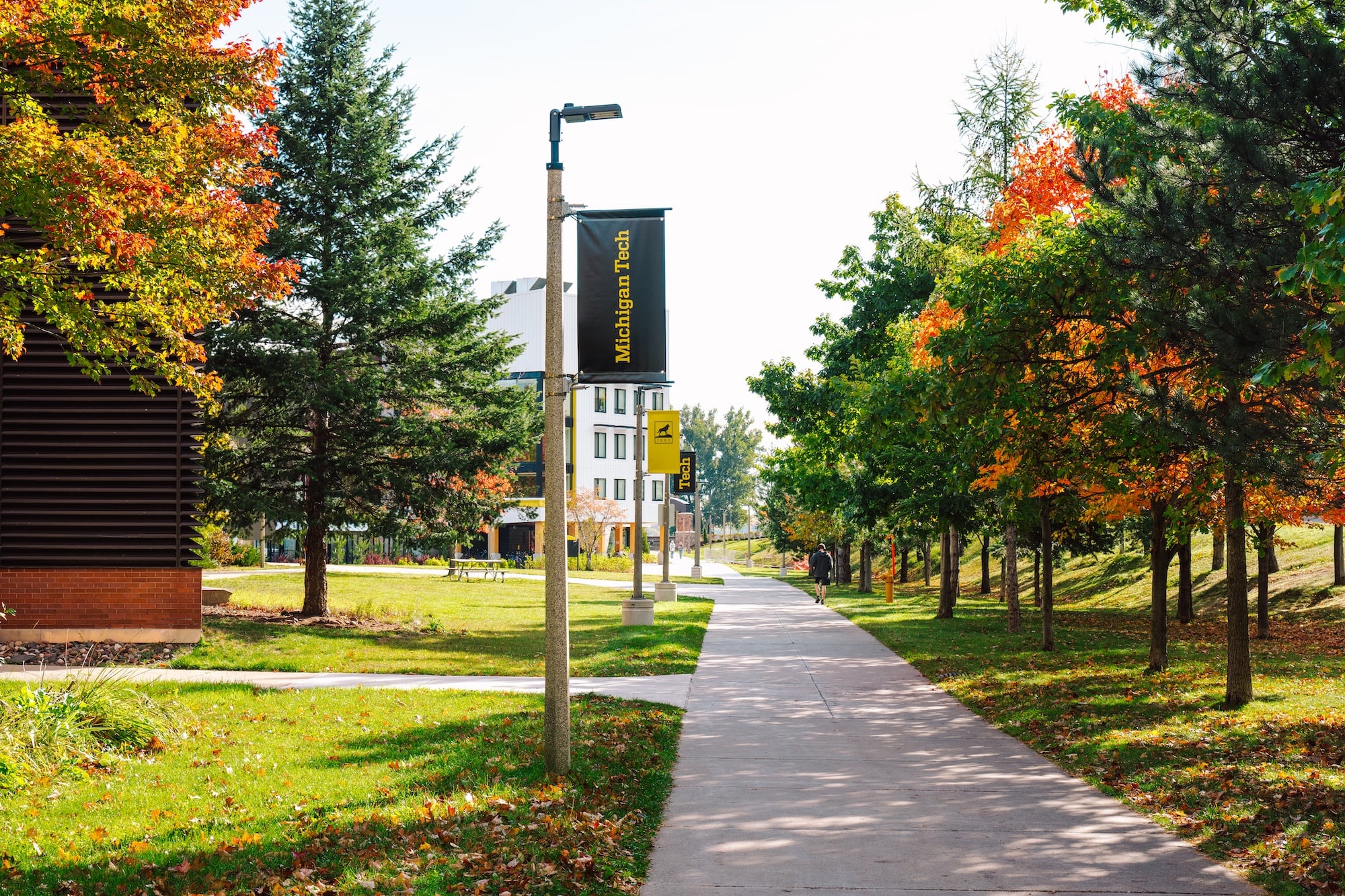
Students walking on campus by the Walker Arts and Humanities Center sign.
The new academic year brings new students and new faculty to the College of Sciences and Arts.

The College of Sciences and Arts announces nine new faculty appointments for this academic year. These faculty bring a wide variety of knowledge and skills to the College, our students, and our research. Their individual areas of expertise include dark-room photography, photonics characterization techniques, human-AI interactions, political science and jazz history. Please join us in welcoming these Huskies to their new positions!

Social Sciences Associate Professor Awarded Fulbright

Social Sciences Associate Professor Mark Rhodes temporarily stepped away from Tech’s campus to complete his 2025-2026 Fulbright-Schuman European Union Affairs Scholarship in Halle, Germany.

Mark Rhodes, associate professor of geography in Tech’s social sciences department, is one of two scholars selected as a 2025-26 Fulbright US Scholar within the Fulbright-Schuman European Union Affairs Program.

Rhodes’s research leverages Michigan Tech’s unique focus on industrial heritage and archaeology and environmental and energy policy to understand the policy process behind Europe’s industrial heritage. Tech offers the world’s only industrial heritage and archaeology PhD program in the world.

“So many communities around the world, including those in our own back yard and where I’m from in the Illinois Rust Belt, are struggling to navigate deindustrialization,” said Rhodes. “Europe seems to have gotten much more creative in how to not only continue sustainable industrial production but use those former facilities in innovative ways that preserve communities and economic livelihoods.”

Mark Rhodes smiles at the camera, wearing a zip up Michigan Tech branded fleece in front of a scenic view of trees, hills and a lake on a cloudy day.
Mark Rhodes will spend six months in Europe continuing his work on European heritage site policies, designation and narratives.

Mark Rhodes is spending six months continuing his work on European heritage site policies, designation, and narratives.
Rhodes noted that Europe, known as one of the first regions in the world to begin a shift away from extractive and manufacturing economic activities, has also been a global leader in preserving, interpreting, and managing difficult cultural and economic transitions. Europe has 48 industrial World Heritage Sites, as designated by UNESCO, the United Nations Educational, Scientific and Cultural Organization. In addition, the European Route of Industrial Heritage connects more than 2,400 individual sites. Rhodes’s work explores how EU policy shapes the relationships and laws impacting site designation and narrative, along with understanding how the two are interconnected. His research—spanning the EU—combines in-depth interviews, archival work, and institutional analysis to better understand and inform industrial heritage best practices.

He’ll spend six months in Halle, Germany, hosted by Martin Luther University’s Center for Interdisciplinary Area Studies and Institute of Geosciences and Geography. The Fulbright-Schuman Program, is administered by the Fulbright Commission in Belgium, is jointly financed by the US Department of State and the European Union’s (EU) European Commission. The fellowship aims to strengthen international relations between the US and EU by supporting policymakers and scholars focused on US-EU relations, EU Policy, or EU institutions.

Rodica Curtu Named New Mathematical Sciences Chair

Rodica Curtu stands outdoors on a sunny day in front of the walking bridge between the Van Pelt and Opie Library and Rekhi Hall.
Rodica Curtu joins the College of Sciences and Arts as the new mathematical sciences department chair.

Michigan Tech’s College of Sciences and Arts welcomes Rodica Curtu as the new chair of the Department of Mathematical Sciences, effective July 1. Curtu comes to Michigan Tech from the University of Iowa, where she recently brought the math graduate program into the Internship Network in the Mathematical Sciences and served as faculty senate president.

College of Sciences and Arts Entomologist Celebrates Releasing Third Volume on Fruit Flies

Thomas Werner, center, poses outside with Jasmine Segar, left, and Jessica Kreais, right, two campers he met on his travels studying fruit flies. The campers hold copies of volumes 1 and 2 of the Encyclopedia of North American Drosophilids.
Thomas Werner, center, is celebrating his third encyclopedic volume of North American fruit flies in an upcoming book release celebration at the Van Pelt and Opie Library at Michigan Tech. He met the two campers Jasmine Segar, left, and Jessica Kreais, right, while collecting fruit flies in 2023. Both of them joined Werner and his family on their next trip in 2024. (Photos courtesy of Thomas Werner.)

Thomas Werner, a North American fruit fly expert, entomologist and biological sciences professor of genetics and developmental biology is celebrating the release of his latest volume documenting fruit flies across the continent—and Huskies are invited.

MTU Ecosystem Ecologist Helps Bring ‘Foundations of’ series into a New Era

Amy Marcarelli stands outdoors at the Great Lakes Research Center on a sunny day.
Michigan Tech Biological Sciences Professor Amy Marcarelli is the co-editor of recently published Foundations of Stream and River Ecology, a revival of Chicago Press’ Foundations of… series.

Biological Sciences professor Amy Marcarelli is the proud co-editor of recently published Foundations of Stream and River Ecology: A Guide to the Classic Literature. The book is a continuation of the University of Chicago Press Foundations of series, which began with the first publication of Foundations of Ecology over 30 years ago. The series had temporarily lapsed in publications as resources for academic papers shifted to digital availability, but has been brought back with a new perspective in this latest addition.

Previous editions in the series reprinted academic research papers in their entirety, with a brief introduction explaining the editors’ reason for including those particular papers. The goal, Marcarelli said, was to get these foundational papers into the hands of graduate students and others exploring a new field. Now that academic papers are more readily available online, Marcarelli and her co-editors took a different approach with their compilation.

“If you don’t know the original literature you run the risk of reinventing the wheel.”

– Amy Marcarelli, biological sciences

The book is designed to not only refer researchers to classic literature in the field, but to provide additional context to each paper’s place in the history of stream and river ecology. Instead of fully reprinting each paper, the book is presented as an annotated bibliography with summaries of each paper, and a “looking forward” section highlighting changes to the field after those papers were published.

This book is also the first comprehensive work of its kind in the relatively new field of stream and river ecology. While most established labs and courses have a recommended reading list passed down by mentors, Marcarelli said this is the first compilation published with additional context for those papers. Most papers included in the book were published before the 2000s, which was an intentional reaction to the modern landscape of digital research paper databases.

“When students go to do research there is sort of a sense that newer papers are better or sometimes it is more difficult to find older papers,” said Marcarelli, “Some of those indexes don’t go much before the mid-80s or they have poor coverage of papers before then.”

The book sits on a brown table. The cover art shows a rocky stream in the forest. The text reads: “Foundations of Stream and River Ecology: A Guide to the Classic Literature Edited by Wyatt F. Cross, Jonathan P. Benstead, Amy M. Marcarelli, and Ryan A. Sponseller
##
Amy Marcarelli co-edited Foundations of Stream and River Ecology: A Guide to the Classic Literature, which was published by University of Chicago Press in December 2024.

Marcarelli and her co-editors have found many seeds of unexplored ideas and unanswered questions still exist within older, classic papers and wanted to bring them to students’ attention.

“A lot of those early papers have a lot in them, and they get cited for one thing but there is so much more material and ideas embedded in those. Things that in our current, concise, very focused scientific writing style we don’t include in our modern papers but they are certainly there in the older papers,” said Marcarelli.

Marcarelli was invited to the project by her long-time colleague and lead editor Wyatt F. Cross. While she has never done research directly with Cross or her other co-editors, Jonathan P. Benstead and Ryan A. Sponseller, they have all collaborated in their shared field for many years and are members of the Society for Freshwater Science. The project was created with editors from a variety of backgrounds to provide additional perspectives, and that intentionality carried over to discussions of diversity when editing the book.

One of Marcarelli’s major contributions to the book was reconciling who did the research behind each paper and why, as well as who may have been excluded from the table in the past.

“You can’t discount the work that was done in the past because it was done in a culture where some people had opportunities and some didn’t, but you also have to be careful not to exacerbate past sins, for lack of a better word,” said Marcarelli.

Though Marcarelli said stream and river ecology has had key female leaders since the 1970s, representation in the field has still been predominantly male and white. Editors focused especially on highlighting diverse voices of up and coming researchers in the book’s “looking forward” sections. Their journey to encourage diversity in the field is expressed in greater detail in the book’s forward and epilogue.

“We talked a lot about not just paying attention to things like citation count. Thinking about where there might be papers by groups or people that maybe haven’t been recognized as as important as they should be and trying to highlight those where possible,” she said, “not just thinking about gender diversity, but also about geographic diversity.”

Copies can be purchased through The University of Chicago Press. Marcarelli also plans to make copies available in the J. Robert Van Pelt and John and Ruanne Opie Library as well once they have been shipped to her.


About the College of Sciences and Arts

The College of Sciences and Arts is a global center of academic excellence in the sciences, humanities, and arts for a technological world. Our teacher-scholar model is a foundation for experiential learning, innovative research and scholarship, and civic leadership. The College offers 33 bachelor’s degrees in biological sciences, chemistry, humanities, kinesiology and Integrative physiology, mathematical sciences, physics, psychology and human factors, social sciences, and visual and performing arts. We are home to Michigan Tech’s pre-health professions and ROTC programs. The College offers 25 graduate degrees and certificates. We conduct approximately $12 million in externally funded research in health and wellness, sustainability and resiliency, and the human-technology frontier.

Follow the College on Facebook, Instagram, LinkedInX and the CSA blog. Questions? Contact us at csa@mtu.edu.
From a Childhood Dream to the Forests of the Pacific Northwest: New Documentary Chronicles Michigan Tech Entomologist’s Journey

Thomas Werner sits inside his mobile lab tent in front of a microscope, imaging fruit flies. The lighting is tinted blue as it filters through the tent walls.
Genetics and developmental biology professor Thomas Werner’s quest to document fruit flies across North America is captured in the new documentary All the Little Things.

How do you capture microscopic images of miniscule fruit flies when you’re 3,000 miles away from the lab? Grab some popcorn and kick back in the Van Pelt and Opie Library at Michigan Tech to find out.

All the Little Things, a new documentary film featuring the work of genetics and developmental biology professor Thomas Werner will be screened at 2 p.m. on Wednesday, Jan. 22. A Q&A will follow the 40-minute film. Admission is free, the public is invited, and yes, popcorn will be served.