Category: News

College of Sciences and Arts Celebrates New Faculty and Appointments

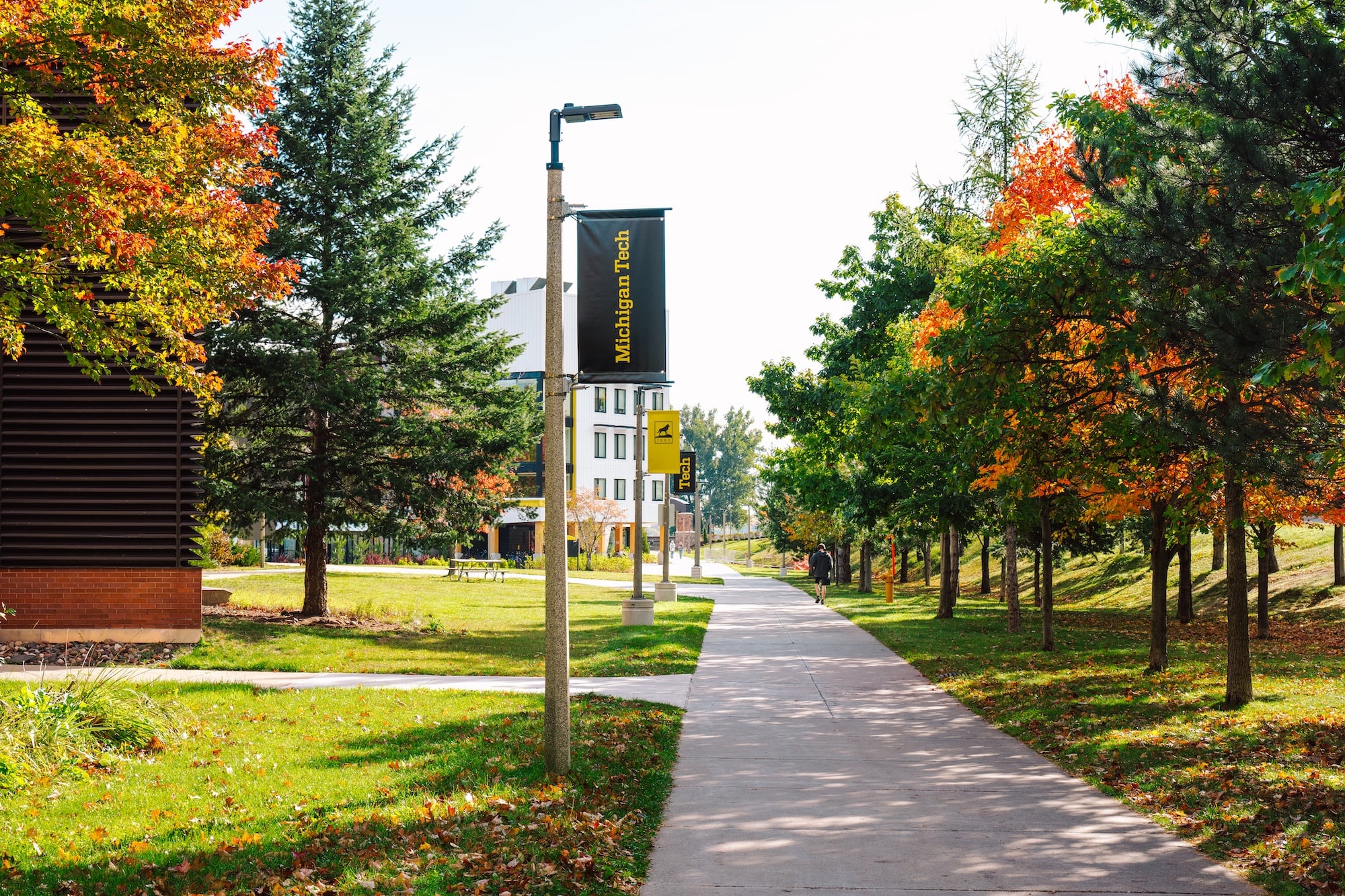
A scenic view of Michigan Technological University in the distance, surrounded by vibrant autumn foliage.
Fall means new faculty at Michigan Tech’s College of Sciences and Arts.

The College of Sciences and Arts announces five new faculty appointments and multiple faculty promotions for this academic year. Please join us in congratulating these Huskies!

AROTC
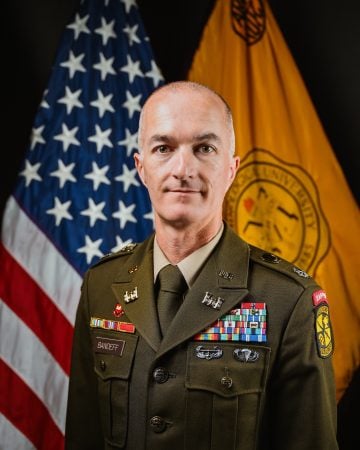
LTC Wallace W. Bandeff.

LTC Wallace W. Bandeff ‘06 returns to Tech as a professor of military science with the Army Reserve Officer Training Corps. Bandeff earned his bachelor’s degree in mechanical engineering technology from Michigan Tech and his master’s degree in geological engineering from the Missouri University of Science and Technology – previously known as the University of Missouri – Rolla.

“This position allowed me to return to Tech—this time as faculty,” said Bandeff. “After I graduated with my undergraduate degree from MTU, I was commissioned as an officer from the ROTC program. I’ve traveled the world and used the skills I’ve learned here ever since. It’s exciting to be able to return and provide our students with a high-quality education that will serve them well.”

Prior to his return to Tech, Bandeff served as the commander and district engineer for the Detroit District, U.S. Army Corps of Engineers. There he led a workforce of approximately 550 employees overseeing a multimillion-dollar program providing engineering, design, construction, and water resource management solutions for the Upper Great Lakes region.


Kyle Dolezal

CPT Kyle Dolezal joins Tech as an assistant professor of military science. He earned his bachelor’s degree from the University of Central Florida. Dolezal said he’s excited to work in a program that has a great reputation and a strong cadet corps. He is interested in collaborating with other faculty and staff on historic records preservation related to the AROTC program’s history.

Mathematical Sciences

Jordan Barrett

Jordan Barrett joins the mathematical sciences department as an associate teaching professor. He earned his PhD in mathematics from the University of Nebraska – Lincoln and was recently a member of the teaching faculty at the University of Oklahoma. Barrett hopes to collaborate with other faculty members on commutative algebra and algebraic geometry.

“Tech’s students are highly motivated, and I’m so excited to teach them,” said Barrett.

Psychology and Human Factors

Christopher R. M. Rundus

Christopher R. M. Rundus joins Psychology and Human Factors as an assistant professor this fall. He earned his Ph.D. in industrial and systems engineering from the University of Iowa and completed his postdoctoral program at Nationwide Children’s Hospital.

“I was excited to come to Michigan Tech because of the strong focus on applied research and the opportunities for interdisciplinary collaboration,” said Rundus. “I’m especially looking forward to working with students and involving them in hands-on human factors and transportation research.”

Previously, he worked with Gulfstream Aerospace as a human factors engineer, where he conducted research and evaluated human performance and safety in aviation systems. Rundus is interested in collaborating on projects related to driver safety, transportation human factors, advanced driver assistance and automated vehicle technologies, human-autonomy teaming, and decision-making.

Visual and Performing Arts

Pan-Pan Gou

Pan-Pan Gou joins the Visual and Performing Arts Department as an assistant professor of sound. Gou earned her MFA in sound design from Carnegie Mellon University. She has worked extensively as a sound designer and composer across theater, games, film, opera, and dance, creating sonic experiences that travel between heightened theatricality and emotional nuances. Her credits include City Theatre, Chautauqua Theatre, Theater Mu, Creede Repertory Theatre, and Pittsburgh Opera. 

“I’m really excited about Tech’s rich research environment that encourages cross-disciplinary, innovative collaboration,” said Gou. “I’m interested in exploring ways to utilize sounds in both storytelling and non-entertainment fields.”

Gou also sound-designed the premiere of the contemporary opera “Time to Act”, and her work will be featured in the commercial recording for national release on the award-winning classical label Bright Shiny Things. Internationally, she won Second Prize in Emerging Sound Design and was shortlisted as one of the 100 final exhibitors at World Stage Design 2025.

Advancement Celebrations

The College of Sciences and Arts also congratulates advancing faculty on their career achievements. Sarah LewAllen moves from her previous staff position at Tech as medical lab sciences (MLS) coordinator and instructor to a teaching track faculty position as MLS program coordinator and assistant teaching professor. Trish Brewer advances from adjunct assistant teaching professor to assistant teaching professor of philosophy. Trista Vick-Majors and Stephanie Carpenter have been promoted from assistant professor to associate professor. Moving from assistant teaching professor to associate teaching professor are Claire Danielson, Travis Wakeham, Tim Wagner, and Michael Maxwell. Congratulations to Jason Harman, associate professor of psychology and human factors, for achieving tenure. Melissa Baird, Marika Seigel, and M. Bartley Seigel have been promoted from associate professor to professor positions. Maria Bergstrom, who is also associate dean for undergraduate education in CSA, was promoted from associate teaching professor to teaching professor.


About the College of Sciences and Arts

The College of Sciences and Arts is a global center of academic excellence in the sciences, humanities, and arts for a technological world. Our teacher-scholar model is a foundation for experiential learning, innovative research and scholarship, and civic leadership. The College offers 33 bachelor’s degrees in biological sciences, chemistry, humanities, kinesiology and Integrative physiology, mathematical sciences, physics, psychology and human factors, social sciences, and visual and performing arts. We are home to Michigan Tech’s pre-health professions and ROTC programs. The College offers 25 graduate degrees and certificates. We conduct approximately $12 million in externally funded research in health and wellness, sustainability and resiliency, and the human-technology frontier.

Follow the College on Facebook, Instagram, LinkedIn,  X and the CSA blog. Questions? Contact us at csa@mtu.edu.

Joel Neves Named New Visual and Performing Arts Chair

Joel Neves stands in front of an orchestra with his back to the camera, waving his baton.
Joel Neves, shown here in his conducting role, steps up to a new position as chair of the Michigan Tech Department of Visual and Performing Arts.

Michigan Tech’s College of Sciences and Arts congratulates Joel Neves as he takes on his new position as chair of the Department of Visual and Performing Arts, effective July 1. Neves has served as a professor of music and director of orchestral activities in the department, specializing in teaching the history of rock music.

Michigan Tech’s Wales Study Abroad Program Continues to Evolve with Gilman Pioneering Institution Grant

Michigan Tech students pose beneath a massive red sign that says, “Eisteddfod” during the festival in 2025.
In 2025, Michigan Tech’s study abroad trip to Wales expanded to include the National Eisteddfod, the country’s largest festival. A $10,000 grant will help expand the 2027 trip to focus on critical minerals and the copper industry. Photos courtesy of Mark Rhodes.

Tech’s semiannual study abroad trip to Wales, supported by the social sciences department, takes a new focus on critical copper connections in 2027, following the receipt of a $10,000 Pioneering Institution Grant from the Gilman Program. Mark Rhodes, an associate professor of geography, has led the study abroad program since its inception as an ethnographic research trip in 2022. That year, a combination of 14 graduate students and community members attended.

“While our primary goal was collecting data, in the back of my mind, I was already starting to plan out a program,” said Rhodes.

Celebrating CSA Grads and Their Three Cs: Curiosity, Commitment, and Commencement

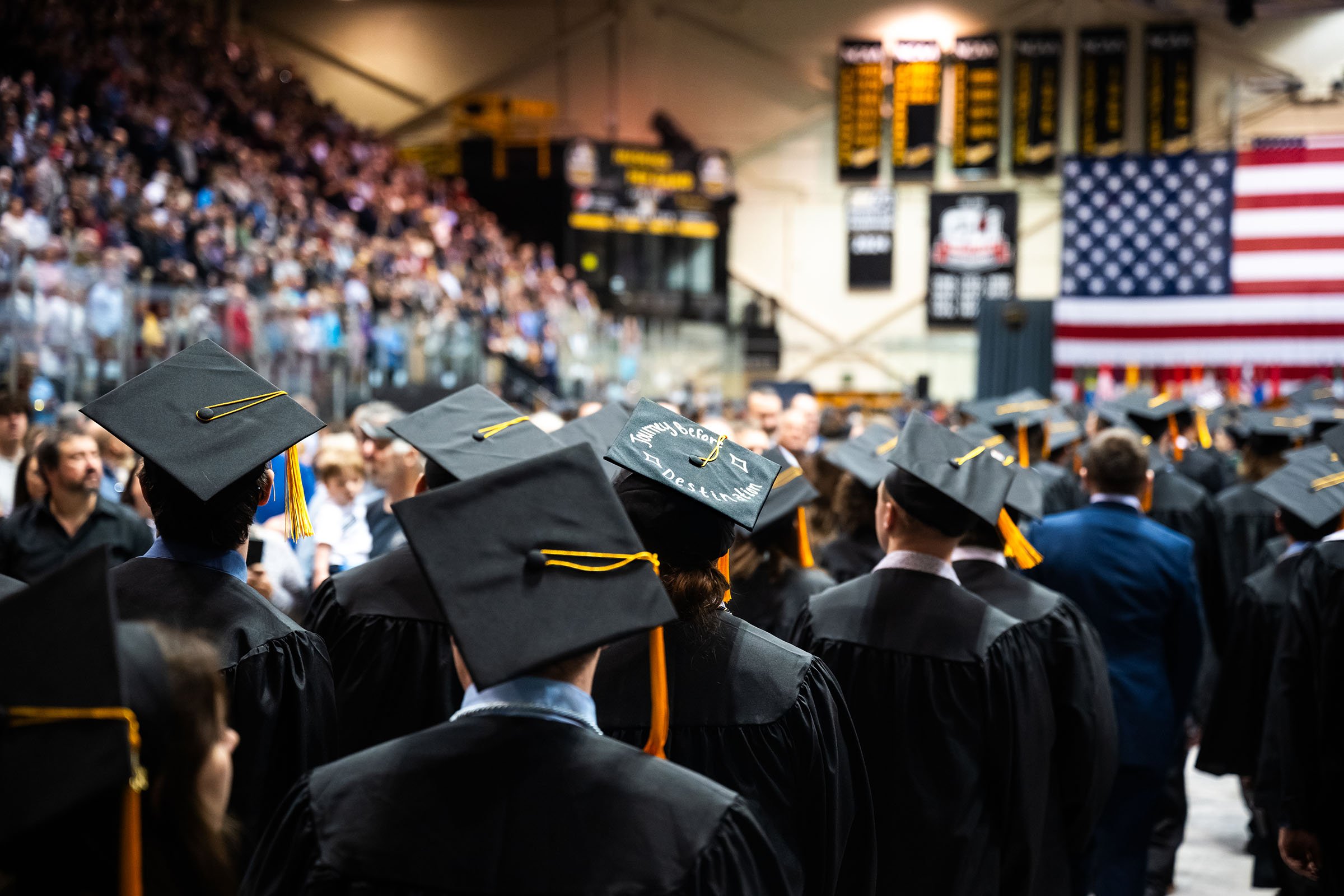
A large group of students in graduation caps and gowns walk away from the camera, toward the graduation podium at the other end of a large multipurpose hall. One graduation cap includes the decorative phrase, “Journey Before Destination.”
Since their first day on campus, our 2025 College of Sciences and Arts grads have marched forward with curiosity and determination. Now, they prepare to take their final steps on campus in Tech’s Midyear Commencement ceremony.

The College of Sciences and Arts applauds our nearly 50 soon-to-be graduates as they march toward Michigan Tech’s Midyear Commencement ceremony on Saturday, Dec. 13. Along with their caps and gowns, they bring with them the support of Husky faculty, staff, and leadership, including CSA Dean LaReesa Wolfenbarger.

“I feel hopeful for the future, knowing that this class is entering the workforce. They want to make a difference and have positive impacts through their work and accomplishments,” said Wolfenbarger.

College of Sciences and Arts Welcomes New Faculty, Celebrates New Appointments

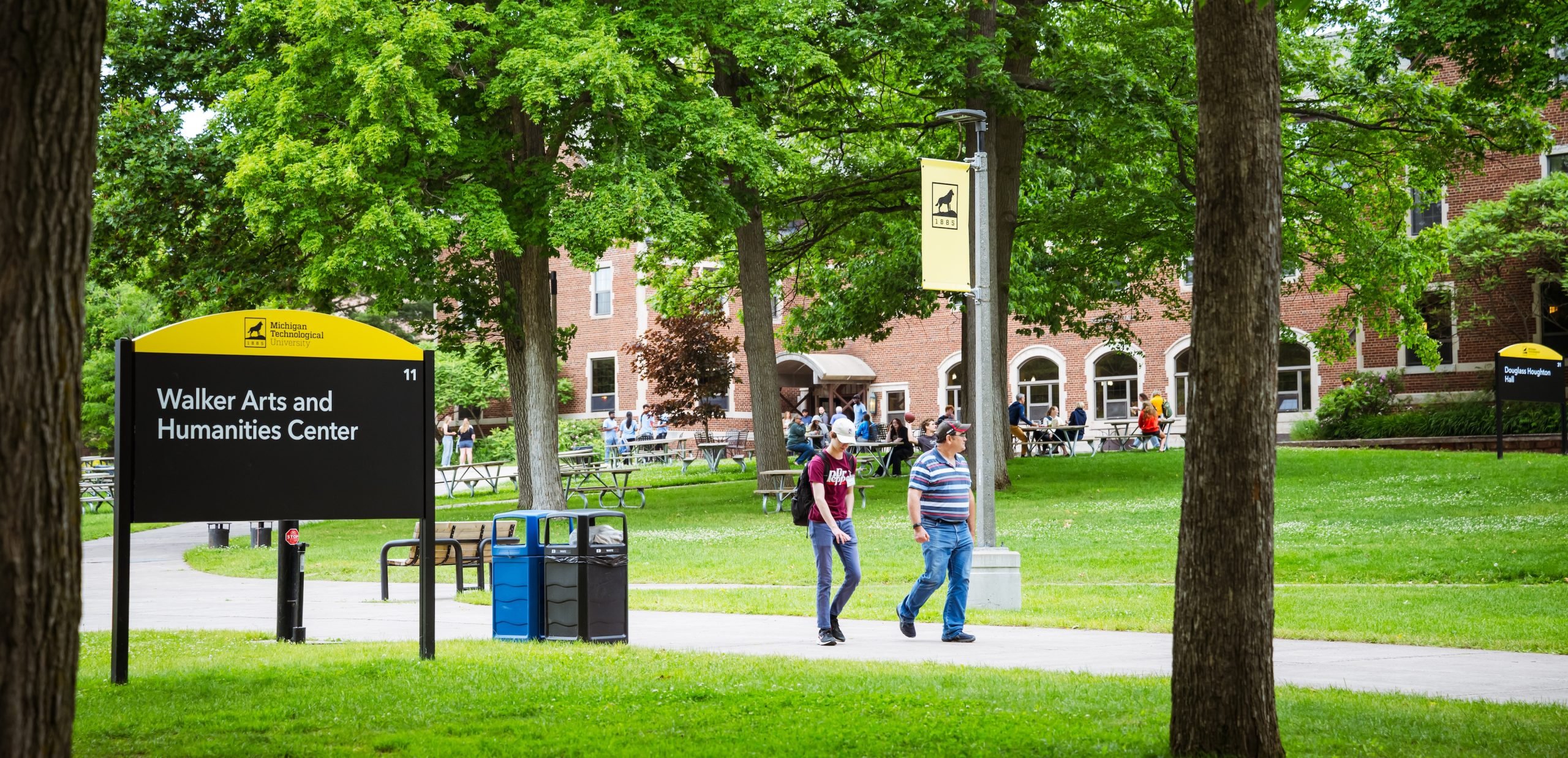
Students walking on campus by the Walker Arts and Humanities Center sign.
The new academic year brings new students and new faculty to the College of Sciences and Arts.

The College of Sciences and Arts announces nine new faculty appointments for this academic year. These faculty bring a wide variety of knowledge and skills to the College, our students, and our research. Their individual areas of expertise include dark-room photography, photonics characterization techniques, human-AI interactions, political science and jazz history. Please join us in welcoming these Huskies to their new positions!

Rodica Curtu Named New Mathematical Sciences Chair

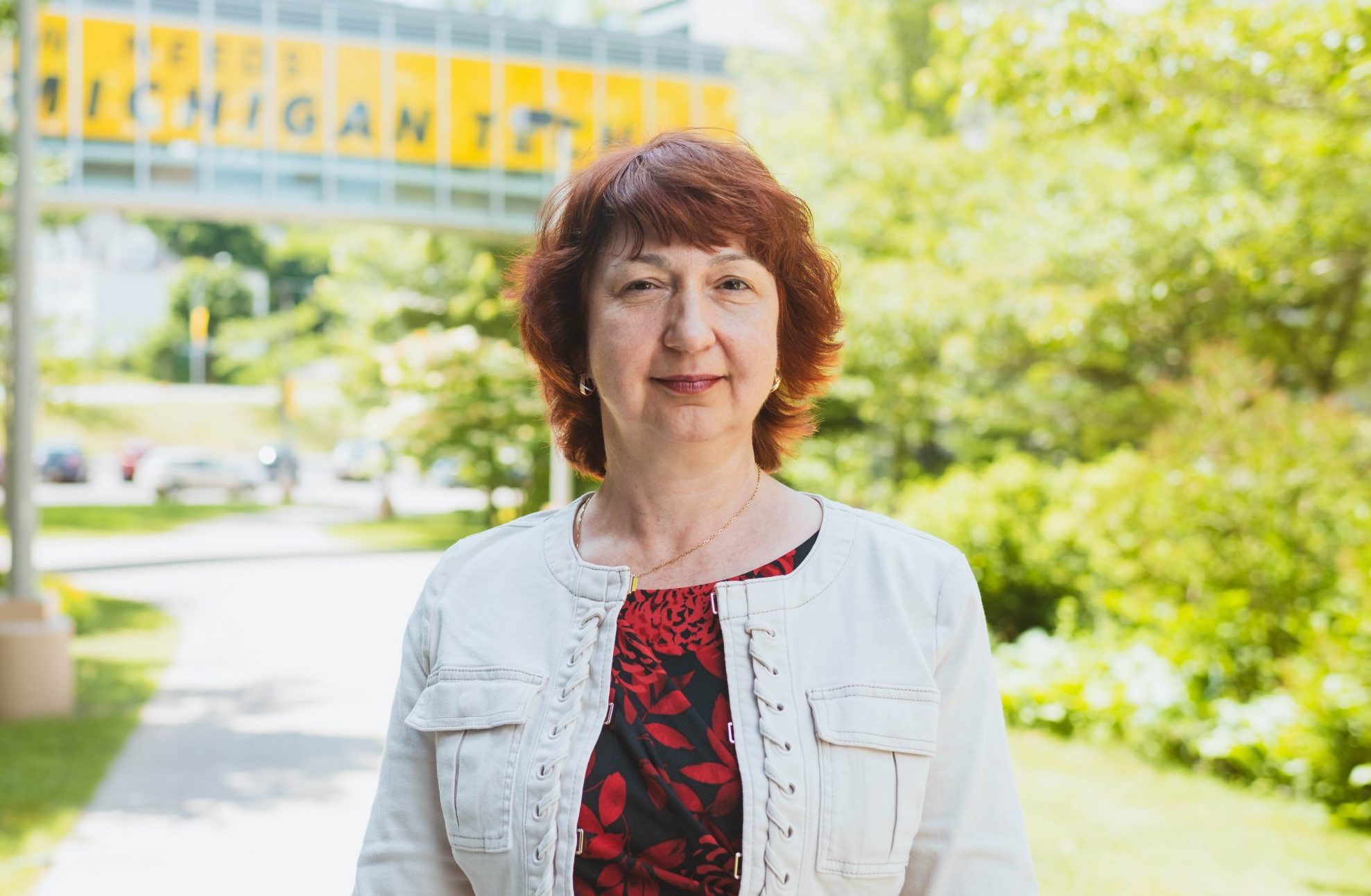
Rodica Curtu stands outdoors on a sunny day in front of the walking bridge between the Van Pelt and Opie Library and Rekhi Hall.
Rodica Curtu joins the College of Sciences and Arts as the new mathematical sciences department chair.

Michigan Tech’s College of Sciences and Arts welcomes Rodica Curtu as the new chair of the Department of Mathematical Sciences, effective July 1. Curtu comes to Michigan Tech from the University of Iowa, where she recently brought the math graduate program into the Internship Network in the Mathematical Sciences and served as faculty senate president.

Bell Gives Voice to the History of Talking Machines in Nationally Recognized Book

The cover of Vox Ex Machina: A Cultural History of Talking Machines by Sarah Bell

Sarah Bell, associate professor of digital media in the College of Science and Arts gained national recognition recently when her book Vox Ex Machina was listed on the New Yorker’s “Best Books We’ve Read This Week.” The book details the development of key voice synthesis technologies across the 20th century and factors that influenced their creation.

Bell’s exploration of the topic goes far deeper than a simple history of how these technologies were created, also exploring public response to the tech and asking whether talking machines are good for us.

“We were already primed for voice assistants before Siri and Alexa, but that doesn’t mean they work very well for us.”

Sarah Bell

Vox Ex Machina is as much about the people creating and using voice synthesis as it is about the technology itself, and this research concept began very close to home for Bell.

Physicist’s Search for a New Project Leads to Discovery and Publication

View of the HAWC Observatory with mountains in the background
Data from the HAWC Observatory, shown here, was central to the research project. (Image credit: Jordan Goodman/HAWC Collaboration)

When postdoctoral scholar Xiaojie Wang of the Michigan Technological University Physics Department went looking for her next research topic, she found a previously unexplored region and a path to publication.

Wang is lead corresponding author of the article, “Ultra-High-Energy Gamma-Ray Bubble around Microquasar V4641 Sgr” recently published in Nature journal. The findings highlighted in the article offer new insights into how microquasars might contribute to the cosmic-ray energy spectrum—a long-standing puzzle in astrophysics.

“While reviewing the sky maps in search of my next project, I noticed a region five degrees away from our galactic plane with bright emissions that had not been visible in previous datasets,” said Wang, who works with Petra Huentemeyer, a distinguished professor of physics at Michigan Tech. “No gamma-ray source has been identified nor analyzed in this region—so I seized the opportunity and led the analysis.”

Five Alumni Inducted Into College of Sciences and Arts Academy

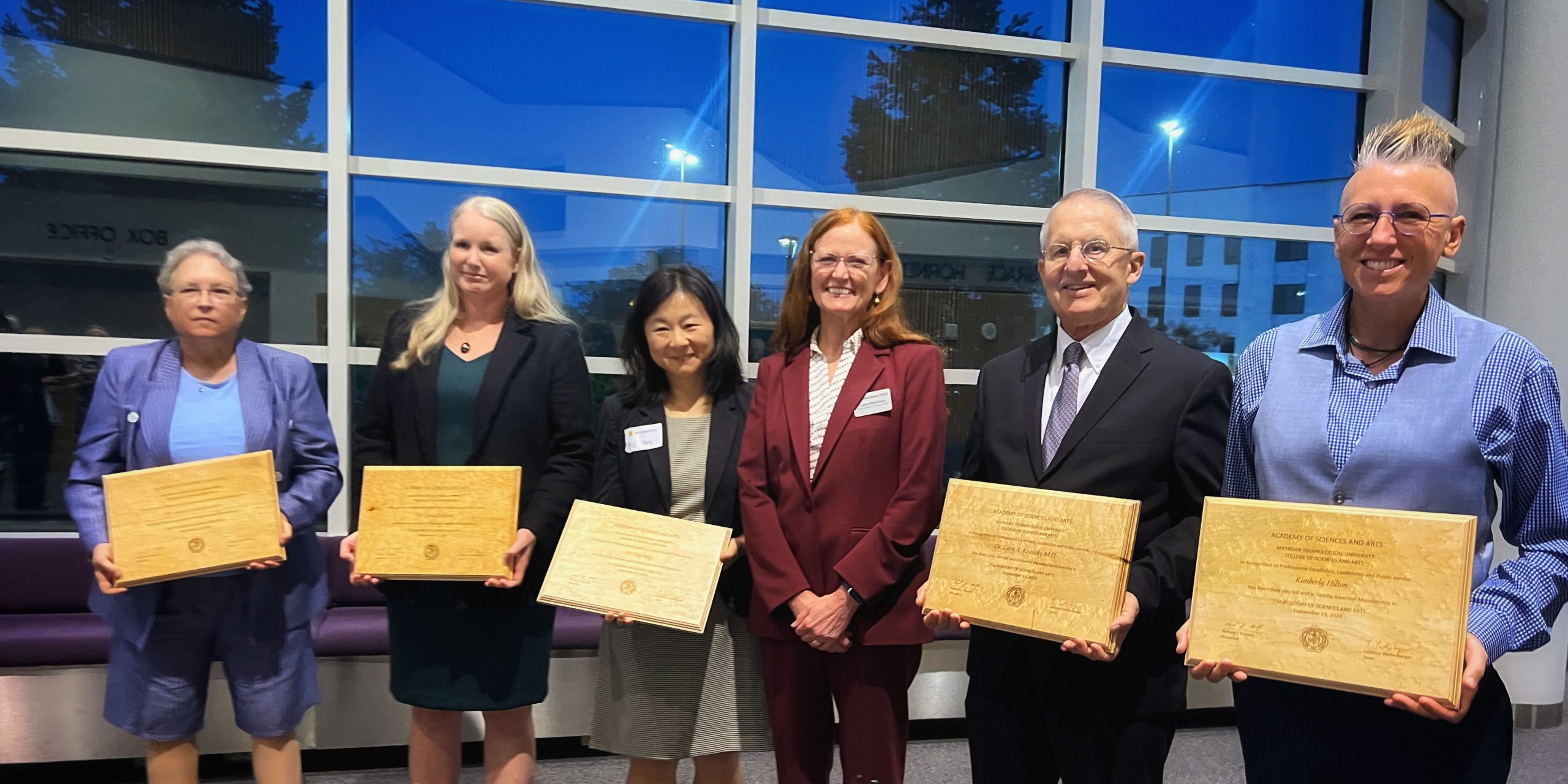
From left, Leann Nitschke, Carly Robinson, Ping Yang, CSA Dean LaReesa Wolfenbarger, Gary Karicky, and Kimberly Hilton
at the College of Sciences and Arts Academy induction ceremony on Sept. 19. (Image courtesy Kelly Steelman).

Earlier this fall, the Michigan Tech College of Sciences and Arts (CSA) gathered to celebrate the induction of five remarkable and accomplished alumni into the CSA Academy.

Dean LaReesa Wolfenbarger hosted the ceremony honoring these alumni and their contributions to a better tomorrow, which run the gamut from advancing scientific discovery to serving the nation and their communities through defense readiness, healthcare, education, and public engagement.

This year’s CSA Academy inductees are Kimberly Hilton; Gary A. Karicky M.D.; Leann Nitschke, M.D.; Carly Robinson; and Ping Yang.

New Institute Brings Keweenaw Time Traveler to the World—And New Researchers to Keweenaw

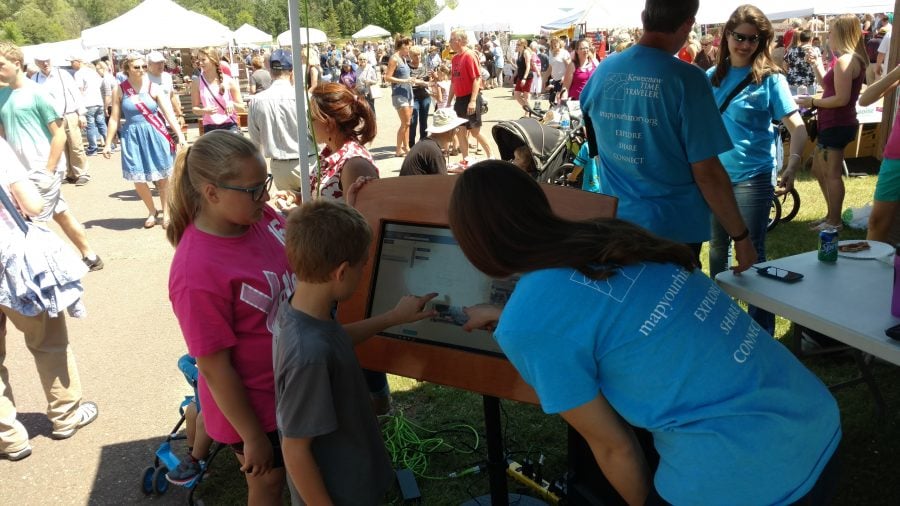
Deep-mapping projects like Keweenaw Time Traveler can engage communities in meaningful, multi-generational explorations. (Image courtesy KeTT)

An advanced institute in the spatial and digital humanities is coming to Michigan Tech.

Don Lafreniere, a professor of geography and geographic information science (GIS) in Tech’s Department of Social Sciences is leading a team of researchers, staff, and students from Michigan Tech and Wayne State University on project that will develop the National Endowment for the Humanities (NEH) Community Deep Mapping Institute. The project is supported by a $250,000 NEH grant.