Geological and Mining Engineering and Sciences

Posts under the ‘Seminars’ category

Seminar: Oil Spill Response Experience: Exxon Valdez to BP Deepwater Horizon

Monday, April 22nd, 2013

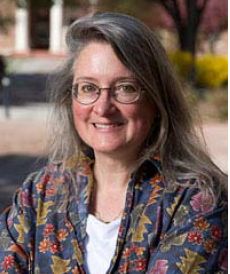
In an engaging lecture, Tina Behr-Andres will share her experience advising the Federal Government’s Science Team for the Deep Water Horizon BP Oil Spill Response. The presentation, entitled, “Oil Spill Response Experience: Exxon Valdez to BP Deepwater Horizon,” will be held on Tuesday, April 23, from 4 p.m. to 5p.m., Dow 642.

Behr-Andres holds over twenty years of professional experience in engineering academe, private-sector technical consulting and national laboratory research management. She specializes in management of legacy wastes from nuclear weapons production; marine and terrestrial oil spill response; industrial and hazardous waste management and wastewater treatment; and contaminated site remediation. Currently, Behr-Andres is an Executive Advisor to the principal associate director of science, technology and engineering at Los Alamos National Laboratory.

This presentation is sponsored by Los Alamos National Laboratory, the Sustainable Futures Institute, Michigan Tech’s Department of Geological and Mining Engineering and Sciences, and Michigan Tech’s Office for Institutional Diversity.

Seminar: ‘Lessons from Yucca Mountain Standards, Regulations & Performance Assessments

Monday, March 18th, 2013

Professor Rodney C. Ewing, Edward H. Kraus Distinguished University Professor
Department of Earth & Environmental Sciences, University of Michigan
‘Lessons from Yucca Mountain Standards, Regulations & Performance Assessments”
Yucca Mountain, Nevada, was scheduled to be a geological repository storage facility for high-level radioactive waste until it was defunded in 2010. This seminar is sponsored by the A. E. Seaman Mineral Museum and hosted by the Department of Geological and Mining Engineering and Sciences. There will be a social after the talk in the Dow sixth-floor atrium (lakeside).
Friday – March 22, 3:00 to 4:00 pm DOW 642; Social to follow in 6th floor atrium, lakeside

Seminar: Patty Bryan, Principal Geologist/Senior ProjectManager, URS Corporation

Friday, February 15th, 2013

Patty Bryan, Principal Geologist/Senior ProjectManager, URS Corporation – hosted by Association of Environmental and Engineering Geology (AEG) URS Corporation is an engineering, design and construction firm and a US federal government contractor. Bryan will present a technical talk on URS projects and describe opportunities for engineering. Seminar was presented as part of National Engineers Week, Friday February 15, 2013


Thomas Oommen Assistant Professor, Geological and Mining Engineering and Sciences presents a gift of native copper to Patty Bryan.

GMES Seminar: Cable Shovel Durabaility in Formation-Excavation Engineering

Monday, January 21st, 2013

GMES Seminar: Cable Shovel Durability in Formation-Excavation Engineering
Muhammad Azeem Raza, Instructor, GMES, PhD Candidate of Mining Engineering

Cable shovel is a primary excavation unit in many surface mines around the world. The capacities of the shovels have seen an ever increasing trend to achieve the economies of large scale operation. The modern day shovels have 100+ tons per pass production capacities. The dynamic force of 100+ ton material combined with the dynamic cutting, friction and acceleration forces during the excavation result in severe stress loading of the shovel front end components. Stress and fatigue cracks appear, as a result of this cyclic stress loading, resulting in expansive breakdown, reduced efficiency and production loss. Numerical and analytical techniques can be used to model the stress and fatigue failures.
In this seminar we will discuss the challenges and on-going research in cable-shovel formation-excavation and durability studies. The talk will include: (i) kinematic and dynamic modeling of shovel, (ii) stress and fatigue failure modeling (iii) life expectancy of shovel front-end components.

Muhammad Azeem Raza, an instructor for GMES, will be presenting his work titled “Cable Shovel Durabaility in Formation-Excavation Engineering”. Mr. Raza is a PhD candidate for a degree in Mining Engineering at the Missouri University of Science and Technology, Rolla. He is also an assistant professor at the University of Engineering and Technology, Lahore where he taught for three years before coming to the US for his PhD.

EPSSI Speaker: Integrating ecosystem modeling and remote sensing to understand effects of hypoxia on the food web in the Northern Gulf of Mexico

Monday, November 26th, 2012

December 3, 2012: Integrating Ecosystem Modeling and Remote Sensing to Understand the Effects of Hypoxia on the Food Web in the Northern Gulf of Mexico. Andrea Vander Woude. Cooperative Institute for Limnology and Ecosystems Research;
4 pm, M&M Room U113
Dr. Andrea Vander Woude will be next week’s EPSSI seminar speaker. She is currently a Postdoctoral Researcher at the Cooperative Institute for Limnology and Ecosystem Research (CILER) and NOAA’s Great Lakes Environmental Research Labratory (GLERL). Andrea works in the fields of remote sensing and ecosystem modeling of the Great Lakes and coastal ocean. Her seminar is titled, “Integrating ecosystem modeling and remote sensing to understand effects of hypoxia on the food web in the Northern Gulf of Mexico.”

Abstract: The Northern Gulf of Mexico (NGOMEX) experiences extensive seasonal hypoxia that is predicted to cause declines in the production of commercially and recreationally valuable fish and shellfish. In order to understand the direct and indirect effects of hypoxia on food web dynamics and ecological and economically important species, we developed an Atlantis ecosystem model and compared the model results to the available satellite remote sensing data. The Atlantis framework is a three-dimensional biogeochemical and biophysical modeling system that uses hydrodynamic model output as a forcing function and simulates biochemical cycles and food web interactions. Nutrient and field observations from 2003-2008, and from Southeast Area Monitoring and Assessment Program (SeaMap) were used to initialize the Atlantis ecosystem-based model and the in situ data were also compared to salinity, temperature and chlorophyll values from the available satellite imagery. This included coincident satellite data from the Aquarius satellite (salinity) the Moderate-resolution Imaging Spectroradiometer (MODIS) and the MEdium Resolution Imaging Spectrometer (MERIS). The output of the NGOMEX Atlantis model helped define the extent and seasonal timing of hypoxia on predator-prey interactions and directional change in the food web components. Our overall goal is to use these results to forecast the effects of hypoxia on NGOMEX living resources by uniquely combining both satellite and ecosystem based model results.

The Secret to a Successful Career in Mining

Wednesday, October 31st, 2012

“The Secret to a Successful Career in Mining” Presentation by Mr. Patrick McAndless, Imperial Metals Corporation, Mr. Chuck Stevens, Sterling Gold Mine, Monday, November 5th, 4-7 pm, Dow 641

Flyer

GMES Seminar April 6: Tropical glaciers

Tuesday, April 3rd, 2012

Geological & Mining Engineering & Sciences Seminar April 6:
Kyung In Huh, Visiting Scholar, Department of Geological & Mining Engineering & Sciences, Michigan Technological University
and PhD Candidate, Department of Geography and Byrd Polar Research Center, The Ohio State University
Friday, April 6, 2012 3:00pm Dow 610

Title: Assessing the volume and hypsometric changes of the glaciers
in the Tropical Peruvian Andes: Some case studies over Cordillera Blanca

Tropical glaciers are very sensitive to changes in climate due to the low latitude radiation regime and steep vertical mass balance gradients. These mountain glaciers have rapidly retreated over the 20th century, raising concerns about downstream regional water supplies under continued global climate change. Monitoring tropical glaciers using remotely sensed data has drawn a great attention in earth science communities for decades and time-lapse analysis of sensory data has
provided important variability information of tropical glacier recession. The motivation of this study is to refine a surface area to volume relationship for tropical glaciers to enable extrapolation of more detailed inventory of glacier volume and water resources. This study
focuses on the glaciers in the Cordillera Blanca in Peru, within the world’s largest concentration of tropical glaciers, to assess the volume and topographic changes over the late 20th century. A combination of LiDAR (Light Detection and Range) data achieved in 2008, DEMs (Digital Elevation Models) from vertical aerial photographs taken in 1962 by stereo-photogrammetry, and multispectral ASTER (Advanced Spaceborne Thermal Emission and Reflection Radiometer)
imagery taken during 2001 – 2008 with geospatial techniques are used for this research. These airborne and Spaceborne imagery can reveal both current glacial surface topography and glacial
profiles 46 years back, enabling calculation of the total volume loss trend over the last 46 years.

The resulting improved understanding of how tropical glacier mass changes in response to climate dynamics is critical for global climate modeling, which can reliably predict future glacier changes only after accurately simulating the past.

Departmental Seminar

Tuesday, March 20th, 2012

Title/Abstract

Beauty and the Beast: Using EarthScope, Sense of Place and the Landscapes of Our National Parks to Engage the Public on the Scenery and Geological Hazards of the United States

Presenter

Robert J. Lillie, PhD, Certified Interpretive Trainer, Emeritus Professor of Geosciences
Oregon State University
E-mail: lillier@geo.oregonstate.edu
Web: http://geo.oregonstate.edu/~lillier

Date

March 20, 2012 2 pm Dow 610

Linking Microbial and Ecosystem Processes: what to measure and how to measure it

Thursday, February 9th, 2012

Feb 9: Ed Hall, USGS Research Biologist, Natural Resource Ecology Laboratory Colorado State University, Title: “Linking Microbial and Ecosystem Processes: what to measure and how to measure it” Thursday February 9th, 2:00 PM Rekhi Hall G06

Field observations of mixing and transport near topography in lakes and the ocean

Wednesday, February 8th, 2012

Feb 8: Danielle Wain, University of Washington “Field observations of mixing and transport near topography in lakes and the ocean” Rekhi G06 2:00 pm

Geological and Mining Engineering and Sciences

630 Dow Environmental Sciences
1400 Townsend Drive
Houghton, MI 49931

Ph. 906-487-2531
Fax: 906-487-3371
Email: geo@mtu.edu

Michigan Technological University

1400 Townsend Drive
Houghton, Michigan 49931-1295
906-487-1885

See a Problem?

Email the Webmaster

Protected by Akismet | Blog with WordPress