How to Add or Drop a Course (and What a “W” Means)

Adjusting your schedule at Michigan Tech? Whether you’re thinking of adding a course, dropping one, or curious about what a “W” means on your transcript, this guide will walk you through it all—step by step.


How to ADD a Course at Michigan Tech

Courses may be added on BanWeb during the initial registration period until 5:00 p.m. on Friday of the first week of the semester. Registration closes for a short period after initial registration and then reopens and stays open until the end of the 1st week of classes.

After Friday of the 1st week of a semester, students must see an academic advisor for a late-add form which must be approved by the section instructor.

  1. Check the Add Deadline
    Visit the Academic Calendar to make sure you’re within the official add period.
  2. Log in to Banweb
    Use Banweb and go to:
    • Student > Registration > Add or Drop Classes
  3. Enter the CRN (Course Reference Number)
    Find this number in the course schedule to add your desired class.
  4. Instructor Permission
    Some courses require approval or overrides if they’re full or if you don’t meet prerequisites.
  5. First-Year Students
    First-year students must use the First-year Student Permission to Add/Drop Courses Form:
    • It needs signatures from both the instructor and the academic advisor
    • Submit it to the Registrar’s Office (Room 130, Admin Building) or email a scanned copy to schedule@mtu.edu

How to DROP a Course at Michigan Tech

Week 1-2 of the Semester

You can drop the course yourself through BanWeb:

  • Go to Student > Registration > Add or Drop Classes
  • Click “Drop” next to the course
  • Confirm changes
  • Courses may be dropped on BanWeb until 5:00 p.m. on the Wednesday of second week of a semester.

After Week 2

After Wednesday of the 2nd week, all drops must be done by Registrar’s Office (first floor Administration Building).

You may email your request to schedule@mtu.edu.

Include the following in your email:

  • Your full name
  • Your M# (student ID)
  • The course name and number(s) (e.g., PH 2100 – University Physics I)

Courses may be dropped at the Registrar’s Office until 5:00 p.m. on Friday of the 3rd week with no grade. Courses dropped by this deadline will not appear on the student’s transcripts.

If a drop will put a student below 12 credits, the deadline to get a refund for that drop is at 5:00 p.m. on Wednesday of the 2nd week, otherwise plateau tuition is in effect for 12-18 credits. Specific course fees may lead to billing balance changes. No refunds of any kind will be granted after Wednesday of the 2nd week unless the entire semester’s registration is withdrawn.  Contact the Registrar’s Office for the percentage refund schedule in the case of complete withdrawal.

First-Year Students

First year students must obtain their advisor’s and instructor’s signatures on the orange First-year Student Permission to Add/Drop Courses Form for any drops after the 3rd week.


What is a “W” and How Does It Affect My GPA?

Dropping a course after the official drop deadline will result in a “W” (Withdrawal) on your transcript.

Courses dropped after 5:00 p.m. on Friday of the 3rd week through 5:00 p.m. on Friday of the 10th week will earn a ‘W’ grade.  
After the 10th week, courses may not be dropped without extenuating circumstances.

Courses dropped during the 4th week through the 10th week will earn a ‘W’ grade (withdrawn). A ‘W’ appears on the student’s transcript which indicates that the student dropped the course. ‘W’ marks do not affect GPA calculations, but the credits dropped are included in attempted credit hours for financial aid purposes (satisfactory academic progress).

Key facts about a “W”:

  • Does NOT affect your GPA
    A “W” is not calculated into your grade point average.
  • Stays on your transcript
    It shows you enrolled in and later withdrew from the course.

Need Help?

For more info or personalized guidance:

How to Set Up a Meeting with the BME Academic Advisor

How to Set Up a Meeting with Kailee Sague, Senior Academic Advisor for Biomedical Engineering

Navigating your academic journey in Biomedical Engineering (BME) at Michigan Tech can feel overwhelming at times—but you’re not alone. Whether you’re mapping out your course schedule, looking into internships, or preparing for grad school, Kailee Sague, Senior Academic Advisor, is here to help you every step of the way.

When Should You Meet with Her?

You might want to schedule a meeting if:

  • You need help choosing courses or building your semester schedule
  • You’re exploring minors or planning a double major
  • You’re thinking about undergraduate research, internships, or co-ops
  • You have questions about graduation requirements or long-term goals
  • You need support navigating academic challenges

How to Schedule a Meeting

  1. To schedule an advising appointment at Michigan Technological University using the Ellucian Experience portal:
  2. Log in to your Experience Dashboard.
  3. Locate and open the advising or student scheduling tool (often found in the Navigate or Academic Profile widgets).
  4. Select the option to Schedule an Appointment, choose your assigned advisor, and pick an available date and time.

Quick Tips

  • Book early during busy advising times (like before registration!)
  • Be specific in your appointment notes to make the most of your meeting
  • If your question is simple, you can also reach out via email

Updated 07/07/2026 to reflect change from Calendly to Experience / CRM Advise

ENT4950 REGISTRATION

Scheduling ENT4950 requires a slightly different process than the normal Enterprise semesters. If you are registering for ENT 4950, please follow the instructions below:

  • Complete & Submit Form A
    • The online form can also be found under the tab “Enterprise Student Resources.” NOTE: This requires ISO login.  
    • Part A is used to verify you are “Senior Design Ready” and have met the prerequisites. Your academic advisor will review your university audit to ensure you have taken the required prerequisites.
    • Part A must be satisfactorily completed before the completion of Part B.
    • Emails will be sent to you from enterprisereg@mtu.edu regarding this process.
  • Complete & Submit Part B
    • This form is used to document your project and obtain approval from your Enterprise Advisor.
    • Complete it by the first week of classes. Your submission should include the following:
      •  Who is the sponsor?
      • What is the fundamental problem or opportunity?
      • What is being designed?
      • What are the specific deliverables?
      • What are the major milestones?
      • What are you, as an individual, going to bring to the project? I’m looking for both skills and, to the best of your knowledge, tasks that you will complete.
      • NOTE: FORM BE MUST BE SUBMITTED NO LATER THAN THE FIRST DAY OF CLASSES.
  • Once FORM B  has been approved, your academic advisor will register you in ENT4950 (2 credits.)
    • Late-add form is required after 1st week of classes, in addition to Part B.
      Late fee may apply.

BME – Senior Capstone – Updated Rules/Requirements

PLEASE NOTE: These Rules/Regulations go into effect for Fall 2025.

SENIOR CAPSTONE

Biomedical Engineering (BME) Students have THREE options for their Senior Capstone:

  1. European Exchange Semester (EPS)
  2. Senior Design (BE 4901 & BE 4910) or
  3. Enterprise (ENT 3950, 3960, 4950, 4950)

Regardless of how a student completes their capstone requirements (Senior Design, Enterprise substitution with ENT 3950/3960 and ENT4950/4960, or EPS), all students MUST take BE4900 Biomedical Design Fundamentals as a prerequisite.  

BE4900 is a firm prerequisite for capstone courses (BE 4901, ENT 4950, EPS). The BME Department will not allow it to be taken concurrently with capstone courses nor will substitution from another department be allowed.

EUROPEAN EXCHANGE SEMESTER

European Project Semester (EPS) is designed to meet engineering senior design requirements with a mix of project related courses and project organization/problem-based learning. All EPS programs are taught in English. Semester lengths vary but last a minimum of 15 weeks. 

Biomedical students earn four credits of Senior Design credit, with the possibility of two additional credits for their Free Elective. All students MUST take BE4900 Biomedical Design Fundamentals as a prerequisite for EPS.

Students should work directly with Study Away Services.

Casey Nelson – Manager, Study Away and Abroad
studyabroad@mtu.edu / 906-487-2876
Administration Building, International Programs and Services – room 200

LEARN HOW TO SIGN UP FOR EPS

SENIOR DESIGN

Senior Design connects students and industry through challenging projects that have an open-ended design solution. Students work with their peers on a small team with the supervision of a faculty member, and often a representative from a company or organization. Teams have access to state-of-the-art design and collaboration tools, as well as dedicated fabrication facilities, labs, and design studios. Senior Design functions more like a “first job” than a “last class”—providing the kind of relevant design experience that can launch you into a rewarding, successful career.

Students should take BE 4901 and BE 4910 in consecutive semesters, Fall and Spring.

All students MUST take BE4900 Biomedical Design Fundamentals as a prerequisite for any Senior Design course.

LEARN HOW TO REGISTER FOR SENIOR DESIGN

ENTERPRISE

Enterprise consists of  27 teams, which are student-run consulting companies at Michigan Tech. Each Enterprise works in teams on real projects, with real clients, in an environment that’s more like a business than a classroom. They are often focused on contracted work, competition, or projects for the campus and community with the goal of inventing products, providing services, and pioneering solutions. 

Enterprises are large groups, overseen by faculty mentors, usually of fifty or more students. Students often are divided into sub-groups for project work. 

The BME Department requires students to complete four semesters of Enterprise to count as the capstone requirement. Students may only complete Enterprise modules in Fall and Spring semesters. Summer semesters of Enterprise will not count towards your Senior Capstone requirement. 

Students are welcome to participate in any of the Enterprises on campus, providing they check with the Enterprise Advisor to ensure there is a substantial amount of Biomedical Engineering work. Students are encouraged to utilize the H-STEM Enterprise

PLEASE NOTE:

  • Upon signing up for ENT3950, students inform the Department about the Enterprise team through the BME – Senior Capstone Verification Form
  • Students will not be permitted to take ENT 4950 or ENT 4960 in summer semesters.
  • ENT4950 and ENT4960 will be taken in consecutive semesters (e.g., Fall-Spring of the same academic year, or in unusual cases, Spring-Fall of consecutive academic years).
  • Students wishing to substitute Enterprise courses for Senior Design, must take all four semesters (ENT 3950/3960/4950/4960) within the same Enterprise and preferably on the same project.
  • The most common Enterprises BME students choose to participate in are H-STEM and Wireless Communications.
  • When registering for ENT 4950, the project description or PART B form used to sign up for ENT4950 should be approved by the BME Department. It may not be submitted later than the first day of classes.

LEARN HOW TO REGISTER FOR ENTERPRISE
LEARN HOW TO REGISTER FOR ENT 4950

Cody Tuftee and Victoria Santillan Place at GRC 2024

The Michigan Tech Graduate Research Colloquium (GRC) and Annual Banquet 2024 was held on March 27.

Congratulations to the GRC winners.

Oral Presentation

First Place: Natalie Nold
Second Place: Nithin Allwayin
Third Place: Brilynn Janckila

Poster Presentation

First Place: Jessica Czarnecki
Second Place: Cody Tuftee (BME)
Third Place: Victoria Santillan (BME)

Second Place Poster

Drug Eluting Microgels as an Immunomodulatory Corneal Wound
Sealant

Authors: Cody Tuftee, Saad Asim, Gary Hin-Fai Yam, Muhammad Rizwan

Poster Extract

  • Corneal damage is one of the leading causes of blindness with less than 1 in 70 victims able to undergo a correctional cornea transplant due to global donor shortages; hence, there is a need to develop synthetic alternatives.
  • Sustained delivery of therapeutic molecules to the cornea proves a challenge due to natural defense mechanisms constantly seeking to clear away foreign materials from the eye.
  • The proposed corneal wound sealant seeks to provide a platform for multiple immunomodulatory drugs to be released at different rates to regulate cornea repair.

Third Place Poster

Study of Breast Cancer Cells under Biophysical and Metabolic Cues

Authors: Victoria Santillan, Samerender Nagam Hanumantharao, Stephanie Bule, Carolynn Que, Brennan Vogl, Marina Tanasova, Smitha Rao

Poster Extract

  • Cancer cell reprogramming is a complex process driven by many factors.
  • By culturing cells in 3 dimensional (3D) scaffolds with specific morphologies, we can study how the behavior between cells and protein expression changes.
  • We studied how the scaffolds affected cell-cell interactions and cell-matrix interactions, in the presence of the probe.

Sangyoon Han on Cell Adhesion

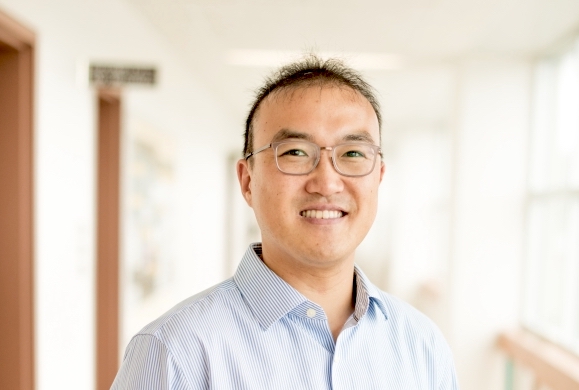
Sangyoon Han
Sangyoon Han

Sangyoon Han (BioMed) was quoted by The Scientist in a story about a recent study reporting the promotion of cellular adhesion by the adaptor protein Cas. The story involves the migration of cells during development, immune defense, and tumorigenesis. Cells need to form and dismantle attachments with the extracellular matrix and other cells.

Researchers reported that the adaptor protein Cas promoted the initiation of cellular adhesion.

Sangyoon Han, not involved in that study, commented on the sparseness of studies involving premechanosensitive processes that act as a seed for the original binding of this mechanosensitive binding. He emphasized the importance of further research and how people can now change their perspective on the focal adhesion assembly.

Han’s research involves mechanobiology, traction force by a living cell, and cell adhesion and migration. He is an assistant professor in Biomedical Engineering.

Read more at The Scientist, by Shelby Bradford.

My Story: Carolynn Que, MTUengineer

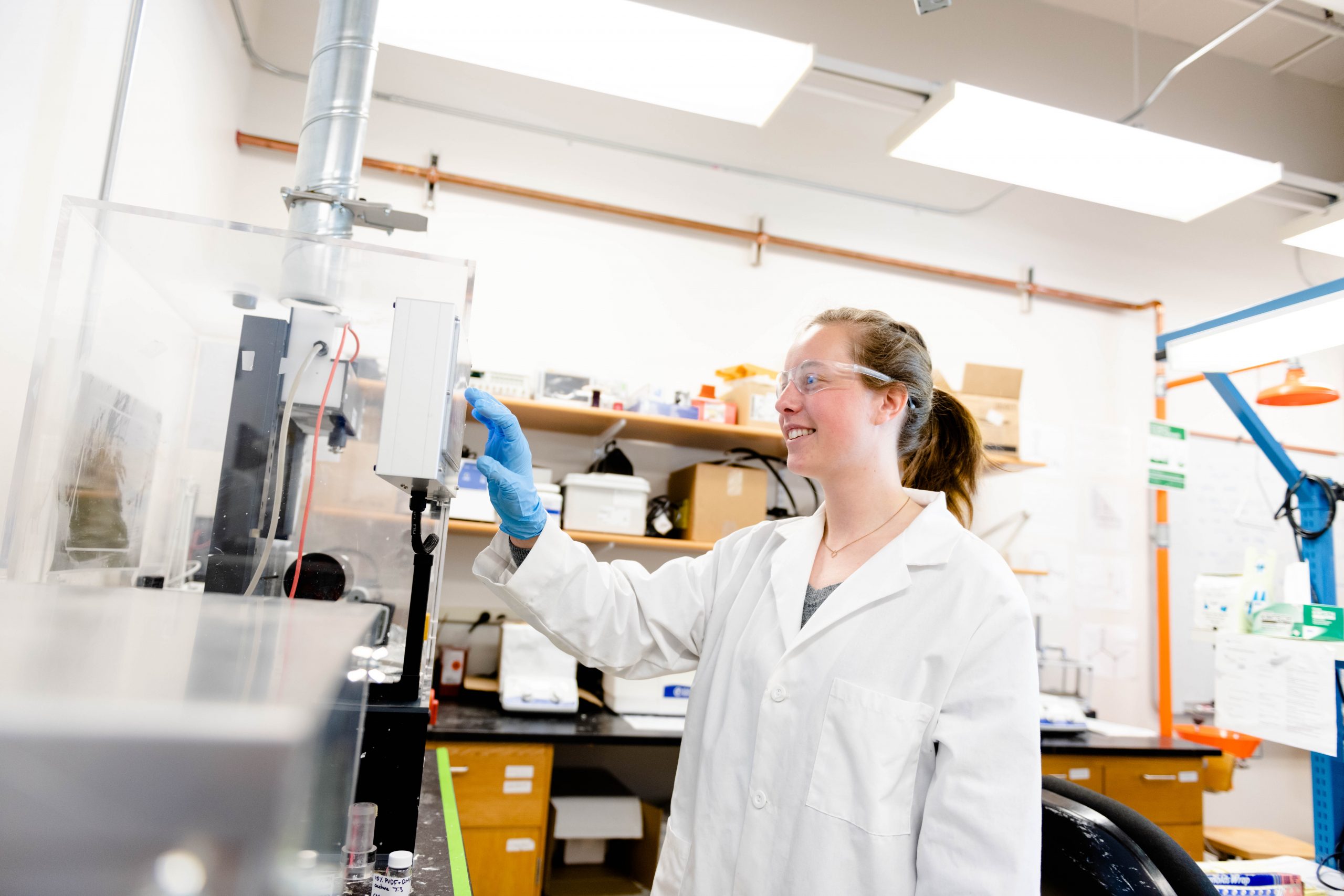
Carolynn Que at work in Dr. Smitha Rao’s Biomedical MicroDevices Lab. She earned a BS in 2018 and an MS in 2020. She now works as an associate scientist at Regeneron.

Guest Blog: Life in the Lab: Biomedical engineering student Carolynn Que, explains how one hallway conversation changed her career.

I saw an opportunity when my course instructor for Micro- and Nanotechnologies took us on a tour of her lab. The lab was small, but she was proud of it, and I was keenly interested in what she was working on. I told myself that the next day in class, I would ask to join her research group.

I chickened out for two months. Then I happened to run into her in the hallway one day. It was just the two of us and I mustered some courage, counted to three and blurted out the question. I flushed immediately thinking about how clumsy it sounded and patiently awaited her refusal. To my surprise, it never came. Instead she casually agreed to meet with me to discuss a potential project. My first thoughts were that she must be mistaking me with someone else; I had two classes with her and she had to know I’m not at the top of my class. I think she did know but Dr. Smitha Rao gave me a chance — and I haven’t looked back since.

Teamwork makes the dream work — and engineering, too.

After jumping through the necessary hoops and following all protocols to become certified to work in the lab, I found myself responsible for creating polymer solutions using various combinations of solvents and polymers such as polycaprolactone (PCL), polyvinylidene (PVDF) and polyaniline (PANI).

Using these solutions, I fabricate nanofibers using a method known as electrospinning. I change the morphologies of the nanofibers by playing around with the voltage and other parameters. I use these nanofibers as scaffolds, seed cells onto them and monitor cell proliferation and growth, which tells me how the cells behave on the scaffolds and helps me figure out ideal wound dressing parameters. The end goal is that one day this technology will expedite the healing process of diabetic foot ulcers or burn wounds.

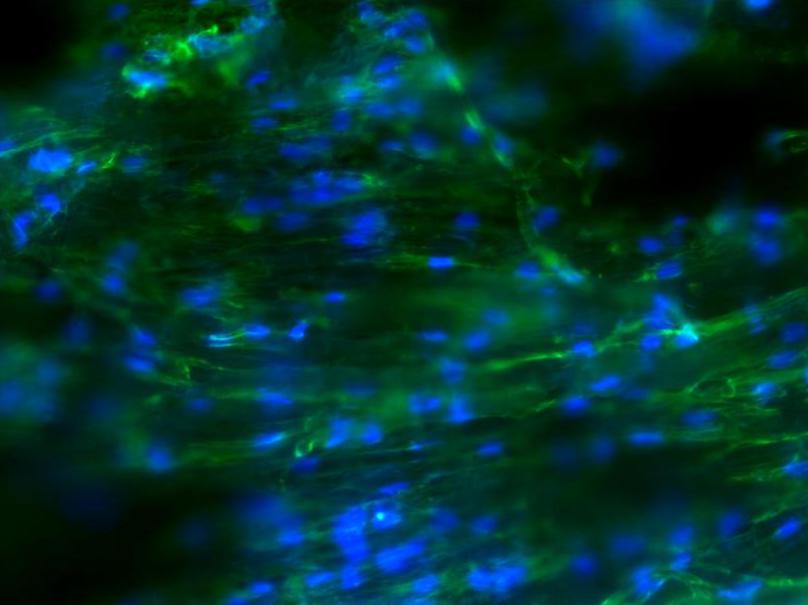
Fluorescence illuminates the structure of nanoscaffolds used to grow cell cultures. 

While characterizing the fibers, I have learned how to use several facilities and devices. This includes a dynamic mechanical analysis (DMA) machine for tensile testing in a temperature-controlled environment, a field emission scanning electron microscope (FESEM) used in nanoscale imaging, ultraviolet-visible and Fourier-transform infrared (FTIR) spectroscopy for compositional analysis, brightfield and fluorescent imaging. Not to mention the cell culture experience I gained working with several cell lines from cardio myoblasts and adult human fibroblasts to breast epithelial cells of varying malignancies.

The work I do in the lab builds on coursework. Working in the lab helped me understand my coursework better because I could relate it to real-life applications.

And I’m a published author. I am a co-author on a paper published in Materialia with others in the works.

Working in the lab has taught me how to use my resources to solve real problems in need of real solutions, whether it be via poring over existing literature or seeking the knowledge of peers and faculty. It is okay not to know everything, but lab work gave me the confidence to learn and better myself daily. It has also taught me to accept outcomes and results as they are — I may not like them, I may not have expected them, but things are what they are, and I will find a use for them or modify experiments to achieve better outcomes.

Working in the lab restored my confidence in myself and helped me realize GPA is just a number. It’s something I would highly recommend to any student.

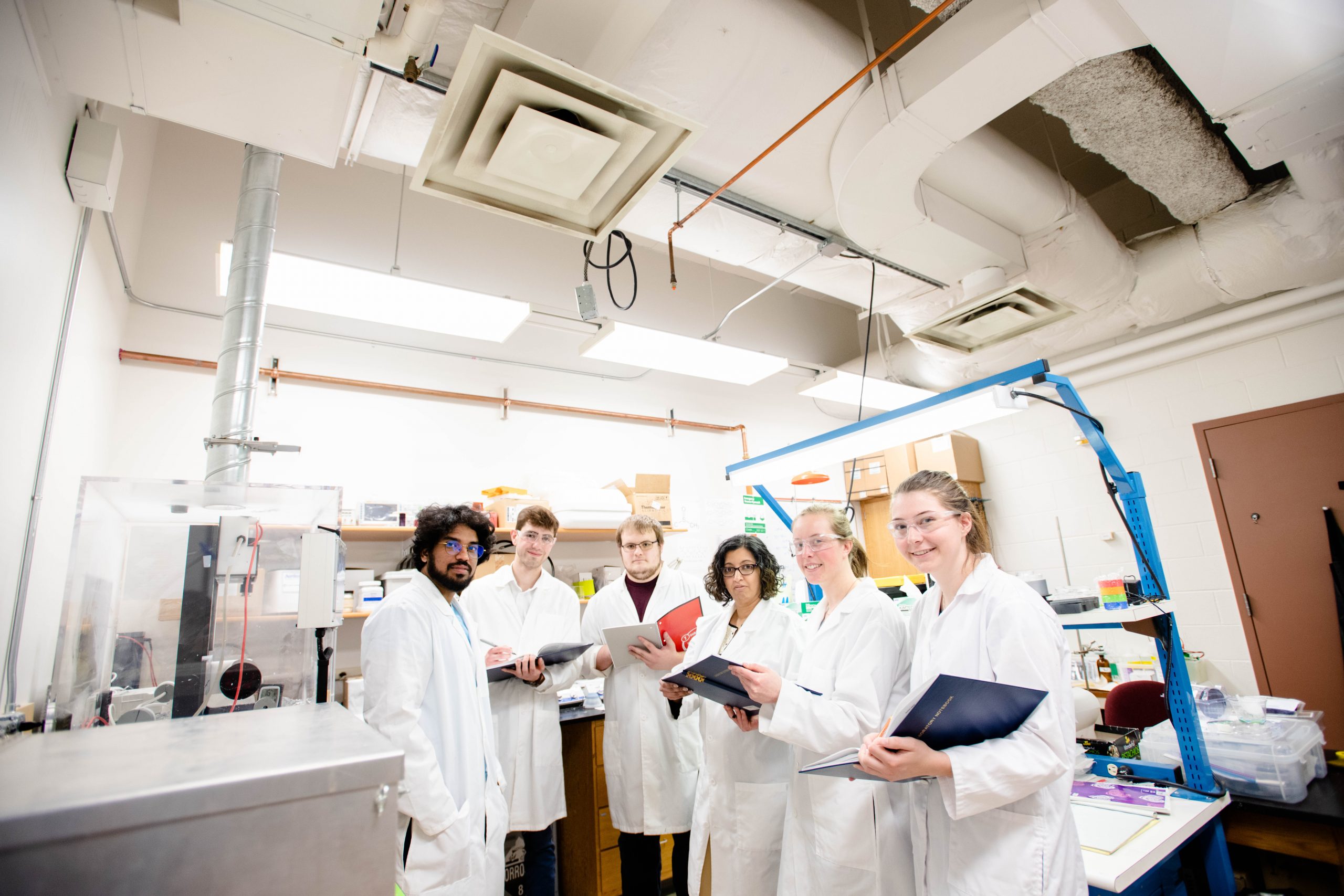
Biomedical Engineering Associate Professor Smitha Rao

Editor’s note: Carolyn earned her Bachelors and Master’s in Biomedical Engineering at Michigan Tech, and accepted a position as an associate scientist at Regeneron, in New York.

Integrated Molecular Innovations Wins Individual Investment and Cash Prize


Last week, Huskies took their business pitches on the road and won big!

Graduate student Rourke Sylvain (biomedical engineering) and Ali Dabas ‘23 (B.S. Biomedical Engineering) pitched imi (integrated molecular innovations) at the renowned Rice Business Plan Competition. They won $25,000 in prize money for the best pediatric device, sponsored by Southwest National Pediatric Device Innovation Consortium (SWPDC). Sylvain, founder and CEO, and Ali Dabas, co-founder and CTO, pitched a wearable device that revolutionizes health care by eliminating the need for centralized clinical testing. They pitched in two categories. The shorter elevator pitch can be viewed on YouTube.

Congratulations to our student teams! We are proud of your hard work!

By Husky Innovate, Pavlis Honors College.

The Rice Business Plan Competition exists so that student founders pushing to create new possibilities in technology, energy, healthcare and more can surround themselves with a powerful network; learn what it takes to secure investor funding.

Watch Integrated Molecular Innovations video
Preview image for Integrated Molecular Innovations video

Integrated Molecular Innovations

Health Research Institute 2023 Summer Fellowship Award for Mohanish Chandurkar

Mohanish Chandurkar Poster
Mohanish Chandurkar stands by his poster at the 2022 Graduate Research Colloquium at Michigan Tech.

The Health Research Institute (HRI) at Michigan Tech is pleased to announce Summer Fellowship awardees for 2023. Congratulations to all recipients!

HRI Summer Fellowship awardees are:

  • Alexander Apostle, Chemistry
  • Mohanish Chandurkar, Biomedical Engineering
  • Catherine Rono, Biological Sciences

HRI Student Fellowships are awarded three times a year. More information can be found on the HRI website.

By the Health Research Institute.